On this page
A seller who lists on Amazon, eBay, and Etsy by hand spends time copying listings and fixing stock counts instead of growing the business. The tools below do that work automatically, so a product listed once appears everywhere with the right price and the right stock level. LitCommerce leads the list because it covers three channels and a thousand listings with unlimited orders for twenty-nine dollars a month. The other six tools are ranked on the same test: how well they keep a seller in sync for the price, and whether they fit a new seller or a high-volume operation.
How we researched this
We checked every price on the vendor pricing page on November 28, 2026, and only included tools with a published US dollar list price. ChannelAdvisor, now Rithum, and Solid Commerce sell by quote, so they are not in this list even though they are popular with sellers. Prices change, so confirm the current figure on the vendor site before you buy.
Compare the tools
| Name | Best for | Starting price | Free plan | |
|---|---|---|---|---|
 Linnworks | Sellers with serious multi-channel volume | $449/month | No free plan, free demo | Visit |
 Sellbrite | New sellers who want a free plan before paying | $29/month | Free plan up to 30 orders per month | Visit |
| Shopify Marketplace Connect | Shopify sellers that want the cheapest marketplace connection | Free to install | Free to install; first 50 synced orders a month free | Visit |
| Webgility | Sellers that run Amazon, eBay and their own store side by side | $69/month | No free plan, 14-day free trial | Visit |
 Cin7 Core | Sellers that want inventory and warehouse management | $349/month | No free plan, free trial | Visit |
 LitCommerce | Sellers starting to expand across marketplaces | $29/month | No free plan, 7-day free trial | Visit |
| Channable | Sellers that want to control product feeds before they reach a marketplace | $49/month | No free plan, free trial | Visit |
The marketplace integration software for sellers, compared
1. Linnworks
Best for: Sellers with serious multi-channel volume
Paid tool Starting price: $449/month · Four hundred forty-nine dollars per month starting, per the vendor blog; confirm the current figure before buying
Free plan: No free plan, free demo
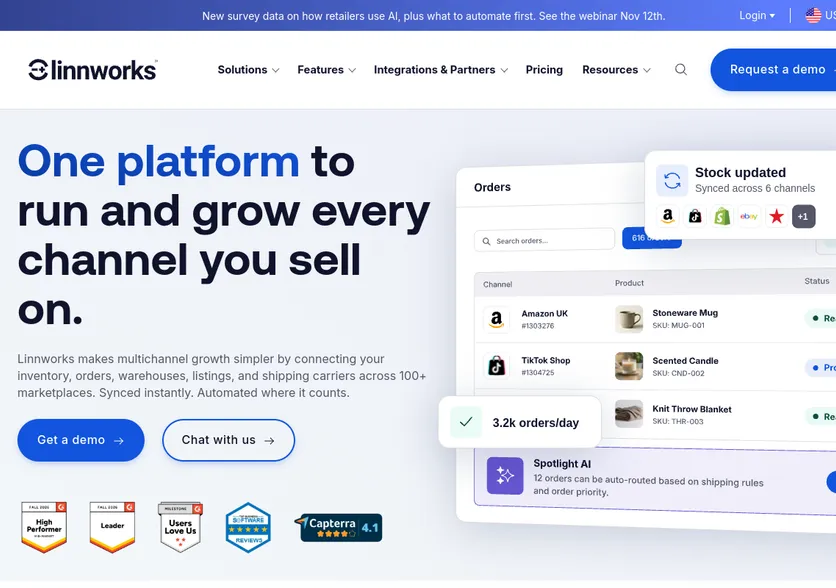
For a seller with serious multi-channel volume, the Linnworks plan starts at four hundred forty-nine dollars a month, and it connects marketplaces, webstores, and warehouses with automated order routing and inventory sync. A seller can list on Amazon, eBay, and Etsy, route each order to the right warehouse, and keep stock levels accurate everywhere. The price is per the vendor blog and should be confirmed before buying, and the platform is built for sellers with real volume rather than a hobby shop.
What we like
- Automated order routing across channels
- Warehouse sync included
- Built for sellers with real volume
Watch out for
- Price is per the vendor blog, so confirm before buying
- Overkill for a seller just starting out
How to try it
- Connect marketplaces, webstores and warehouses
- Set up automated order routing for each channel
- Sync stock levels across every location
2. Sellbrite
Best for: New sellers who want a free plan before paying
Paid tool Starting price: $29/month · Twenty-nine dollars per month on the Pro 100 plan, or twenty-four dollars per month billed annually; the Shopify edition starts at nineteen dollars per month
Free plan: Free plan up to 30 orders per month
The Sellbrite Pro 100 plan costs twenty-nine dollars a month, or twenty-four dollars a month billed annually, and it is a straightforward way for a seller to list on Amazon, eBay, Etsy, and Walmart from one dashboard. A seller can push products to several marketplaces, keep inventory in sync, and pull orders back without manual work. The free plan covers up to thirty orders a month, which is enough for a new seller to test the platform before paying.

What we like
- Free plan covers up to thirty orders a month
- Straightforward listing sync across channels
- Shopify edition starts at nineteen dollars a month
Watch out for
- Paid plans update inventory every fifteen minutes
- FBA add-on costs extra each month
How to try it
- Connect Amazon, eBay, Etsy and Walmart
- Push products to several marketplaces at once
- Pull orders back into one dashboard
3. Shopify Marketplace Connect
Best for: Shopify sellers that want the cheapest marketplace connection
Paid tool Starting price: Free to install · Free to install on the Shopify App Store; the first fifty synced orders a month are free, then one percent per synced order, capped at ninety-nine dollars a month. Codisto was acquired by Shopify in 2023 and renamed Marketplace Connect; the nineteen-dollar monthly plan no longer exists.
Free plan: Free to install; first 50 synced orders a month free
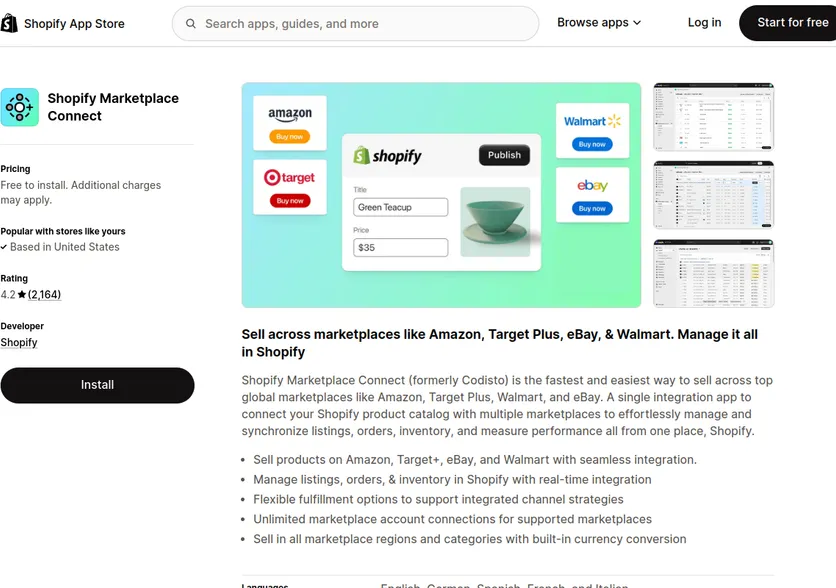
Shopify Marketplace Connect (formerly Codisto) is free to install, and it connects a Shopify store to Amazon, eBay, Walmart, and other marketplaces with listing sync and order management. A seller can push products to several marketplaces, keep inventory in sync, and pull orders back into Shopify without manual work. The first fifty synced orders a month are free, then the app charges one percent per synced order, capped at ninety-nine dollars a month.
What we like
- Free to install with fifty free orders a month
- Listing sync and order management included
- Built for Shopify stores
Watch out for
- Usage charges apply after the first fifty synced orders a month
- Works best for Shopify stores, not other platforms
How to try it
- Connect the Shopify store to Amazon, eBay and Walmart
- Push products to several marketplaces at once
- Pull orders back into Shopify automatically
4. Webgility
Best for: Sellers that run Amazon, eBay and their own store side by side
Paid tool Starting price: $69/month · Sixty-nine dollars per month on the Pro plan billed annually for three hundred orders per month and two channels; the monthly-billed rate is seventy-nine dollars
Free plan: No free plan, 14-day free trial
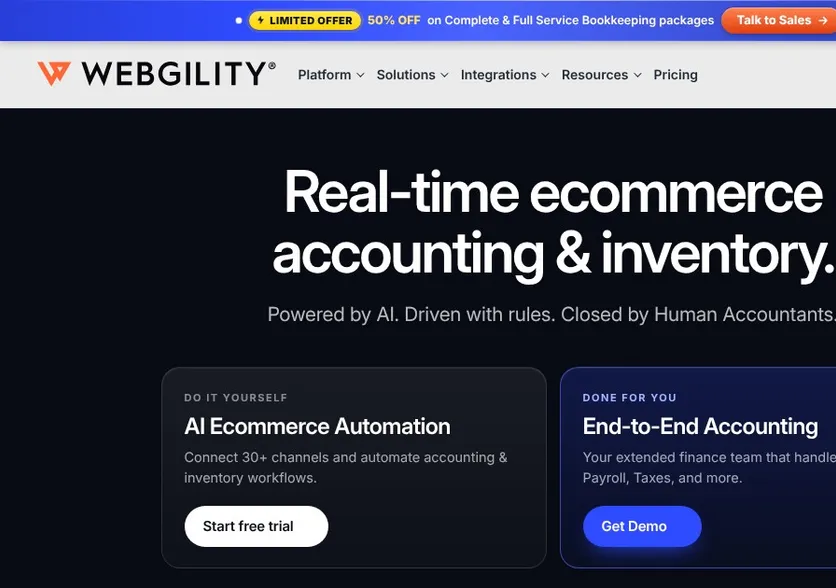
Webgility Pro costs sixty-nine dollars a month billed annually for three hundred orders a month and two channels, and it is built for sellers that run Amazon, eBay, and their own store side by side. It syncs orders, inventory, and accounting across channels, so a seller sees one clean set of numbers instead of three separate ones. Extra orders cost ten dollars a month per five hundred, and extra channels cost twenty dollars a month each.
What we like
- Orders, inventory and accounting in one place
- Clean numbers for the seller and the accountant
- Good fit for sellers on several channels
Watch out for
- Extra orders and channels cost more each month
- Two channels on Pro may be too few for larger sellers
How to try it
- Connect Amazon, eBay and the webstore
- Sync orders, inventory and accounting across channels
- Set up automated order routing for each channel
5. Cin7 Core
Best for: Sellers that want inventory and warehouse management
Paid tool Starting price: $349/month · Three hundred forty-nine dollars per month on the Standard plan
Free plan: No free plan, free trial
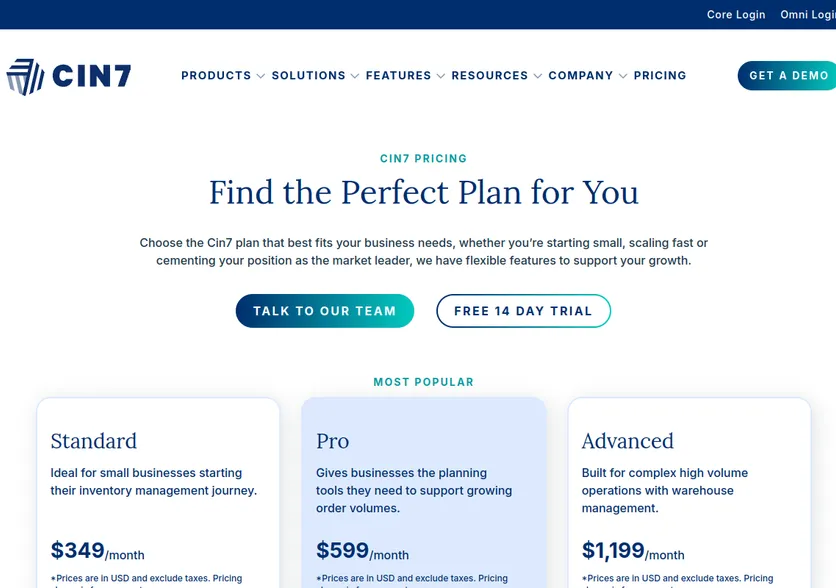
At three hundred forty-nine dollars a month on the Standard plan, Cin7 Core gives a seller inventory, order, and warehouse management across marketplaces and sales channels. It syncs stock in real time, routes orders to the right warehouse, and connects to accounting tools so the books stay clean. The price suits sellers with real warehouse complexity better than a single-store seller just starting out.
What we like
- Real-time stock sync across warehouses
- Order routing and accounting connections included
- Good fit for sellers with warehouse complexity
Watch out for
- Highest price among the inventory-first tools here
- Needs setup time before it pays off
How to try it
- Connect marketplaces and sales channels
- Sync stock in real time across warehouses
- Route orders to the warehouse that can ship fastest
6. LitCommerce
Best for: Sellers starting to expand across marketplaces
Paid tool Starting price: $29/month · Twenty-nine dollars per month for three channels and one thousand listings with unlimited orders; the annual-billed rate is twenty-four dollars per month
Free plan: No free plan, 7-day free trial
For a seller starting to expand across marketplaces, the LitCommerce plan costs twenty-nine dollars a month for three channels and one thousand listings with unlimited orders, and it is the best-value listing tool on this list. A seller can push products to Amazon, eBay, Etsy, Walmart, and TikTok Shop, keep inventory in sync, and manage orders from one dashboard. The price rises with every channel and listing band, so a growing catalog will cost more than the starting figure.

What we like
- Best-value listing tool on this list
- Unlimited orders on every plan
- Wide channel coverage for the price
Watch out for
- Price rises with every channel and listing band
- Inventory sync runs every fifteen minutes, not real time
How to try it
- Connect the store to Amazon, eBay, Etsy and Walmart
- Push products to three channels with one thousand listings
- Sync inventory and manage orders from one dashboard
7. Channable
Best for: Sellers that want to control product feeds before they reach a marketplace
Paid tool Starting price: $49/month · Forty-nine dollars per month on the Core Standard plan for five hundred items, one project and three channels; the marketplaces add-on is listed separately
Free plan: No free plan, free trial
Channable Core Standard costs forty-nine dollars a month for five hundred items, one project, and three channels, and it is built for sellers that want to control their product feeds before they reach a marketplace. It cleans up titles, prices, and attributes with rule-based feeds, then pushes listings to marketplaces and ad channels. The marketplaces add-on is listed separately, so a seller that wants full marketplace sync should check the total price.
What we like
- Rule-based feeds clean up the catalog
- Works for marketplaces and ad channels
- Good fit for sellers with messy product data
Watch out for
- Marketplaces add-on is listed separately
- Five hundred items on Core Standard may be too few for large catalogs
How to try it
- Connect the catalog and build rule-based feeds
- Clean up titles, prices and attributes
- Push listings to marketplaces and ad channels
Prices above were checked on each vendor’s own website on Nov 28, 2026 and can change — the vendor’s page is the final word. Vendor links are editorial: nobody paid to be listed or ranked here. Vendors who want a featured listing can see how it works on our Get listed page.
How a seller should set up marketplace integration
Start with one marketplace, not five. The highest-value step for a seller is a clean listing on the channel that already sells best, with accurate titles, prices, and stock levels, before adding the next one. Next, connect inventory sync, because an oversold item creates a refund and a bad review in one stroke. Then set up order management so every marketplace order lands in one place instead of three inboxes. Test the feed for two weeks and fix the mismatched SKUs, because a bad feed multiplies across channels. Finally, review the channel margins monthly, because a marketplace that looks busy can still lose money once fees and returns are counted.
Before you buy
- Confirm the tool syncs inventory across every channel you sell on
- Check whether the price covers your listing count and order volume
- Make sure orders from all marketplaces land in one place
- Ask if marketplace connections are included or billed as add-ons
- Test the feed on one marketplace first, because a bad feed multiplies across channels
Official websites
Official websites of the products reviewed above. Features and prices were checked against these sites when this guide was written, and they can change, so confirm on the vendor site before you buy.
Frequently asked questions
What is the best marketplace integration software for sellers?
LitCommerce is the best overall choice for most sellers because it covers three channels and one thousand listings with unlimited orders for twenty-nine dollars a month. A new seller on a tight budget can start with Sellbrite, which has a free plan for up to thirty orders a month and paid plans from twenty-nine dollars a month. The right pick depends on whether the seller needs simple listing sync or full order and warehouse management.
How much does marketplace integration cost for a seller?
The tools in this list start free to install with Shopify Marketplace Connect (formerly Codisto), then twenty-nine dollars a month for LitCommerce and Sellbrite. A mid-range setup costs forty-nine dollars a month for Channable or sixty-nine dollars a month for Webgility Pro. The enterprise-grade platforms cost three hundred forty-nine dollars a month for Cin7 Core and four hundred forty-nine dollars a month for Linnworks, which suit high-volume sellers.
Do sellers need a marketplace platform or just a listing tool?
A listing tool pushes products to marketplaces, but it cannot route orders, manage a warehouse, or keep stock in sync across channels. A seller doing real volume needs that order and inventory layer, because one oversold item creates a refund and a bad review that hurts every channel. The tools in this list cover both jobs, so the listing and the inventory live in the same system.
Can marketplace integration stop overselling?
Yes, and inventory sync is the feature that does it. When a sale on Amazon updates the stock level everywhere at once, the same item cannot be sold twice on eBay an hour later. A sync that runs every fifteen minutes is good enough for most sellers, while a high-volume shop should look for real-time sync. A clean catalog matters just as much, because a mismatched SKU will break the sync no matter how fast it runs.
Is LitCommerce or Sellbrite better for a seller?
LitCommerce is better for a seller that wants wide channel coverage, with Amazon, eBay, Etsy, Walmart, and TikTok Shop, and unlimited orders for twenty-nine dollars a month. Sellbrite is better for a new seller that wants a free plan for up to thirty orders a month before paying anything. LitCommerce costs twenty-nine dollars a month while Sellbrite Pro 100 costs the same, so the choice comes down to channels and the free plan, not price.
Compare the seven tools above, then start with the free plan or trial on the one that matches how your shop already sells before you pay for a full year.
Browse Marketing & Ads Calculators tools