On this page
Enterprise OKR programs fail when goals live in slides and check-ins happen by memory, so the tool has to make progress visible across hundreds of people without adding admin work. The seven platforms below were chosen because each one publishes a real price and handles company-wide goal tracking. Lattice leads the list because its Goals and OKRs plan costs eight dollars a seat a month and pairs goal tracking with performance reviews in one system, and the rest are ranked on the same test: how much goal structure you get for the price.
How we researched this
We checked every price on the vendor pricing page on November 28, 2026, and only included tools with a published US dollar list price. The enterprise OKR platforms that sell by quote, including Workboard, Quantive Results and Perdoo, publish no prices, so they are not in this list. Prices change, so confirm the current figure on the vendor site before you buy.
Compare the tools
| Name | Best for | Starting price | Free plan | |
|---|---|---|---|---|
 Tability | Large teams that want focused OKR tracking at a low price | $6/user/month | 14-day free trial | Visit |
| Mooncamp | Enterprises that want lightweight OKRs without a full HR suite | $7/user/month | 14-day free trial | Visit |
 Betterworks | Enterprises that want OKRs inside performance management | $8/user/month | Free demo | Visit |
 Lattice | Enterprises that want goals, reviews and feedback together | $8/seat/month | Free demo | Visit |
 Weekdone | Enterprises that want a simple weekly OKR rhythm | $9/user/month | Free for up to 3 users | Visit |
 15Five | Enterprises that want OKRs tied to feedback and check-ins | $11/user/month | Free trial | Visit |
| OKRs Tool | Enterprises that prefer flat pricing over per-user billing | $49/month | Free Launch plan | Visit |
The OKR software for enterprises, compared
1. Tability
Best for: Large teams that want focused OKR tracking at a low price
Paid tool Starting price: $6/user/month · Six dollars per user per month billed annually on the Basic plan, or seven dollars month to month; Premium is ten dollars billed annually and Enterprise is quoted; the Agentic tier is listed at twenty dollars as coming soon
Free plan: 14-day free trial
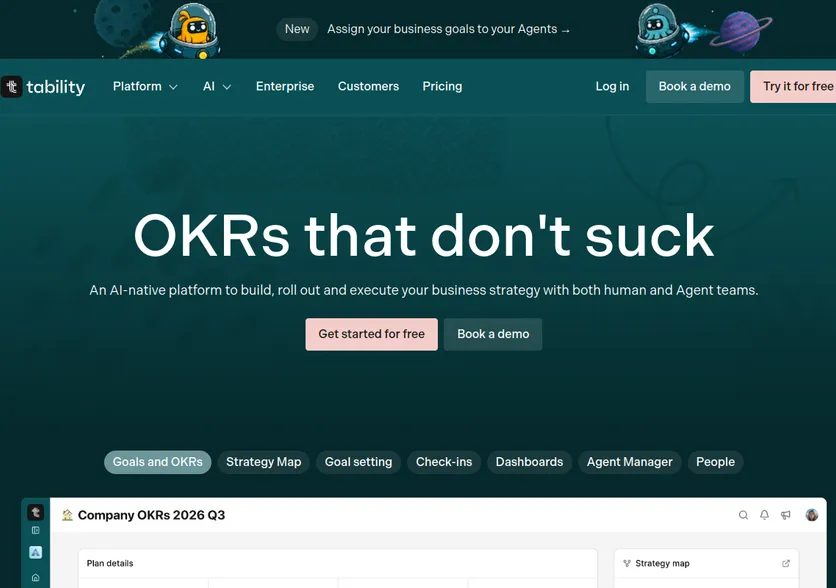
This Tability plan costs six dollars a user a month on annual billing, and it is the cheapest dedicated OKR tool in this list. A team gets goal setting, weekly check-ins, dashboards and integrations with Slack and Jira in a clean interface that takes minutes to learn. It suits a large company that wants every department running the same goal rhythm without paying for a full performance suite.
What we like
- Cheapest dedicated OKR pricing in this list
- Weekly check-ins keep goals visible between reviews
- Simple interface that new teams learn quickly
Watch out for
- No built-in performance reviews or feedback tools
- The premium tier costs more and the top tier is quoted
How to try it
- Create company objectives and link team key results to each one
- Set a weekly check-in cadence and review progress in the dashboard
- Connect Slack or Jira so updates flow into daily work
2. Mooncamp
Best for: Enterprises that want lightweight OKRs without a full HR suite
Paid tool Starting price: $7/user/month · Seven dollars per user per month billed annually on the Essential plan with a five user minimum; Professional is ten dollars and Enterprise is quoted with a one hundred user minimum; a fourteen day trial is included
Free plan: 14-day free trial
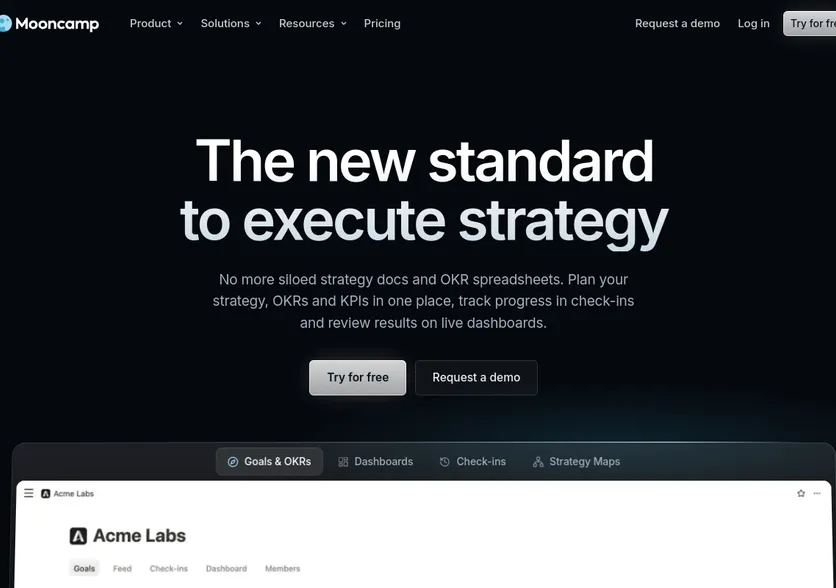
This Mooncamp plan costs seven dollars a user a month on annual billing, and it pairs OKRs with a simple check-in workflow. Teams set objectives, update key results weekly and see progress on a shared dashboard, with templates that speed up the first quarter. It fits an enterprise that wants a lightweight goal tool without the weight of a full HR platform.
What we like
- Low entry price with a five user minimum
- Templates that get the first OKR cycle running fast
- Weekly check-ins built into the core workflow
Watch out for
- Enterprise requires at least one hundred users
- Fewer HR features than the all-in-one platforms
How to try it
- Set up company objectives and assign owners for each one
- Add key results and schedule weekly progress check-ins
- Review the dashboard each quarter and reset goals
3. Betterworks
Best for: Enterprises that want OKRs inside performance management
Paid tool Starting price: $8/user/month · Eight dollars per user per month on the Performance plan; Performance plus Talent Intelligence is nine dollars and Enterprise is quoted; a one-time implementation fee applies and the amount is not published; a first-year promotion on a three-year agreement is not the list price
Free plan: Free demo
This Betterworks plan costs eight dollars a user a month, and it ties OKRs to ongoing performance conversations. Managers run check-ins, give feedback and track goals in one place, so the quarterly review never starts from a blank page. It suits a large company that already treats goals and performance as one conversation rather than two separate tools.
What we like
- Goals, check-ins and feedback in one workflow
- Strong manager tooling for large teams
- Integrations with common HR systems
Watch out for
- Implementation carries a one-time fee that is not published
- The talent intelligence add-on raises the price per user
How to try it
- Define company objectives and cascade them to teams
- Run regular check-ins between managers and reports
- Review goal progress before each performance cycle
4. Lattice
Best for: Enterprises that want goals, reviews and feedback together
Paid tool Starting price: $8/seat/month · Eight dollars per seat per month for Goals and OKRs; Performance is ten dollars, the Foundations bundle is thirteen dollars and Engagement is four dollars; a four thousand dollar yearly minimum applies and billing is annual only
Free plan: Free demo
This Lattice plan costs eight dollars a seat a month, and it combines OKR tracking with performance reviews in one system. A company can set goals, run reviews and gather feedback without buying three separate tools, which keeps the data in one place. It is the strongest all-round pick for an enterprise that wants goals and people management to share the same record.
What we like
- Goals, reviews and engagement in one platform
- Clear pricing with a published entry tier
- Good reporting for HR and leadership teams
Watch out for
- A four thousand dollar yearly minimum applies to annual agreements
- Annual billing only, with no monthly option
How to try it
- Set company goals and link team objectives underneath
- Run performance reviews in the same system as goals
- Survey engagement alongside goal progress each quarter
5. Weekdone
Best for: Enterprises that want a simple weekly OKR rhythm
Paid tool Starting price: $9/user/month · Nine dollars per user per month billed annually as a ten user package, or ten dollars and eighty cents month to month; four to six users cost nine dollars and eighty-six cents on annual billing; the free plan covers up to three users and a fourteen day trial is included
Free plan: Free for up to 3 users
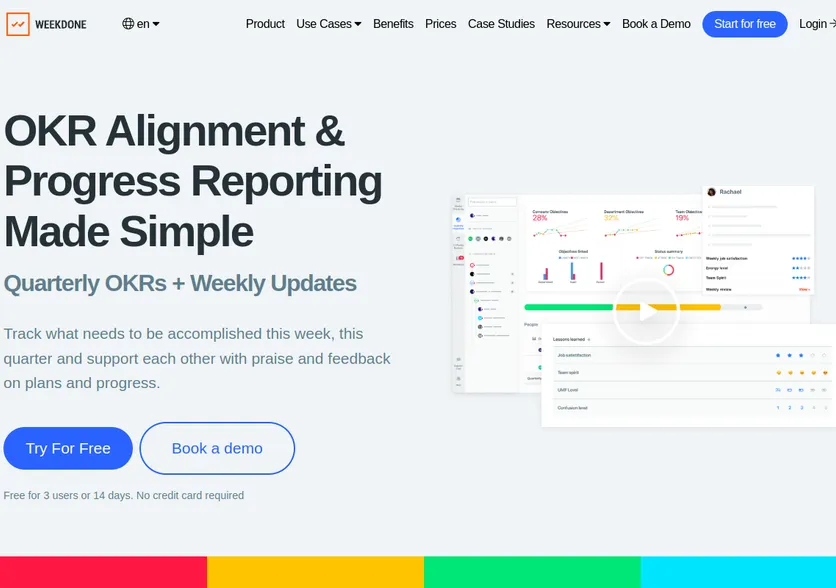
This Weekdone plan costs nine dollars a user a month on annual billing, and it is built around short weekly updates. Teams report progress, flag blockers and link their work to company objectives in a format managers can read in minutes. It fits a large company that wants a simple weekly rhythm rather than a heavyweight planning suite.
What we like
- Weekly update format that managers actually read
- Free plan for teams of up to three users
- Per-user rate falls as the team grows
Watch out for
- The headline rate assumes a ten user package
- Fewer enterprise controls than the bigger suites
How to try it
- Create company objectives for the quarter
- Ask each team to submit a weekly progress update
- Review blockers in the manager dashboard every Monday
6. 15Five
Best for: Enterprises that want OKRs tied to feedback and check-ins
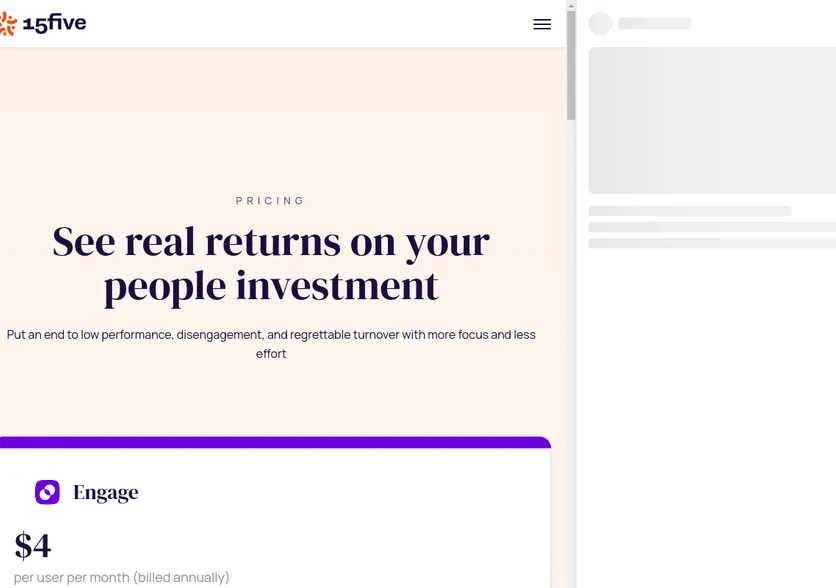
Paid tool Starting price: $11/user/month · Eleven dollars per user per month billed annually on the Perform plan; Engage is four dollars and the Total Platform is sixteen dollars, all billed annually
Free plan: Free trial
This 15Five plan costs eleven dollars a user a month on annual billing, and it links OKRs to weekly check-ins and feedback. Managers see goal progress next to employee sentiment, so a missed target comes with context instead of a surprise. It suits an enterprise that wants goals, feedback and recognition handled by one vendor.
What we like
- OKRs linked to check-ins, feedback and recognition
- Clear tier structure with a dedicated OKR plan
- Strong manager and HR reporting
Watch out for
- Full platform access costs more than the OKR tier alone
- The cheapest tier has no OKR features
How to try it
- Set objectives in the Perform plan and assign key results
- Run weekly check-ins alongside goal updates
- Review engagement data with goal progress each quarter
7. OKRs Tool
Best for: Enterprises that prefer flat pricing over per-user billing
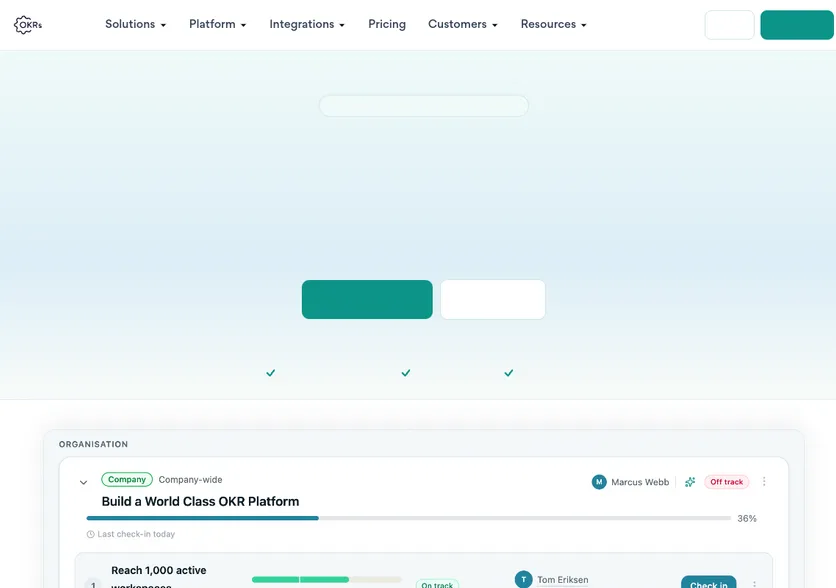
Paid tool Starting price: $49/month · Forty-nine dollars per month flat for six to fifty users; fifty-one users and up cost one hundred and twenty-nine dollars per month; the Launch plan is free for one to five users and annual billing saves twenty percent
Free plan: Free Launch plan
This OKRs Tool plan costs forty-nine dollars a month flat, and it charges by team size rather than by seat. A company pays one fixed monthly fee for six to fifty users, which makes budgeting simple as headcount grows. It fits an enterprise that prefers predictable flat pricing over per-user billing.
What we like
- Flat monthly price that does not grow per seat
- Free plan for teams of up to five users
- Annual billing saves twenty percent
Watch out for
- Costs more than per-user tools for very small teams
- Fewer integrations than the larger platforms
How to try it
- Create company objectives and add team key results
- Invite the team under one flat monthly plan
- Track progress on the dashboard and reset each quarter
Prices above were checked on each vendor’s own website on Nov 28, 2026 and can change — the vendor’s page is the final word. Vendor links are editorial: nobody paid to be listed or ranked here. Vendors who want a featured listing can see how it works on our Get listed page.
How to run enterprise OKRs without drowning in admin
Start with one company objective per quarter, not ten, because a goal list nobody reads is worse than no list at all. Give every objective a named owner and a weekly check-in, then review progress in a short meeting where blockers are the only agenda. Keep key results measurable and few, so a team can say in one sentence whether it is on track. Finally, close the quarter with a retro on the goals themselves, and drop any objective that survived only because nobody wanted to kill it.
Before you buy
- Confirm the plan includes goal alignment across departments, not just team-level tracking
- Check whether check-ins and progress updates are included or cost extra per user
- Ask if the tool connects to your HR system so goal data follows the employee record
- Make sure reporting shows company, team and individual progress in one view
- Test the weekly update flow with a real team before rolling it out company-wide
Official websites
Official websites of the products reviewed above. Features and prices were checked against these sites when this guide was written, and they can change, so confirm on the vendor site before you buy.
Frequently asked questions
What is OKR software for enterprises?
It is software that helps a large company set objectives and key results, cascade them from the leadership team to departments, and track progress in one place. The tools in this list cover different parts of that job: some focus only on goal tracking, while others add check-ins, feedback and performance reviews. A good enterprise tool keeps hundreds of goals visible without adding admin work.
How much does Lattice cost for OKR tracking?
Lattice charges eight dollars a seat a month for its Goals and OKRs plan, with Performance at ten dollars and the Foundations bundle at thirteen dollars. A four thousand dollar yearly minimum applies to annual agreements, and billing is annual only. For that price a company gets goal tracking in the same system as performance reviews and engagement surveys.
Which enterprise OKR tool is cheapest?
Tability is the cheapest dedicated OKR tool in this list at six dollars a user a month billed annually. Mooncamp follows at seven dollars and Betterworks at eight dollars, so the gap between the cheapest and the mid-priced tools is small. The cheapest option fits a team that only needs goal tracking, while the pricier tools add feedback and reviews.
Can I try enterprise OKR software for free?
Yes, several tools in this list offer a free start. Weekdone is free for up to three users, OKRs Tool has a free Launch plan for up to five users, and Mooncamp, Tability and 15Five offer fourteen day trials. The free options are enough to test goal setting and weekly check-ins with a small team before paying.
Do I need a performance management suite for OKRs?
Not always. A dedicated OKR tool such as Tability or Mooncamp is enough if the only goal is tracking objectives and key results. A suite such as Lattice or 15Five makes sense when the same company also wants performance reviews, feedback and engagement surveys, because the data then lives in one record instead of three separate tools.
Compare the seven tools above, then start with a free trial on the one that matches how your teams already set goals before you commit to a full year.
Browse Business Tools tools