On this page
Operations software is the system that keeps a team moving: tasks, projects, docs and data in one place instead of scattered across chats and spreadsheets. ClickUp leads this list on value at $9 a month, but the best pick depends on how your team actually works. These seven paid tools cover operations from $9 a month, with prices verified on each vendor site in November 2026.
How we researched this
We picked tools with published per-user prices, a plan a small team can afford, and features that cover real operations work rather than simple to-do lists. Every price below was read on the vendor pricing page and checked against a second source where the page was hard to read. Tools with quote-only enterprise pricing were left out.
Compare the tools
| Name | Best for | Starting price | Free plan | |
|---|---|---|---|---|
 ClickUp | Teams that want visual project boards with automation at a low price | $9/month | Free Forever plan | Visit |
 Monday | Teams that want a polished, colourful workspace for managing work | $9/month | Free plan for up to 2 seats | Visit |
 Asana | Teams that want simple task tracking with strong collaboration | $10.99/month | Free Personal plan for up to 10 teammates | Visit |
 Smartsheet | Teams that run operations in spreadsheets and want more control | $9/month | No free plan; 30-day free trial | Visit |
 Wrike | Teams that need structured project tracking with approvals | $10/month | Free plan available | Visit |
 Airtable | Teams that mix databases, docs and project tracking in one place | $20/month | Free plan available | Visit |
 Notion | Teams that want docs, wikis and project tracking together | $10/month | Free plan for individuals | Visit |
The 7 best operations software tools
1. ClickUp
Best for: Teams that want visual project boards with automation at a low price
Paid tool Starting price: $9/month · Core $9 per user a month billed annually, $12 monthly; Business $17
Free plan: Free Forever plan
ClickUp packs boards, docs, goals and automation into one workspace, which makes it the value pick on this list. This ClickUp Core plan costs $9 per user a month on annual billing and removes the limits that hold small teams back on the free tier.

What we like
- Lowest paid entry on this list
- Boards, docs and goals in one workspace
- Free Forever plan is genuinely usable
Watch out for
- Feature depth can overwhelm new users
- Some workspaces see a newer Core plan at $9
How to try it
- Start the free plan and create one space per client or project
- Add lists, boards and a timeline view for the work that matters
- Upgrade to Core when storage or guest limits start to bite
2. Monday
Best for: Teams that want a polished, colourful workspace for managing work
Paid tool Starting price: $9/month · Basic $9 per user a month billed annually, $12 monthly; Standard $12, Pro $19; 3-seat minimum
Free plan: Free plan for up to 2 seats
Monday is the most visual tool on this list, with boards that look more like a dashboard than a spreadsheet. This Monday Basic plan costs $9 per user a month on annual billing and covers unlimited boards, docs and viewers for a small team. The three-seat minimum means the real floor is $27 a month, which is worth knowing before you budget for one person.

What we like
- Boards are visual and easy to read
- Automations save repetitive admin work
- Templates cover most common workflows
Watch out for
- Three-seat minimum lifts the real floor to $27
- Advanced features sit on pricier tiers
How to try it
- Start free with two seats and build one board per workflow
- Add status columns, owners and due dates to every item
- Upgrade to Basic when you need automations or more seats
3. Asana
Best for: Teams that want simple task tracking with strong collaboration
Paid tool Starting price: $10.99/month · Starter $10.99 per user a month billed annually, $13.49 monthly; Advanced $24.99
Free plan: Free Personal plan for up to 10 teammates
Asana is the steady choice for teams that want tasks, projects and goals without a steep learning curve. This Asana Starter plan costs about $11 per user a month on annual billing and adds timeline views, custom fields and workflow automation over the free tier. It is the tool most often recommended to teams moving off spreadsheets, and the free Personal plan covers up to ten teammates.

What we like
- Clean interface that teams adopt quickly
- Timeline and workload views are strong
- Free plan covers up to ten teammates
Watch out for
- Advanced reporting needs the higher tier
- Per-user pricing adds up on big teams
How to try it
- Create a free workspace and set up one project per workflow
- Add tasks with owners, due dates and dependencies
- Upgrade to Starter for timelines and automation
4. Smartsheet
Best for: Teams that run operations in spreadsheets and want more control
Paid tool Starting price: $9/month · Pro $9 per member a month billed annually, $12 monthly; Business $19
Free plan: No free plan; 30-day free trial
Smartsheet feels like a spreadsheet with superpowers, which is exactly why operations teams love it. This Smartsheet Pro plan costs $9 per member a month on annual billing and adds unlimited sheets, reports and dashboards over the trial. New signups get a 30-day trial rather than a free plan, so budget for the paid tier from the start.

What we like
- Spreadsheet feel with real project controls
- Reports and dashboards are powerful
- Automation handles recurring admin work
Watch out for
- No free plan for new signups
- Interface can feel dated next to rivals
How to try it
- Start the 30-day trial and import one live spreadsheet
- Turn the sheet into a project with owners and due dates
- Add dashboards to track the whole operation at a glance
5. Wrike
Best for: Teams that need structured project tracking with approvals
Paid tool Starting price: $10/month · Team $10 per user a month billed annually, for 2 to 15 users; Business $25
Free plan: Free plan available
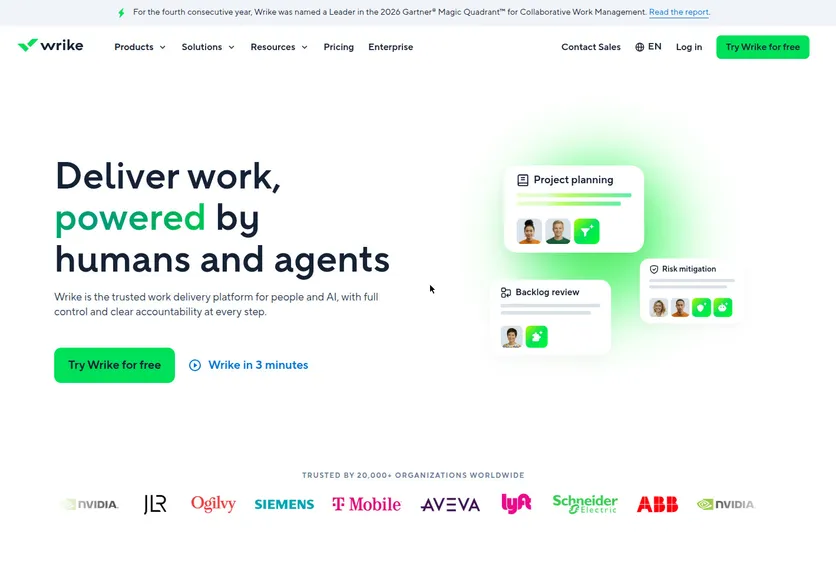
Wrike suits teams that run formal projects with approvals, request forms and proofing, rather than loose task lists. This Wrike Team plan costs $10 per user a month on annual billing and covers two to fifteen users with boards, timelines and shared calendars. The free plan is a decent trial, but the Team tier is where the real project controls live.
What we like
- Approvals and request forms built in
- Strong timeline and workload views
- Scales from small teams to enterprise
Watch out for
- Team tier caps at 15 users
- Setup takes longer than simpler tools
How to try it
- Start free and build one project with boards and timelines
- Add request forms so work arrives with the right details
- Upgrade to Team for approvals and workload views
6. Airtable
Best for: Teams that mix databases, docs and project tracking in one place
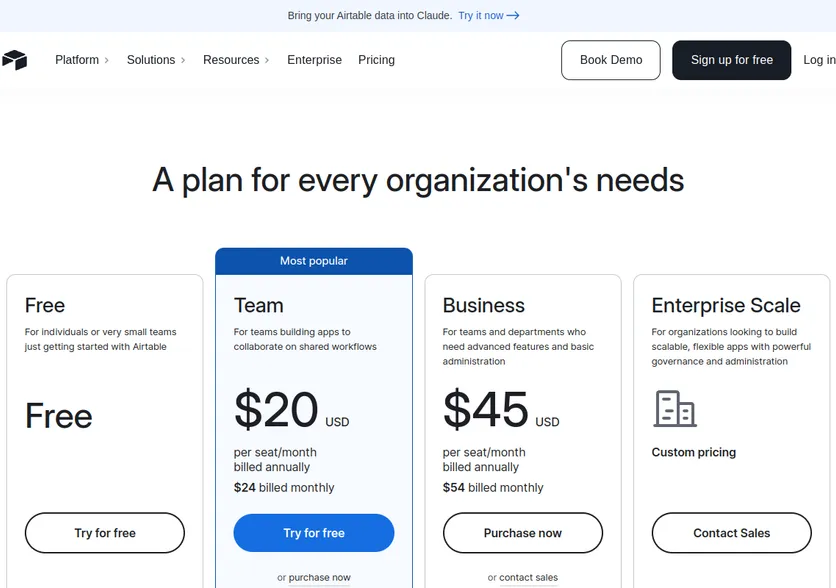
Paid tool Starting price: $20/month · Team $20 per user a month billed annually, $24 monthly; Business $45
Free plan: Free plan available
Airtable is the database disguised as a spreadsheet, and it shines when operations work is really data work. This Airtable Team plan costs $20 per user a month on annual billing and adds more records, automations and syncing over the free tier. It is the priciest tool here, but for teams that track inventory, content or pipelines as structured data it earns the premium.
What we like
- Databases that behave like spreadsheets
- Views and automations are powerful
- Free plan is generous for small bases
Watch out for
- Highest starting price on this list
- Record limits can force an upgrade early
How to try it
- Start free and build one base for your core workflow
- Add linked records and views for each team that uses the data
- Upgrade to Team when record or automation limits bite
7. Notion
Best for: Teams that want docs, wikis and project tracking together
Paid tool Starting price: $10/month · Plus $10 per member a month billed annually, $12 monthly; Business $20
Free plan: Free plan for individuals
Notion is the all-in-one workspace where docs, wikis and project boards live side by side, which is why small teams adopt it so fast. This Notion Plus plan costs $10 per member a month on annual billing and adds unlimited file uploads, longer page history and automations over the free tier. The free plan already covers most solo work, so pay only when the team grows.

What we like
- Docs, wikis and boards in one workspace
- Templates make setup fast
- Free plan covers most solo work
Watch out for
- Flexibility can turn into messy workspaces
- Offline support is limited
How to try it
- Start free and build one workspace with docs and a task board
- Add databases for projects, meeting notes and wikis
- Upgrade to Plus for unlimited uploads and automations
Prices above were checked on each vendor’s own website on Nov 26, 2026 and can change — the vendor’s page is the final word. Vendor links are editorial: nobody paid to be listed or ranked here. Vendors who want a featured listing can see how it works on our Get listed page.
How to pick one operations tool and get the team using it
Pick the tool that matches how your team already works, not the one with the longest feature list, and migrate one real project first so the team learns the workflow on live work. Set naming rules for projects and tasks on day one, because a workspace with no conventions turns into a mess within a month, and review the seat count quarterly so you stop paying for people who left.
Before you buy
- Count the seats you will actually pay for, because per-user pricing turns a ten-person team into a real monthly bill.
- Check the seat minimum on the plan you want, since some tools charge for three seats even when you need one.
- Confirm the plan covers the views your team uses, such as timeline, Gantt and workload, not just simple boards.
- Ask whether guests and clients can view work for free, because paid guest seats inflate the cost fast.
- Run a real project on the free plan for two weeks to learn the workflow before moving the whole team over.
Official websites
Official websites of the products reviewed above. Features and prices were checked against these sites when this guide was written, and they can change, so confirm on the vendor site before you buy.
Frequently asked questions
What is the cheapest operations software tool?
ClickUp starts at $9 per user a month on annual billing, the lowest paid entry here. Monday, Asana, Smartsheet, Wrike and Notion all start at $9 to $11, while Airtable is the premium pick at $20. Every tool except Smartsheet offers a free plan, so the real cost depends on your team size and which limits you hit first.
Do I need a paid plan or is the free tier enough?
Start with the free plan and a real project, not a test account. If the team hits storage, guest or automation limits within two weeks, the paid tier is worth it. If the free tier covers the work, keep the money. Most teams upgrade for timelines, automations or more seats rather than for the core task list.
Can one tool run several teams or clients?
Yes, every tool here supports multiple projects and teams, and most let you organise work by space, workspace or team. The limit to watch is the seat count and the number of guests you can add for free. Clients and contractors often need guest access, so check whether guests are free before you commit.
Which operations tool is easiest for a non-technical team?
Monday and ClickUp are the most visual, with colourful boards and dashboards that suit teams who think in pictures. Asana and Notion are calmer and more text-led, which suits teams who prefer clean lists. Try the free plan of each for a week and let the team pick the one they actually open every day.
Is the headline price the same as the monthly bill?
No, per-user pricing means a ten-person team pays ten times the headline rate, and seat minimums can lift the floor further. Monday charges for at least three seats, for example. Multiply the per-user price by your headcount, then add any paid guests, to get the number that matters.
Keep the rest of your toolkit free — try Toolsvine's browser tools for invoices, budgets and time right now.
Browse Business Tools tools