On this page
How we researched this
We checked each vendor's own pricing page in November 2026 and kept tools that connect to at least two marketplaces plus a web store. We kept only tools with a published list price and a real multichannel stock record, and we dropped quote-only platforms and single-channel tools. Every price is the vendor's list price, with annual billing noted where the vendor lists it.
Compare the tools
| Name | Best for | Starting price | Free plan | |
|---|---|---|---|---|
 Linnworks | High-volume multichannel sellers | $449/month | Free demo | Visit |
 Cin7 Core | Brands selling on several channels at once | $349/month | No free plan; 14-day free trial | Visit |
 Ordoro | Brands that ship, stock and dropship together | $499/month | No free plan; 14-day free trial | Visit |
 ShipStation | Shopify sellers who ship every day | $14.99/month | No free plan; 30-day free trial | Visit |
| Easyship | Brands selling across borders | $23/month | Free plan (50 shipments a month) | Visit |
 Veeqo | Multichannel sellers who want free shipping tools | $19/month | Free plan (Shipping) | Visit |
 Zoho Inventory | Small sellers who want stock and orders together | $29/month | Free plan (50 orders a month) | Visit |
 Fishbowl | QuickBooks businesses with deep stock needs | $229/month | Free demo | Visit |
The 8 order management tools compared
1. Linnworks
Best for: High-volume multichannel sellers
Paid tool Starting price: $449/month · Four hundred and forty-nine dollars a month starting, per the vendor blog; final pricing is set by order volume, so confirm the figure before signing
Free plan: Free demo
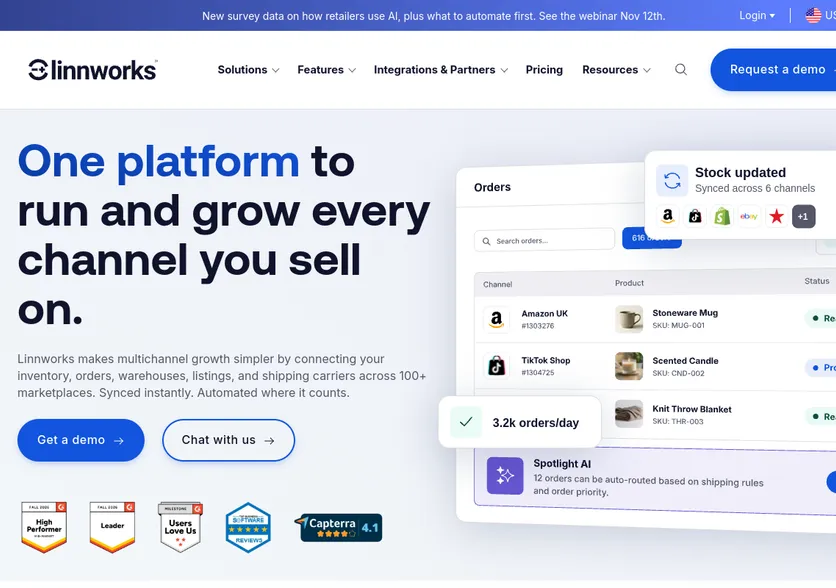
Four hundred and forty-nine dollars a month is the starting price for Linnworks, which keeps one stock record across marketplaces, the web store and the warehouse. Automation rules process thousands of orders without manual work, and the warehouse app guides picking and packing. It is the workhorse for a brand that sells everywhere at once.
What we like
- Automation rules process thousands of orders without manual work
- One stock record across marketplaces, web store and warehouses
- Built-in warehouse picking and packing workflows
Watch out for
- The starting price is high for a small catalog
- Onboarding a large catalog takes planning and time
How to try it
- Connect every marketplace and web store to one dashboard
- Build automation rules for routing, printing and messaging
- Set reorder levels and let the warehouse app guide picking
2. Cin7 Core
Best for: Brands selling on several channels at once
Paid tool Starting price: $349/month · Three hundred and forty-nine dollars a month on Standard for 5 users, 2 integrations and 6,000 sale orders a year; Pro is $599 and Advanced is $1,199 a month, and Cin7 Omni is quoted
Free plan: No free plan; 14-day free trial
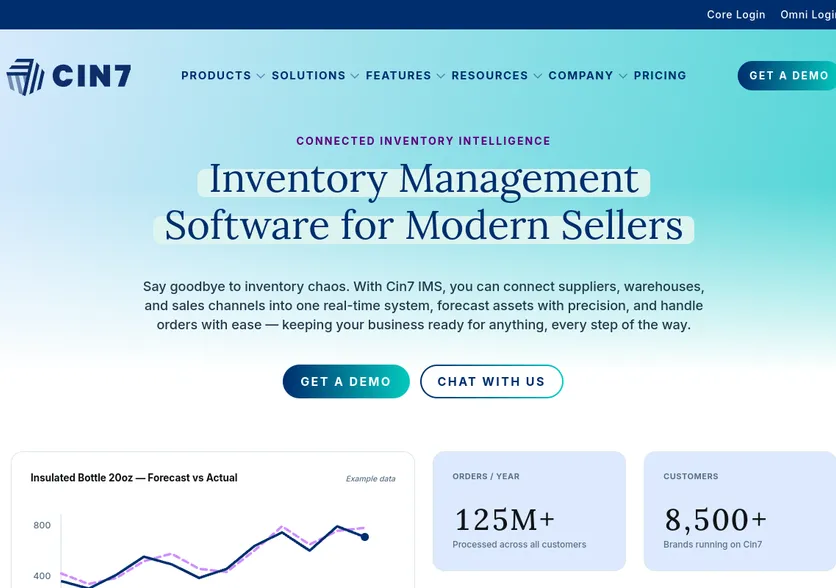
A marketplace seller who also runs a web store needs one stock record, and the Standard plan from Cin7 Core costs three hundred and forty-nine dollars a month to provide it. Marketplace orders, web store orders and wholesale orders all flow into the same queue. The B2B portal lets trade buyers order for themselves, though it is a paid add-on on the Standard plan.
What we like
- One stock record across 700 plus integrations
- B2B portal for wholesale buyers on every plan
- AI demand forecasting on higher tiers
Watch out for
- Standard caps at 6,000 sale orders a year
- The B2B portal, POS and forecasting are paid add-ons
How to try it
- Connect the store, marketplaces and accounting app
- Set stock levels and reorder rules per location
- Route orders to the right warehouse for fulfillment
3. Ordoro
Best for: Brands that ship, stock and dropship together
Paid tool Starting price: $499/month · Four hundred and ninety-nine dollars a month on Pro billed annually; Express is $59 a month for shipping only and Enterprise is $999 a month
Free plan: No free plan; 14-day free trial
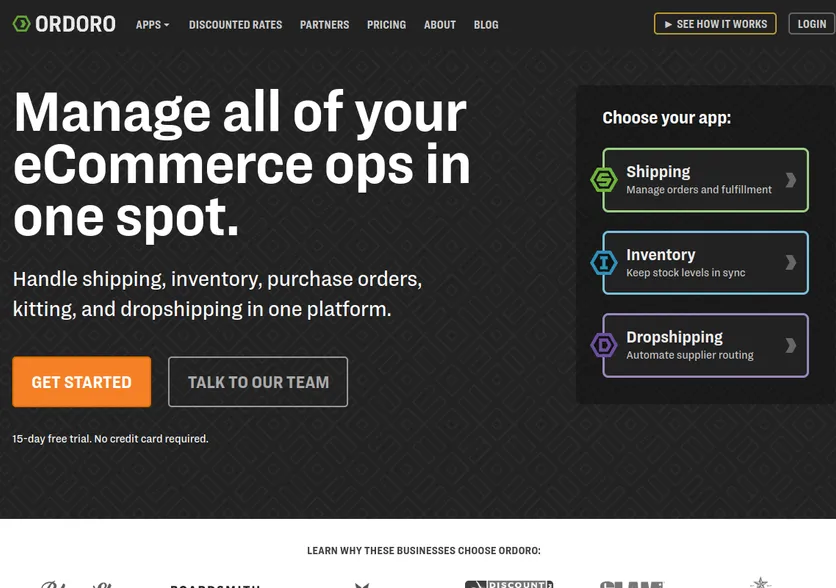
Four hundred and ninety-nine dollars a month is the Pro price for Ordoro, and it covers shipping, inventory and dropshipping for marketplace and direct sellers alike. Kitting and bundling suit brands that sell sets and bundles across channels. Supplier feeds keep stock accurate when a product sells on two marketplaces at once.
What we like
- Shipping, inventory and dropshipping in one dashboard
- Kitting and bundling built for multi-item orders
- Supplier feeds update stock automatically
Watch out for
- The entry price is far above label-only tools
- Setup takes longer than a simple shipping app
How to try it
- Import products and connect every sales channel
- Set reorder points and supplier rules for each SKU
- Route orders to the warehouse or dropshipper automatically
4. ShipStation
Best for: Shopify sellers who ship every day
Paid tool Starting price: $14.99/month · Fourteen dollars and ninety-nine cents a month on Starter for 50 shipments; Standard is $29.99 a month for 100 shipments and Premium is $349.99 a month for 10,000 shipments
Free plan: No free plan; 30-day free trial
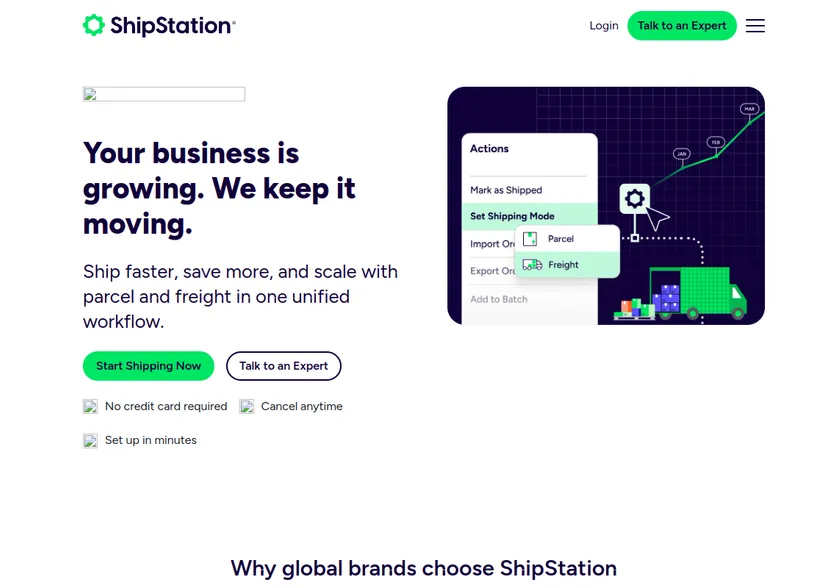
Fourteen dollars and ninety-nine cents a month buys the Starter plan from ShipStation, which pulls marketplace and direct orders into one shipping queue. Automation rules pick the carrier and the package, and branded tracking keeps buyers informed. It is a shipping tool, so a brand that also needs stock control should pair it with an inventory system.
What we like
- Discounted carrier rates across USPS, UPS, FedEx and DHL
- Automation rules handle routine orders without touching them
- Branded tracking pages and a returns portal included
Watch out for
- The Starter cap of 50 shipments a month is easy to outgrow
- Carrier account fees and label costs sit on top of the subscription
How to try it
- Connect the Shopify store and import the open orders
- Set automation rules for carriers, packaging and messages
- Buy labels in bulk, print packing slips and mark orders shipped
5. Easyship
Best for: Brands selling across borders
Paid tool Starting price: $23/month · Twenty-three dollars a month on Plus billed annually ($29 billed monthly); the free plan covers 50 shipments a month and higher tiers add volume and features
Free plan: Free plan (50 shipments a month)
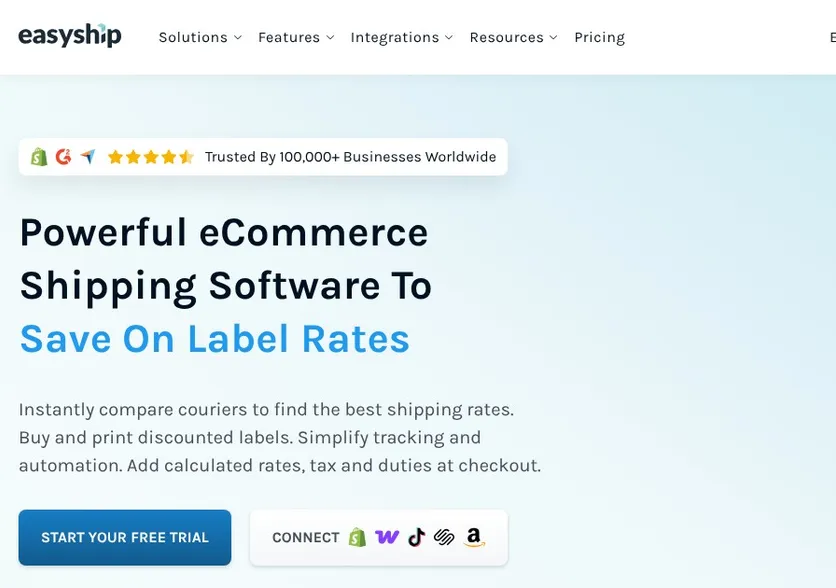
Twenty-three dollars a month buys the Plus plan from Easyship, which compares rates across more than five hundred couriers for marketplace and direct orders alike. Duties and taxes are calculated at checkout for cross-border sales, so international buyers see the true landed cost. The free plan covers fifty shipments a month for brands testing a new marketplace.
What we like
- Compares rates across 550 plus couriers in one screen
- Duties and taxes calculated at checkout for cross-border orders
- Branded tracking pages keep buyers on the store
Watch out for
- Cross-border delivery times vary by courier and lane
- The free plan caps at 50 shipments a month
How to try it
- Connect the store and sync the product catalog
- Set shipping rules by destination, weight and value
- Print labels and share the branded tracking page
6. Veeqo
Best for: Multichannel sellers who want free shipping tools
Paid tool Starting price: $19/month · Nineteen dollars a month for the Inventory plan, priced by seller-fulfilled order volume; the Shipping plan is free forever with unlimited orders and users, and High Volume starts at $350 a month
Free plan: Free plan (Shipping)
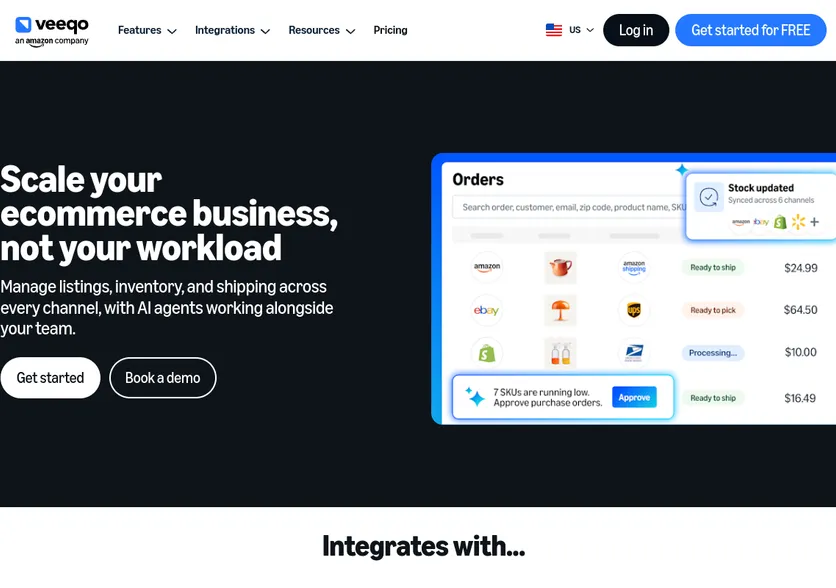
A multichannel seller can ship for free with Veeqo, since the Shipping plan has no monthly fee, and the Inventory plan costs nineteen dollars a month. Marketplace and direct orders sync into one dashboard, so labels print from a single queue. Pre-negotiated carrier rates come with up to five percent back in credits, which adds up at volume.
What we like
- Free shipping software with unlimited orders and users
- Inventory sync and digital picking on the paid plan
- Pre-negotiated carrier rates with up to 5 percent back in credits
Watch out for
- Inventory features moved to the paid plan in 2026
- The paid price moves with monthly order volume
How to try it
- Connect every sales channel to one shipping dashboard
- Sync inventory across channels on the Inventory plan
- Print labels in bulk and track every parcel
7. Zoho Inventory
Best for: Small sellers who want stock and orders together
Paid tool Starting price: $29/month · Twenty-nine dollars a month on Standard per organization billed annually ($39 billed monthly); Professional is $79, Premium is $129 and Enterprise is $249 a month billed annually
Free plan: Free plan (50 orders a month)
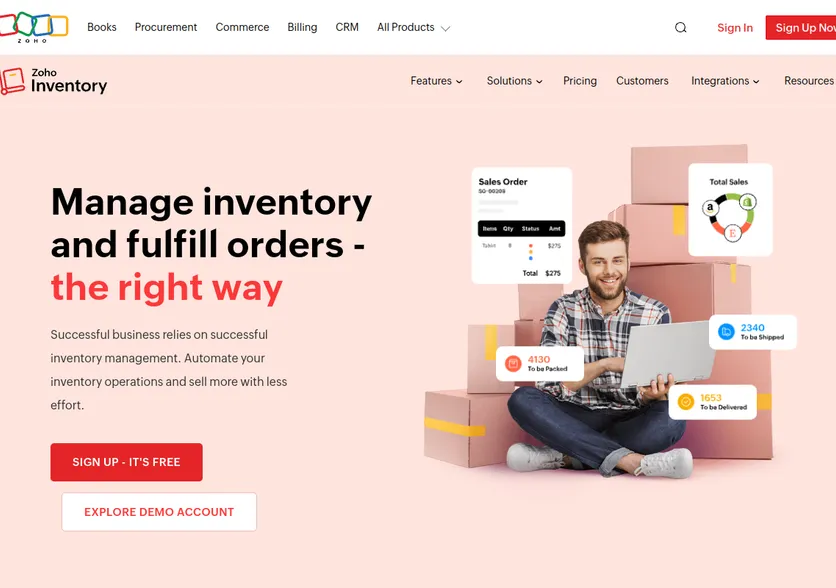
Twenty-nine dollars a month buys the Standard plan from Zoho Inventory per organization, with native links to Shopify, Amazon, eBay and Etsy. Orders sync automatically from every channel, and dropshipment and backordering are included. It is priced by organization, not by seat, so a small team selling on several marketplaces stays cheap.
What we like
- Priced per organization, not per user
- Dropshipment and backordering on the Standard plan
- Native links to Shopify, Amazon, eBay and Etsy
Watch out for
- Standard caps at 500 orders and 3 users a month
- Extra orders, users and locations are paid add-ons
How to try it
- Import products and set reorder points per warehouse
- Connect sales channels and sync orders automatically
- Create purchase orders when stock runs low
8. Fishbowl
Best for: QuickBooks businesses with deep stock needs
Paid tool Starting price: $229/month · Two hundred and twenty-nine dollars a month on Essentials; this is Fishbowl Inventory, not the Fishbowl restaurant guest platform, which is a different product with its own pricing
Free plan: Free demo
Two hundred and twenty-nine dollars a month buys the Essentials plan from Fishbowl, which adds lot and serial tracking to multichannel inventory. The QuickBooks integration is the deepest in this list, so accounting and stock stay in sync. It is built for a brand that needs manufacturing and warehouse workflows, not just a label printer.
What we like
- Deep QuickBooks integration for inventory and accounting
- Lot and serial tracking for regulated stock
- Manufacturing and warehouse workflows included
Watch out for
- QuickBooks is close to required for the full value
- The restaurant product shares the name and confuses searches
How to try it
- Sync Fishbowl with QuickBooks and import products
- Set lot and serial tracking rules per item
- Run pick, pack and ship from the warehouse app
Prices above were checked on each vendor’s own website on Nov 28, 2026 and can change — the vendor’s page is the final word. Vendor links are editorial: nobody paid to be listed or ranked here. Vendors who want a featured listing can see how it works on our Get listed page.
How to keep marketplace and direct orders in sync
Start with the stock record, because overselling is the most expensive mistake a multichannel brand makes. One product listed on three channels needs one number, not three, and the tool must update it the moment a sale lands anywhere. Check which marketplaces each tool connects to natively, since a workaround integration breaks when the marketplace changes its rules. Test the order flow from each channel before paying, and confirm that tracking updates flow back to the marketplace automatically. Confirm the returns flow too, since a marketplace return that never reaches the warehouse will break the stock record.
Before you buy
- List every marketplace you sell on and confirm the tool connects to all of them.
- Check that stock updates instantly across channels when a sale lands anywhere.
- Confirm tracking numbers flow back to the marketplace automatically after shipping.
- Compare the discounted carrier rates against what you pay today.
- Test the free trial with real orders from each channel before committing.
Official websites
Official websites of the products reviewed above. Features and prices were checked against these sites when this guide was written, and they can change, so confirm on the vendor site before you buy.
Frequently asked questions
What is the best order management software for selling on Amazon and Shopify?
Linnworks is the strongest fit, with one stock record across marketplaces and the web store from four hundred and forty-nine dollars a month. Cin7 Core starts at three hundred and forty-nine dollars and covers more than seven hundred integrations, including Amazon and Shopify. For a smaller budget, Zoho Inventory starts at twenty-nine dollars a month and connects natively to both.
How do I stop overselling on multiple marketplaces?
Use one stock record that updates instantly when a sale lands on any channel, which is what Linnworks, Cin7 Core and Zoho Inventory all do. The stock number must fall the moment an order arrives, not when it ships. The most common failure is a spreadsheet or a manual update, so any tool that needs a daily sync is not a real multichannel system.
Do I need separate software for marketplace and direct orders?
No, a multichannel order manager pulls both into one queue, so the team packs and ships from a single screen. ShipStation does this for the shipping side at fourteen dollars and ninety-nine cents a month, while Linnworks and Cin7 Core add stock control. The only reason to keep two systems is a marketplace that refuses to integrate, which is rare for Amazon, eBay and Etsy.
What does multichannel order management cost?
Zoho Inventory starts at twenty-nine dollars a month, Cin7 Core at three hundred and forty-nine and Linnworks at four hundred and forty-nine. ShipStation covers the shipping side for fourteen dollars and ninety-nine cents a month. The price gap reflects depth: Zoho suits a small seller, while Linnworks and Cin7 suit a brand processing thousands of orders across many channels.
Which tool is best for a QuickBooks business selling on marketplaces?
Fishbowl starts at two hundred and twenty-nine dollars a month and has the deepest QuickBooks integration in this list, with lot and serial tracking for regulated stock. It connects sales channels and keeps accounting and inventory in sync. A brand that does not use QuickBooks will get more value from Linnworks or Cin7 Core at a similar price.
Connect every marketplace to one stock record and let the tool stop overselling before it happens.
Browse Business Tools tools