On this page
An animation production is a hundred small jobs moving at once: storyboards, shots, assets, renders and client notes that all have to land in the right order. The eight tools below cover that job for studios of every size, from a two-person team finishing a short to a studio running several series at once. monday.com leads because its boards track every shot from storyboard to final render for nine dollars a seat a month, and the rest are ranked on how well they fit animation work for the price.
How we researched this
We checked every price on the vendor pricing page on November 28, 2026, and only included tools with a published US dollar list price. The specialist production platforms that sell by quote, including ShotGrid, ftrack and SyncSketch, publish no prices, so they are not in this list. Prices change, so confirm the current figure on the vendor site before you buy.
Compare the tools
| Name | Best for | Starting price | Free plan | |
|---|---|---|---|---|
 monday.com | Teams that want boards for any workflow | $9/seat/month | Free plan (up to 2 seats) | Visit |
| Frame.io | Studios reviewing video cuts with clients | $13/member/month | Free plan (up to 2 members) | Visit |
 ClickUp | Small teams that want everything in one app | $9/user/month | Free plan | Visit |
 Asana | Teams that need timelines and portfolios | $10.99/user/month | Free plan (Personal, up to 2 users) | Visit |
 Wrike | Teams that need requests and proofing | $10/user/month | Free plan (200 active tasks) | Visit |
 Notion | Teams that keep plans and notes together | $10/member/month | Free plan | Visit |
 ProofHub | Teams that want unlimited users for one flat fee | $45/month | No free plan; 14-day free trial | Visit |
 GanttPRO | Teams that live on the Gantt chart | $8/user/month | No free plan; 14-day free trial | Visit |
The project management software for animation studios, compared
1. monday.com
Best for: Teams that want boards for any workflow
Paid tool Starting price: $9/seat/month · Nine dollars per seat a month billed annually on Basic ($12 billed monthly); Standard is $12 a seat a month billed annually ($14 monthly); Pro is $19 ($24 monthly); Enterprise is quoted; paid plans need a three-seat minimum
Free plan: Free plan (up to 2 seats)
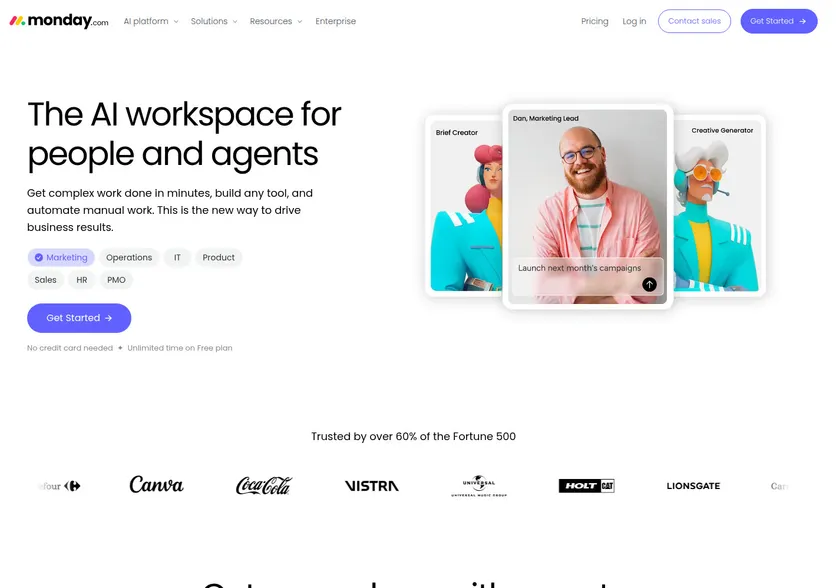
Animation studios juggling shots, assets and client notes across a production will like this monday.com plan, which costs nine dollars per seat a month billed annually, and its boards track every shot from storyboard to final render. Its boards bend to almost any workflow, from simple task lists to multi-stage approvals with owners and due dates. Automations move work forward without manual chasing, and dashboards give managers a live view of progress across every project.
What we like
- Boards adapt to almost any workflow without code
- Automations and integrations cover the routine chasing
- Dashboards show live progress across every project
Watch out for
- Paid plans need a three-seat minimum, so solo users pay for three
- Basic has no automations, so most teams need Standard or Pro
How to try it
- Pick a board template and add the columns the workflow needs
- Set up automations for status changes and deadline reminders
- Build a dashboard that pulls progress from every active board
2. Frame.io
Best for: Studios reviewing video cuts with clients
Paid tool Starting price: $13/member/month · Thirteen dollars per member a month billed annually on Pro ($156 per member a year; $15 billed monthly) for up to five members; Team is $22 per member a month billed annually ($264 a year; $25 monthly) for up to fifteen members; Enterprise is quoted; Creative Cloud subscribers get a limited Frame.io plan at no extra cost
Free plan: Free plan (up to 2 members)
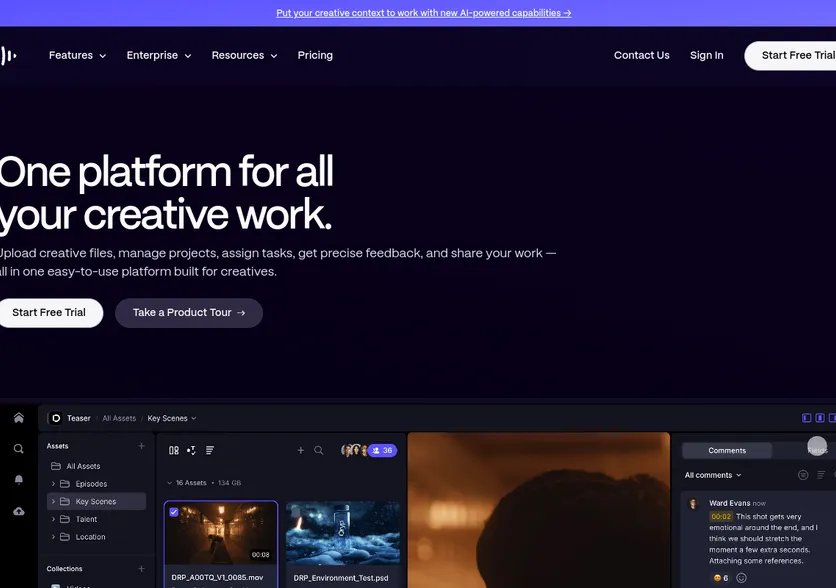
A studio that sends cuts to clients for frame-accurate notes needs this Frame.io plan, which costs thirteen dollars per member a month billed annually, and its version stacks keep every round of feedback in one place. Its frame-accurate comments and version stacks let a studio collect client feedback on cuts without email chains. Camera to Cloud moves footage straight from set to review, and Adobe panels keep notes inside the editing app.
What we like
- Frame-accurate comments and version stacks on every cut
- Camera to Cloud moves footage from set to review
- Adobe panels keep notes inside the editing app
Watch out for
- Pro stops at five members, forcing a jump to Team
- Reviewers are free but every member who uploads pays
How to try it
- Create a project and upload the first cut
- Share a review link and collect frame-accurate comments
- Upload the next version and compare it against the last
3. ClickUp
Best for: Small teams that want everything in one app
Paid tool Starting price: $9/user/month · Nine dollars per user a month billed annually on Core ($12 billed monthly); Business is $17 a user a month billed annually; Enterprise is quoted; a Max plan at $100 a user a month is listed for AI-heavy teams
Free plan: Free plan
For a small animation team that wants docs, storyboards and tasks in one workspace, this ClickUp plan costs nine dollars per user a month billed annually, and its whiteboards suit brainstorming a new sequence. Its docs, whiteboards, goals and chat sit beside tasks, so a team can plan and discuss work without leaving the app. Custom views and automations adapt to almost any process, and the free plan is generous enough for small teams to start properly.

What we like
- Docs, whiteboards, goals and chat sit beside tasks
- Custom views and automations adapt to almost any process
- The free plan is generous enough for small teams to start properly
Watch out for
- The depth of features can overwhelm a team that wants simple boards
- Some advanced reporting sits on the higher Business plan
How to try it
- Create a space for the team and add lists for each active project
- Choose the views each role needs, from board to Gantt to calendar
- Set automations for handoffs so nothing waits on a manual update
4. Asana
Best for: Teams that need timelines and portfolios
Paid tool Starting price: $10.99/user/month · Ten dollars and ninety-nine cents per user a month billed annually ($13.49 billed monthly); Advanced is $24.99 a user a month billed annually ($30.49 monthly); Enterprise is quoted; seats are sold in blocks above five users
Free plan: Free plan (Personal, up to 2 users)
Studios running several productions at once can keep every episode on track with this Asana plan, which costs ten dollars and ninety-nine cents per user a month billed annually, and its portfolios show the status of all shows at a glance. Its timeline and board views keep every workstream visible in one place, and custom fields track the details that matter to the team. Automations clear routine status updates from the calendar, and portfolios roll many projects into a single progress view.

What we like
- Timeline and Gantt views with dependencies built in
- Unlimited automations and custom fields on Starter
- Portfolios roll many projects into one progress view
Watch out for
- Seats are sold in blocks above five users, so small teams can overpay
- Goals and workload tracking need the Advanced plan
How to try it
- Create a project from a template and set its timeline and milestones
- Assign owners and due dates, then add custom fields for the details that matter
- Open the portfolio view each week to check progress across every project
5. Wrike
Best for: Teams that need requests and proofing
Paid tool Starting price: $10/user/month · Ten dollars per user a month billed annually on Team ($25 on Business); Team covers two to fifteen users and Business five to two hundred; Pinnacle and Apex are quoted; no monthly billing is published
Free plan: Free plan (200 active tasks)
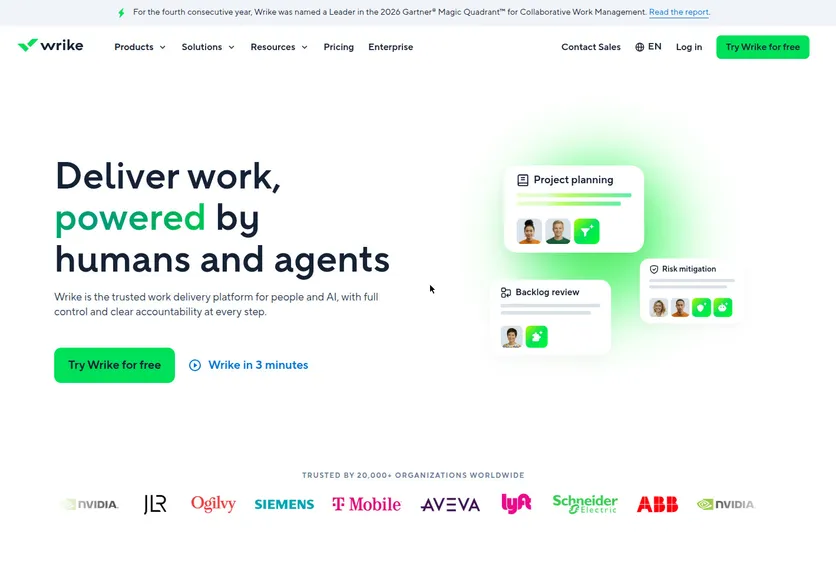
When a production needs request forms for new shots and proofing on every frame, this Wrike plan costs ten dollars per user a month billed annually, and its templates repeat the pipeline for each episode. Its Gantt charts, request forms and proofing tools cover the full journey from brief to sign-off. Templates repeat proven workflows, and resource views show who is overloaded before deadlines slip.
What we like
- Gantt charts, request forms and proofing in one place
- Templates repeat proven workflows across the team
- Resource views show overload before deadlines slip
Watch out for
- Team stops at fifteen users, pushing growing teams to Business
- No monthly billing is published, so the commitment is annual
How to try it
- Start from a template and set the project timeline with dependencies
- Turn on request forms so new work arrives with the details attached
- Check the workload view each week and rebalance overloaded owners
6. Notion
Best for: Teams that keep plans and notes together
Paid tool Starting price: $10/member/month · Ten dollars per member a month billed annually on Plus ($12 billed monthly); Business is $20 a member a month billed annually ($24 monthly); Enterprise is quoted; full Notion AI is only on Business and above
Free plan: Free plan
A studio that keeps scripts, style guides and production notes together will enjoy this Notion plan, which costs ten dollars per member a month billed annually, and its linked databases track characters, scenes and assets. Its pages and databases let a team keep project plans, meeting notes and reference material in one connected workspace. Templates and linked views turn a simple page into a tracker, a roadmap or a content calendar with little setup.

What we like
- Pages and databases keep plans and notes in one workspace
- Templates turn a page into a tracker, roadmap or calendar
- Guests are free, so clients can view without a seat
Watch out for
- Full AI and single sign-on need the Business plan
- It is a workspace first, so strict project controls need setup
How to try it
- Create a page for the project and add a database for its tasks
- Link related pages so plans, notes and decisions stay connected
- Share the page with guests who only need to view progress
7. ProofHub
Best for: Teams that want unlimited users for one flat fee
Paid tool Starting price: $45/month · Forty-five dollars a month billed annually on Essential ($50 billed monthly) for unlimited users and forty projects; Ultimate Control is $135 a month billed annually ($150 monthly) after a three-month introductory rate of $89 a month billed annually
Free plan: No free plan; 14-day free trial
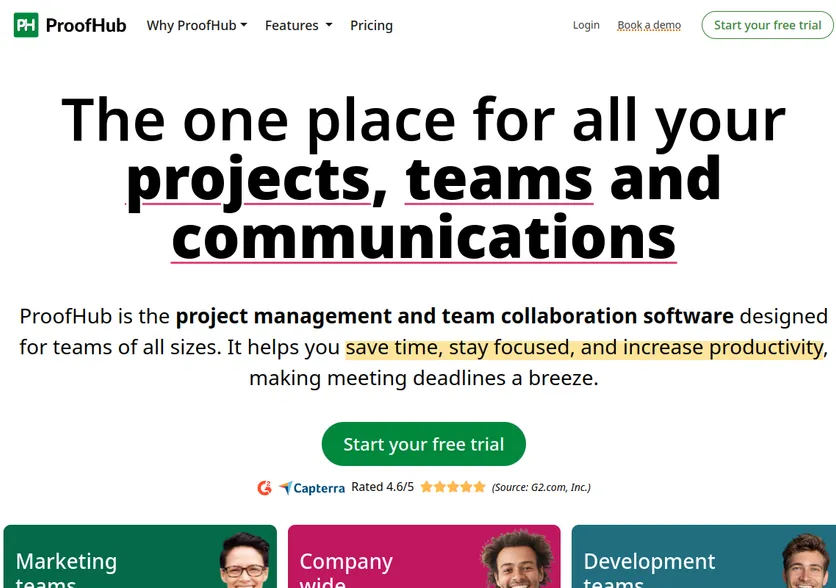
Animation teams that want unlimited seats for freelancers and clients will save money on this ProofHub plan, which costs forty-five dollars a month billed annually, and its file proofing collects notes on storyboards in the same workspace. Its flat monthly fee covers unlimited users, so growing teams never pay per seat. Tasks, Gantt charts, time tracking, chat and file proofing all live in one workspace, and custom roles keep client access tidy.
What we like
- Flat monthly fee covers unlimited users
- Tasks, Gantt, time tracking, chat and proofing in one place
- Custom roles keep client access tidy
Watch out for
- Essential caps at forty projects and fifteen gigabytes of storage
- No free plan, only a fourteen-day trial
How to try it
- Create a project and invite the whole team at no extra cost
- Set up tasks, milestones and a Gantt chart for the schedule
- Use proofing to collect client feedback on files in the same workspace
8. GanttPRO
Best for: Teams that live on the Gantt chart
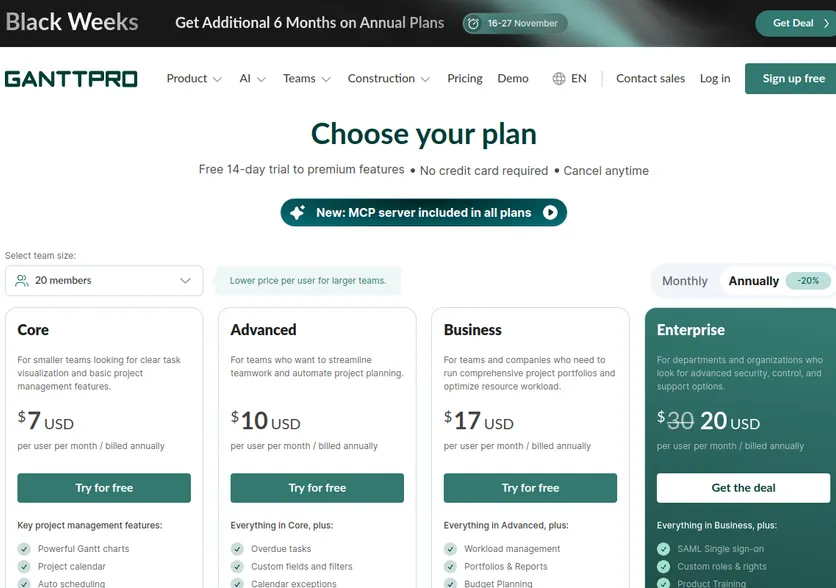
Paid tool Starting price: $8/user/month · Eight dollars per user a month billed annually on Core for teams of one to fifteen users ($7 for twenty or more); Advanced is $12 and Business is $19 ($10 and $17 for larger teams); monthly billing is $9, $15 and $24; older listings show the previous Basic, Pro and Business names at $7.99, $12.99 and $19.99
Free plan: No free plan; 14-day free trial
For a producer who plans a whole series on a timeline, this GanttPRO plan costs eight dollars per user a month billed annually, and its critical path shows which shots must finish first. Its Gantt charts are the whole product, and they are polished: dependencies, baselines, critical path and resource workload in one clean timeline. Export and sharing options make it easy to send a schedule to anyone.
What we like
- Polished Gantt charts with dependencies and baselines
- Critical path and resource workload in one timeline
- Export and sharing options send schedules to anyone
Watch out for
- No kanban or docs, so it pairs with another tool for daily tasks
- Team-size pricing means the rate changes as the team grows
How to try it
- Create a project and add tasks with start dates and durations
- Link dependencies and switch on the critical path view
- Share the timeline link with stakeholders and export a PDF for clients
Prices above were checked on each vendor’s own website on Nov 28, 2026 and can change — the vendor’s page is the final word. Vendor links are editorial: nobody paid to be listed or ranked here. Vendors who want a featured listing can see how it works on our Get listed page.
How to run an animation production without losing a shot
Start with a shot list that every artist can see, because a production that tracks shots in chat will lose one sooner or later. Give every shot a status, an owner and a due date, and move it through the same stages every time, from storyboard to final render. Keep client notes against the version they refer to, never in a separate email thread, and archive each approved cut so nobody reopens an old render. Review the board daily, clear blocked shots first, and confirm the next milestone with the client before the team moves on.
Before you buy
- Confirm the tool can track shots and assets by status, owner and due date in one view
- Check whether clients can review cuts and leave frame-accurate notes without a paid seat
- Ask if the tool handles the large video and image files the studio actually produces
- Make sure templates can repeat the same pipeline for each new episode or project
- Test the tool on a real production board before paying, including a client review round
Official websites
Official websites of the products reviewed above. Features and prices were checked against these sites when this guide was written, and they can change, so confirm on the vendor site before you buy.
Frequently asked questions
What is project management software for animation studios?
It is software that tracks every shot, asset and task in an animation production, from storyboard to final render, so the whole studio knows what is done and what is blocked. Good tools add client review, version tracking and deadlines, which matter when a production has hundreds of shots moving through the same pipeline.
How much does monday.com cost for animation studios?
monday.com costs nine dollars per seat a month billed annually on Basic, or twelve dollars billed monthly. Standard is twelve dollars per seat a month billed annually and adds timelines, Gantt views and automations. Pro is nineteen dollars and adds time tracking and private boards, which suits larger studios.
Can I manage an animation production for free?
Yes, with ClickUp, which offers a free plan, and Notion, which offers a free plan for individuals and small teams. Both work for a tiny studio with a handful of shots, though storage and permissions are limited. A busy studio will outgrow either free tier and should compare the paid plans above.
Which tool is best for client review of animation cuts?
Frame.io is the best pick for client review, at thirteen dollars per member a month billed annually on Pro, because clients leave frame-accurate comments on the cut itself and reviewers are free. It pairs well with a project tool like monday.com, which tracks the shots, while Frame.io handles the feedback.
Which tool is best for a small animation studio?
monday.com is the best overall pick for a small studio, at nine dollars per seat a month, because its boards track every shot from storyboard to render. ClickUp is the better value pick where docs, whiteboards and tasks must live together, while Frame.io suits studios that send cuts to clients every week.
Compare the eight tools above, then start with a free trial on the tool that matches how the studio already tracks shots and client feedback before paying for a full year.
Browse Business Tools tools