On this page
A distributed team lives or dies by what everyone can see without asking, because a question left in a chat thread at midnight in one time zone is a blocked day in another. The eight tools below were picked for remote-first work: clear ownership, async updates and one shared source of truth for deadlines. Asana leads because its timelines, dashboards and automations keep a scattered team aligned for ten dollars and ninety-nine cents per user a month, and the rest are ranked on how well they replace the office tap on the shoulder.
How we researched this
We checked every price on the vendor pricing page on November 28, 2026, and only included tools with a published US dollar list price. Quote-only platforms such as Workfront, Planview and Kantata publish no prices, so they are not in this list. Prices change, so confirm the current figure on the vendor site before you buy.
Compare the tools
| Name | Best for | Starting price | Free plan | |
|---|---|---|---|---|
 Asana | Teams that want structure without a long setup | $10.99/user/month | Free plan (up to 2 users) | Visit |
 monday.com | Teams that think in boards and want visual status | $9/seat/month | Free plan (up to 2 seats) | Visit |
 ClickUp | Teams that want one app instead of five | $9/user/month | Free plan (unlimited members) | Visit |
 Notion | Teams that want projects, docs and wikis in one place | $10/user/month | Free plan | Visit |
 Basecamp | Teams that want one flat price and calmer communication | $79/month | Free plan | Visit |
 Wrike | Teams that outgrew simple boards and need workload planning | $9.80/user/month | Free plan (unlimited users, 200 tasks) | Visit |
 Teamwork | Client-service teams that bill by the hour | $9.99/user/month | Free plan (up to 5 users, 5 projects) | Visit |
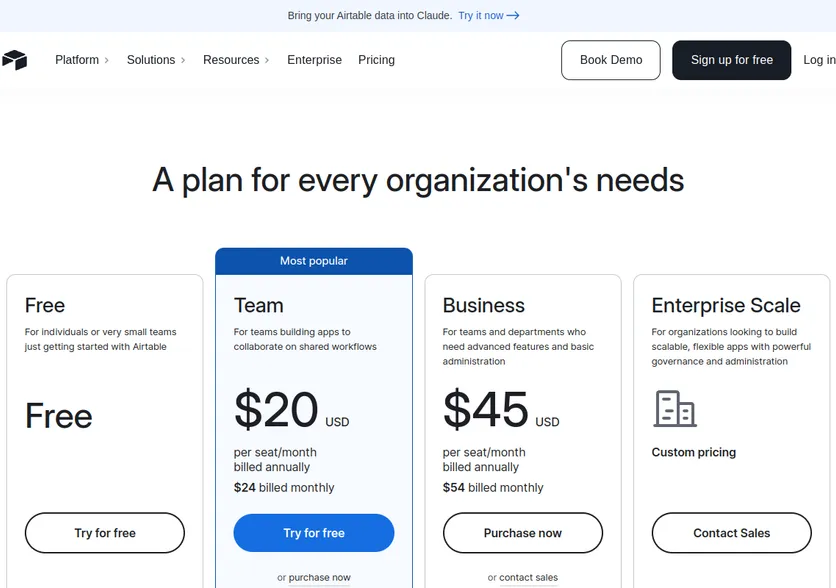
 Airtable | Teams whose projects are structured data with deadlines | $20/seat/month | Free plan (up to 5 editor seats) | Visit |
The project management software for distributed teams, compared
1. Asana
Best for: Teams that want structure without a long setup
Paid tool Starting price: $10.99/user/month · Ten dollars and ninety-nine cents per user a month billed annually ($13.49 billed monthly); Advanced is $24.99 a user a month billed annually ($30.49 monthly); Enterprise is quoted
Free plan: Free plan (up to 2 users)
For a team spread across time zones, this Asana plan costs ten dollars and ninety-nine cents per user a month billed annually, and it keeps every deadline visible on one shared timeline. Starter adds timeline and Gantt views, dashboards, forms, custom fields and unlimited automations, with free guests for clients and contractors. It is the safest default for a team that wants structure without a long setup.

What we like
- Timeline and Gantt views with dependencies
- Unlimited automations and custom fields on Starter
- Free guests and a generous template library
Watch out for
- Seats are sold in blocks above five users, so the bill jumps in steps
- Portfolios, goals and workload need the Advanced tier
How to try it
- Create a project from a template and set its timeline
- Assign tasks with owners and due dates
- Track progress on the dashboard and adjust dates as work slips
2. monday.com
Best for: Teams that think in boards and want visual status
Paid tool Starting price: $9/seat/month · Nine dollars per seat a month billed annually ($12 billed monthly); Standard is $12 a seat a month billed annually ($14 monthly); Pro is $19 ($24 monthly); paid plans start at three seats
Free plan: Free plan (up to 2 seats)
For a team spread across time zones, this monday.com plan costs nine dollars per seat a month billed annually, and its colour-coded boards show status at a glance. Boards, automations and more than two hundred integrations cover most workflows, and the mobile app keeps field and remote staff in the loop. It suits teams that think in boards and want colour and status to do the talking.

What we like
- Colourful boards that non-technical teams read at a glance
- Timeline, Gantt and calendar views from Standard
- No-code automations and 200 plus integrations
Watch out for
- Basic has no timeline view and almost no automations
- Seat bundles mean a small team still pays for three seats
How to try it
- Pick a board template and add the columns the work needs
- Invite the team and assign owners to each item
- Turn on automations for status changes and due-date reminders
3. ClickUp
Best for: Teams that want one app instead of five
Paid tool Starting price: $9/user/month · Nine dollars per user a month billed annually ($12 billed monthly); Business is $17 a user a month billed annually ($25 monthly); Enterprise and Max are quoted
Free plan: Free plan (unlimited members)
For a team spread across time zones, this ClickUp plan costs nine dollars per user a month billed annually, and it folds docs, goals and time tracking into one workspace. Fifteen views, from list and board to Gantt and calendar, sit beside docs, whiteboards, goals and native time tracking. It is the best value in this list for a team that wants one app instead of five.

What we like
- Fifteen plus views including list, board, Gantt and calendar
- Docs, goals, time tracking and chat in one workspace
- Generous free plan with unlimited members
Watch out for
- The sheer number of settings can overwhelm new teams
- Some views and automations need the Business tier
How to try it
- Build a space for the team and add lists for each workstream
- Switch on the views each project needs, such as board or Gantt
- Set goals and dashboards to watch progress in one place
4. Notion
Best for: Teams that want projects, docs and wikis in one place
Paid tool Starting price: $10/user/month · Ten dollars per user a month billed annually ($12 billed monthly) on Plus; Business is $20 a user a month billed annually ($24 monthly) and adds full Notion AI; Enterprise is quoted
Free plan: Free plan
For a team spread across time zones, this Notion plan costs ten dollars per user a month billed annually, and it pairs project boards with the docs and wikis teams already keep. Databases, timelines, kanban boards and linked docs let a team shape the workspace around its own process instead of the other way round. It suits teams that want their projects, docs and knowledge base in one place.

What we like
- Docs, databases and project boards in one flexible workspace
- Templates for roadmaps, wikis and meeting notes
- Guests join pages free on paid plans
Watch out for
- Project tracking needs setup, since it starts as a blank page
- Offline access is limited next to native apps
How to try it
- Pick a project template or build a database for tasks
- Add status, owner and date properties to every task
- Link docs and meeting notes to the project page
5. Basecamp
Best for: Teams that want one flat price and calmer communication
Paid tool Starting price: $79/month · Seventy-nine dollars a month flat on Pro for up to ten users, with unlimited projects; Pro Plus is $99 a month flat; Pro Unlimited is $199 a month billed annually ($329 billed monthly); Freelancer is $29 a month flat
Free plan: Free plan
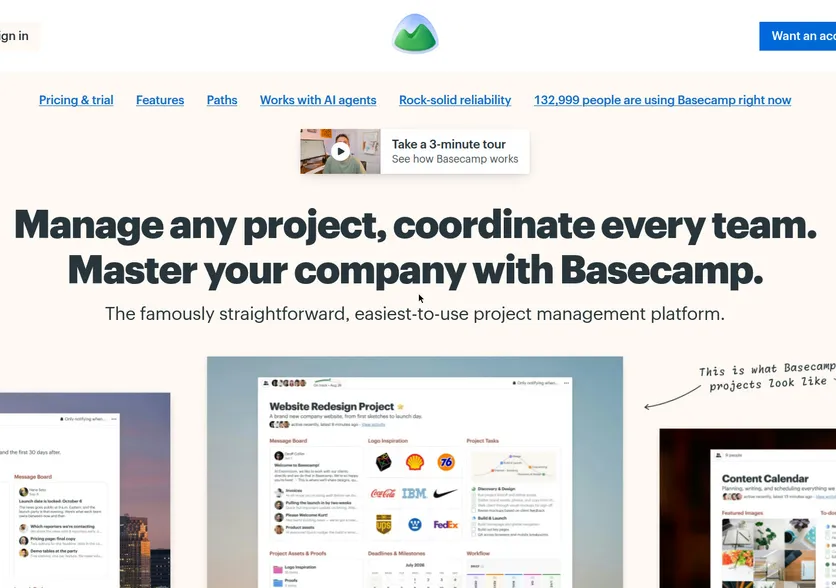
For a team spread across time zones, this Basecamp plan costs seventy-nine dollars a month flat, and it keeps discussion, files and schedules in one calm place. Message boards, to-do lists, schedules, docs and file storage replace scattered email threads, and clients join without extra seat charges. It is the calmest option here, and the flat price makes budgeting easy.
What we like
- One flat monthly price whatever the headcount
- Message boards, to-dos, schedules and docs in one calm place
- Clients join projects without extra seat charges
Watch out for
- No Gantt chart or workload view for detailed planning
- Reporting is light next to dedicated project tools
How to try it
- Create a project and invite the team and clients
- Add to-dos, a schedule and a message board
- Check the activity feed each morning for updates
6. Wrike
Best for: Teams that outgrew simple boards and need workload planning
Paid tool Starting price: $9.80/user/month · Nine dollars and eighty cents per user a month billed annually on Team, shown as ten dollars on the vendor page, for two to twenty-five users; Business is twenty-four dollars and eighty cents a user a month billed annually (shown as twenty-five dollars), for five to two hundred users; Enterprise and Pinnacle are quoted
Free plan: Free plan (unlimited users, 200 tasks)
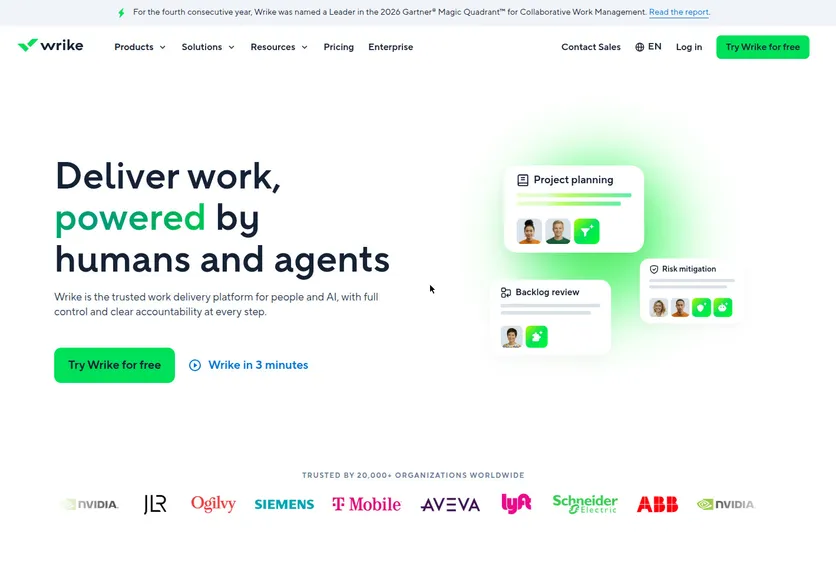
For a team spread across time zones, this Wrike plan costs nine dollars and eighty cents per user a month billed annually, and its Gantt charts and workload views keep capacity honest. Folders, spaces, dashboards and interactive Gantt charts organise large portfolios, and request forms bring new work in through one door. It fits teams that outgrow simple boards and need real workload planning.
What we like
- Interactive Gantt charts and workload views built in
- Request forms and approvals route work in cleanly
- Strong reporting across folders and spaces
Watch out for
- Passing fifteen users forces the whole team onto Business at $25
- The interface packs in so much that small teams can find it heavy
How to try it
- Set up a space and folders for each project
- Build the plan on a Gantt chart with dependencies
- Use request forms to take in new work
7. Teamwork
Best for: Client-service teams that bill by the hour
Paid tool Starting price: $9.99/user/month · Nine dollars and ninety-nine cents per user a month billed annually on Basics, with a three-seat minimum; Accelerate is twenty-four dollars and ninety-nine cents a user a month billed annually with a five-seat minimum; Optimize and Enterprise are quoted; free plan covers up to five users. Monthly billing costs more — yearly billing saves twenty-nine percent. The older Deliver and Grow tiers are retired.
Free plan: Free plan (up to 5 users, 5 projects)
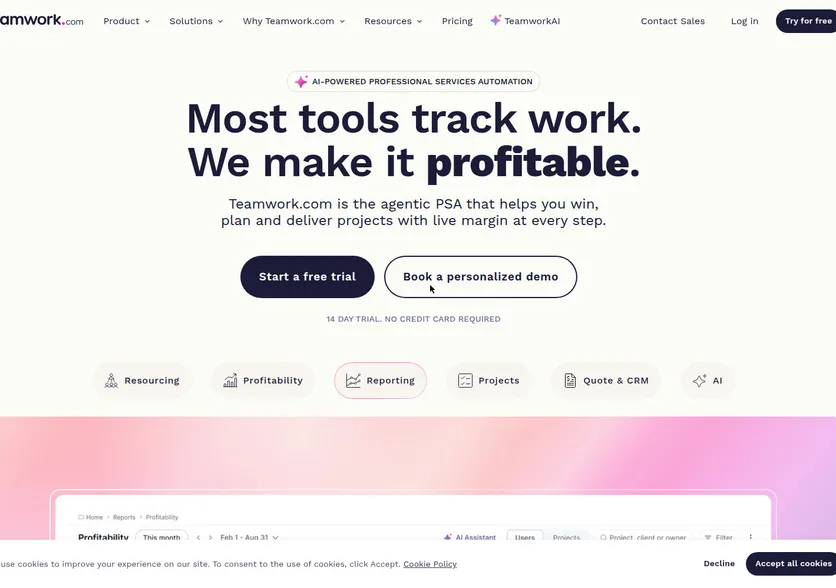
For a team spread across time zones, this Teamwork plan costs nine dollars and ninety-nine cents per user a month billed annually, and it ties time tracking and billing straight to each project. Gantt charts, milestones, project templates, time tracking and invoicing are built for teams that bill clients for the hours they log. It suits client-service teams that need hours and budgets beside the plan.
What we like
- Time tracking, billing and invoicing built for client work
- Gantt charts, milestones and project templates
- Client users see only their own projects
Watch out for
- The vendor pricing page showed conflicting figures in November 2026 reads
- Workload and portfolio tools need the Accelerate tier
How to try it
- Create a project from a template and add milestones
- Log time against tasks and track the budget
- Share a client view so customers see progress
8. Airtable
Best for: Teams whose projects are structured data with deadlines
Paid tool Starting price: $20/seat/month · Twenty dollars per seat a month billed annually ($24 billed monthly) on Team; Business is $45 a seat a month billed annually ($54 monthly); Enterprise is quoted
Free plan: Free plan (up to 5 editor seats)
For a team spread across time zones, this Airtable plan costs twenty dollars per seat a month billed annually, and its linked tables turn project data into live views. Rich fields, attachments, linked records and Interface Designer turn a simple table into a project hub with custom views for every role. It fits teams whose projects are really structured data with deadlines attached.
What we like
- Spreadsheet tables with rich fields, attachments and links
- Interface Designer builds custom views for each role
- Automations and synced tables across bases
Watch out for
- Real project planning needs views and extensions configured first
- Costs climb fast once many editors need seats
How to try it
- Create a base from a project template
- Add tables for tasks, owners and milestones
- Build a Gantt or timeline view for the plan
Prices above were checked on each vendor’s own website on Nov 28, 2026 and can change — the vendor’s page is the final word. Vendor links are editorial: nobody paid to be listed or ranked here. Vendors who want a featured listing can see how it works on our Get listed page.
How to run a distributed team without endless meetings
Start by writing the work down in the tool, not in chat, so a teammate waking up six hours later finds the decision, the owner and the due date in one place. Give every task an owner and a date, even the small ones, because unowned work is the first thing a distributed team loses. Use status updates inside the tool instead of a daily call, and keep meetings for decisions that genuinely need a live conversation. Agree on core overlap hours and mark the rest as async time, so nobody waits on a reply that cannot come until tomorrow. Review the dashboards weekly, not daily, and fix the one bottleneck the numbers show instead of adding more process. The tool only works if the whole team trusts it as the single source of truth, so retire the side spreadsheets and the chat threads that duplicate it.
Before you buy
- Check that the tool shows ownership, status and due dates without opening a chat thread
- Confirm the mobile app works well, since remote teammates check work from phones
- Ask whether guests and clients can join projects without buying extra seats
- Make sure time zones are handled on due dates, not just in the calendar
- Test the free plan with the whole team for two weeks before paying
Official websites
Official websites of the products reviewed above. Features and prices were checked against these sites when this guide was written, and they can change, so confirm on the vendor site before you buy.
Frequently asked questions
What is project management software for distributed teams?
It is software that keeps a team working across time zones and locations on the same plan, with shared tasks, owners, due dates and status updates in one place. The best tools replace hallway conversations with written updates, dashboards and automations, so nobody waits on a meeting to know what changed. They also handle file sharing, comments and approvals inside the project, which keeps decisions visible to everyone no matter where they sit.
How much does Asana cost for a distributed team?
Asana Starter costs ten dollars and ninety-nine cents per user a month billed annually, or thirteen dollars and forty-nine cents billed monthly. That plan adds timeline and Gantt views, dashboards, forms, custom fields and unlimited automations, plus free guests for clients and contractors. A distributed team usually needs Starter at minimum, because the free Personal plan caps at two users.
Can I manage a distributed team for free?
Yes. ClickUp offers a free plan with unlimited members, Basecamp has a free plan, and Notion and Airtable both offer free tiers for small teams. Asana's free plan covers two users only, so it suits a pair rather than a team. Free plans work for a small distributed team, but timelines, automations and workload views usually need a paid plan.
How do these tools handle different time zones?
Most show due dates in each teammate's local time and let the team set a shared working calendar, so a deadline set in London reads correctly in New York. Asana, monday.com and ClickUp all stamp comments and updates with local times, which stops the confusion of chasing a reply across a twelve-hour gap. The practical fix is still a written rule: every task carries an owner and a date, and nobody waits on a reply outside agreed overlap hours.
Which tool is best for a distributed team?
Asana is the best overall pick for a distributed team, because its timelines, dashboards and automations keep scattered work visible for ten dollars and ninety-nine cents per user a month. Basecamp is the better pick for a team that wants one flat monthly price and calmer communication, at seventy-nine dollars a month for up to ten users. ClickUp is the best value when the team wants docs, goals and time tracking in the same app.
Compare the eight tools above, then start a free trial on the one that matches how the team already works across time zones before paying for a full year.
Browse Business Tools tools