On this page
A store team juggles three kinds of work at once: the store itself, the marketing that fills it, and the fulfilment that empties it. When those three plans live in different apps, launches slip and orders pile up. The eight tools below were picked for ecommerce teams that need one plan covering listings, campaigns and operations. Asana leads because its timelines and portfolios keep store, marketing and fulfilment work visible together for ten dollars and ninety-nine cents per user a month, and the rest are ranked on how simply they run a busy store.
How we researched this
We checked every price on the vendor pricing page on November 28, 2026, and only included tools with a published US dollar list price. Quote-only platforms such as Workfront and Planview publish no prices, so they are not in this list. Prices change, so confirm the current figure on the vendor site before you buy.
Compare the tools
| Name | Best for | Starting price | Free plan | |
|---|---|---|---|---|
 Asana | Teams that want structure without a long setup | $10.99/user/month | Free plan (up to 2 users) | Visit |
 monday.com | Teams that think in boards and want visual status | $9/seat/month | Free plan (up to 2 seats) | Visit |
 ClickUp | Teams that want one app instead of five | $9/user/month | Free plan (unlimited members) | Visit |
 Trello | Teams that want the simplest possible board | $5/user/month | Free plan (up to 10 collaborators) | Visit |
 Smartsheet | Operations-led teams that already think in grids | $9/member/month | No free plan; 30-day free trial | Visit |
 Airtable | Teams whose projects are structured data with deadlines | $20/seat/month | Free plan (up to 5 editor seats) | Visit |
 Teamwork | Client-service teams that bill by the hour | $9.99/user/month | Free plan (up to 5 users, 5 projects) | Visit |
 Zoho Projects | Small teams that want Gantt charts for very little money | $4/user/month | Free plan (up to 3 users) | Visit |
The project management software for ecommerce teams, compared
1. Asana
Best for: Teams that want structure without a long setup
Paid tool Starting price: $10.99/user/month · Ten dollars and ninety-nine cents per user a month billed annually ($13.49 billed monthly); Advanced is $24.99 a user a month billed annually ($30.49 monthly); Enterprise is quoted
Free plan: Free plan (up to 2 users)
For a store team running launches, content and fulfilment, this Asana plan costs ten dollars and ninety-nine cents per user a month billed annually, and it keeps every deadline visible on one shared timeline. Starter adds timeline and Gantt views, dashboards, forms, custom fields and unlimited automations, with free guests for clients and contractors. It is the safest default for a team that wants structure without a long setup.

What we like
- Timeline and Gantt views with dependencies
- Unlimited automations and custom fields on Starter
- Free guests and a generous template library
Watch out for
- Seats are sold in blocks above five users, so the bill jumps in steps
- Portfolios, goals and workload need the Advanced tier
How to try it
- Create a project from a template and set its timeline
- Assign tasks with owners and due dates
- Track progress on the dashboard and adjust dates as work slips
2. monday.com
Best for: Teams that think in boards and want visual status
Paid tool Starting price: $9/seat/month · Nine dollars per seat a month billed annually ($12 billed monthly); Standard is $12 a seat a month billed annually ($14 monthly); Pro is $19 ($24 monthly); paid plans start at three seats
Free plan: Free plan (up to 2 seats)
For a store team running launches, content and fulfilment, this monday.com plan costs nine dollars per seat a month billed annually, and its colour-coded boards show status at a glance. Boards, automations and more than two hundred integrations cover most workflows, and the mobile app keeps field and remote staff in the loop. It suits teams that think in boards and want colour and status to do the talking.

What we like
- Colourful boards that non-technical teams read at a glance
- Timeline, Gantt and calendar views from Standard
- No-code automations and 200 plus integrations
Watch out for
- Basic has no timeline view and almost no automations
- Seat bundles mean a small team still pays for three seats
How to try it
- Pick a board template and add the columns the work needs
- Invite the team and assign owners to each item
- Turn on automations for status changes and due-date reminders
3. ClickUp
Best for: Teams that want one app instead of five
Paid tool Starting price: $9/user/month · Nine dollars per user a month billed annually ($12 billed monthly); Business is $17 a user a month billed annually ($25 monthly); Enterprise and Max are quoted
Free plan: Free plan (unlimited members)
For a store team running launches, content and fulfilment, this ClickUp plan costs nine dollars per user a month billed annually, and it folds docs, goals and time tracking into one workspace. Fifteen views, from list and board to Gantt and calendar, sit beside docs, whiteboards, goals and native time tracking. It is the best value in this list for a team that wants one app instead of five.

What we like
- Fifteen plus views including list, board, Gantt and calendar
- Docs, goals, time tracking and chat in one workspace
- Generous free plan with unlimited members
Watch out for
- The sheer number of settings can overwhelm new teams
- Some views and automations need the Business tier
How to try it
- Build a space for the team and add lists for each workstream
- Switch on the views each project needs, such as board or Gantt
- Set goals and dashboards to watch progress in one place
4. Trello
Best for: Teams that want the simplest possible board
Paid tool Starting price: $5/user/month · Five dollars per user a month billed annually ($6 billed monthly); Premium is $10 a user a month billed annually ($12.50 monthly); Enterprise starts at $17.50 a user a month
Free plan: Free plan (up to 10 collaborators)
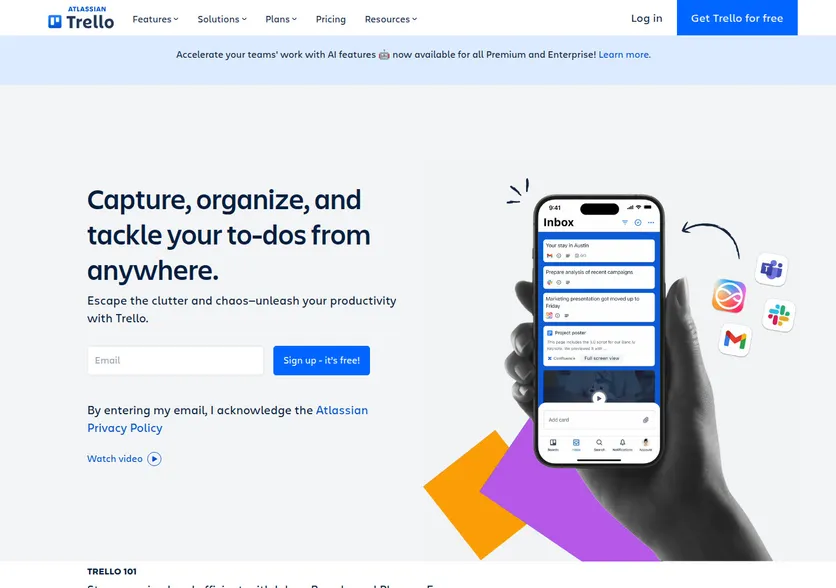
For a store team running launches, content and fulfilment, this Trello plan costs five dollars per user a month billed annually, and its kanban boards make the next step obvious to everyone. Unlimited boards, custom fields, advanced checklists and a thousand automation runs a month come with Standard, plus a generous free tier. It is the simplest way to get a whole team looking at the same board.
What we like
- Kanban boards anyone learns in minutes
- Butler automation and Power-Ups extend every board
- Free plan covers ten collaborators and unlimited cards
Watch out for
- Calendar and Timeline views need Premium
- Reporting and workload views are thin next to full project tools
How to try it
- Create a board and add lists for each stage of the work
- Add cards with owners, due dates and checklists
- Turn on Butler rules to move cards automatically
5. Smartsheet
Best for: Operations-led teams that already think in grids
Paid tool Starting price: $9/member/month · Nine dollars per member a month billed annually ($12 billed monthly) on Pro, which caps at ten members; Business is $19 a member a month billed annually ($24 monthly) with a three-member minimum; Enterprise is quoted
Free plan: No free plan; 30-day free trial
For a store team running launches, content and fulfilment, this Smartsheet plan costs nine dollars per member a month billed annually, and its spreadsheet grid turns plans into reports without extra tools. Sheets, forms, dashboards and automated alerts handle intake, approvals and reporting, with card, Gantt and calendar views on the same data. It suits operations-led teams that already think in rows and columns.

What we like
- Spreadsheet grid that finance and operations teams already understand
- Gantt, card and calendar views on the same data
- Automation, forms and dashboards without code
Watch out for
- Pro stops at ten members, so growth forces a jump to Business
- No free plan for new signups, only a thirty-day trial
How to try it
- Start from a project sheet template and add columns
- Switch to Gantt view and link task dependencies
- Set up automated alerts for due dates and approvals
6. Airtable
Best for: Teams whose projects are structured data with deadlines
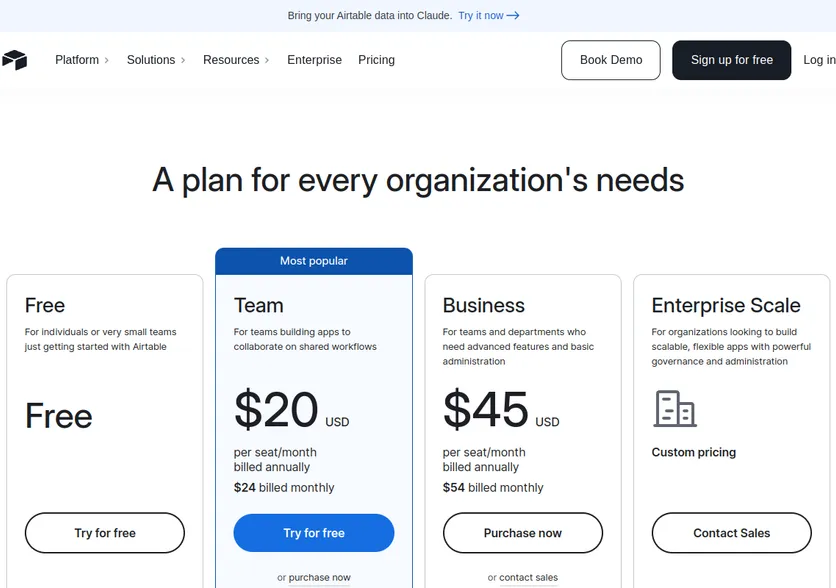
Paid tool Starting price: $20/seat/month · Twenty dollars per seat a month billed annually ($24 billed monthly) on Team; Business is $45 a seat a month billed annually ($54 monthly); Enterprise is quoted
Free plan: Free plan (up to 5 editor seats)
For a store team running launches, content and fulfilment, this Airtable plan costs twenty dollars per seat a month billed annually, and its linked tables turn project data into live views. Rich fields, attachments, linked records and Interface Designer turn a simple table into a project hub with custom views for every role. It fits teams whose projects are really structured data with deadlines attached.
What we like
- Spreadsheet tables with rich fields, attachments and links
- Interface Designer builds custom views for each role
- Automations and synced tables across bases
Watch out for
- Real project planning needs views and extensions configured first
- Costs climb fast once many editors need seats
How to try it
- Create a base from a project template
- Add tables for tasks, owners and milestones
- Build a Gantt or timeline view for the plan
7. Teamwork
Best for: Client-service teams that bill by the hour
Paid tool Starting price: $9.99/user/month · Nine dollars and ninety-nine cents per user a month billed annually on Basics, with a three-seat minimum; Accelerate is twenty-four dollars and ninety-nine cents a user a month billed annually with a five-seat minimum; Optimize and Enterprise are quoted; free plan covers up to five users. Monthly billing costs more — yearly billing saves twenty-nine percent. The older Deliver and Grow tiers are retired.
Free plan: Free plan (up to 5 users, 5 projects)
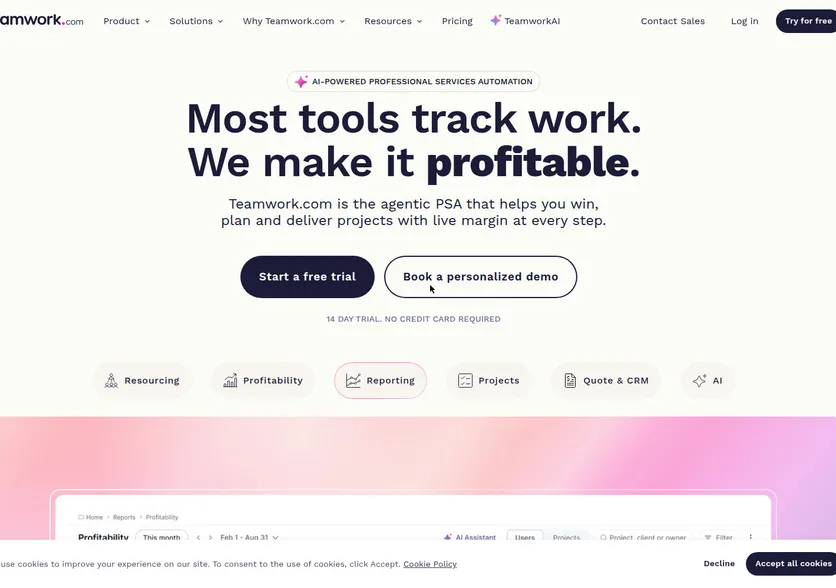
For a store team running launches, content and fulfilment, this Teamwork plan costs nine dollars and ninety-nine cents per user a month billed annually, and it ties time tracking and billing straight to each project. Gantt charts, milestones, project templates, time tracking and invoicing are built for teams that bill clients for the hours they log. It suits client-service teams that need hours and budgets beside the plan.
What we like
- Time tracking, billing and invoicing built for client work
- Gantt charts, milestones and project templates
- Client users see only their own projects
Watch out for
- The vendor pricing page showed conflicting figures in November 2026 reads
- Workload and portfolio tools need the Accelerate tier
How to try it
- Create a project from a template and add milestones
- Log time against tasks and track the budget
- Share a client view so customers see progress
8. Zoho Projects
Best for: Small teams that want Gantt charts for very little money
Paid tool Starting price: $4/user/month · Four dollars per user a month billed annually ($5 billed monthly) on Premium; Enterprise is $9 a user a month billed annually ($10 monthly); Projects Plus bundles more Zoho apps by quote
Free plan: Free plan (up to 3 users)
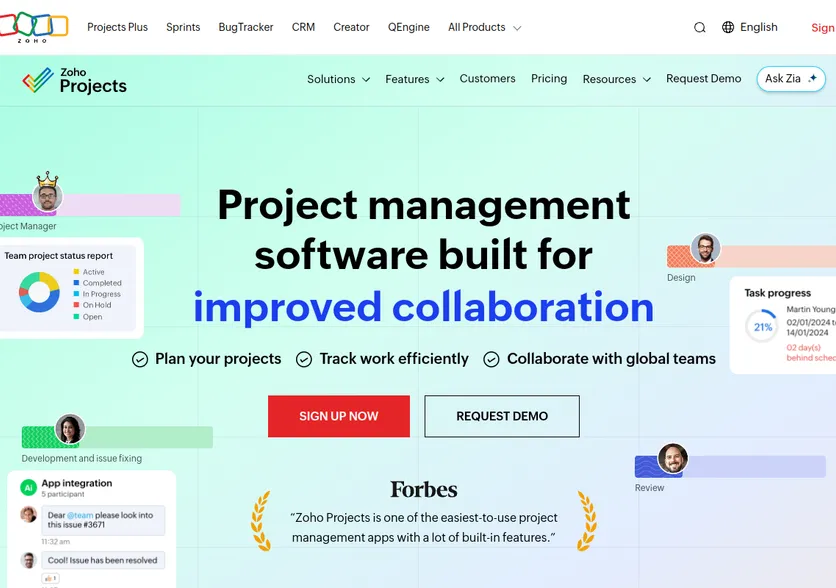
For a store team running launches, content and fulfilment, this Zoho Projects plan costs four dollars per user a month billed annually, and it covers Gantt charts and milestones for very little money. Task lists, milestones, Gantt charts, timesheets and blueprints cover the project lifecycle, with Zoho CRM and Books a click away. It is the cheapest serious option in this list for a small team.
What we like
- Gantt charts, milestones and time tracking at a low price
- Blueprints automate recurring project steps
- Deep links to Zoho CRM, Books and Desk
Watch out for
- The interface feels dated next to newer rivals
- Advanced reporting and resource tools sit on Enterprise
How to try it
- Create a project and add milestones and task lists
- Assign tasks and set dependencies on the Gantt chart
- Track time and compare it with the project budget
Prices above were checked on each vendor’s own website on Nov 28, 2026 and can change — the vendor’s page is the final word. Vendor links are editorial: nobody paid to be listed or ranked here. Vendors who want a featured listing can see how it works on our Get listed page.
How to keep store, marketing and fulfilment on one plan
Give each workstream its own project, but link them through one shared calendar, so a promotion date never lands before the stock is ready. Run a weekly planning meeting from the board, not from a spreadsheet, and let the board show what slipped instead of asking each person in turn. Keep a standing template for the recurring jobs, such as the weekly promotion and the monthly restock, so the team stops rebuilding the same list. Automate the handoffs between marketing and fulfilment, so a campaign marked ready creates the packing tasks automatically. Track the numbers the store cares about, such as launch dates hit and orders shipped on time, on a dashboard the whole team can see. The goal is one plan the whole team trusts, not three plans that disagree.
Before you buy
- Check that the tool handles recurring work, since store tasks repeat every week
- Confirm the calendar view shows promotions, launches and fulfilment together
- Ask whether the free plan covers the whole team or only a few seats
- Make sure automations can move work between marketing and fulfilment
- Test the tool on a real promotion cycle before committing to a year
Official websites
Official websites of the products reviewed above. Features and prices were checked against these sites when this guide was written, and they can change, so confirm on the vendor site before you buy.
Frequently asked questions
What is project management software for ecommerce teams?
It is software that plans the work behind an online store, covering product listings, marketing campaigns, content calendars and order fulfilment in one place. The best tools give each workstream its own project while sharing one calendar, so a promotion never launches before the stock is ready. They also automate handoffs between teams, which keeps a busy store moving without constant check-in meetings.
How much does Asana cost for an ecommerce team?
Asana Starter costs ten dollars and ninety-nine cents per user a month billed annually, or thirteen dollars and forty-nine cents billed monthly. That plan adds timeline and Gantt views, dashboards, forms, custom fields and unlimited automations, plus free guests for agencies and freelancers. A store team usually needs Starter at minimum, because the free Personal plan caps at two users.
What is the cheapest tool for an ecommerce team?
Zoho Projects is the cheapest serious option in this list, at four dollars per user a month billed annually on Premium. Trello Standard costs five dollars per user a month billed annually, and ClickUp Core costs nine dollars. All three offer free plans, so a small store team can test the workflow before paying. The cheapest seat is not always the cheapest tool, though, since a missing calendar view can cost more in slipped launches.
Can these tools track inventory and orders too?
Not directly. These are project tools, not inventory systems, so stock levels and order tracking still belong in the store platform or an inventory app. What they do well is plan the work around inventory: restock tasks, listing updates and promotion dates, with links out to the store system. Airtable and Smartsheet come closest to tracking stock, since their tables can hold inventory data beside the project plan.
Which tool is best for an ecommerce team?
Asana is the best overall pick for an ecommerce team, because its timelines and portfolios keep store, marketing and fulfilment work visible together. Trello is the best pick for a small team that wants the simplest board, at five dollars per user a month. ClickUp is the best value when the team wants docs, goals and time tracking in the same app for nine dollars per user a month.
Compare the eight tools above, then start a free trial on the one that matches how the store team works before paying for a full year.
Browse Business Tools tools