On this page
Healthcare projects cross departments fast — a clinic rollout touches nursing, admin, IT and facilities in the same week. The eight tools below run from four dollars a user a month to about forty-five dollars a month flat, and every price was checked on the vendor site on November 26, 2026. Most include free plans or trials, so compare how each one handles handoffs, approvals and workload before you commit. Monday is our first pick — the clearest boards for a whole care team.
How we researched this
We started with the project tools healthcare teams actually buy, then read each price on the vendor pricing page on November 26, 2026 and noted the free plan or trial each one carries. We judged them for a healthcare team that needs clear boards, timelines, workload views and approvals across departments, and we kept only tools with a published price.
Compare the tools
| Name | Best for | Starting price | Free plan | |
|---|---|---|---|---|
 Monday | Healthcare teams who want visual boards and dashboards that every department can read | $9/user/month | Free plan for up to 2 seats | Visit |
 Asana | Healthcare teams who want clean timelines and portfolios across several projects | $10.99/user/month | Free Personal plan for up to 2 users | Visit |
 Smartsheet | Healthcare teams who plan in sheets and need grid, Gantt and card views of the same data | $9/user/month | No free plan; 30-day free trial | Visit |
 Wrike | Healthcare teams who need workload views, approvals and strong reporting | $9.80/user/month | Free plan for up to 5 users | Visit |
 ClickUp | Healthcare teams who want tasks, docs and automations on one low-cost plan | $9/user/month | Free Forever plan | Visit |
 Teamwork | Healthcare teams who bill time and need projects, capacity and invoicing together | $9.99/user/month | Free plan for up to 5 projects and 5 users | Visit |
 ProofHub | Healthcare teams who want one flat monthly price with unlimited users | $45/month | No free plan; free trial available | Visit |
 Zoho Projects | Healthcare teams who want the cheapest full project tool with time tracking and budgets | $4/user/month | Free plan for up to 5 users | Visit |
The project management software for healthcare, compared
1. Monday
Best for: Healthcare teams who want visual boards and dashboards that every department can read
Paid tool Starting price: $9/user/month · Basic plan, nine dollars a user a month billed annually or twelve dollars billed monthly; Standard twelve dollars and Pro nineteen dollars a month on annual billing
Free plan: Free plan for up to 2 seats
For a clinic or hospital team, Monday turns referrals, onboarding and facility projects into boards that nurses, admins and managers all read the same way. This Monday Basic plan starts at nine dollars a user a month and covers unlimited items, docs and templates. Standard adds the timeline and Gantt views that help a care team plan a rollout across several departments.

What we like
- Boards and dashboards anyone can read at a glance
- Strong timeline and Gantt views from Standard up
- Automations cut the manual follow-up work
Watch out for
- Paid plans start at three seats, so a small clinic pays for three
- Basic has no timeline view, so most teams need Standard
How to try it
- Open the Monday pricing page and start the fourteen-day Pro trial
- Build a board for one care pathway with owners and due dates
- Invite the department leads and set up one automation for status changes
2. Asana
Best for: Healthcare teams who want clean timelines and portfolios across several projects
Paid tool Starting price: $10.99/user/month · Starter plan, ten dollars ninety-nine cents a user a month billed annually or thirteen dollars forty-nine cents billed monthly; Advanced twenty-four dollars ninety-nine cents a month
Free plan: Free Personal plan for up to 2 users
Asana gives a healthcare team one place to track clinic rollouts, training and facility work without losing the thread. This Asana Starter plan costs ten dollars ninety-nine cents a user a month and adds timeline views, dashboards and unlimited automations. A manager running several sites can watch every project in a portfolio instead of chasing email updates.

What we like
- Timeline and Gantt views included from Starter
- Portfolios and goals for multi-site teams
- Unlimited free guests for outside partners
Watch out for
- Time tracking needs a paid add-on
- Advanced jumps to about twenty-five dollars a user a month
How to try it
- Open the Asana pricing page and start with the free Personal plan
- Create a project for one clinic rollout and switch on the timeline view
- Add a portfolio to watch every active project in one place
3. Smartsheet
Best for: Healthcare teams who plan in sheets and need grid, Gantt and card views of the same data
Paid tool Starting price: $9/user/month · Pro plan, nine dollars a member a month billed annually or twelve dollars billed monthly; Business nineteen dollars a member a month on annual billing
Free plan: No free plan; 30-day free trial
Smartsheet fits healthcare operations that already run on spreadsheets, because the same plan shows as a grid, a Gantt chart or a card board. This Smartsheet Pro plan costs nine dollars a member a month and covers up to ten members with unlimited contributors. A team tracking equipment, staffing and compliance checklists can keep its sheet habits and still get real project tracking.

What we like
- Grid, Gantt, card and calendar views of one plan
- Unlimited free contributors on every plan
- Strong formulas and reports for data-heavy teams
Watch out for
- No free plan, only a thirty-day trial
- The sheet interface feels plain next to visual boards
How to try it
- Open the Smartsheet pricing page and start the thirty-day trial
- Import a spreadsheet of open tasks and switch it to a Gantt view
- Share the sheet with contributors who need no paid seat
4. Wrike
Best for: Healthcare teams who need workload views, approvals and strong reporting
Paid tool Starting price: $9.80/user/month · Team plan, nine dollars eighty cents a user a month billed annually, usually shown as ten dollars; Business twenty-four dollars eighty cents a user a month
Free plan: Free plan for up to 5 users
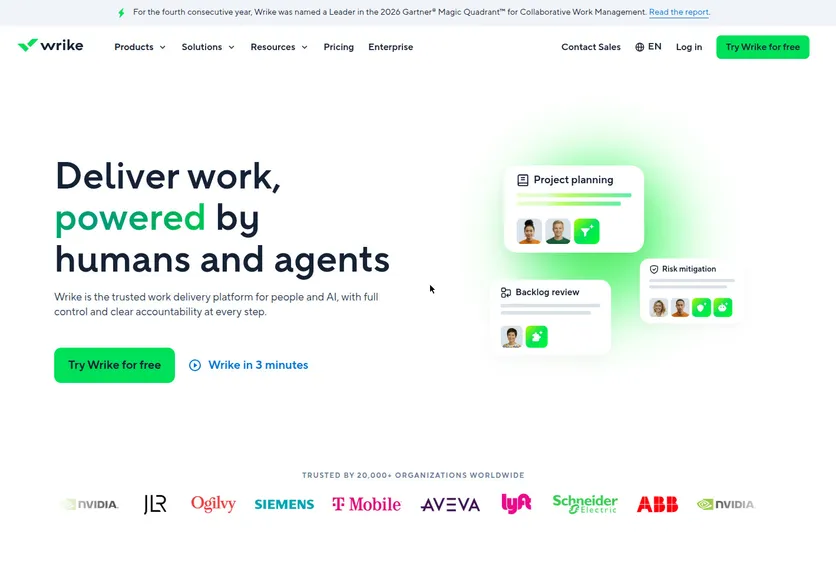
Wrike helps a healthcare team balance workloads across shifts and departments while approvals keep every sign-off on record. This Wrike Team plan costs nine dollars eighty cents a user a month and adds Gantt charts, dashboards and custom workflows. A manager who juggles intake requests and delivery will like the way work arrives as a form and leaves as a finished task.
What we like
- Workload views show who is overloaded before it slips
- Request forms turn intake into tracked work
- Approvals and proofing keep sign-offs on record
Watch out for
- Business costs about twenty-five dollars a user a month
- Seats are sold in groups, so small teams overbuy
How to try it
- Open the Wrike pricing page and start the fourteen-day trial
- Build a request form for incoming facility or IT work
- Set up a workload view and check capacity before the next rollout
5. ClickUp
Best for: Healthcare teams who want tasks, docs and automations on one low-cost plan
Paid tool Starting price: $9/user/month · Core plan, $9 a user a month billed annually ($12 billed monthly); Business $17 a user a month billed annually
Free plan: Free Forever plan
ClickUp brings tasks, docs, goals and automations into one workspace, so a healthcare team can stop stitching together three tools. This ClickUp Core plan lists at nine dollars a user a month billed annually billed annually, with unlimited Gantt charts and storage included. A small clinic can run onboarding, training and facility projects from the same login for less than most rivals charge.

What we like
- Tasks, docs and goals in one workspace
- Unlimited Gantt charts from the Core plan
- Generous free plan for trying real work
Watch out for
- The feature list is so wide it can overwhelm new teams
- The page shows a nine-dollar promotional rate, not the twelve-dollar list price
How to try it
- Open the ClickUp pricing page and start the Free Forever plan
- Create a space for one department with a board, a doc and a goal
- Turn on automations for moving tasks between stages
6. Teamwork
Best for: Healthcare teams who bill time and need projects, capacity and invoicing together
Paid tool Starting price: $9.99/user/month · Basics plan, nine dollars ninety-nine cents a user a month billed annually; Accelerate twenty-four dollars ninety-nine cents a user a month
Free plan: Free plan for up to 5 projects and 5 users
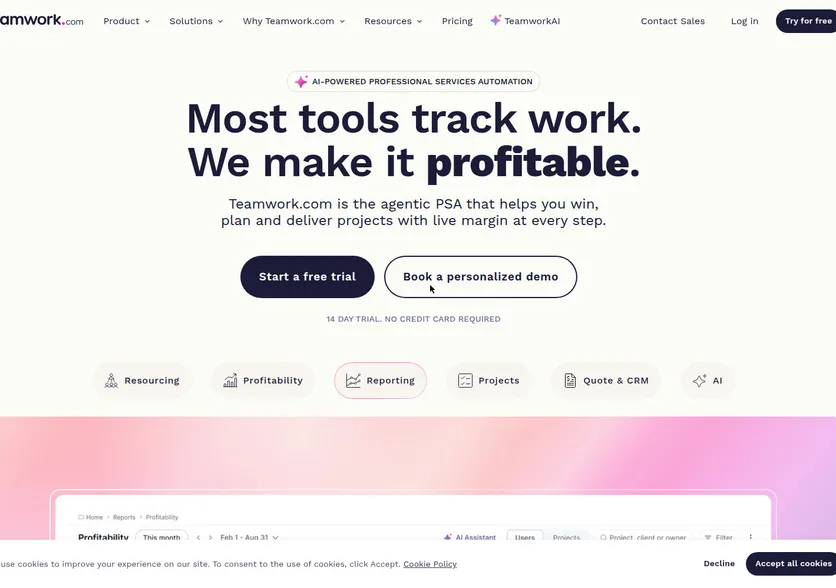
Teamwork suits healthcare teams that track billable hours and capacity, because projects, time and invoices share one login. This Teamwork Basics plan costs nine dollars ninety-nine cents a user a month and covers up to three hundred projects with time tracking included. A team that runs client-funded programs can see project health and billable time without a second app.
What we like
- Time tracking and invoicing built into project work
- Capacity views show who is free before you commit
- Clean client and project organization
Watch out for
- Higher plans climb fast once you add capacity planning
- The interface takes a day to learn well
How to try it
- Open the Teamwork pricing page and start the free plan
- Create a project for one program and add your team
- Log time for a week and check the project health view
7. ProofHub
Best for: Healthcare teams who want one flat monthly price with unlimited users
Paid tool Starting price: $45/month · Essential plan, forty-five dollars a month flat billed annually with unlimited users; Ultimate Control lists at eighty-nine dollars a month for the first three months and then one hundred thirty-five dollars
Free plan: No free plan; free trial available
ProofHub charges one flat monthly fee no matter how many staff join, which suits a clinic that adds people without wanting a bigger bill. This ProofHub Essential plan costs forty-five dollars a month flat billed annually and covers forty projects with unlimited users. A healthcare team can invite nurses, admins and outside partners without counting seats.
What we like
- Flat price with unlimited users at every size
- Projects, chat, files and time tracking in one place
- No per-seat math when the team grows
Watch out for
- No free plan, only a trial to test with
- The interface feels busier than simpler boards
How to try it
- Open the ProofHub pricing page and start the free trial
- Create a project for one department and invite the whole team
- Set up a Gantt view and a discussion thread for the rollout
8. Zoho Projects
Best for: Healthcare teams who want the cheapest full project tool with time tracking and budgets
Paid tool Starting price: $4/user/month · Premium plan, four dollars a user a month billed annually or five dollars billed monthly; Enterprise nine dollars and Ultimate fourteen dollars a user a month
Free plan: Free plan for up to 5 users
Zoho Projects is the budget pick that still behaves like a full project system, with Gantt charts, timesheets and budgets included. This Zoho Projects Premium plan costs four dollars a user a month and covers unlimited projects with time logs and timesheets. A clinic watching every dollar can run real projects, track hours and report cost against progress for less than any rival here.
What we like
- Cheapest starting price in this comparison
- Gantt charts, timesheets and budgets included
- Strong value against per-user priced rivals
Watch out for
- The interface takes time to learn
- Single sign-on needs the Enterprise plan
How to try it
- Open the Zoho Projects pricing page and start the fifteen-day trial
- Create a project and switch on the Gantt chart
- Log time for a week and check the budget report
Prices above were checked on each vendor’s own website on Nov 26, 2026 and can change — the vendor’s page is the final word. Vendor links are editorial: nobody paid to be listed or ranked here. Vendors who want a featured listing can see how it works on our Get listed page.
What project management software costs for healthcare teams in 2026
Healthcare teams usually pay per seat, so the headline rate is only half the story — a ten-person team on the cheapest paid plans here spends between forty and about one hundred twenty dollars a month. The one flat-rate exception is ProofHub at forty-five dollars a month no matter how many staff join, which suits a clinic that keeps adding people. The spread in this list runs from four dollars a user a month to forty-five dollars a month flat, and the free plans from Monday, Asana, ClickUp and Teamwork cover small teams well enough to test a real rollout before spending anything.
Start with the free plan or trial on two tools and run one real care pathway through each, from intake to go-live. Compare how clear the board is during a handoff, how fast approvals move, and whether workload views show who is overloaded. Pick the tool your departments actually open every day, because the best project tool is the one the whole team uses.
Before you buy
- Count the seats first, because per-user pricing turns a clinic team into a four-figure yearly bill.
- Check the free plan limits, because Monday caps free at two seats and Asana caps it at two users.
- Ask your IT team about compliance before you buy, because patient data rules vary by clinic.
- Test the tool on one real care pathway, because a demo board hides how handoffs behave.
- Compare annual and monthly billing, because most tools here cut the price by a fifth on annual plans.
Official websites
Official websites of the products reviewed above. Features and prices were checked against these sites when this guide was written, and they can change, so confirm on the vendor site before you buy.
Frequently asked questions
Which project management software is best for healthcare in 2026?
Monday, at nine dollars a user a month on the Basic plan, is the safest default because its boards are easy for every department to read. Smartsheet wins for sheet-based teams at nine dollars a member a month, with grid, Gantt and card views of the same plan. Asana is the strongest choice for multi-site teams, with portfolios that roll every clinic project into one view.
How much does project management software cost for a healthcare team?
Most tools in this list cost between four and twelve dollars a user a month for a small team, with annual billing cutting the monthly rate. A ten-person team on the cheapest plans spends roughly forty to one hundred twenty dollars a month, while ProofHub charges a flat forty-five dollars a month no matter how many users join. Expect the bill to rise with headcount on per-seat plans.
Can I store patient information in these project tools?
No, every tool here is built for general project work, not for storing patient records, so keep clinical data in your approved systems. Use the project tool for rollouts, training, staffing and facility work, and ask your IT team about compliance before you connect anything to patient data. The best setup keeps the project board and the medical record strictly separate.
Is there a free project management tool for healthcare teams?
Yes, Monday covers two seats free, Asana offers a free Personal plan for two users, and ClickUp runs a Free Forever plan with unlimited tasks. Teamwork is free for up to five projects and five users, and Zoho Projects is free for up to five users. A free plan is enough to run one rollout end to end, then upgrade when the team outgrows the limits.
What should a healthcare team look for in project management software?
Look for clear boards every department can read, plus timelines, workload views and approvals for sign-offs. Check the per-user cost if you plan to add staff, and test the tool on one real care pathway before you buy. The best tool is the one your nurses, admins and managers actually open, not the one with the longest feature list.
Need everyday business help too? Try Toolsvine's free business tools right in your browser.
Browse Business Tools tools