On this page
A legal team juggles matters, contracts, discovery and compliance, all with dates that cannot move. The eight tools below cover that job for legal teams of every size, from a four-dollar seat for a small in-house team to a full planning system for a team running dozens of matters. Monday.com leads because its visual boards and automations make matter work visible at a glance for nine dollars per seat a month, and the rest are ranked on how well they handle deadlines, documents and review work for the price.
How we researched this
We checked every price on the vendor pricing page on November 28, 2026, and only included tools with a published US dollar list price. Quote-only legal platforms and eDiscovery systems that publish no prices, including Relativity, Everlaw and DISCO, are not in this list. Prices change, so confirm the current figure on the vendor site before you buy.
Compare the tools
| Name | Best for | Starting price | Free plan | |
|---|---|---|---|---|
 Monday.com | Teams that want visual boards and no-code automations | $9/seat/month | Free plan (up to 2 seats) | Visit |
 Wrike | Teams that need Gantt charts, proofing and workload views | $9.80/user/month | Free plan (up to 5 users) | Visit |
 Asana | Teams that need timelines, goals and portfolios in one place | $10.99/user/month | Free plan (up to 2 users) | Visit |
 ClickUp | Teams that want every view and tool in one workspace | $9/user/month | Free plan | Visit |
 Smartsheet | Teams that think in spreadsheets and need real project controls | $9/member/month | No free plan; 30-day free trial | Visit |
 Airtable | Teams that track structured data behind their projects | $20/user/month | Free plan | Visit |
 Notion | Teams that want docs, wikis and projects in one workspace | $10/user/month | Free plan | Visit |
 Zoho Projects | Budget-conscious teams that want the core done well | $4/user/month | Free plan (up to 3 users) | Visit |
The project management software for legal teams, compared
1. Monday.com
Best for: Teams that want visual boards and no-code automations
Paid tool Starting price: $9/seat/month · Nine dollars per seat a month billed annually on Basic ($12 billed monthly); Standard is $12 a seat a month billed annually ($14 monthly); Pro is $19 ($24 monthly); paid plans start at three seats
Free plan: Free plan (up to 2 seats)
Legal teams that run matters, contracts and compliance work across several groups get one board per matter in this Monday.com plan, which costs nine dollars per seat a month billed annually, with automations that chase deadlines. Colourful boards and timeline views make the whole workload visible at a glance, and automations handle status changes and reminders without manual chasing. Dashboards roll every project into one view for managers who need the big picture.

What we like
- Colourful boards make the whole workload visible at a glance
- Automations handle status changes and reminders without chasing
- Dashboards roll every project into one view for managers
Watch out for
- Basic has no timeline view and almost no automations
- Paid plans sell in seat blocks with a three-seat minimum
How to try it
- Build a board with groups for each project phase and columns for status and owner
- Add an automation that moves items and notifies owners when dates slip
- Create a dashboard that shows progress across all boards at once
2. Wrike
Best for: Teams that need Gantt charts, proofing and workload views
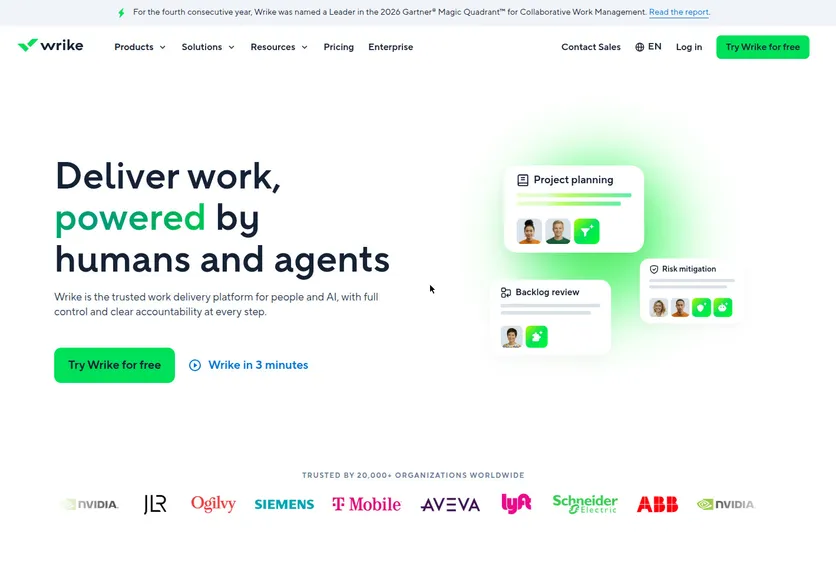
Paid tool Starting price: $9.80/user/month · Nine dollars and eighty cents per user a month billed annually on Team for two to twenty-five users; Business is $24.80 a user a month billed annually; Enterprise and Pinnacle are quoted; monthly billing costs about twenty percent more
Free plan: Free plan (up to 5 users)
When a legal team must land a filing, a discovery deadline and a contract review in the same week, this Wrike plan costs nine dollars and eighty cents per user a month billed annually and lays the whole chain on one Gantt chart. Gantt charts, workload views and proofing tools cover planning and review in a single workspace. Custom workflows and request forms route new work to the right people without a meeting.
What we like
- Gantt charts, workload views and proofing in one workspace
- Custom workflows and request forms route new work cleanly
- Dashboards give managers a live view of every project
Watch out for
- Team caps at twenty-five users, then the price more than doubles
- Resource management sits on the dearer Business plan
How to try it
- Build a project from a template and lay out tasks on the Gantt chart
- Create a request form so new work arrives with all the details
- Check the workload view each week and rebalance overloaded people
3. Asana
Best for: Teams that need timelines, goals and portfolios in one place
Paid tool Starting price: $10.99/user/month · Ten dollars and ninety-nine cents per user a month billed annually ($13.49 billed monthly); Advanced is $24.99 a user a month billed annually ($30.49 monthly); Enterprise is quoted
Free plan: Free plan (up to 2 users)
A legal team coordinating discovery, filings and client work toward fixed court dates gets every deadline on one timeline in this Asana plan, which costs ten dollars and ninety-nine cents per user a month billed annually. Timeline and Gantt views keep every workstream visible, while custom fields and forms capture the details each project needs. Automations move routine updates off the team so people spend their time on the work itself.

What we like
- Timeline and Gantt views keep every workstream visible
- Unlimited automations and forms on the Starter plan
- Goals and portfolios connect daily work to strategy
Watch out for
- The free Personal plan now covers only two users
- Portfolios and workload need the dearer Advanced plan
How to try it
- Create a project from a template and add every task with an owner and due date
- Switch to Timeline view and link dependencies between tasks
- Set up a dashboard that reports progress to stakeholders each week
4. ClickUp
Best for: Teams that want every view and tool in one workspace
Paid tool Starting price: $9/user/month · Nine dollars per user a month billed annually on Core ($12 billed monthly); Business is $17 a user a month billed annually; Enterprise is quoted; the old Unlimited tier name was retired in the October to November 2026 ladder rebuild
Free plan: Free plan
A legal team that mixes matters, documents and review work in separate tools can merge them in this ClickUp plan, which costs nine dollars per user a month billed annually, with docs and goals beside the tasks. Views span lists, boards, calendars and Gantt charts, so each person works in the layout that suits them best. Docs, goals and time tracking sit inside the same workspace, which keeps the tool count down.

What we like
- List, board, calendar and Gantt views in the same workspace
- Docs, goals and time tracking included without extra tools
- Deep customisation suits almost any workflow
Watch out for
- The breadth of features takes real time to set up well
- Some teams find the interface busy compared with simpler boards
How to try it
- Set up a Space for each project and pick the view that suits the work
- Add custom fields for the details the team tracks every week
- Turn on time tracking and goals so progress reports itself
5. Smartsheet
Best for: Teams that think in spreadsheets and need real project controls
Paid tool Starting price: $9/member/month · Nine dollars per member a month billed annually on Pro ($12 billed monthly); Business is $19 a member a month billed annually ($24 monthly); Enterprise is quoted; Pro caps at ten members and the free plan is closed to new sign-ups
Free plan: No free plan; 30-day free trial
Legal teams that already track matters and deadlines in spreadsheets can keep the grid and add real controls in this Smartsheet plan, which costs nine dollars per member a month billed annually, with reports for every matter. Grids, Gantt charts and dashboards feel familiar to anyone who lives in spreadsheets, with automations and approvals layered on top. Reports pull live data from many sheets, so status updates write themselves.

What we like
- Grids, Gantt charts and dashboards feel familiar to spreadsheet users
- Reports pull live data from many sheets at once
- Automations and approvals run on top of the familiar grid
Watch out for
- Pro caps at ten members, so growing teams must move to Business
- Only paid members can edit, which can surprise new buyers
How to try it
- Build a sheet for the project with columns for owner, status and due date
- Add a Gantt view and set dependencies between key milestones
- Create a report that pulls live status from every project sheet
6. Airtable
Best for: Teams that track structured data behind their projects
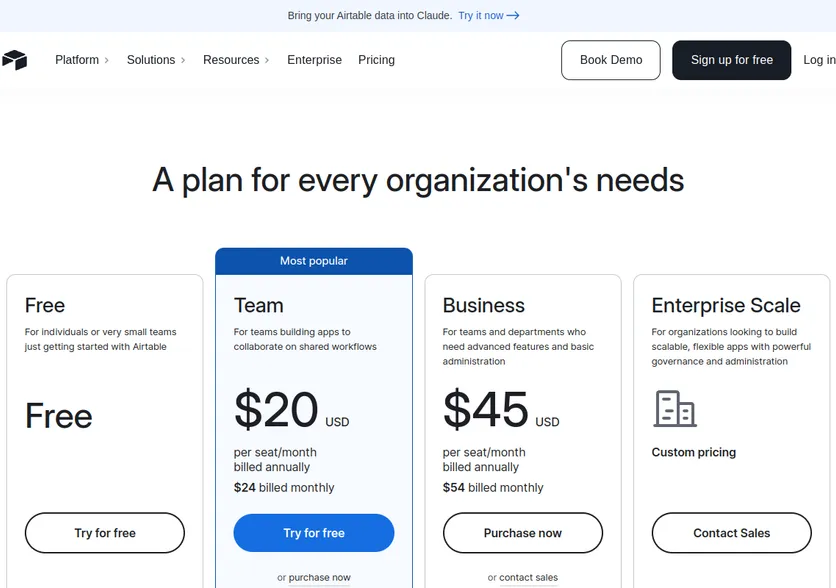
Paid tool Starting price: $20/user/month · Twenty dollars per user a month billed annually on Team ($24 billed monthly); Business is $45 a user a month billed annually; Enterprise Scale is quoted; the free plan covers up to five users
Free plan: Free plan
For a legal team that tracks matters, contracts and deadlines as structured data, this Airtable plan costs twenty dollars per user a month billed annually and turns those records into calendars and Kanban boards. Grid, calendar, Kanban and gallery views turn the same records into whatever the team needs to see. Automations and interfaces connect the data to the people who use it, without a separate database tool.
What we like
- Grid, calendar, Kanban and gallery views of the same records
- Automations connect the data to the people who use it
- Interfaces give each role a clean view without extra tools
Watch out for
- The entry paid tier is dearer than most rivals here
- Heavy relational set-ups need someone who enjoys databases
How to try it
- Build a base with one table per workstream and link the records
- Add a Kanban view for daily work and a calendar view for deadlines
- Create an interface that shows stakeholders only what they need
7. Notion
Best for: Teams that want docs, wikis and projects in one workspace
Paid tool Starting price: $10/user/month · Ten dollars per user a month billed annually on Plus ($12 billed monthly); Business is $20 a user a month billed annually ($24 monthly) and includes the full Notion AI suite; Enterprise is quoted; the standalone AI add-on was withdrawn in May 2025
Free plan: Free plan
A legal team that keeps matter notes, templates and playbooks beside the daily work gets all of it in this Notion plan, which costs ten dollars per user a month billed annually, with pages and databases in one workspace. Pages, databases and wikis combine notes and project tracking in one flexible workspace. Templates and linked databases let a team shape the tool around its own process instead of the other way round.

What we like
- Pages, databases and wikis combine notes and tracking in one place
- Templates and linked databases shape the tool around the team
- Flexible views turn the same data into boards, calendars or tables
Watch out for
- Full Notion AI needs the Business plan at double the price
- Freedom to build anything means set-up takes real thought
How to try it
- Create a database for projects with properties for owner, status and deadline
- Build a board view for daily work and a calendar view for deadlines
- Link a wiki page to each project so notes stay beside the tasks
8. Zoho Projects
Best for: Budget-conscious teams that want the core done well
Paid tool Starting price: $4/user/month · Four dollars per user a month billed annually on Premium ($5 billed monthly); Enterprise is $9 a user a month billed annually ($10 monthly); Projects Plus is quoted
Free plan: Free plan (up to 3 users)
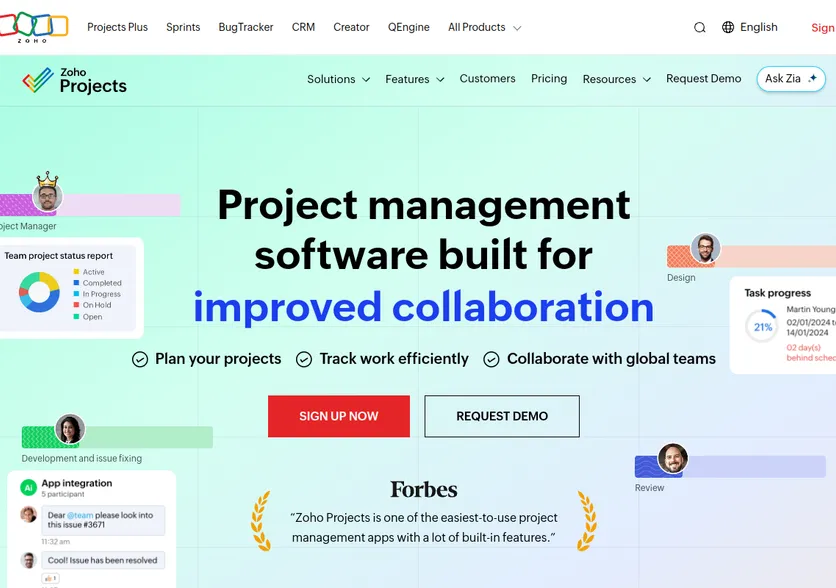
Legal teams on a tight budget get the core of matter tracking in this Zoho Projects plan, which costs four dollars per user a month billed annually, with Gantt charts for deadlines and timesheets for billable hours. Gantt charts, Kanban boards and timesheets cover the core of project work at a price most small teams can afford. The Zoho integrations connect projects to CRM, mail and finance when the wider suite is in use.
What we like
- Gantt charts, Kanban boards and timesheets at a low price
- Zoho integrations connect projects to CRM, mail and finance
- The free plan lets a tiny team start without paying
Watch out for
- The free plan covers only three users and two projects
- Some advanced features sit on the Enterprise tier
How to try it
- Create a project and add milestones with owners and due dates
- Switch to the Gantt view to check dependencies and deadlines
- Log time on tasks and export a report for the client or manager
Prices above were checked on each vendor’s own website on Nov 28, 2026 and can change — the vendor’s page is the final word. Vendor links are editorial: nobody paid to be listed or ranked here. Vendors who want a featured listing can see how it works on our Get listed page.
How to keep a legal team on top of every matter deadline
Start with one board per matter, not one board for the whole team, because each matter has its own dates, documents and people. Put every filing, discovery deadline and contract review on the timeline with its owner, and automate reminders that fire a week ahead, since a deadline found the day before is already late. Keep documents beside the tasks they belong to, so nobody opens the wrong version at the hearing. Review the matter board every week with the team, and keep one owner for each deadline. Keep a template for each matter type, so a new matter starts from a proven checklist instead of a blank board.
Before you buy
- Confirm the tool shows every matter deadline on one board or calendar
- Check whether documents can live beside the tasks they belong to
- Make sure reminders fire a week ahead, not on the day itself
- Ask if contracts and compliance work can be tracked separately from matters
- Test the tool on a real matter before paying, including a discovery deadline
Official websites
Official websites of the products reviewed above. Features and prices were checked against these sites when this guide was written, and they can change, so confirm on the vendor site before you buy.
Frequently asked questions
What is project management software for legal teams?
It is software that organises the matters, contracts, discovery work and compliance tasks of a legal team in one place, with every deadline tracked from intake to close. Good tools show all deadlines on one board, keep documents beside the tasks they belong to, and send reminders a week ahead rather than on the day.
How much does Monday.com cost for legal teams?
Monday.com Basic costs nine dollars per seat a month billed annually, or twelve dollars billed monthly. Standard is twelve dollars per seat a month billed annually and adds timeline views and automations. Pro is nineteen dollars per seat a month billed annually and adds time tracking and private boards.
Can I run a legal team for free?
Yes, with Monday.com, which offers a free plan for up to two seats, and Zoho Projects, which offers a free plan for up to three users. Those free tiers suit a tiny legal team, but a team that needs timeline views or automations will need a paid plan, and the cheapest paid seat here is Zoho Projects at four dollars a user a month.
Which tool is best for a small legal team?
Zoho Projects is the cheapest capable option for a small legal team, at four dollars a user a month billed annually, with Gantt charts and timesheets included. Monday.com is the better pick if visual boards matter, since its boards and automations make matter work visible at a glance.
What should legal teams look for in project management software?
Look for matter boards, deadline reminders, document tracking and a way to separate contracts from matters first, because those are what legal work actually runs on. Then check the per-seat price against the headcount, since every lawyer and paralegal needs a seat, and test it on a real matter.
Compare the eight tools above, then start with a free trial or the free plan on the tool that matches how the legal team already tracks matters and deadlines before paying for a full year.
Browse Business Tools tools