On this page
Real estate agents juggle listings, showings, inspections and client follow-ups at once, so the right tool keeps every deal moving without adding admin. The seven tools below range from simple visual boards to structured databases for property and client records. Asana leads because it organizes listings, client tasks and shared workflows in one place for ten dollars and ninety-nine cents per user a month, and the rest are ranked on how they fit an agent or a brokerage.
How we researched this
We checked every price on the vendor pricing page on November 28, 2026, and only included tools with a published US dollar list price. Wrike publishes Team pricing and is included. Prices change, so confirm the current figure on the vendor site before you buy.
Compare the tools
| Name | Best for | Starting price | Free plan | |
|---|---|---|---|---|
 Asana | Agents organizing listings, client follow-ups and shared workflows | $10.99/user/month | Free plan (Personal, up to 2 users) | Visit |
 Trello | Agents who want visual boards for transaction stages | $5/user/month | Free plan (up to 10 collaborators) | Visit |
| monday.com | Brokerages wanting one AI-assisted workspace for operations | $9/seat/month | Free plan (up to 2 seats) | Visit |
 ClickUp | Agents consolidating tasks, docs and deal goals in one app | $9/user/month | Free plan | Visit |
 Smartsheet | Larger brokerages needing governed transaction tracking | $9/member/month | No free plan; 30-day free trial | Visit |
 Wrike | Real estate teams needing enterprise delivery and control | $9.80/user/month | Free plan (up to 5 users) | Visit |
 Airtable | Agents structuring property and client data as tables | $20/user/month | Free plan | Visit |
The project management software for real estate agents, compared
1. Asana
Best for: Agents organizing listings, client follow-ups and shared workflows
Paid tool Starting price: $10.99/user/month · Ten dollars and ninety-nine cents per user a month billed annually ($13.49 billed monthly); Advanced is $24.99 a user a month billed annually ($30.49 monthly); Enterprise is quoted
Free plan: Free plan (Personal, up to 2 users)
An agent handling several active deals at once needs one place where listing prep, showings and follow-ups stay assigned and tracked, and this Asana plan costs ten dollars and ninety-nine cents per user a month billed annually on Starter. Tasks, timelines and calendars sit in one view that most people learn quickly, and automation rules move repeat work without manual chasing. Templates for listing prep and client onboarding shorten setup, so a busy agent spends less time building workflows and more time with clients. It fits agents who want structure across several deals and teams that share administrative work.

What we like
- Timeline and Gantt views keep deadlines visible
- Automation rules move routine work without manual chasing
- Unlimited free guests on paid plans for outside collaborators
Watch out for
- Portfolios and workload views need the Advanced tier
- Per-user pricing climbs quickly as the team grows
How to try it
- Create a project from a template that matches the work
- Assign every task an owner and a due date
- Turn on a rule that moves completed work automatically
2. Trello
Best for: Agents who want visual boards for transaction stages
Paid tool Starting price: $5/user/month · Five dollars per user a month billed annually on Standard ($6 billed monthly); Premium is $10 a user a month billed annually ($12.50 monthly); Enterprise is $17.50 a user a month billed annually
Free plan: Free plan (up to 10 collaborators)
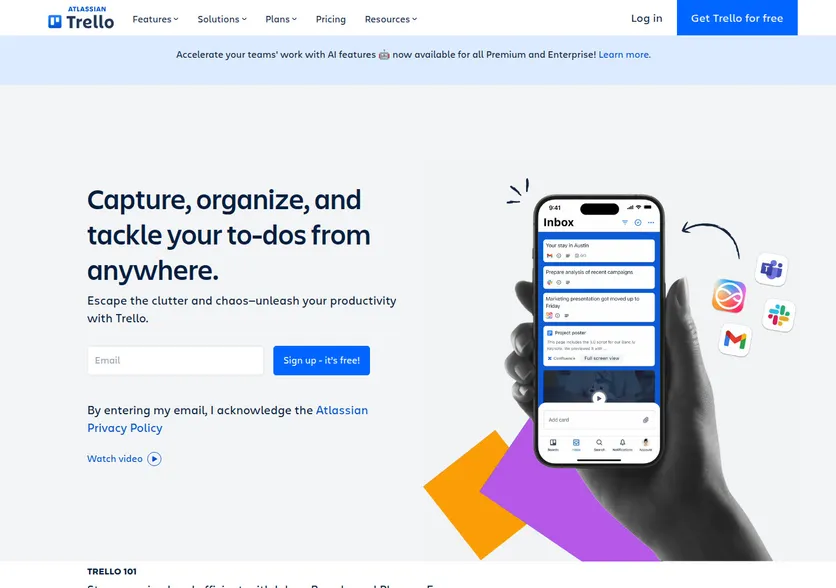
An agent who wants to see each deal move through listing, showing, offer and closing at a glance will find the fastest start here, since this Trello plan costs five dollars per user a month billed annually on Standard. Boards, lists and cards map neatly to transaction stages, and a new hire can move a card without training. Power-Ups add calendars and automation when the board needs to grow, so the simple start does not become a dead end. It suits individual agents and small teams that want a quick, visual system without a long setup.
What we like
- Boards, lists and cards take minutes to learn
- Butler automation handles routine card moves without code
- Mobile apps keep the board in hand away from the desk
Watch out for
- Reporting stays light next to full project platforms
- Heavy dependencies and layered planning outgrow boards fast
How to try it
- Make a board with one list per stage of the work
- Add a card for each job with an owner and due date
- Drag cards across lists as the work moves forward
3. monday.com
Best for: Brokerages wanting one AI-assisted workspace for operations
Paid tool Starting price: $9/seat/month · Nine dollars per seat a month billed annually on Basic ($12 billed monthly); Standard is $12 a seat a month billed annually ($14 monthly); Pro is $19 ($24 monthly); paid plans start at 3 seats and seats are sold in blocks
Free plan: Free plan (up to 2 seats)
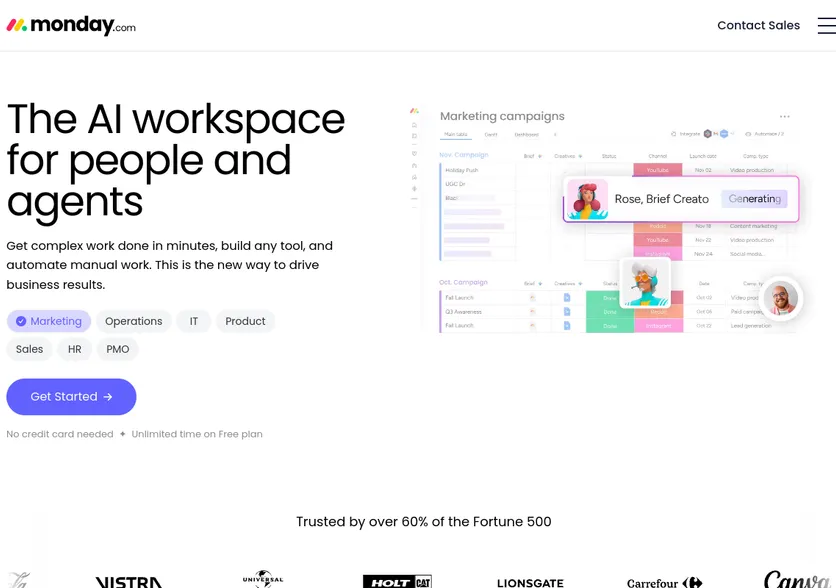
A brokerage that wants one workspace for listings, client pipelines and marketing tasks will find the flexible option here, because this Monday plan costs nine dollars per seat a month billed annually on Basic. Custom columns, status labels and timelines turn a deal into a visual plan, and templates for marketing, sales and operations shorten setup. It fits teams that want one workspace for operations and are comfortable configuring it around their process.
What we like
- Boards turn any workflow into a visual plan in minutes
- Hundreds of templates shorten setup for common processes
- Automations and integrations cut repetitive admin work
Watch out for
- The 3-seat minimum means a solo user still pays for three seats
- Basic has no timeline view and almost no automations
How to try it
- Pick a template that matches the process to track
- Add status, owner and date columns to the board
- Set one automation that updates status when work moves
4. ClickUp
Best for: Agents consolidating tasks, docs and deal goals in one app
Paid tool Starting price: $9/user/month · Nine dollars per user a month billed annually on Core ($12 billed monthly); Business is $17 a user a month billed annually; Enterprise is quoted; the old $7 Unlimited tier is gone
Free plan: Free plan
An agent who wants listing checklists, client notes and deal goals in one system rather than switching between tools will find the consolidator here, since this ClickUp plan costs nine dollars per user a month billed annually on Core. Tasks, docs, goals and chat share one workspace with list, board, calendar and Gantt views, and the free plan covers unlimited members. It suits agents and teams that want to consolidate their workflow and are willing to configure views to match how they work.

What we like
- Tasks, docs, goals and chat live in one workspace
- List, board, calendar and Gantt views share the same data
- The free plan covers unlimited members with core task features
Watch out for
- Feature breadth can overwhelm a team that wants a simple tracker
- Workspaces drift without regular housekeeping and conventions
How to try it
- Create a Space for the team and add one List per workstream
- Switch the List to the view each role prefers
- Set a goal and link the tasks that feed into it
5. Smartsheet
Best for: Larger brokerages needing governed transaction tracking
Paid tool Starting price: $9/member/month · Nine dollars per member a month billed annually on Pro ($12 billed monthly) for 1 to 10 members; Business is $19 a member a month billed annually ($24 monthly) for 3 or more members; Enterprise and Advanced Work Management are quoted
Free plan: No free plan; 30-day free trial
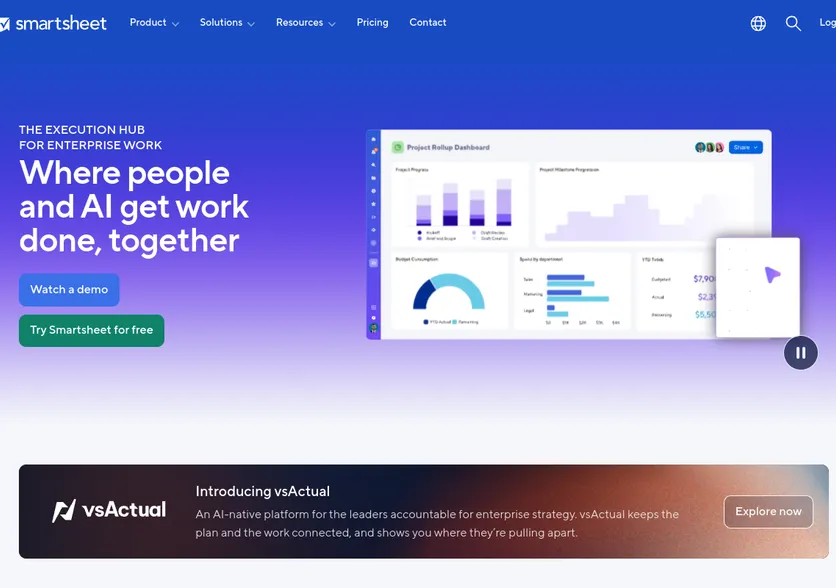
A brokerage that needs consistent tracking and oversight across many agents will find the governed option here, because this Smartsheet plan costs nine dollars per member a month billed annually on Pro. Structured sheets, reports and dashboards keep transactions, deadlines and shared processes visible, and the familiar grid layout suits teams that already plan in rows and columns. It fits larger offices that need oversight across many agents and deals.
What we like
- Grid sheets feel familiar to anyone who plans in spreadsheets
- Gantt, card and calendar views show the same plan differently
- Forms, reports and dashboards turn sheets into a working system
Watch out for
- There is no permanent free plan, only a 30-day trial
- Pro stops at 10 members, so growing teams must move to Business
How to try it
- Build a sheet with one row per job and columns for owner and date
- Switch the sheet to Gantt view to check dependencies
- Add a report that rolls up status across sheets
6. Wrike
Best for: Real estate teams needing enterprise delivery and control
Paid tool Starting price: $9.80/user/month · Nine dollars and eighty cents per user a month billed annually on Team, shown as ten dollars on the vendor page, for two to twenty-five users; Business is twenty-four dollars and eighty cents a user a month billed annually (shown as twenty-five dollars), for five to two hundred users; Enterprise and Pinnacle are quoted
Free plan: Free plan (up to 5 users)
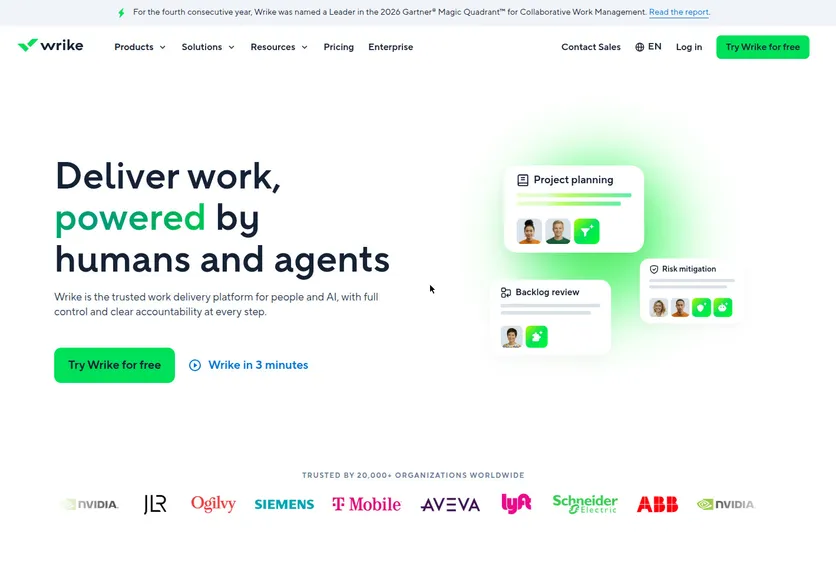
A real estate marketing team or brokerage that needs structure and oversight across many contributors will find the enterprise option here, since this Wrike plan costs nine dollars and eighty cents per user a month billed annually on Team. Folders, projects, custom workflows and approvals give managers a clear chain from request to delivery, and dashboards show workload across clients. It fits larger organizations that need delivery control rather than a simple board.
What we like
- Folders, projects and custom workflows give clear delivery chains
- Request forms turn incoming work into tracked tasks
- Dashboards and approvals suit teams with sign-off steps
Watch out for
- The most useful reporting and automation sit on Business, not Team
- Setup takes deliberate planning before the platform pays off
How to try it
- Create a folder for the department and a project inside it
- Build a custom workflow that matches the approval steps
- Add a request form so new work arrives as tracked tasks
7. Airtable
Best for: Agents structuring property and client data as tables
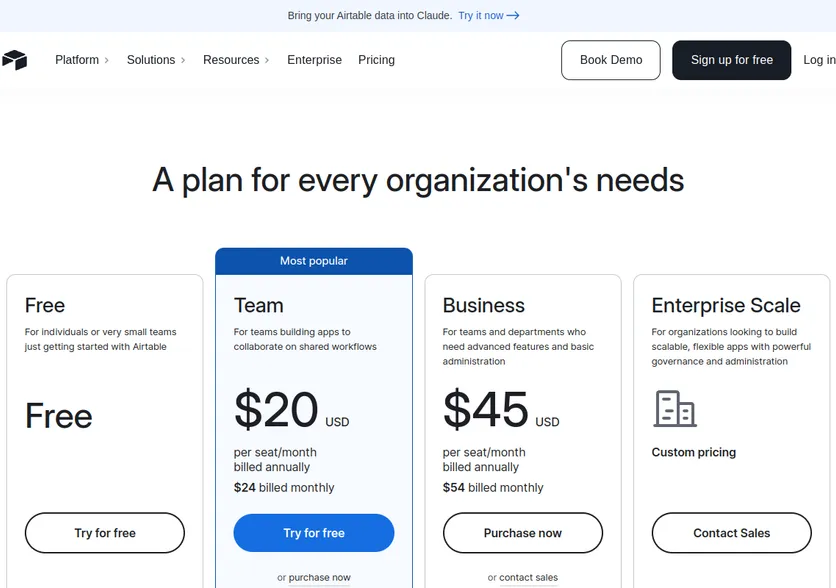
Paid tool Starting price: $20/user/month · Twenty dollars per user a month billed annually on Team ($24 billed monthly); Business is $45 a user a month billed annually; Enterprise Scale is quoted
Free plan: Free plan
An agent who thinks in data and wants property inventories, client records and follow-ups as connected tables will find the database option here, because this Airtable plan costs twenty dollars per user a month billed annually on Team. Real-time collaboration and automation turn repetitive tasks into workflows, and interfaces build lightweight apps on top of the data. It suits agents and teams that want a customizable system rather than a fixed task layout.
What we like
- Relational tables link records across projects and clients
- Automations move data between tables without manual copying
- Interfaces turn a base into a lightweight app for the team
Watch out for
- You build the structure yourself, so setup takes real thought
- It is less of a ready-made task tracker than a board tool
How to try it
- Create a base with one table per record type
- Link the tables so records connect across the workflow
- Add an automation that updates records when status changes
Prices above were checked on each vendor’s own website on Nov 28, 2026 and can change — the vendor’s page is the final word. Vendor links are editorial: nobody paid to be listed or ranked here. Vendors who want a featured listing can see how it works on our Get listed page.
How to track listings and clients without losing a deal
Start from the deal, not the feature list, because the tool has to follow a listing from prep to closing without losing a follow-up. A board works well for individual agents and small teams that want to see each deal move through stages, while a structured platform fits brokerages that need reporting and oversight across many agents. Check mobile access first, since agents work from showings and site visits, and test automation on one repeatable step such as listing prep before building a whole system around it. Budget for the seat minimum too, since a three-seat floor changes the real monthly total for a solo agent.
Before you buy
- Check whether the tool supports the views agents actually use, such as boards or sheets
- Confirm how tasks, files and client notes are shared across team members
- Review mobile access if agents work from showings and site visits
- Test how automation handles repeatable steps like listing prep and follow-ups
- Verify how the tool fits larger brokerage oversight and permissions
Official websites
Official websites of the products reviewed above. Features and prices were checked against these sites when this guide was written, and they can change, so confirm on the vendor site before you buy.
Frequently asked questions
What should real estate agents look for in project management software?
Look for clear task tracking, shared visibility across deals and mobile access for work in the field. Automation for repeatable steps such as listing prep and client follow-ups also helps. Match the level of structure to whether you work alone or as part of a brokerage team, since solo agents rarely need enterprise governance.
Is a simple board enough for tracking real estate transactions?
A board works well for individual agents and small teams that want to see each deal move through stages. Trello is the clear example, at five dollars per user a month on Standard with a free plan. If you need reporting, layered dependencies or oversight across many agents, a more structured platform may fit better.
How much does Asana cost for a real estate agent?
Asana costs ten dollars and ninety-nine cents per user a month billed annually on Starter, or thirteen dollars and forty-nine cents billed monthly. The Personal plan is free for up to two users. Starter adds timelines, Gantt views, dashboards, forms and unlimited automation rules, which is where most agents get value.
Can these tools handle both listings and client follow-ups?
Yes, most of the tools here support tasks, deadlines and shared notes that cover listings and client follow-ups. Asana and ClickUp are built around workflows and multiple views. Airtable is stronger when you want structured records of properties and clients rather than a task list.
How do I choose between a task tool and a database tool?
Choose a task-focused tool when your priority is moving deals and to-dos through clear stages. Choose a database-style tool such as Airtable when organizing property and client records is central. Many teams combine a simple task view with structured data as they grow, rather than forcing one tool to do both.
Compare the seven tools above, then start with a free plan on the tool that matches how the agent already tracks deals before paying for a full year.
Browse Business Tools tools