On this page
Startups rarely need a full enterprise quality suite on day one, but the moment a customer asks for audit trails, document control, and corrective actions, spreadsheets stop being enough. This guide compares seven quality management tools that a young company can actually buy and run, from a free inspection app to a twenty-five-thousand-dollar platform. Isolocity leads the list because it covers the most ground for the least money, while the enterprise-grade options below suit startups in regulated markets that need to look audit-ready fast.
How we researched this
We checked each vendor's own pricing page in November 2026 and kept only tools with a published price a startup can actually pay. Quote-only enterprise suites were left out because a founder cannot budget around a number that does not exist. We weighed audit readiness, setup effort, and per-user cost, not feature-count alone.
Compare the tools
| Name | Best for | Starting price | Free plan | |
|---|---|---|---|---|
 Qualio | Life sciences startups that need to pass customer and regulatory audits | $25,000/year | No free plan; free read-only seats included on paid plans | Visit |
 Greenlight Guru | Medical device startups building their first FDA-ready quality system | $12,000/year | No free plan; demo by request | Visit |
 SimplerQMS | Life sciences and manufacturing startups that want one all-in price | $17,500/year | Free guided trial; no free plan | Visit |
 1factory | Hardware and manufacturing startups that need supplier and inspection quality | $20/user/month | No free plan; demo available | Visit |
 Isolocity | Startups that want a complete quality system at a small-team price | $220/month | Free Basic User plan (unlimited users, limited modules) | Visit |
 isoTracker | Startups that need one or two quality functions, not a full suite | $13.40/user/month | No free plan | Visit |
 SafetyCulture | Operations-heavy startups that run quality through inspections and checklists | $24/user/month | Free plan for up to 10 users | Visit |
The quality management software for startups, compared
1. Qualio
Best for: Life sciences startups that need to pass customer and regulatory audits
Paid tool Starting price: $25,000/year · Foundation plan, five edit users included; Growth and Scale are quoted and implementation is a separate fee. Read-only and training users are free on paid plans.
Free plan: No free plan; free read-only seats included on paid plans
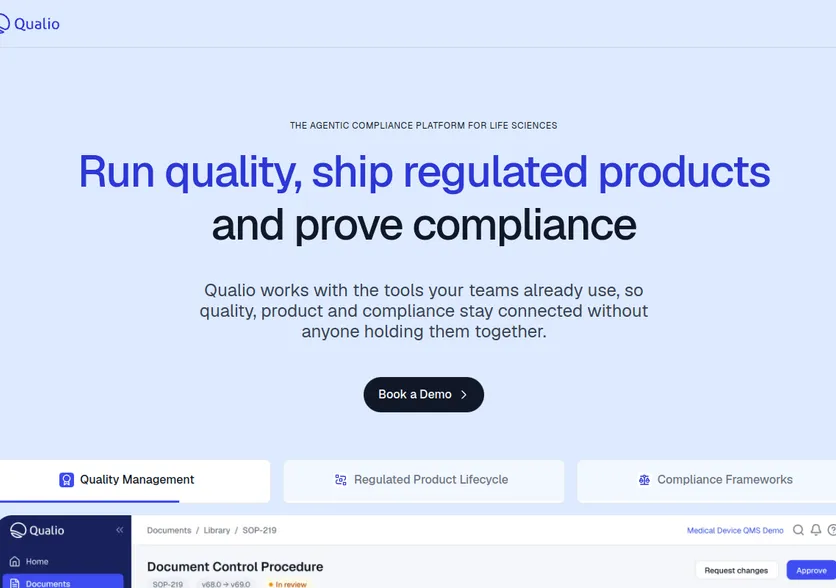
Qualio costs twenty-five thousand dollars a year on its Foundation plan, which buys a quality system built for life sciences startups that expect regulators and enterprise customers to inspect their records. Document control, training records, supplier management, and CAPA live in one place, so a small team can show an auditor a complete trail without stitching tools together. The price is steep for a seed-stage company, but it is the cheapest honest way into a regulated market.
What we like
- Document control, training, and CAPA in one audit-ready system
- Free read-only seats keep the whole team in the loop
- Built for FDA and ISO expectations from the start
Watch out for
- Twenty-five thousand dollars a year is a big commitment before revenue
- Growth and Scale pricing is quoted, so budgeting beyond Foundation is guesswork
How to try it
- List the documents, trainings, and suppliers you must track for your first audit
- Migrate your existing procedures into Qualio document control first
- Train the team and run one CAPA end to end before your first customer audit
2. Greenlight Guru
Best for: Medical device startups building their first FDA-ready quality system
Paid tool Starting price: $12,000/year · Entry eQMS package; implementation is billed separately. A third-party directory puts the median annual cost near forty-four thousand dollars, which reflects larger deployments.
Free plan: No free plan; demo by request
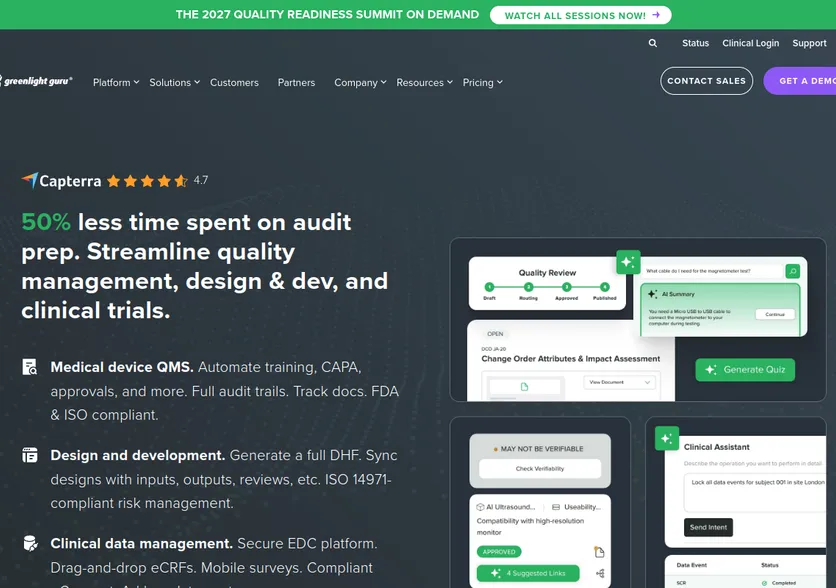
At twelve thousand dollars a year, Greenlight Guru is the lowest-priced entry into a medical device quality system that understands FDA and ISO 13485 workflows out of the box. It links design controls, risk management, CAPA, and document control so a device startup can trace a requirement from idea to released product. The entry package is deliberately narrow, and growing teams should expect the real annual cost to climb well above the starting figure.
What we like
- Design controls and risk management linked to documents
- Workflows written around FDA and ISO 13485 expectations
- Lowest entry price among device-focused quality systems
Watch out for
- Implementation is a separate charge on top of the subscription
- The entry package is narrow, and larger teams pay far more
How to try it
- Map your design history file and risk file to the built-in templates
- Import existing procedures and link them to design controls
- Run a mock audit on one product before your first real submission
3. SimplerQMS
Best for: Life sciences and manufacturing startups that want one all-in price
Paid tool Starting price: $17,500/year · For up to fifteen users, with implementation, validation, migration, and training included. Prices rise five percent each January 1.
Free plan: Free guided trial; no free plan
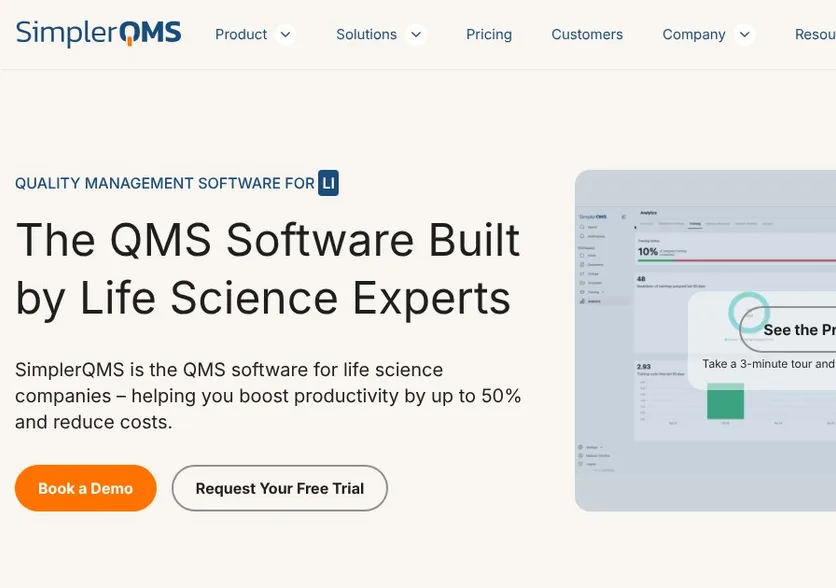
SimplerQMS starts at seventeen thousand five hundred dollars a year for up to fifteen users, and that figure includes implementation, validation, data migration, and training, which other vendors charge for separately. It covers documents, CAPA, audits, suppliers, and training in a single system aimed at life sciences and manufacturing teams. The all-in price makes budgeting simple, though the per-user cost only makes sense once the team is close to fifteen people.
What we like
- Implementation, validation, and migration included in the price
- Covers documents, CAPA, audits, suppliers, and training
- Flat pricing up to fifteen users is easy to budget
Watch out for
- Small teams pay the full platform price for a handful of seats
- Prices rise five percent every January, so multi-year costs climb
How to try it
- Count the users who will actually edit documents and records
- Use the included migration help to move procedures out of shared drives
- Validate the system with your quality lead before going live
4. 1factory
Best for: Hardware and manufacturing startups that need supplier and inspection quality
Paid tool Starting price: $20/user/month · QMS plan, ten-user minimum, billed annually (two thousand four hundred dollars a year for ten users). Quality Control is a separate seventy-five-dollar plan.
Free plan: No free plan; demo available
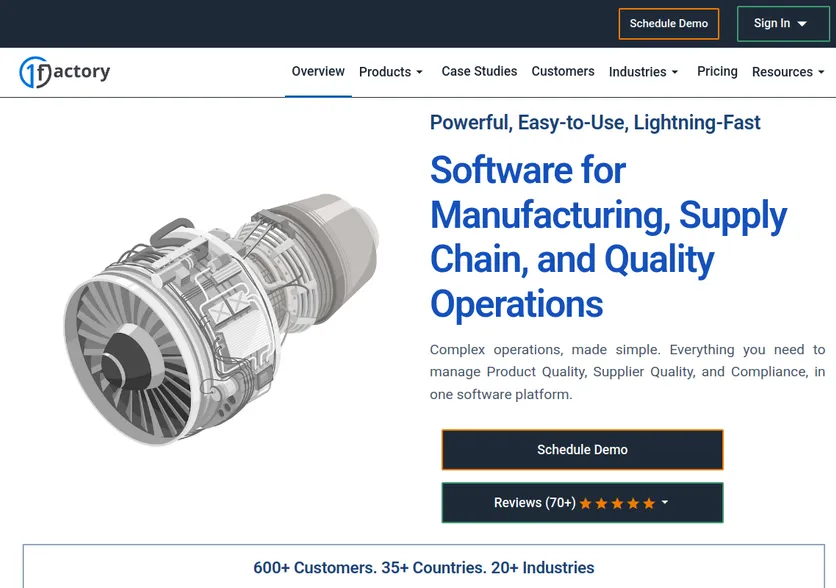
Twenty dollars a user a month buys 1factory QMS, the cheapest per-seat quality system in this guide, aimed squarely at startups that make physical products. It handles document control, inspections, nonconformances, and supplier quality without the enterprise ceremony of the bigger platforms. The ten-user minimum means the real starting bill is two thousand four hundred dollars a year, which is still far below the regulated-market suites above.
What we like
- Lowest per-user price in this comparison
- Inspections and supplier quality included, not bolted on
- Simple enough for a small operations team to run
Watch out for
- The ten-user minimum sets the real starting price higher than it looks
- Quality Control is a separate, much pricier plan
How to try it
- Start with your ten most active quality users, not the whole company
- Set up inspection checklists for your highest-volume parts first
- Link supplier records to incoming inspections so failures trace back
5. Isolocity
Best for: Startups that want a complete quality system at a small-team price
Paid tool Starting price: $220/month · Full User plan billed annually (two hundred seventy dollars a month on monthly billing); includes all seventeen modules. Production Users cost thirty-nine dollars a month.
Free plan: Free Basic User plan (unlimited users, limited modules)
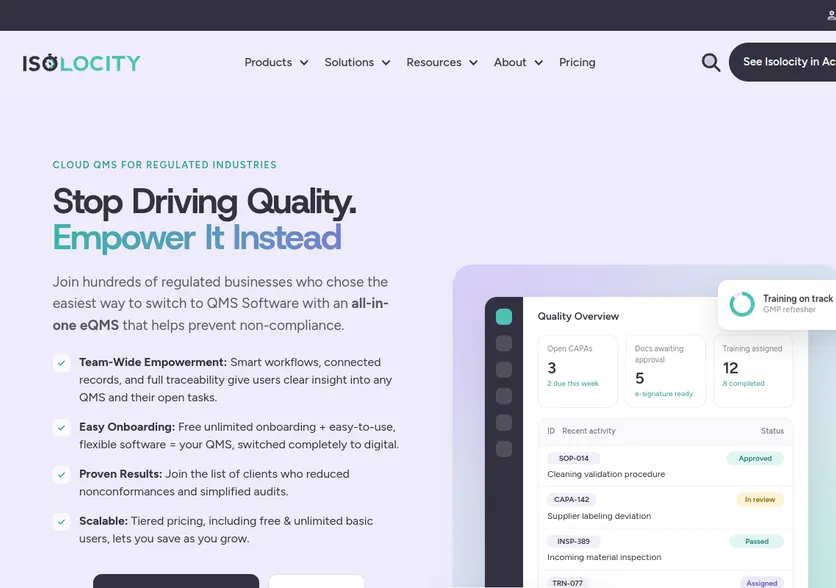
For two hundred twenty dollars a month, Isolocity gives a startup every one of its seventeen quality modules, from document control and CAPA to audits, training, and supplier management. The pricing model is unusually friendly: shop-floor staff can use a cheaper Production seat, and read-only Basic users are free, so the whole company can see quality records without paying for everyone. It is the best value here for a startup that wants a complete system without an enterprise price tag.
What we like
- All seventeen modules included in one flat monthly price
- Cheaper Production seats for shop-floor staff
- Free Basic users keep quality records visible to everyone
Watch out for
- Monthly billing jumps to two hundred seventy dollars, so commit annually
- Smaller vendor, so integrations are fewer than the big platforms
How to try it
- Start on the free Basic plan to map your documents and processes
- Upgrade the quality team to Full Users and the floor to Production seats
- Turn on CAPA and audit modules once documents are under control
6. isoTracker
Best for: Startups that need one or two quality functions, not a full suite
Paid tool Starting price: $13.40/user/month · Per module, per user; modules are sold separately, so a twenty-user team on one module pays about two hundred sixty-eight dollars a month.
Free plan: No free plan
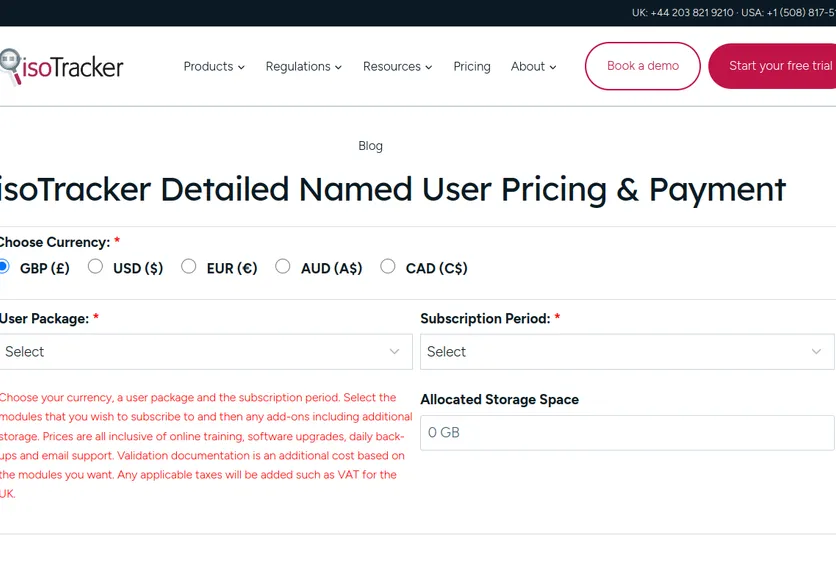
Starting at thirteen dollars and forty cents a user a month per module, isoTracker lets a startup buy exactly the quality pieces it needs, such as document control or complaints, and add modules later. That pick-and-mix model keeps the first bill tiny, which suits a team that only needs one or two functions today. The catch is arithmetic: a team that eventually needs five modules pays five times the headline rate, so the total can quietly pass the flat-rate tools above.
What we like
- Buy only the modules you need and add more later
- Lowest headline price in this guide
- Simple module pricing makes small pilots cheap
Watch out for
- Five modules cost five times the headline rate
- No free plan, so even a trial-sized rollout is paid
How to try it
- Pick the single module that solves your biggest audit gap
- Roll it out to the team that owns that process first
- Add a second module only after the first is running cleanly
7. SafetyCulture
Best for: Operations-heavy startups that run quality through inspections and checklists
Paid tool Starting price: $24/user/month · Premium plan billed annually (twenty-nine dollars a month on monthly billing). Free for up to ten users; the product rebranded to Mitti in August 2026.
Free plan: Free plan for up to 10 users
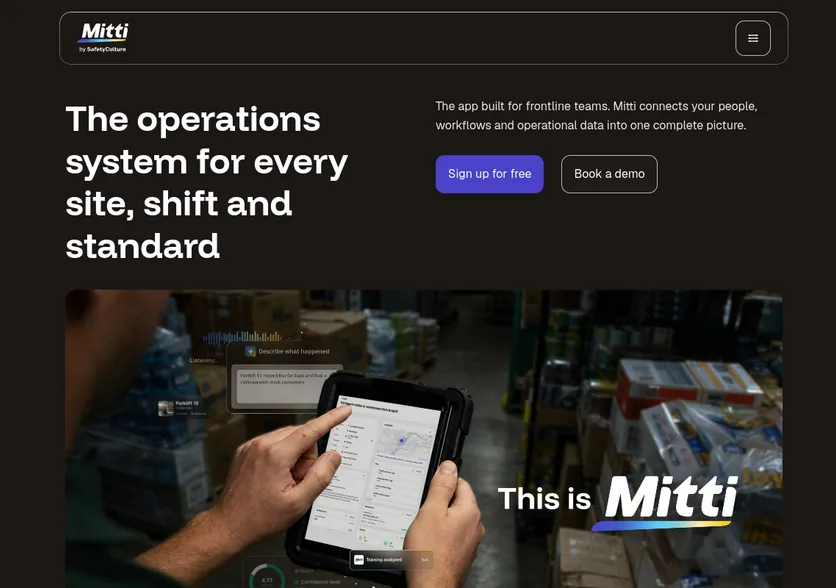
SafetyCulture Premium costs twenty-four dollars a user a month on annual billing, and its free plan covers up to ten users, which makes it the easiest quality tool here for a startup to try. It is built around inspections, checklists, and corrective actions rather than full document control, so it fits teams whose quality work happens on the floor or in the field. With more than ten thousand templates and a training module on Premium, it is a practical first quality system for operations-heavy startups.
What we like
- Free plan for up to ten users with real inspection tools
- Huge template library speeds up first checklists
- Mobile-first design suits field and factory teams
Watch out for
- Not a full document control system like the dedicated QMS tools
- The product rebranded to Mitti, so older guides may confuse buyers
How to try it
- Start on the free plan with your five most-used inspection templates
- Assign failed items as corrective actions so nothing is forgotten
- Upgrade to Premium when you need training records and unlimited templates
Prices above were checked on each vendor’s own website on Nov 28, 2026 and can change — the vendor’s page is the final word. Vendor links are editorial: nobody paid to be listed or ranked here. Vendors who want a featured listing can see how it works on our Get listed page.
How to choose quality management software as a startup
Start with the audit you actually face. A medical device or life sciences startup needs document control, training records, and CAPA that an auditor can trace, which points to Qualio, Greenlight Guru, or SimplerQMS despite their prices. A hardware startup cares more about inspections and suppliers, where 1factory and Isolocity cover the ground for far less. If your quality work is mostly checklists and corrective actions on the floor, SafetyCulture or a single isoTracker module gets you running this week. Buy the smallest system that passes your next audit, and upgrade when a customer or regulator asks for more.
Before you buy
- Confirm which audit standard your next customer or regulator will check, such as ISO 9001, ISO 13485, or FDA rules, before comparing features
- Count only the people who will edit records, since read-only and shop-floor seats are often free or much cheaper
- Ask whether implementation, validation, and migration are included, because those services can cost as much as the first year
- Check whether the price is per user, per module, or flat, since the same headline can mean very different annual bills
- Trial the document control and CAPA workflows with your real procedures, not the demo data, before signing a contract
Official websites
Official websites of the products reviewed above. Features and prices were checked against these sites when this guide was written, and they can change, so confirm on the vendor site before you buy.
Frequently asked questions
What is the cheapest quality management software for a startup?
The cheapest starting point is SafetyCulture, which is free for up to ten users, followed by isoTracker at about thirteen dollars a user a month for a single module. Among full quality systems, Isolocity at two hundred twenty dollars a month covers the most ground for the money. The right cheap option depends on whether you need inspections, document control, or a complete audit-ready system.
Do startups need ISO 9001 certified quality software?
No tool is itself ISO 9001 certified; certification applies to your company, not your software. What you need is a tool that supports the standard, with document control, corrective actions, audits, and training records. Every tool in this guide supports those workflows, though the regulated-market options are built around them more tightly.
How much should a startup budget for quality management software?
Budget between two hundred and three hundred dollars a month for a small team using a general quality system like Isolocity or 1factory. Regulated startups should budget twelve thousand to twenty-five thousand dollars a year, plus implementation, for a system that survives customer audits. Add a buffer for training time, which costs more than the subscription in the first quarter.
Can a startup start free and upgrade later?
Yes. SafetyCulture is free for up to ten users, and Isolocity offers free Basic users, so a startup can run real inspections and share documents before paying. The trade-off is migration: moving documents, training records, and open corrective actions to a bigger system later takes real effort, so pick a tool you can grow with for at least two years.
What is the difference between QMS software and inspection software?
A quality management system covers documents, training, suppliers, audits, and corrective actions as one connected record, which is what auditors ask for. Inspection software focuses on checklists and field checks, which is faster to adopt but leaves document control to another tool. Startups in regulated markets need the full system; operations teams often start with inspections and add the rest later.
Compare the seven tools above, then start with the free plan or trial on the one that matches your next audit before paying for a full year.
Browse Business Tools tools