On this page
Architecture firms juggle projects that run for months, and a principal double-booked across two deadlines is a delay nobody can afford. The seven tools below plan architects, engineers and project phases in one place, from a five dollar starter to a forty-five dollar practice platform. Monograph leads because it is built for architecture practices, tracking time, budgets and project phases together, and the rest are ranked on how well they fit a studio or a growing firm.
How we researched this
We checked every price on the vendor pricing page on November 28, 2026, and only included tools with a published US dollar list price. Deltek Vision, BQE Core, Ajera and Mosaic publish no usable platform price, so they are not in this list. Prices change, so confirm the current figure on the vendor site before you buy.
Compare the tools
| Name | Best for | Starting price | Free plan | |
|---|---|---|---|---|
 Monograph | Architecture studios that want a practice platform built for them | $45/month | No free plan; free demo | Visit |
 BigTime | Architecture firms that want planning plus invoicing in one system | $20/user/month | No free plan; demo only | Visit |
 Harvest | Small studios that want simple time and capacity tracking | $9/seat/month | Free plan (1 seat, 2 projects) | Visit |
 Float | Studios that want a visual capacity timeline | $7/scheduled person/month | No free plan; 30-day free trial | Visit |
 Resource Guru | Small studios that need a simple booking calendar | $5/person/month | No free plan; 30-day free trial | Visit |
 Runn | Firms that forecast capacity across long projects | $7/resource seat/month | No free plan; 30-day free trial | Visit |
 Teamwork | Studios that manage delivery and planning together | $9.99/user/month | Free plan (5 users, 5 projects) | Visit |
The resource planning software for architecture firms, compared
1. Monograph
Best for: Architecture studios that want a practice platform built for them
Paid tool Starting price: $45/month · Forty-five dollars a month is the entry figure on the vendor calculator, with a firm-size range of forty-five to four hundred and ninety dollars a month; the Pipeline module is a separate add-on and some sources quote forty-five dollars per user a month on the Track plan, so confirm the exact figure on a demo
Free plan: No free plan; free demo
Forty-five dollars a month buys Monograph on the vendor calculator, a practice platform built specifically for architecture firms. It tracks time against project phases, forecasts budgets and shows who is working on what, so a studio can plan staff around design deadlines rather than generic tasks. The firm-size range runs to four hundred and ninety dollars a month, and the Pipeline module for winning new work is a separate add-on, so confirm the exact figure on a demo.

What we like
- Built for architecture practices, not generic teams
- Time tracking linked to project phases and budgets
- Forecasts show who is free before a deadline hits
Watch out for
- Exact price comes from the vendor calculator or demo
- Pipeline module for new business is a separate add-on
How to try it
- Book a demo and confirm the price for the firm's size
- Set up projects by phase and allocate architects to each one
- Track time against phases and check the budget forecast weekly
2. BigTime
Best for: Architecture firms that want planning plus invoicing in one system
Paid tool Starting price: $20/user/month · Twenty dollars per user a month on Essentials is the only published price; Advanced, Premier and Enterprise plans and the Resource Management module are quote-only; the vendor page states no billing period or minimum, so confirm before buying
Free plan: No free plan; demo only
Twenty dollars per user a month buys BigTime Essentials, a professional services platform that plans resources and then bills the work from the same project record. It tracks availability, logs time and expenses, and produces invoices without re-entry, which suits architecture firms that want planning and billing in one system. The deepest resource planning features sit in the quote-only Resource Management module, so confirm what Essentials includes before budgeting.

What we like
- Planning with time, expenses and invoicing together
- Utilization tracking shows who is over or under booked
- Built for professional services rather than generic teams
Watch out for
- Resource Management module is quote-only
- No free trial, so the demo is the only preview
How to try it
- Book a demo and confirm what Essentials includes
- Set up projects and allocate architects to each one
- Track utilization weekly and adjust allocations as projects shift
3. Harvest
Best for: Small studios that want simple time and capacity tracking
Paid tool Starting price: $9/seat/month · Nine dollars per seat a month billed annually on Teams (eleven dollars billed monthly); Enterprise is fourteen dollars per seat a month billed annually; flex billing adds unpublished usage charges for projects, clients, tasks and invoicing on top of the seat rate
Free plan: Free plan (1 seat, 2 projects)
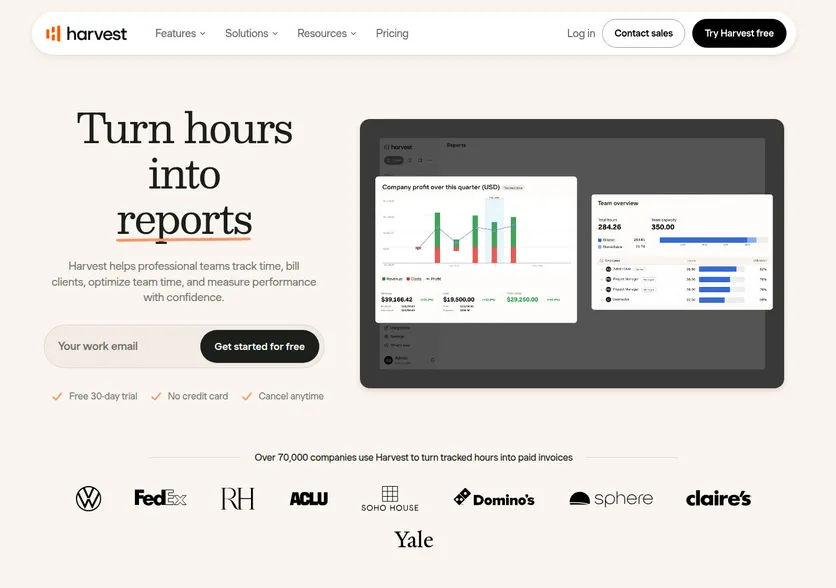
Nine dollars per seat a month billed annually buys Harvest Teams, a time tracker that gives a small studio a simple view of who is working on what. It logs hours against projects and phases, shows capacity in a clean report and invoices from the same data, with a free plan for one seat and two projects. Flex billing adds unpublished usage charges for projects, clients, tasks and invoicing on top of the seat rate, so read the fine print before scaling up.
What we like
- Simplest interface in this list, staff learn it in minutes
- Free plan for one seat and two projects
- Invoices generated from tracked time without re-entry
Watch out for
- Flex billing adds unpublished usage charges on top of the seat rate
- No phase-based forecasting, so larger firms outgrow it
How to try it
- Start on the free plan and track the first project
- Add the team and allocate hours to each phase
- Invoice from tracked time and check the flex billing charges
4. Float
Best for: Studios that want a visual capacity timeline
Paid tool Starting price: $7/scheduled person/month · Seven dollars per scheduled person a month billed annually on Starter (eight dollars and fifty cents billed monthly); Pro is twelve dollars per scheduled person a month billed annually; unscheduled guests are free and there is no free plan
Free plan: No free plan; 30-day free trial
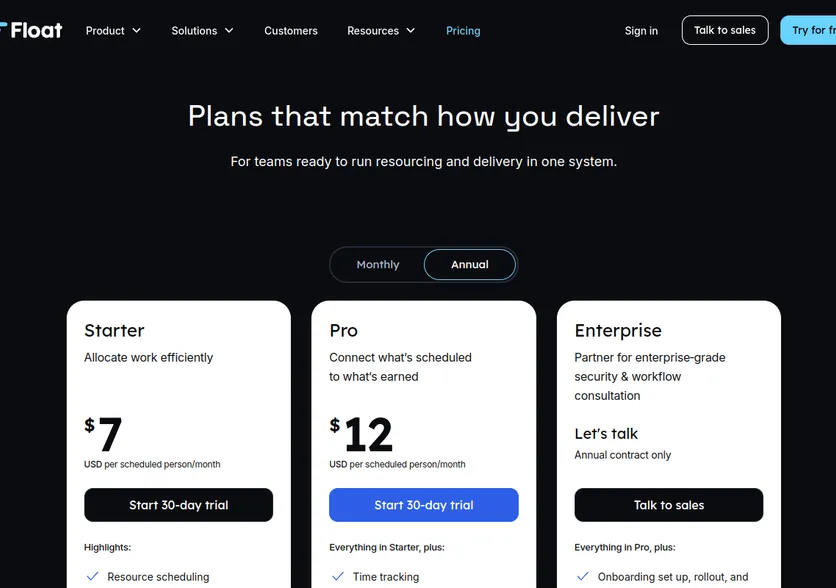
Seven dollars per scheduled person a month billed annually buys Float Starter, a scheduler whose timeline makes a studio's capacity visible at a glance. Principals drag projects onto architects, see clashes instantly and log time against the same schedule, so the plan and the actuals stay in sync across long project phases. Only scheduled people are billed, which keeps the cost honest for a studio with contractors and part-time staff, and the thirty-day trial needs no card.
What we like
- Drag-and-drop timeline shows capacity at a glance
- Time tracking linked to the same schedule
- Only scheduled people are billed, guests are free
Watch out for
- No free plan, so the trial is the only way to test it
- Advanced reporting and forecasting need the Pro plan
How to try it
- Add the team and set working hours for each person
- Drag the next project phase onto the timeline and check capacity
- Log time against the schedule and compare plan to actuals
5. Resource Guru
Best for: Small studios that need a simple booking calendar
Paid tool Starting price: $5/person/month · Five dollars per person a month billed annually on Grasshopper (six dollars billed monthly); Blackbelt is eight dollars per person a month billed annually and Master is twelve dollars; the price rose effective July 1, 2026 and non-human resources are billed at half rate
Free plan: No free plan; 30-day free trial
Five dollars per person a month billed annually buys Resource Guru Grasshopper, a booking calendar that shows a studio who is free, who is booked and who is on leave in one clean view. Clients can book through a self-service portal, which cuts the email back-and-forth that usually fills a project manager's day. Non-human resources such as meeting rooms and plotters bill at half rate, so the same calendar covers the whole office.

What we like
- Cheapest planning starting point in this list
- Leave management and client portal included
- Non-human resources billed at half rate
Watch out for
- No time tracking, so billable hours live elsewhere
- Capacity forecasting needs the Blackbelt plan
How to try it
- Add the team and mark working hours and leave
- Book the next project phase and check for clashes
- Share the availability calendar with clients for self-service booking
6. Runn
Best for: Firms that forecast capacity across long projects
Paid tool Starting price: $7/resource seat/month · Seven dollars per resource seat a month billed annually on Lite (nine dollars billed monthly); Standard is eleven dollars per resource seat a month billed annually and Advanced is quote-only; a twenty-seat minimum applies, so the smallest Lite bill is one hundred and forty dollars a month
Free plan: No free plan; 30-day free trial
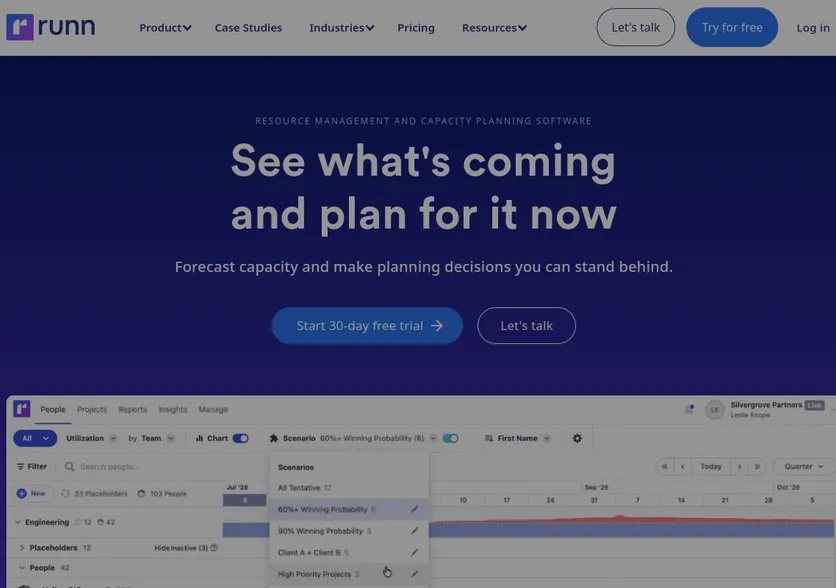
Seven dollars per resource seat a month billed annually buys Runn Lite, a capacity tool built for firms that forecast people months ahead. It shows utilization, flags over-allocation and models what-if scenarios before a project is taken on, so a studio can promise a start date with real numbers behind it. The twenty-seat minimum means the smallest Lite bill is one hundred and forty dollars a month, so it fits firms with a real team rather than a handful of people.
What we like
- What-if scenario planning before a project is taken on
- Utilization forecasts months ahead, not just this week
- Thirty-day free trial to test the planning workflow
Watch out for
- Twenty-seat minimum means the smallest bill is $140 a month
- No free plan for small studios that want to try it longer
How to try it
- Add the team and set each person's capacity
- Forecast the next quarter and check utilization
- Run a what-if scenario before committing to a new project
7. Teamwork
Best for: Studios that manage delivery and planning together
Paid tool Starting price: $9.99/user/month · Nine dollars and ninety-nine cents per user a month billed annually on Basics; Accelerate is twenty-four dollars and ninety-nine cents per user a month billed annually
Free plan: Free plan (5 users, 5 projects)
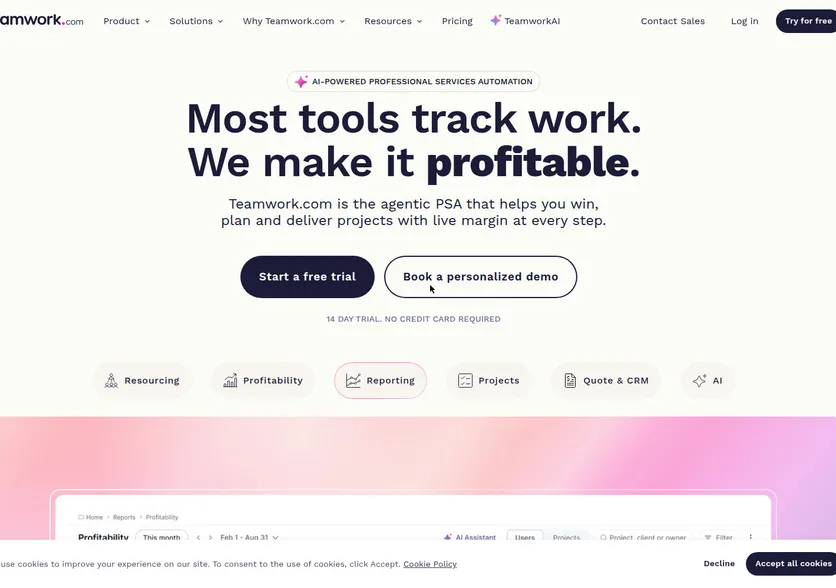
Nine dollars and ninety-nine cents per user a month billed annually buys Teamwork Basics, a project platform that plans resources alongside tasks, time and client work. It shows who is available, tracks project progress and bills from the same workspace, which suits architecture firms that manage delivery and planning together. The free plan covers five users and five projects, so a small studio can start without paying and upgrade when the team grows.
What we like
- Planning with tasks and time in one workspace
- Free plan for five users and five projects
- Client work and billing tracked from the same project
Watch out for
- Advanced planning features need the Accelerate plan
- Monthly billing price is not published, so confirm before buying
How to try it
- Start on the free plan and set up the first five projects
- Plan staff for the next project phase and check the workload view
- Upgrade to Basics when the team passes five users
Prices above were checked on each vendor’s own website on Nov 28, 2026 and can change — the vendor’s page is the final word. Vendor links are editorial: nobody paid to be listed or ranked here. Vendors who want a featured listing can see how it works on our Get listed page.
How to plan a studio around long project phases
Plan by phase, not by week, because an architecture project lives or dies on whether the right people are free when the design moves from concept to documentation. Book the scarce skills first, such as the principal and the senior designer, then fill around them with junior staff. Check utilization every week: a studio at one hundred percent for a month is a burnout risk, and a bench that sits idle is a hiring mistake. Keep the plan visible to the whole studio, since a hidden spreadsheet is how two project managers book the same architect for the same week.
Before you buy
- Confirm the tool plans by project phase, not just by week or day
- Check whether time tracking links to phases and budgets, not just to projects
- Ask how the tool flags over-allocation before a booking goes live
- Make sure the plan is visible to principals without a separate report
- Test the tool with the firm's actual projects during the free trial before moving the whole studio
Official websites
Official websites of the products reviewed above. Features and prices were checked against these sites when this guide was written, and they can change, so confirm on the vendor site before you buy.
Frequently asked questions
What is resource planning software for architecture firms?
Resource planning software shows who is available, who is booked and who is overworked across every project and phase, so an architecture firm can staff work without double-booking its principals. It usually pairs an availability calendar with capacity planning, utilization reports and time tracking linked to project budgets. The goal is to deliver on time without burning out the people doing the design.
How much does Monograph cost?
Monograph costs from forty-five dollars a month on the vendor calculator, with a firm-size range of forty-five to four hundred and ninety dollars a month. The exact figure comes from the vendor calculator or a demo, and the Pipeline module for winning new work is a separate add-on. Some sources quote forty-five dollars per user a month on the Track plan, so confirm whether the price is flat or per user before budgeting.
What is the cheapest resource planning software for architecture firms?
Resource Guru is the cheapest at five dollars per person a month billed annually, with a thirty-day free trial and a client portal for self-service booking. Float and Runn both start at seven dollars a month, though Runn has a twenty-seat minimum that makes its smallest bill one hundred and forty dollars a month. Harvest starts at nine dollars per seat a month and offers a free plan for one seat and two projects.
Do architecture firms need software built for their industry?
Not necessarily, but it helps. Monograph is built for architecture practices, with time tracking linked to project phases and budgets, which generic tools do not model well. BigTime, Float and Runn cover the same planning ground for professional services generally, and a small studio may do fine with one of them. The deciding test is whether the tool plans by project phase and links time to budgets, or only tracks hours.
How is resource planning different from project management?
Resource planning focuses on who is available and who is overbooked across the whole firm, while project management focuses on tasks, deadlines and deliverables within one project. A studio needs both, which is why tools such as Teamwork and BigTime pair planning with task tracking and billing. Start with the workload view in the tool you already use, and add dedicated planning only when it stops being enough.
Compare the seven tools above, then start the free trial or demo on the tool that matches your studio size and project length before paying for a full year.
Browse Business Tools tools