On this page
A new restaurant has one location, a small team and no time to waste, so scheduling has to work on day one without a setup project or a big bill. The eight tools below cover that job for startups of every kind, from a food truck to a first cafe. Homebase leads because its free plan covers one location and up to ten employees, and the rest are ranked on how cheaply and simply they get a first rota published.
How we researched this
We checked every price on the vendor pricing page on November 28, 2026, and only included tools with a published US dollar list price. HotSchedules and Restaurant365 publish no prices, so they are not in this list. Prices change, so confirm the current figure on the vendor site before you buy.
Compare the tools
| Name | Best for | Starting price | Free plan | |
|---|---|---|---|---|
 Homebase | New restaurants that want scheduling for free | $24/location/month | Free plan (1 location, up to 10 employees) | Visit |
 7shifts | Startups planning to grow past one site | $39.99/location/month | Free plan (1 location, up to 15 employees) | Visit |
 Deputy | Startups that want proper scheduling from week one | $5/user/month | No free plan; 30-day free trial | Visit |
 When I Work | Startups that want the cheapest per-person scheduling | $2.50/user/month | No free plan; 14-day free trial | Visit |
 Sling | Startups that want scheduling at the lowest price | $1.70/user/month | Free plan (up to 30 users) | Visit |
 Push Operations | Funded startups that want scheduling plus payroll and HR | $200/location/month | No free plan; demo only | Visit |
 Connecteam | Startups that want training beside the rota | $29/month | Free plan (up to 10 users) | Visit |
 ZoomShift | Startups that want the simplest rota possible | $2/user/month | Free plan (up to 20 users, 1 location) | Visit |
The restaurant scheduling software for startups, compared
1. Homebase
Best for: New restaurants that want scheduling for free
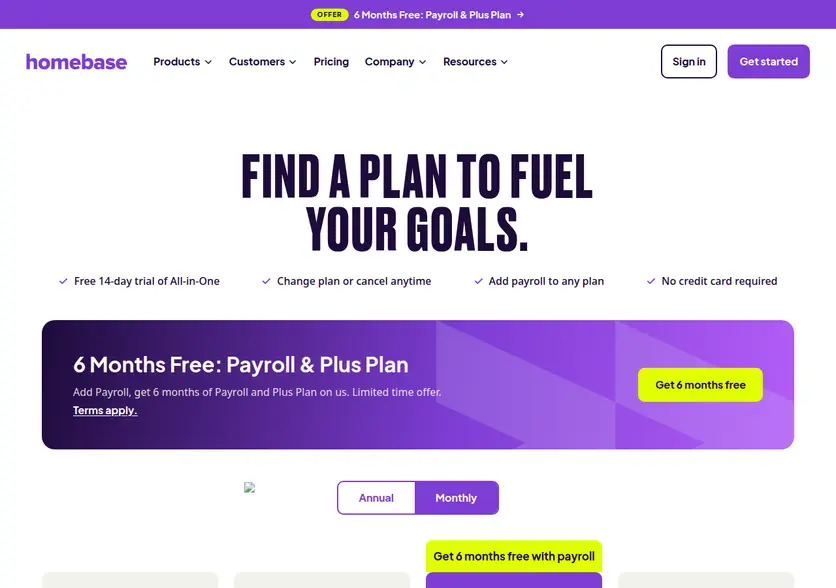
Paid tool Starting price: $24/location/month · Twenty-four dollars per location a month billed annually on Essentials ($30 billed monthly); Plus is fifty-six dollars billed annually ($70 monthly) and All-in-One is ninety-six dollars billed annually ($120 monthly); the free Basic plan covers one location and up to ten employees
Free plan: Free plan (1 location, up to 10 employees)
For a startup restaurant that needs a rota before it needs a bill, this Homebase plan costs twenty-four dollars per location a month billed annually, and the free Basic plan covers one location and up to ten employees. The schedule, time clock and hiring tools sit in one app, so a new owner can post the first job, hire the first cook and publish the first rota without a second system. It is the best starting point in this list for a restaurant that is still finding its feet.
What we like
- Free plan covers one location and up to ten employees
- Hiring, scheduling and time clock in one app
- Simple enough for a first-time owner
Watch out for
- The free plan is limited to one location
- Advanced features need the higher tiers
How to try it
- Claim the free Basic plan for your restaurant
- Add your team and publish the first rota
- Post your next hire when the team grows
2. 7shifts
Best for: Startups planning to grow past one site
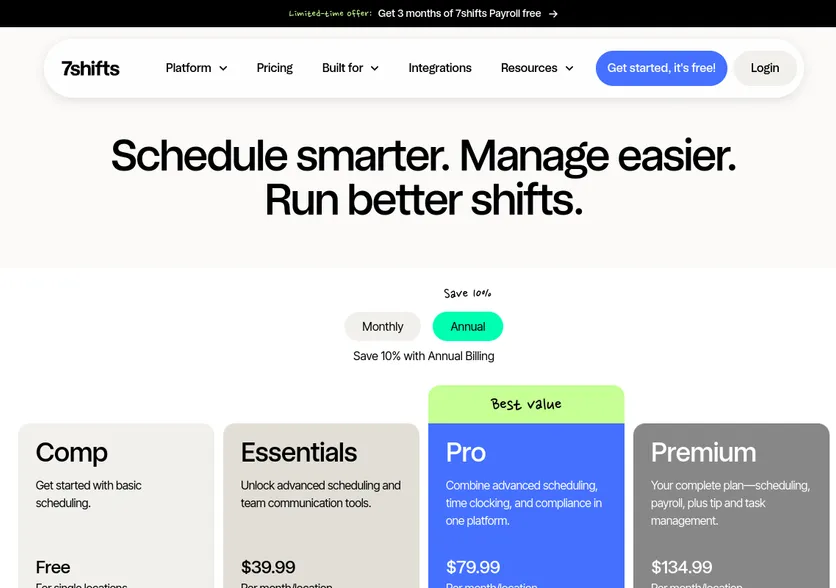
Paid tool Starting price: $39.99/location/month · Thirty-nine dollars and ninety-nine cents per location a month billed annually on Essentials ($44.99 billed monthly), for up to thirty employees; Pro is seventy-nine dollars and ninety-nine cents and Premium is one hundred and thirty-four dollars and ninety-nine cents billed annually; the free Comp plan covers one location and up to fifteen employees
Free plan: Free plan (1 location, up to 15 employees)
When a startup plans to grow past one site, this 7shifts plan costs thirty-nine dollars and ninety-nine cents per location a month billed annually, and it was built for restaurant scheduling from the start. The rota builder is fast, staff claim open shifts from the app, and labour costs show against the budget as the rota fills, so a new owner sees the real cost of every shift. It is the tool to grow into once the free options run out.
What we like
- Built for restaurant scheduling from the start
- Labour costs show against budget as the rota fills
- Staff claim open shifts from the app
Watch out for
- The free plan covers only one location
- More expensive than the free-first options here
How to try it
- Add your location and staff with their roles
- Build the rota and publish it to the app
- Track labour cost against the budget weekly
3. Deputy
Best for: Startups that want proper scheduling from week one
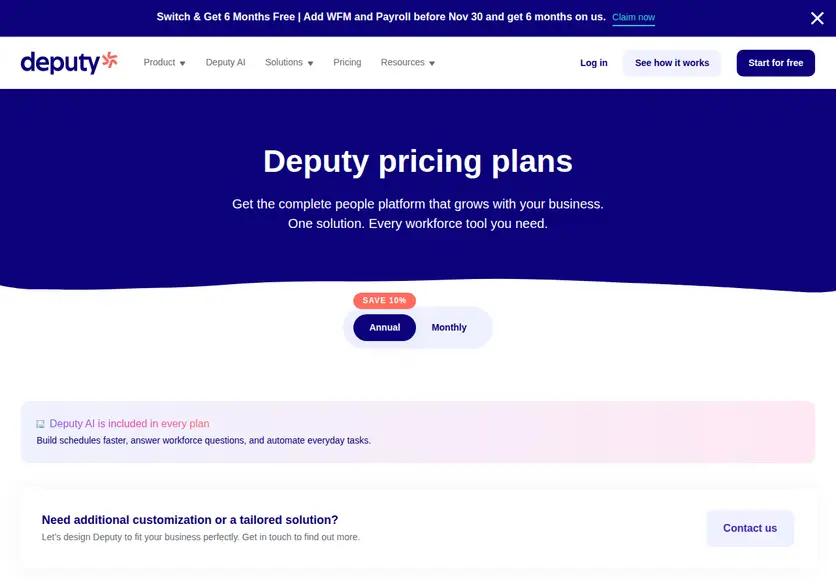
Paid tool Starting price: $5/user/month · Five dollars per user a month on Lite; Core is six dollars and fifty cents and Pro is nine dollars; a thirty-dollar monthly invoice minimum applies; some older reads showed Lite at five dollars and fifty cents, which appears stale
Free plan: No free plan; 30-day free trial
A startup that wants proper scheduling from the first week will find it here, because this Deputy plan costs five dollars per user a month, and it covers shifts, time tracking and leave in one app. Managers build the rota in minutes, staff swap shifts from their phones, and timesheets feed payroll without retyping, which matters when the owner is also the accountant. It is the most complete cheap option in this list.
What we like
- Scheduling, time tracking and leave in one app
- Staff swap shifts from their phones
- Timesheets feed payroll without retyping
Watch out for
- A thirty-dollar monthly invoice minimum applies
- No free plan, only a thirty-day trial
How to try it
- Add staff with their roles and hours
- Build the rota and publish it to the team
- Approve timesheets and send them to payroll
4. When I Work
Best for: Startups that want the cheapest per-person scheduling
Paid tool Starting price: $2.50/user/month · Two dollars and fifty cents per user a month on Essentials; Pro is five dollars and Premium is eight dollars; the vendor page states no billing period, and its FAQ prices multi-location teams at five dollars per user a month; a time-tracking add-on costs about one dollar and fifty cents to two dollars
Free plan: No free plan; 14-day free trial
For a startup watching every dollar, this When I Work plan costs two dollars and fifty cents per user a month, and it covers shift scheduling, time tracking and messaging in one app. Staff see their shifts, pick up open ones and message the owner without a separate tool, while the time clock records hours as they happen. It is the cheapest per-person option here for a team that is still small.
What we like
- Lowest entry price in this list
- Scheduling, time clock and messaging in one app
- Staff pick up open shifts themselves
Watch out for
- The vendor page states no billing period
- Multi-location pricing runs higher at five dollars per user a month
How to try it
- Add staff and their availability
- Publish the shift schedule to the app
- Review the time clock records each week
5. Sling
Best for: Startups that want scheduling at the lowest price
Paid tool Starting price: $1.70/user/month · One dollar and seventy cents per user a month billed annually on Premium ($2 billed monthly); Business is three dollars and forty cents billed annually ($4 monthly); the free plan covers up to thirty users; a fifteen-day free trial is included on paid plans
Free plan: Free plan (up to 30 users)
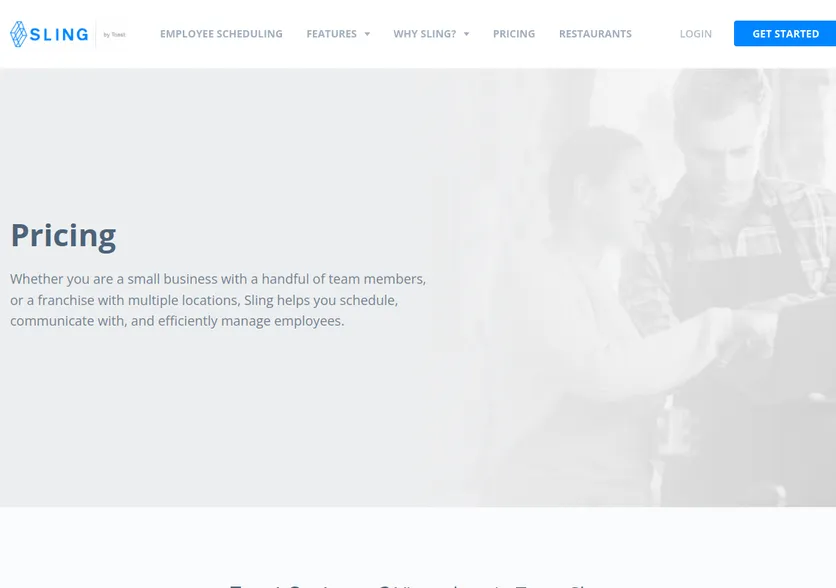
When a startup needs scheduling for almost nothing, this Sling plan costs one dollar and seventy cents per user a month billed annually, and it covers shifts, time tracking and team chat in one app. Managers drag shifts onto the calendar, staff get notified instantly, and the free plan covers up to thirty users for a team that wants to try it first. It is the cheapest paid option here for a restaurant on a tight budget.
What we like
- Cheapest paid plan in this list
- Shifts, time clock and team chat in one app
- Free plan covers up to thirty users
Watch out for
- Reporting is basic compared with the bigger tools here
- No payroll or HR features
How to try it
- Add your team and their shift preferences
- Drag shifts onto the calendar and publish
- Let staff swap shifts in the app when plans change
6. Push Operations
Best for: Funded startups that want scheduling plus payroll and HR
Paid tool Starting price: $200/location/month · Two hundred dollars per location a month on Essentials, for up to fifteen employees, billed monthly; no annual-billing price is published; Signature, Supreme and Enterprise are sold by demo and quote; no free plan or trial is listed
Free plan: No free plan; demo only
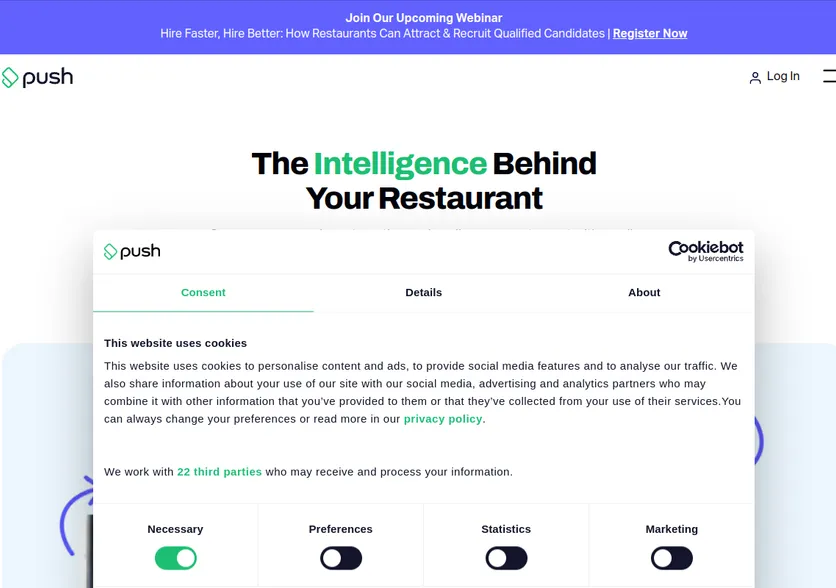
A startup with bigger ambitions will find the full package here, because this Push Operations plan costs two hundred dollars per location a month, and it covers scheduling, time tracking, payroll and HR in one system. The platform handles the whole employee lifecycle, from hiring to payday, though the price is the highest in this list and suits a startup that is already funded. It is the tool for a restaurant that plans to scale fast.
What we like
- Scheduling, payroll and HR in one system
- Built for restaurant groups at scale
- Handles hiring through to payday
Watch out for
- Highest price in this list at two hundred dollars per location
- No annual-billing price is published
How to try it
- Set up your location with its staff
- Build schedules and approve timesheets
- Run payroll from the same system
7. Connecteam
Best for: Startups that want training beside the rota
Paid tool Starting price: $29/month · Twenty-nine dollars a month per hub billed annually on Basic ($35 billed monthly), for the first thirty users; Advanced is forty-nine dollars and Expert is ninety-nine dollars; all three hubs on Basic total eighty-seven dollars a month; the free Small Business plan covers up to ten users
Free plan: Free plan (up to 10 users)
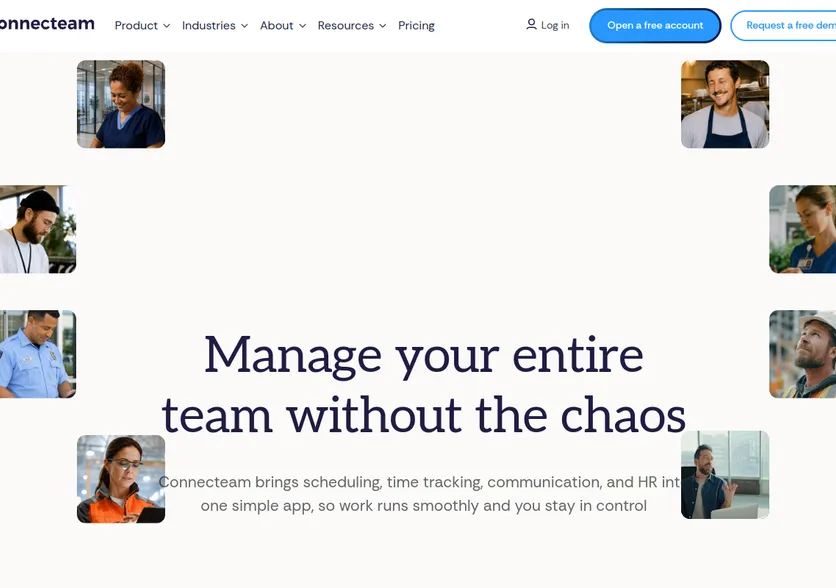
A startup that needs more than a rota will like this Connecteam plan, which costs twenty-nine dollars a month per hub billed annually, and it combines scheduling with forms, training and messaging. The hub covers the whole team, so training checklists and shift chats sit beside the rota, and the free plan covers up to ten users. It fits a new restaurant that wants to train staff properly from day one.
What we like
- Scheduling plus forms, training and messaging
- One hub covers the whole team
- Free plan covers up to ten users
Watch out for
- All three hubs on Basic total eighty-seven dollars a month
- Per-hub pricing confuses teams that expect per-user pricing
How to try it
- Set up one hub for your restaurant
- Build schedules and training checklists
- Use the team chat for shift changes
8. ZoomShift
Best for: Startups that want the simplest rota possible
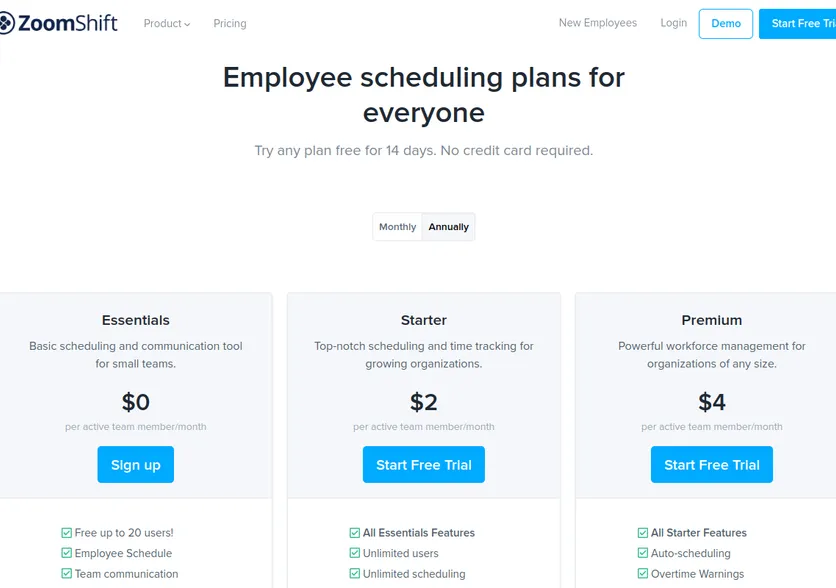
Paid tool Starting price: $2/user/month · Two dollars per user a month billed annually on Starter ($2.50 billed monthly); Premium is four dollars billed annually; the free Essentials plan covers up to twenty users at one location
Free plan: Free plan (up to 20 users, 1 location)
For a startup that wants the simplest rota possible, this ZoomShift plan costs two dollars per user a month billed annually, and it covers shifts, time tracking and availability in a clean interface. Managers build rotas fast, staff confirm their shifts from the app, and the free plan covers up to twenty users at one location. It is the simplest pick in this list for a restaurant that just needs the rota done.
What we like
- Clean interface the whole team learns fast
- Shifts, time tracking and availability in one app
- Free plan covers twenty users at one location
Watch out for
- No hiring or HR features
- Reporting is basic compared with the bigger tools here
How to try it
- Add staff and their availability
- Build the rota and send it to the app
- Track time and approve timesheets weekly
Prices above were checked on each vendor’s own website on Nov 28, 2026 and can change — the vendor’s page is the final word. Vendor links are editorial: nobody paid to be listed or ranked here. Vendors who want a featured listing can see how it works on our Get listed page.
How to publish your first rota without spending a dollar
Start on a free plan, because a startup with one location and a small team does not need to pay for scheduling yet. Publish the rota a week ahead and stick to the same day every week, so staff can plan their lives around it and stop asking when the rota comes out. Let staff swap shifts in the app rather than by text, so every change is recorded and no shift ends up uncovered. And track labour cost from the first week, because a rota that looks full can still lose money if the hours cost more than the shift earns.
Before you buy
- Check whether the free plan covers your real team size, not just a handful of people
- Confirm staff can swap shifts and pick up open ones from their phones
- Ask if the price is per user or per location, since the bill changes completely
- Make sure the time clock records real hours, so payroll is right from the first month
- Test the tool with your real team and rota before paying for a year
Official websites
Official websites of the products reviewed above. Features and prices were checked against these sites when this guide was written, and they can change, so confirm on the vendor site before you buy.
Frequently asked questions
What is restaurant scheduling software for startups?
It is software that builds staff rotas, records hours and lets the team swap shifts from their phones, so a new restaurant can cover every service without a spreadsheet. Good tools are free or cheap for a single location, which matters when a startup has one site and a small team.
How much does Homebase cost for a startup restaurant?
Homebase is free for one location and up to ten employees on the Basic plan, which covers scheduling and the time clock. Essentials is twenty-four dollars per location a month billed annually, or thirty dollars billed monthly, with Plus at fifty-six dollars and All-in-One at ninety-six dollars billed annually.
Can a startup restaurant schedule for free?
Yes. Homebase is free for one location and up to ten employees, Sling is free for up to thirty users, Connecteam is free for up to ten users, and ZoomShift is free for up to twenty users at one location. A startup can run on a free tier until the team or the site count grows.
Which tool is best for a new restaurant?
Homebase is the best overall pick for a new restaurant, because its free plan covers one location and up to ten employees with scheduling, a time clock and hiring. Sling is the best value paid option at one dollar and seventy cents a user a month, and ZoomShift is the simplest for a tiny team.
When should a startup move to a paid scheduling plan?
Move to a paid plan when the free limits bite: more than ten employees on Homebase, more than thirty users on Sling, or a second location. At that point the paid plans here start at about two dollars a user a month, so the jump is small compared with the cost of a missed shift.
Compare the eight tools above, then start with a free plan on the tool that matches how the restaurant already runs its first rota before paying for anything.
Browse Business Tools tools