On this page
A small retailer cannot afford a wrong range, because every shelf holds cash that could sit somewhere else. The eight tools below cover assortment and space planning for a small shop, from a free planogram app to a till that plans the range as it sells. Lightspeed Retail leads because it runs the till and the assortment from one stock figure for eighty-nine dollars a month, and the rest are ranked on how much planning a small team gets for the money.
How we researched this
We checked every price on the vendor pricing page on November 28, 2026, and only included tools with a published United States dollar list price. The enterprise suites that Toolnimba lists for assortment planning, including Oracle Retail, RELEX, SAP Business One and Blue Yonder, publish no prices or start far above a small business budget, so they are not in this list. Prices change, so confirm the current figure on the vendor site before you buy.
Compare the tools
| Name | Best for | Starting price | Free plan | |
|---|---|---|---|---|
 Lightspeed Retail | Small retailers that want till and planning in one system | $89/month | No free plan; 14-day free trial | Visit |
| Quant Retail | Small businesses outgrowing spreadsheet range plans | $1,650/user/year | No free plan | Visit |
| DotActiv | Small retailers that want professional planograms cheaply | $800/license/year | $0 (free plan, 40 SKUs) | Visit |
| PlanoHero | Small shops that plan shelves in the browser | $199/month | No free plan (Enterprise by quote) | Visit |
| OPENCatman | Small businesses starting on a tight budget | $99/month | $0 (free version, unlimited projects) | Visit |
| PlanogramBuilder | Small retailers building planograms store by store | From $475/user/year | No free plan (30-day trial) | Visit |
| Shelf Logic | Small shops that prefer a one-time purchase | $995 one-time | No free plan | Visit |
 SmartDraw | Small businesses that sketch their own store layout | $10.95/month | No free plan (7-day trial) | Visit |
The retail assortment planning software for small business, compared
1. Lightspeed Retail
Best for: Small retailers that want till and planning in one system
Paid tool Starting price: $89/month · Retail plan starting at eighty-nine dollars a month billed annually, or one hundred and nine dollars month to month; an older page still shows sixty-nine dollars.
Free plan: No free plan; 14-day free trial
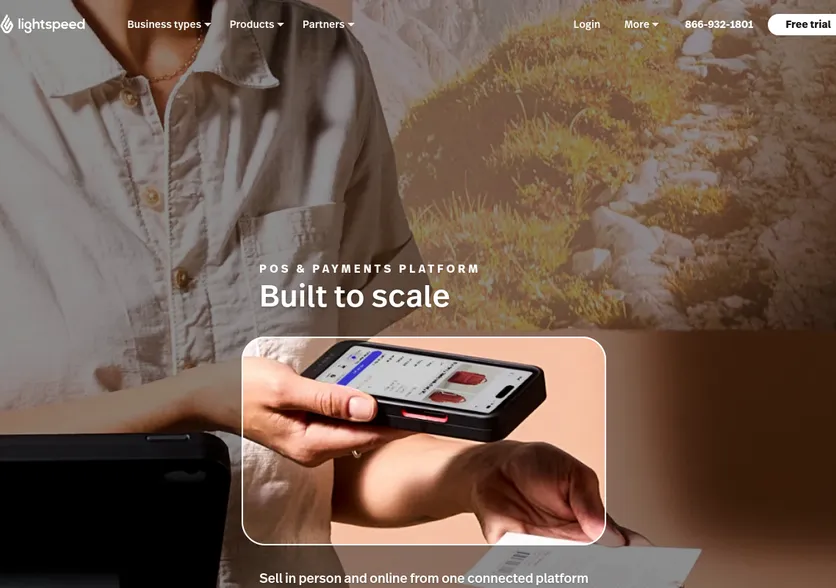
A small retailer that wants the till and the assortment plan in one system gets both here, because this Lightspeed Retail plan costs eighty-nine dollars a month billed annually, and every sale updates the range plan straight away. Purchase orders, supplier lists and multi-store stock share one dashboard, so a small team sees what is selling without a spreadsheet. It suits a shop that is ready to plan its range from real sales data instead of gut feel.
What we like
- Till, inventory and purchasing in one dashboard
- Multi-store stock in one view
- Purchase orders built from real sales data
Watch out for
- Eighty-nine dollars a month is a step up from a free till
- Advanced reporting sits on higher tiers
How to try it
- Connect the till and import the product list
- Build the assortment from sales data by category
- Set reorder points and let purchase orders follow the plan
2. Quant Retail
Best for: Small businesses outgrowing spreadsheet range plans
Paid tool Starting price: $1,650/user/year · Planogramming is $1,650 per user per year; Retail Planning starts at $11,000 a year. Some directories list 1,200 euros per user per year, about $1,320, so confirm the dollar figure on a quote.
Free plan: No free plan
A small business that is outgrowing spreadsheets for its range plan gets serious software here, because this Quant Retail plan costs one thousand six hundred and fifty dollars per user a year, and it pairs planogramming with full retail planning in one cloud workspace. Assortments, space plans and sales data share the same model, so the owner sees the same numbers as the buyer. It is the most complete option here, and it is also the most expensive by a wide margin.
What we like
- Planograms, assortments and sales data in one model
- Cloud workspace keeps the owner and buyer on the same numbers
- Retail Planning tier covers full range strategy
Watch out for
- The price is far above a small business budget for most shops
- Retail Planning starts at a much higher annual figure
How to try it
- Import the product list and sales history for the range
- Build the assortment and the planogram in the same model
- Review the plan with the buyer before it goes to the shop
3. DotActiv
Best for: Small retailers that want professional planograms cheaply
Paid tool Starting price: $800/license/year · Lite costs $800 per licence per year with 40 SKUs; Pro is $2,000 and Enterprise $4,500, with Enterprise AI at $7,500.
Free plan: $0 (free plan, 40 SKUs)
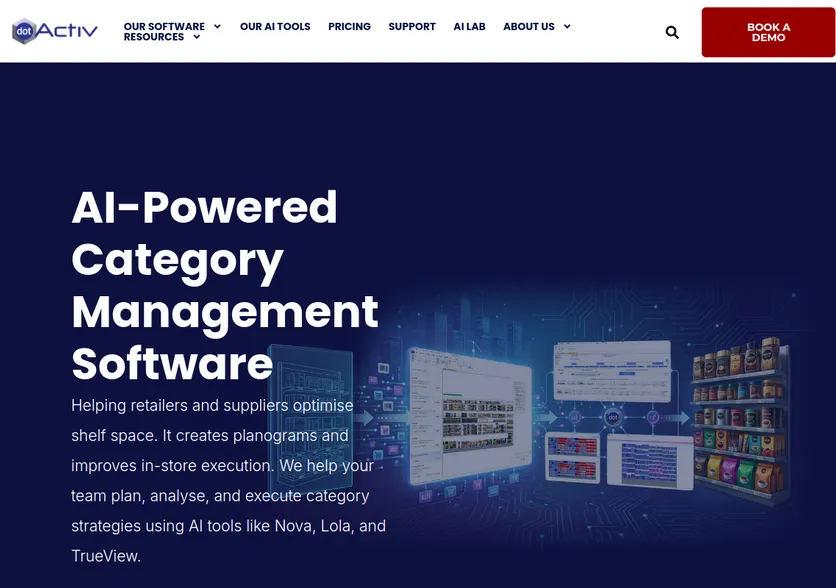
For a small retailer that wants professional planograms without an enterprise contract, this DotActiv plan costs eight hundred dollars per licence a year, and the free plan covers forty SKUs for a first range. Planograms and store clusters share one library, so a shop with two or three sites works from the same shelf layout. It suits a small team that plans centrally and sends finished planograms out to its stores.
What we like
- Low entry price with a free plan for forty SKUs
- Store clustering groups similar stores for one plan
- Planogram library keeps every site on the same layout
Watch out for
- Desktop app, so a second computer needs its own copy
- Pro and Enterprise tiers rise steeply in price
How to try it
- Install the app and import the product catalogue
- Build the first planogram for the best-selling shelf
- Publish the finished planogram to each store
4. PlanoHero
Best for: Small shops that plan shelves in the browser
Paid tool Starting price: $199/month · Lite is $199 per month or $2,150 a year, with unlimited users, 5,000 SKUs and 100 planograms; Enterprise is quoted.
Free plan: No free plan (Enterprise by quote)
A small shop that plans its shelves in a browser gets unlimited users here, since this PlanoHero plan costs one hundred and ninety-nine dollars a month, and it runs entirely online with no software to install. Planograms, photos and comments live in the same browser workspace, so the owner can review a shelf from home. It suits a small team that wants to see the same shelf at the same time.

What we like
- Runs in the browser with unlimited users on Lite
- Photos and comments sit beside each planogram
- Five thousand SKUs and one hundred planograms on Lite
Watch out for
- No free plan, so a trial run costs money
- Enterprise pricing is by quote only
How to try it
- Open the browser workspace and import the product list
- Draw the shelf with fixtures and product photos
- Ask staff to comment on the planogram before printing it
5. OPENCatman
Best for: Small businesses starting on a tight budget
Paid tool Starting price: $99/month · PRO is $99 per month or $990 a year, with a free version covering unlimited projects; Corporate and Ambassador tiers are quoted. Price from competitor and directory reads, not the vendor's own page.
Free plan: $0 (free version, unlimited projects)
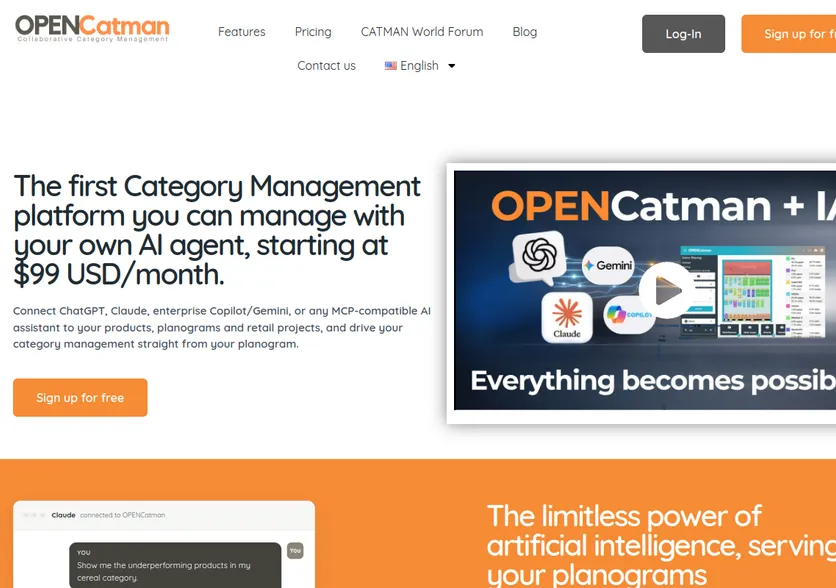
For a small business that needs planograms before it can afford them, this OPENCatman plan costs ninety-nine dollars a month for PRO, and the free version covers unlimited projects. The free version handles a real range, while PRO adds reporting and data imports for a growing catalogue. It suits a small retailer that needs a proper planogram tool before the budget arrives.
What we like
- Free version covers unlimited projects
- PRO adds reporting and data imports
- Simple enough for a first-time planogram user
Watch out for
- Corporate and Ambassador tiers are quoted, not listed
- The published price comes from directory reads, not the vendor page
How to try it
- Start on the free version and build the first planogram
- Import the product list and assign items to shelves
- Upgrade to PRO when the range needs reporting
6. PlanogramBuilder
Best for: Small retailers building planograms store by store
Paid tool Starting price: From $475/user/year · Subscriptions start at $475 per user per year, with the exact price set by version, user count and term through the configurator; a 30-day trial is included.
Free plan: No free plan (30-day trial)
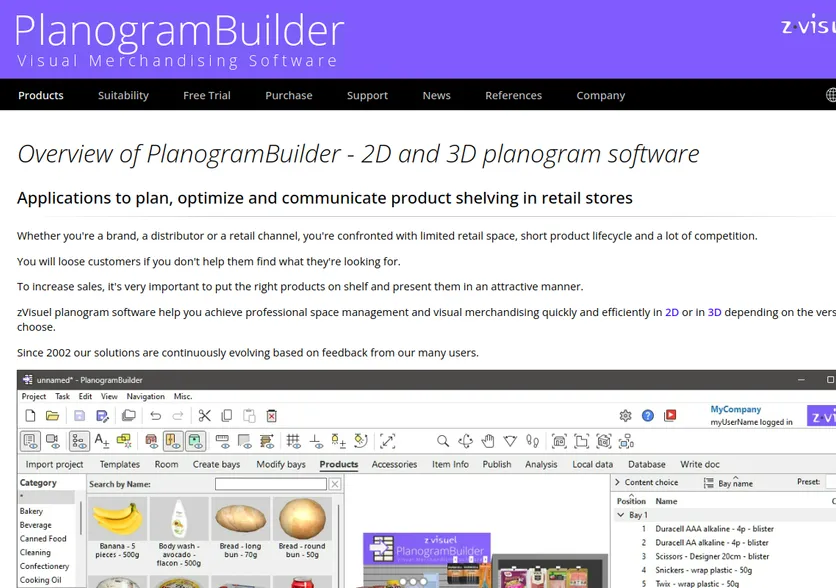
A small retailer that builds planograms for one or two stores gets a fair entry price here, because this PlanogramBuilder plan starts at four hundred and seventy-five dollars per user a year, and a thirty-day trial is included. Fixtures, products and photos sit in one builder, and the configurator sets the exact price by version, user count and term. It suits a shop that builds planograms store by store and wants a trial before committing.
What we like
- Thirty-day trial before paying
- Fixtures, products and photos in one builder
- Price set by version, user count and term
Watch out for
- The exact price needs the configurator, not a flat list
- Desktop-first, so a second computer needs its own copy
How to try it
- Start the thirty-day trial and import the catalogue
- Build the fixture layout for the first store
- Duplicate the planogram and adjust it per store
7. Shelf Logic
Best for: Small shops that prefer a one-time purchase
Paid tool Starting price: $995 one-time · Master Edition is a $995 one-time purchase and Enterprise is $4,995 one-time; ProView cloud viewing is $14.99 a month. The vendor's compare page is dated, so confirm the edition mapping before buying.
Free plan: No free plan
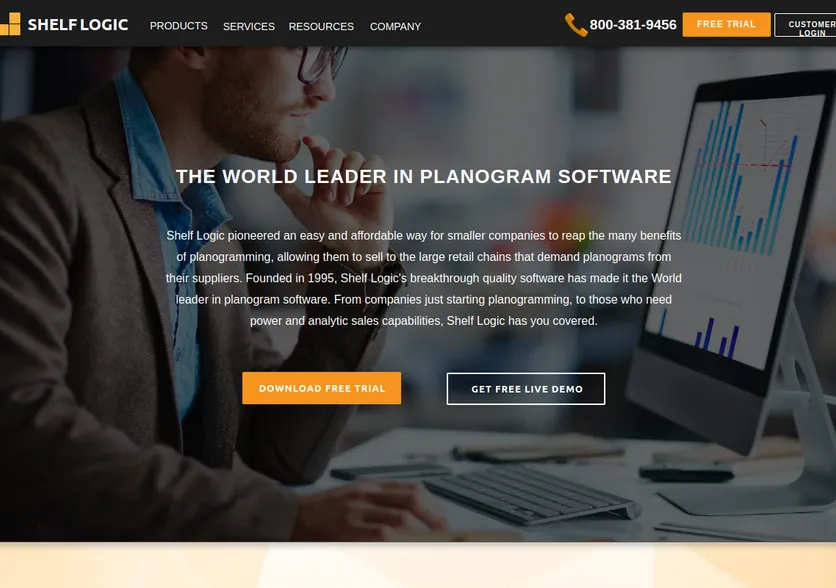
For a small shop that would rather pay once than subscribe, this Shelf Logic plan costs nine hundred and ninety-five dollars one time for the Master Edition, and there is no monthly bill after that. The Master Edition builds planograms and shelf layouts on the desktop, and ProView lets staff view finished plans in the cloud. It suits a small retailer that would rather own its software than rent it every month.
What we like
- One-time purchase with no monthly subscription
- ProView lets staff view plans in the cloud
- Enterprise edition covers larger teams
Watch out for
- Desktop-only, so a second computer needs its own copy
- The compare page is dated, so confirm the edition mapping
How to try it
- Buy the Master Edition and install it on the shop computer
- Build the planogram with fixtures and product images
- Share finished plans with staff through ProView
8. SmartDraw
Best for: Small businesses that sketch their own store layout
Paid tool Starting price: $10.95/month · Individual is $10.95 per month at list, billed annually; new customers see a $7.95 introductory rate and Team is $6.95 per user per month.
Free plan: No free plan (7-day trial)
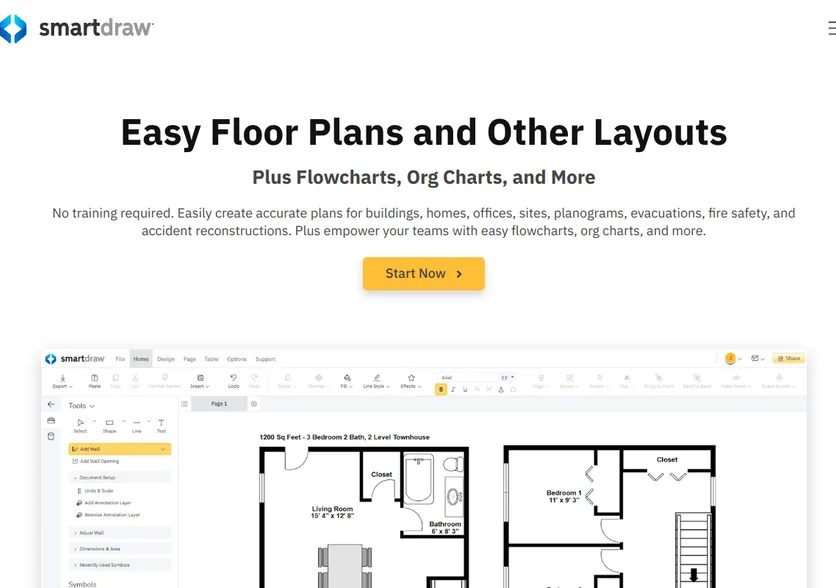
A small business that sketches its own store layout before ordering fixtures gets a cheap start here, since this SmartDraw plan costs ten dollars and ninety-five cents a month billed annually, and it covers planograms, store layouts and org charts in one subscription. Templates let a new planner start straight away, and the app runs on Windows, Mac and the web. It suits a small shop that needs floor plans and shelf layouts more than deep assortment maths.
What we like
- Planograms, floor plans and org charts in one app
- Templates speed up a first store layout
- Runs on Windows, Mac and the web
Watch out for
- No free plan, only a seven-day trial
- Assortment maths is lighter than the dedicated planners
How to try it
- Pick a store layout or planogram template
- Draw the fixtures and place products on the shelves
- Share the finished plan with staff for comment
Prices above were checked on each vendor’s own website on Nov 28, 2026 and can change — the vendor’s page is the final word. Vendor links are editorial: nobody paid to be listed or ranked here. Vendors who want a featured listing can see how it works on our Get listed page.
How a small shop plans a range that sells
Start with what sold last season, because a small shop cannot afford to guess its range from scratch. Rank every product by sales and margin, then cut the slowest lines before adding anything new, since a shelf full of slow stock is cash standing still. Draw the planogram for the best-selling shelf first, put new lines where customers already look, and review the range every month so the plan follows the till, not the catalogue.
Before you buy
- Confirm the free plan covers enough products to build a real range before paying
- Check whether the price is per user or per licence, because a small team still adds seats
- Ask if planograms export in a format staff can open without buying the same software
- Make sure the tool handles the product count the shop actually carries, not just a demo list
- Test the tool on the best-selling shelf first, where a better plan pays for itself fastest
Official websites
Official websites of the products reviewed above. Features and prices were checked against these sites when this guide was written, and they can change, so confirm on the vendor site before you buy.
Frequently asked questions
What is retail assortment planning software for small business?
It is software that helps a small retailer decide which products to stock, how many of each to carry and where they sit on the shelf, without a big planning team. The tools in this list cover planograms, range reviews and sales data, so a shop owner can plan the range from what actually sells. A till with assortment tools, such as Lightspeed Retail, suits shops that want planning beside the register.
How much does Lightspeed Retail cost?
Lightspeed Retail costs eighty-nine dollars a month billed annually, or one hundred and nine dollars month to month. That plan covers the till, inventory, purchasing and multi-store stock in one dashboard, which is why it leads this list for small retailers. An older page still shows sixty-nine dollars a month, so confirm the current figure on the vendor pricing page before buying.
Can a small business plan its range for free?
Yes, with OPENCatman, which offers a free version covering unlimited projects, and DotActiv, which offers a free plan for forty SKUs. Both are genuine free tiers rather than trials, so a small shop can build a real range without paying. Paid plans add reporting, data imports and larger catalogues when the range grows beyond the free limits.
Is Quant Retail too expensive for a small business?
For most small shops, yes, because Quant Retail costs one thousand six hundred and fifty dollars per user a year for planogramming alone. That price buys the most complete planning model in this list, with assortments, space plans and sales data in one place. A small business should start with a cheaper planogram tool and move to Quant only when the range outgrows it.
Which tool is best for a small retailer starting out?
OPENCatman is the best value for a small retailer starting out, because the free version covers unlimited projects and PRO costs ninety-nine dollars a month. Lightspeed Retail is the better pick if the shop wants the till and the range plan in one system. SmartDraw suits a shop that mainly needs floor plans and shelf layouts at a low monthly price.
Compare the eight tools above, then start with the free OPENCatman plan or the DotActiv free tier on the tool that matches how the shop already plans its range before paying for a full year.
Browse Business Tools tools