On this page
A parcel that never arrives costs the sale, the refund and the customer, and the eight tools below are judged on how much of that loss they cover and who pays for the cover. Some are free to the merchant because shoppers fund them, others charge per parcel, and all of them handle the claim so the store does not have to. Route leads because it costs the merchant nothing and handles claims and replacements automatically, and the rest are ranked on how much protection they buy for the price.
How we researched this
We checked every price on the vendor pricing page or Shopify listing on November 28, 2026, and only included tools with a published US dollar price. Corso and Extend publish no merchant rate, so they are not in this list, and Loop Protection has no standalone published price either. Prices change, so confirm the current figure on the vendor site before you buy.
Compare the tools
| Name | Best for | Starting price | Free plan | |
|---|---|---|---|---|
| Route | Stores that want free tracking and protection | Free | Free Standard plan ($0 a month) | Visit |
| Seel | Brands that want delays covered as well as loss | Free | Free plan ($0 per store a month) | Visit |
| AfterShip Protection | Brands that want insured protection inside AfterShip | $1 per $100 | Free to install; shoppers pay at checkout | Visit |
| Shipsurance | Etsy and Shopify sellers who insure per parcel | $0.80 per $100 | No monthly fee; pay per shipment | Visit |
| InsureShip | High-volume shippers who want licensed cargo cover | $2.00 per $100 | Free to add to the store | Visit |
| ShipInsure | Brands whose problem parcels include wrong items and defects | Free | Free to install; shoppers pay from $0.98 | Visit |
| Navidium | Stores that want to run their own protection program | $29.99/month | Free plan (up to 50 orders a month) | Visit |
| CWILL Order Tracking | Shopify stores that want tracking pages that sell | $11/month | Free plan (20 orders a month) | Visit |
The shipping protection software for ecommerce, compared
1. Route
Best for: Stores that want free tracking and protection
Paid tool Starting price: Free · Free to the merchant on the Standard plan; shoppers pay about two percent of the cart value at checkout, with a ninety-eight-cent minimum; a Custom plan with flat-fee or merchant-funded options is quoted
Free plan: Free Standard plan ($0 a month)
A store that wants its parcels protected without paying a monthly fee will start here, because this Route plan costs nothing to the merchant on the Standard plan. Shoppers pay about two percent of the cart at checkout, and Route verifies most claims with AI and triggers a replacement or refund fast. Tracking comes with the protection, so the brand gets visibility and cover from one install.
What we like
- Free to the merchant, with shoppers funding protection
- Order tracking and package protection in one app
- AI verifies most claims and triggers replacements fast
Watch out for
- Shoppers can decline the protection fee at checkout
- The merchant plan is free only because shoppers pay
How to try it
- Install Route from the Shopify App Store
- Switch on tracking and the checkout protection offer
- Let Route handle claims and replacements automatically
2. Seel
Best for: Brands that want delays covered as well as loss
Paid tool Starting price: Free · Free to the merchant on the Free plan, covering two hundred and fifty orders with Worry-Free Delivery, Worry-Free Purchase and Extended Warranty; Growth is ninety-nine dollars per store a month; shoppers pay a small fee at checkout and Seel covers the refunds
Free plan: Free plan ($0 per store a month)
A store that loses sales to delivery delays as well as lost parcels needs cover that names delays, and this Seel plan costs nothing per store a month on the Free plan. Worry-Free Delivery covers loss, damage, theft and delays, while Worry-Free Purchase makes even final sale items returnable. Seel pays the refunds, so the merchant keeps the original sale revenue.
What we like
- Covers loss, damage, theft and delays in one offer
- Worry-Free Purchase makes final sale items returnable
- Seel pays the refunds, so the merchant keeps the sale
Watch out for
- The free plan covers only two hundred and fifty orders
- Shoppers pay the protection fee, so take-up varies
How to try it
- Install Seel from the Shopify App Store
- Switch on Worry-Free Delivery and Purchase at checkout
- Let shoppers file claims in the self-service Resolution Center
3. AfterShip Protection
Best for: Brands that want insured protection inside AfterShip
Paid tool Starting price: $1 per $100 · One dollar per one hundred dollars of declared value, with AfterShip noting typical premiums run around one and a half percent; underwritten through UPS Capital InsureShield with a ten thousand dollar cap per order; some November 2026 reads quote one dollar and fifty cents per one hundred
Free plan: Free to install; shoppers pay at checkout
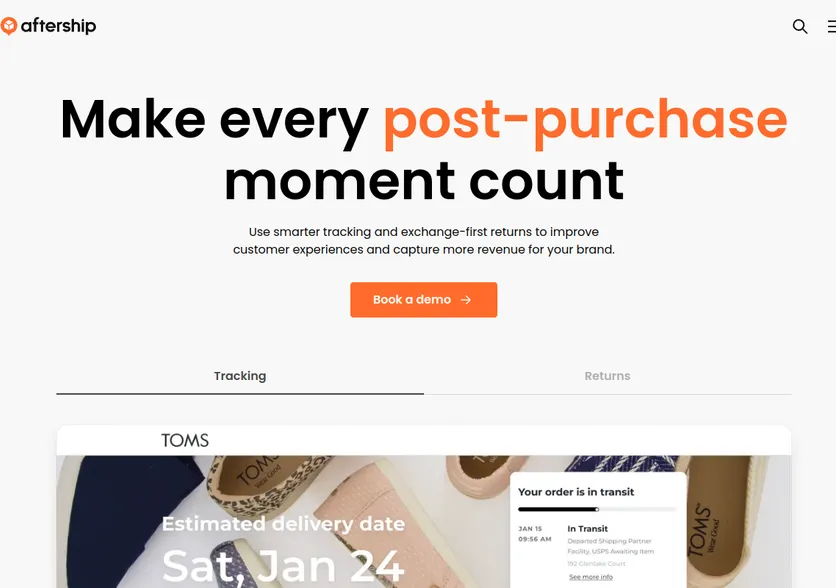
A brand already running AfterShip can add protection without a second vendor, and this AfterShip Protection cover costs one dollar per one hundred dollars of declared value. Shoppers add it at checkout, and claims are handled from the same dashboard as tracking and returns. It is underwritten through UPS Capital InsureShield, with a ten thousand dollar cap per order.
What we like
- Protection sold at checkout with no merchant subscription
- Claims handled through the AfterShip dashboard
- Underwritten by UPS Capital InsureShield
Watch out for
- The per-hundred rate varies by order value and route
- Only available inside the AfterShip post-purchase suite
How to try it
- Enable Protection in the AfterShip dashboard
- Set the checkout offer and coverage limits
- File claims from the dashboard when a parcel goes missing
4. Shipsurance
Best for: Etsy and Shopify sellers who insure per parcel
Paid tool Starting price: $0.80 per $100 · Eighty cents per one hundred dollars of declared value on the Etsy program for domestic shipments, or one dollar and thirty-five cents international; Shopify labels cost eighty-nine cents domestic and one dollar and twenty-nine cents international; direct rates run from about thirty cents per one hundred by volume
Free plan: No monthly fee; pay per shipment
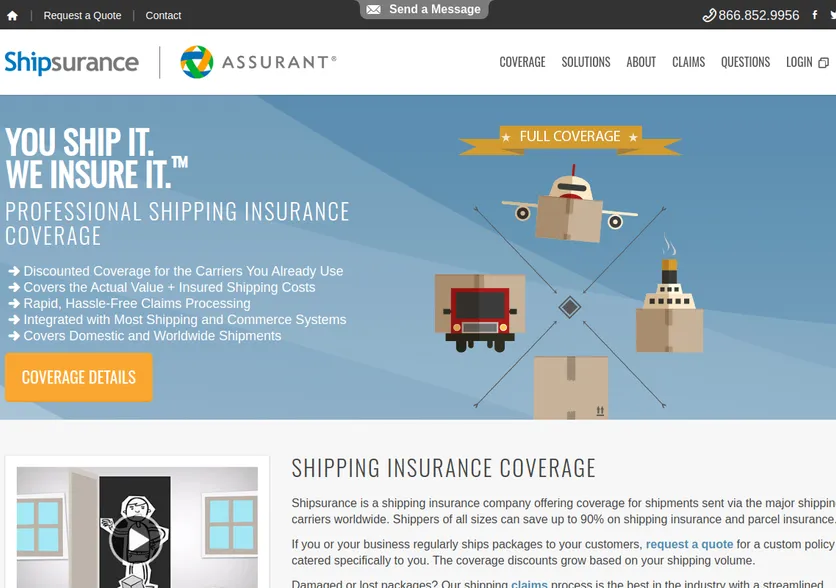
A store that wants real cargo insurance priced per parcel will like this Shipsurance cover, which costs eighty cents per one hundred dollars of declared value on the Etsy program. There is no subscription, so the store pays only for the parcels it insures, and Shopify labels cost eighty-nine cents per one hundred dollars domestic. Cover runs to five thousand dollars per shipment.
What we like
- Pay per parcel with no monthly subscription
- Claims filed through Shopify admin on Shopify labels
- Covers loss, theft and damage up to five thousand dollars
Watch out for
- The rate depends on the channel, so Etsy and Shopify prices differ
- Claims must be filed within one hundred and twenty days
How to try it
- Add Shipsurance coverage when buying the label
- Declare the shipment value in one hundred dollar steps
- File any claim through Shopify admin or the Shipsurance portal
5. InsureShip
Best for: High-volume shippers who want licensed cargo cover
Paid tool Starting price: $2.00 per $100 · Two dollars per one hundred dollars of declared value for enterprise bulk coverage, or one thousand dollars per fifty thousand insured, as published on the vendor about page; volume rates run from about fifty-five cents per one hundred and the Shopify checkout product is priced at one dollar and twenty-five cents per two hundred dollars of cart value
Free plan: Free to add to the store
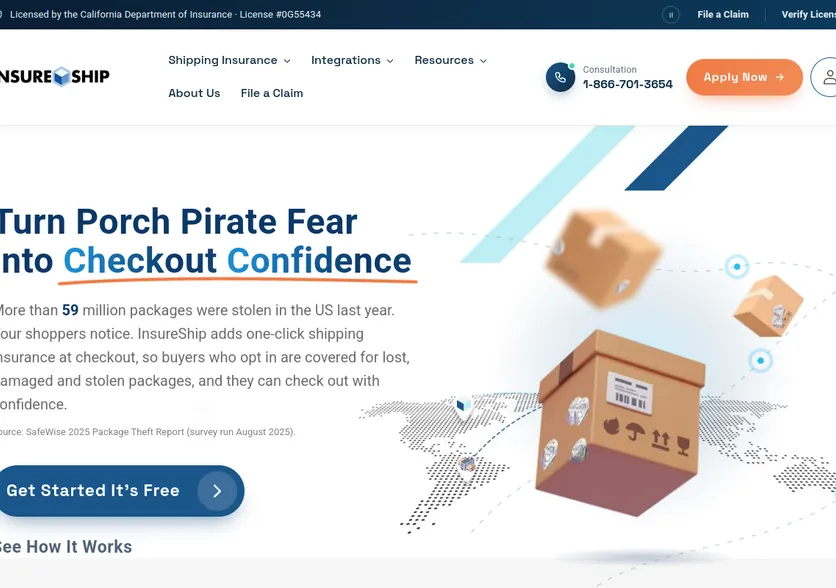
A high-volume shipper who wants licensed cargo cover for the whole outbound flow will find this InsureShip cover costs two dollars per one hundred dollars of declared value on the enterprise bulk program. The agency has been licensed since 2009, and volume rates run from about fifty-five cents per one hundred for large shippers. Claims go through an online portal with a seven to ten business day payout window.
What we like
- Licensed shipping insurance agency since 2009
- Covers loss, damage and theft up to five thousand dollars per shipment
- Volume rates drop to about fifty-five cents per one hundred
Watch out for
- The headline bulk rate is higher than the per-order volume rates
- Checkout pricing is confirmed per store, not published as a flat rate
How to try it
- Contact InsureShip to set up the bulk program
- Declare values on outbound shipments automatically
- File claims through the online portal within the claim window
6. ShipInsure
Best for: Brands whose problem parcels include wrong items and defects
Paid tool Starting price: Free · Free for the merchant to install; shoppers pay from ninety-eight cents at checkout and the merchant keeps a revenue share of five to fifteen cents per order by volume; coverage includes loss, theft, damage in transit, defects and wrong items
Free plan: Free to install; shoppers pay from $0.98
A store whose problem parcels include wrong items and defects, not just carrier losses, needs wider cover, and this ShipInsure plan costs nothing for the merchant to install. Shoppers pay from ninety-eight cents at checkout, and the merchant keeps a revenue share of five to fifteen cents per order. Claims run through a branded wizard on the store subdomain, with support around the clock.
What we like
- Covers wrong items and manufacturing defects, not only carrier losses
- Branded claims wizard runs on the store subdomain
- Merchant earns a revenue share on every protected order
Watch out for
- The shopper cost above the ninety-eight-cent minimum is not published
- Protection is not insurance sold by ShipInsure, per its own terms
How to try it
- Install ShipInsure from the Shopify App Store
- Switch on the Order Insurance offer at checkout
- Let shoppers file claims through the branded wizard
7. Navidium
Best for: Stores that want to run their own protection program
Paid tool Starting price: $29.99/month · Twenty-nine dollars and ninety-nine cents a month for Essential, covering up to five hundred orders; Growth is forty-nine dollars and ninety-nine cents to one thousand and Enterprise Plus is ninety-nine dollars and ninety-nine cents unlimited; the merchant keeps one hundred percent of the fees collected
Free plan: Free plan (up to 50 orders a month)
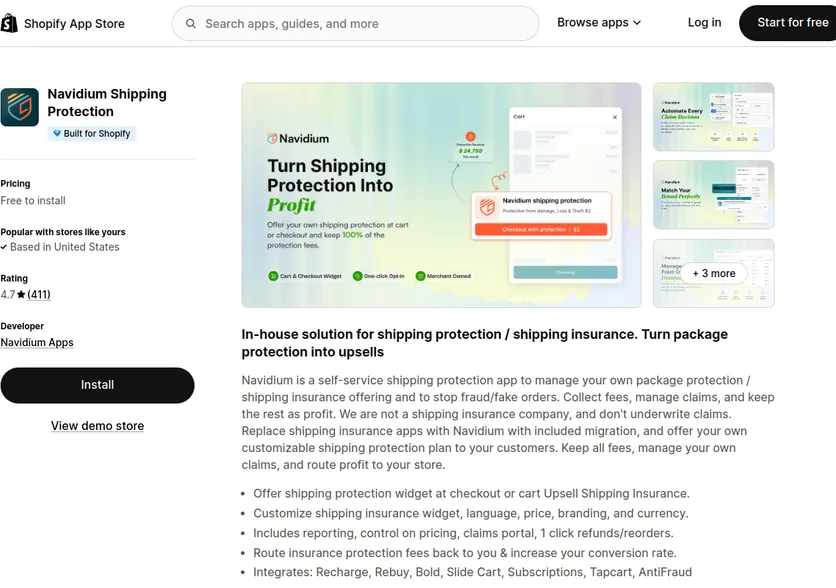
A store that would rather keep the protection fees and pay its own claims will like this Navidium plan, which costs twenty-nine dollars and ninety-nine cents a month for Essential. The merchant keeps one hundred percent of the fees shoppers pay, and a self-service portal handles claims with one-click refunds. Navidium is not an insurer, so the merchant funds every claim from the fees collected.
What we like
- Keep one hundred percent of the protection fees collected
- Self-service claims portal with one-click refunds
- No revenue share taken from the merchant
Watch out for
- Navidium is not an insurer and does not underwrite claims
- The merchant pays every claim from the fees collected
How to try it
- Install Navidium from the Shopify App Store
- Set the widget price shoppers see at checkout
- Manage claims and refunds from the Navidium portal
8. CWILL Order Tracking
Best for: Shopify stores that want tracking pages that sell
Paid tool Starting price: $11/month · Eleven dollars a month for Essential, covering two hundred orders with five cents per extra order, or one hundred and eight dollars a year; Professional is fifty-nine dollars and Enterprise is four hundred and seventy-nine; formerly ParcelPanel and ParcelWILL, now sold under the CWILL name
Free plan: Free plan (20 orders a month)
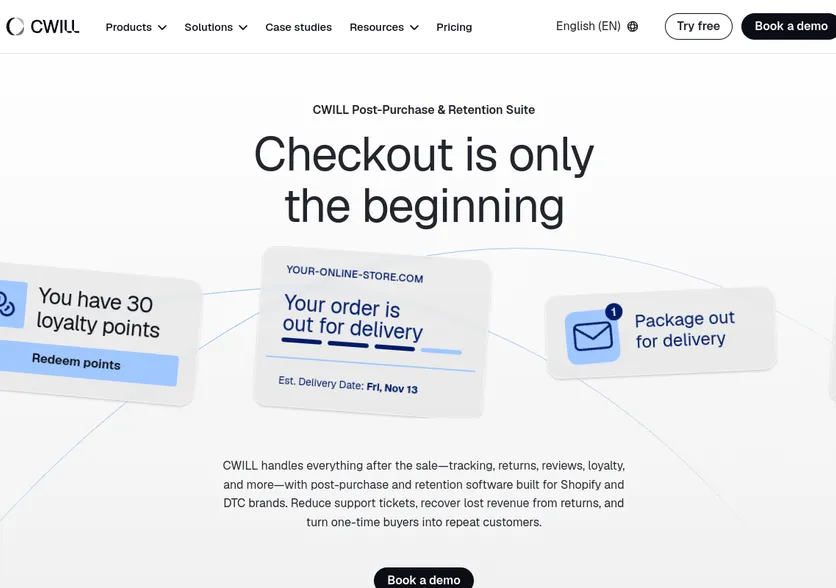
A Shopify store that sells protection from the tracking page can do it here, because this CWILL Order Tracking plan costs eleven dollars a month for Essential. Shipping protection sits on the branded tracking page beside product recommendations, so the offer reaches the buyer after the sale. The free plan covers twenty orders a month, and protection needs the paid plan.
What we like
- Branded tracking pages with product recommendations built in
- Shipping notifications start on the Essential plan
- Shipping protection can be sold from the tracking page
Watch out for
- Shopify and WooCommerce only, with no standalone platform
- The rebrand means older guides still call it ParcelPanel
How to try it
- Install the app from the Shopify App Store
- Customise the tracking page with the store branding
- Switch on notifications and product recommendations
Prices above were checked on each vendor’s own website on Nov 28, 2026 and can change — the vendor’s page is the final word. Vendor links are editorial: nobody paid to be listed or ranked here. Vendors who want a featured listing can see how it works on our Get listed page.
How to offer shipping protection without annoying buyers
Show the protection fee clearly at checkout and let the shopper remove it, because a hidden charge creates more complaints than the protection prevents. Pick cover that matches the order value, and do not sell a high fee on a low-value parcel. File claims fast when a parcel goes missing, because a slow claim is worse than no cover at all. Track how many shoppers take the cover and how many claim, and change the offer when the numbers stop adding up. Tell shoppers the protection is optional in plain words, because trust is worth more than one fee.
Before you buy
- Confirm what the cover actually pays for, including delays and theft
- Check who funds the protection, the shopper or the merchant, before choosing
- Make sure claims are filed online and paid quickly, not by post
- Test the checkout offer on a real order to see what shoppers actually see
- Confirm the cover limit is above the average order value of the store
Official websites
Official websites of the products reviewed above. Features and prices were checked against these sites when this guide was written, and they can change, so confirm on the vendor site before you buy.
Frequently asked questions
What is the best shipping protection software for ecommerce in 2026?
Route is the best overall choice, because it costs the merchant nothing and handles claims and replacements automatically. Seel is the best pick for coverage, since it names delays as well as loss, damage and theft, while Shipsurance is the best per-parcel insurance from eighty cents per one hundred dollars. The right pick depends on whether the store wants shoppers to fund the cover or prefers to pay per parcel.
How much does shipping protection cost?
It depends on who pays, because most protection is funded by shoppers at checkout rather than by the merchant. Route and Seel cost the merchant nothing, with shoppers paying about two percent of the cart, while Shipsurance costs eighty cents per one hundred dollars of declared value. InsureShip charges two dollars per one hundred dollars on its bulk program, and Navidium costs twenty-nine dollars and ninety-nine cents a month.
Is shipping protection the same as shipping insurance?
No, and the difference matters, because protection is usually a checkout add-on funded by shoppers, while insurance is a licensed policy the merchant or carrier buys. Route, Seel and Navidium all say their products are not insurance, while Shipsurance and InsureShip sell real cargo cover underwritten by insurers. The claim process differs too, so read the terms before choosing a product.
Who handles the claim when a protected parcel goes missing?
It depends on the tool, because Route, Seel and ShipInsure handle claims themselves, while Navidium leaves the claim with the merchant. Shipsurance claims go through Shopify admin on Shopify labels, and InsureShip claims go through its online portal. A store that wants no claims work at all should pick Route, Seel or ShipInsure.
Can I offer shipping protection for free to my customers?
Yes, if the merchant funds it, but most tools here pass the cost to shoppers as a small checkout fee. Route and Seel cost the merchant nothing because shoppers pay about two percent of the cart, while Shipsurance lets the merchant pay per parcel instead. A store that absorbs the cost should price it into the product, since free protection still costs someone.
Compare the eight tools above, then start with the free protection offer that matches the store, whether that is shopper-funded cover or per-parcel insurance, before paying for a monthly plan.
Browse Business Tools tools