On this page
Not every buyer is ready to talk, and the teams that win are the ones that spot the ready ones first. The eight tools below cover that job for teams of every size, from a free email plan for a tiny store to a platform that names the companies visiting the website. HubSpot Marketing Hub leads because marketing and CRM share one record from twenty dollars a seat a month, and the rest are ranked on how much buyer intent you get for the price.
How we researched this
We checked every price on the vendor pricing page on November 28, 2026, and only included tools with a published US dollar list price. 6sense, ZoomInfo and Drift publish no prices, so they are not in this list. Prices change, so confirm the current figure on the vendor site before you buy.
Compare the tools
| Name | Best for | Starting price | Free plan | |
|---|---|---|---|---|
 HubSpot Marketing Hub | Teams that want marketing and CRM in one place | $20/seat/month | Free plan (up to 2 users) | Visit |
 ActiveCampaign | Teams that want deep email automation | $15/month | No free plan; 14-day free trial | Visit |
 Klaviyo | Ecommerce teams that sell by email and text | $20/month | Free plan (up to 250 profiles) | Visit |
 Intercom | Teams that chat with buyers on the website | $29/seat/month | No free plan; 14-day free trial | Visit |
 Apollo | Sales teams that prospect and sequence in one place | $49/user/month | Free plan | Visit |
 Lusha | Reps who find contacts on LinkedIn | $37.45/month | Free plan | Visit |
 Mailchimp | Small businesses that start with email | $13/month | Free plan (up to 250 contacts) | Visit |
| Leadfeeder | Teams that want to know who visits the website | $99/month | Free plan (100 companies a month) | Visit |
The software for managing high-intent buyers, compared
1. HubSpot Marketing Hub
Best for: Teams that want marketing and CRM in one place
Paid tool Starting price: $20/seat/month · Twenty dollars per seat a month billed annually on Starter, with one thousand marketing contacts included; a seven-dollar first-year promo for new customers is not the list price; Professional is eight hundred dollars a month and Enterprise three thousand six hundred dollars
Free plan: Free plan (up to 2 users)
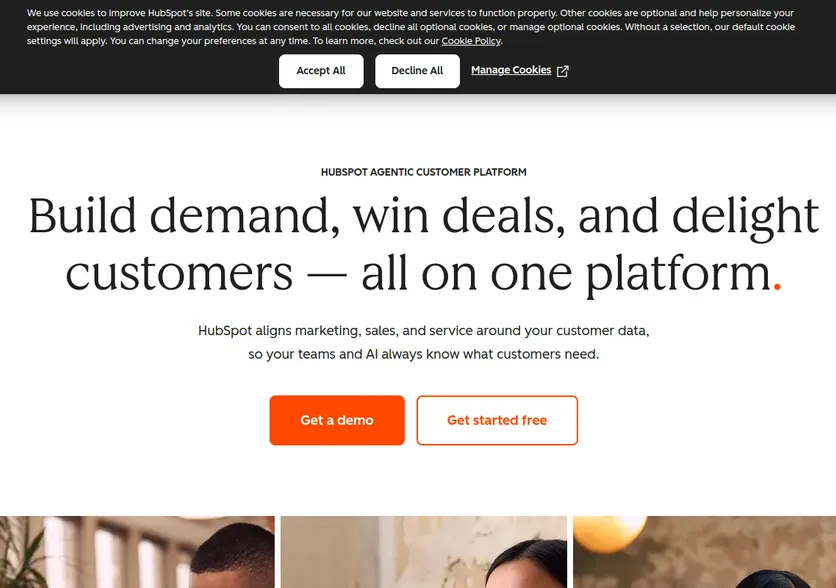
A team that wants its marketing and its CRM to share one record starts here, because this HubSpot Marketing Hub plan costs twenty dollars per seat a month billed annually on Starter, with one thousand marketing contacts included. Email, forms, landing pages and simple automation run on the same contact record as sales, so no lead ever falls between two systems. It is the safest pick in this list for a team that wants buyer intent inside the CRM it already uses.
What we like
- Marketing and CRM share one contact record
- Forms, email and landing pages in one hub
- Free tools cover the basics for a tiny team
Watch out for
- The bill grows with the marketing contact count
- Real automation starts on the dearer Professional tier
How to try it
- Connect Marketing Hub to the HubSpot CRM
- Build a landing page and form for the next campaign
- Set up a simple workflow that scores new leads
2. ActiveCampaign
Best for: Teams that want deep email automation
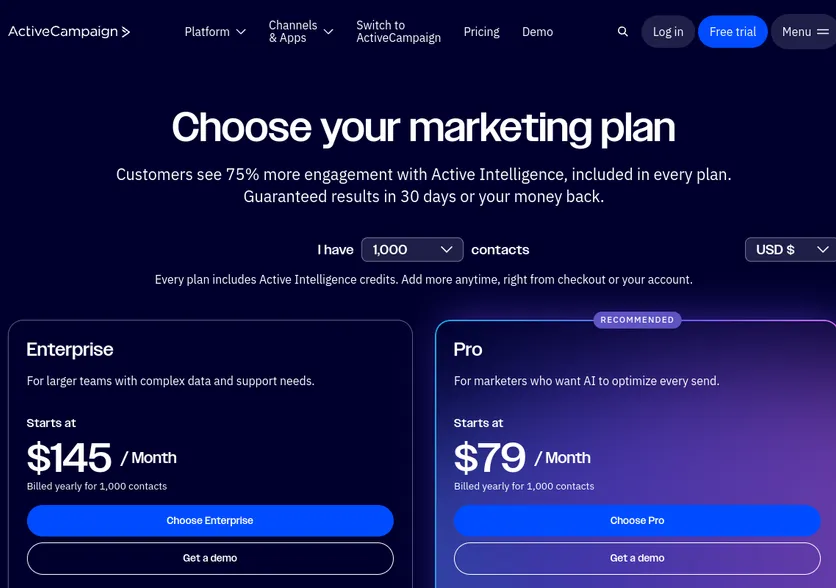
Paid tool Starting price: $15/month · Fifteen dollars a month billed annually on Starter for one thousand contacts ($19 month to month); Plus is forty-nine dollars, Pro seventy-nine dollars and Enterprise one hundred and forty-five dollars; the bill rises with the contact count
Free plan: No free plan; 14-day free trial
A team that lives on email automation will move fastest here, because this ActiveCampaign plan costs fifteen dollars a month billed annually on Starter for one thousand contacts. Multi-step automations, segmentation and site tracking trigger the right message at the right moment, and the visual builder keeps complex flows readable. It is the strongest automation tool in this list for a team that turns buyer signals into email journeys.
What we like
- Multi-step automation with a visual builder
- Segmentation and site tracking built in
- Hundreds of ready-made automation recipes
Watch out for
- The bill rises with every contact, including unsubscribed ones
- Landing pages and AI need the dearer Plus plan
How to try it
- Import the contact list and set up segments
- Build the first automation from a recipe
- Turn on site tracking to score engaged visitors
3. Klaviyo
Best for: Ecommerce teams that sell by email and text
Paid tool Starting price: $20/month · Twenty dollars a month for two hundred and fifty-one to five hundred active profiles; forty-five dollars at one thousand and one to one thousand five hundred profiles and about one hundred and fifty dollars at ten thousand; the free plan covers two hundred and fifty profiles and five hundred sends a month
Free plan: Free plan (up to 250 profiles)
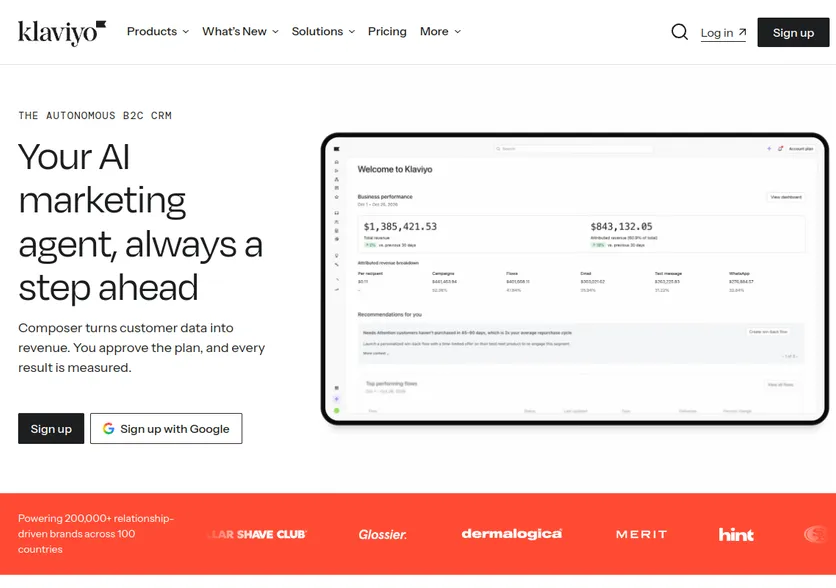
An online store that makes its money from repeat buyers finds its engine here, because this Klaviyo plan costs twenty dollars a month for two hundred and fifty-one to five hundred active profiles. Abandoned-cart flows, post-purchase sequences and predictive analytics turn browsing into orders, and the free plan covers two hundred and fifty profiles. It is the best pick in this list for a store that wants email and text to drive revenue.
What we like
- Abandoned-cart and post-purchase flows built in
- Predictive analytics on buyer behaviour
- Free plan covers two hundred and fifty profiles
Watch out for
- The bill climbs steeply as the list grows
- Built for ecommerce, so other businesses get less value
How to try it
- Connect the store and sync the customer list
- Turn on the abandoned-cart and welcome flows
- Build a segment of repeat buyers for the next campaign
4. Intercom
Best for: Teams that chat with buyers on the website
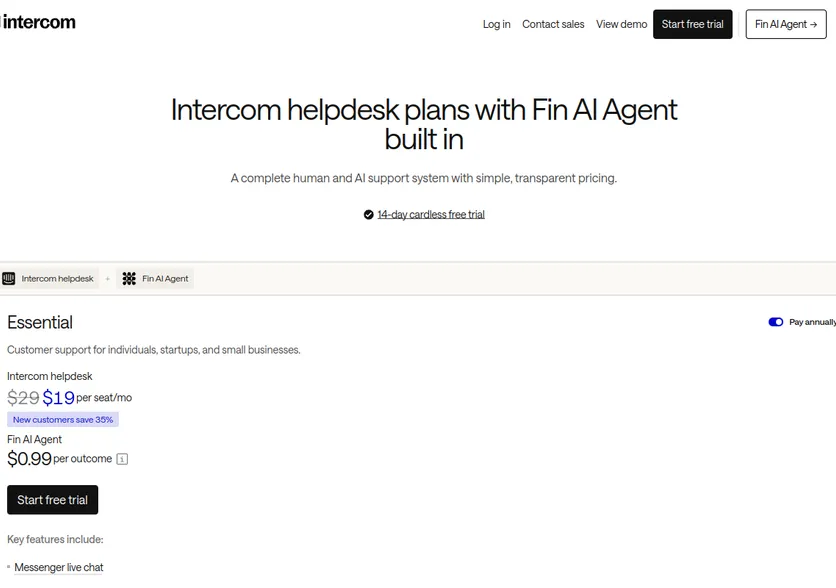
Paid tool Starting price: $29/seat/month · Twenty-nine dollars per seat a month billed annually on Essential ($39 month to month); Advanced is eighty-five dollars and Expert one hundred and thirty-two dollars; Fin AI costs ninety-nine cents per outcome on top; a nineteen-dollar new-customer price is a promo, not the list
Free plan: No free plan; 14-day free trial
A team that turns website visitors into conversations starts here, because this Intercom plan costs twenty-nine dollars per seat a month billed annually on Essential. Live chat, the help centre and the Fin AI agent answer buyers in real time, and the best conversations route straight to sales. It is the best pick in this list for a team whose highest-intent buyers arrive through the chat window.
What we like
- Live chat, help centre and AI agent in one app
- Fin AI resolves most questions automatically
- Sales conversations route to the right person
Watch out for
- Fin AI outcomes add ninety-nine cents each on top of seats
- No free plan, only a fourteen-day trial
How to try it
- Install the messenger on the website
- Set up the Fin AI agent to answer common questions
- Route sales conversations to the right team member
5. Apollo
Best for: Sales teams that prospect and sequence in one place
Paid tool Starting price: $49/user/month · Forty-nine dollars per user a month billed annually on Basic, with thirty thousand credits a year; Professional is seventy-nine dollars and Organization one hundred and nineteen dollars with a three-user minimum; monthly billing costs more, with recent reads disagreeing between fifty-nine and sixty-five dollars
Free plan: Free plan
A sales team that builds its own pipeline from cold lists will move fastest here, because this Apollo plan costs forty-nine dollars per user a month billed annually on Basic. A database of more than two hundred and forty million contacts, email sequences and a dialer share one workspace, and credits ration how many contacts each user can reveal. It is the best pick in this list for an outbound team that wants data and sequencing in one subscription.
What we like
- Huge contact database with built-in sequences
- Dialer and CRM integrations in one workspace
- Free plan lets a solo seller test the data
Watch out for
- Credits cap how many contacts each user can reveal
- Data accuracy varies by industry and region
How to try it
- Search the database for the target accounts
- Build a sequence with email and call steps
- Enrich the replies and push them into the CRM
6. Lusha
Best for: Reps who find contacts on LinkedIn
Paid tool Starting price: $37.45/month · Thirty-seven dollars and forty-five cents a month billed annually on Starter for one seat ($49.90 month to month); Pro is fifty-two dollars and forty-five cents for two seats and Premium two hundred and ninety-nine dollars and ninety-five cents for five seats; credits are the real limit
Free plan: Free plan
A rep who finds buyers on LinkedIn gets the fastest reveal here, because this Lusha plan costs thirty-seven dollars and forty-five cents a month billed annually on Starter for one seat. The browser extension reveals verified emails and direct phone numbers from a profile in one click, and the lists sync into the CRM. It is the best pick in this list for a small team that builds lists from LinkedIn every day.
What we like
- One-click reveals from LinkedIn profiles
- Verified emails and direct phone numbers
- Lists sync into Salesforce, HubSpot and Pipedrive
Watch out for
- Credits run out fast on phone-heavy teams
- Annual plans do not roll over unused credits
How to try it
- Install the browser extension and connect LinkedIn
- Reveal contacts from profiles and save them to a list
- Sync the list into the CRM for outreach
7. Mailchimp
Best for: Small businesses that start with email
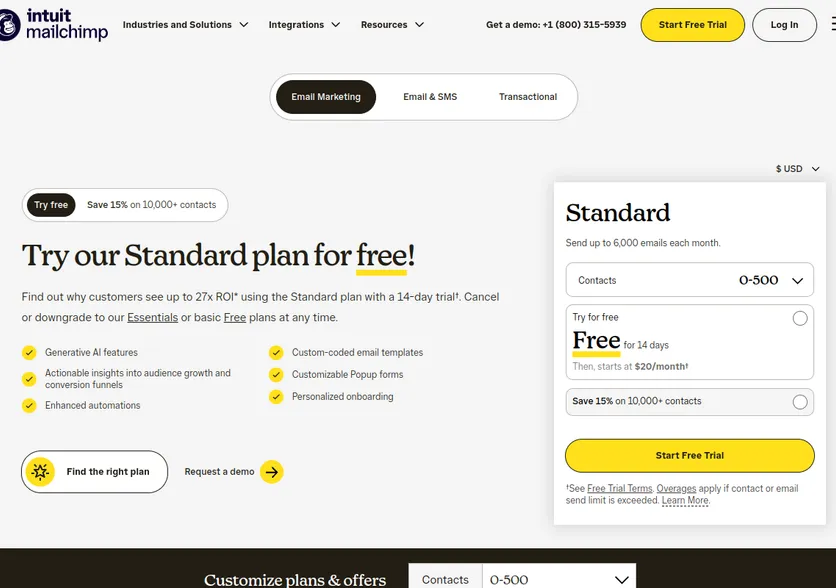
Paid tool Starting price: $13/month · Thirteen dollars a month on Essentials for up to five hundred contacts; Standard is twenty dollars and Premium three hundred and fifty dollars; the price climbs with the contact count, reaching seventy-five dollars on Essentials at five thousand contacts; a seventeen-dollar Standard promo is not the list price
Free plan: Free plan (up to 250 contacts)
A small business that starts its marketing with email finds the best-known name here, because this Mailchimp plan costs thirteen dollars a month on Essentials for up to five hundred contacts. Templates, A/B testing and simple automation cover the first campaigns, and the free plan covers two hundred and fifty contacts. It is the easiest starting point in this list for a team that wants email marketing without a learning curve.
What we like
- The best-known email tool with the gentlest learning curve
- Templates and A/B testing on the entry plan
- Hundreds of integrations with stores and CRMs
Watch out for
- The price climbs fast as the list grows
- Automation is basic next to the specialist tools
How to try it
- Import the contact list and set up the first audience
- Pick a template and send the first campaign
- Turn on a simple welcome automation for new signups
8. Leadfeeder
Best for: Teams that want to know who visits the website
Paid tool Starting price: $99/month · Ninety-nine dollars a month billed annually on Discover for up to fifty companies identified a month (about one hundred and thirty-nine dollars month to month); higher bands rise to one thousand one hundred and ninety-nine dollars; the vendor page now shows euro prices to some visitors, and the product is sold as Dealfront
Free plan: Free plan (100 companies a month)
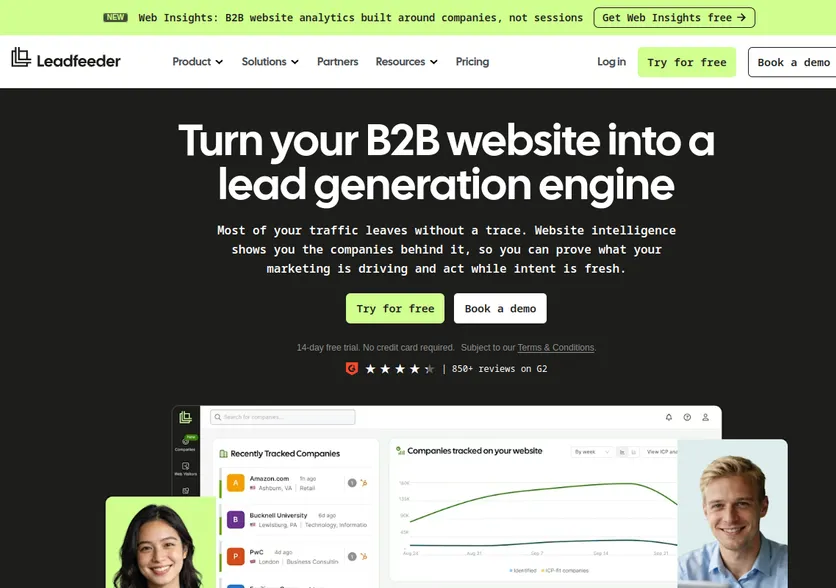
A team that wonders which companies visit its website gets the answer here, because this Leadfeeder plan costs ninety-nine dollars a month billed annually on Discover for up to fifty companies identified a month. Reverse IP lookup names the visiting company, and the visit history shows which pages drew the most attention. It is the best pick in this list for a team that wants to catch buyers who never filled in a form.
What we like
- Names the companies visiting the website
- Visit history shows which pages drew attention
- Syncs hot visitors into the CRM automatically
Watch out for
- Only identifies the company, not the person who visited
- Contact details need the dearer Activate plan
How to try it
- Add the tracking script to the website
- Watch the feed of visiting companies for a week
- Sync the hottest visitors into the CRM for follow-up
Prices above were checked on each vendor’s own website on Nov 28, 2026 and can change — the vendor’s page is the final word. Vendor links are editorial: nobody paid to be listed or ranked here. Vendors who want a featured listing can see how it works on our Get listed page.
How to work high-intent buyers without burning the list
Score the signal before the outreach, because a buyer who visited the pricing page twice this week deserves a call, while a cold list deserves an email. Reply within a day of the signal, since intent goes stale fast and the first team to call usually wins the conversation. Keep the first message short and specific to what the buyer actually looked at, and stop mailing accounts that never engage. Finally, review the scores every month, because a signal that worked in spring may mean nothing by autumn.
Before you buy
- Confirm how the price is counted: seats, contacts, profiles or companies identified
- Check whether intent data, enrichment credits and automation are included or capped
- Ask if the tool syncs buyer activity into the CRM the sales team uses
- Make sure the data complies with the privacy rules for the regions the team sells into
- Test the tool on a real list of target accounts before paying for a full year
Official websites
Official websites of the products reviewed above. Features and prices were checked against these sites when this guide was written, and they can change, so confirm on the vendor site before you buy.
Frequently asked questions
What is the best software for managing high-intent buyers?
HubSpot Marketing Hub is the best overall pick, because marketing and CRM share one contact record and Starter costs twenty dollars a seat a month billed annually. ActiveCampaign is the best automation value at fifteen dollars a month for one thousand contacts, and Klaviyo suits online stores at twenty dollars a month. The right choice depends on whether the team sells by email, chat, outbound or website visits.
How much does high-intent buyer software cost?
Prices in this list run from thirteen dollars a month for Mailchimp Essentials to ninety-nine dollars a month for Leadfeeder Discover, because the tools count different things: contacts, profiles, seats or companies identified. HubSpot Marketing Hub Starter is twenty dollars a seat a month, Apollo Basic is forty-nine dollars a user a month, and Intercom Essential is twenty-nine dollars a seat a month. Always check what the price counts before comparing.
Is there free software for finding high-intent buyers?
Yes. HubSpot Marketing Hub, Klaviyo and Mailchimp all offer free plans, Apollo has a free plan, Lusha has a free plan, and Leadfeeder is free for up to one hundred companies a month. ActiveCampaign and Intercom offer fourteen-day trials instead. Free plans cover small lists and basic features, while intent data, credits and automation usually need a paid tier.
How do I find out which companies visit my website?
Leadfeeder names the companies visiting the website through reverse IP lookup, so the team can follow up with accounts that never filled in a form. It costs ninety-nine dollars a month billed annually for up to fifty companies identified a month. Apollo and Lusha add contact data and outreach, while HubSpot and ActiveCampaign score the buyers already in the database. Most teams pair a visitor tool with an outreach tool.
How do I choose between these tools?
Start from the list the team already has, because a tool that cannot use the existing contacts and CRM data will sit unused. Test on a real list of target accounts for two weeks and measure replies, not clicks. Check the billing unit carefully, since a tool priced per contact, per profile or per company identified can cost very different amounts at the same list size.
Compare the eight tools above, then start with a free plan or trial on the one that matches the team's list size and sales process before paying for a full year.
Browse Marketing & Ads Calculators tools