On this page
User story mapping lays out the journey a user takes and the stories that support each step, so the team can see the whole product before it builds any of it. The eight tools below cover that job, from a three-dollar editor seat to a hosted workshop platform. Miro leads because its infinite canvas holds the backbone, the activities and the stories in one view for eight dollars per member a month billed annually, and the rest are ranked on how well they turn a map into a backlog.
How we researched this
We checked every price on the vendor pricing page on November 29, 2026, and only included tools with a published US dollar list price. Conceptboard is left out because its current page prices in euros only, with no verifiable US dollar price, and InVision Freehand is discontinued while Excalidraw and Ziteboard have no paid plan to price. Prices change, so confirm the current figure on the vendor site before you buy.
Compare the tools
| Name | Best for | Starting price | Free plan | |
|---|---|---|---|---|
 Miro | Teams that want the biggest whiteboard canvas | $8/member/month | Free plan (3 editable boards) | Visit |
 Mural | Teams that run structured workshops | $9.99/member/month | Free plan (3 murals) | Visit |
 Lucidspark | Teams already using Lucidchart | $10/user/month | Free plan | Visit |
 FigJam | Design teams that already use Figma | $3/editor/month | Free Starter plan | Visit |
 Whimsical | Teams that want boards, docs and mind maps together | $10/editor/month | Free plan | Visit |
 Stormboard | Teams that want AI help with brainstorming | $8.33/user/month | Free Personal plan | Visit |
 Klaxoon | Teams that run workshops with a host | $24.90/host/month | Free plan (1 open activity) | Visit |
 ClickUp | Teams that want boards tied to tasks | $9/user/month | Free plan | Visit |
The whiteboard software for user story mapping, compared
1. Miro
Best for: Teams that want the biggest whiteboard canvas
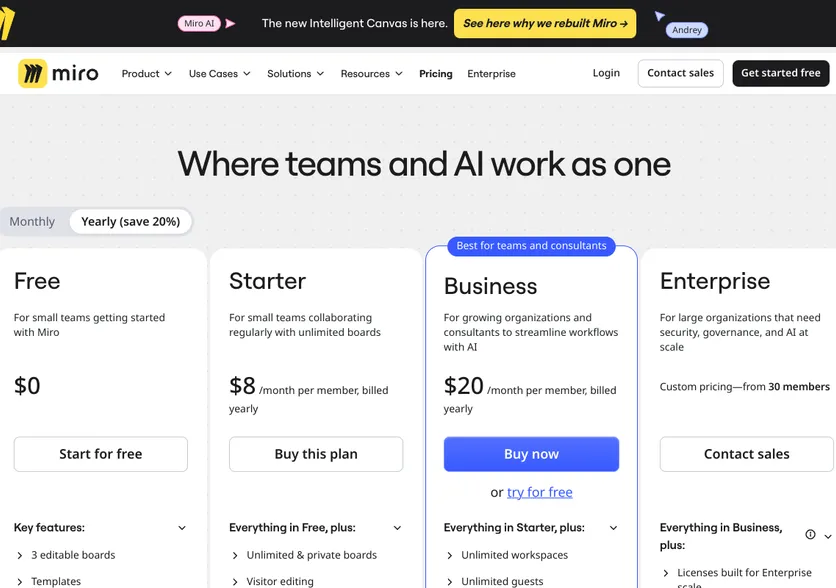
Paid tool Starting price: $8/member/month · $8 per member a month billed annually on Starter ($10 month to month); Business is $20 a month billed annually; free plan covers 3 editable boards
Free plan: Free plan (3 editable boards)
A team mapping user stories needs a board where stories stack into releases, and this Miro plan costs eight dollars per member a month billed annually. Its infinite canvas and journey templates hold personas, touchpoints and pain points in one view, and real-time cursors, comments and voting keep the whole team in the same workshop. The free plan covers three editable boards, so a team can test a real session before paying.
What we like
- Infinite canvas with templates for almost any workshop
- Real-time collaboration with comments and voting
- Hundreds of integrations with the tools teams already use
Watch out for
- The free plan allows only three editable boards
- Business features need the $20 tier
How to try it
- Create a board from a template
- Invite the team and set the sharing permissions
- Add sticky notes, frames and votes to run the session
2. Mural
Best for: Teams that run structured workshops
Paid tool Starting price: $9.99/member/month · $9.99 per member a month billed annually on Team+ ($12 month to month); Business is $17.99 a month billed annually with no monthly option; free plan covers 3 murals
Free plan: Free plan (3 murals)
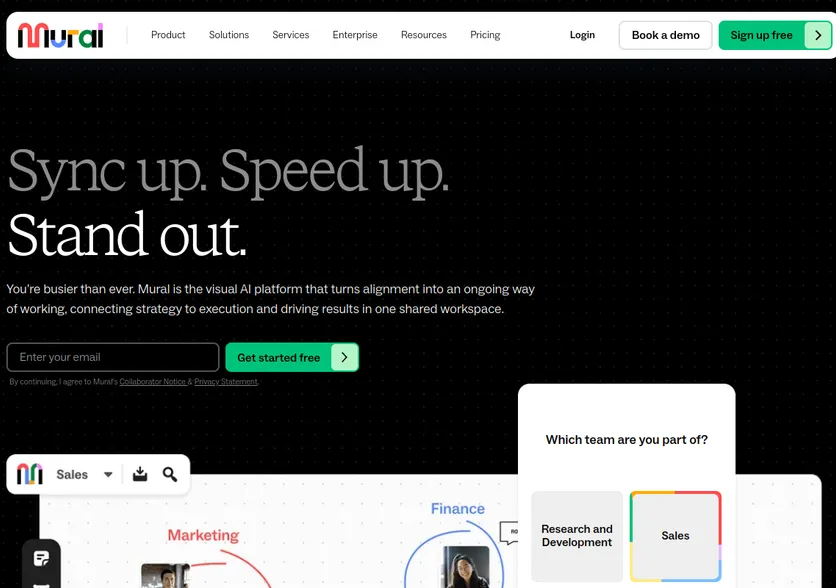
A team mapping user stories in a workshop needs private voting and guided steps, and this Mural plan costs nine dollars and ninety-nine cents per member a month billed annually. Its facilitation features, templates and anonymous voting keep workshops honest and on schedule, and the free plan covers three murals for a team to try the format. It suits a team that values a guided session over a free-form board.
What we like
- Facilitation features built for guided workshops
- Templates for design thinking and agile ceremonies
- Anonymous voting and private mode for honest input
Watch out for
- Business has no monthly billing option
- Fewer integrations than the biggest rival
How to try it
- Start a mural from a workshop template
- Invite participants and set the facilitation mode
- Run the activities and export the outcomes
3. Lucidspark
Best for: Teams already using Lucidchart
Paid tool Starting price: $10/user/month · $10 per user a month billed annually on Team; Individual is $9 a month billed annually; free plan included
Free plan: Free plan
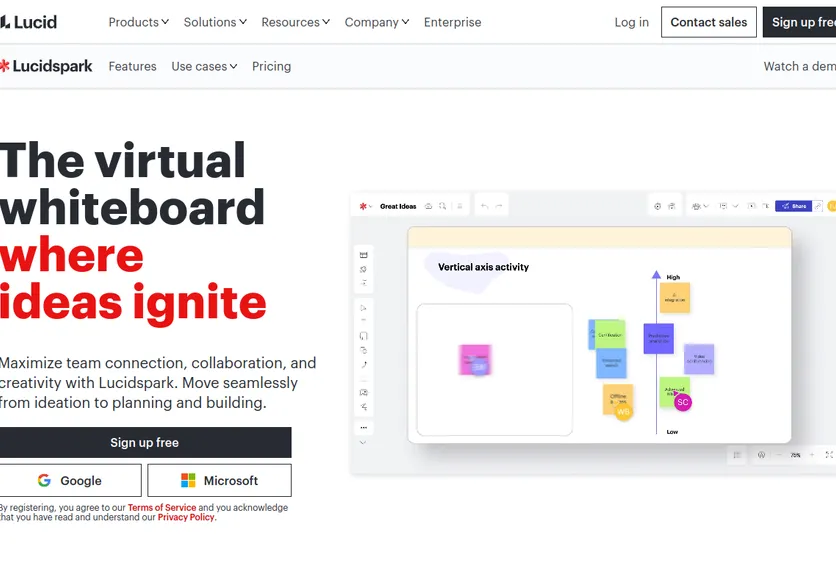
A team mapping user stories in breakout groups needs boards that split by theme, and this Lucidspark plan costs ten dollars per user a month billed annually. Its breakout boards, grouping and voting tools keep big sessions organised, and it sits beside Lucidchart diagrams in the same account for teams that diagram as well as brainstorm. The free plan covers the basics for a small team.
What we like
- Breakout boards and grouping for big sessions
- Works beside Lucidchart diagrams in one account
- Voting, timer and chat keep sessions moving
Watch out for
- Priced per user, so big workshops add up
- Fewer templates than the market leader
How to try it
- Open a new board and pick a template
- Add sticky notes and group them into themes
- Share the board link and run the session live
4. FigJam
Best for: Design teams that already use Figma
Paid tool Starting price: $3/editor/month · $3 a month per editor billed annually on the Professional Collab seat ($5 month to month); a full Figma seat is $16 a month billed annually ($20 month to month); a dev seat is $12 a month billed annually; free Starter plan
Free plan: Free Starter plan
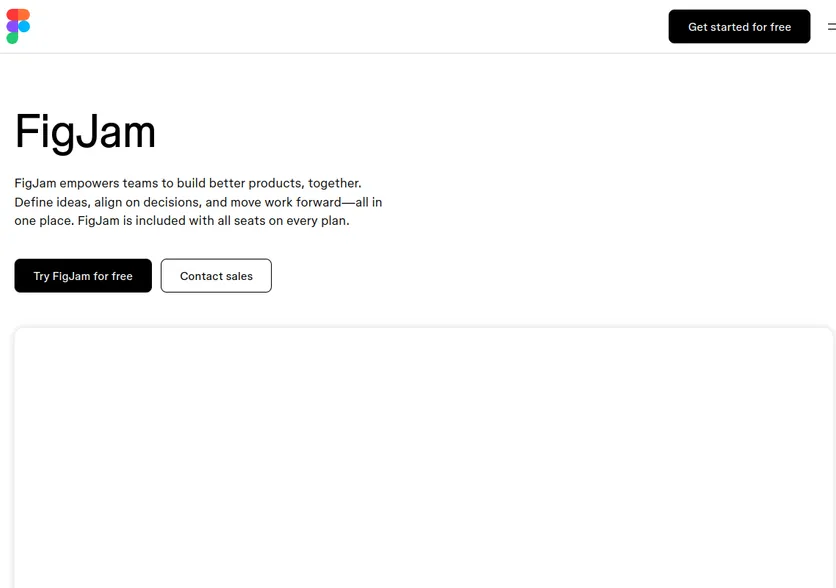
A team mapping user stories beside its prototypes needs the board in the same app, and this FigJam plan costs three dollars per editor a month billed annually. Its stickers, stamps and widgets make sessions playful without losing the thread, and it lives inside Figma beside the design files the team already opens daily. The free Starter plan covers the basics for a small team.
What we like
- Cheapest editor seat in this list at $3 a month
- Stickers, stamps and widgets make sessions playful
- Lives inside Figma beside the design files
Watch out for
- A full Figma seat costs $16 a month billed annually
- Best for Figma users, weaker as a standalone board
How to try it
- Open FigJam from Figma and start a board
- Add sticky notes, shapes and connectors
- Invite the team and run the session in real time
5. Whimsical
Best for: Teams that want boards, docs and mind maps together
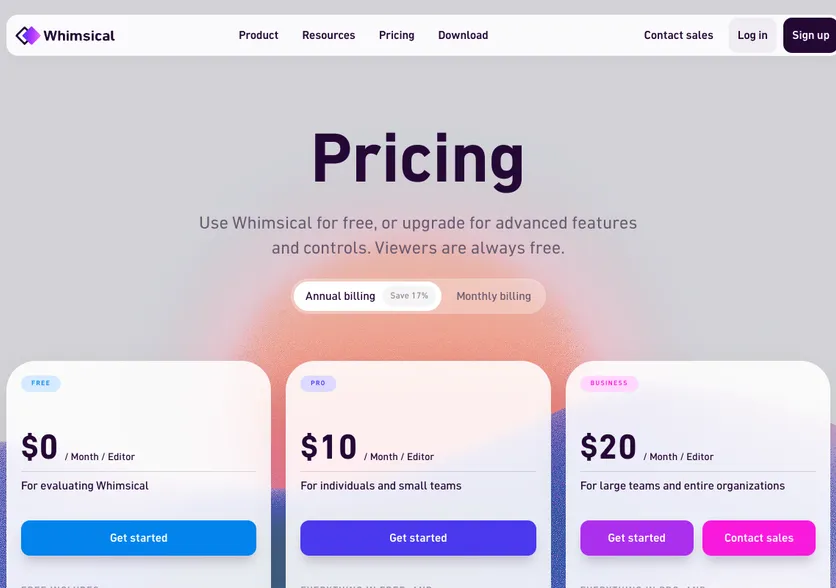
Paid tool Starting price: $10/editor/month · $10 per editor a month billed annually on Pro ($12 month to month); Business is $20 a month billed annually ($24 month to month); one reseller lists $16 for Pro, which is wrong against the vendor page
Free plan: Free plan
A team mapping user stories as a visual flow needs a board that thinks in branches, and this Whimsical plan costs ten dollars per editor a month billed annually. Its whiteboards, flowcharts, mind maps and docs share one clean interface, and the free plan covers the basics for a small team. It suits a team that wants one simple app instead of a stack of them.
What we like
- Whiteboards, flowcharts, mind maps and docs in one app
- Clean interface with almost no learning curve
- Free plan covers the basics for small teams
Watch out for
- One reseller lists a wrong $16 Pro price
- Fewer enterprise controls than the big rivals
How to try it
- Create a board and add sticky notes
- Connect the notes into a flow or mind map
- Share the link and collaborate in real time
6. Stormboard
Best for: Teams that want AI help with brainstorming
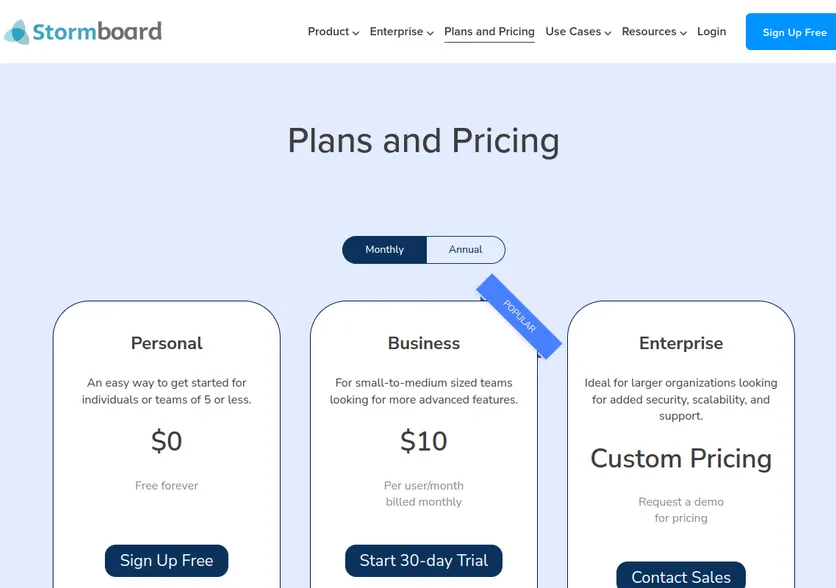
Paid tool Starting price: $8.33/user/month · $8.33 per user a month billed annually on Business ($100 a year; $10 month to month); Personal plan is free with 5 open Storms; StormAI on Business is a 30-day trial only
Free plan: Free Personal plan
A team mapping user stories wants AI help to fill the gaps, and this Stormboard plan costs eight dollars and thirty-three cents per user a month billed annually. Its sticky notes, grouping and voting turn a brainstorm into a ranked list, and the templates keep retrospectives on track. The free Personal plan covers small teams getting started.
What we like
- StormAI suggests ideas during brainstorms
- Templates for retrospectives and planning
- Free Personal plan for small sessions
Watch out for
- StormAI on Business is a thirty-day trial only
- Smaller template library than the leaders
How to try it
- Start a Storm from a template
- Add ideas as sticky notes and group them
- Vote on the best ideas and export the results
7. Klaxoon
Best for: Teams that run workshops with a host
Paid tool Starting price: $24.90/host/month · $24.90 per host a month billed annually on Starter for up to 4 Pro users; Enterprise is quoted from 5 Pro users; old euro figures of 9.90 and 14 are stale; priced per host, not per user; Klaxoon is now part of Wrike after the January 2025 acquisition
Free plan: Free plan (1 open activity)
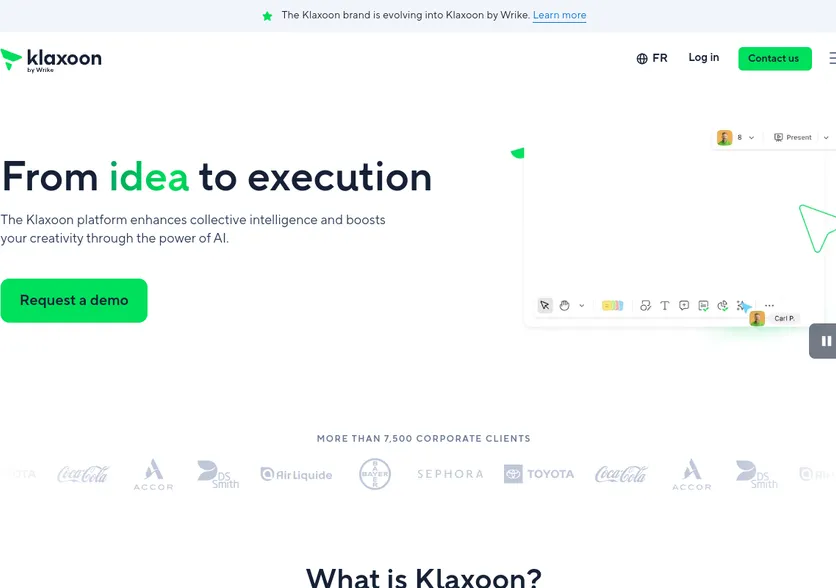
A team mapping user stories in a hosted session needs quizzes and surveys as well as boards, and this Klaxoon plan costs twenty-four dollars and ninety cents per host a month billed annually. Its facilitated formats keep big groups engaged, and the host-led model suits training and planning sessions. The free plan covers one open activity to test the format.
What we like
- Board, quiz, survey and adventure formats in one
- Priced per host, so participants join free
- Built for facilitated sessions and training
Watch out for
- Enterprise is quoted from five Pro users
- Old euro prices of 9.90 and 14 are stale
How to try it
- Create an activity from a template
- Invite participants with the session link
- Run the workshop and collect the results
8. ClickUp
Best for: Teams that want boards tied to tasks
Paid tool Starting price: $9/user/month · $9 per user a month billed annually on Core ($12 month to month); Business is $17 a month billed annually; whiteboards are included on every plan
Free plan: Free plan
A team mapping user stories wants each story to become a task with one click, and this ClickUp plan costs nine dollars per user a month billed annually. Its boards, docs and tasks share one workspace, and the Core plan includes whiteboards at the same nine-dollar rate. The free plan is enough for a small team to test the flow.

What we like
- Whiteboards link straight to ClickUp tasks
- Core plan includes whiteboards at $9 a month
- Docs, goals and chat sit beside the board
Watch out for
- Whiteboard features are lighter than dedicated boards
- The interface can overwhelm new users
How to try it
- Open a whiteboard from any ClickUp space
- Add sticky notes and link them to tasks
- Invite the team and work the board into the sprint
Prices above were checked on each vendor’s own website on Nov 29, 2026 and can change — the vendor’s page is the final word. Vendor links are editorial: nobody paid to be listed or ranked here. Vendors who want a featured listing can see how it works on our Get listed page.
How to map user stories without building the wrong product
Start with the user's goal and walk the journey in order, because a story map that starts with features instead of steps is a backlog with a prettier name. Write each story small enough to finish in one sprint, and put the stories that matter most above the line and the rest below it. Read the map out loud as a story before the session ends, since a gap in the narrative is a gap in the product. Cut the bottom rows ruthlessly, because the first release is the top row, not the whole board.
Before you buy
- Confirm the plan allows enough boards and members for the whole product team
- Check whether story templates, voting and prioritisation tools are included or locked to a dearer tier
- Ask if stories can link to tasks, so the map becomes a backlog without retyping
- Make sure the board exports to the format the team plans sprints in
- Test the tool on a real story mapping session before paying, including a prioritisation vote
Official websites
Official websites of the products reviewed above. Features and prices were checked against these sites when this guide was written, and they can change, so confirm on the vendor site before you buy.
Frequently asked questions
What is whiteboard software for user story mapping?
It is software that gives a product team a shared canvas to map the user journey and the stories that support each step. Good tools add story templates, voting, prioritisation and exports, so a mapping session ends with a backlog the team can build from. The tools in this list all publish a flat monthly price.
How much does Miro cost for story mapping?
Miro costs eight dollars per member a month billed annually on Starter, or ten dollars month to month. The Business plan costs twenty dollars per member a month billed annually. The free plan covers three editable boards, so a team can map a real product before paying for the Starter plan.
Can I map user stories for free?
Yes, with Miro, Mural, Lucidspark, FigJam, Whimsical, Stormboard, Klaxoon and ClickUp, which all offer free plans. The free tiers limit boards or members, so a team that maps stories every sprint will hit the limits. The cheapest paid seat here is three dollars a month on FigJam.
Which whiteboard is best for user story mapping?
Miro is the best overall pick for story mapping, at eight dollars per member a month billed annually with an infinite canvas and templates. Lucidspark is the best choice for teams that map in breakout groups. FigJam suits design-led teams that map stories beside their prototypes in the same app.
What is the difference between story mapping and a backlog?
A story map shows the user journey in order, with the backbone of activities across the top and the stories beneath each step. A backlog is a prioritised list of the same stories without the journey context. The map helps a team choose what to build first, and the backlog tracks the work once that choice is made.
Compare the eight tools above, then start on a free plan and move to the paid tier that matches the product team once story mapping becomes part of every sprint.
Browse Productivity Tools tools