On this page
Inventory control is the discipline of knowing exactly what is in the warehouse, where it sits, and how much of it is already promised to a customer. The eight tools below keep that record true, from free trackers for a single stockroom to multichannel platforms that sync thousands of SKUs. Zoho Inventory leads because it starts free and its first paid plan is twenty-nine dollars a month, and the rest are ranked on how accurately they track stock at scale.
How we researched this
We checked every price on the vendor pricing page on November 29, 2026, and only included tools with a published US dollar list price. NetSuite WMS, Logiwa, Deposco and ShipHero publish no prices, so they are not in this list. Prices change, so confirm the current figure on the vendor site before you buy.
Compare the tools
| Name | Best for | Starting price | Free plan | |
|---|---|---|---|---|
 Fishbowl Inventory | Growing businesses that need one true stock record | $229/month | No free plan; free demo | Visit |
 Cin7 Core | Multichannel sellers who cannot afford to oversell | $349/month | No free plan or trial stated on the pricing page | Visit |
 SKULabs | Fulfilment teams that control stock by scanning | $299/month | No free plan; 30-day money-back guarantee | Visit |
 Finale Inventory | Ecommerce sellers whose stock accuracy decides sales | $63/month | No free plan; 14-day free trial | Visit |
 inFlow Inventory | B2B businesses ordering and selling every day | $99/month | No free plan; 14-day free trial with no credit card | Visit |
 Zoho Inventory | Small businesses wanting purchasing and stock control cheaply | $29/month | Free plan with 50 orders a month and 1 user; 14-day trial | Visit |
 Sortly | Teams tracking parts, tools and supplies visually | $49/month | Free plan at $0 with 100 unique items and 1 user | Visit |
 Sumtracker | Growing online sellers syncing multi-warehouse stock | $59/month | No free plan; 14-day free trial | Visit |
The WMS software for inventory control, compared
1. Fishbowl Inventory
Best for: Growing businesses that need one true stock record
Paid tool Starting price: $229/month · Two hundred and twenty-nine dollars a month for Inventory Essentials; this is the Fishbowl Inventory product, not the Fishbowl restaurant guest-relationship platform, which is a different product at $125 per location a month
Free plan: No free plan; free demo
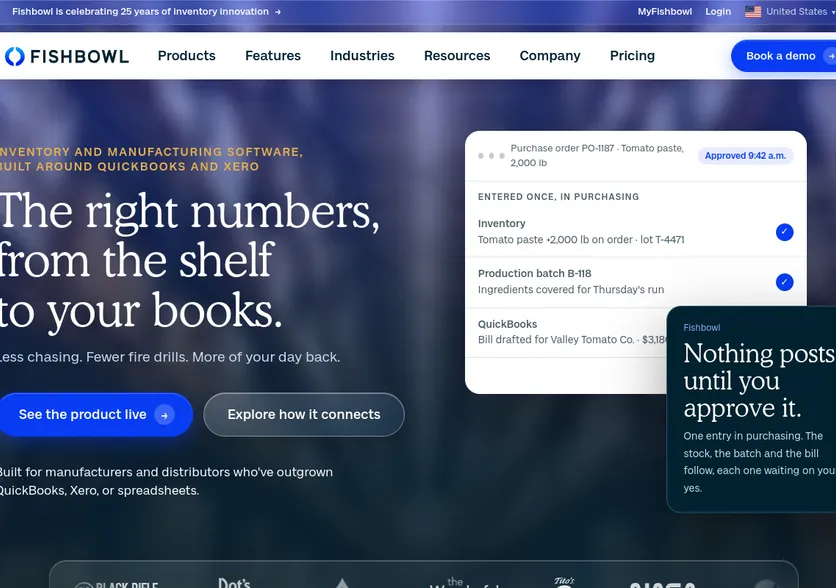
A business that needs its inventory record to stay true across locations gets a proven system here, because this Fishbowl Inventory plan costs two hundred and twenty-nine dollars a month. It tracks stock by location and bin, handles manufacturing and assemblies, and keeps QuickBooks in sync so the books and the shelves always agree. It suits a growing business that outgrew spreadsheets and needs one stock truth.
What we like
- Stock tracked by location and bin across warehouses
- Manufacturing and assemblies included
- Deep QuickBooks integration keeps books and shelves in sync
Watch out for
- No free plan, only a demo before purchase
- Implementation takes longer than the cloud-only tools
How to try it
- Connect Fishbowl to the QuickBooks company file
- Set up the locations, bins and stock levels
- Run a cycle count and reconcile the differences
2. Cin7 Core
Best for: Multichannel sellers who cannot afford to oversell
Paid tool Starting price: $349/month · Three hundred and forty-nine dollars a month for Standard with five users, six thousand sale orders a year and two integrations; Pro is $599 and Advanced is $1,199 a month and adds advanced warehouse management
Free plan: No free plan or trial stated on the pricing page
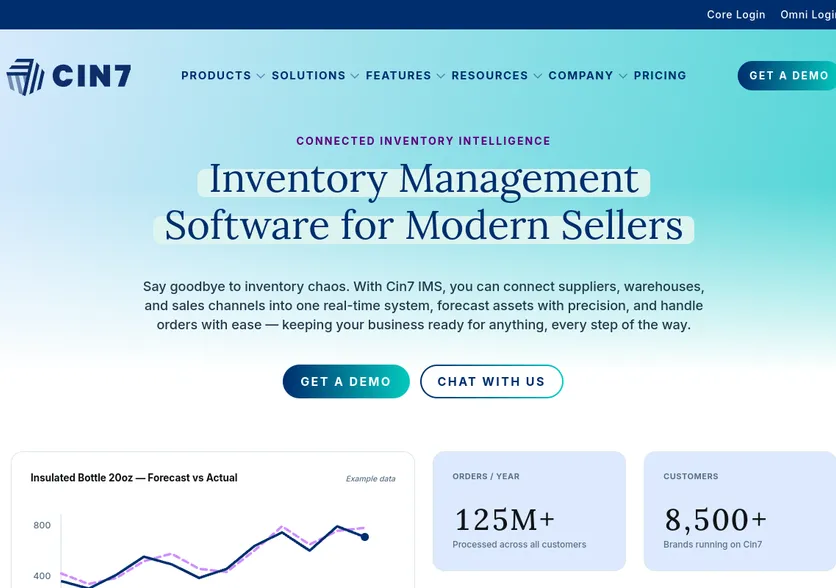
A seller whose stock is spread across shops, marketplaces and wholesale gets one control point here, since this Cin7 Core plan costs three hundred and forty-nine dollars a month. It keeps stock levels, orders and warehouse receiving in sync across every channel, so a sale on one channel updates the count everywhere else. It suits a multichannel business that cannot afford to oversell.
What we like
- One stock truth across channels and warehouses
- Purchase orders and wholesale pricing included
- Mobile warehouse app with barcode scanning
Watch out for
- Full warehouse management needs the $1,199 Advanced tier
- No free plan and no trial stated on the pricing page
How to try it
- Connect the sales channels to Cin7 Core
- Import the product catalogue with opening stock
- Test a sale on one channel and watch the stock sync
3. SKULabs
Best for: Fulfilment teams that control stock by scanning
Paid tool Starting price: $299/month · Two hundred and ninety-nine dollars a month for Starter with one thousand orders, three users, two warehouses and ten thousand SKUs; Basic is $499 and Growth is $799 a month; extra orders cost $0.20 each
Free plan: No free plan; 30-day money-back guarantee
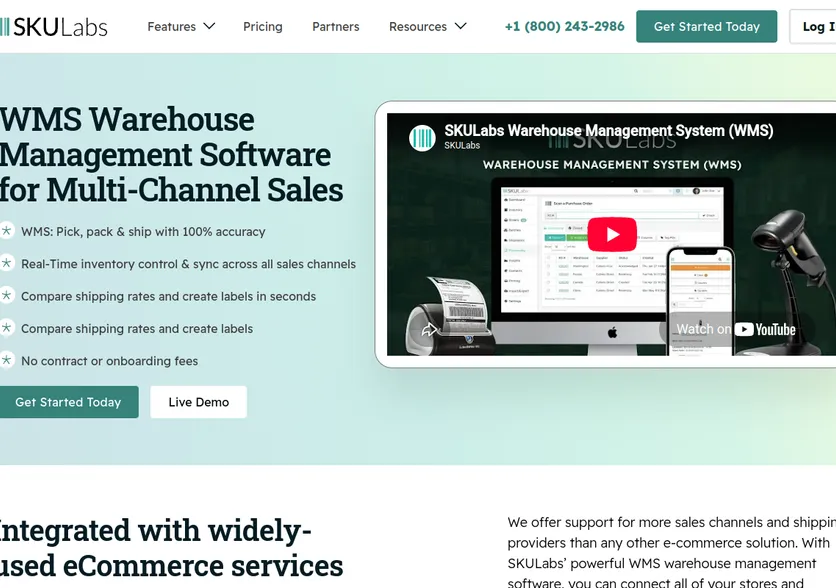
A warehouse that controls stock by scanning every movement gets accuracy built into the flow here, because this SKULabs plan costs two hundred and ninety-nine dollars a month. Every receive, pick and pack is verified by barcode, so the stock record stays true without a separate counting exercise, and batch picking keeps the team moving. It suits a fulfilment team that measures itself on stock accuracy.
What we like
- Every stock movement verified by barcode scan
- Batch and wave picking from the Starter plan
- No per-label fee on USPS, UPS and FedEx labels
Watch out for
- No free plan, only a money-back guarantee
- Multi-location transfers need the $499 Basic plan
How to try it
- Set up the warehouses, bins and SKU catalogue
- Scan the first goods-in batch into stock
- Pick and pack a real order with barcode checks
4. Finale Inventory
Best for: Ecommerce sellers whose stock accuracy decides sales
Paid tool Starting price: $63/month · Sixty-three dollars a month billed annually for Starter ($75 billed monthly) with one user and up to five hundred orders a month; Bronze is listed at $240 a month in several November 2026 reads, while others show $199
Free plan: No free plan; 14-day free trial
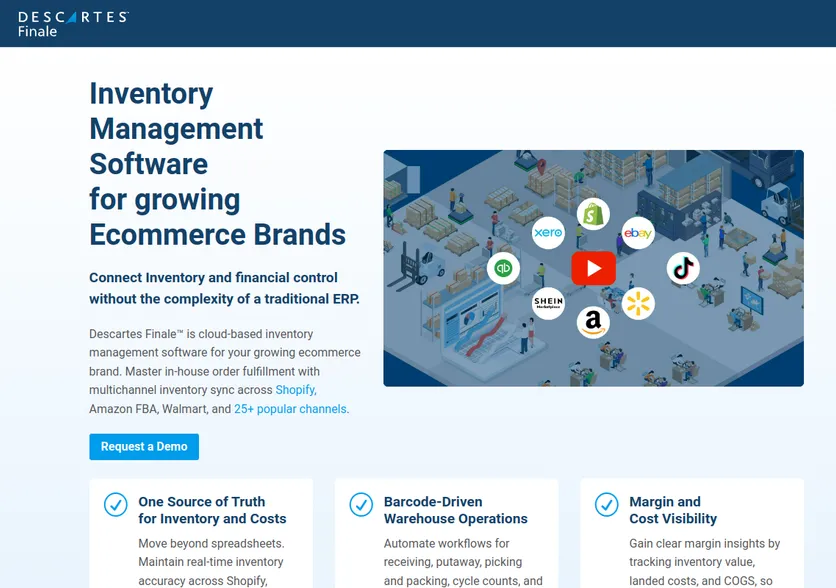
A seller that needs stock accurate across Amazon and Shopify without enterprise pricing gets it here, because this Finale Inventory plan costs sixty-three dollars a month billed annually. It syncs stock across marketplaces with barcode-based warehouse workflows, and its G2 score of 4.8 out of 5 is the highest in this list. It suits an ecommerce seller whose stock accuracy is the difference between a sale and an oversell.
What we like
- Stock synced across marketplaces by barcode workflow
- Highest G2 score in this list at 4.8 out of 5
- Low entry price for multichannel stock control
Watch out for
- Starter covers only one or two users
- Higher tiers jump sharply, so growth is pricey
How to try it
- Connect the Amazon and Shopify channels
- Set up the warehouse bins and barcode labels
- Check the stock sync after a test sale
5. inFlow Inventory
Best for: B2B businesses ordering and selling every day
Paid tool Starting price: $99/month · Ninety-nine dollars a month billed annually on Lite for two team members and one location ($129 billed monthly); Core is $299, Pro is $499 and Max is $699 a month billed annually; a $499 onboarding package is required from Core
Free plan: No free plan; 14-day free trial with no credit card
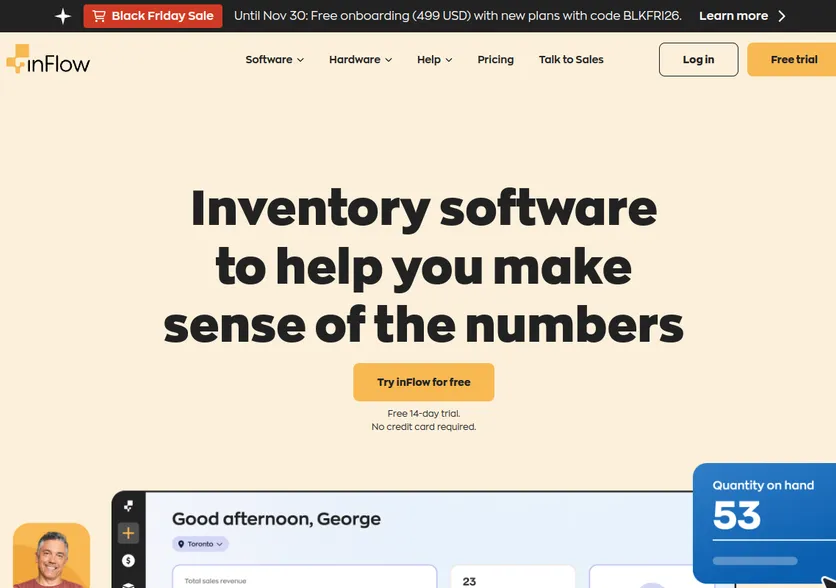
A product business that wants unlimited products and orders without counting every line gets it here, because this inFlow Inventory plan costs ninety-nine dollars a month billed annually. It covers purchase orders, sales orders, stock control and assembly, with reorder points that flag low stock before it runs out. It suits a B2B business that orders and sells every day and needs the record to keep up.
What we like
- Unlimited products and orders on every plan
- Reorder points flag low stock before it runs out
- Purchase orders, sales and assembly in one system
Watch out for
- A $499 onboarding package is required from Core
- Lite covers only one location with no sublocations
How to try it
- Set up the products, suppliers and reorder points
- Create a purchase order and receive the stock by barcode
- Check the stock report at the end of the first week
6. Zoho Inventory
Best for: Small businesses wanting purchasing and stock control cheaply
Paid tool Starting price: $29/month · Twenty-nine dollars per organisation a month billed annually on Standard ($39 billed monthly) for five hundred orders, three users and two locations; Premium is $79 and Plus is $129 a month billed annually
Free plan: Free plan with 50 orders a month and 1 user; 14-day trial
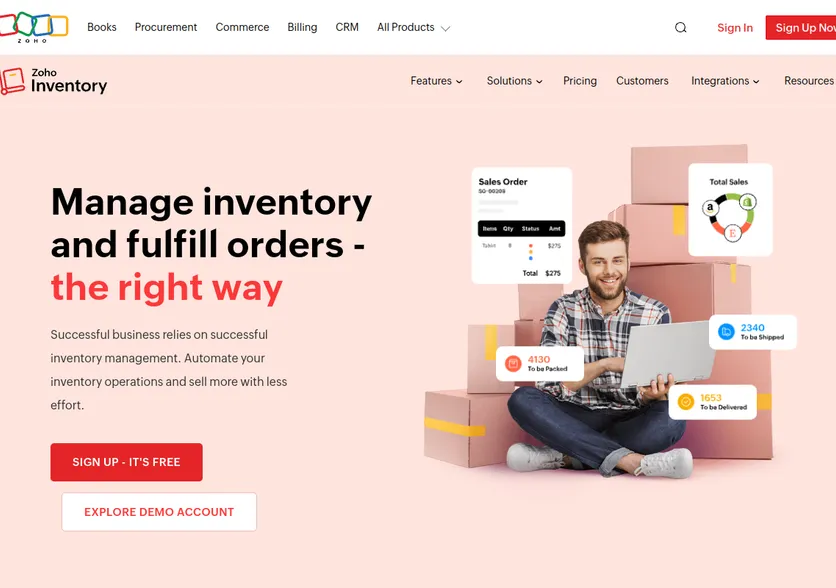
A small business that wants real inventory control on a small budget gets it here, because this Zoho Inventory plan costs twenty-nine dollars per organisation a month billed annually. It tracks stock across two locations, handles purchase and sales orders, and adds barcode generation and serial tracking on Premium. It suits a small warehouse that wants purchasing and stock control in one cheap system.
What we like
- Free plan with fifty orders a month to start
- Stock tracked across two locations on Standard
- Extra users and order blocks at $7.50 each
Watch out for
- Bin locations and serial tracking need Premium at $79
- Order caps push growing teams up the tiers fast
How to try it
- Create the organisation and add the warehouse locations
- Import the product catalogue with stock levels
- Set the reorder points for the fastest-moving items
7. Sortly
Best for: Teams tracking parts, tools and supplies visually
Paid tool Starting price: $49/month · Forty-nine dollars a month list for Advanced with five hundred unique items and two users; the page currently shows a 50 percent first-year promotion at $24 a month billed annually, and a 20 percent discount applies to yearly plans after year one
Free plan: Free plan at $0 with 100 unique items and 1 user
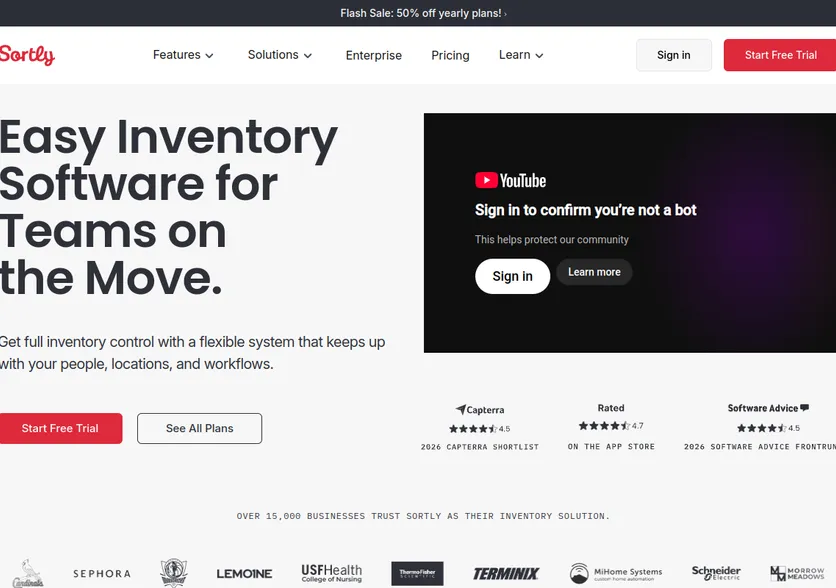
A team that controls stock by sight and by phone gets a visual tracker here, because this Sortly plan costs forty-nine dollars a month list for Advanced. Photos, folders and QR labels show exactly where each item sits, and the mobile app lets staff check stock in and out from the stockroom floor. It suits a small team that tracks parts, tools and supplies rather than full order flows.
What we like
- Photos and QR labels show where each item sits
- Mobile app for checking stock in and out
- Free plan with one hundred unique items to start
Watch out for
- List price is $49, so the $24 figure is a first-year promo only
- No order management, so it is not a full WMS
How to try it
- Create the folders and locations for the stockroom
- Add items with photos and print the QR labels
- Run a stock check with the mobile app
8. Sumtracker
Best for: Growing online sellers syncing multi-warehouse stock
Paid tool Starting price: $59/month · Fifty-nine dollars a month billed monthly ($50 a month billed annually) for up to five thousand yearly orders and ten warehouses; higher tiers raise the order cap and add locations
Free plan: No free plan; 14-day free trial
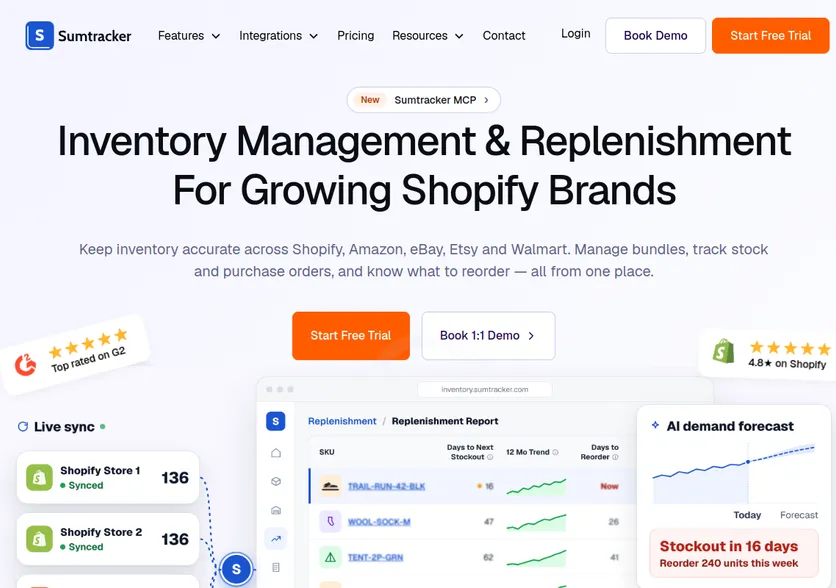
An ecommerce seller that needs stock synced across warehouses and channels gets it here, because this Sumtracker plan costs fifty-nine dollars a month billed monthly. It keeps multi-warehouse stock in sync with Shopify, Amazon and other channels, so a sale anywhere updates the count everywhere. It suits a growing online seller that outgrew a single-warehouse tracker.
What we like
- Multi-warehouse stock synced across sales channels
- Up to ten warehouses on the entry plan
- Low entry price for multichannel sync
Watch out for
- No free plan, only a fourteen-day trial
- Order caps rise with the plan, so volume costs more
How to try it
- Connect the Shopify and Amazon channels
- Map the warehouses and their stock levels
- Test a sale and watch the stock update everywhere
Prices above were checked on each vendor’s own website on Nov 29, 2026 and can change — the vendor’s page is the final word. Vendor links are editorial: nobody paid to be listed or ranked here. Vendors who want a featured listing can see how it works on our Get listed page.
How to keep inventory control honest with a WMS
Control starts with a count, not with software. Run a full physical count before the new system goes live, because a WMS can only keep a true record if it starts from one. Then scan every movement, since stock that moves without a scan is stock the record cannot trust. Set reorder points on the fastest-moving items first, and count one aisle every week so small errors are caught while they are still small. Keep the data clean from day one, since a record that nobody trusts is worse than no record at all, and a weekly count keeps small drift from turning into a stockout.
Before you buy
- Run a full physical count before the new system goes live
- Confirm every stock movement is scanned, not typed by hand
- Check whether the plan caps SKUs, orders or locations the team will hit
- Ask if stock syncs across every sales channel in real time
- Set reorder points on the fastest-moving items before launch day
Official websites
Official websites of the products reviewed above. Features and prices were checked against these sites when this guide was written, and they can change, so confirm on the vendor site before you buy.
Frequently asked questions
What is WMS software for inventory control?
It is software that keeps the stock record true: what is in the warehouse, where it sits, how much is promised to customers, and when to reorder. The best tools verify every movement by barcode, sync stock across sales channels, and flag low stock before it runs out. Without it, a business guesses at stock and oversells.
How much does Zoho Inventory cost for inventory control?
Zoho Inventory is free for fifty orders a month, and Standard costs twenty-nine dollars per organisation a month billed annually, or thirty-nine dollars billed monthly. Premium is seventy-nine dollars a month billed annually and adds bin locations, barcode generation and serial or batch tracking.
Is there a free WMS for inventory control?
Yes, in part. Zoho Inventory has a free plan covering fifty orders a month, Sortly has a free plan for one hundred unique items, and Katana has a free plan for up to thirty SKUs. These suit small stockrooms, but a busy warehouse will outgrow them and need a paid plan with higher caps.
Which WMS is best for multichannel stock sync?
Cin7 Core at three hundred and forty-nine dollars a month is the strongest for multichannel sync, with five users and six thousand orders a year on Standard. Sumtracker at fifty-nine dollars a month is the cheapest way to sync multi-warehouse stock across Shopify and Amazon.
How often should a warehouse count its stock?
Count one aisle every week and run a full physical count before a new system goes live. Cycle counting catches small errors while they are still small, and it keeps the record honest without shutting the warehouse for a day. A WMS that supports cycle counts by location makes the routine easy to run.
Compare the eight tools above, then run a full physical count and trial the shortlist on one aisle before paying for the whole warehouse.
Browse Business Tools tools