On this page
A small team does not need enterprise portfolio management, it needs one place where every task has an owner and a deadline that everyone can see. The eight tools below are the ones small teams actually adopt, priced per seat so a team of five can cost the month in seconds. Trello leads because its Standard plan is five dollars a user a month and a new team can start on it in an afternoon, and the rest are ranked on how much structure they add as the team grows.
How we researched this
We checked every price on the vendor pricing page on November 29, 2026, and only included tools with a published US dollar list price. Basecamp's Pro plan price is disputed across sources, so it is not in this list. Prices change, so confirm the current figure on the vendor site before you buy.
Compare the tools
| Name | Best for | Starting price | Free plan | |
|---|---|---|---|---|
 Asana | Small teams that want polished task tracking | $10.99/user/month | Free Personal plan | Visit |
 ClickUp | Small teams that want one app for tasks and docs | $9/user/month | Free Forever plan | Visit |
 monday.com | Visual teams that like boards and dashboards | $9/seat/month | Free plan (up to 2 seats) | Visit |
 Trello | Small teams that want simple kanban boards | $5/user/month | Free plan | Visit |
 Wrike | Small teams that need structured workflows and approvals | $9.80/user/month | Free plan | Visit |
 Notion | Teams that track work in docs and databases | $10/user/month | Free plan | Visit |
 Smartsheet | Spreadsheet-first teams migrating off Excel | $9/member/month | No free plan; 30-day free trial | Visit |
 Teamwork | Agencies tracking billable time and project budgets | $9.99/user/month | Free plan (up to 5 users) | Visit |
The work management software for small teams, compared
1. Asana
Best for: Small teams that want polished task tracking
Paid tool Starting price: $10.99/user/month · Ten dollars and ninety-nine cents per user a month billed annually on Starter ($13.49 billed monthly); Advanced is $24.99 a user a month billed annually
Free plan: Free Personal plan
A small team that wants polished task and project tracking without a training programme gets it here, since this Asana plan costs ten dollars and ninety-nine cents per user a month billed annually. It covers lists, boards, timelines and goals, with unlimited automations from the Starter tier, and the interface stays calm even as the project list grows. It suits a team that needs real structure without learning a complex system.

What we like
- Lists, boards, timelines and goals in one place
- Unlimited automations from the Starter tier
- Calm interface that stays readable as projects grow
Watch out for
- Resource management needs the Advanced tier
- No free plan beyond the two-user Personal plan
How to try it
- Create the team workspace and invite the members
- Add the first project with lists and a timeline
- Set the goals that link daily tasks to targets
2. ClickUp
Best for: Small teams that want one app for tasks and docs
Paid tool Starting price: $9/user/month · Nine dollars per user a month billed annually on Core ($12 billed monthly); Business is $17 a user a month billed annually; the older $7 Unlimited tier is retired
Free plan: Free Forever plan
A small team that wants tasks, docs, goals and chat in a single app gets it here, because this ClickUp plan costs nine dollars per user a month billed annually. It replaces several apps at once, with a generous free plan for teams that want to try it properly before paying. It suits a team that wants one flexible workspace instead of a stack of single-purpose tools.

What we like
- Tasks, docs, goals and chat in one workspace
- Generous free plan for proper testing
- Flexible views for lists, boards and calendars
Watch out for
- So many features that setup can feel overwhelming
- The older $7 Unlimited tier is retired
How to try it
- Create the workspace and invite the team
- Build the first project with tasks and docs
- Set the goals and link them to the tasks
3. monday.com
Best for: Visual teams that like boards and dashboards
Paid tool Starting price: $9/seat/month · Nine dollars per seat a month billed annually on Basic with a three-seat minimum; Standard is $12 and Pro is $19 a seat a month billed annually
Free plan: Free plan (up to 2 seats)
A visual team that likes colourful boards and dashboards gets it here, because this monday.com plan costs nine dollars per seat a month billed annually. Boards track anything from content calendars to hiring, and the dashboard widgets turn the work into charts without exporting. It suits a team that wants one shared view where every task, owner and deadline is clear at a glance.

What we like
- Boards track anything with no-code automation
- Dashboard widgets turn work into charts
- Free plan covers up to two seats for testing
Watch out for
- Three-seat minimum means a solo user buys three seats
- Advanced automations need the higher tiers
How to try it
- Create the first board for the team's work
- Add the status, owner and deadline columns
- Build a dashboard widget to show progress
4. Trello
Best for: Small teams that want simple kanban boards
Paid tool Starting price: $5/user/month · Five dollars per user a month billed annually on Standard ($6 billed monthly); Premium is $10 a user a month billed annually and adds timeline and calendar views
Free plan: Free plan
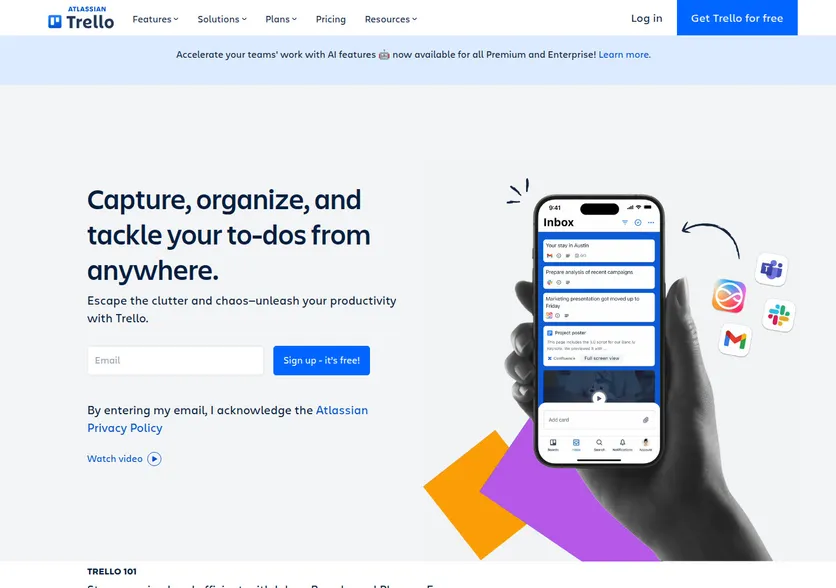
A small team that wants a visual kanban board with zero learning curve gets it here, because this Trello plan costs five dollars per user a month billed annually. Cards move across lists in seconds, automation runs on every board, and the free plan is generous enough for a team to run on it for months. It suits a team that wants the lightest possible start to managing work together.
What we like
- Visual kanban boards with zero learning curve
- Automation built into every board
- Generous free plan for small teams
Watch out for
- Light on reporting and structured planning
- Timeline and calendar views need Premium
How to try it
- Create the first board with lists for the workflow
- Add cards for each task with owners and due dates
- Turn on automation for the repetitive moves
5. Wrike
Best for: Small teams that need structured workflows and approvals
Paid tool Starting price: $9.80/user/month · Nine dollars and eighty cents per user a month billed annually on Team for two to fifteen users; Business is $25 a user a month billed annually; some November 2026 reads round Team to $10
Free plan: Free plan
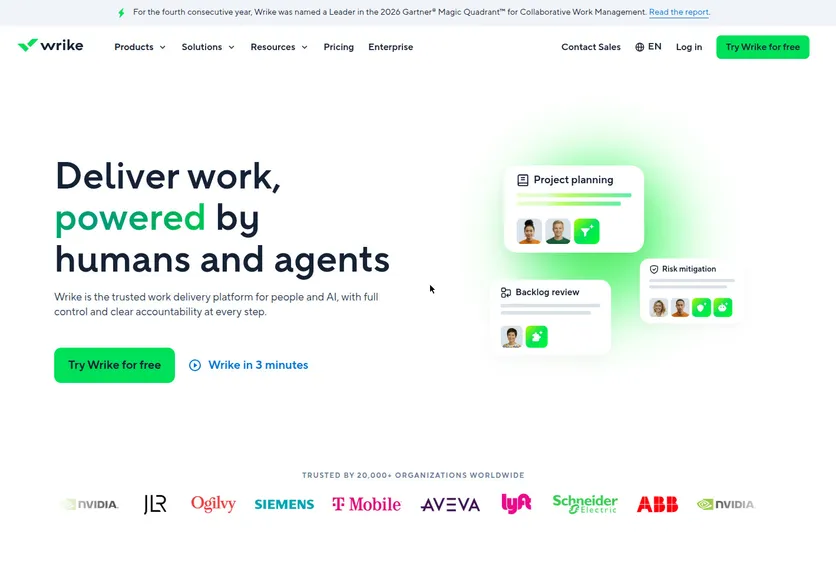
A small team that needs structured workflows and approval chains gets it here, because this Wrike plan costs nine dollars and eighty cents per user a month billed annually. It handles cross-functional projects with approvals, request forms and portfolio views, and the free plan lets a team test the structure first. It suits a team that outgrew simple boards and needs formal plans.
What we like
- Structured workflows with approval chains
- Request forms and portfolio views included
- Free plan for testing the structure first
Watch out for
- Some November 2026 reads round Team to $10
- Heavier setup than the simple board tools
How to try it
- Create the workspace and set up the first project
- Add the approval chain for the key deliverables
- Build a portfolio view across the team's projects
6. Notion
Best for: Teams that track work in docs and databases
Paid tool Starting price: $10/user/month · Ten dollars per member a month billed annually on Plus ($12 billed monthly); Business is $20 a member a month billed annually and adds SAML SSO; free for students
Free plan: Free plan
A small team that already lives in documents and wikis gets its task system in the same place here, because this Notion plan costs ten dollars per member a month billed annually. Its databases turn pages into flexible trackers, and the Plus plan adds unlimited file uploads and longer page history. It suits a team that tracks work in docs and databases rather than fixed boards.

What we like
- Databases turn pages into flexible trackers
- Wikis and tasks live in the same workspace
- Free plan covers individuals and small teams
Watch out for
- Lightweight task system, not a full project manager
- SAML SSO needs the Business tier at $20
How to try it
- Create a database for the team's tasks
- Add the status, owner and deadline properties
- Link the task pages to the team wiki
7. Smartsheet
Best for: Spreadsheet-first teams migrating off Excel
Paid tool Starting price: $9/member/month · Nine dollars per member a month billed annually on Pro ($12 billed monthly); Business is $19 a member a month billed annually; the vendor does not clearly label monthly against yearly prices on its own page
Free plan: No free plan; 30-day free trial
A team used to spreadsheets that wants structured project tracking gets it here, because this Smartsheet plan costs nine dollars per member a month billed annually. It keeps the grid a spreadsheet team already understands, then adds formulas, automation and governance on top. It suits a team migrating off Excel that wants plans, formulas and portfolio reports without relearning how to work.

What we like
- Familiar grid with formulas and automation
- Portfolio reports and governance included
- Strong fit for teams migrating off Excel
Watch out for
- No free plan, only a thirty-day trial
- Vendor page does not clearly label monthly prices
How to try it
- Create the first sheet for the team's project
- Add the formulas and automation rules
- Build a report across the team's sheets
8. Teamwork
Best for: Agencies tracking billable time and project budgets
Paid tool Starting price: $9.99/user/month · Nine dollars and ninety-nine cents per user a month billed annually on Basics; Accelerate is $24.99 a user a month billed annually; the free plan covers up to five users
Free plan: Free plan (up to 5 users)
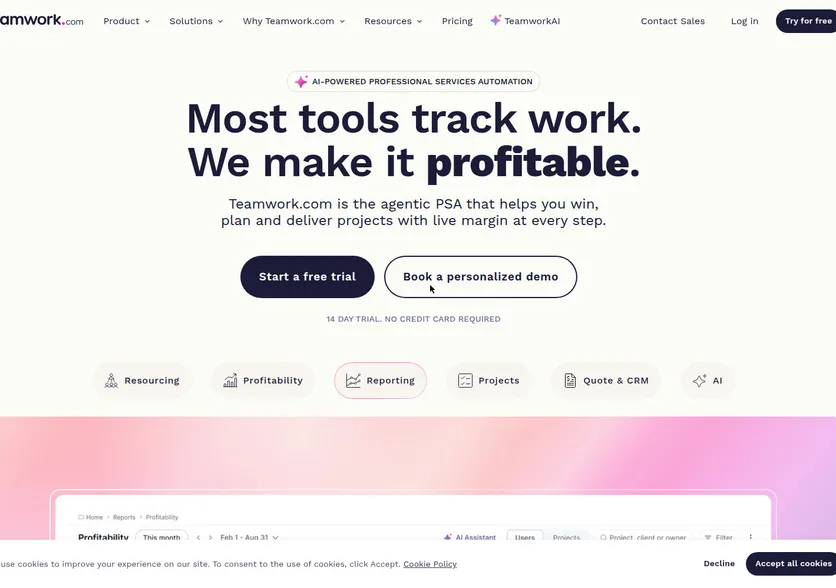
A small team that bills clients by the hour and needs to know if a project made money gets it here, because this Teamwork plan costs nine dollars and ninety-nine cents per user a month billed annually. It combines a built-in timer, per-project billable rates and profitability reports, so the team can see the margin on every job. It suits an agency or services team that tracks time and budgets together.
What we like
- Built-in timer with per-project billable rates
- Profitability reports show the margin on every job
- Free plan covers up to five users
Watch out for
- Higher tiers needed for advanced reporting
- Less flexible than ClickUp for non-agency teams
How to try it
- Create the first client project in Teamwork
- Set the billable rate and start the timer
- Check the profitability report at month end
Prices above were checked on each vendor’s own website on Nov 29, 2026 and can change — the vendor’s page is the final word. Vendor links are editorial: nobody paid to be listed or ranked here. Vendors who want a featured listing can see how it works on our Get listed page.
How a small team should pick work management software
Start with the free plan and a real project, because a tool that looks good in a demo can still fail on the team's actual work. Give it two weeks with the whole team, and watch whether tasks actually get updated or quietly rot. Count the seats honestly too: a three-seat minimum and per-seat pricing mean a team of five pays for five, and the bill doubles when the team doubles. Pick the tool the team will actually open every morning, not the one with the longest feature list. Watch the renewal date too, since a free plan that ends mid-project forces a rushed decision, and a paid plan bought early is cheaper than a panicked upgrade later.
Before you buy
- Start on the free plan with a real project before paying
- Check whether the plan has a seat minimum the team will pay for
- Ask if the tool covers the views the team uses, boards or timelines
- Make sure the whole team will actually open it every morning
- Test the tool for two full weeks before committing to a year
Official websites
Official websites of the products reviewed above. Features and prices were checked against these sites when this guide was written, and they can change, so confirm on the vendor site before you buy.
Frequently asked questions
What is work management software for small teams?
It is software that keeps a small team's work in one place, with every task owned, dated and visible to everyone. The tools in this list cover lists, boards, timelines, docs and goals, priced per seat per month. A small team needs one shared view of the work, not enterprise portfolio management.
How much does Trello cost for a small team?
Trello Standard costs five dollars per user a month billed annually, or six dollars billed monthly. Premium is ten dollars per user a month billed annually and adds timeline and calendar views. The free plan is generous enough for a small team to run on it for months before paying.
Is there free work management software for small teams?
Yes. Trello, ClickUp, Asana, monday.com, Wrike, Notion and Teamwork all offer free plans, with limits from two seats on Asana and monday.com to five users on Teamwork. Smartsheet is the only tool here with no free plan, offering a thirty-day trial instead.
Which work management tool is best for agencies?
Teamwork is the best pick for agencies, at nine dollars and ninety-nine cents per user a month billed annually, because it combines a built-in timer, per-project billable rates and profitability reports. Asana is the better pick for cross-functional teams that need timelines and goals.
Should a small team use Notion or Trello for work management?
Use Trello at five dollars per user a month if the team wants simple visual boards with zero learning curve. Use Notion Plus at ten dollars per member a month if the team already lives in docs and wikis and wants tasks tracked in databases beside the knowledge base.
Compare the eight tools above, then start on a free plan with a real project and pay only when the whole team is actually using it.
Browse Productivity Tools tools