On this page
Businesses with several companies, subsidiaries, or locations face a harder accounting problem, and the software has to keep each entity separate while rolling everything up together. The best tools for multiple entities handle consolidated reporting, intercompany transactions, and separate books per entity without spreadsheet gymnastics. Prices run from about five dollars a user a month for expense tools to three hundred forty dollars a month for a full multi-entity ledger. QuickBooks Online is our first pick for groups that want consolidated reporting in a familiar ledger.
How we researched this
We checked the vendor pricing pages for eight accounting tools that handle multiple entities, and we kept only tools with a published list price in dollars. We compared each one for consolidated reporting, intercompany transactions, entity-level permissions, and how cleanly the books roll up, then ranked them for groups that run several companies at once.
Compare the tools
| Name | Best for | Starting price | Free plan | |
|---|---|---|---|---|
 QuickBooks Online | Groups that need consolidated reporting in one ledger | $340/month | Free plan at no monthly cost with 1 user; 30-day trial on paid plans | Visit |
 Xero | Groups that want clean multi-entity cloud books | $97/month | No free plan; a 30-day trial is listed | Visit |
 Zoho Books | Groups that want budget multi-branch accounting | $60/month | Free plan for businesses under fifty thousand dollars of yearly revenue | Visit |
 Dynamics 365 Business Central | Groups that need intercompany transactions in one system | $80/user/month | No free plan; a 30-day trial is listed | Visit |
 Odoo | Groups that want modular multi-company accounting | $31.10/user/month | One App Free plan with unlimited users | Visit |
 FreshBooks | Service groups that bill clients per entity | $70/month | No free plan; a 30-day trial is listed | Visit |
 BILL | Groups that automate payables across entities | $49/user/month | Free trial available; no free plan on paid tiers | Visit |
 Expensify | Groups that need expense tracking per entity | $5/user/month | Free Submit plan for individuals | Visit |
The accounting software for multiple entities, compared
1. QuickBooks Online
Best for: Groups that need consolidated reporting in one ledger
Paid tool Starting price: $340/month · Advanced plan per user; Simple Start is thirty eight dollars a month and Plus is one hundred forty
Free plan: Free plan at no monthly cost with 1 user; 30-day trial on paid plans
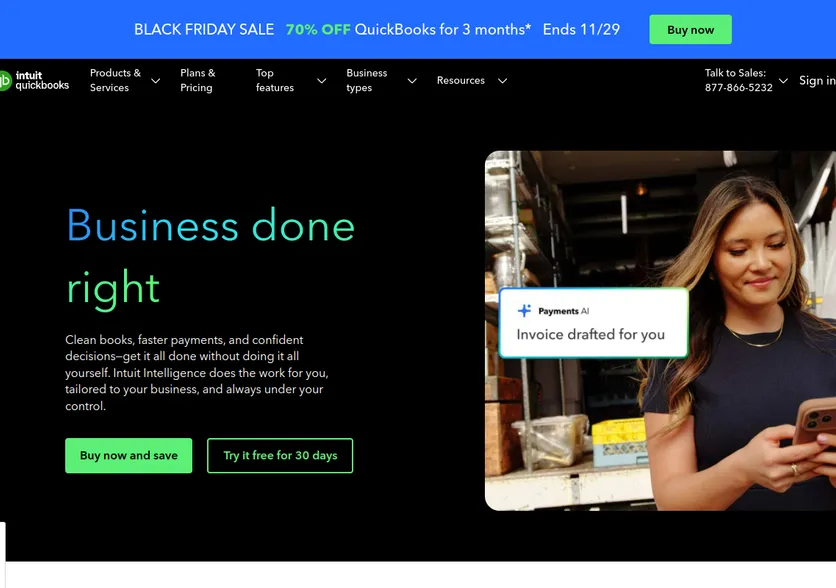
QuickBooks Online is the ledger that multi-entity groups turn to first, and the Advanced plan adds consolidated reporting, custom roles, and higher limits that smaller tiers lack. It handles several companies with separate books and rolls them into one view, with a marketplace that covers payroll and bill pay. The monthly price is the highest here, so it fits groups with the complexity to justify it.
What we like
- Consolidated reporting across entities
- Custom roles and permissions
- Deep app marketplace
Watch out for
- Highest monthly price in this list
- Each entity needs its own subscription
How to try it
- Set up each entity as a separate company file
- Connect bank feeds and set custom user roles per entity
- Run consolidated reports across all entities
2. Xero
Best for: Groups that want clean multi-entity cloud books
Paid tool Starting price: $97/month · Established plan; Early is twenty seven dollars a month and Growing is fifty nine
Free plan: No free plan; a 30-day trial is listed
Xero is the cloud ledger that multi-entity groups pick for clean books and easy collaboration, and the Established plan adds multi-currency, expenses, and project tracking. It handles several entities with separate organizations and rolls them up through reporting tools. Its consolidation features are lighter than the enterprise tools, so large groups often add a reporting app.

What we like
- Clean interface across many entities
- Strong multi-currency support
- Open API with reporting apps
Watch out for
- Consolidation needs a reporting add-on
- Per-entity pricing adds up
How to try it
- Create a separate organization for each entity
- Connect bank feeds and set user permissions per entity
- Use reporting tools to roll up the entities
3. Zoho Books
Best for: Groups that want budget multi-branch accounting
Paid tool Starting price: $60/month · Premium plan per organization, billed annually; Standard is fifteen dollars a month and Professional is forty
Free plan: Free plan for businesses under fifty thousand dollars of yearly revenue
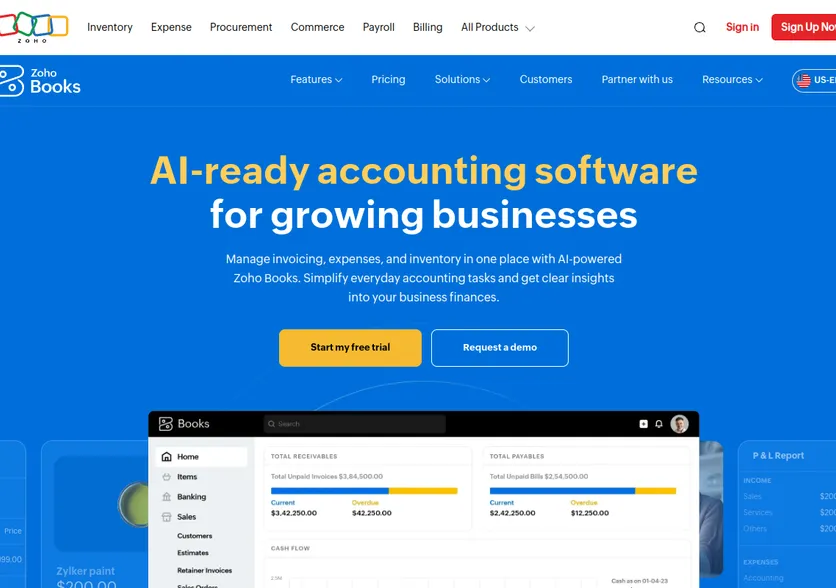
Zoho Books is the budget ledger for multi-entity groups, and the Premium plan adds multi-branch accounting, advanced inventory, and custom roles at about sixty dollars a month. It handles several branches with separate books and rolls them into consolidated reports. The interface is denser than the leaders, and very large groups may need a more powerful consolidation tool.
What we like
- Multi-branch accounting at a low price
- Custom roles and permissions
- Deep Zoho ecosystem connections
Watch out for
- Denser interface than the leaders
- Consolidation is lighter than enterprise tools
How to try it
- Set up each branch as a separate entity in Zoho Books
- Connect bank feeds and assign user roles per branch
- Run consolidated reports across all branches
4. Dynamics 365 Business Central
Best for: Groups that need intercompany transactions in one system
Paid tool Starting price: $80/user/month · Essentials plan per user; Premium is one hundred and ten dollars a user a month
Free plan: No free plan; a 30-day trial is listed
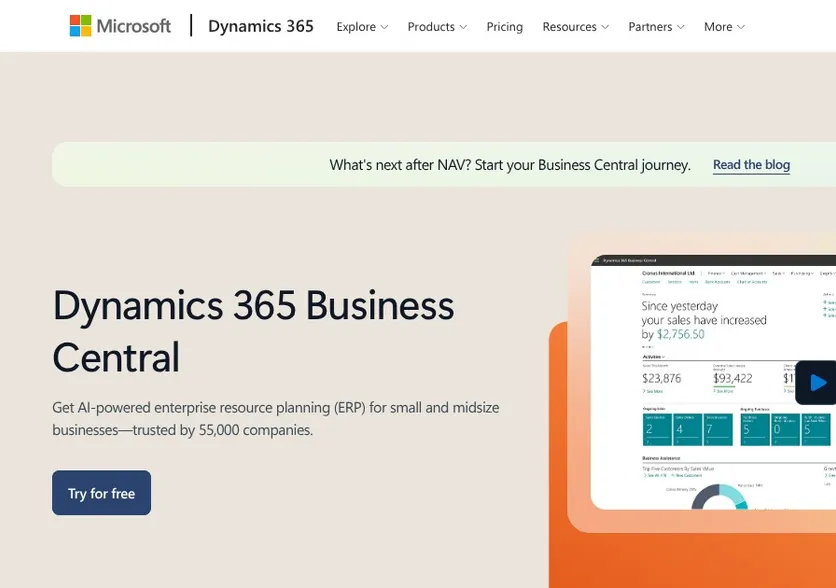
Dynamics 365 Business Central is the Microsoft system that multi-entity groups pick when they need accounting, inventory, and intercompany transactions in one platform. The Essentials plan covers financials and inventory at about eighty dollars a user a month, with consolidation tools built in. It is the most powerful tool here, though it needs more setup and training than the simpler ledgers.
What we like
- Built-in consolidation and intercompany tools
- Deep Microsoft integration
- Scales to large groups
Watch out for
- Needs more setup and training
- Per-user price adds up across entities
How to try it
- Set up each company and define intercompany accounts
- Configure consolidation and elimination rules
- Run consolidated financial statements across all companies
5. Odoo
Best for: Groups that want modular multi-company accounting
Paid tool Starting price: $31.10/user/month · Standard plan, $31.10 a user a month billed annually; $24.90 a user a month for the first year; Custom plan is $61.00 a user a month billed annually ($49.00 for the first year)
Free plan: One App Free plan with unlimited users
Odoo is the modular platform that multi-entity groups use when they want accounting plus CRM, inventory, and projects across several companies. The Standard plan costs about thirty one dollars and ten cents a user a month on annual billing, with multi-company support built in. The flexibility is the appeal and the risk, since a poorly planned setup can get messy without an implementation partner.
What we like
- Multi-company support built in
- Low per-user price
- Modular apps for every department
Watch out for
- Setup can get messy without planning
- Consolidation needs configuration
How to try it
- Set up each company in Odoo and define the chart of accounts
- Configure intercompany rules and user access per company
- Add apps like Inventory and CRM as each company needs them
6. FreshBooks
Best for: Service groups that bill clients per entity
Paid tool Starting price: $70/month · Premium plan billed annually; Lite is twenty three dollars a month and Plus is forty three
Free plan: No free plan; a 30-day trial is listed
FreshBooks is the invoicing-led tool that service groups use when each entity bills clients separately, and the Premium plan adds double-entry accounting and unlimited clients. It tracks time and expenses per project, which suits agencies with several brands. It is not built for deep consolidation, so groups that need complex intercompany accounting will want a stronger ledger.

What we like
- Excellent invoicing per entity
- Simple time and expense tracking
- Easy to learn for every team
Watch out for
- Weak consolidation features
- Not a full multi-entity ledger
How to try it
- Set up each entity with its own clients and invoice templates
- Track time and expenses by project and entity
- Review profitability per entity from the reports
7. BILL
Best for: Groups that automate payables across entities
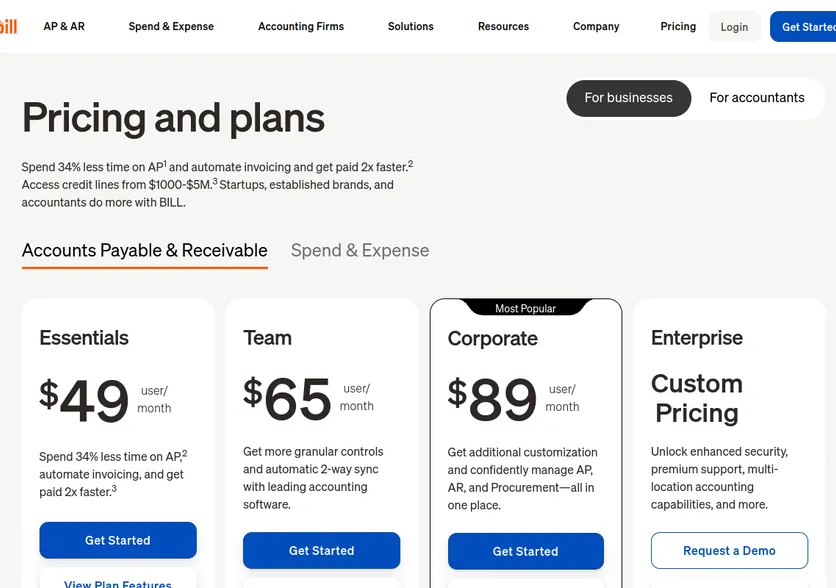
Paid tool Starting price: $49/user/month · Essentials plan per user; Team is sixty five dollars a user a month
Free plan: Free trial available; no free plan on paid tiers
BILL automates payables across several entities, and it is the tool finance teams add when vendor bills arrive for more than one company. It routes invoices for approval per entity, pays vendors, and syncs back to each ledger. The per-user price adds up across entities, and it handles payables rather than full accounting, so it works beside your ledgers.
What we like
- Payables automation per entity
- Strong approval workflows
- Syncs with major ledgers
Watch out for
- Per-user price adds up across entities
- Payables only, not full accounting
How to try it
- Connect each entity's ledger and import its vendors
- Set up approval workflows per entity and department
- Approve bills and let BILL pay vendors on schedule
8. Expensify
Best for: Groups that need expense tracking per entity
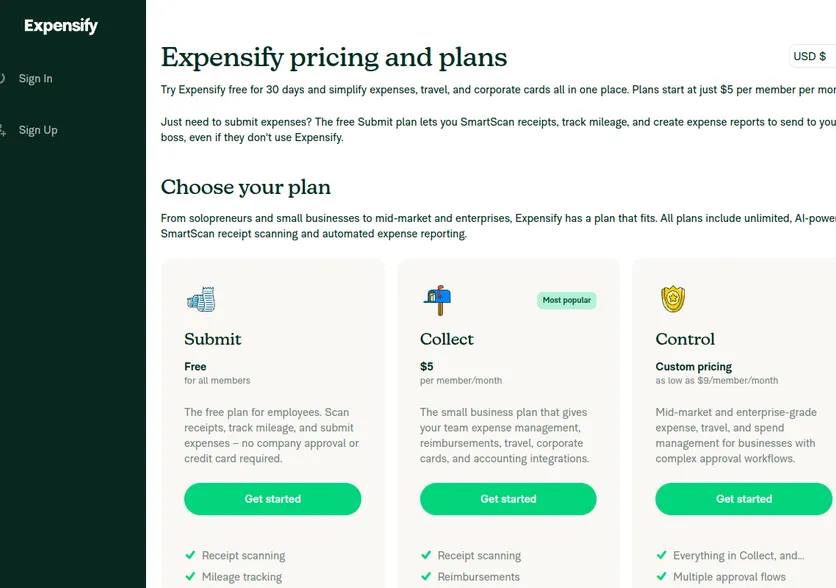
Paid tool Starting price: $5/user/month · Collect plan per member; Control plan starts at nine dollars a user a month
Free plan: Free Submit plan for individuals
Expensify is the expense tool that multi-entity groups use to keep employee spending tidy, and the Collect plan costs about five dollars a user a month. It captures receipts, approves expenses, and syncs them into each entity's ledger with the right codes. It is an expense tool, not a ledger, so it works beside your accounting software rather than replacing it.
What we like
- Lowest price in this list
- Smart receipt scanning
- Syncs expenses per entity
Watch out for
- Expense tool only, not a ledger
- Advanced controls need a higher tier
How to try it
- Connect each entity's ledger and set expense policies
- Invite employees to snap receipts in the app
- Approve expenses and sync them into the right entity
Prices above were checked on each vendor’s own website on Nov 26, 2026 and can change — the vendor’s page is the final word. Vendor links are editorial: nobody paid to be listed or ranked here. Vendors who want a featured listing can see how it works on our Get listed page.
What accounting software for multiple entities actually costs
Multi-entity accounting starts cheap with expense tools near five dollars a user a month, and a full ledger with consolidated reporting runs from about sixty to three hundred forty dollars a month per entity. Most groups spend one hundred to five hundred dollars a month in total, depending on how many entities they run and whether they add payables and expense automation. Per-entity pricing adds up fast, so count your companies before you budget, not just your users.
Before you buy, test the consolidated reports on your real entities, since a tool that looks good for one company can struggle with five. Check that intercompany transactions post cleanly and that user permissions keep each entity's books separate, because those two features decide whether the software actually works for a group.
Before you buy
- Check whether the price is per entity or per user before you budget
- Test consolidated reporting on your real entities, not a demo
- Confirm intercompany transactions post cleanly between all of your entities
- Make sure user permissions keep each entity's books separate
- Count the cost of payables and expense add-ons across all entities
Official websites
Official websites of the products reviewed above. Features and prices were checked against these sites when this guide was written, and they can change, so confirm on the vendor site before you buy.
Frequently asked questions
What is the best accounting software for multiple entities?
QuickBooks Online Advanced leads for most groups, with consolidated reporting and custom roles in a familiar ledger. Dynamics 365 Business Central suits groups that need intercompany transactions in one system, while Odoo is the best value modular platform. The right pick depends on how many entities you run and how complex the intercompany accounting gets.
How much does multi-entity accounting software cost?
Expense tools start near five dollars a user a month, and full ledgers with consolidated reporting run from about sixty to three hundred forty dollars a month per entity. Most groups spend one hundred to five hundred dollars a month in total, depending on entity count and add-ons. Count your entities before you budget, since per-entity pricing adds up fast.
Can QuickBooks Online handle multiple entities?
Yes, QuickBooks Online Advanced supports multiple entities with separate company files and consolidated reporting across them. Each entity needs its own subscription, which raises the total cost for larger groups. Groups with many entities or complex intercompany transactions may prefer Dynamics 365 Business Central or a dedicated consolidation tool.
What is intercompany accounting, and do I need it?
Intercompany accounting tracks transactions between your own companies, like one entity lending money to another or charging for shared services. If your entities trade with each other, you need a tool that posts these transactions cleanly and eliminates them in consolidated reports. Groups with separate entities that never trade can skip it and use simpler reporting.
Is Odoo good for multiple companies?
Yes, Odoo has multi-company support built in, with separate charts of accounts and intercompany rules at about thirty one dollars and ten cents a user a month (twenty four dollars and ninety cents for the first year). Its modular design lets each company add the apps it needs, from inventory to CRM. The setup needs careful planning, so budget time for configuration or an implementation partner.
Need free money help too? Try Toolsvine's free finance calculators for quick answers right in your browser.
Browse Finance Calculators tools