On this page
A law firm cannot work without its case files, and one dead laptop can lose a brief the week of a filing deadline. The eight tools below run from about forty dollars a year to about one hundred dollars a year, and every price was checked on the vendor site on November 27, 2026. Some encrypt every file so only the firm can read it, others keep every version forever, and the right pick depends on what the firm's clients expect. SpiderOak One Backup is our first pick — zero-knowledge encryption for confidential client files.
How we researched this
We started with the backup tools law firms actually buy, then read each price on the vendor pricing page on November 27, 2026 and noted the trial each plan carries. We judged them for a firm that stores confidential client files across several computers and needs a restore to work the first time. We dropped Druva, Datto and Rubrik because they publish no list price, and Veeam Data Platform because its editions are quote-only.
Compare the tools
| Name | Best for | Starting price | Free plan | |
|---|---|---|---|---|
 SpiderOak One Backup | Law firms that need zero-knowledge encryption so no one but the firm can read client files | $69/year | No free plan; 21-day free trial | Visit |
 CrashPlan | Law firms that need unlimited versions and central control across every lawyer's machine | $88/user/year | No free plan; 14-day free trial | Visit |
 IDrive | Law firms with several devices who want one storage pool for every computer, phone and drive | $99.50/year | Free 10 GB Basic plan included | Visit |
 Carbonite Safe | Law firms that want automatic backup that runs itself once it is switched on | $95.99/year | No free plan; 15-day free trial | Visit |
 Backblaze Computer Backup | Law firms that want one flat price per computer with unlimited storage and no thinking about it | $99/year | No free plan; 15-day free trial | Visit |
 Sync.com | Law firms that want every file end-to-end encrypted with a shared admin console | $6/user/month | Free 5 GB plan; 30-day free trial on paid plans | Visit |
 pCloud | Law firms that want a pay-once cloud drive with file backup and versioning built in | $49.99/year | Free plan with up to 10 GB | Visit |
 Acronis True Image | Law firms that want full disk images so a dead computer does not miss a filing deadline | $49.99/year | No free plan; 30-day free trial | Visit |
The backup software for law firms, compared
1. SpiderOak One Backup
Best for: Law firms that need zero-knowledge encryption so no one but the firm can read client files
Paid tool Starting price: $69/year · One hundred fifty gigabyte plan, sixty-nine dollars a year, or six dollars a month; larger plans run to five terabytes
Free plan: No free plan; 21-day free trial
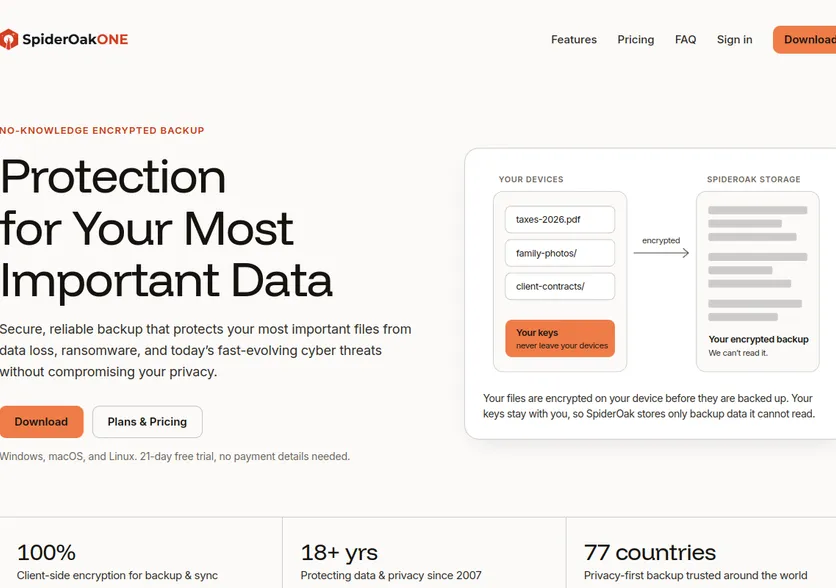
Client confidentiality is a lawyer's duty, and SpiderOak One Backup is built around it, with zero-knowledge encryption that keeps the backup vendor blind to your data. Every plan covers unlimited devices, so one subscription protects the office computers, the laptops and the phones together. The entry plan holds one hundred fifty gigabytes, which suits documents and case files, while larger tiers cover the firm's full archive.
What we like
- Zero-knowledge encryption keeps the vendor from reading your files
- Unlimited devices on every plan
- Covers Windows, Mac and Linux from one account
Watch out for
- The entry plan holds only 150 GB, so a large archive needs a bigger tier
- No free plan, so the 21-day trial is the only way to test it
How to try it
- Open the SpiderOak One site and start the 21-day trial
- Pick the storage tier that fits the firm's case files
- Back up the office computers and laptops under one account
2. CrashPlan
Best for: Law firms that need unlimited versions and central control across every lawyer's machine
Paid tool Starting price: $88/user/year · Endpoints plan, eighty-eight dollars per user a year on yearly billing; a two-year term lists at one hundred fifty-eight dollars; a server plan is priced separately
Free plan: No free plan; 14-day free trial
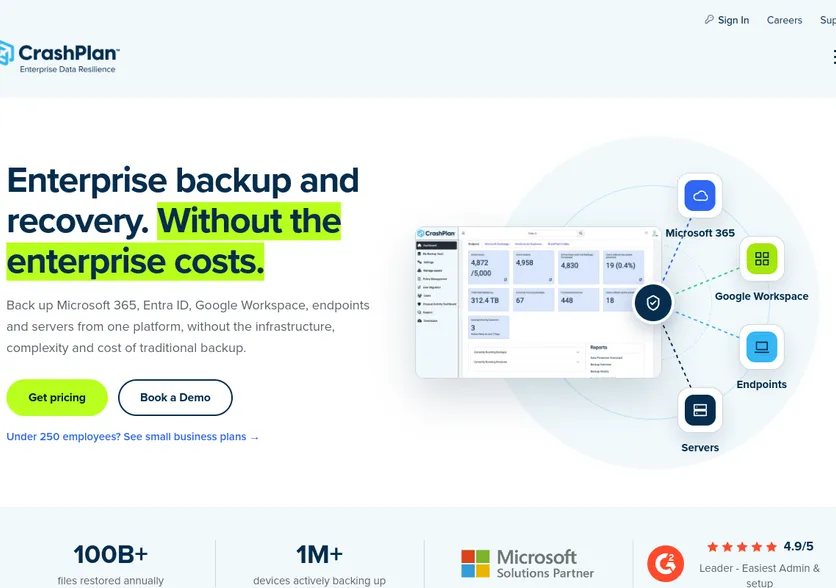
Case files get edited every day, and CrashPlan keeps every version of every file forever, so a brief overwritten by mistake can be pulled back from any point in time. The admin console lets the office manager see every machine's backup status in one place instead of checking each lawyer's laptop. Windows, Mac and Linux machines sit under one bill, and a server plan covers the firm's file server too.
What we like
- Unlimited storage and unlimited version history per user
- Admin console shows every machine's backup status at a glance
- Covers Windows, Mac and Linux from one subscription
Watch out for
- No personal plan, so a solo practice pays a business price
- No disk imaging, so a dead drive needs a reinstall plus a file restore
How to try it
- Open the CrashPlan site and start the 14-day trial
- Add the firm's computers and set retention rules in the console
- Restore an old version of a test file to confirm history works
3. IDrive
Best for: Law firms with several devices who want one storage pool for every computer, phone and drive
Paid tool Starting price: $99.50/year · Personal plan, five terabytes for ninety-nine dollars and fifty cents a year on renewal; the first year is often discounted for new accounts, so budget the renewal rate
Free plan: Free 10 GB Basic plan included
A law firm works from many machines, and IDrive covers them all under a single account with five terabytes of pooled storage. Office computers, laptops, phones and network drives feed the same pool, so there is no per-computer bill multiplying as the firm grows. Disk images, version history and a private encryption key come with the plan, which matters when client files must stay unreadable to anyone but the firm.
What we like
- One 5 TB pool covers unlimited devices on a single bill
- Disk imaging plus file backup in the same plan
- Optional private key keeps client files unreadable to the vendor
Watch out for
- Storage is capped at five terabytes, so a large archive needs a bigger tier
- First-year promotions end at renewal, so check the renewal price first
How to try it
- Open the IDrive site and create the firm account
- Add each lawyer's computer and phone to the same pool
- Turn on the private key and schedule nightly backups
4. Carbonite Safe
Best for: Law firms that want automatic backup that runs itself once it is switched on
Paid tool Starting price: $95.99/year · Basic plan list price, ninety-five dollars and ninety-nine cents a year for one computer; first-year promotions run lower and do not carry into renewal
Free plan: No free plan; 15-day free trial
Lawyers bill by the hour, not by the backup, and Carbonite Safe copies files automatically in the background with unlimited storage for one computer. There are no backup sets to build and no storage tiers to watch, so the plan fits a firm that would rather work cases than manage software. The Basic plan covers documents, photos and music, while Plus adds an external drive and automatic video backup.

What we like
- Unlimited storage for one computer at a flat yearly price
- Fully automatic backup with no backup sets to manage
- Remote file access from any browser when working off-site
Watch out for
- Basic skips external drives and automatic video backup
- One computer per plan, so every lawyer's machine needs its own subscription
How to try it
- Open the Carbonite Safe page and start the 15-day trial
- Install the app on the main office computer first
- Check the dashboard after a week to confirm new files are covered
5. Backblaze Computer Backup
Best for: Law firms that want one flat price per computer with unlimited storage and no thinking about it
Paid tool Starting price: $99/year · Ninety-nine dollars a year per computer on yearly billing, or nine dollars a month billed monthly; a two-year term lists at one hundred eighty-nine dollars
Free plan: No free plan; 15-day free trial
A law firm's files grow with every case, and Backblaze Computer Backup removes the storage math entirely with unlimited backup for one computer at a flat yearly price. The client copies every user file, including files on connected external drives, without asking which folders matter. Restores work from any browser, so a brief lost before a filing deadline can be pulled back before the court closes.

What we like
- Unlimited storage per computer at one flat price
- Covers connected external drives, where case archives often live
- Browser restores and mailed-drive restores for big recoveries
Watch out for
- One license covers one computer, so each lawyer's machine costs extra
- No Linux client, so a Linux machine needs a different tool
How to try it
- Open the Backblaze site and start the 15-day trial
- Install the client on the computer that holds the case files
- Test a file restore from the web dashboard before your next deadline
6. Sync.com
Best for: Law firms that want every file end-to-end encrypted with a shared admin console
Paid tool Starting price: $6/user/month · Teams 1TB plan, six dollars per user a month on yearly billing, or eight dollars billed monthly; a three-user minimum applies and the first year is often discounted
Free plan: Free 5 GB plan; 30-day free trial on paid plans
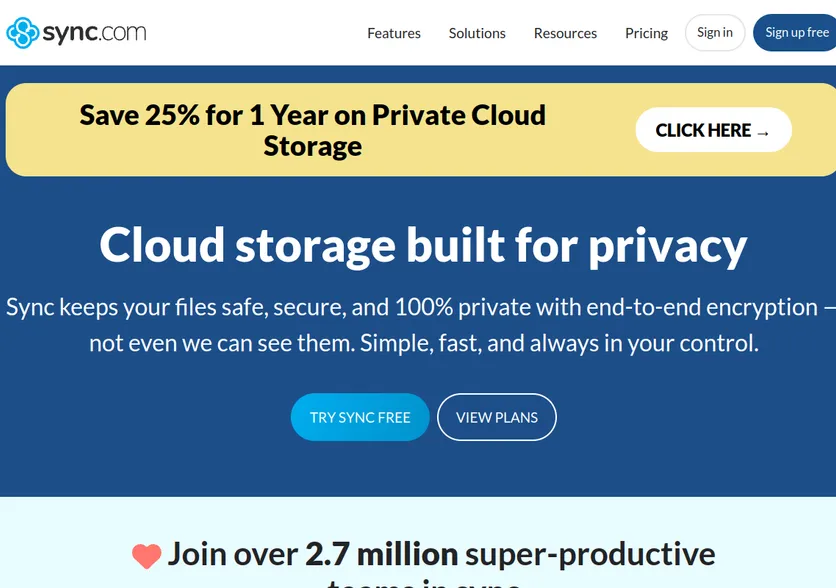
Client files are the firm's reputation, and Sync.com encrypts every file end to end, so only the account holder can read what is stored. The Teams plan adds an admin account, centralized billing and shared folders for the firm, with one terabyte per user and six months of file history. A three-user minimum applies, which suits a small firm better than a solo practice.
What we like
- End-to-end encryption on every file by default
- Admin console with centralized billing for the firm
- One terabyte per user with 180 days of file history
Watch out for
- Three-user minimum means a solo lawyer pays for three seats
- It is cloud storage with backup features, not a disk imaging tool
How to try it
- Open the Sync.com site and start the Teams trial
- Create the admin account and invite at least two colleagues
- Move case folders into shared folders with per-user access
7. pCloud
Best for: Law firms that want a pay-once cloud drive with file backup and versioning built in
Paid tool Starting price: $49.99/year · Premium plan, five hundred gigabytes for forty-nine dollars and ninety-nine cents a year, or four dollars and ninety-nine cents a month; lifetime plans are sold separately
Free plan: Free plan with up to 10 GB
Not every firm wants another monthly bill, and pCloud offers a cloud drive with backup, sync and file versioning that can be bought once for life instead of rented every year. The Premium plan gives five hundred gigabytes for one person, with apps on every system including Linux and a virtual drive that keeps files in the cloud without filling the laptop. A lifetime plan costs more up front but ends the renewal cycle for good.

What we like
- Lifetime plan option ends the yearly renewal cycle
- Virtual drive keeps files in the cloud without filling the laptop
- Apps on Windows, Mac, Linux, iOS and Android
Watch out for
- True zero-knowledge encryption costs extra through the Crypto Folder
- Five hundred gigabytes fills fast if the case archive is large
How to try it
- Open the pCloud site and create the free account
- Turn on Backup for the folders that hold case files
- Compare the yearly and lifetime prices before you pay
8. Acronis True Image
Best for: Law firms that want full disk images so a dead computer does not miss a filing deadline
Paid tool Starting price: $49.99/year · Essentials plan, forty-nine dollars and ninety-nine cents a year for one computer; the product was formerly sold as Acronis Cyber Protect Home Office
Free plan: No free plan; 30-day free trial
When a lawyer's laptop dies the week of a filing, the whole case stops, and Acronis True Image protects the entire machine with full disk imaging, cloning and universal restore. A dead drive can be rebuilt on different hardware without reinstalling every application, which turns a lost day into a lost hour. The Essentials plan covers one computer for a year, with higher tiers adding cloud storage and malware protection.

What we like
- Full disk imaging with restore to different hardware
- Active disk cloning for fast drive upgrades
- Anti-ransomware protection guards the backup files themselves
Watch out for
- Essentials has no cloud storage, so offsite copies need a higher tier
- Essentials has no malware protection, which starts at Advanced
How to try it
- Open the Acronis True Image page and start the 30-day trial
- Create a full disk image of the main work computer
- Test a restore to a spare machine before you rely on it
Prices above were checked on each vendor’s own website on Nov 27, 2026 and can change — the vendor’s page is the final word. Vendor links are editorial: nobody paid to be listed or ranked here. Vendors who want a featured listing can see how it works on our Get listed page.
What backup costs a law firm in 2026
A law firm's backup bill is really two bills in one: the license and the lawyers. Per-computer plans look cheap until every lawyer, paralegal and assistant machine joins the count, while pooled plans like IDrive cover every device for one price but cap the total storage. Count the machines first, then the gigabytes, and the honest total appears. Encryption is the other hidden cost, since a private key or zero-knowledge plan can be the difference between meeting a client confidentiality duty and failing it.
Start with the trial on two tools and back up a real working week, not a test folder. Delete a file on purpose and restore it, then restore an older version to check the history window. Pick the tool whose restore feels boring and reliable, because the day you actually need it will already be stressful enough.
Before you buy
- Confirm the encryption model before you buy, because client files must stay unreadable to anyone but the firm, including the vendor.
- Check the retention window against your file policy, because a version that ages out after ninety days cannot help with a case from last year.
- Count every lawyer, paralegal and assistant computer, because most plans charge per machine and a firm adds up fast.
- Test a restore of a real case file and one older version before you trust the plan, because a backup you have never restored is only a promise.
- Read the renewal price at checkout, because first-year discounts end and the second year can cost far more than the first.
Official websites
Official websites of the products reviewed above. Features and prices were checked against these sites when this guide was written, and they can change, so confirm on the vendor site before you buy.
Frequently asked questions
What is the best backup software for law firms in 2026?
SpiderOak One Backup is the best overall pick for a law firm at sixty-nine dollars a year, because zero-knowledge encryption keeps client files unreadable to anyone but the firm. CrashPlan is the best pick for version history, keeping every version of every case file forever with a central admin console. IDrive is the best value for a firm with many devices, since one five-terabyte pool covers unlimited machines.
How much does backup software for a law firm cost?
Prices in this list run from forty-nine dollars and ninety-nine cents a year for Acronis True Image and pCloud to ninety-nine dollars and fifty cents a year for IDrive, with per-user plans from six dollars a month at Sync.com and eighty-eight dollars a year at CrashPlan. A small firm with three lawyers can be covered for roughly three hundred dollars. Always check the renewal price, since first-year discounts end after year one.
Does a law firm need encrypted backup for client files?
Yes, because client files are confidential by duty, and a backup vendor that can read your files is a risk the firm does not need. SpiderOak One Backup encrypts everything with zero-knowledge encryption by default, Sync.com encrypts every file end to end, and IDrive and Backblaze both offer an optional private key. Pick a tool whose encryption model matches the confidentiality standard the firm promises its clients.
What should a law firm back up first?
Back up the case files, the email archive and the firm's file server first, because those hold the work the firm cannot rebuild. Then add the laptops that travel to court and to client meetings, since a stolen laptop can take a whole case with it. A backup that covers only the office server leaves the traveling machines exposed.
How often should a law firm test a restore?
Test a restore at least once a quarter, because a backup you have never restored is only a promise. Pick one real case file and one older version, restore them and check that they open correctly. A full test once a year, restoring a whole case folder after a simulated failure, is the check that catches silent problems before a real disaster misses a deadline.
Need everyday security help too? Try Toolsvine's free security tools right in your browser.
Browse Security & Privacy tools