On this page
A photographer's library is the whole business, and one dead drive can lose a wedding, a season of portraits and years of work. The eight tools below run from about fifty dollars a year to about one hundred dollars a year, and every price was checked on the vendor site on November 27, 2026. Some offer unlimited storage for raw libraries, others cover every device on one bill, and the right pick depends on how many terabytes you shoot. Backblaze Computer Backup is our first pick — unlimited backup for one computer at a flat yearly price.
How we researched this
We started with the backup tools photographers actually buy, then read each price on the vendor pricing page on November 27, 2026 and noted the trial each plan carries. We judged them for a photographer who shoots in raw, stores terabytes of images across drives and needs a restore to work the first time. We dropped Druva, Datto and Rubrik because they publish no list price, and Veeam Data Platform because its editions are quote-only.
Compare the tools
| Name | Best for | Starting price | Free plan | |
|---|---|---|---|---|
 Backblaze Computer Backup | Photographers with huge libraries who want unlimited backup for one computer at a flat price | $99/year | No free plan; 15-day free trial | Visit |
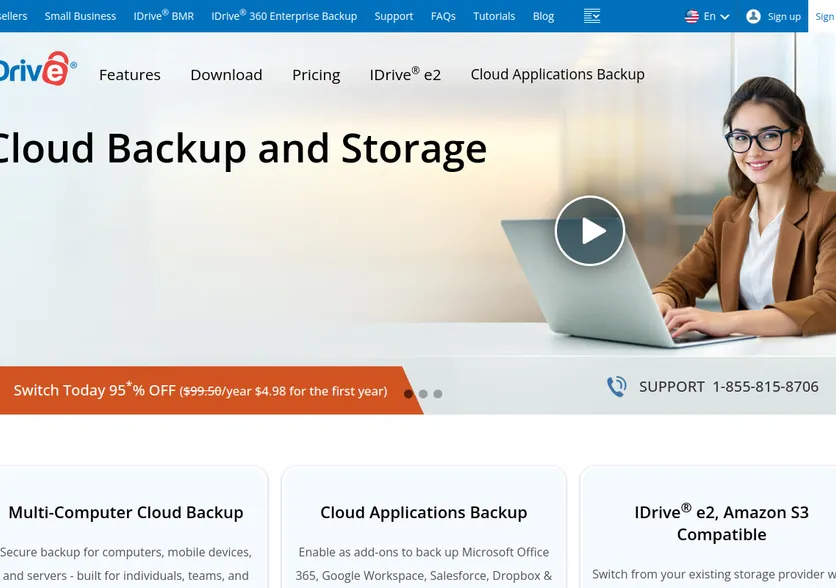
 IDrive | Photographers with several devices who want one storage pool for every computer, phone and drive | $99.50/year | Free 10 GB Basic plan included | Visit |
 pCloud | Photographers who want a pay-once cloud drive with backup, sync and file versioning built in | $49.99/year | Free plan with up to 10 GB | Visit |
 Dropbox Plus | Photographers who want two terabytes of cloud storage with file backup and versioning built in | $9.99/month | Free Basic plan with 2 GB | Visit |
 SpiderOak One Backup | Photographers handling sensitive client shoots who want zero-knowledge encryption on every backup | $69/year | No free plan; 21-day free trial | Visit |
 Carbonite Safe | Photographers who want automatic backup that runs itself once it is switched on | $95.99/year | No free plan; 15-day free trial | Visit |
 Acronis True Image | Photographers who want full disk images of the editing machine so a dead drive does not lose a season | $49.99/year | No free plan; 30-day free trial | Visit |
| Arq Backup | Photographers who want a one-time license and their own choice of cloud storage | $59.99 one-time | No free plan; 30-day free trial | Visit |
The backup software for photographers, compared
1. Backblaze Computer Backup
Best for: Photographers with huge libraries who want unlimited backup for one computer at a flat price
Paid tool Starting price: $99/year · Ninety-nine dollars a year per computer on yearly billing, or nine dollars a month billed monthly; a two-year term lists at one hundred eighty-nine dollars
Free plan: No free plan; 15-day free trial
Photo libraries grow by the terabyte, and Backblaze Computer Backup removes the storage math entirely with unlimited backup for one computer at a flat yearly price. The client copies every user file, including raw photos on connected external drives, without asking which folders matter. Restores work from any browser, and a mailed hard drive can bring back a whole shoot faster than any download.

What we like
- Unlimited storage per computer, so raw libraries never hit a cap
- Covers connected external drives, where shoots usually live
- Mailed-drive restores bring back a whole shoot fast
Watch out for
- One license covers one computer, so a desktop plus a laptop costs double
- No Linux client, so a Linux editing machine needs a different tool
How to try it
- Open the Backblaze site and start the 15-day trial
- Install the client and let the first backup of the library finish
- Order a mailed-drive restore test for one shoot folder
2. IDrive
Best for: Photographers with several devices who want one storage pool for every computer, phone and drive
Paid tool Starting price: $99.50/year · Personal plan, five terabytes for ninety-nine dollars and fifty cents a year on renewal; the first year is often discounted for new accounts, so budget the renewal rate
Free plan: Free 10 GB Basic plan included
A photographer works from a desktop, a laptop and a phone, and IDrive covers them all under a single account with five terabytes of pooled storage. Edited photos, raw files, phones and network drives feed the same pool, so there is no per-computer bill multiplying as the kit grows. Disk images, version history and a private encryption key come with the plan, which matters when client shoots must stay private.
What we like
- One 5 TB pool covers unlimited devices on a single bill
- Disk imaging plus file backup in the same plan
- Optional private key keeps client shoots unreadable to the vendor
Watch out for
- Storage is capped at five terabytes, so huge raw libraries need a bigger tier
- First-year promotions end at renewal, so check the renewal price first
How to try it
- Open the IDrive site and create a free Basic account
- Add the editing desktop, the laptop and the phone to one pool
- Turn on the private key and schedule nightly backups
3. pCloud
Best for: Photographers who want a pay-once cloud drive with backup, sync and file versioning built in
Paid tool Starting price: $49.99/year · Premium plan, five hundred gigabytes for forty-nine dollars and ninety-nine cents a year, or four dollars and ninety-nine cents a month; lifetime plans are sold separately
Free plan: Free plan with up to 10 GB
Not every photographer wants another monthly bill, and pCloud offers a cloud drive with backup, sync and file versioning that can be bought once for life instead of rented every year. The Premium plan gives five hundred gigabytes for one person, with apps on every system including Linux and a virtual drive that keeps photos in the cloud without filling the laptop. A lifetime plan costs more up front but ends the renewal cycle for good.

What we like
- Lifetime plan option ends the yearly renewal cycle
- Virtual drive keeps photos in the cloud without filling the laptop
- Apps on Windows, Mac, Linux, iOS and Android
Watch out for
- True zero-knowledge encryption costs extra through the Crypto Folder
- Five hundred gigabytes fills fast on raw photo libraries
How to try it
- Open the pCloud site and create the free account
- Turn on Backup for the folders that hold your shoots
- Compare the yearly and lifetime prices before you pay
4. Dropbox Plus
Best for: Photographers who want two terabytes of cloud storage with file backup and versioning built in
Paid tool Starting price: $9.99/month · Plus plan, nine dollars and ninety-nine cents a month billed yearly, or eleven dollars and ninety-nine cents billed monthly; two terabytes for one person
Free plan: Free Basic plan with 2 GB
Finished galleries, client proofs and portfolio files need a home that syncs everywhere, and Dropbox Plus gives one person two terabytes with thirty days of file recovery and version history. Files sync across every device, transfers up to fifty gigabytes can be sent to clients, and deleted files can be pulled back within the recovery window. It is storage first and backup second, so pair it with an unlimited backup for the raw library.
What we like
- Two terabytes for one person with sync on every device
- Thirty-day recovery for deleted files and older versions
- Large file transfers up to fifty gigabytes for clients
Watch out for
- Thirty-day history only, so older versions age out fast
- Two terabytes fills fast on raw libraries, so it suits finished work best
How to try it
- Open the Dropbox site and start the Plus plan
- Move finished galleries and client proofs into Dropbox
- Test recovering a deleted file within the thirty-day window
5. SpiderOak One Backup
Best for: Photographers handling sensitive client shoots who want zero-knowledge encryption on every backup
Paid tool Starting price: $69/year · One hundred fifty gigabyte plan, sixty-nine dollars a year, or six dollars a month; larger plans run to five terabytes
Free plan: No free plan; 21-day free trial
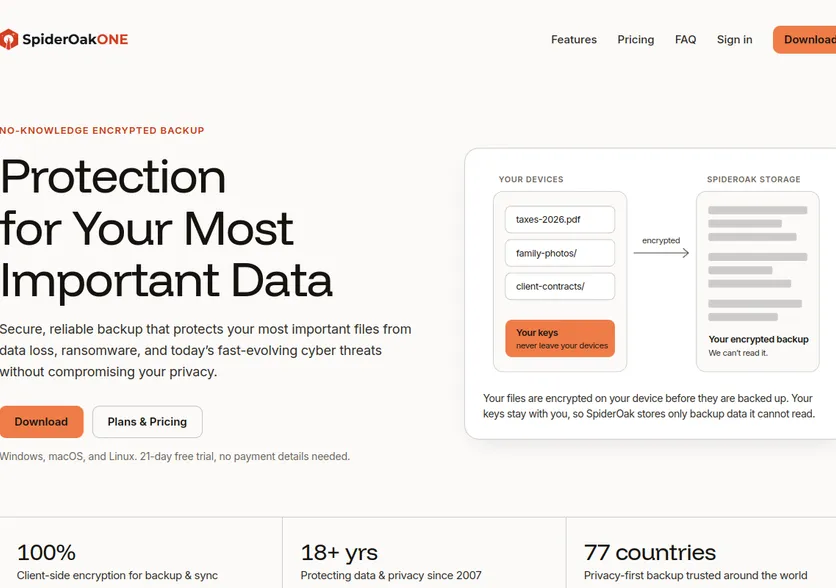
Client shoots must stay private even from the backup vendor, and SpiderOak One Backup is the privacy-first pick, with zero-knowledge encryption that keeps the vendor blind to your data. Every plan covers unlimited devices, so one subscription protects the editing desktop, the laptop and the phone together. The entry plan holds one hundred fifty gigabytes, which suits finished galleries, while larger tiers cover raw libraries.
What we like
- Zero-knowledge encryption keeps the vendor from reading your files
- Unlimited devices on every plan
- Covers Windows, Mac and Linux from one account
Watch out for
- The entry plan holds only 150 GB, so raw libraries need a bigger tier
- No free plan, so the 21-day trial is the only way to test it
How to try it
- Open the SpiderOak One site and start the 21-day trial
- Pick the storage tier that fits your finished galleries
- Back up the editing desktop and the laptop under one account
6. Carbonite Safe
Best for: Photographers who want automatic backup that runs itself once it is switched on
Paid tool Starting price: $95.99/year · Basic plan list price, ninety-five dollars and ninety-nine cents a year for one computer; first-year promotions run lower and do not carry into renewal
Free plan: No free plan; 15-day free trial
A photographer would rather shoot than manage backup software, and Carbonite Safe copies files automatically in the background with unlimited storage for one computer. There are no backup sets to build and no storage tiers to watch, so the plan fits a studio that would rather edit photos than babysit software. The Basic plan covers documents, photos and music, while Plus adds an external drive and automatic video backup.

What we like
- Unlimited storage for one computer at a flat yearly price
- Fully automatic backup with no backup sets to manage
- Remote file access from any browser when shooting on location
Watch out for
- Basic skips external drives and automatic video backup
- One computer per plan, so a desktop plus a laptop costs double
How to try it
- Open the Carbonite Safe page and start the 15-day trial
- Install the app on the editing computer first
- Check the dashboard after a week to confirm new shoots are covered
7. Acronis True Image
Best for: Photographers who want full disk images of the editing machine so a dead drive does not lose a season
Paid tool Starting price: $49.99/year · Essentials plan, forty-nine dollars and ninety-nine cents a year for one computer; the product was formerly sold as Acronis Cyber Protect Home Office
Free plan: No free plan; 30-day free trial
When an editing machine dies mid-season, the whole workflow stops, and Acronis True Image protects the entire machine with full disk imaging, cloning and universal restore. A dead drive can be rebuilt on different hardware without reinstalling the editing software and every preset around it. The Essentials plan covers one computer for a year, with higher tiers adding cloud storage and malware protection.

What we like
- Full disk imaging with restore to different hardware
- Active disk cloning for fast drive upgrades
- Anti-ransomware protection guards the backup files themselves
Watch out for
- Essentials has no cloud storage, so offsite copies need a higher tier
- Essentials has no malware protection, which starts at Advanced
How to try it
- Open the Acronis True Image page and start the 30-day trial
- Create a full disk image of the editing machine
- Test a restore to a spare machine before you rely on it
8. Arq Backup
Best for: Photographers who want a one-time license and their own choice of cloud storage
Paid tool Starting price: $59.99 one-time · Arq 7, fifty-nine dollars and ninety-nine cents once per computer, with one year of updates included; Arq Premium with one terabyte of storage lists at sixty-nine dollars and ninety-nine cents a year
Free plan: No free plan; 30-day free trial
Some photographers would rather own the software and pick their own storage, and Arq Backup is a one-time purchase that sends encrypted backups to the storage you choose. Arq 7 costs fifty-nine dollars and ninety-nine cents once per computer, with one year of updates included, and it works with Amazon S3, Backblaze B2, Google Cloud and more. Storage is billed separately by the provider, so the total depends on how much you keep.
What we like
- One-time license with no yearly subscription to renew
- Encrypted backups to storage you choose and control
- Works with S3, B2, Google Cloud and other providers
Watch out for
- Storage is not included, so cloud fees from your provider are extra
- Updates after the first year cost twenty-five dollars per computer
How to try it
- Open the Arq Backup site and start the 30-day trial
- Connect your Backblaze B2 or Amazon S3 storage account
- Back up one shoot folder and restore a single file to test it
Prices above were checked on each vendor’s own website on Nov 27, 2026 and can change — the vendor’s page is the final word. Vendor links are editorial: nobody paid to be listed or ranked here. Vendors who want a featured listing can see how it works on our Get listed page.
What backup costs a photographer in 2026
A photographer's backup bill is really two bills in one: the license and the storage. Unlimited plans look dear until the library passes five terabytes, while capped plans look cheap until the overage or the bigger tier arrives. Count the library in terabytes first, then the machines, and the honest total appears. External drives are the other hidden cost, since shoots live on portable drives that a basic plan can skip entirely.
Start with the trial on two tools and back up a real shoot, not a test folder. Delete one raw file on purpose and restore it, then restore a whole folder to check the speed. Pick the tool whose restore feels boring and reliable, because the day you actually need it will already be stressful enough.
Before you buy
- Count the terabytes before you buy, because a capped plan fills fast on raw photo libraries and the overage bill hurts.
- Check whether the plan covers external drives, because photographers keep shoots on portable drives that a basic plan will skip.
- Confirm the restore speed for large files, because pulling back a whole wedding shoot over a slow connection takes days.
- Read the retention window for deleted files, because a shoot deleted by mistake may only be noticed months later.
- Test a restore of one full shoot folder before you trust the plan, because a backup you have never restored is only a promise.
Official websites
Official websites of the products reviewed above. Features and prices were checked against these sites when this guide was written, and they can change, so confirm on the vendor site before you buy.
Frequently asked questions
What is the best backup software for photographers in 2026?
Backblaze Computer Backup is the best overall pick for a photographer at ninety-nine dollars a year per computer, with unlimited storage that never caps a raw library. IDrive is the best value for a photographer with several devices, since one five-terabyte pool covers unlimited machines. pCloud is the best pay-once pick, with a lifetime plan that ends the renewal cycle for finished galleries and portfolios.
How much does backup software for photographers cost?
Prices in this list run from forty-nine dollars and ninety-nine cents a year for Acronis True Image and pCloud to ninety-nine dollars and fifty cents a year for IDrive, with Arq Backup at fifty-nine dollars and ninety-nine cents once. A photographer with one editing computer can be covered for under one hundred dollars a year, while a second machine doubles a per-computer plan. Always check the renewal price, since first-year discounts end after year one.
How much storage does a photographer need for backup?
Use an unlimited plan for the raw library and a capped plan only for finished work, because raw files grow by the terabyte and a five-terabyte cap fills fast on a busy season. Backblaze and Carbonite offer unlimited storage per computer, while IDrive caps at five terabytes on the entry plan. Count the library in terabytes before you buy, not in shoots, since one wedding can be hundreds of gigabytes.
What should a photographer back up first?
Back up the raw files first, because finished exports can be rebuilt from the raw files but lost raw files are gone forever. Then add the edited catalogs, presets and finished galleries, since those hold the work you cannot rebuild quickly. A backup that covers only the finished exports leaves the most valuable data unprotected.
How often should a photographer test a restore?
Test a restore at least once a quarter, because a backup you have never restored is only a promise. Pick one full shoot folder, restore it to a different drive and check that every raw file opens correctly. A full test once a year, restoring a whole season after a simulated drive failure, is the check that catches silent problems before a real disaster loses a client's wedding.
Need everyday security help too? Try Toolsvine's free security tools right in your browser.
Browse Security & Privacy tools