On this page
A nurse practitioner needs trusted answers in seconds, because the patient in front of you cannot wait for a literature search. The seven tools below run from one hundred forty-nine dollars to five hundred seventy-nine dollars a year for an individual, and every price was checked on the vendor site on November 27, 2026. Some give deep topic reviews, others give fast drug answers or visual diagnosis, so the right pick depends on the cases you see most. UpToDate is our first pick — the deepest evidence-based reference, with graded recommendations for the point of care.
How we researched this
We started with the decision support tools nurse practitioners actually subscribe to as individuals, then read each price on the vendor store or pricing page on November 27, 2026 and noted the trial each plan carries. We judged them for a nurse practitioner who needs trusted answers at the point of care without an institutional license. We dropped BMJ Best Practice because it prices in pounds, Lexicomp because it publishes no individual US price, and ClinicalKey AI because it sells to institutions only.
Compare the tools
| Name | Best for | Starting price | Free plan | |
|---|---|---|---|---|
| UpToDate | Nurse practitioners who want the deepest evidence-based reference at the point of care | $579/year | No free plan; trial access varies by region | Visit |
| DynaMed | Clinicians who want graded evidence in a faster, cheaper reference | $399/year | No free plan; trial available through institutions | Visit |
| VisualDx | Clinicians who diagnose from what they can see, especially skin findings | $299.99/year | No free plan; 7-day free trial | Visit |
| Epocrates Plus | Prescribers who need fast drug dosing and interaction checks | $179.99/year | Free basic app; Plus is paid | Visit |
| Isabel Healthcare | Clinicians who want a ranked differential for tricky presentations | $149/year | No free plan; 30-day free trial | Visit |
| AMBOSS | Clinicians who want a library, Qbank and clinical tools in one app | $259/year | No free plan; 5-day free trial | Visit |
| PEPID | Urgent care clinicians who need emergency content with CME included | $499.95/year | No free plan; 2-week free trial | Visit |
The clinical decision support software for nurse practitioners, compared
1. UpToDate
Best for: Nurse practitioners who want the deepest evidence-based reference at the point of care
Paid tool Starting price: $579/year · Individual subscription, five hundred seventy-nine dollars a year; Pro Plus lists at six hundred ninety-nine dollars a year and the trainee rate at two hundred nineteen dollars a year
Free plan: No free plan; trial access varies by region
UpToDate is the evidence-based reference most nurse practitioners open first, with graded recommendations on thousands of topics written for the point of care. This UpToDate individual subscription costs five hundred seventy-nine dollars a year, with Pro Plus at six hundred ninety-nine dollars a year and the trainee rate at two hundred nineteen dollars a year. A practitioner gets deep topic reviews with treatment pathways, though there is no free plan and the price sits at the top of this list.
What we like
- Deepest topic reviews with graded recommendations
- Treatment pathways written for the point of care
- Trusted by clinicians in nearly every specialty
Watch out for
- The highest annual price in this comparison
- No free plan, so the full price lands at once
How to try it
- Open the UpToDate store and choose the individual plan
- Search a topic from your last clinic day and read the graded recommendation
- Check the trainee rate if you are still in a training program
2. DynaMed
Best for: Clinicians who want graded evidence in a faster, cheaper reference
Paid tool Starting price: $399/year · Individual subscription, three hundred ninety-nine dollars a year; the Dyna AI version lists at four hundred seventy-five dollars a year and DynaMedex at five hundred ninety-nine dollars a year
Free plan: No free plan; trial available through institutions
DynaMed is the graded-evidence alternative many clinicians pick for faster answers, with concise summaries that show the strength of the evidence behind each recommendation. This DynaMed individual subscription costs three hundred ninety-nine dollars a year, with the Dyna AI version at four hundred seventy-five dollars a year and DynaMedex at five hundred ninety-nine dollars a year. A nurse practitioner gets a lighter, faster reference at a lower price, though the drug content is thinner than the dedicated drug databases here.
What we like
- Concise summaries with clear evidence grades
- Faster answers than the deeper references here
- Lower annual price than UpToDate for individuals
Watch out for
- Drug content is thinner than a dedicated drug database
- No individual free trial on the vendor store
How to try it
- Open the DynaMed store and choose the individual plan
- Run a recent case through the summary and check the evidence grade
- Compare the Dyna AI version if you want AI-assisted answers
3. VisualDx
Best for: Clinicians who diagnose from what they can see, especially skin findings
Paid tool Starting price: $299.99/year · Elite plan, two hundred ninety-nine dollars and ninety-nine cents a year; Core lists at two hundred forty-nine dollars and ninety-nine cents a year; monthly billing costs forty-nine dollars and ninety-nine cents for Elite
Free plan: No free plan; 7-day free trial
VisualDx is the visual diagnosis tool that helps clinicians recognize conditions from images, with a library of skin and systemic findings across ages and skin tones. This VisualDx Elite plan costs two hundred ninety-nine dollars and ninety-nine cents a year, with Core at two hundred forty-nine dollars and ninety-nine cents a year and a seven-day free trial. A nurse practitioner gets image-led differential diagnosis that text references cannot match, though the monthly price is steep for part-time use.
What we like
- Image-led diagnosis across ages and skin tones
- Differential builder that narrows findings fast
- Strong coverage of dermatology presentations
Watch out for
- Monthly billing is steep for part-time clinicians
- Narrower than a general reference outside visual diagnosis
How to try it
- Open the VisualDx pricing page and start the 7-day trial
- Search a recent rash or lesion and compare the image matches
- Check whether Core covers your cases before paying for Elite
4. Epocrates Plus
Best for: Prescribers who need fast drug dosing and interaction checks
Paid tool Starting price: $179.99/year · Plus subscription, one hundred seventy-nine dollars and ninety-nine cents a year; monthly billing costs twenty-four dollars and ninety-nine cents; the basic app is free
Free plan: Free basic app; Plus is paid
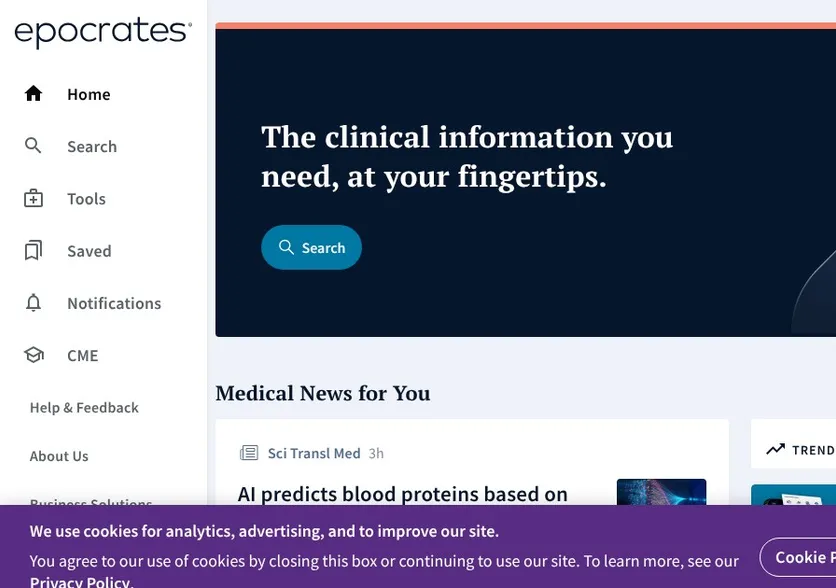
Epocrates Plus is the drug reference clinicians have carried in their pockets for years, with dosing, interactions, pill identification and formulary checks. This Epocrates Plus subscription costs one hundred seventy-nine dollars and ninety-nine cents a year, or twenty-four dollars and ninety-nine cents billed monthly, while the basic app stays free. A prescriber gets fast drug answers at the bedside, though Plus adds little for clinicians who never prescribe.
What we like
- Fastest drug dosing and interaction checks here
- Pill identification and formulary tools included
- Free basic app covers the core drug lookup
Watch out for
- Plus adds little for clinicians who never prescribe
- Monthly billing costs far more than the annual rate
How to try it
- Download the free Epocrates app and test the basic drug lookup
- Upgrade to Plus if you need interaction checks and pill identification
- Check your formulary coverage before the trial ends
5. Isabel Healthcare
Best for: Clinicians who want a ranked differential for tricky presentations
Paid tool Starting price: $149/year · Standard plan, one hundred forty-nine dollars a year; Premium lists at one hundred ninety-nine dollars a year and the student and resident rate at forty-nine dollars a year
Free plan: No free plan; 30-day free trial
Isabel Healthcare is the differential diagnosis tool that turns a symptom list into a ranked set of possibilities, with evidence links behind each suggestion. This Isabel Healthcare Standard plan costs one hundred forty-nine dollars a year, with Premium at one hundred ninety-nine dollars a year and a thirty-day free trial. A nurse practitioner gets a second opinion on tricky presentations, though the tool supports the workup rather than replacing clinical judgment.
What we like
- Ranked differentials with evidence links
- Lowest annual price in this comparison
- Thirty-day trial, the longest free test here
Watch out for
- Supports the workup rather than replacing judgment
- Narrower content than a full clinical reference
How to try it
- Open the Isabel pricing page and start the 30-day trial
- Enter the symptoms from a recent difficult case
- Review the ranked differential against your own workup
6. AMBOSS
Best for: Clinicians who want a library, Qbank and clinical tools in one app
Paid tool Starting price: $259/year · Practitioner membership, two hundred fifty-nine dollars a year billed annually, or twenty-nine dollars and ninety-nine cents billed monthly; the student rate lists at one hundred forty-nine dollars a year
Free plan: No free plan; 5-day free trial
AMBOSS pairs a medical library with clinical tools, giving nurse practitioners diagnostic algorithms, admission checklists and drug information in one app. This AMBOSS practitioner membership costs two hundred fifty-nine dollars a year billed annually, or twenty-nine dollars and ninety-nine cents billed monthly, with a five-day free trial. A clinician gets library depth plus point-of-care tools for less than UpToDate, though the AI mode is limited to medical research rather than diagnosis.
What we like
- Library, Qbank and clinical tools in one membership
- Diagnostic algorithms and admission checklists included
- Offline mobile app for use without a connection
Watch out for
- AI mode is limited to medical research, not diagnosis
- Five-day trial is the shortest free test here
How to try it
- Open the AMBOSS pricing page and start the 5-day trial
- Test the diagnostic algorithms on a recent case
- Check the student rate if you are still in training
7. PEPID
Best for: Urgent care clinicians who need emergency content with CME included
Paid tool Starting price: $499.95/year · EM Complete, four hundred ninety-nine dollars and ninety-five cents a year, or one thousand one hundred ninety-nine dollars and eighty-five cents every three years; the resident Primary Care Plus rate lists at ninety-nine dollars and ninety cents a year
Free plan: No free plan; 2-week free trial
PEPID is the point-of-care suite built around emergency medicine, with drug data, interaction checkers, dosing calculators and procedure videos. This PEPID EM Complete plan costs four hundred ninety-nine dollars and ninety-five cents a year, or one thousand one hundred ninety-nine dollars and eighty-five cents every three years, with a two-week free trial. A nurse practitioner in urgent care gets adult and pediatric emergency content with unlimited CME, though the price is high for clinicians outside emergency practice.

What we like
- Adult and pediatric emergency content in one suite
- Unlimited CME credit included with the plan
- Drug database with interaction checkers and calculators
Watch out for
- High price for clinicians outside emergency practice
- All sales are final, so use the trial first
How to try it
- Open the PEPID EM Complete page and start the two-week trial
- Look up a drug interaction from your last shift
- Check whether the unlimited CME covers your renewal needs
Prices above were checked on each vendor’s own website on Nov 27, 2026 and can change — the vendor’s page is the final word. Vendor links are editorial: nobody paid to be listed or ranked here. Vendors who want a featured listing can see how it works on our Get listed page.
What clinical decision support costs in 2026
A decision support subscription is a yearly cost, so compare the annual figure rather than the monthly teaser. A tool at twenty-four dollars and ninety-nine cents a month costs about three hundred dollars a year, while an annual plan at one hundred forty-nine dollars covers the same twelve months for half the money. Check first whether your employer or school already pays for access, because many nurse practitioners get UpToDate or DynaMed free through work and would pay twice by subscribing alone.
Start with the trial and bring your hardest recent cases to it, not the easy ones. Check whether the answer arrives in seconds, whether the evidence grade is clear, and whether the drug dosing matches your formulary. Pick the reference whose answers you trust at two in the morning, because that is when a decision support tool earns its price.
Before you buy
- Check whether your employer already provides access, because many clinics and hospitals include UpToDate or DynaMed for staff.
- Match the tool to your caseload, because a visual diagnosis tool helps a dermatology clinic more than a drug database does.
- Compare the annual price against the monthly price, because monthly billing costs far more over a full year.
- Use the free trial on real patient questions, because a reference earns its price only when its answers fit your workflow.
- Confirm CME credit is included, because PEPID bundles unlimited CME while most references do not.
Official websites
Official websites of the products reviewed above. Features and prices were checked against these sites when this guide was written, and they can change, so confirm on the vendor site before you buy.
Frequently asked questions
Which clinical decision support software is best for nurse practitioners in 2026?
UpToDate is the best overall pick at five hundred seventy-nine dollars a year, with the deepest graded recommendations for the point of care. DynaMed is the best value at three hundred ninety-nine dollars a year for faster, concise answers. VisualDx is the best pick for visual diagnosis at two hundred ninety-nine dollars and ninety-nine cents a year.
How much does clinical decision support software for nurse practitioners cost?
Individual plans in this list run from one hundred forty-nine dollars a year for Isabel to five hundred seventy-nine dollars a year for UpToDate, with DynaMed at three hundred ninety-nine dollars and AMBOSS at two hundred fifty-nine dollars. Monthly billing is available for Epocrates Plus and AMBOSS, but it costs far more over a full year than the annual rate.
Is there a free clinical decision support tool for nurse practitioners?
Epocrates offers a free basic app with drug lookup, while the full references have no permanent free plan. Trials run from five days for AMBOSS to thirty days for Isabel, with VisualDx at seven days and PEPID at two weeks. Check first whether your employer provides UpToDate or DynaMed free, because many clinics do.
Which tool should a prescribing nurse practitioner buy first?
Pair a drug reference with a general reference for the best coverage. Epocrates Plus at one hundred seventy-nine dollars and ninety-nine cents a year handles dosing and interactions, while UpToDate or DynaMed covers diagnoses and treatment pathways. A prescribing nurse practitioner who buys only one tool should start with the drug reference.
What should a nurse practitioner check before subscribing?
Check whether your employer or school already pays for access, because an individual subscription duplicates a benefit you already have. Confirm the trial length and whether CME credit is included, since PEPID bundles unlimited CME and the others do not. Read the annual price, not the monthly teaser, before you pay.
Need a quick health number too? Try Toolsvine's free health and fitness calculators right in your browser.
Browse Health & Fitness Calculators tools