On this page
A renewal rarely fails on the day it comes due, because the warning signs appear weeks earlier in usage, support tickets and survey answers. The seven tools below turn those signals into health scores a success manager can act on, from a forty-nine-dollar starter to an AI engine that evaluates every account daily. Every price was checked on the vendor site on November 27, 2026, and the list runs from forty-nine dollars a month to five hundred dollars a month. Akita is our first pick — the cheapest dedicated health-scoring platform with a published price.
How we researched this
We started with the health scoring tools customer success teams actually buy, then read each price on the vendor pricing page on November 27, 2026 and noted the trial each plan carries. We judged them for a CSM team that manages a book of accounts and needs an early warning before renewals slip. We dropped Gainsight, ChurnZero, Vitally, Planhat and Custify because none publishes a price a team can check without a sales call, and we kept Retently for the survey signal that usage data cannot see.
Compare the tools
| Name | Best for | Starting price | Free plan | |
|---|---|---|---|---|
 Akita | Small CSM teams that want real health scores without an enterprise contract | $49/month | No free plan; month-to-month billing, cancel any time | Visit |
 ChartMogul | CSM teams that want health scores grounded in revenue metrics | $57/month | Free plan up to $10K MRR | Visit |
 Baremetrics | CSM teams that want churn warnings from their billing data | $49/month | Free up to $180K ARR | Visit |
 Userpilot | CSM teams that want health signals from inside the product | $299/month | No free plan; 14-day free trial | Visit |
| Odie | CSM teams that want AI to read every signal in an account | $500/month | No free plan; talk to sales | Visit |
 HubSpot Service Hub | CSM teams that already run on HubSpot CRM | $20/seat/month | Free plan for up to 2 users | Visit |
 Retently | CSM teams that add the survey signal to usage-based health scores | $99/month | No free plan; 14-day free trial | Visit |
The customer health scoring software for csm teams, compared
1. Akita
Best for: Small CSM teams that want real health scores without an enterprise contract
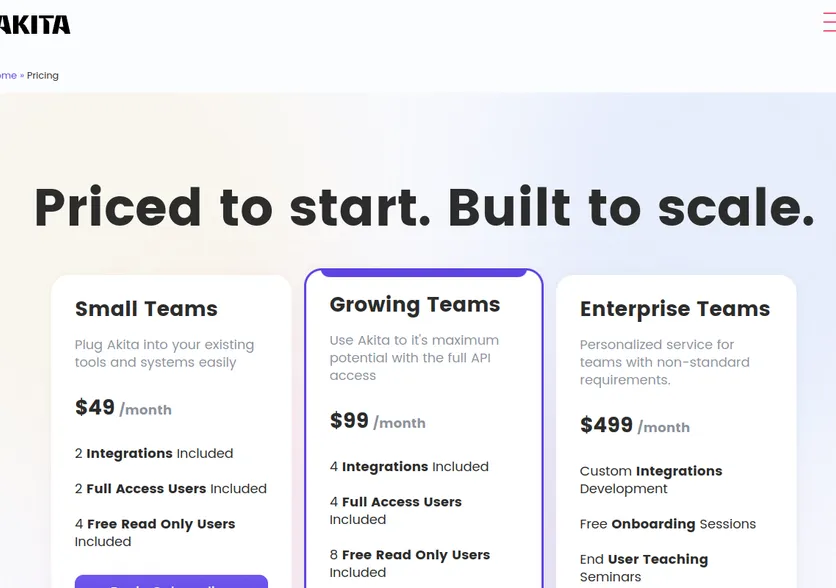
Paid tool Starting price: $49/month · Forty-nine dollars a month for the Small Teams plan with two integrations and two full-access users; Growing Teams costs ninety-nine dollars a month and Enterprise Teams costs four hundred ninety-nine dollars. Annual prepayment earns a twenty percent discount.
Free plan: No free plan; month-to-month billing, cancel any time
A small customer success team cannot justify an enterprise contract, and Akita is built for exactly that gap. This Akita Small Teams plan costs forty-nine dollars a month, with health scores, segments, playbooks and account views for up to ten thousand accounts. A team of two success managers gets weighted account and contact scores without a sales call or a setup fee.
What we like
- Cheapest published health-scoring price here
- Weighted account and contact scores you define
- Playbooks and segments included from the start
Watch out for
- No free trial, so the first month is the test
- No renewal forecasting or AI agents on any plan
How to try it
- Open the Akita site and start the Small Teams plan
- Connect two integrations and set your scoring rules
- Build your first playbook for accounts that slip
2. ChartMogul
Best for: CSM teams that want health scores grounded in revenue metrics
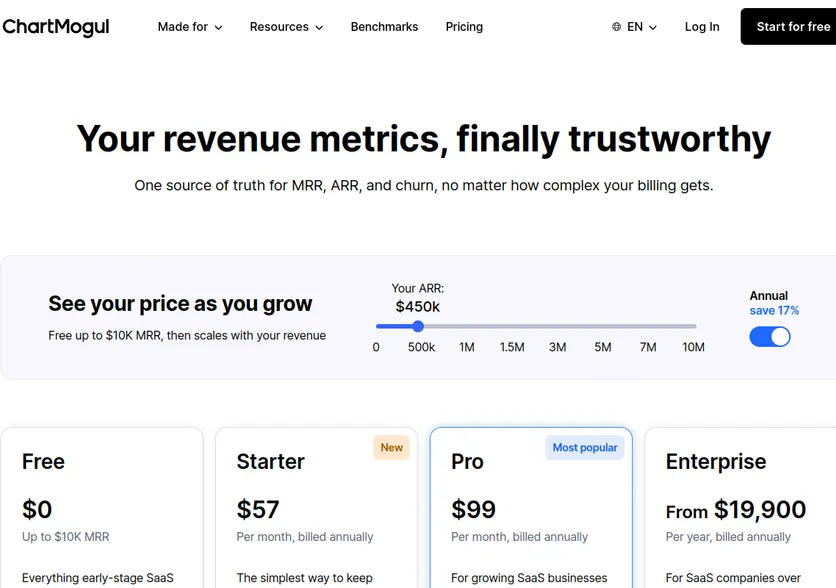
Paid tool Starting price: $57/month · Fifty-seven dollars a month billed annually for the Starter plan, or sixty-nine dollars billed monthly; the free plan covers up to ten thousand dollars of monthly recurring revenue, and Pro costs ninety-nine dollars a month billed annually
Free plan: Free plan up to $10K MRR
A health score means little without the revenue numbers behind it, and ChartMogul supplies those numbers first. This ChartMogul Starter plan costs fifty-seven dollars a month billed annually, with subscription analytics, cohorts, segmentation and a built-in CRM. A success team that argues from monthly recurring revenue, churn and lifetime value gets a score the finance team believes too.
What we like
- Investor-grade revenue metrics behind every score
- Free plan covers teams under ten thousand dollars of monthly revenue
- Benchmarks and forecasting included on every plan
Watch out for
- Starter caps at three team members
- Health scoring is analytic, not a full playbook engine
How to try it
- Open the ChartMogul site and connect your billing system
- Set the revenue bands that define a healthy account
- Build a dashboard that pairs scores with churn cohorts
3. Baremetrics
Best for: CSM teams that want churn warnings from their billing data
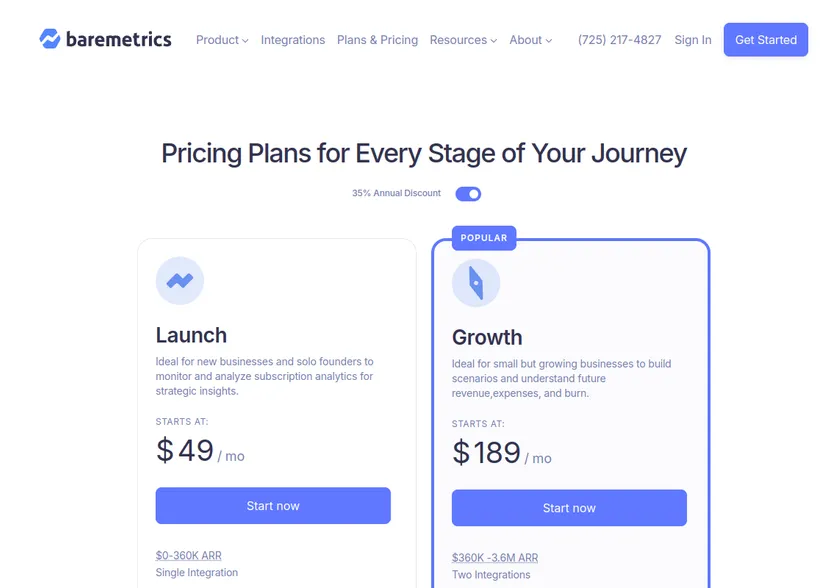
Paid tool Starting price: $49/month · Forty-nine dollars a month billed annually for the Launch plan, or seventy-five dollars billed monthly; the plan is free up to one hundred eighty thousand dollars of annual recurring revenue, and Growth starts at one hundred eighty-nine dollars a month billed annually
Free plan: Free up to $180K ARR
A customer success manager who cannot see churn coming cannot stop it, and Baremetrics turns billing data into that early warning. This Baremetrics Launch plan costs forty-nine dollars a month billed annually, tracking more than twenty-eight subscription metrics with cohorts and segmentation. A team that watches monthly recurring revenue, churn and lifetime value daily gets the signal weeks before a cancellation.
What we like
- Twenty-eight subscription metrics out of the box
- Free up to one hundred eighty thousand dollars of annual revenue
- Failed-payment recovery available as an add-on
Watch out for
- Dashboards refresh every two hours, not in real time
- Payment recovery and cancellation insights cost extra
How to try it
- Open the Baremetrics site and connect Stripe or your billing system
- Pick the churn and retention metrics for your dashboard
- Set alerts for accounts whose revenue starts slipping
4. Userpilot
Best for: CSM teams that want health signals from inside the product
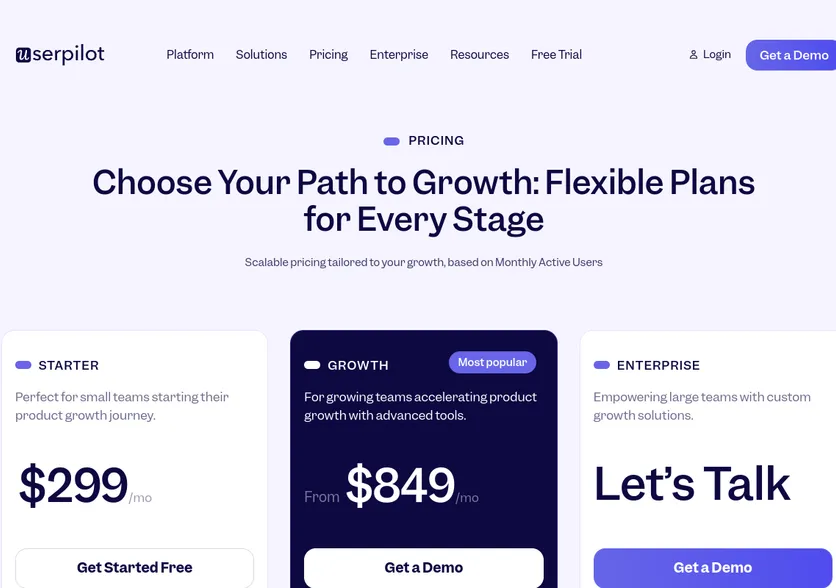
Paid tool Starting price: $299/month · Two hundred and ninety-nine dollars a month billed annually on Starter, for up to two thousand monthly active users and three seats; Growth starts at eight hundred and forty-nine dollars a month for up to one hundred thousand monthly active users and fifteen seats; Enterprise is quoted. Pricing is by monthly active users, not seats or accounts.
Free plan: No free plan; 14-day free trial
Userpilot scores customer health from inside the product, and its Starter plan costs two hundred and ninety-nine dollars a month billed annually. Userpilot builds customizable health scorecards from real usage, with in-app NPS surveys and trend dashboards, usage-trend reports and user segmentation for up to two thousand monthly active users. A team that wants early warning from feature adoption and survey sentiment gets it without a sales call or an enterprise contract.
What we like
- Customizable health scorecards built on real product usage
- In-app NPS, CSAT and CES surveys with trend dashboards
- User segmentation and AI-surfaced insights from day one
Watch out for
- Health is scored at the user level, not the account level — it is not a full CSM suite with account playbooks
- Funnel, path and retention reports need the Growth plan at eight hundred and forty-nine dollars a month
How to try it
- Open the Userpilot site and start the free trial
- Define the usage and survey signals behind your health scorecards
- Segment at-risk users and trigger in-app messages before renewals slip
5. Odie
Best for: CSM teams that want AI to read every signal in an account
Paid tool Starting price: $500/month · Five hundred dollars a month to start for the Customer Knowledge Engine, with a one-year minimum and no month-to-month terms; the Customer Operating System starts at one thousand five hundred dollars a month
Free plan: No free plan; talk to sales
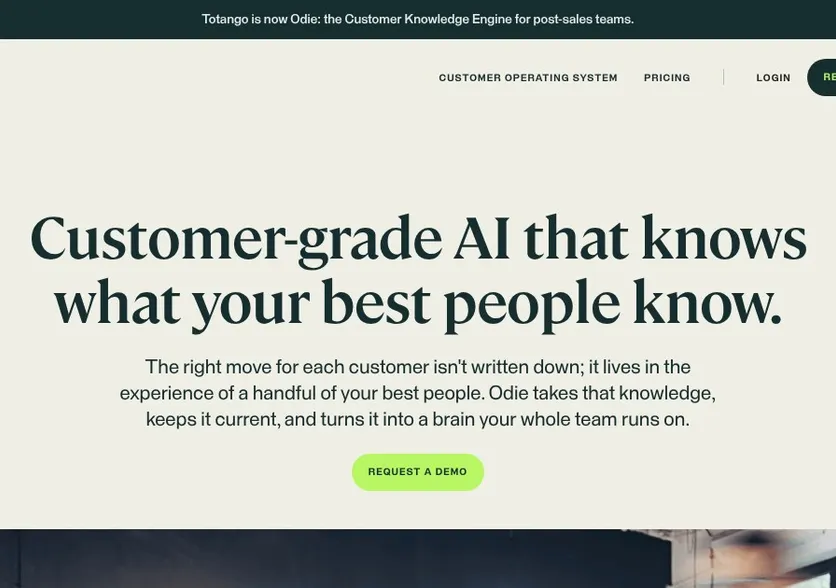
Totango became Odie in September 2026, and the rebrand brought an AI-first approach to customer health that reads every signal in the account. This Odie Customer Knowledge Engine starts at five hundred dollars a month, building living knowledge graphs from customer data, team expertise and company history. A success team that wants daily account evaluation and predictive renewal risk gets it from an engine rather than a spreadsheet.
What we like
- Daily evaluation of every account in the portfolio
- Predictive models flag renewal risk early
- Knowledge graphs power AI agents, not just dashboards
Watch out for
- One-year minimum, with most customers signing for two
- No self-serve trial, so pricing needs a sales call
How to try it
- Open the Odie site and talk to the sales team
- Connect your CRM, calls, email and support data
- Review the daily account evaluations with your team
6. HubSpot Service Hub
Best for: CSM teams that already run on HubSpot CRM
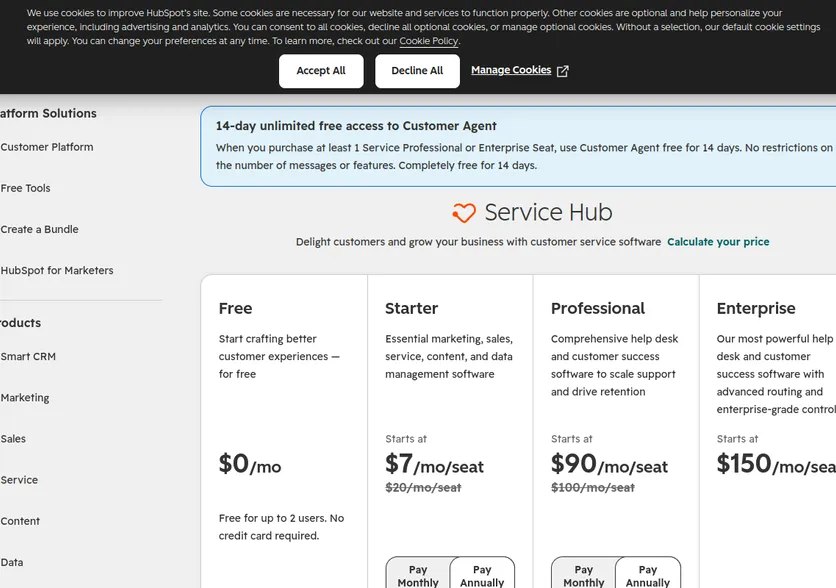
Paid tool Starting price: $20/seat/month · Twenty dollars per seat a month at list price for the Starter plan; HubSpot shows a seven-dollar new-customer price on its page, so the twenty-dollar figure is the regular rate. Professional costs ninety dollars per seat a month and Enterprise costs one hundred fifty dollars.
Free plan: Free plan for up to 2 users
A success team that already lives in HubSpot should score health where the customer record already is, and Service Hub keeps it there. This HubSpot Service Hub Starter plan costs twenty dollars per seat a month at list price, with tickets, live chat and customer data on the same CRM record. A team that supports customers after the sale gets shared inboxes, ticket pipelines and reporting without a second system.
What we like
- Tickets and CRM records share one view
- Free tier covers two users for a first test
- Scales from a shared inbox to a full service suite
Watch out for
- Dedicated success workspace waits for Professional
- New-customer price rises after the first term
How to try it
- Open the HubSpot site and start with the free tools
- Add Starter seats for the team members who act on tickets
- Build ticket pipelines and route conversations by team
7. Retently
Best for: CSM teams that add the survey signal to usage-based health scores
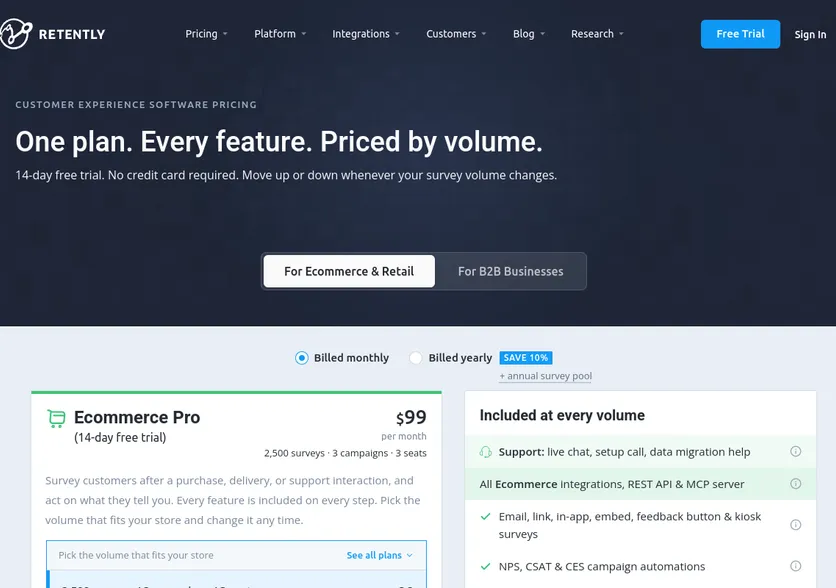
Paid tool Starting price: $99/month · Ninety-nine dollars a month for the Ecommerce Basic plan with two thousand five hundred surveys and three seats; Ecommerce Pro costs two hundred ninety-nine dollars a month and Enterprise is custom-priced. Yearly billing saves about ten percent.
Free plan: No free plan; 14-day free trial
A health score built only on usage misses how the customer feels, and Retently adds the survey signal that usage data cannot see. This Retently Ecommerce Basic plan costs ninety-nine dollars a month for two thousand five hundred surveys, three campaigns and three seats. A success team that pairs account-level NPS with product usage gets a health view that covers both behavior and sentiment.
What we like
- NPS, CSAT and CES in one steady program
- Account-level scores roll up for business customers
- Surveys count sends, not responses, so no cap surprises
Watch out for
- No free plan, only a fourteen-day trial
- A survey signal, not a full health-scoring engine
How to try it
- Open the Retently site and start the fourteen-day trial
- Connect your CRM and set the survey trigger
- Roll scores up by account and compare them with usage
Prices above were checked on each vendor’s own website on Nov 27, 2026 and can change — the vendor’s page is the final word. Vendor links are editorial: nobody paid to be listed or ranked here. Vendors who want a featured listing can see how it works on our Get listed page.
What health scoring costs a CSM team in 2026
A health score is only as good as the data behind it, so check the integrations before the price, because a tool that cannot read your billing system or your support tickets scores from guesswork. The cheapest dedicated platform here costs forty-nine dollars a month, while the enterprise suites that hide their prices cost many times more once a sales call sets the number. Price the tool at the account count you expect next year, not the one you have today.
Start with the free plan on two tools and score the same twenty accounts in both. Compare the scores against what your team already knows about those customers, then adjust the weights until the model flags the accounts you already worry about. The tool whose scores match your team's judgment is the one to pay for, because a health model only works when the people who act on it trust it.
Before you buy
- Check what feeds the score, because a health score built on one signal misses the full picture.
- Confirm the price covers your account count, because per-account and per-seat billing grow differently.
- Test the playbooks on a real at-risk account, because alerts without actions change nothing.
- Ask which billing systems connect, because a score that cannot read invoices stays guesswork.
- Check who can see each score, because a health model only works when the whole team trusts it.
Official websites
Official websites of the products reviewed above. Features and prices were checked against these sites when this guide was written, and they can change, so confirm on the vendor site before you buy.
Frequently asked questions
Which customer health scoring software is best for CSM teams in 2026?
Akita is the best overall pick at forty-nine dollars a month, because it is the only dedicated health-scoring platform here with a published price under fifty dollars. ChartMogul is the best pick for revenue-grounded scores at fifty-seven dollars a month billed annually. Odie is the best pick for AI-led health at five hundred dollars a month, with daily account evaluation and predictive renewal risk.
How much does customer health scoring software cost?
Prices in this list run from forty-nine dollars a month for Akita and Baremetrics to five hundred dollars a month for Odie, with most health tools landing between forty-nine and ninety-nine dollars a month. The enterprise platforms that hide their prices, like Gainsight, ChurnZero and Vitally, cost far more once a sales call sets the number. Annual prepayment saves about twenty percent on the tools that offer it.
What should a health score be based on?
A good health score blends product usage, support history, billing health and survey sentiment, because any one signal alone misleads. Akita lets a team weight account and contact scores by its own rules, while ChartMogul and Baremetrics ground the score in revenue and churn data. Retently adds the survey signal, so a quiet account that answers surveys happily does not get flagged by mistake.
Should health scoring software connect to billing?
Yes, if the tool connects to the billing system, because a score that cannot read invoices stays guesswork. ChartMogul and Baremetrics both read Stripe, Chargebee and Recurly directly, while Akita connects through more than one hundred integrations including Intercom. Check the integration list before you buy, because a missing connector means manual exports every week.
Is there a free health scoring tool for small CSM teams?
Akita is the cheapest published option at forty-nine dollars a month, and ChartMogul and Baremetrics both offer free plans up to a revenue limit. HubSpot Service Hub is free for up to two users. A small team can start on a free plan, prove the scoring model on real accounts and then pay once the book of business outgrows the free limits.
Need a free business calculator too? Try Toolsvine's free business tools right in your browser.
Browse Business Tools tools