On this page
A regulatory audit asks a harder question than a routine compliance check: prove it, with names, dates and the full chain from source to report. The seven tools below build audit-ready lineage for regulated teams, with prices checked on the vendor site on November 27, 2026. Secoda is our first pick — the catalog that maps lineage and documents every table so the audit evidence is ready before the auditors arrive.
How we researched this
We started with the lineage tools audit teams actually buy, then read each price on the vendor pricing page on November 27, 2026 and noted the free plan each one carries. We judged them for a team that must hand an auditor proof of where every number in a regulated report came from, with names and dates. We dropped Microsoft Purview because Microsoft announced its retirement on November 12, 2026, and we dropped Atlan, Collibra, Alation, Monte Carlo, Informatica, Manta, Octopai, Stemma, DataGalaxy, Bigeye, Anomalo, DataHub Cloud, Elementary, OpenMetadata and Google Dataplex because none of them publishes a clear list price.
Compare the tools
| Name | Best for | Starting price | Free plan | |
|---|---|---|---|---|
| Secoda | Audit teams that need lineage evidence ready before the auditors arrive | $99/month | Free plan available | Visit |
| dbt Cloud | Audit teams that transform data with dbt and need the audit trail written as they work | $100/user/month | Free Developer plan with 1 seat and 3,000 models a month | Visit |
| Select Star | Audit teams that must show the full chain behind one dashboard | $270/month | Free Light plan with 1 source and 100 tables | Visit |
| Coalesce Catalog | Audit teams that transform data with Coalesce and need lineage evidence in the same platform | $150/user/month | Free Developer plan, but it excludes the Catalog | Visit |
| Metaplane | Audit teams that need to prove a regulated report was built on tested data | $10/table/month | Free plan with 10 tables | Visit |
| Soda | Audit teams that need proof data passed quality checks before it fed a report | $750/month | Free plan with up to 3 datasets | Visit |
| Datafold | Audit teams that must prove a report did not change without a record | $15,000/year | No free tier; 14-day free trial | Visit |
The data lineage software for regulatory audits, compared
1. Secoda
Best for: Audit teams that need lineage evidence ready before the auditors arrive
Paid tool Starting price: $99/month · Ninety-nine dollars a month billed annually for the Starter plan, with a free plan available for smaller teams
Free plan: Free plan available
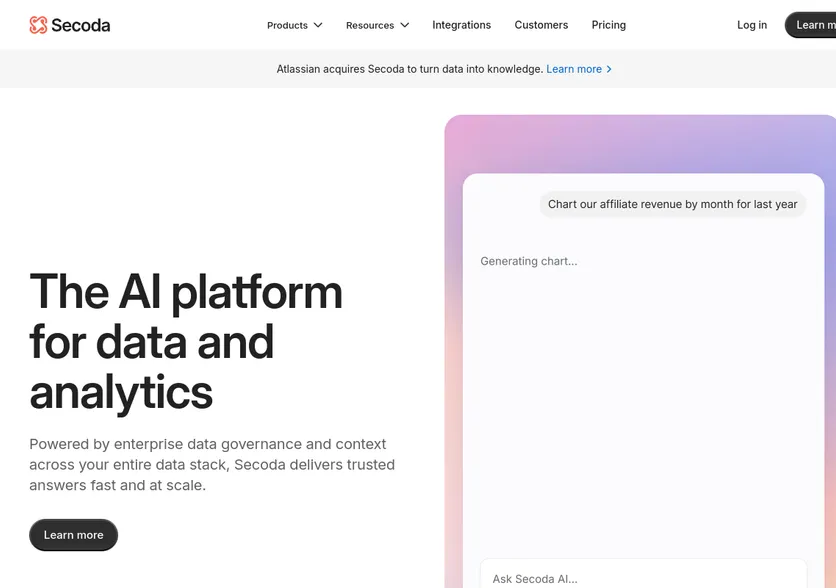
Secoda gives an audit team a searchable catalog of lineage and documentation, so the evidence for a regulated report is ready before the auditors arrive. This Secoda Starter plan costs ninety-nine dollars a month billed annually, with a free plan for smaller teams. An audit team that needs to answer questions about any table in the estate gets lineage and documentation in one searchable place.
What we like
- Lineage and documentation in one searchable catalog
- Free plan that covers small teams
- Exports that hand the audit evidence to the team
Watch out for
- The free plan covers only smaller estates
- Deeper governance features need a higher plan
How to try it
- Open the Secoda site and start the free plan
- Connect your warehouse and let it map the lineage
- Search for a regulated report and export its full chain
2. dbt Cloud
Best for: Audit teams that transform data with dbt and need the audit trail written as they work
Paid tool Starting price: $100/user/month · One hundred dollars per user a month for the Starter plan, with five developer seats and fifteen thousand successful models a month; the Developer plan is free for one seat with three thousand models a month
Free plan: Free Developer plan with 1 seat and 3,000 models a month
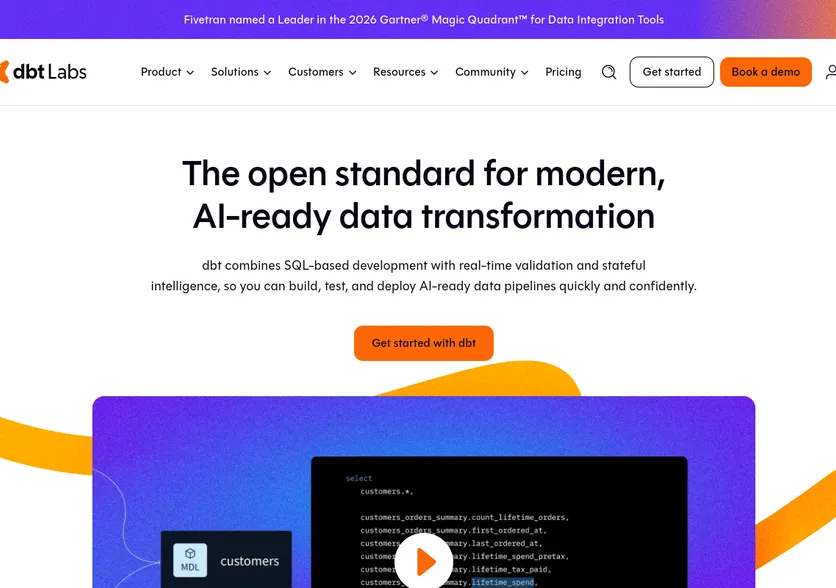
dbt Cloud records lineage as it builds the models a regulated report reads, so the audit trail is written by the same system that transforms the data. This dbt Cloud Starter plan costs one hundred dollars per user a month, with five developer seats and fifteen thousand successful models a month, and the Developer plan is free for one seat. An audit team that already transforms data with dbt gets lineage evidence as a by-product of daily work.
What we like
- Lineage recorded automatically as models are built
- Free Developer plan for small teams
- Model testing that catches broken logic before a report
Watch out for
- Per-user pricing means a large team costs more than a small one
- Lineage only covers what dbt models, so outside pipelines are invisible
How to try it
- Open the dbt Cloud site and start the free Developer plan
- Connect your warehouse and build one model from a source table
- Open the lineage view and check the chain to the regulated report
3. Select Star
Best for: Audit teams that must show the full chain behind one dashboard
Paid tool Starting price: $270/month · Two hundred and seventy dollars a month billed annually for the Pro plan, or three hundred dollars monthly; the free Light plan covers one source, one hundred tables and ten users, and Growth costs eight hundred and ten dollars a month billed annually
Free plan: Free Light plan with 1 source and 100 tables
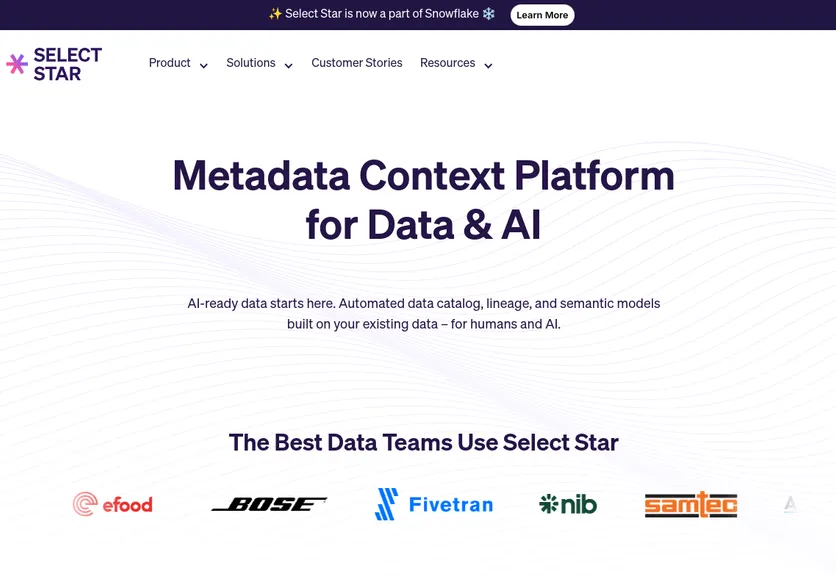
Select Star traces lineage from warehouse tables to the dashboards an auditor will inspect, with usage data that shows which reports people actually read. This Select Star Pro plan costs two hundred and seventy dollars a month billed annually, or three hundred dollars monthly, with a free Light plan covering one source and one hundred tables. An audit team that must show the full chain behind one dashboard gets lineage it can export and hand over.
What we like
- Clear lineage from warehouse tables to dashboards
- Usage data that shows which reports people actually read
- Free Light plan that covers a small estate
Watch out for
- The free Light plan covers only one source
- Snowflake announced plans to acquire Select Star in November 2025, so the roadmap may change
How to try it
- Open the Select Star site and start the free Light plan
- Connect your warehouse and pick one regulated dashboard
- Trace the lineage back to the source tables and export it
4. Coalesce Catalog
Best for: Audit teams that transform data with Coalesce and need lineage evidence in the same platform
Paid tool Starting price: $150/user/month · One hundred and fifty dollars per user a month billed annually for the Starter plan, with up to four Transform users, three catalog integrations and fifteen thousand actions a month; the Developer plan is free but excludes the Catalog
Free plan: Free Developer plan, but it excludes the Catalog
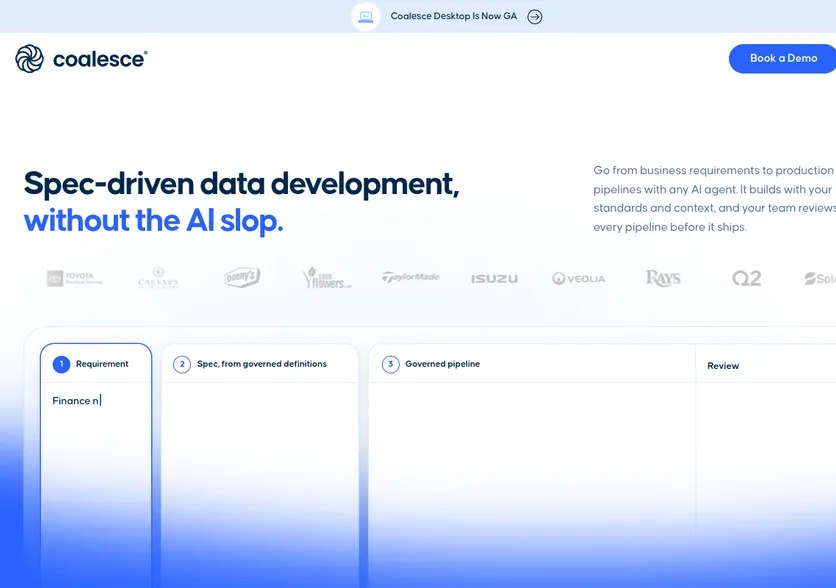
Coalesce Catalog documents lineage across the transformation pipeline, so an audit team can trace a regulated model back to its raw sources. This Coalesce Catalog Starter plan costs one hundred and fifty dollars per user a month billed annually, with up to four Transform users and three catalog integrations, and the Developer plan is free but excludes the catalog. An audit team that transforms data with Coalesce gets lineage evidence built into the same platform.
What we like
- Lineage evidence built into the transformation platform
- Catalog that documents every model in the pipeline
- Simple per-user pricing for small teams
Watch out for
- The catalog costs extra beyond the free Developer plan
- Lineage only covers what Coalesce transforms
How to try it
- Open the Coalesce site and start the free Developer plan
- Build one transformation pipeline from a raw source
- Open the catalog and trace the lineage to the model
5. Metaplane
Best for: Audit teams that need to prove a regulated report was built on tested data
Paid tool Starting price: $10/table/month · Ten dollars per monitored table a month on the Pro plan, with a free plan covering ten tables; Metaplane was acquired by Datadog in April 2025 and pricing is being re-packaged alongside Datadog
Free plan: Free plan with 10 tables
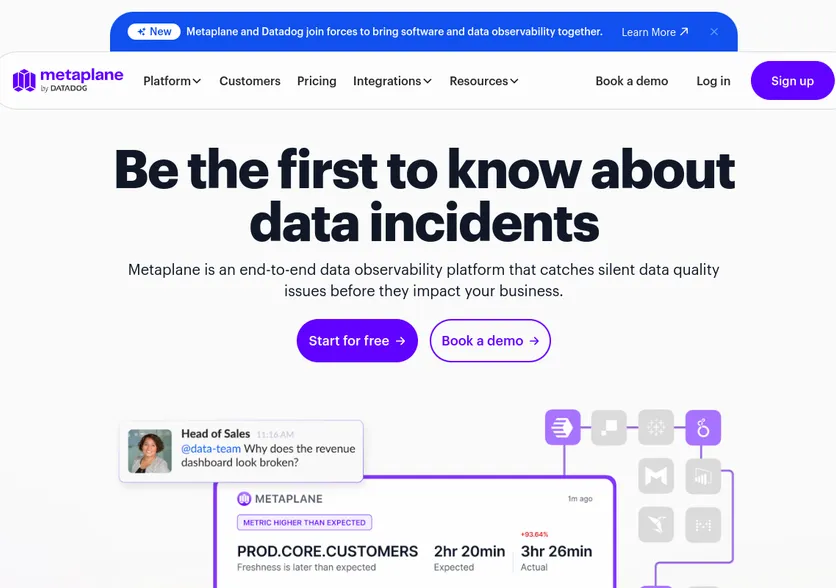
Metaplane pairs lineage with data quality monitoring, so an audit team can show that a regulated report was built on data that passed its checks. This Metaplane Pro plan costs ten dollars per monitored table a month, with a free plan covering ten tables. An audit team that needs to catch a broken source before it reaches a regulated report gets alerts priced by the tables that matter.
What we like
- Lineage and data quality monitoring in one tool
- Per-table pricing that fits a small regulated estate
- Alerts that catch a broken source before the report
Watch out for
- Per-table costs grow with the estate you monitor
- Pricing is being re-packaged after the Datadog acquisition, so plans may change
How to try it
- Open the Metaplane site and start the free plan
- Connect your warehouse and pick the tables behind one report
- Set an alert for upstream changes and test it
6. Soda
Best for: Audit teams that need proof data passed quality checks before it fed a report
Paid tool Starting price: $750/month · Seven hundred and fifty dollars a month for the Team plan as a flat fee plus pay-as-you-go processing units, with a free plan covering up to three datasets; the vendor removed its pricing page in November 2026, so the figure comes from November 2026 vendor-page reads
Free plan: Free plan with up to 3 datasets
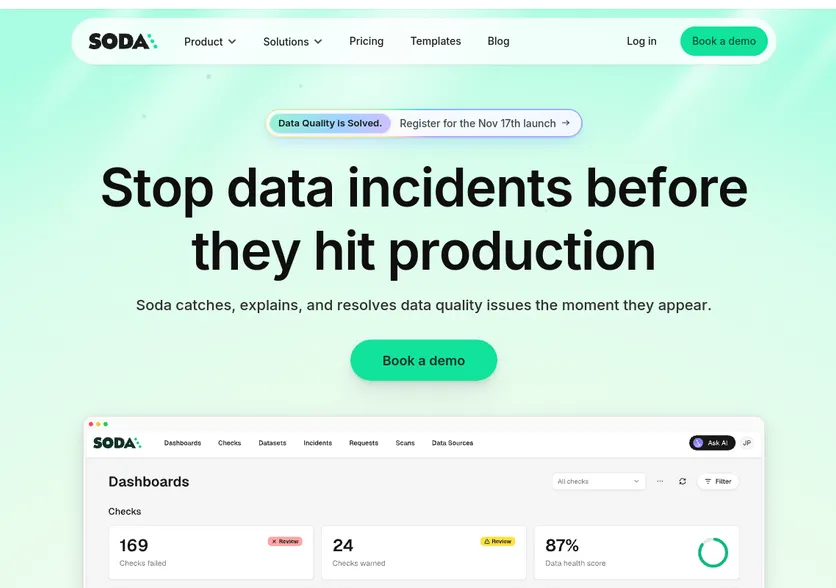
Soda runs data quality checks inside the pipeline and records the lineage they cover, so an audit team can show that tested data fed the report. This Soda Team plan costs seven hundred and fifty dollars a month as a flat fee plus pay-as-you-go processing units, with a free plan covering up to three datasets. An audit team that needs proof its data passed checks before it landed gets tests and lineage in one system.
What we like
- Data quality tests and lineage in one system
- Free plan that covers a few datasets
- Checks that run inside the pipeline, not after it
Watch out for
- Processing-unit costs are not published, so the total bill is hard to predict
- The vendor pricing page was removed in November 2026
How to try it
- Open the Soda site and start the free plan
- Connect a dataset behind one regulated report
- Write a quality check and run it against the pipeline
7. Datafold
Best for: Audit teams that must prove a report did not change without a record
Paid tool Starting price: $15,000/year · Fifteen thousand dollars a year for a twelve-month contract covering five developer seats, or three thousand dollars per developer a year; the vendor publishes no price on its own site, so the figure comes from the published AWS Marketplace listing
Free plan: No free tier; 14-day free trial
Datafold versions data and traces lineage through the pipeline, so an audit team can show exactly what changed and when before a regulated report. This Datafold Cloud plan costs fifteen thousand dollars a year for a twelve-month contract covering five developer seats. An audit team that must prove a report did not change without a record gets versioned lineage and data diffs in one place.
What we like
- Versioned lineage that shows exactly what changed
- Data diffs that catch silent changes before a report
- Strong fit for teams that version their data
Watch out for
- The vendor publishes no price on its own site
- The annual contract is a big commitment for a small team
How to try it
- Open the Datafold site and start the 14-day trial
- Connect your warehouse and run a diff on one report
- Check the lineage view for the tables behind that report
Prices above were checked on each vendor’s own website on Nov 27, 2026 and can change — the vendor’s page is the final word. Vendor links are editorial: nobody paid to be listed or ranked here. Vendors who want a featured listing can see how it works on our Get listed page.
What lineage software costs an audit team
Audit-ready lineage pricing follows the unit the vendor counts, so a regulated team should match that unit to its estate before it compares plans. Per-user tools charge by the team, per-table tools charge by the data, and per-seat contracts charge by the developers on the platform. The cheapest paid entry here costs ten dollars per table a month, while the most expensive costs fifteen thousand dollars a year, and the right choice depends on whether the team is small and the estate is large, or the other way round.
Start with a free plan on two tools and build the audit evidence for one regulated report end to end. Check whether every source and transformation appears, whether the tool records who changed the data and when, and whether the export reads cleanly without a login. Pick the tool whose lineage covers the full chain for that report, because an audit trail that misses one transformation fails the audit.
Before you buy
- Build the evidence for one regulated report first, because an audit trail that misses one step fails the audit.
- Check that every source and warehouse you run is covered, because one unsupported system leaves a gap in the chain.
- Ask how the tool records change history, because auditors want who changed what and when.
- Confirm the lineage export reads without a login, because auditors should not need your tools to read the evidence.
- Test with your real pipeline, because a demo dataset hides the transformations your data carries.
Official websites
Official websites of the products reviewed above. Features and prices were checked against these sites when this guide was written, and they can change, so confirm on the vendor site before you buy.
Frequently asked questions
Which data lineage software is best for regulatory audits in 2026?
Secoda is the best overall pick at ninety-nine dollars a month, with a searchable catalog of lineage and documentation that makes audit evidence ready before the auditors arrive. dbt Cloud is the best pick for teams that transform with dbt at one hundred dollars per user a month, recording lineage as models are built. Metaplane is the best budget pick at ten dollars per monitored table a month.
How much does data lineage software cost for regulatory audits?
Prices in this list run from ten dollars per monitored table a month for Metaplane to fifteen thousand dollars a year for Datafold, with most tools landing between ninety-nine and two hundred and seventy dollars a month. Per-user and per-table plans charge by different units, so an audit team should count its team size and its estate before comparing headline prices. Add processing-unit costs where the vendor charges them before you compare totals.
What makes lineage audit-ready rather than just a diagram?
A diagram shows the chain from source to report, but an auditor needs more than that. Audit-ready lineage records who changed the data and when, keeps a history of past versions, and exports into a format the auditor can read without a login. A tool that only draws the current chain leaves the audit team rebuilding the history by hand.
How long does it take to build audit-ready lineage?
A small team can map one regulated report end to end in a few days on a free plan, because the first report proves the tool covers the full chain. Mapping a whole estate takes weeks, because each source and transformation needs checking. A team should start with the report the next audit will ask about, then expand the map one report at a time.
Can lineage tools replace a data governance platform?
No, and a lineage tool should not try to be one. A governance platform adds policies, access control and data ownership on top of lineage, while a lineage tool only maps the chain. A regulated team should buy lineage first, because it answers the audit question directly, and add governance once the lineage map proves the estate is understood.
Need everyday business help too? Try Toolsvine's free business tools right in your browser.
Browse Business Tools tools