On this page
A B2B team lives or dies on its contact data: stale emails bounce, wrong titles waste outreach, and a missing phone number ends a deal before it starts. The eight tools below keep B2B contact and company data accurate, with prices checked on the vendor site on November 27, 2026. Apollo is our first pick — the sales platform that pairs verified contacts with outreach for forty-nine dollars per user a month.
How we researched this
We started with the data tools B2B teams actually buy, then read each price on the vendor pricing page on November 27, 2026 and noted the free plan each one carries. We judged them for a team that needs accurate contact and company data to find buyers without hiring a data operations hire. We dropped Seamless because its pricing page redirects to an inquiry form and the one hundred and forty-seven dollar figure comes from a buyer report, not the vendor, and we dropped Clay because its March 2026 overhaul replaced its plans and the new prices conflict across sources, plus ZoomInfo, Clearbit, Cognism, 6sense and Demandbase because none of them publishes a list price.
Compare the tools
| Name | Best for | Starting price | Free plan | |
|---|---|---|---|---|
 Apollo | B2B teams that want verified contacts and outreach in one platform | $49/user/month | Free plan with no cost | Visit |
 Lusha | B2B teams that enrich their own CRM records with verified contact details | $29/user/month | Free plan with 40 credits a month | Visit |
 Crunchbase | B2B teams that target companies by funding, headcount and growth signals | $29/month | Free tier with basic company profiles | Visit |
 Snov.io | B2B teams that run cold email campaigns and need verification and warm-up | $29.25/month | Free Trial plan with 50 credits a month | Visit |
 Hunter | B2B teams that need work emails for any domain with a free plan | $34/month | Free plan with 50 credits a month | Visit |
 RocketReach | B2B teams that prospect by person and need verified emails and phone numbers | $33/month | No free plan; free trial available | Visit |
| UpLead | B2B teams that have been burned by bounced emails and need real-time verification | $74/month | 7-day free trial with 5 credits | Visit |
| LeadIQ | B2B teams that prospect on LinkedIn and need contact capture in the browser | $39/user/month | Free plan with 50 verified emails a week | Visit |
The data management software for B2B, compared
1. Apollo
Best for: B2B teams that want verified contacts and outreach in one platform
Paid tool Starting price: $49/user/month · Forty-nine dollars per user a month billed annually for the Basic plan, or sixty-five dollars monthly, with thirty thousand credits a year; Professional costs seventy-nine dollars and Organization costs one hundred and nineteen dollars per user a month billed annually
Free plan: Free plan with no cost
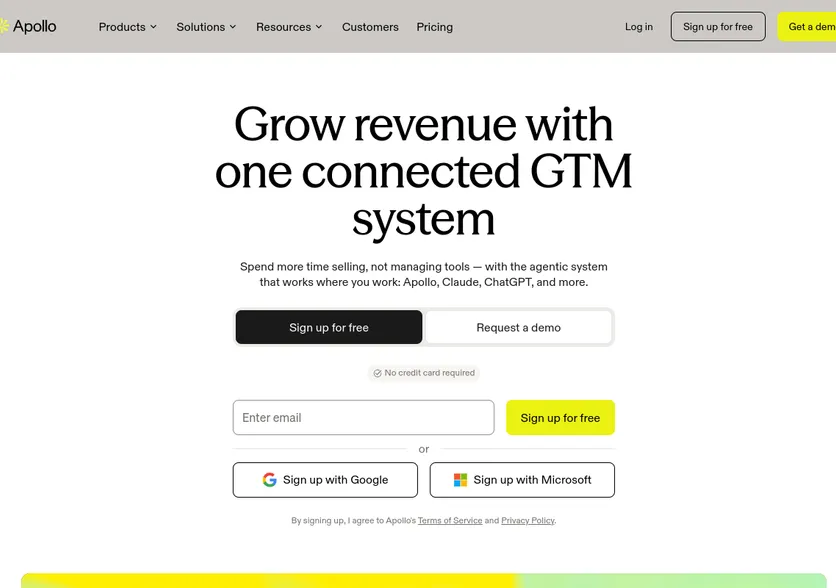
Apollo pairs a verified B2B contact database with outreach, so a sales team can find a lead and email it from the same platform. This Apollo Basic plan costs forty-nine dollars per user a month billed annually, or sixty-five dollars monthly, with thirty thousand credits a year. A B2B team that wants contacts and outreach in one place gets a database that stays accurate and a sequencer that works from it.
What we like
- Verified contacts and outreach in one platform
- Large database that covers most B2B companies
- Free plan that covers small prospecting runs
Watch out for
- Credit limits mean heavy prospecting months cost more
- Advanced features need the Professional plan at a higher price
How to try it
- Open the Apollo site and start the free plan
- Search for the accounts your team wants to target
- Export the verified contacts and send the first outreach sequence
2. Lusha
Best for: B2B teams that enrich their own CRM records with verified contact details
Paid tool Starting price: $29/user/month · Twenty-nine dollars per user a month billed annually for the Pro plan, with four hundred and eighty credits a year; Premium costs fifty-one dollars per user a month billed annually
Free plan: Free plan with 40 credits a month
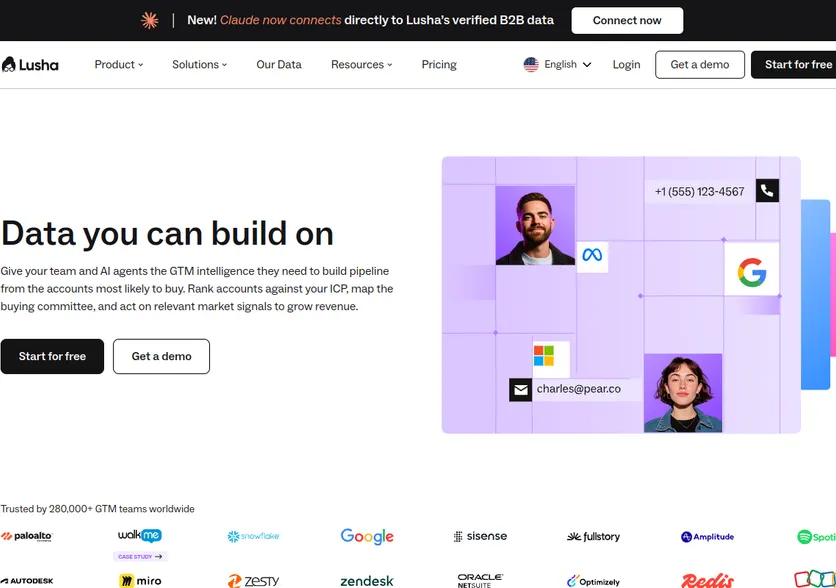
Lusha finds verified work emails and phone numbers for the contacts a B2B team already has in its CRM. This Lusha Pro plan costs twenty-nine dollars per user a month billed annually, with four hundred and eighty credits a year. A B2B team that enriches its own CRM records gets accurate contact details without buying a new database.
What we like
- Verified emails and phone numbers for CRM records
- Browser extension that enriches contacts where you work
- Free plan that covers light enrichment
Watch out for
- Credit limits mean a big CRM cleanup needs a higher plan
- Phone numbers are limited on lower plans
How to try it
- Open the Lusha site and start the free plan
- Install the browser extension and open a contact record
- Enrich the record and check the verified email and phone number
3. Crunchbase
Best for: B2B teams that target companies by funding, headcount and growth signals
Paid tool Starting price: $29/month · Twenty-nine dollars a month billed annually for the Pro plan, or three hundred and forty-eight dollars a year; Enterprise costs forty-nine dollars per user a month
Free plan: Free tier with basic company profiles
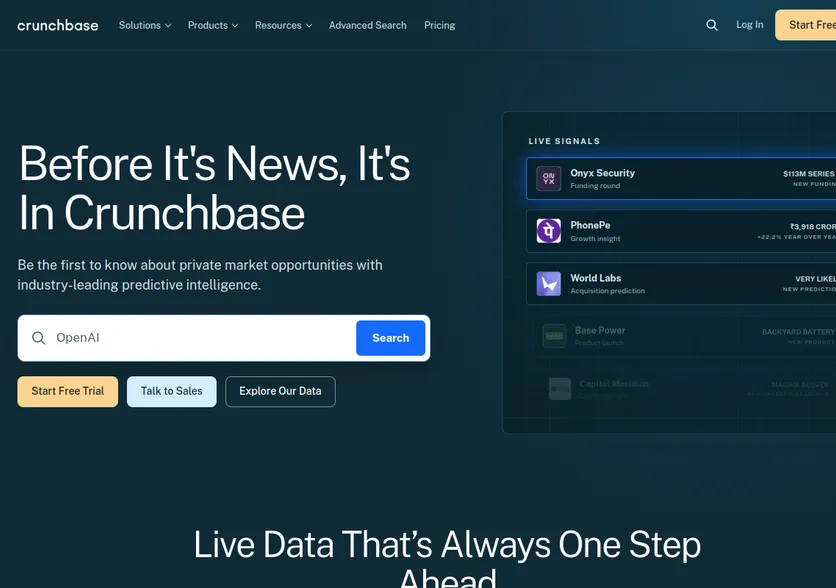
Crunchbase tracks company funding, headcount and growth, so a B2B team can find accounts that are ready to buy. This Crunchbase Pro plan costs twenty-nine dollars a month billed annually, or three hundred and forty-eight dollars a year. A B2B team that targets companies by funding and growth signals gets a database built for account research.
What we like
- Company funding and growth data that other tools lack
- Account research that finds buyers at the right moment
- Free tier that covers basic company profiles
Watch out for
- Contact data is thinner than the company data
- Enterprise pricing is needed for larger teams
How to try it
- Open the Crunchbase site and start the free tier
- Search for companies in your target market by funding stage
- Save the best accounts to a list and check their growth signals
4. Snov.io
Best for: B2B teams that run cold email campaigns and need verification and warm-up
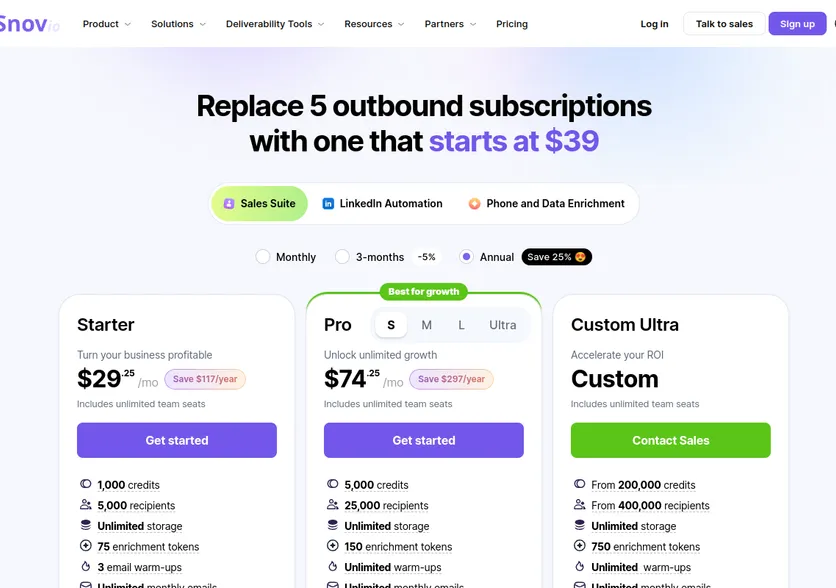
Paid tool Starting price: $29.25/month · Twenty-nine dollars and twenty-five cents a month billed annually for the Starter plan, or thirty-nine dollars monthly, for one thousand credits, five thousand recipients and three warm-ups with unlimited seats; Pro S costs ninety-nine dollars monthly or seventy-four dollars and twenty-five cents billed annually
Free plan: Free Trial plan with 50 credits a month
Snov finds and verifies work emails, then warms up the sending domain so outreach lands in the inbox. This Snov Starter plan costs twenty-nine dollars and twenty-five cents a month billed annually, or thirty-nine dollars monthly, for one thousand credits and five thousand recipients. A B2B team that runs cold email campaigns gets verification and warm-up in the same tool.
What we like
- Email verification and domain warm-up in one tool
- Unlimited seats, so the whole team can prospect
- Free Trial plan that covers small campaigns
Watch out for
- Credit limits mean a large campaign needs a higher plan
- Warm-up takes time before the first campaign can send
How to try it
- Open the Snov site and start the free Trial plan
- Find and verify the work emails for your target accounts
- Warm up the sending domain, then send the first campaign
5. Hunter
Best for: B2B teams that need work emails for any domain with a free plan
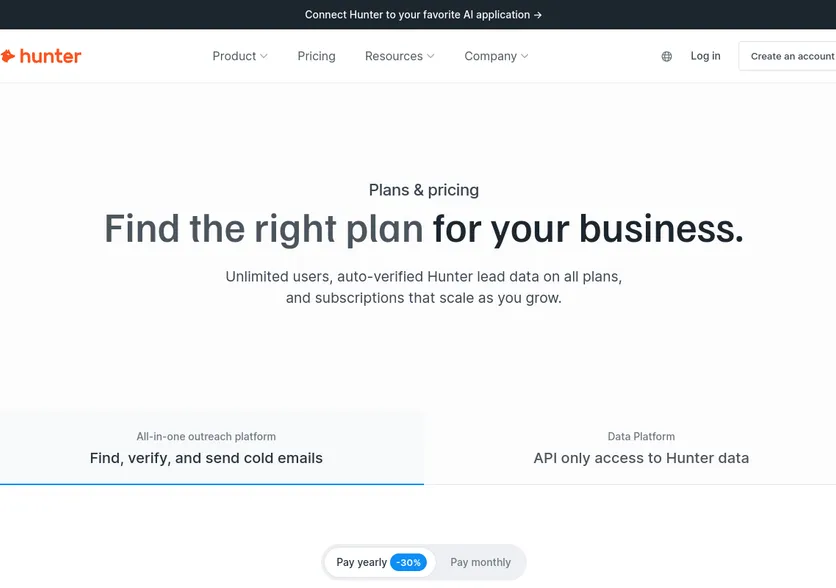
Paid tool Starting price: $34/month · Thirty-four dollars a month billed annually for the Starter plan, or forty-nine dollars monthly, for two thousand credits a month with unlimited users; Growth costs one hundred and four dollars and Scale costs two hundred and nine dollars a month billed annually
Free plan: Free plan with 50 credits a month
Hunter finds and verifies work emails for any domain, so a B2B team can reach the right person without guessing addresses. This Hunter Starter plan costs thirty-four dollars a month billed annually, or forty-nine dollars monthly, for two thousand credits a month with unlimited users. A B2B team that needs email addresses for outreach gets a simple tool with a free plan for small volumes.
What we like
- Simple email finder that works from any domain
- Free plan that covers small outreach volumes
- Unlimited users, so the whole team can use it
Watch out for
- Credit limits mean heavy prospecting needs a higher plan
- It finds emails, it does not manage outreach sequences
How to try it
- Open the Hunter site and start the free plan
- Enter a company domain and find the work emails behind it
- Verify the addresses and export them to your sales tools
6. RocketReach
Best for: B2B teams that prospect by person and need verified emails and phone numbers
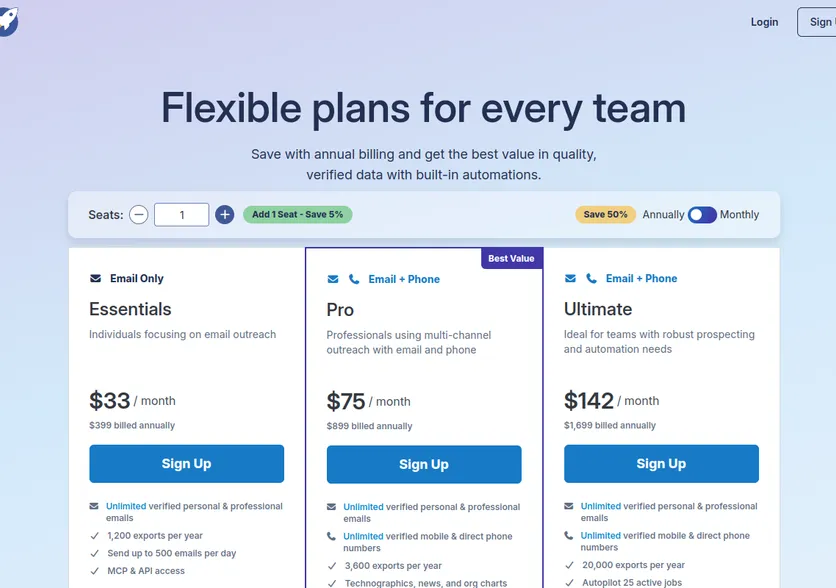
Paid tool Starting price: $33/month · Thirty-three dollars a month billed annually for the Essentials plan, or three hundred and ninety-nine dollars a year, with email only and one thousand two hundred exports a year; monthly billing costs sixty-nine dollars a month, Pro costs eight hundred and ninety-nine dollars a year and Ultimate costs one thousand six hundred and ninety-nine dollars a year
Free plan: No free plan; free trial available
RocketReach finds verified emails and phone numbers for the people a B2B team wants to reach, with a database built for prospecting. This RocketReach Essentials plan costs thirty-three dollars a month billed annually, or three hundred and ninety-nine dollars a year, with email only and one thousand two hundred exports a year. A B2B team that prospects by person rather than by company gets a tool focused on finding the right contact.
What we like
- Verified emails and phone numbers for prospecting
- Person-first search that finds the right contact
- Simple plan that fits small prospecting teams
Watch out for
- Essentials covers email only, so phone numbers need a higher plan
- One source lists Essentials at nineteen dollars a month, but two direct vendor-page reads confirm three hundred and ninety-nine dollars a year
How to try it
- Open the RocketReach site and start the free trial
- Search for the people at your target accounts
- Export the verified contacts and add them to your CRM
7. UpLead
Best for: B2B teams that have been burned by bounced emails and need real-time verification
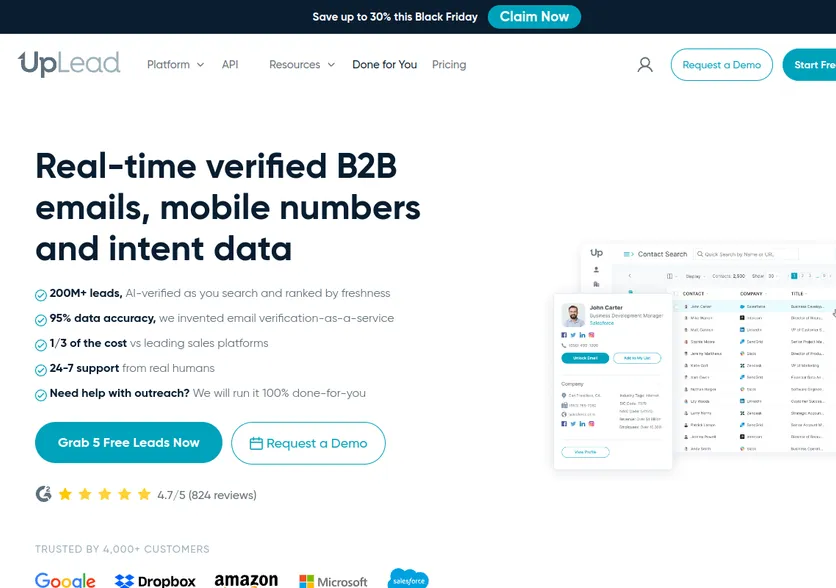
Paid tool Starting price: $74/month · Seventy-four dollars a month billed annually for the Essentials plan, or ninety-nine dollars monthly, for one hundred and seventy credits a month; Plus costs one hundred and forty-nine dollars a month billed annually and extra credits cost sixty cents each on Essentials
Free plan: 7-day free trial with 5 credits
UpLead verifies every contact in its database in real time, so a B2B team downloads emails that work. This UpLead Essentials plan costs seventy-four dollars a month billed annually, or ninety-nine dollars monthly, for one hundred and seventy credits a month. A B2B team that has been burned by bounced emails gets a database that verifies contacts as they are exported.
What we like
- Real-time verification that cuts bounce rates
- Clean database with no stale contacts
- Free trial that covers a real prospecting run
Watch out for
- The highest starting price in this comparison
- Credit limits mean a big prospecting push needs a higher plan
How to try it
- Open the UpLead site and start the free trial
- Search for contacts at your target accounts
- Export a sample and check the bounce rate on your first send
8. LeadIQ
Best for: B2B teams that prospect on LinkedIn and need contact capture in the browser
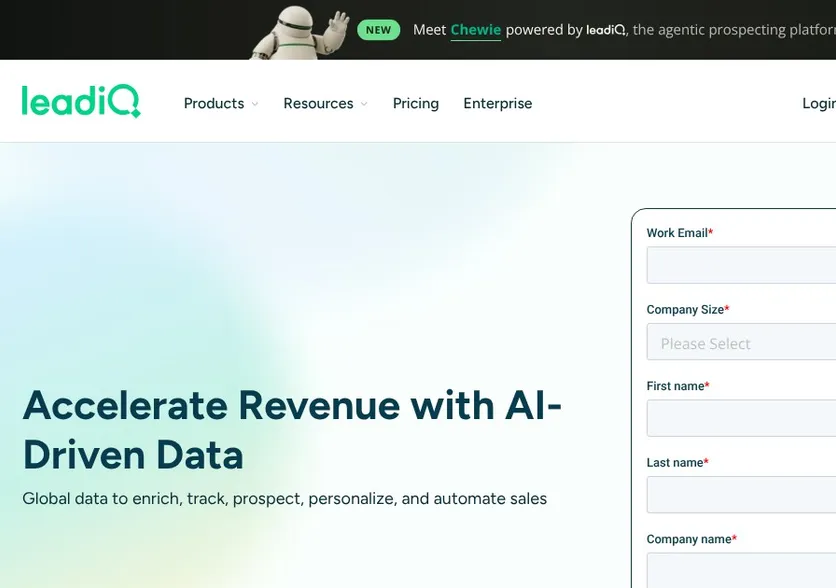
Paid tool Starting price: $39/user/month · Thirty-nine dollars per user a month billed annually for the Essential plan, or forty-nine dollars monthly, for five hundred verified emails a month and thirty phone numbers a month; Pro costs seventy-nine dollars per user a month billed annually
Free plan: Free plan with 50 verified emails a week
LeadIQ captures verified emails and phone numbers while a B2B rep browses LinkedIn, feeding the CRM without manual entry. This LeadIQ Essential plan costs thirty-nine dollars per user a month billed annually, or forty-nine dollars monthly, for five hundred verified emails a month and thirty phone numbers a month. A B2B team that prospects on LinkedIn gets contact capture built into the browser.
What we like
- Contact capture built into the LinkedIn browser flow
- Verified emails and phone numbers without manual entry
- Free plan that covers light prospecting
Watch out for
- Phone numbers are limited to thirty a month on Essential
- It works best for LinkedIn prospecting, less so for other sources
How to try it
- Open the LeadIQ site and start the free plan
- Install the browser extension and open a LinkedIn profile
- Capture the verified contact and sync it to your CRM
Prices above were checked on each vendor’s own website on Nov 27, 2026 and can change — the vendor’s page is the final word. Vendor links are editorial: nobody paid to be listed or ranked here. Vendors who want a featured listing can see how it works on our Get listed page.
What B2B data software costs a sales team
B2B data pricing follows the credit, so a team should count the contacts it needs each month before it compares plans. The cheapest paid plan here costs twenty-nine dollars a month, while the most expensive costs seventy-four dollars a month, and the gap comes from credit counts and verification depth. A small team that enriches a few hundred contacts a month fits the low end, while a team that prospects thousands of new accounts needs a plan priced for that volume.
Start with a free plan on two tools and enrich a sample of real contacts from your CRM. Check how many emails verify, whether the phone numbers connect, and whether the export drops cleanly into your sales tools. Pick the tool whose verified rate is highest on your own data, because a cheap plan that returns bad emails costs more than the plan above it.
Before you buy
- Count the contacts you enrich each month, because a plan priced by credits punishes a growing prospect list.
- Check the verification rate on your own data, because a database that looks good can still bounce on your contacts.
- Ask whether phone numbers are included, because email-only plans miss the reps who call.
- Confirm the CRM export works cleanly, because a bad export means retyping every contact by hand.
- Test the free plan on real CRM records first, because a trial with sample data hides the gaps your list carries.
Official websites
Official websites of the products reviewed above. Features and prices were checked against these sites when this guide was written, and they can change, so confirm on the vendor site before you buy.
Frequently asked questions
Which data management software is best for B2B in 2026?
Apollo is the best overall pick at forty-nine dollars per user a month, pairing a verified contact database with outreach in one platform. Lusha is the best pick for enrichment at twenty-nine dollars per user a month, finding verified emails and phone numbers for the contacts already in your CRM. Hunter is the best budget pick at thirty-four dollars a month, with a free plan for small volumes.
How much does data management software cost for B2B?
Prices in this list run from twenty-nine dollars a month for Lusha and Crunchbase to seventy-four dollars a month for UpLead, with most tools landing between twenty-nine and forty-nine dollars a month. Credit-based plans charge by the contacts you enrich, so a team should count its monthly prospecting volume before comparing headline prices. Add phone-number costs where the plan charges extra before you compare totals.
What is a credit and how many do I need?
A credit is one unit of data use, usually one verified contact or one enrichment. A team that enriches five hundred contacts a month needs at least five hundred credits a month, while a team that only looks up fifty contacts needs far fewer. A buyer should count the contacts it actually enriches, not the size of its whole CRM, because most tools charge only for what you use.
Can a small B2B team use these tools without a sales operations hire?
Yes, and most of the tools here are built for that buyer. Apollo, Lusha, Crunchbase, Snov and Hunter all carry free plans or free tiers that cover small prospecting volumes. A small team should start on a free plan, enrich a real sample from its CRM, and only pay once the verified rate on its own data proves the tool is worth it.
What is the difference between a B2B database and a CRM?
A B2B database finds and verifies contact and company data, while a CRM stores the deals and conversations your team already has. A database feeds the CRM with fresh contacts, and the CRM tracks what happens after the first email. A B2B team needs both: the database to find buyers, and the CRM to work them through the pipeline.
Need everyday business help too? Try Toolsvine's free business tools right in your browser.
Browse Business Tools tools