On this page
Cloud data management is really two jobs: moving data from everywhere it lives into one place, and keeping that place fast, governed and affordable. The tools below cover both halves, from managed pipelines that sync your apps and databases to the warehouses and lakehouses where the data lands. We checked list prices on November 27, 2026 and compared eight tools that business teams actually run in production. Fivetran is our first pick for teams that want a managed pipeline with a clear per-row price and connectors that just work.
How we researched this
We compared cloud data integration and platform tools that move, store and manage data in the cloud for business teams. Every tool below lists a public United States dollar price on its own site, so nothing here is priced by guess or by quote. We checked those prices on November 27, 2026 and ranked the tools on connector coverage, reliability and value at real data volumes.
Compare the tools
| Name | Best for | Starting price | Free plan | |
|---|---|---|---|---|
 Fivetran | Teams that want a managed pipeline with a clear per-row price | $500 per million MAR/month | No free plan; free trial available | Visit |
 Airbyte | Teams that want open source flexibility with a low entry price | $20/month | Free plan available | Visit |
 Hevo Data | Small teams that need no-code pipelines from spreadsheets and apps | $265/month | No free plan; free trial available | Visit |
 Stitch | Teams that want simple ELT from databases and SaaS apps | $100/month | No free plan; free trial available | Visit |
 Snowflake | Teams that already run their analytics on Snowflake | $2/credit | Free trial available | Visit |
 Databricks | Teams building lakehouse pipelines with Spark and notebooks | $0.30/DBU | Free plan available | Visit |
| Rivery | Teams that want consumption pricing without a monthly minimum | $0.90 per BDU credit | No free plan; free trial available | Visit |
 Estuary | Teams that need real-time streaming from databases and APIs | $0.50/GB | Free tier covering ten gigabytes a month and two connector instances | Visit |
The 8 best cloud data management tools
1. Fivetran
Best for: Teams that want a managed pipeline with a clear per-row price
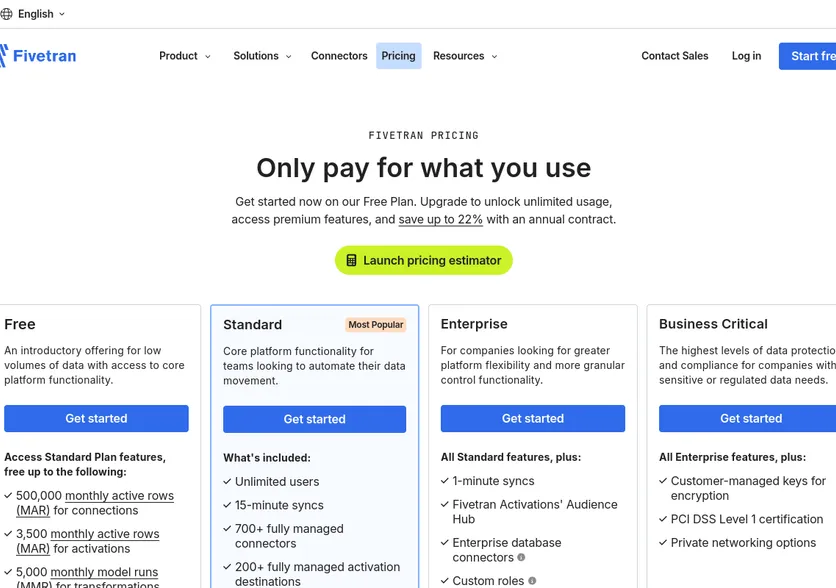
Paid tool Starting price: $500 per million MAR/month · Standard costs five hundred dollars per million monthly active rows a month. Usage is billed on monthly active rows, so the bill follows the rows you actually sync.
Free plan: No free plan; free trial available
Fivetran is a managed data integration platform that moves data from hundreds of sources into your warehouse with automated schema updates. It handles retries, schema changes and incremental syncs, so engineers stop babysitting pipelines. The usage model charges by monthly active rows, which suits teams whose data volume is steady and predictable.
What we like
- Hundreds of managed connectors with schema handling
- Automatic retries and incremental syncs save engineering time
- Clear per-row usage model for steady volumes
Watch out for
- Costs climb fast when row counts spike
- No free tier for ongoing small use
How to try it
- Connect one source and one destination in the trial
- Let the first sync run and check row counts
- Compare monthly active rows against the plan limit
2. Airbyte
Best for: Teams that want open source flexibility with a low entry price
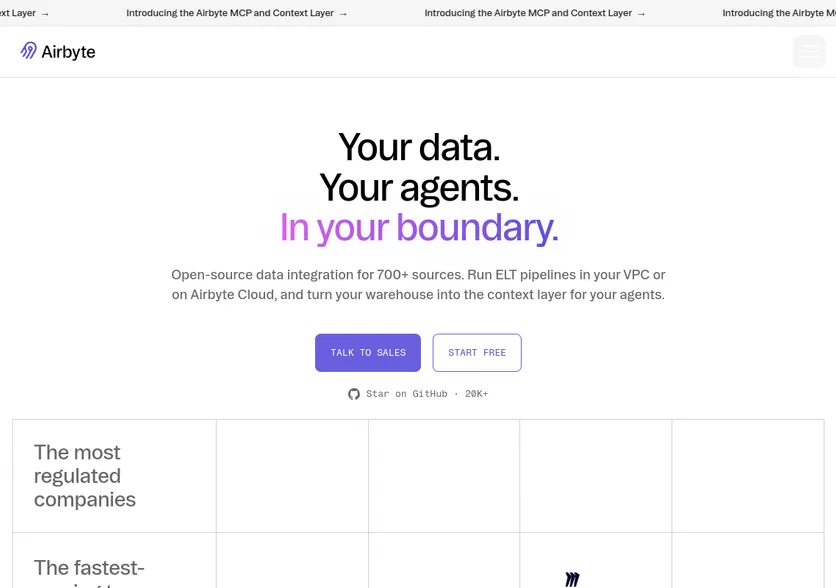
Paid tool Starting price: $20/month · Standard costs twenty dollars a month with five credits included and five dollars per extra credit. Plus starts from one hundred and eighty-nine dollars a month, and the open source core is free to self-host.
Free plan: Free plan available
Airbyte is an open source data integration platform with a cloud service for teams that want managed pipelines without a big bill. It offers hundreds of connectors plus a connector builder for the sources nobody else covers. The Standard plan starts low, which makes it the cheapest managed entry point on this list.
What we like
- Open source core with a connector builder
- Standard plan starts at twenty dollars a month
- Self-hosting option for teams that need control
Watch out for
- Credit usage needs monitoring to avoid surprises
- Some connectors are community maintained
How to try it
- Pick your source and destination from the connector list
- Run a first sync and watch the credit usage
- Set up the connector builder if a source is missing
3. Hevo Data
Best for: Small teams that need no-code pipelines from spreadsheets and apps
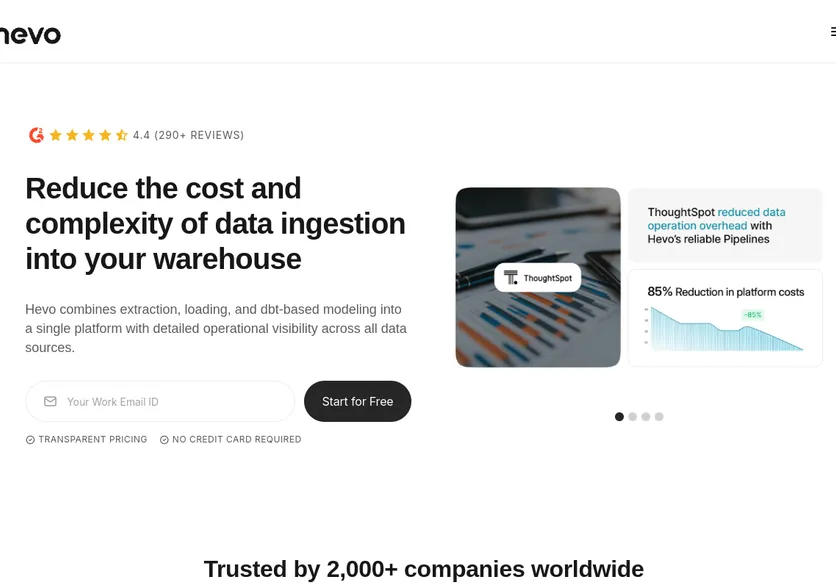
Paid tool Starting price: $265/month · Starter costs two hundred and sixty-five dollars a month billed annually for five million events and up to ten users. Monthly billing is two hundred and ninety-nine dollars a month.
Free plan: No free plan; free trial available
Hevo Data is a no-code data pipeline platform that moves data from apps, databases and spreadsheets into your warehouse. It offers pre-built transformations and automatic schema mapping, so non-engineers can build reliable pipelines. The Starter plan covers five million events a month, which suits small teams getting started with analytics.
What we like
- No-code setup that non-engineers can run
- Pre-built transformations for common use cases
- Automatic schema mapping on every pipeline
Watch out for
- Event limits cap how much data Starter can move
- Higher volumes jump to custom pricing
How to try it
- Connect your first source from the app catalog
- Map the fields and turn on automatic schema handling
- Schedule the sync and check the destination tables
4. Stitch
Best for: Teams that want simple ELT from databases and SaaS apps
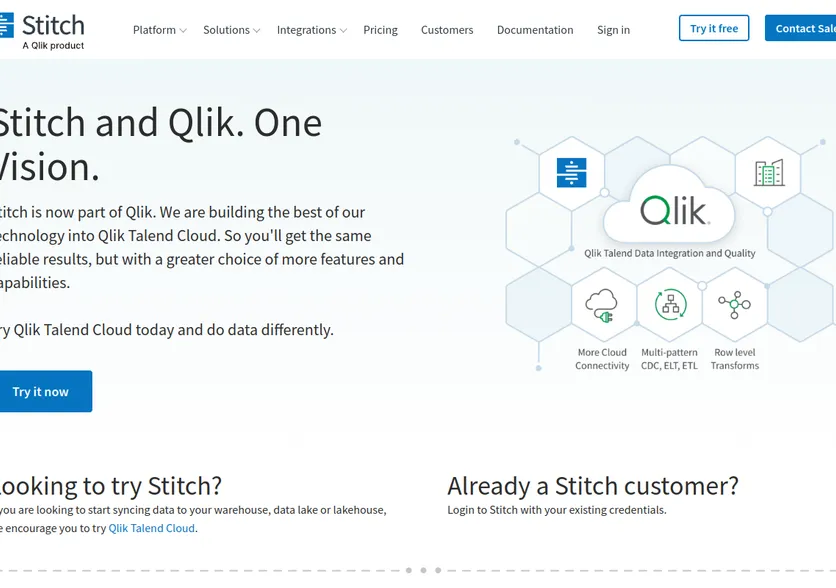
Paid tool Starting price: $100/month · Standard costs one hundred dollars a month for five million replicated rows. Advanced costs one thousand five hundred dollars a month and Premium costs three thousand dollars a month, both billed annually.
Free plan: No free plan; free trial available
Stitch is a simple extract-load platform that moves data from databases and SaaS apps into your warehouse. It focuses on reliable replication rather than heavy transformation, which keeps setup quick and costs predictable. The Standard plan covers five million replicated rows a month at a flat monthly price.
What we like
- Simple setup with no transformation complexity
- Flat monthly price for five million rows
- Reliable replication from databases and apps
Watch out for
- No built-in transformation for complex pipelines
- Row caps mean fast-growing data needs a higher tier
How to try it
- Connect your database or SaaS source
- Pick the destination warehouse and tables
- Run the first replication and verify row counts
5. Snowflake
Best for: Teams that already run their analytics on Snowflake
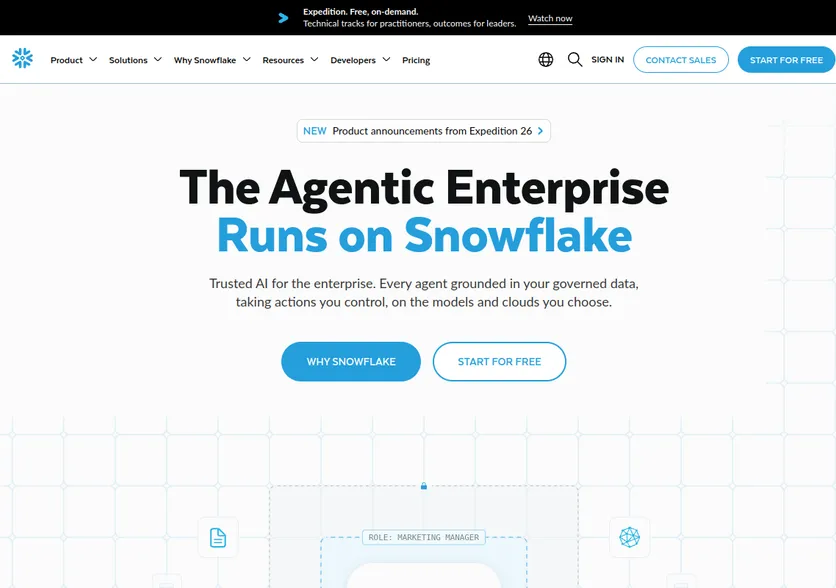
Paid tool Starting price: $2/credit · Standard costs two dollars per credit on demand on AWS in the United States East region. Enterprise costs three dollars per credit, Business Critical four dollars and Virtual Private Snowflake six dollars, with storage at twenty-three dollars per terabyte a month.
Free plan: Free trial available
Snowflake is a cloud data platform that stores, processes and shares data at scale, and it anchors many cloud data management stacks. It separates storage from compute, so teams scale each independently and pay for the credits they use. The Standard edition is the entry point for teams that want a warehouse with strong governance and sharing.
What we like
- Storage and compute scale independently
- Strong governance and secure data sharing
- Huge ecosystem of integrations and partners
Watch out for
- Credit costs need monitoring on heavy workloads
- Virtual machine costs are separate on some setups
How to try it
- Create a trial account and load a sample dataset
- Run a query and check credit usage
- Set up a warehouse size that matches your workload
6. Databricks
Best for: Teams building lakehouse pipelines with Spark and notebooks
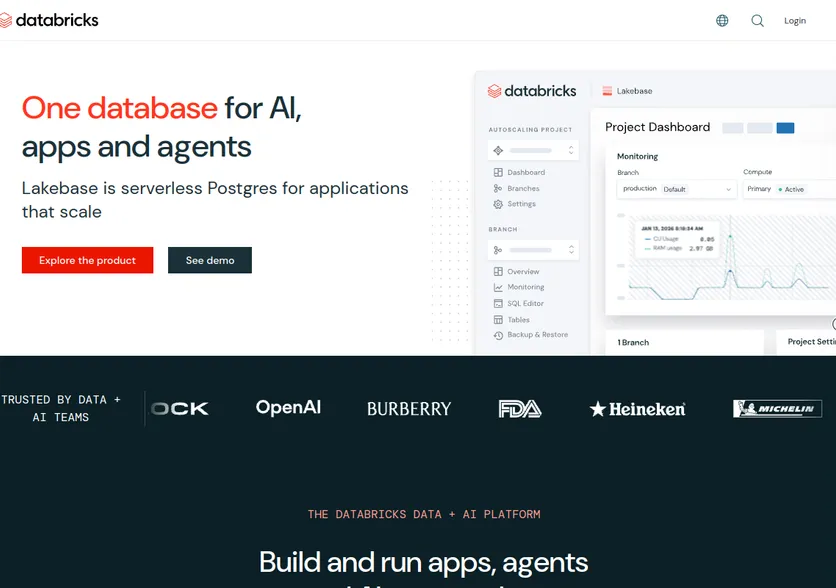
Paid tool Starting price: $0.30/DBU · Premium Jobs Compute costs thirty cents per DBU. All-Purpose Premium costs fifty-five cents per DBU, and cloud virtual machine costs are separate on classic clusters.
Free plan: Free plan available
Databricks is a unified data platform that combines lakehouse storage, notebooks and machine learning in one workspace. It runs Spark jobs, SQL analytics and model training on the same data, so teams stop copying files between systems. The Premium tier adds the governance and security that larger organisations require.
What we like
- Lakehouse, notebooks and machine learning in one place
- Spark and SQL on the same data
- Unity Catalog adds strong governance
Watch out for
- DBU plus virtual machine costs can confuse the bill
- Premium features add up on large teams
How to try it
- Start a workspace and load a sample lakehouse
- Run a notebook job and check DBU usage
- Turn on Unity Catalog for governance
7. Rivery
Best for: Teams that want consumption pricing without a monthly minimum
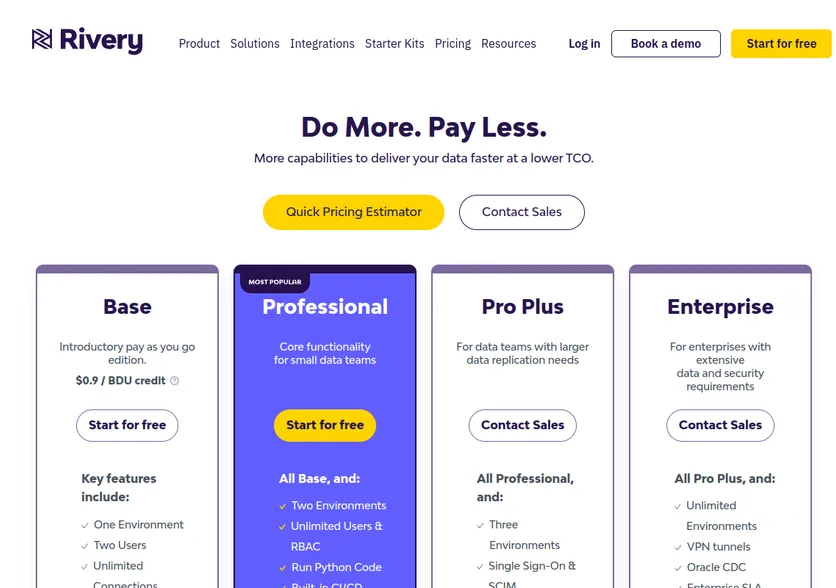
Paid tool Starting price: $0.90 per BDU credit · Base costs ninety cents per BDU credit on monthly billing, and one credit covers one hundred megabytes of database replication. Rivery is now Boomi Data Integration after the December 2024 acquisition.
Free plan: No free plan; free trial available
Rivery is a data integration platform that builds pipelines from sources to warehouses with a low-code interface. It charges per data unit consumed, so teams pay for what they move rather than a flat monthly fee. The platform is now Boomi Data Integration after Boomi acquired Rivery in December 2024, and the product continues under that name.
What we like
- Consumption pricing with no monthly minimum
- Low-code pipeline building for fast setup
- Strong change data capture for databases
Watch out for
- Usage-based bills vary month to month
- The Boomi rename can confuse support and docs
How to try it
- Connect a source and build your first pipeline
- Check the data units consumed by the first run
- Schedule the pipeline and watch usage over a week
8. Estuary
Best for: Teams that need real-time streaming from databases and APIs
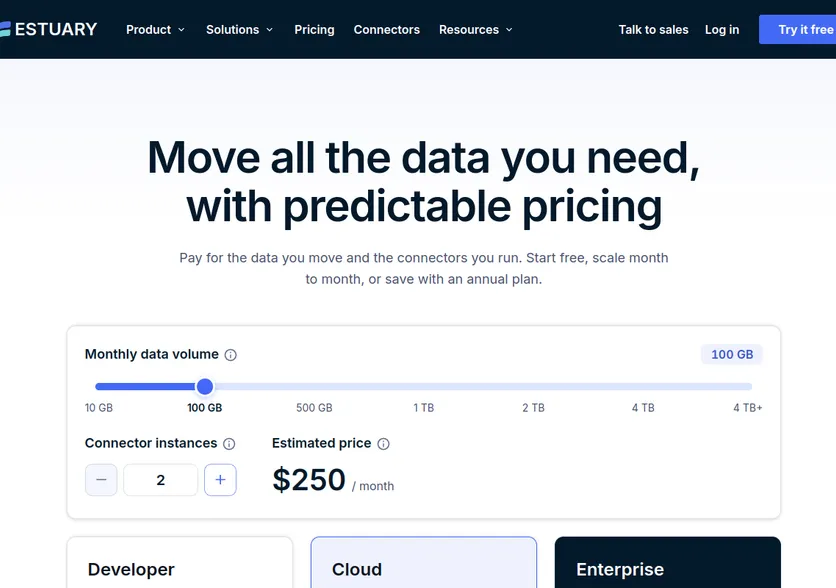
Paid tool Starting price: $0.50/GB · Cloud costs fifty cents per gigabyte plus one hundred dollars a month per connector instance for the first six instances, then fifty dollars a month after. The free tier covers ten gigabytes a month and two instances.
Free plan: Free tier covering ten gigabytes a month and two connector instances
Estuary is a real-time data integration platform that streams changes from databases, APIs and files into your warehouse. It captures changes as they happen, so dashboards and models stay current without batch delays. The Cloud plan charges by data volume plus a per-connector fee, and a free tier covers ten gigabytes a month.
What we like
- Real-time change capture from databases and APIs
- Free tier covers ten gigabytes a month
- No batch delays for dashboards and models
Watch out for
- Per-connector fees add up with many sources
- The recent rename from Estuary Flow can confuse older guides
How to try it
- Connect a database source with change capture on
- Pick the destination and start the stream
- Watch the first records land in real time
Prices above were checked on each vendor’s own website on Nov 27, 2026 and can change — the vendor’s page is the final word. Vendor links are editorial: nobody paid to be listed or ranked here. Vendors who want a featured listing can see how it works on our Get listed page.
How to pick a cloud data platform
Start by measuring the data you actually move. Count monthly active rows, events or gigabytes for a normal month and a peak month, because usage pricing punishes guesses. Then list every source and destination you need, and check connector coverage before you fall in love with a feature list. A tool that lacks one critical connector will cost more in workarounds than a pricier tool that covers everything.
Run a trial on one real pipeline for a full week and read the bill, not just the dashboard. Annual billing usually cuts the monthly price, so compare the annual figure across tools rather than the monthly teaser. And confirm what happens when you exceed the included volume, because overage rates decide the true cost.
Before you buy
- Measure your monthly active rows or events before choosing a usage plan
- Check connector coverage for every source and destination you actually use
- Compare annual billing against monthly, because the gap is often large
- Test sync speed and reliability on a real pipeline, not a demo dataset
- Confirm what happens when you exceed the included volume or credits
Official websites
Official websites of the products reviewed above. Features and prices were checked against these sites when this guide was written, and they can change, so confirm on the vendor site before you buy.
Frequently asked questions
What is the best cloud data management software?
Fivetran is our first pick for its managed connectors and automatic schema handling. Airbyte is the cheapest managed start at twenty dollars a month, and Snowflake is the best anchor if your analytics already live on its platform. Hevo Data suits non-engineers who want no-code pipelines.
How much does cloud data management software cost?
Fivetran charges five hundred dollars per million monthly active rows, Airbyte starts at twenty dollars a month, and Hevo Data starts at two hundred and sixty-five dollars a month billed annually. Warehouse pricing is usage based, with Snowflake at two dollars per credit and Databricks at thirty cents per DBU for Premium Jobs Compute.
Is there a free cloud data management tool?
Yes, Airbyte has a free plan and a free open source core, Estuary has a free tier covering ten gigabytes a month, and Databricks offers a free plan. Snowflake and Fivetran offer free trials rather than permanent free tiers. Free plans suit small volumes and testing, not production workloads.
What is the difference between Fivetran and Snowflake?
Fivetran and Airbyte are pure integration platforms that move data into a warehouse. Snowflake and Databricks are the platforms where that data lives, gets queried and gets modelled. Most teams use one of each, so the choice is about the pair, not a single winner.
How do I avoid surprise bills on usage-based data tools?
Check how each vendor counts usage, because monthly active rows, events, credits and data units all bill differently. Run a trial on one real source for a week and compare the bill against your measured volume. Annual billing usually cuts the price, so ask for the annual figure before you sign.
Pick the pipeline that matches your data volume, then trial it on one real source before you move everything.
Browse Business Tools tools