On this page
Cloud architecture in a dental practice means one shared database that every office opens in a browser, with no server humming in a back room. The eight tools below run from ninety-five dollars a month to eight hundred ninety-nine dollars a month, and every price was checked on the vendor site on November 26, 2026. Some are cloud-native from day one, others are desktop systems with a hosting add-on, so compare the architecture as well as the price. Denticon is our first pick — the strongest cloud architecture for multi-location groups.
How we researched this
We started with the dental systems that run in the cloud, then read each price on the vendor pricing page on November 26, 2026 and noted whether the system is cloud-native or a hosted desktop product. We judged them for practices that need scheduling, charting, billing and multi-location control without a server in the office, and we kept only tools with a published price. We dropped Curve Dental and Dentrix Ascend because neither publishes a general price.
Compare the tools
| Name | Best for | Starting price | Free plan | |
|---|---|---|---|---|
 Denticon | Multi-location groups and DSOs that need one patient record across every office | $795/month | No free plan; demo on request | Visit |
 tab32 | Solo dentists and small groups that want the cheapest cloud-native system | $95/month | No free plan; 14-day free trial | Visit |
 Open Dental | Cost-conscious practices that want a published fee and control of their own data | $199/month | Free trial version limited to 30 patients | Visit |
 Practice-Web | Small offices that want guided setup and a simple per-office price | $179/month | No free plan; 30-day trials on selected add-ons | Visit |
 DentiMax | Practices that buy imaging sensors and software from one vendor | $169/month | No free plan; free trial available | Visit |
 Oryx | Startups and solo practices that want an all-in-one cloud system with imaging and claims bundled | $650/month | Startup offer waives fees until 200 patients or 12 months | Visit |
 CareStack | Groups that want published prices and AI clinical tools in one cloud platform | $829/month | No free plan; demo on request | Visit |
 Archy | Modern practices that want one flat price with unlimited users and texting included | $899/month | No free plan; demo on request | Visit |
The dental software for cloud architecture, compared
1. Denticon
Best for: Multi-location groups and DSOs that need one patient record across every office
Paid tool Starting price: $795/month · From $795 a month, with packages shaped by practice size and location count; part of the Planet DDS DentalOS platform
Free plan: No free plan; demo on request
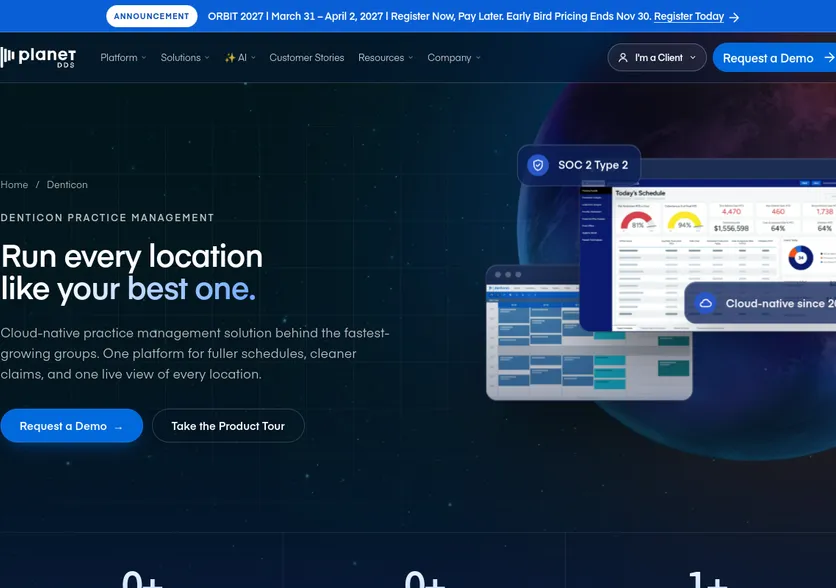
Denticon was built for groups rather than adapted from a single-office system, with one shared patient record and one database across all locations. This Denticon platform starts from seven hundred ninety-five dollars a month, with packages shaped by practice size and location count. Central scheduling, billing and reporting let head office standardize care across offices instead of reconciling separate systems at month end.
What we like
- One patient record shared across every location
- Central reporting and configuration for groups
- Proven at DSO scale with large location counts
Watch out for
- Built for groups, so a solo office pays for scale it does not need
- Group rollout takes weeks per location
How to try it
- Open the Planet DDS site and request a Denticon demo
- Map your locations and providers to the central database
- Run one location live before rolling the rest over
2. tab32
Best for: Solo dentists and small groups that want the cheapest cloud-native system
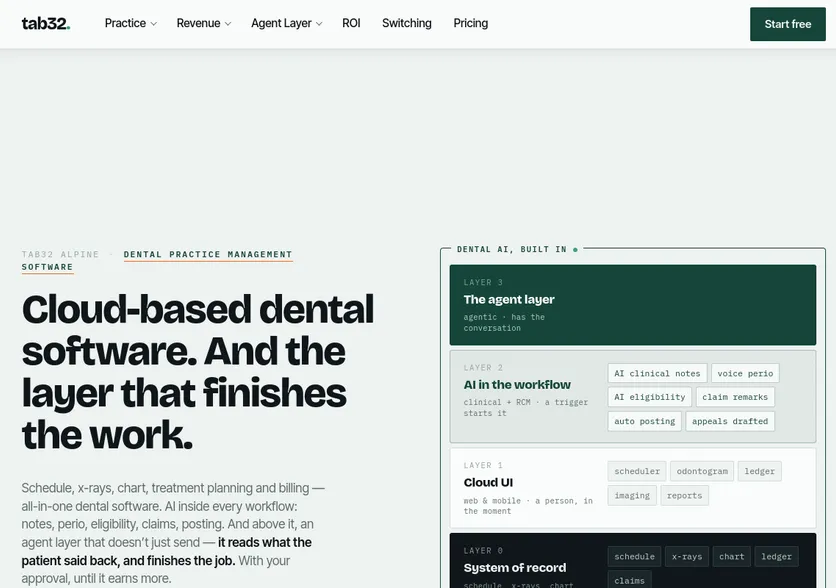
Paid tool Starting price: $95/month · Alpine plan from $95 a month per practice, with usage fees for claims and eligibility checks; tab32 revised its published rate in November 2026
Free plan: No free plan; 14-day free trial
tab32 is a cloud-native practice management system that runs entirely in the browser, with scheduling, charting, billing and imaging in one shared database. This tab32 Alpine plan starts from ninety-five dollars a month per practice, which is the lowest published price in this list. A small office that wants cloud architecture without a group-sized budget gets a real cloud system with a fourteen-day trial and no server to maintain.
What we like
- Lowest published price in this comparison
- Cloud-native with no server in the office
- Fourteen-day trial with no sales call needed
Watch out for
- Usage fees for claims add to the monthly bill
- Smaller ecosystem than the big-name systems
How to try it
- Open the tab32 pricing page and start the 14-day trial
- Import your patient list and build the schedule
- Connect claims and test eligibility checks before going live
3. Open Dental
Best for: Cost-conscious practices that want a published fee and control of their own data
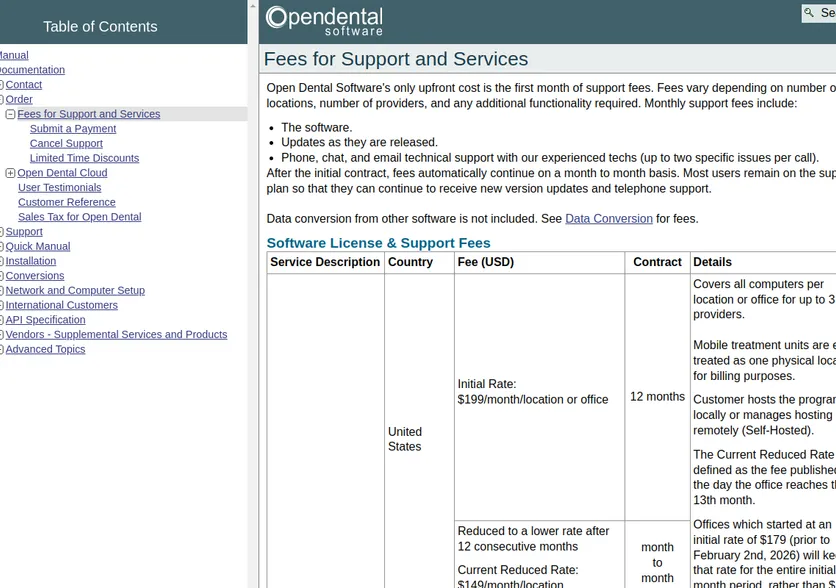
Paid tool Starting price: $199/month · Support fee of $199 a month per location for the first 12 months, then a reduced rate of $149 a month; cloud hosting is a separate add-on
Free plan: Free trial version limited to 30 patients
Open Dental is the low-cost, transparent option in dental software, publishing a full fee table where most rivals quote by phone. This Open Dental support fee costs one hundred ninety-nine dollars a month per location for the first twelve months, then drops to a reduced rate of one hundred forty-nine dollars a month. The system is desktop software with a cloud hosting add-on, so a practice that wants cloud access buys the hosting package on top of the support fee.
What we like
- Published fee table with no quote needed
- Lowest long-term cost once the rate drops
- Open API and hundreds of integrations
Watch out for
- Not cloud-native, so cloud access costs extra
- Add-on modules for texting and scheduling add up
How to try it
- Open the Open Dental fees page and read the full table
- Download the trial and test it with thirty patients
- Add the cloud hosting package if you need browser access
4. Practice-Web
Best for: Small offices that want guided setup and a simple per-office price
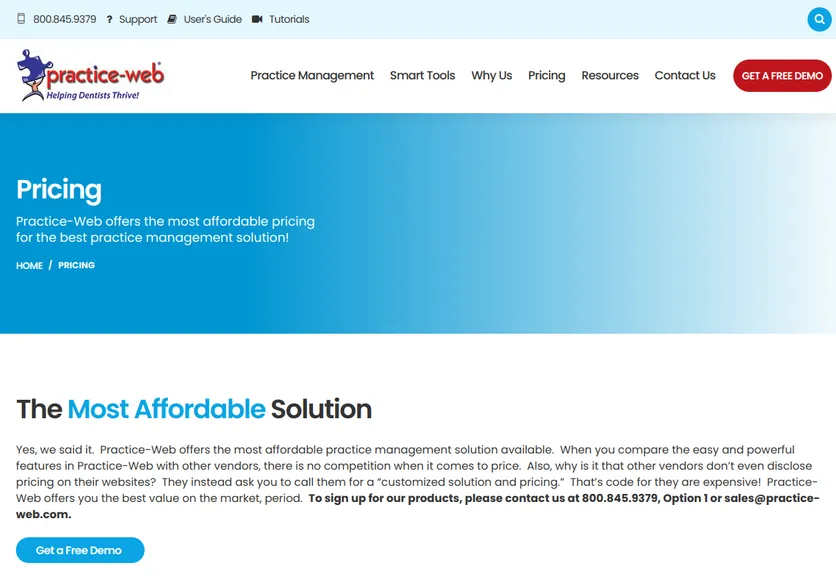
Paid tool Starting price: $179/month · First office at $179 a month for 12 months, then $129 a month, with a regular rate of $199 a month; each dentist beyond three adds $20 a month
Free plan: No free plan; 30-day trials on selected add-ons
Practice-Web is a desktop practice management platform with scheduling, clinical charting, billing, e-claims and patient communication, sold at a simple per-office price. This Practice-Web first office costs one hundred seventy-nine dollars a month for twelve months, then one hundred twenty-nine dollars a month. A small office that wants cloud-style access runs it on a hosted server instead of a cloud-native app, which keeps the workflow familiar while removing the server from the office.
What we like
- Simple per-office pricing with no seat counts
- Guided setup with conversion and training included
- Lowest first-year cost after tab32
Watch out for
- Desktop system, not a cloud-native app
- The vendor publishes two price schedules that do not agree
How to try it
- Open the Practice-Web pricing page and confirm the first-office rate
- Arrange database conversion and web training
- Host the system on a server if you need remote access
5. DentiMax
Best for: Practices that buy imaging sensors and software from one vendor
Paid tool Starting price: $169/month · In-Office plan at $169 a month; the cloud Flow plan starts from $299 a month, or $199 in the first year
Free plan: No free plan; free trial available
DentiMax pairs practice management software with its own digital sensors and X-ray equipment, so one vendor covers the clinical and imaging stack. This DentiMax In-Office plan costs one hundred sixty-nine dollars a month, while the cloud Flow plan starts from two hundred ninety-nine dollars a month. A practice already buying DentiMax sensors gets software and hardware support from the same team, with charting, billing and patient texting in the bundle.
What we like
- Software and imaging sensors from one vendor
- Published prices for both desktop and cloud plans
- Restorative and perio charting with two-way texting
Watch out for
- The cloud plan costs nearly twice the desktop plan
- No patient-facing tools named on the site
How to try it
- Open the DentiMax pricing page and compare In-Office and Flow
- Test the charting and perio tools with your own templates
- Add the cloud Flow plan if you need browser access
6. Oryx
Best for: Startups and solo practices that want an all-in-one cloud system with imaging and claims bundled
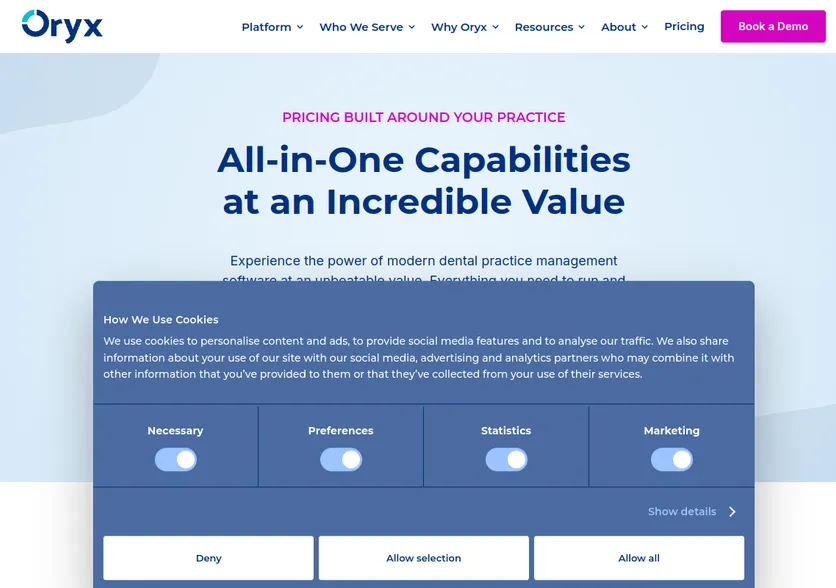
Paid tool Starting price: $650/month · Pro plan at $650 a month for two providers, with extra providers at $100 a month each; startup plans waive fees until 200 patients or 12 months
Free plan: Startup offer waives fees until 200 patients or 12 months
Oryx is a cloud-native all-in-one system that bundles scheduling, charting, imaging, claims and patient communication with no add-ons to buy. This Oryx Pro plan costs six hundred fifty dollars a month for two providers, with extra providers at one hundred dollars a month each. A new practice gets a startup offer that waives fees until two hundred patients or twelve months, which makes Oryx the most startup-friendly cloud architecture here.
What we like
- All-in-one cloud system with imaging and claims included
- Startup offer waives fees while the practice grows
- Risk-based charting with voice AI perio
Watch out for
- Six hundred fifty dollars a month is steep for a solo office
- No public integration program for third-party tools
How to try it
- Open the Oryx pricing page and check the startup offer
- Build your schedule and charting templates in the cloud
- Add providers as the practice grows, at one hundred dollars each
7. CareStack
Best for: Groups that want published prices and AI clinical tools in one cloud platform
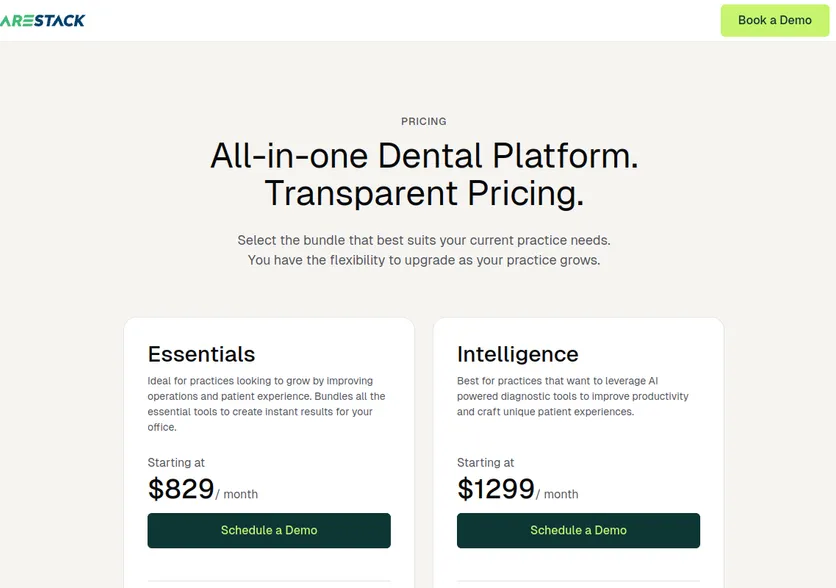
Paid tool Starting price: $829/month · Essentials plan from $829 a month, with Intelligence from $1,299 a month; price is set by locations, chairs and providers
Free plan: No free plan; demo on request
CareStack is a cloud-native all-in-one platform that folds scheduling, charting, imaging, insurance, patient engagement and analytics into one system. This CareStack Essentials plan starts at eight hundred twenty-nine dollars a month, with Intelligence from one thousand two hundred ninety-nine dollars a month adding AI clinical notes and X-ray analysis. Groups from five to five hundred locations get centralized reporting and revenue-cycle tools, with pricing set by locations, chairs and providers instead of per-user licences.
What we like
- Published prices, rare in this category
- AI clinical tools on the Intelligence plan
- Pricing by location, not per user
Watch out for
- Far above the budget tools for a single office
- Voice phone system and membership tools cost extra
How to try it
- Open the CareStack pricing page and compare Essentials and Intelligence
- Request a quote based on your locations and chairs
- Pilot one location before rolling out to the group
8. Archy
Best for: Modern practices that want one flat price with unlimited users and texting included
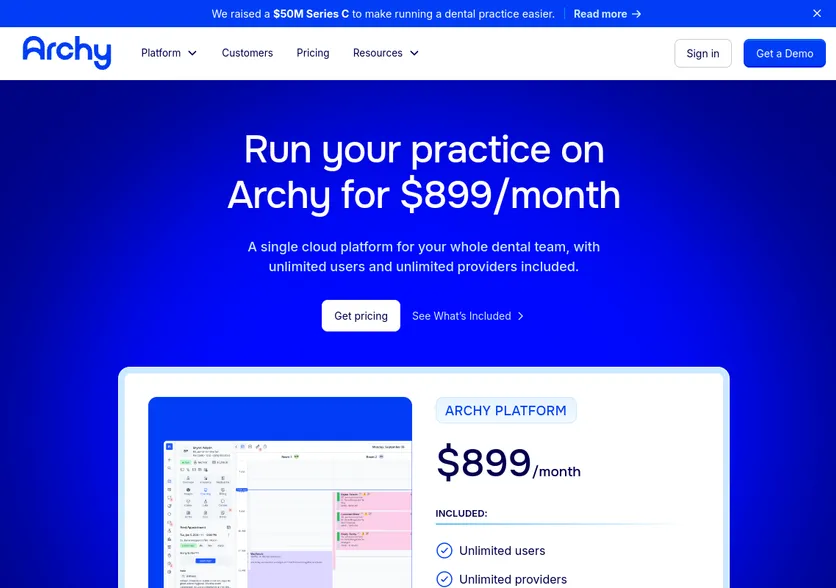
Paid tool Starting price: $899/month · Platform plan at $899 a month per location, with unlimited users and two-way texting included
Free plan: No free plan; demo on request
Archy is a cloud-native platform with a flat monthly price, unlimited users, two-way texting and online scheduling included, so the bill never grows with headcount. This Archy Platform plan costs eight hundred ninety-nine dollars a month per location. A growing practice that hates per-seat billing gets every user on one price, with patient communication built in rather than bolted on as an add-on.
What we like
- Flat price with unlimited users
- Two-way texting and scheduling included
- Modern cloud interface with no server
Watch out for
- The highest flat price in this list
- Newer platform with a smaller track record
How to try it
- Open the Archy pricing page and confirm the flat rate
- Move your schedule and patient list into the cloud
- Turn on two-way texting and online booking for patients
Prices above were checked on each vendor’s own website on Nov 26, 2026 and can change — the vendor’s page is the final word. Vendor links are editorial: nobody paid to be listed or ranked here. Vendors who want a featured listing can see how it works on our Get listed page.
What cloud dental software costs in 2026
Most practices pay per location, so the headline monthly price is the whole budget here, and this list runs from ninety-five dollars a month to eight hundred ninety-nine dollars a month. The cheapest plans are not always the cheapest deal, because desktop systems like Open Dental charge extra for cloud hosting, while cloud-native tools like tab32 include it. The headline plan each vendor shows on its own pricing page is the number in the table above, checked on November 26, 2026.
Start with a trial on two tools and run one real week through each, from booking to billing. Compare how the schedule, charting and claims feel to the team, and whether head office can see every location in one report. Pick the architecture your practice can live with for years, because switching dental systems is the most expensive move on this list.
Before you buy
- Confirm the price covers every location, because per-location billing doubles the moment a second office opens.
- Check whether imaging and claims are included, because add-on modules can double the headline price.
- Ask for the year-two price in writing, because several vendors here charge less in year one than in year two.
- Confirm the system is cloud-native, because a hosted desktop system still needs a server mindset and a migration plan.
- Test multi-location reporting before you sign, because a central database is only useful if head office can actually read it.
Official websites
Official websites of the products reviewed above. Features and prices were checked against these sites when this guide was written, and they can change, so confirm on the vendor site before you buy.
Frequently asked questions
Which dental software is best for cloud architecture in 2026?
Denticon, from seven hundred ninety-five dollars a month, is the safest default for groups because it was built around one shared patient record across locations. tab32 is the cheapest cloud-native start at ninety-five dollars a month, and CareStack is the best all-in-one at eight hundred twenty-nine dollars a month with published prices and AI tools.
How much does cloud dental software cost?
Published prices in this list run from ninety-five dollars a month for tab32 to eight hundred ninety-nine dollars a month for Archy. Most single offices pay between one hundred sixty-nine and two hundred dollars a month, while groups pay between six hundred fifty and eight hundred ninety-nine dollars a month per location.
Do dental software vendors publish their prices?
Yes, tab32, Open Dental and Practice-Web all publish prices, as do DentiMax, Oryx, Denticon, CareStack and Archy. Curve Dental, Dentrix Ascend and Eaglesoft do not publish a general price, so budgeting for those needs a written quote that states the billing basis and the year-two price.
What is the difference between cloud-native and hosted dental software?
Cloud-native systems like tab32, Oryx, Denticon, CareStack and Archy run entirely in the browser with no server in the office. Open Dental and Practice-Web are desktop systems with a cloud hosting add-on, so the architecture is different even when the monthly price looks similar.
What should a practice check before choosing cloud dental software?
Check whether the price covers every location, whether imaging and claims are included, and what the year-two price will be. Then test multi-location reporting, because a central database is only useful if head office can read it without exporting spreadsheets.
Need more free health help? Try Toolsvine's free health and fitness tools right in your browser.
Browse Health & Fitness Calculators tools