On this page
A supply chain breaks when the number on the website disagrees with the number on the shelf. The fix is one system for purchasing, stock, orders and manufacturing, but most enterprise platforms hide their prices behind a quote form. We compared eight systems with published prices, from a five-dollar open-source host to Microsoft's cloud ERP. Cin7 Core is our first pick — one accurate stock picture across Shopify, Amazon and wholesale, with a published price list at every tier.
How we researched this
We started with the supply chain systems a growing brand can actually buy without a sales cycle, then read each price on the vendor site on November 27, 2026 and noted the trial each plan carries. We judged them for a team that sells on several channels, holds stock in one or more warehouses and needs one accurate stock count. We dropped quote-only enterprise platforms such as NetSuite, SAP and Infor, because a growing brand needs a published price it can budget around.
Compare the tools
| Name | Best for | Starting price | Free plan | |
|---|---|---|---|---|
 Odoo | Supply chain teams that want every app for one flat per-user price | $31.10/user/month | One App Free with one app and unlimited users; Community edition free to self-host | Visit |
 ERPNext | Supply chain teams that want open-source software with no per-user fees | $5/month | Free self-hosted Community edition; 14-day Frappe Cloud trial | Visit |
| Microsoft Dynamics 365 Business Central | Supply chain teams already running Microsoft 365 | $80/user/month | No free plan; 30-day free trial | Visit |
 Cin7 Core | Multichannel brands that need one accurate stock picture everywhere | $349/month | No free plan; 14-day free trial | Visit |
 Katana | Makers that want production planning tied to sales channels | $299/month | Free plan for 30 SKUs and three locations on Shopify | Visit |
 MRPeasy | Small manufacturers that want real MRP at a per-user price | $49/user/month | No free plan; 15-day free trial, extendable by 15 days | Visit |
 Fishbowl | QuickBooks shops that need warehouse stock and manufacturing | $229/month | No free plan; demo available | Visit |
 Zoho Inventory | Small sellers that want low-cost multichannel inventory sync | $29/month | Free plan for 50 orders a month, one user and one location | Visit |
The ERP software for supply chain management, compared
1. Odoo
Best for: Supply chain teams that want every app for one flat per-user price
Paid tool Starting price: $31.10/user/month · Thirty-one dollars and ten cents per user a month billed annually for Standard, covering all apps on Odoo Online; the first twelve months cost twenty-four dollars and ninety cents per user a month, and monthly billing runs thirty-eight dollars and ninety cents
Free plan: One App Free with one app and unlimited users; Community edition free to self-host
This Odoo Standard plan gives a supply chain team accounting, inventory, purchasing, sales and manufacturing for one flat per-user price. Standard costs thirty-one dollars and ten cents per user a month billed annually, and the whole suite sits on one database, so the stock count on the shelf matches the number the customer sees. The open-source Community edition is free for teams that self-host, and the One App Free plan covers a single app with unlimited users.
What we like
- One flat price covers inventory, purchasing, sales and manufacturing
- One database means the stock count matches across every channel
- Free Community edition for teams that self-host
Watch out for
- The first-year discount ends after twelve months, then the price rises
- Multi-warehouse and external API features need the Custom plan
How to try it
- Open the Odoo pricing page and start with the free One App plan
- Turn on the Inventory and Purchase apps and import your suppliers
- Run one purchasing cycle end to end before you add more users
2. ERPNext
Best for: Supply chain teams that want open-source software with no per-user fees
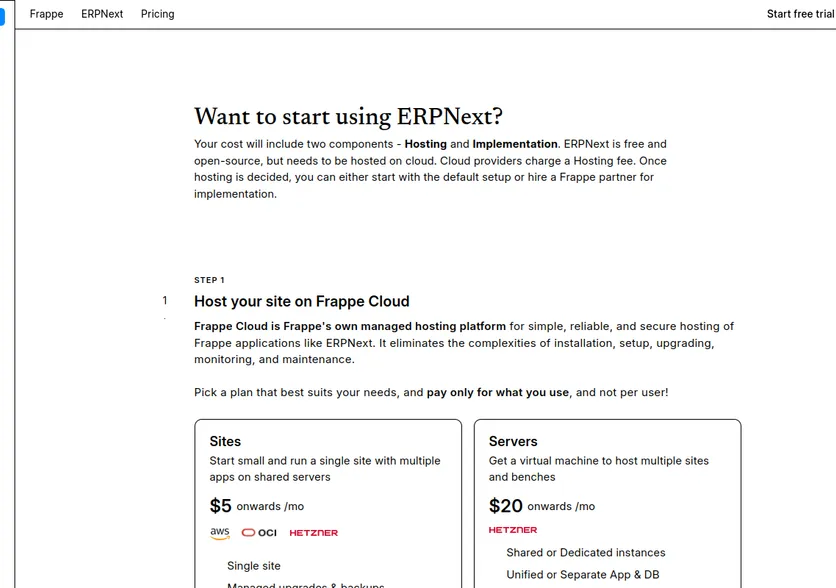
Paid tool Starting price: $5/month · Five dollars a month for the smallest Frappe Cloud shared site plan, with site plans from five to fifty dollars a month priced by compute, not by headcount; the ERPNext software itself is free under the GPLv3 licence
Free plan: Free self-hosted Community edition; 14-day Frappe Cloud trial
This ERPNext system is the only supply chain platform here with no per-user licence fee, because the software is free under the GPLv3 licence. A team pays only for hosting on Frappe Cloud, where site plans start at five dollars a month and carry no user limit, so adding warehouse staff never moves the bill. Accounting, inventory, purchasing, manufacturing and quality management are all included, and a team with DevOps skills can self-host it on its own servers.
What we like
- No per-user licence fees, so warehouse headcount never moves the bill
- Every module included, from quality management to manufacturing
- Frappe Cloud hosting starts at five dollars a month with no user limit
Watch out for
- Implementation and customization effort is the real cost, not the licence
- The five-dollar plan suits a small team, not a hundred heavy users
How to try it
- Open the Frappe Cloud pricing page and pick the five-dollar site plan
- Import your item master and set up one warehouse location
- Run one full stock cycle, from purchase order to shipment, before you scale
3. Microsoft Dynamics 365 Business Central
Best for: Supply chain teams already running Microsoft 365
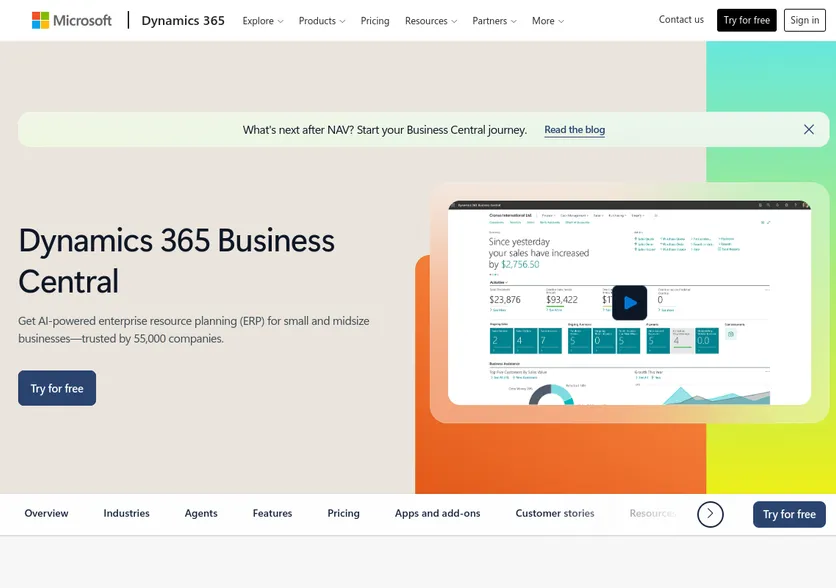
Paid tool Starting price: $80/user/month · Eighty dollars per user a month paid yearly for Essentials, covering finance, sales, purchasing, inventory, supply chain planning, projects and warehousing; Premium costs one hundred and ten dollars and adds manufacturing and service management, and Team Members cost eight dollars
Free plan: No free plan; 30-day free trial
This Microsoft Dynamics 365 Business Central Essentials plan is the supply chain ERP for a company already on Microsoft 365, with finance, purchasing, inventory, supply chain planning and warehouse management in one system. Essentials costs eighty dollars per user a month paid yearly, with Microsoft Copilot included and a thirty-day trial to test it. It connects natively to Outlook, Excel and Teams, so planners stop exporting stock reports into spreadsheets.
What we like
- Published per-user price, unlike NetSuite and most mid-market ERPs
- Supply chain planning and warehouse management in the Essentials plan
- Native Microsoft 365 integration with Outlook, Excel and Teams
Watch out for
- Implementation is partner-led and usually costs far more than the licence
- Manufacturing waits for the Premium plan at one hundred and ten dollars a month
How to try it
- Open the Business Central pricing page and start the thirty-day trial
- Connect your Microsoft 365 tenant and import your item master
- Run one replenishment cycle through the system before you buy
4. Cin7 Core
Best for: Multichannel brands that need one accurate stock picture everywhere
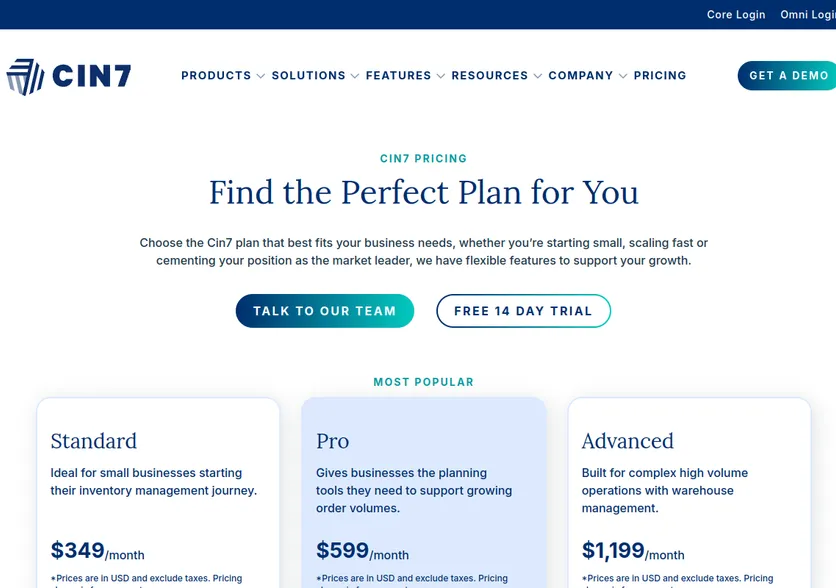
Paid tool Starting price: $349/month · Three hundred and forty-nine dollars a month for Standard, covering five users and six thousand sale orders a year; Pro costs five hundred and ninety-nine dollars a month and adds material requirements planning, and Advanced costs one thousand one hundred and ninety-nine dollars
Free plan: No free plan; 14-day free trial
This Cin7 Core Standard plan is the multichannel supply chain pick, syncing purchasing, stock and orders across Shopify, Amazon, wholesale and retail from one system. Standard costs three hundred and forty-nine dollars a month for five users and six thousand sale orders a year, with over seven hundred integrations and demand forecasting included. Pro adds material requirements planning for brands that assemble or make what they sell, which makes Core the natural step up from a single-channel shop.
What we like
- One stock count across Shopify, Amazon, wholesale and retail
- A rare published price list: Standard, Pro and Advanced all listed
- Demand forecasting included on the Standard plan
Watch out for
- Standard covers only five users, two integrations and six thousand orders a year
- ForesightAI forecasting extras, the B2B portal and POS are add-ons
How to try it
- Open the Cin7 Core pricing page and check the Standard plan limits
- Connect your busiest sales channel and sync one week of orders
- Add the B2B portal when wholesale customers ask to order online
5. Katana
Best for: Makers that want production planning tied to sales channels
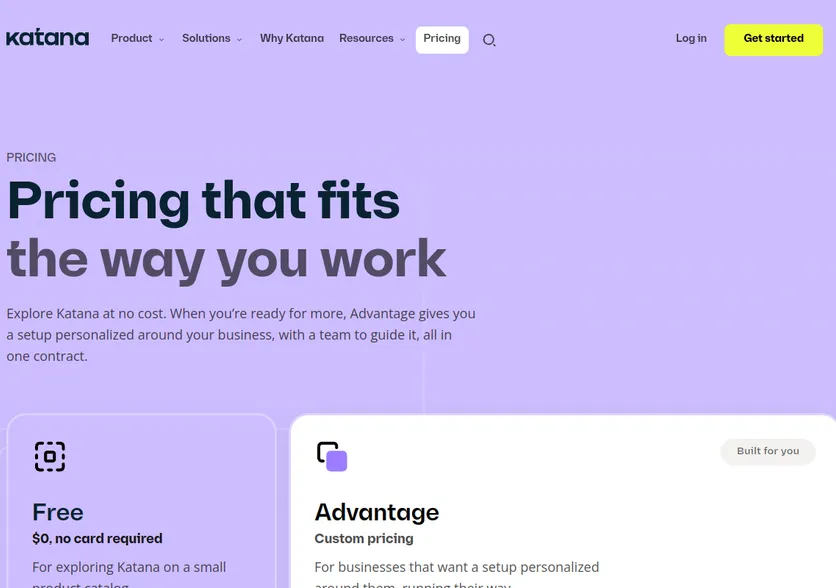
Paid tool Starting price: $299/month · Two hundred and ninety-nine dollars a month for Core, billed monthly, with unlimited users and integrations; lot tracking costs two hundred and forty-nine dollars a month and production routings one hundred and ninety-nine dollars a month as add-ons
Free plan: Free plan for 30 SKUs and three locations on Shopify
This Katana Core plan is built for companies whose supply chain runs through their own workshop, with multi-level bills of materials and manufacturing orders beside real-time stock. Core costs two hundred and ninety-nine dollars a month with unlimited users and integrations, so a Shopify order can reserve finished goods or trigger production and raw-material purchasing. A free plan covers thirty SKUs and three locations for Shopify sellers, which is enough to test the system on a real product line.
What we like
- Production, materials and stock tied to sales channels in one view
- Unlimited users and integrations on the Core plan
- Free plan covers thirty SKUs, enough to test on a real product
Watch out for
- Manufacturing management is a one-hundred-and-ninety-nine-dollar add-on
- Sales orders are billed by usage on Core, so the bill moves with volume
How to try it
- Open the Katana pricing page and start the free plan
- Import one product with its bill of materials and a live sales channel
- Upgrade to Core when the free plan's thirty-SKU limit runs out
6. MRPeasy
Best for: Small manufacturers that want real MRP at a per-user price
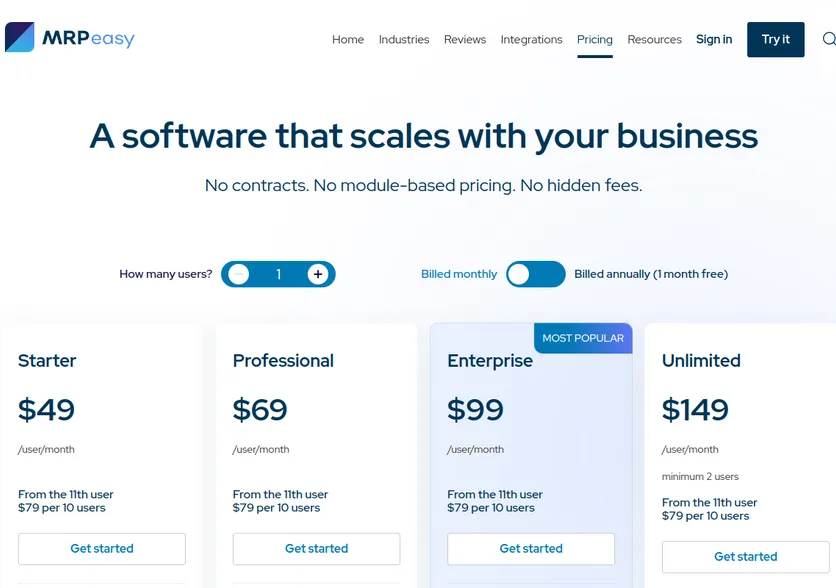
Paid tool Starting price: $49/user/month · Forty-nine dollars per user a month for the Starter plan, or five hundred and eighty-eight dollars a year per user; the top Unlimited plan costs one hundred and forty-nine dollars per user a month with a two-user minimum
Free plan: No free plan; 15-day free trial, extendable by 15 days
This MRPeasy Starter plan is the lowest-cost route to genuine manufacturing planning for a small factory, at forty-nine dollars per user a month. It covers bills of materials, purchasing, production orders and stock tracking, so a small factory can plan production against real demand instead of guessing. A ten-person shop pays four hundred and ninety dollars a month, and the fifteen-day trial extends by another fifteen days, which is enough to run a real production cycle before paying.
What we like
- Full MRP with work orders and routings at a per-user price
- Self-service setup with no implementation package required
- Production planning tied directly to purchasing and stock
Watch out for
- Per-user pricing climbs fast as the team grows
- Barcodes start on the Enterprise plan, not Starter
How to try it
- Open the MRPeasy pricing page and start the fifteen-day trial
- Build one bill of materials and schedule a real production order
- Compare the per-user cost at your actual headcount before you pay
7. Fishbowl
Best for: QuickBooks shops that need warehouse stock and manufacturing
Paid tool Starting price: $229/month · Two hundred and twenty-nine dollars a month billed annually for Essentials, or two thousand seven hundred and forty-eight dollars a year, covering two users; Growth costs four hundred and twenty-nine dollars a month for five users and Scale seven hundred and twenty-nine dollars for ten
Free plan: No free plan; demo available
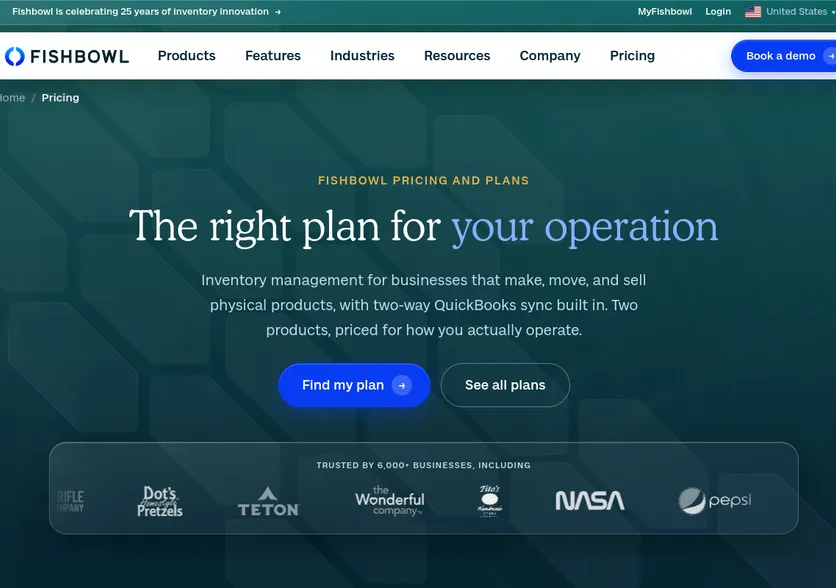
This Fishbowl Essentials plan is built for a supply chain that already runs its books in QuickBooks, with inventory, warehouse and manufacturing tools that sync both ways. Essentials costs two hundred and twenty-nine dollars a month billed annually for two users, with mobile barcode scanning, reorder points and pick, receive and ship workflows. It is the warehouse-grade choice in this list, and the required implementation package means budgeting for setup as well as the subscription.
What we like
- Deepest QuickBooks and Xero sync in this comparison
- Mobile barcode scanning and reorder points included
- Warehouse tools with pick, receive and ship workflows
Watch out for
- An implementation package is required on top of the subscription
- Manufacturing plans start at six hundred and seventy-five dollars a month
How to try it
- Open the Fishbowl pricing page and check the Essentials plan
- Connect your QuickBooks company file and sync one warehouse location
- Ask sales for the implementation package price before you sign
8. Zoho Inventory
Best for: Small sellers that want low-cost multichannel inventory sync
Paid tool Starting price: $29/month · Twenty-nine dollars a month billed annually for Standard, covering five hundred orders a month, three users and two locations; monthly billing costs thirty-nine dollars, and higher plans raise the order limits
Free plan: Free plan for 50 orders a month, one user and one location
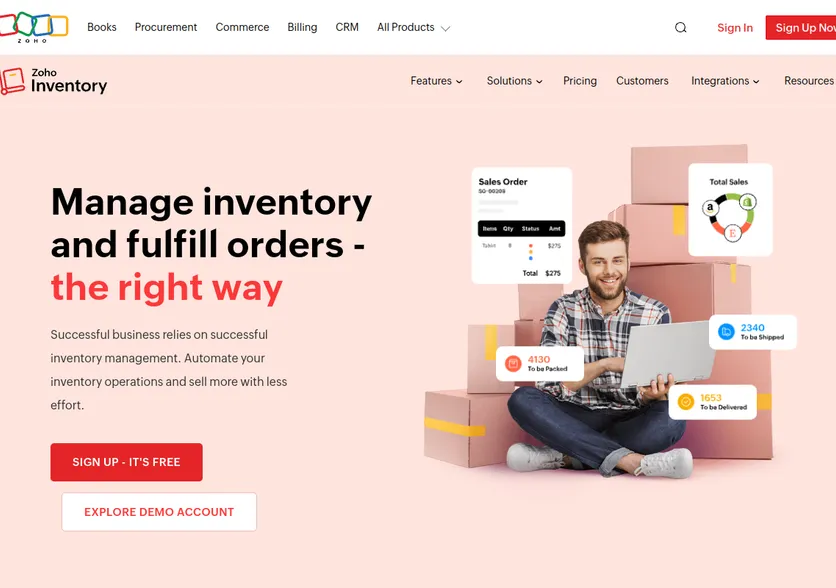
This Zoho Inventory Standard plan is the cheapest paid entry point here, at twenty-nine dollars a month billed annually for five hundred orders a month, three users and two locations. It syncs stock across Shopify, Amazon and other channels, with a free plan covering fifty orders a month for one user and one location. It has no manufacturing beyond simple bundling and assembly, so it suits sellers who buy and resell rather than make what they sell.
What we like
- Cheapest paid plan here at twenty-nine dollars a month
- Free plan covers fifty orders a month for one user
- Multichannel sync with Shopify, Amazon and other channels
Watch out for
- No manufacturing beyond simple bundling and assembly
- Order-based tiers mean the price rises with sales volume
How to try it
- Open the Zoho Inventory pricing page and start the free plan
- Connect your busiest sales channel and sync one week of orders
- Upgrade to Standard when monthly orders pass fifty
Prices above were checked on each vendor’s own website on Nov 27, 2026 and can change — the vendor’s page is the final word. Vendor links are editorial: nobody paid to be listed or ranked here. Vendors who want a featured listing can see how it works on our Get listed page.
How a growing brand should pick supply chain software
Start with your order volume, not the feature list. A brand doing a few hundred orders a month lives happily on Zoho Inventory at twenty-nine dollars a month, while a brand doing six thousand orders a year needs Cin7 Core Standard. Count your warehouses and sales channels too, because several plans cap locations and integrations on the entry tier. A system that cannot see a warehouse cannot count its stock, and a system that cannot see a channel cannot stop an oversell.
Test the accounting sync before you commit. Connect the tool to QuickBooks or Xero, post one week of real orders and check whether finished-goods costs land in the ledger without manual re-entry. If the sync needs a consultant to configure, that tells you what the first year will really cost.
Before you buy
- Count your monthly sales orders first, because several plans cap them by tier
- Check how many warehouses and locations the entry plan actually covers
- Confirm the system syncs stock with every channel you sell on
- Ask whether forecasting, the B2B portal and POS are included or paid add-ons
- Make sure the accounting integration posts to your ledger without manual work
Official websites
Official websites of the products reviewed above. Features and prices were checked against these sites when this guide was written, and they can change, so confirm on the vendor site before you buy.
Frequently asked questions
What is the cheapest supply chain software here?
Zoho Inventory Standard costs twenty-nine dollars a month billed annually, the cheapest paid plan in this comparison. ERPNext charges nothing for the software itself, with Frappe Cloud hosting from five dollars a month and no per-user fees. Odoo Standard costs thirty-one dollars and ten cents per user a month. The right cheap pick depends on whether you need inventory alone, where Zoho wins, or a full ERP.
Why are NetSuite and SAP not in this comparison?
NetSuite, SAP, Sage Intacct, Acumatica, Infor and Epicor all sell by quote, with no published price on their sites. That makes them hard to budget for a growing brand, because the price only appears after a sales cycle. The tools in this comparison all publish a list price you can read before a demo, which is why they made the list and the quote-only platforms did not.
Can a small brand run its supply chain on inventory software alone?
Yes, if your supply chain is really just inventory and orders. Zoho Inventory starts free for fifty orders a month, and Standard at twenty-nine dollars a month syncs stock across Shopify, Amazon and other channels. Move to a full ERP such as Odoo or Business Central when you need purchasing, manufacturing, finance and warehouse management in one system.
What are the hidden limits on the cheaper plans?
Cin7 Core Standard covers five users and six thousand sale orders a year, with two integrations included. Katana Core has unlimited users but charges by sales-order volume and extra locations, and lot tracking and routings are paid add-ons. Odoo and ERPNext have no order caps at all. Read the usage limits on the plan you buy, because order volume is the hidden cost.
Do these tools integrate with QuickBooks or Xero?
It depends on the tool. Cin7 Core and Katana both sync with QuickBooks Online and Xero, Fishbowl syncs with QuickBooks Desktop and Online plus Xero, and Odoo and ERPNext include their own accounting modules. Check whether the integration posts finished-goods costs to the ledger automatically, because manual re-entry is where most small supply chains lose hours every week.
Compare the eight systems above, then trial Cin7 Core and Katana on one real product line before you commit the whole supply chain.
Browse Business Tools tools