On this page
A stadium gate is where the ticket plan meets reality: thousands of fans arriving at once, phones with dying batteries, and a line that cannot stall. The check-in tool has to scan fast, work when the signal drops, and catch duplicate or fake tickets before they reach the turnstile. We compared eight tools on published price, offline scanning, and how they handle re-entry and staff credentials. Ticket Tailor is our first pick — a flat eighty-five cents per ticket with no percentage cut, so the fee stays predictable on a fifty-dollar seat.
How we researched this
We started with the ticketing and check-in tools a stadium can actually run at the gate, then read each price on the vendor site on November 27, 2026 and noted the trial or free tier each plan carries. We judged them for a venue that scans thousands of tickets in a short window, needs offline scanning when the signal drops, and must stop duplicate tickets at the door. We dropped quote-only screening and access-control vendors because a stadium needs a published price it can budget around before the season starts.
Compare the tools
| Name | Best for | Starting price | Free plan | |
|---|---|---|---|---|
 Ticket Tailor | Stadiums that want the cheapest flat fee with no percentage cut | $0.85/ticket | Free for free events; no free plan for paid tickets | Visit |
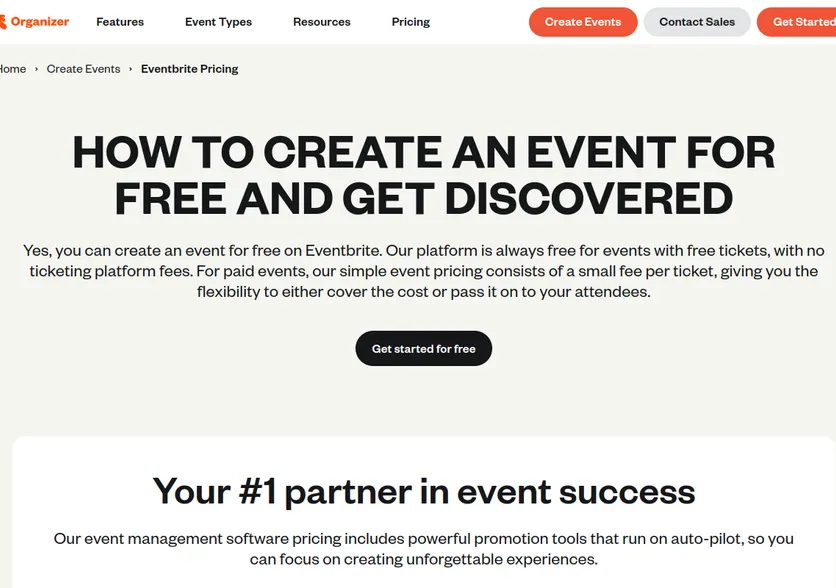
 Eventbrite | Stadiums that want built-in discovery and a public event listing | 3.7% + $1.79/ticket | Free for free events; no free plan for paid tickets | Visit |
 TicketSpice | Stadiums that want a flat per-ticket fee with a real box office app | $0.99/ticket | No free plan; free tickets cost nothing alongside paid events | Visit |
 TicketLeap | Community stadiums and small venues with no monthly bill | $1 + 2%/ticket | Free for free events; no monthly fee | Visit |
| Ticketor | Stadiums that want a monthly plan instead of a per-ticket fee | $54.95/month | Free plan available | Visit |
 SimpleTix | Venues that need season passes and box office tools in one place | $0.79 + 2%/ticket | No free plan | Visit |
 ThunderTix | Stadiums and performing arts venues with reserved seating | $20/month | No free plan; 14-day free trial | Visit |
 RegFox | Stadiums that need deep registration forms with check-in | $0.99 + 1%/registrant | Free for free events; no monthly fee | Visit |
The event security check in software for stadiums, compared
1. Ticket Tailor
Best for: Stadiums that want the cheapest flat fee with no percentage cut
Paid tool Starting price: $0.85/ticket · Eighty-five cents per ticket on pay as you go in the US, or from thirty cents per ticket with prepaid credits; you connect your own Stripe, PayPal or Square account, so card processing is billed at your processor's standard rate; free events cost nothing
Free plan: Free for free events; no free plan for paid tickets
This Ticket Tailor plan charges a flat fee per ticket and never takes a percentage of the ticket price, which keeps costs predictable as seat prices rise. You connect your own Stripe, PayPal or Square account, so payouts land in your own account as tickets sell. The checkout is fast and uncluttered, and the scanner app handles door sales, waitlists and recurring fixtures without a subscription.
What we like
- Cheapest flat fee here at eighty-five cents per ticket
- No percentage cut, so premium seats cost the same to sell
- Payouts go straight to your own Stripe, PayPal or Square account
Watch out for
- No built-in discovery, so you bring your own audience
- Card processing is billed separately by your own processor
How to try it
- Open the Ticket Tailor pricing page and start on pay as you go
- Connect your Stripe account so payouts land with you directly
- Test the scanner app at one gate before the first home game
2. Eventbrite
Best for: Stadiums that want built-in discovery and a public event listing
Paid tool Starting price: 3.7% + $1.79/ticket · Three point seven percent plus one dollar seventy-nine cents per paid ticket, plus a two point nine percent payment processing fee per order; free events publish at no cost; optional Pro email marketing starts at fifteen dollars a month
Free plan: Free for free events; no free plan for paid tickets
This Eventbrite plan is the default choice when a stadium needs a public listing that strangers can find, because its marketplace brings buyers no other tool here can. The check-in app scans tickets from a phone, and the fee is paid by buyers by default unless you choose to absorb it. Free events cost nothing to publish, which suits community days and open training sessions at the stadium.
What we like
- Largest self-service marketplace, with millions of monthly buyers
- Check-in app scans tickets from any staff phone
- Free events publish at no cost
Watch out for
- Highest per-ticket cost here once processing is added
- The fee grows with every ticket price rise
How to try it
- Publish a free community event first to test the check-in app
- Set the fee to pass to buyers or absorb it before tickets go on sale
- Assign one phone per gate and test scanning in the dead zones
3. TicketSpice
Best for: Stadiums that want a flat per-ticket fee with a real box office app
Paid tool Starting price: $0.99/ticket · Ninety-nine cents per paid ticket on Standard; Premium is one dollar forty-nine cents and Pro one dollar ninety-nine cents per ticket; card processing of two point nine percent plus thirty cents is charged on top; on-site card payments cost forty-nine cents per ticket on Standard and are free on Premium and Pro
Free plan: No free plan; free tickets cost nothing alongside paid events
This TicketSpice plan charges a flat ninety-nine cents per ticket with no monthly fee and no percentage cut of the ticket price. The box office app scans tickets in under a second and works offline, which matters when the stadium signal drops at kickoff. Custom ticket pages, reserved seating and weekly payouts are included, so a stadium can sell online and at the door from one inventory.
What we like
- Flat ninety-nine cents a ticket with no monthly fee
- Sub-second offline scanning for crowded gates
- Reserved seating and timed entry in the same plan
Watch out for
- Card processing is charged on top of the per-ticket fee
- Higher plans cost more per ticket, not less
How to try it
- Open the TicketSpice pricing page and pick the Standard plan
- Build the reserved seating map for your main stand
- Test the box office app offline at one gate before game day
4. TicketLeap
Best for: Community stadiums and small venues with no monthly bill
Paid tool Starting price: $1 + 2%/ticket · One dollar plus two percent per ticket, capped at twenty dollars, with forty-nine cents for tickets of five dollars or less; online orders carry a three percent transaction fee processed by Stripe; free events cost nothing
Free plan: Free for free events; no monthly fee
This TicketLeap plan charges no monthly fee, so a stadium pays only when tickets sell. The fee is one dollar plus two percent per ticket, capped at twenty dollars, which keeps expensive premium seats from carrying a huge fee. Buyers cover the fees by default, and free events cost nothing, which suits a venue that mixes paid games with free community events.

What we like
- No monthly fee, so quiet months cost nothing
- Fee capped at twenty dollars per ticket
- Buyers cover the fees by default
Watch out for
- A three percent transaction fee applies on top per order
- Payouts arrive four to six business days after the event
How to try it
- List a free community event to test the checkout flow
- Set the fee to pass to buyers before tickets go on sale
- Check the payout timing against your post-game cash needs
5. Ticketor
Best for: Stadiums that want a monthly plan instead of a per-ticket fee
Paid tool Starting price: $54.95/month · Fifty-four dollars and ninety-five cents a month as listed for the standard plan; a per-ticket option is also listed at two point nine percent plus sixty-nine cents per ticket, so confirm which model applies to your volume before you buy
Free plan: Free plan available
This Ticketor plan sells ticketing as a monthly subscription instead of a per-ticket fee, which suits a stadium with events all year. The standard plan is listed at fifty-four dollars and ninety-five cents a month, and the platform covers online sales, box office and check-in in one place. A per-ticket option is also listed, so a venue with a short season should compare both models against its real ticket count.
What we like
- Monthly billing keeps costs flat while volume grows
- Online sales, box office and check-in in one place
- A free plan lets you test before committing
Watch out for
- Two pricing models are listed, so confirm which one applies
- The monthly fee runs even in months with no events
How to try it
- Start on the free plan and build one event end to end
- Compare the monthly plan against the per-ticket option at your volume
- Test check-in at a small fixture before the season starts
6. SimpleTix
Best for: Venues that need season passes and box office tools in one place
Paid tool Starting price: $0.79 + 2%/ticket · Seventy-nine cents plus two percent per online ticket, capped at nine dollars ninety-nine cents; in-person sales cost twenty-five cents per ticket; nonprofits get a lower rate
Free plan: No free plan
This SimpleTix plan charges seventy-nine cents plus two percent per online ticket, capped at nine dollars ninety-nine cents, which keeps the fee low on expensive seats. Season passes, box office tools and timed-entry ticketing are included, so a stadium can sell a full season and single games from one system. In-person sales cost only twenty-five cents a ticket, which suits a busy match-day box office.
What we like
- Lowest percentage-plus-fixed fee here for online tickets
- Season passes and timed entry included
- In-person sales cost only twenty-five cents a ticket
Watch out for
- No free plan to test with before you pay
- The two percent cut grows with the ticket price
How to try it
- Open the SimpleTix site and price a season pass for your main stand
- Check the in-person rate against your box office volume
- Set up timed entry for the busiest gate before the first game
7. ThunderTix
Best for: Stadiums and performing arts venues with reserved seating
Paid tool Starting price: $20/month · Twenty dollars a month for general admission, including the first twenty tickets, with each extra ticket at one dollar; reserved seating is twenty-five dollars a month with each extra ticket at one dollar twenty-five cents
Free plan: No free plan; 14-day free trial
This ThunderTix plan is built for venues with reserved seating, season subscriptions and passes, which fits a stadium with a regular home crowd. General admission costs twenty dollars a month including the first twenty tickets, and each extra ticket costs one dollar with no percentage cut. Patron tools such as gift cards, donations and seat exchanges are included, so the box office can serve season holders without a second system.
What we like
- No percentage cut, so high ticket prices stay cheap to sell
- Reserved seating, season subscriptions and passes included
- Gift cards and donations in the same box office
Watch out for
- The monthly minimum applies even in quiet months
- Enterprise pricing jumps to a one hundred seventy-five dollar monthly minimum
How to try it
- Start the fourteen-day trial and build your seating chart
- Price a season subscription for your regular home crowd
- Test seat exchanges with a small group before the season
8. RegFox
Best for: Stadiums that need deep registration forms with check-in
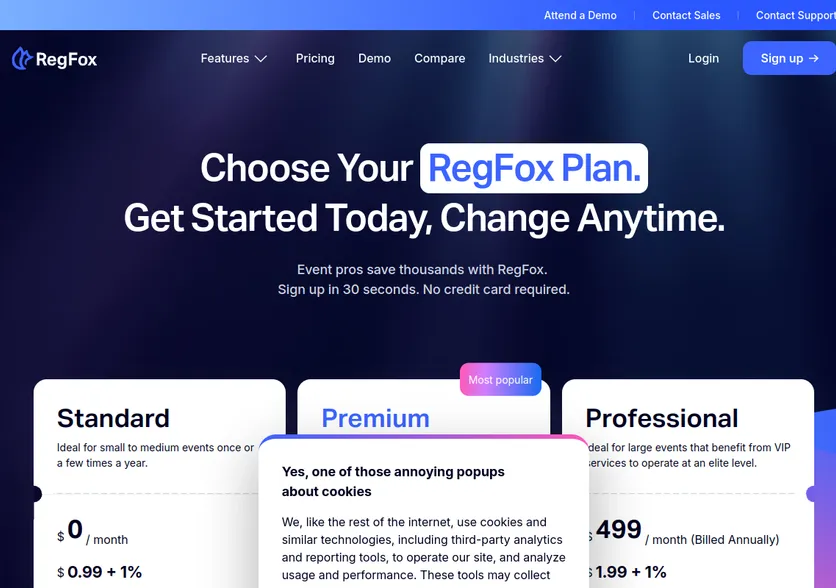
Paid tool Starting price: $0.99 + 1%/registrant · Ninety-nine cents plus one percent per registrant on Standard, capped at four dollars ninety-nine cents, with no monthly fee; Premium is one dollar ninety-nine cents plus one percent capped at five dollars ninety-nine cents; Professional is four hundred ninety-nine dollars a month billed annually; free events cost nothing
Free plan: Free for free events; no monthly fee
This RegFox plan is built for registration-heavy events, with deep custom forms, conditional logic and attendee management that a stadium can use for premium hospitality and group bookings. Basic costs ninety-nine cents plus one percent per registrant with no monthly fee, and free events cost nothing. The check-in and reporting tools track who arrived, when, and through which gate, which helps a venue reconcile the crowd after the game.
What we like
- Deep registration forms with conditional logic
- No monthly fee on any plan
- Gate-level check-in reporting after the event
Watch out for
- No door sales, so the box office needs a second tool
- The one percent cut applies on top of the flat fee
How to try it
- Build the registration form for your hospitality packages first
- Set the fee to pass to registrants or absorb it before launch
- Test check-in reporting after a small fixture
Prices above were checked on each vendor’s own website on Nov 27, 2026 and can change — the vendor’s page is the final word. Vendor links are editorial: nobody paid to be listed or ranked here. Vendors who want a featured listing can see how it works on our Get listed page.
How a stadium should run gate check-in on game day
Put the scanner test before the ticket sale, not after it. Run a full gate rehearsal with the exact phones and scanners your staff will use, and scan tickets in the dead zones under the stands where the signal is weakest. If the tool cannot scan offline and sync later, it will fail at the worst possible moment, when ten thousand fans arrive in twenty minutes. Train two staff per gate on the fallback: a printed list and a manual override, so a dead phone never stops the line.
Decide the fee question before you set ticket prices. A percentage fee grows with every price rise, so a flat per-ticket fee is easier to budget when premium seats sell for far more than general admission. Check who carries the card processing fee, whether re-entry needs a separate pass, and whether staff and vendor credentials scan in the same app as fan tickets, because a second system at the service gate doubles the training.
Before you buy
- Test offline scanning before game day, because the gate cannot wait for a signal
- Count the per-ticket fee at your real ticket price, not the cheapest tier
- Check whether re-entry and staff credentials need a separate plan or add-on
- Confirm who carries the card processing fee, you or the ticket buyer
- Make sure duplicate tickets are flagged at the scanner, not after entry
Official websites
Official websites of the products reviewed above. Features and prices were checked against these sites when this guide was written, and they can change, so confirm on the vendor site before you buy.
Frequently asked questions
What is the cheapest check-in software for a stadium?
Ticket Tailor costs eighty-five cents per ticket on pay as you go in the US, with no percentage cut and no monthly fee, and prepaid credits bring it down to thirty cents a ticket. TicketSpice charges ninety-nine cents per ticket on its Standard plan, and SimpleTix charges seventy-nine cents plus two percent per online ticket. A stadium selling ten thousand tickets saves real money on a flat fee instead of a percentage.
Do these tools work when the stadium Wi-Fi drops?
Most of the tools here offer offline scanning, but you must test it on your own devices before game day. TicketSpice is known for sub-second scanning that works offline, and Ticket Tailor and Eventbrite both scan from a phone app that keeps working without a signal. Run the rehearsal in the dead zones under the stands, and keep a printed list at every gate as a fallback.
Can we stop duplicate or fake tickets at the gate?
Yes, when every ticket carries a unique barcode or QR code and the scanner checks it against the live list. A duplicate scan is flagged at the gate, so the second person holding the same code is stopped before entry. Make sure the tool you pick validates each code once and shows the scanner a clear valid or already-used message, because a vague error slows the line.
Should a stadium pay per ticket or per month?
A per-ticket fee suits a stadium with a short season or uneven crowds, because you pay nothing when no tickets sell. A monthly plan such as Ticketor at fifty-four dollars and ninety-five cents a month or ThunderTix at twenty dollars a month suits a venue with year-round events, because the fee stays flat while volume grows. Model both against your real ticket count before you choose.
What does Eventbrite cost a stadium per ticket?
Eventbrite charges three point seven percent plus one dollar seventy-nine cents per paid ticket, plus a two point nine percent payment processing fee per order, and buyers carry those fees by default. On a forty-dollar ticket that is about four dollars and forty-three cents in fees. Free events cost nothing to publish, so Eventbrite still suits free community days at the stadium.
Compare the eight tools above, then run a trial gate with real tickets before the first home game.
Browse Security & Privacy tools