On this page
How we researched this
We compared eight project management tools that integrate with Google Workspace, using each vendor's published list price from November 2026 and checking admin controls, reporting depth and enterprise governance. Tools that publish no price or offer no enterprise controls were left out, so every price below is one you can verify on the vendor's own site.
Compare the tools
| Name | Best for | Starting price | Free plan | |
|---|---|---|---|---|
 Asana | Enterprise teams that need portfolio oversight and strict permission controls | $10.99/user/month | Free Personal plan for up to two users | Visit |
 Monday.com | Enterprises that want visual boards and fast adoption across departments | $9/seat/month | Free plan for up to two seats | Visit |
 Smartsheet | Enterprises that plan in spreadsheets and need enterprise-grade governance | $9/member/month | No free plan; thirty-day free trial of the Business plan | Visit |
 Wrike | Enterprises running complex, cross-department projects with approval chains | $10/user/month | Free plan for small teams with core task management | Visit |
 ClickUp | Enterprises that want one workspace for docs, tasks, goals and chat | $9/user/month | Free Forever plan for personal use | Visit |
 Jira | Enterprises where engineering work drives the project portfolio | $9.70/user/month | Free plan for up to ten users | Visit |
 Trello | Enterprises that need simple Kanban boards for many small teams | $5/user/month | Free plan with unlimited cards | Visit |
 Airtable | Enterprises that manage projects as structured data and need custom views | $20/seat/month | Free plan for individuals and very small teams | Visit |
The google workspace project management software for enterprise, compared
1. Asana
Best for: Enterprise teams that need portfolio oversight and strict permission controls
Paid tool Starting price: $10.99/user/month · Starter at ten dollars ninety-nine cents a user a month on annual billing, thirteen dollars forty-nine cents on monthly billing; Advanced at twenty-four dollars ninety-nine cents a user a month on annual billing
Free plan: Free Personal plan for up to two users
For an enterprise rollout on Google Workspace, Asana pairs project boards and timelines with portfolios that roll hundreds of projects into one executive view. Workflows, approvals and rules automate the handoffs between departments, while admin controls, SAML sign-on and audit logs satisfy the security reviews that large companies run before any tool is approved. It connects to Google Drive, Gmail and Calendar, so files and dates stay in sync with the workspace the team already lives in.

What we like
- Portfolios that roll up hundreds of projects
- Strong admin controls and audit logs
- Reliable Google Workspace integrations
Watch out for
- Advanced reporting sits on higher-priced tiers
- Large workspaces need a trained administrator
How to try it
- Create a portfolio for each business unit
- Set up approval workflows for cross-team work
- Connect Google Drive and Calendar to every project
2. Monday.com
Best for: Enterprises that want visual boards and fast adoption across departments
Paid tool Starting price: $9/seat/month · Basic at nine dollars a seat a month on annual billing, twelve dollars on monthly billing; Standard at twelve dollars; Pro at nineteen dollars; paid plans require a three-seat minimum
Free plan: Free plan for up to two seats
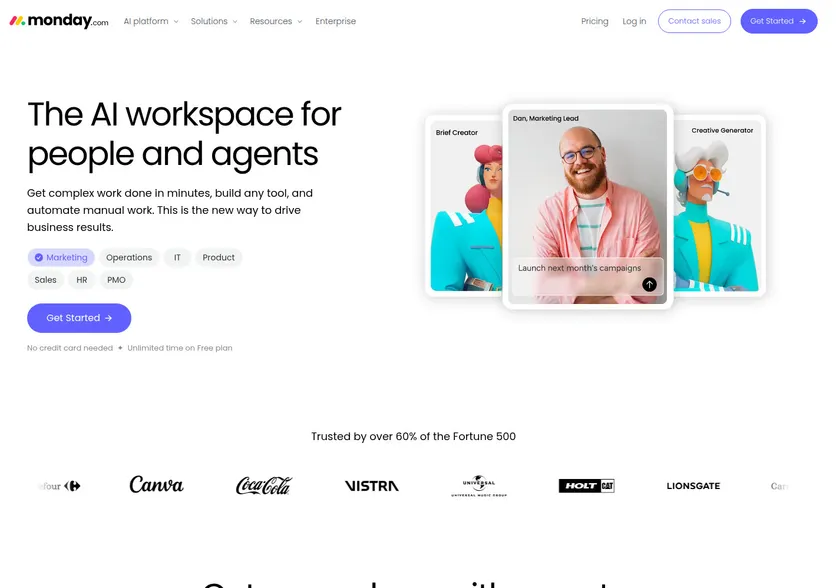
Where an enterprise wants a board that non-technical teams actually open every day, Monday.com turns projects into color-coded boards with status columns, timelines and dashboards anyone can read at a glance. Automations move work between groups without manual updates, and the Enterprise plan adds advanced permissions, audit logs and dedicated support. Its Google Workspace integrations pull files from Drive and sync dates with Calendar, which keeps the board honest without extra admin work.
What we like
- Boards that non-technical teams adopt quickly
- Flexible columns for almost any workflow
- Strong dashboard and reporting views
Watch out for
- Costs climb quickly with many seats
- Three-seat minimum on every paid plan
How to try it
- Build one board per department workflow
- Add automations for status changes and handoffs
- Create a dashboard for leadership reporting
3. Smartsheet
Best for: Enterprises that plan in spreadsheets and need enterprise-grade governance
Paid tool Starting price: $9/member/month · Pro at nine dollars a member a month on annual billing, twelve dollars on monthly billing; Business at nineteen dollars; the free plan was discontinued in 2025
Free plan: No free plan; thirty-day free trial of the Business plan
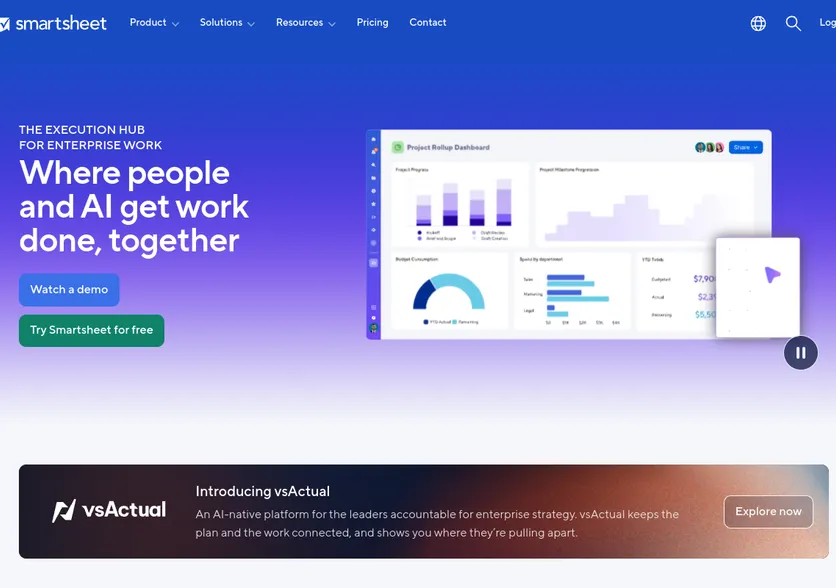
If your enterprise already plans in spreadsheets, Smartsheet is the shortest path to a managed system, because its grid looks familiar while adding Gantt charts, card views, automated approvals and resource management underneath. Control Center enforces consistent project templates across departments, and the Business plan adds the activity log and proofing tools that regulated teams rely on. Google Drive and Gmail integrations keep documents and approvals tied to the sheet, not buried in email.
What we like
- Familiar spreadsheet grid speeds adoption
- Strong templates and governance controls
- Solid reporting across many projects
Watch out for
- No free plan since 2025
- Interface can feel dense for new users
How to try it
- Standardize one project template per department
- Add Gantt and card views for different audiences
- Turn on the activity log for audit trails
4. Wrike
Best for: Enterprises running complex, cross-department projects with approval chains
Paid tool Starting price: $10/user/month · Team at ten dollars a user a month on annual billing for two to fifteen users; Business at twenty-five dollars a user a month; annual billing only on paid plans
Free plan: Free plan for small teams with core task management
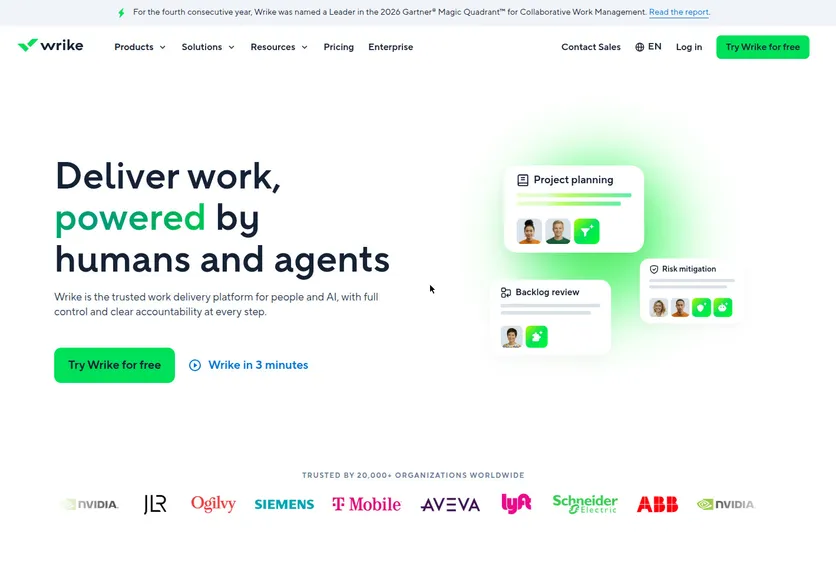
Built for the kind of project where marketing, product and legal all touch the same deliverable, Wrike combines Gantt charts, workload views and request forms with a proofing tool that routes creative approvals without email chains. Blueprints standardize repeatable processes, and the Business plan adds custom fields, calendars and resource scheduling for larger teams. Google Workspace integrations let teams attach Drive files and sync Calendar events directly from a task.
What we like
- Proofing and approvals built in
- Request forms tame incoming work
- Strong workload and resource views
Watch out for
- Annual billing only on paid plans
- Business tier is a big price jump
How to try it
- Set up request forms for incoming work
- Build blueprints for repeatable projects
- Use workload view to balance assignments
5. ClickUp
Best for: Enterprises that want one workspace for docs, tasks, goals and chat
Paid tool Starting price: $9/user/month · Core plan, $9 a user a month billed annually ($12 billed monthly); Business $17 a user a month billed annually
Free plan: Free Forever plan for personal use
For an enterprise that is tired of paying for five separate tools, ClickUp puts tasks, docs, whiteboards, goals and chat in a single workspace, with fifteen-plus views from list to Gantt to mind map. Automations, custom fields and dashboards scale from a single team to a whole company, and the Business plan adds workload management and advanced time tracking. Its Google Drive and Calendar integrations keep documents and meetings linked to the work itself.

What we like
- Lowest starting price in this comparison
- Docs, chat and goals in one workspace
- Many views for different team styles
Watch out for
- Feature depth can overwhelm new teams
- Some advanced views need the Business plan
How to try it
- Pick one view per team and standardize it
- Build dashboards for each department lead
- Set up automations for recurring handoffs
6. Jira
Best for: Enterprises where engineering work drives the project portfolio
Paid tool Starting price: $9.70/user/month · Standard at nine dollars seventy cents a user a month on monthly billing for one to one hundred users; annual plans are sold in user tiers, nine hundred fifty dollars a year for up to ten users; Premium at nineteen dollars sixty cents a user a month
Free plan: Free plan for up to ten users
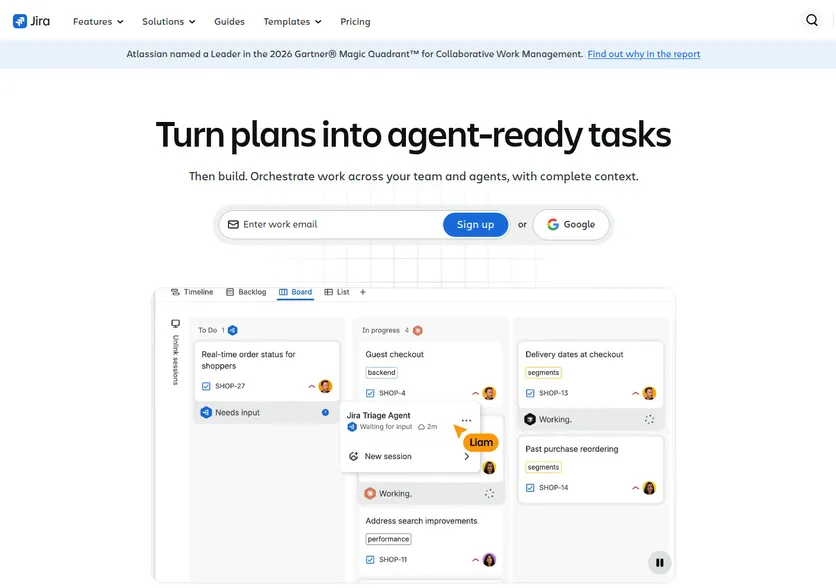
When software delivery is the engine of the enterprise, Jira remains the standard, with scrum and kanban boards, backlogs, sprints and release tracking built around the way engineering teams actually ship. Roadmaps connect epics to business goals, and the Atlassian ecosystem adds Confluence docs and Bitbucket code in the same login. Google Workspace integrations attach Drive files to issues and sync Calendar, so the project record stays complete without leaving Jira.
What we like
- Best-in-class agile boards and backlogs
- Deep Confluence and Bitbucket integration
- Roadmaps that tie work to strategy
Watch out for
- Overkill for non-technical departments
- Annual pricing uses user tiers, not per-user billing
How to try it
- Set up one project per product team
- Run sprints from a prioritized backlog
- Build roadmaps that link epics to goals
7. Trello
Best for: Enterprises that need simple Kanban boards for many small teams
Paid tool Starting price: $5/user/month · Standard at five dollars a user a month on annual billing, six dollars on monthly billing; Premium at ten dollars; Enterprise at seventeen dollars fifty cents
Free plan: Free plan with unlimited cards
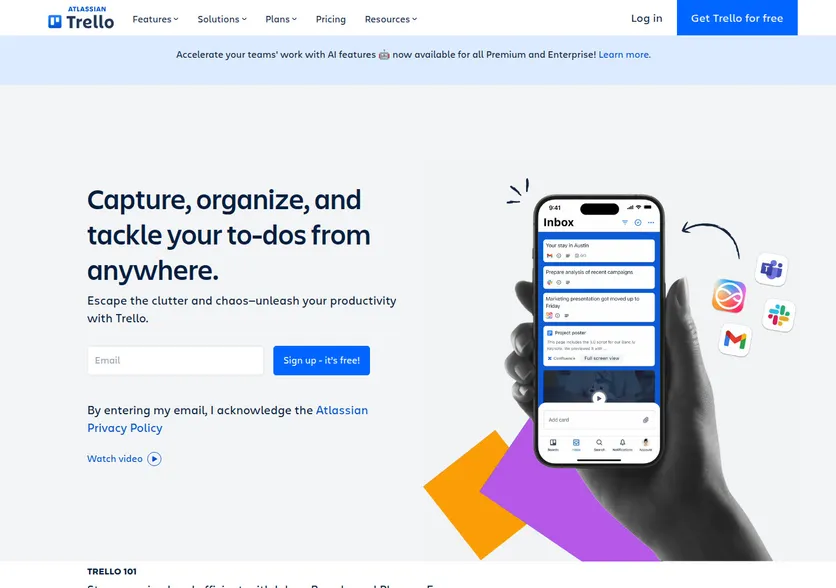
For the many small teams inside a large enterprise, Trello is the simplest board on this list, with cards, lists and checklists that anyone can learn in an afternoon. Power-Ups add calendars, custom fields and integrations, while the Enterprise plan brings organization-wide permissions, single sign-on and priority support. Its Google Drive Power-Up attaches files to cards, and Calendar sync keeps due dates visible in the workspace.
What we like
- Cheapest paid plan in this comparison
- Easiest board for new users to learn
- Enterprise plan adds single sign-on
Watch out for
- Too light for complex multi-team programs
- Reporting needs the Premium plan
How to try it
- Create one board per team or campaign
- Add due dates and checklists to every card
- Use Butler automations for routine moves
8. Airtable
Best for: Enterprises that manage projects as structured data and need custom views
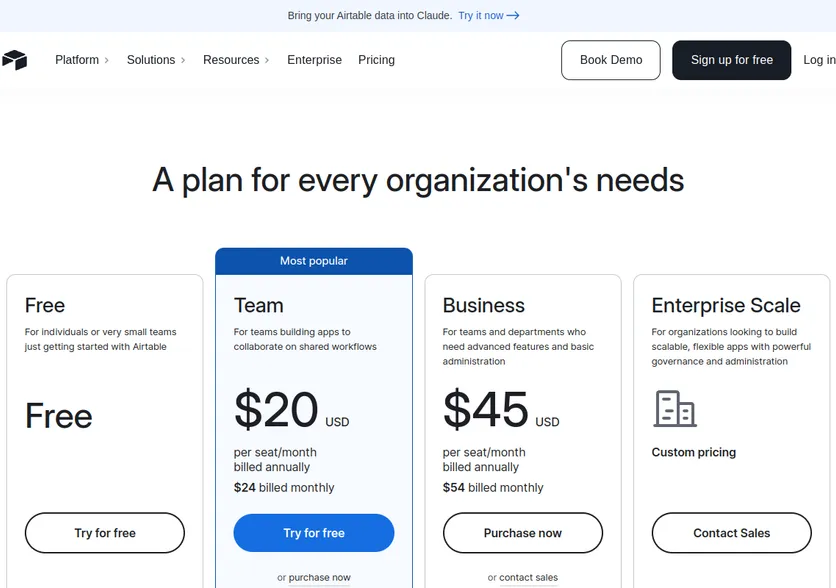
Paid tool Starting price: $20/seat/month · Team at twenty dollars a seat a month on annual billing, twenty-four dollars on monthly billing; Business at forty-five dollars a seat a month on annual billing
Free plan: Free plan for individuals and very small teams
When an enterprise project is really a database, Airtable treats it like one, with grids, kanban, calendar, timeline and gallery views over the same records, plus interfaces that give each team its own dashboard. Automations and sync connect bases across departments, and the Business plan adds advanced permissions and audit history. Google Workspace integrations embed Drive files and sync with Calendar, so the structured record and the documents stay together.
What we like
- Database power with many view types
- Interfaces give each team its own dashboard
- Strong automations between bases
Watch out for
- Highest starting price in this comparison
- Needs a data-minded administrator
How to try it
- Design one base per program area
- Build an interface for each stakeholder group
- Set up sync between department bases
Prices above were checked on each vendor’s own website on Nov 27, 2026 and can change — the vendor’s page is the final word. Vendor links are editorial: nobody paid to be listed or ranked here. Vendors who want a featured listing can see how it works on our Get listed page.
How an enterprise should roll out project software
Start with one department and a single template, not a company-wide rollout on day one. Pick the team that feels the pain most, build their boards and reports, and let the results sell the tool to the next department. Assign an administrator early, because permissions, templates and automations drift without an owner, and a messy workspace is the fastest way to kill adoption.
Agree on one status language before you invite everyone in, so a task marked done means the same thing in every department. Connect Google Drive and Calendar during setup, not later, because files and dates that live outside the tool will never be found again. Review the portfolio dashboard in the weekly leadership meeting, and treat overdue work the same way you treat a missed budget line.
Before you buy
- Confirm the plan includes audit logs and single sign-on before you sign a yearly contract
- Check the seat minimums, since some paid plans start at three seats and others have none
- Make sure reporting covers portfolios, not just single projects, for leadership reviews
- Ask whether data exports cleanly if you switch tools later
- Test the free plan with one department before rolling it out company-wide
Official websites
Official websites of the products reviewed above. Features and prices were checked against these sites when this guide was written, and they can change, so confirm on the vendor site before you buy.
Frequently asked questions
What is the cheapest enterprise project management software that works with Google Workspace?
Trello is the cheapest paid option at five dollars a user a month on annual billing, and ClickUp follows at nine dollars a user a month with far more features included. Asana starts at ten dollars ninety-nine cents a user a month and adds the portfolio reporting that enterprises need. The cheapest price is not always the best deal, because reporting and admin controls matter more once hundreds of people use the tool.
Which project management tool has the best Google Workspace integration?
Asana, Monday.com and Smartsheet all integrate deeply with Google Drive, Gmail and Calendar, attaching files and syncing dates without manual work. Asana's integration is the most mature, with Drive attachments on tasks and Calendar sync for deadlines. Trello's Drive Power-Up and ClickUp's Drive integration are solid too, but the enterprise leaders here are Asana and Smartsheet for teams that live in Google Workspace.
Do enterprise project tools require annual billing?
Wrike bills annually only on its paid plans, while Asana, Monday.com, Smartsheet, ClickUp, Trello and Airtable all offer monthly billing at a higher rate. Annual billing usually saves ten to twenty percent, so it is worth taking once the tool is proven. Jira sells annual plans in user tiers rather than per user, which is a different model to check before you commit.
What admin controls should an enterprise check before buying?
Check for single sign-on, SAML, audit logs, admin controls over guests and permissions, and data export. Asana, Smartsheet and Wrike cover these on their business and enterprise tiers, while Trello reserves single sign-on for its Enterprise plan. If your security team reviews every vendor, ask for the audit log and permission model in the trial, because a tool that fails review wastes the whole rollout.
Can a free plan work for an enterprise team?
Free plans help a small team test a tool, but none of them cover enterprise needs: Asana's free plan caps at two users, Monday.com at two seats, and Smartsheet has no free plan at all. Trello and ClickUp have the most generous free plans, but reporting, admin controls and single sign-on all need a paid tier. Budget for at least the Starter or Standard plan per user.
Compare the eight tools above, then start with a free plan or trial in one department before you roll project software out to the whole enterprise.
Browse Business Tools tools