On this page
An ecommerce brand runs on IT that never sleeps: the storefront, the payment flow, the support inbox and the warehouse computers all have to work at 2 a.m. as well as at 2 p.m. A single outage costs orders, and a slow support reply costs customers. NinjaOne leads this list because its published range starts at $3.75 a device a month and falls to $1.50 at scale, and the other eight tools are judged on the same practical test: how well they keep a store selling and a support team answering.
How we researched this
We checked every price on the vendor pricing page on November 28, 2026, and only included tools with a published US dollar list price and a free trial or free plan. The big names in this category, including Datto, Kaseya and ConnectWise, publish no prices, so they are not in this list. Prices change, so confirm the current figure on the vendor site before you buy.
Compare the tools
| Name | Best for | Starting price | Free plan | |
|---|---|---|---|---|
 Atera | Ecommerce brands that want one console for office and support computers | $129/technician/month | 30-day free trial | Visit |
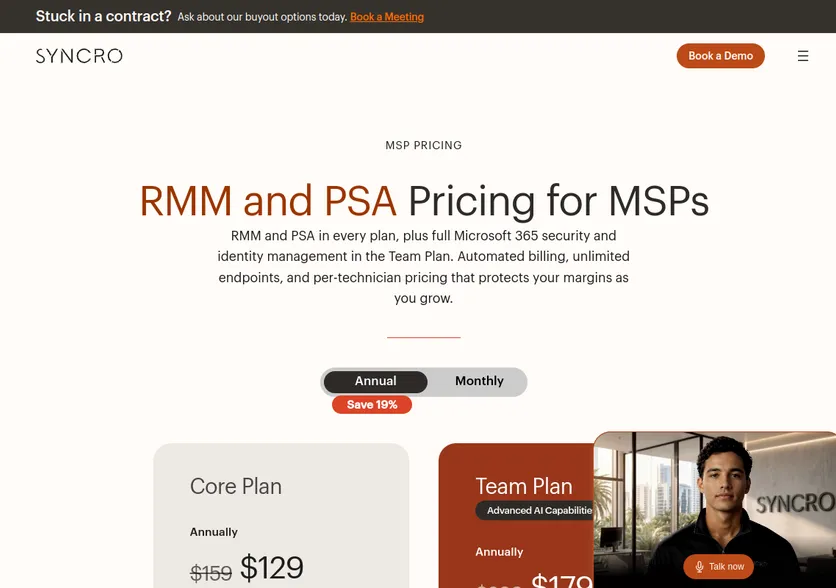
 Syncro | Ecommerce brands that bill for IT work | $129/user/month | Free trial | Visit |
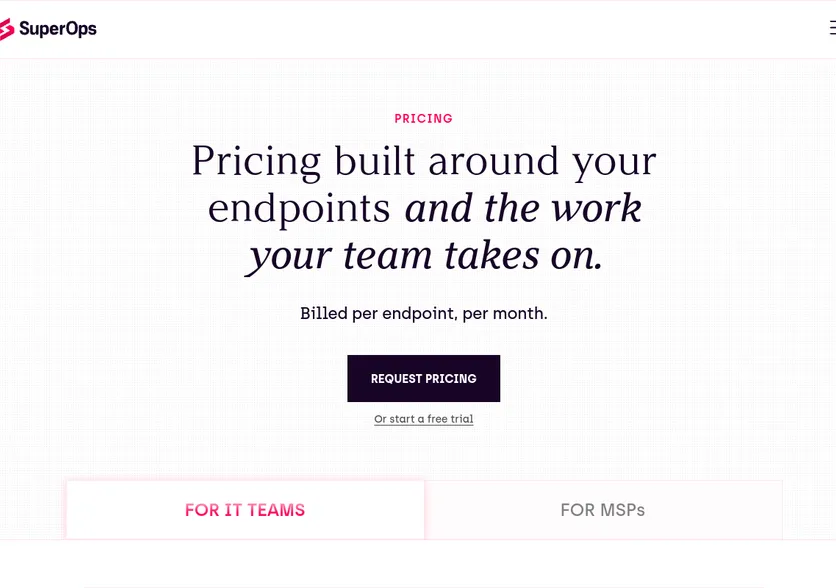
 SuperOps | Ecommerce brands that want per-technician pricing with a low entry | $99/technician/month | Free trial | Visit |
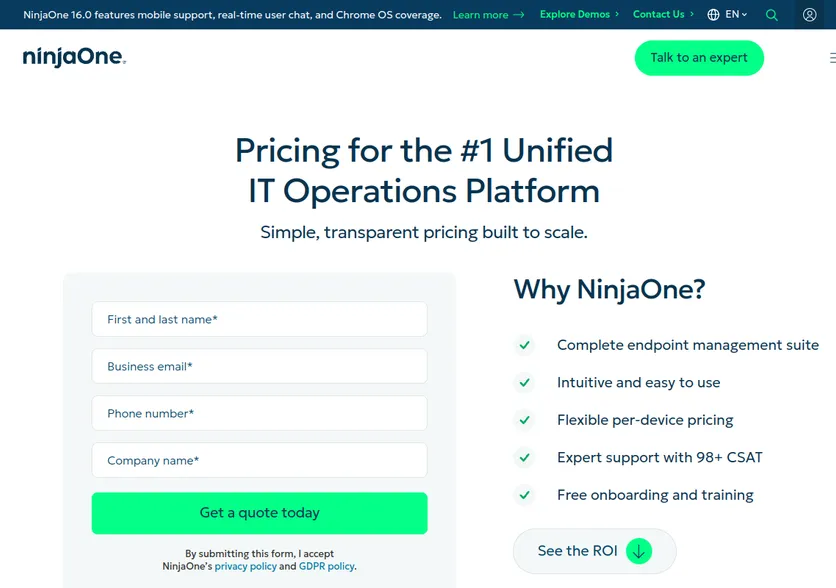
 NinjaOne | Ecommerce brands that want per-device pricing that falls with scale | $3.75/device/month | 14-day free trial | Visit |
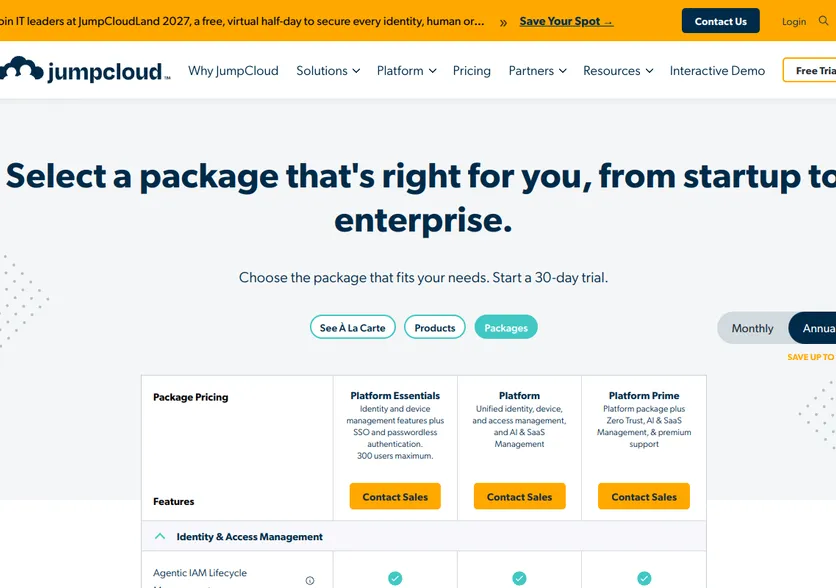
 JumpCloud | Ecommerce brands that want identity and devices in one place | $9/user/month | Free for up to 10 users and 10 devices; 30-day free trial of the full platform | Visit |
 Hexnode | Ecommerce brands that manage phones, tablets and laptops together | $2.20/device/month | 14-day free trial | Visit |
 Freshservice | Ecommerce brands that need IT support tickets handled properly | $19/agent/month | Free trial | Visit |
 Zendesk | Ecommerce brands that need customer support plus IT service | $19/agent/month | Free trial | Visit |
 Zoho Desk | Ecommerce brands that want low-cost support with a free start | $14/agent/month | Free plan for up to 3 users | Visit |
The IT management software for ecommerce brands, compared
1. Atera
Best for: Ecommerce brands that want one console for office and support computers
Paid tool Starting price: $129/technician/month · MSP Pro $129 per technician a month billed annually, or $139 on monthly billing; Growth $159 a month; Power $209; IT Dept Professional $149; unlimited endpoints on every plan
Free plan: 30-day free trial
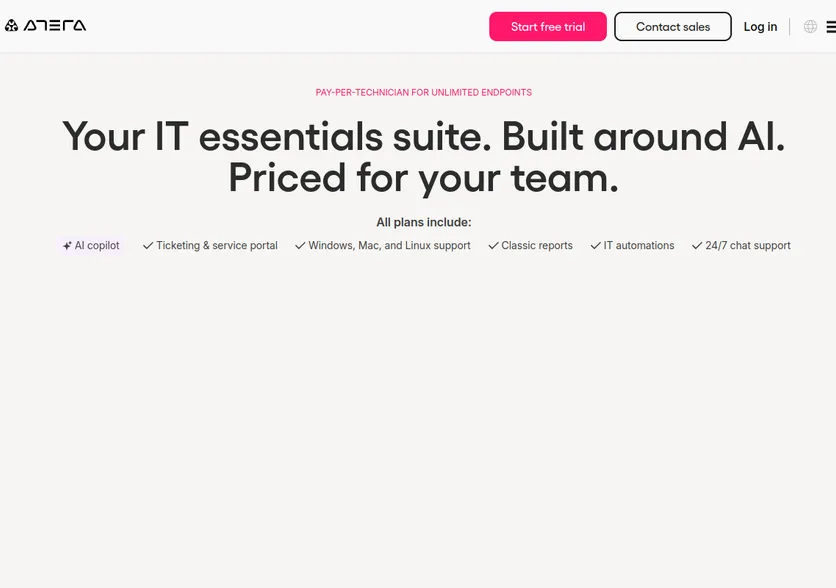
Atera covers an ecommerce brand's office computers and support team for $129 per technician a month billed annually, with unlimited endpoints and ticketing in one console. The warehouse laptops, the office PCs and the support team's machines all show in one place, and remote access fixes most issues without a visit. The AI Copilot is included free on all plans, which helps a small team triage tickets faster.
What we like
- Unlimited endpoints on every plan
- Monitoring, patching and ticketing in one console
- AI Copilot included free on all plans
Watch out for
- Per-technician pricing suits small teams, not large ones
- The Growth plan price varies between sources, so confirm it
How to try it
- Install the Atera agent on every office and warehouse computer
- Set up monitoring alerts for the machines that stop work when they fail
- Fix issues remotely and track tickets to completion
2. Syncro
Best for: Ecommerce brands that bill for IT work
Paid tool Starting price: $129/user/month · MSP Core $129 per user a month billed annually, or $159 on monthly billing; Team $179; IT Teams $179; unlimited endpoints on every plan
Free plan: Free trial
Syncro pairs remote monitoring with ticketing and billing for $129 per user a month billed annually, which suits an ecommerce brand that bills for IT work. Unlimited endpoints come on every plan, so the bill follows the team size, not the device count, and the customer portal keeps the brand's own clients informed. The billing system suits a brand that resells IT services to its partners.
What we like
- RMM, ticketing and billing share one system
- Unlimited endpoints on every plan
- Customer portal keeps clients informed
Watch out for
- AI features become usage-based after January 2027
- Billing features suit MSPs more than single brands
How to try it
- Install the Syncro agent on every office and warehouse computer
- Set up monitoring alerts and ticket rules for common failures
- Invoice IT work through the built-in billing system
3. SuperOps
Best for: Ecommerce brands that want per-technician pricing with a low entry
Paid tool Starting price: $99/technician/month · MSP RMM only $99 per technician a month billed annually, or $109 on monthly billing; Pro $129; Super $159; IT teams Prime from $1.50 per endpoint a month
Free plan: Free trial
SuperOps covers an ecommerce brand's devices for $99 per technician a month billed annually on the RMM-only plan, with monitoring, patching and remote access included. Each licence covers 150 endpoints, which is more than a brand's office and warehouse will ever need, and Pro at $129 adds PSA ticketing. The per-technician model suits a brand with one or two IT people and a growing device fleet.
What we like
- Lowest per-technician entry at $99 a month
- Each licence covers 150 endpoints
- Modern interface that is quick to learn
Watch out for
- RMM only on the entry plan, ticketing costs more
- Per-endpoint pricing for IT teams works differently
How to try it
- Install the SuperOps agent on every office and warehouse computer
- Set up patch policies for the brand's machines
- Upgrade to Pro when the team needs PSA ticketing
4. NinjaOne
Best for: Ecommerce brands that want per-device pricing that falls with scale
Paid tool Starting price: $3.75/device/month · Published range only: $3.75 per device a month at 50 or fewer endpoints, down to $1.50 at 10,000; tiers between are not published, and the exact rate is by quote; varies by region and products; commercial non-FedRAMP instance only
Free plan: 14-day free trial
This NinjaOne plan starts at under $4 per device a month for 50 or fewer endpoints, and the published rate falls to a dollar fifty a device at 10,000 endpoints. Monitoring, patching, remote access and ticketing share one console, so the warehouse laptops and the support team's machines are managed together. The exact rate between those two points is by quote, so a brand should ask for its rate at its real device count.
What we like
- Per-device pricing falls with scale
- Monitoring, patching and ticketing share one console
- Low entry rate for small device fleets
Watch out for
- Mid-tier rates are not published, only the range
- Exact rate is by quote, so confirm it before buying
How to try it
- Install the NinjaOne agent on every office and warehouse device
- Set up patch policies and monitoring alerts for the fleet
- Ask for a quote at the brand's real device count before committing
5. JumpCloud
Best for: Ecommerce brands that want identity and devices in one place
Paid tool Starting price: $9/user/month · Device Management $9 per user a month billed annually, or $11 on monthly billing; SSO $11; Device Identity Management $13; a la carte products $3 to $5 per user a month; free for up to 10 users and 10 devices
Free plan: Free for up to 10 users and 10 devices; 30-day free trial of the full platform
This JumpCloud plan costs $9 per user a month billed annually for Device Management, and it pairs device control with identity, single sign-on and directory services. A brand can onboard a new support hire with one account that unlocks the laptop, the apps and the Wi-Fi. The free tier covers 10 users and 10 devices, which lets a small brand start without paying.
What we like
- Identity and device management share one system
- Single sign-on covers the brand's apps
- Free tier covers 10 users and 10 devices
Watch out for
- Full platform tiers are quote-based
- A la carte pricing can add up across products
How to try it
- Set up the JumpCloud directory and connect the brand's apps
- Enroll devices and assign them to users
- Onboard new hires with one account for laptop, apps and Wi-Fi
6. Hexnode
Best for: Ecommerce brands that manage phones, tablets and laptops together
Paid tool Starting price: $2.20/device/month · Pro $2.20 per device a month billed annually, or $2.40 on monthly billing; Enterprise $3.20; Ultimate $4.70; Ultra is by quote; 15-device minimum on cloud plans, so the smallest Pro contract is $396 a year
Free plan: 14-day free trial
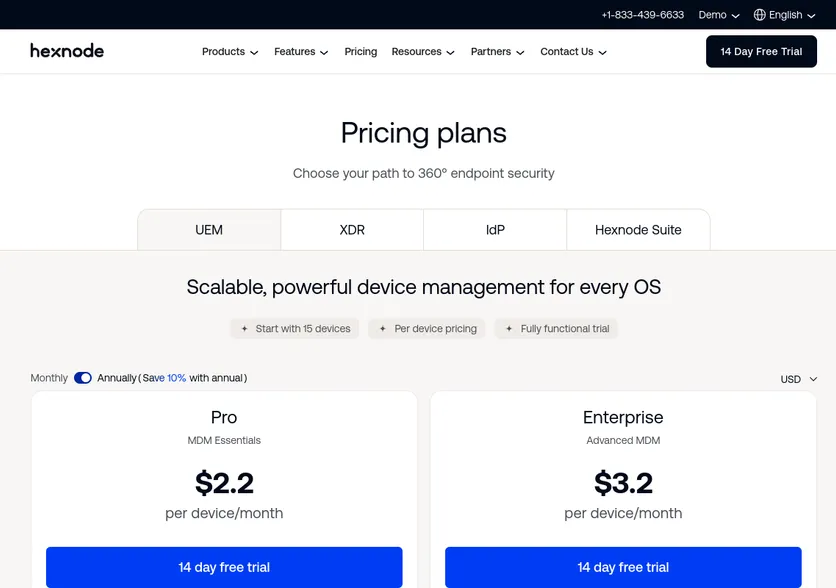
This Hexnode plan costs $2.20 per device a month billed annually on Pro, and it manages phones, tablets and laptops from one console. A brand can lock a lost warehouse tablet, push an app to the support team's phones, and wipe a leaver's device in minutes. The 15-device minimum puts the smallest Pro contract at $396 a year, and a 14-day trial covers the whole setup.
What we like
- Phones, tablets and laptops in one console
- Low per-device rate at $2.20 a month
- Remote lock and wipe for lost devices
Watch out for
- 15-device minimum on cloud plans
- Higher tiers are needed for deeper automation
How to try it
- Enroll the brand's phones, tablets and laptops in Hexnode
- Set up app deployment and device policies
- Lock or wipe devices remotely when one is lost
7. Freshservice
Best for: Ecommerce brands that need IT support tickets handled properly
Paid tool Starting price: $19/agent/month · Starter $19 per agent a month billed annually, or $29 on monthly billing; Growth $49; Pro $99; Enterprise by quote
Free plan: Free trial
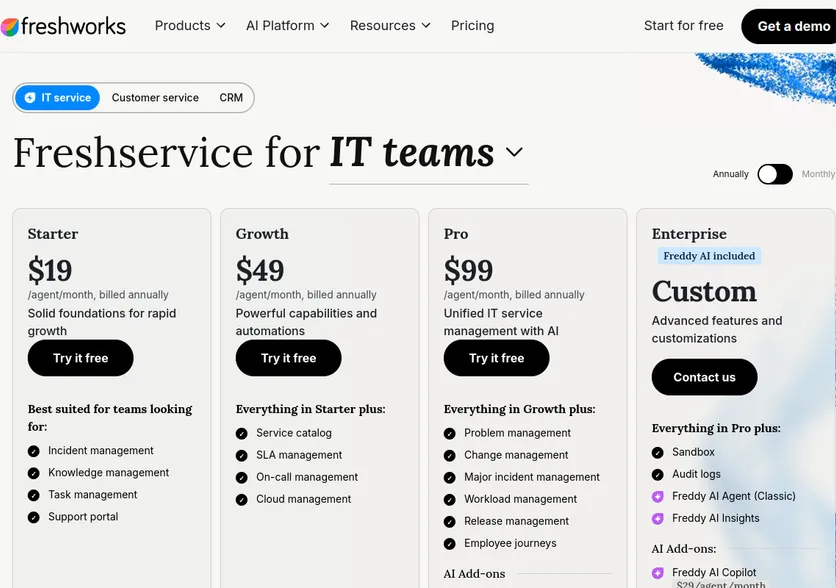
Freshservice runs an ecommerce brand's IT support for $19 per agent a month billed annually, with ticketing and asset discovery in one system. A broken warehouse laptop becomes a tracked ticket with the device record attached, so the fix is documented and the history is kept. Growth at $49 adds the automation a busier support team needs.
What we like
- Ticketing and asset discovery share one system
- Incidents link to the exact device involved
- Low entry price at $19 an agent a month
Watch out for
- Asset management is an add-on cost on some plans
- Deeper automation needs the Growth plan
How to try it
- Set up ticket channels for staff to report IT issues
- Link tickets to the affected device from the asset register
- Track repeat failures per machine to spot hardware to replace
8. Zendesk
Best for: Ecommerce brands that need customer support plus IT service
Paid tool Starting price: $19/agent/month · Support Team $19 per agent a month billed annually, or $25 on monthly billing, ticketing only; Suite Team $55; Suite Professional $115; the Employee Service Suite for IT starts at $29; Copilot add-on $50 per agent a month
Free plan: Free trial
This Zendesk plan costs $19 per agent a month billed annually for Support Team, and it is the ticketing system an ecommerce brand's customers already know. The same inbox can handle shopper questions and IT tickets, so one team answers both without switching tools. Suite Team at $55 adds the omnichannel features a busy storefront needs, and the Employee Service Suite covers IT service from $29.
What we like
- One inbox for shoppers and IT tickets
- Widely used ticketing system with a large integration library
- Suite Team adds omnichannel support for busy storefronts
Watch out for
- Support Team is ticketing only, omnichannel needs Suite
- Copilot add-on costs $50 an agent a month
How to try it
- Set up the support inbox for shopper questions and IT tickets
- Connect email, chat and social channels to one queue
- Add the Employee Service Suite when the team needs IT service
9. Zoho Desk
Best for: Ecommerce brands that want low-cost support with a free start
Paid tool Starting price: $14/agent/month · Standard $14 per agent a month billed annually, or $20 on monthly billing; Express $7; Professional $23; Enterprise $40; free for up to 3 users; Zoho geo-serves its pricing page, so the USD figures may show in another currency from some locations
Free plan: Free plan for up to 3 users
This Zoho Desk plan costs $14 per agent a month billed annually on Standard, and it is the cheapest support desk in this list. Ticketing, a knowledge base and a customer portal come on the entry plan, and the free plan covers 3 users, which lets a small brand start without paying. Professional at $23 adds the automation and reporting a growing support team needs.
What we like
- Cheapest support desk in this list at $14 an agent a month
- Free plan covers 3 users
- Knowledge base and customer portal on the entry plan
Watch out for
- Pricing page shows local currency from some locations
- Deeper automation needs the Professional plan
How to try it
- Set up the support inbox and customer portal
- Add a knowledge base for the questions shoppers ask most
- Upgrade to Professional when the team needs automation
Prices above were checked on each vendor’s own website on Nov 28, 2026 and can change — the vendor’s page is the final word. Vendor links are editorial: nobody paid to be listed or ranked here. Vendors who want a featured listing can see how it works on our Get listed page.
How an ecommerce brand should run its IT
Start with the storefront. The website, the payment flow and the support inbox are the three systems that cost orders when they fail, so monitor those first and keep the support team staffed around the clock. Give every new hire one identity that unlocks the laptop, the apps and the Wi-Fi, because a new support agent who waits a day for access costs a day of tickets. Keep the warehouse computers on the same monitoring as the office, since a dead picking station stops orders as surely as a dead website. Finally, run a trial on one real outage, from alert to fixed, before you commit to a year.
Before you buy
- Check that monitoring covers warehouse computers and support devices, not only office PCs
- Confirm whether the price is per device, per user or per agent before you compare
- Ask how identity and device management work together for new hires
- Count the cost at your real device and agent count, including free tiers
- Run a trial on one real support ticket and one real outage before you commit
Official websites
Official websites of the products reviewed above. Features and prices were checked against these sites when this guide was written, and they can change, so confirm on the vendor site before you buy.
Frequently asked questions
What is IT management software for ecommerce brands?
It is software that monitors, patches and fixes the computers an online brand depends on, from warehouse laptops to the support team's machines, and runs the support inbox that answers shoppers. The tools in this list cover remote monitoring, identity, device management and ticketing, from free for small teams to $129 a technician a month. A brand needs it because a failed computer or a slow support reply costs orders.
How much does IT management software cost for an ecommerce brand?
The tools in this list start free: JumpCloud is free for 10 users and 10 devices, and Zoho Desk is free. Paid plans run from $2.20 a device a month on Hexnode and $3.75 on NinjaOne, to $9 a user a month on JumpCloud, $14 an agent a month on Zoho Desk, and $99 to $129 a technician a month on SuperOps, Atera and Syncro. A brand with 20 devices and 5 agents pays $100 to $200 a month.
Which tool is best for an ecommerce brand?
NinjaOne is the best overall pick, since per-device pricing starts at $3.75 a month and falls to $1.50 at scale, with monitoring, patching and ticketing in one console. JumpCloud is the best pick for identity and devices together, with single sign-on and directory services for $9 a user a month. Zoho Desk is the best budget support pick at $14 an agent a month with a free plan for 3 users.
Can these tools manage the support inbox as well as IT?
Yes, Zendesk and Zoho Desk are support desks too. Zendesk Support Team starts at $19 an agent a month and handles shopper questions and IT tickets in one inbox, while Zoho Desk Standard starts at $14. Freshservice at $19 is the IT-first option, with ticketing and asset discovery for internal support. A brand that wants one inbox for shoppers and IT should pick a support desk, and a brand that wants IT only should pick an RMM tool.
How do I onboard a new support hire quickly?
Use an identity tool like JumpCloud, where one account unlocks the laptop, the apps and the Wi-Fi. Create the user, assign the device and the app access, and the hire is working the same day. Hexnode and NinjaOne manage the device itself, pushing apps and locking lost hardware, while Zendesk and Zoho Desk give the hire the support inbox. The practical test is the trial: onboard one real hire and time how long it takes.
Compare the nine tools above, then start with a free trial on the tool that matches how your brand already runs support and IT before you pay for a full year.
Browse Business Tools tools