On this page
A marketing team juggles five campaigns at once, and the work slips when nobody can see what is writing, what is in review and what is already late. A kanban board makes that visible. monday.com leads the list because its color-coded boards turn a content calendar into one picture the whole team reads for nine dollars a seat a month, and the other seven tools are judged on the same test: how clearly a real campaign shows up on the board.
How we researched this
We checked every price on the vendor pricing page on November 28, 2026, and only included tools with a published US dollar list price. Smartsheet was left out of this list to keep the focus on campaign boards, and every tool here publishes a list price. Prices change, so confirm the current figure on the vendor site before you buy.
Compare the tools
| Name | Best for | Starting price | Free plan | |
|---|---|---|---|---|
 monday.com | Marketing teams that want every campaign visible on one board | $9/seat/month | Free plan for up to 2 seats | Visit |
 Asana | Marketing teams that want campaign plans with timelines and approvals | $10.99/user/month | Free plan for up to 10 users | Visit |
 Trello | Marketing teams that want the simplest campaign board | $5/user/month | Free plan for up to 10 collaborators | Visit |
 ClickUp | Marketing teams that want boards, docs and chat in one workspace | $9/user/month | Free plan with unlimited tasks | Visit |
 Jira | Marketing teams that plan campaigns in sprints | $9.70/user/month | Free plan for up to 10 users | Visit |
 Airtable | Marketing teams that want the campaign calendar backed by a database | $20/seat/month | Free plan with up to 5 editors | Visit |
 Notion | Marketing teams that want briefs, brand docs and boards in one place | $10/user/month | Free plan for individuals and small teams | Visit |
 Wrike | Marketing departments that run intake forms and approvals | $10/user/month | Free plan for up to 5 users | Visit |
The kanban software for marketing teams, compared
1. monday.com
Best for: Marketing teams that want every campaign visible on one board
Paid tool Starting price: $9/seat/month · Nine dollars per seat per month billed annually on the Basic plan (twelve dollars monthly), with a three-seat minimum; Standard is twelve dollars, Pro is nineteen dollars per seat per month, and Basic includes no automations
Free plan: Free plan for up to 2 seats
For a marketing team, this monday.com Basic plan turns the content calendar into a board where every asset moves from brief to published with an owner attached. Color-coded status columns show what is writing, what is in review and what is live, and the whole team reads the same picture. Basic costs nine dollars per seat a month billed annually, with a three-seat minimum, and Standard at twelve dollars adds timelines and automations.

What we like
- Color-coded boards the whole team can read at a glance
- Status, owner and deadline visible in one row
- Unlimited free viewers on paid plans
Watch out for
- Basic includes zero automations
- A three-seat minimum applies to paid plans
How to try it
- Build a board per campaign with status columns for each stage
- Attach the asset, the brief and the deadline to each card
- Move cards across the board as work passes review
2. Asana
Best for: Marketing teams that want campaign plans with timelines and approvals
Paid tool Starting price: $10.99/user/month · Ten dollars and ninety-nine cents per user per month billed annually on the Starter plan; Advanced is twenty-four dollars and ninety-nine cents per user per month, and the free plan covers up to ten users
Free plan: Free plan for up to 10 users
For marketers juggling five campaigns at once, this Asana Starter plan turns each brief into a task with an owner, a due date and an approval step. Timelines show the whole campaign at a glance, boards carry the daily work, and portfolios roll every campaign into one view for the manager. Starter costs ten dollars and ninety-nine cents per user a month billed annually, and Advanced at twenty-four dollars and ninety-nine cents adds goals and workload views.

What we like
- Timelines and approvals suit campaign work
- Portfolios roll every campaign into one view
- Boards, lists and timelines in one plan
Watch out for
- Goals and workload views need the Advanced tier
- No native time tracking on Starter
How to try it
- Turn each campaign brief into a project with tasks and owners
- View the campaign on a timeline with dependencies between steps
- Roll every campaign into a portfolio for the marketing manager
3. Trello
Best for: Marketing teams that want the simplest campaign board
Paid tool Starting price: $5/user/month · Five dollars per user per month billed annually on the Standard plan (six dollars monthly); Premium is ten dollars per user per month billed annually, and the free plan covers up to ten collaborators
Free plan: Free plan for up to 10 collaborators
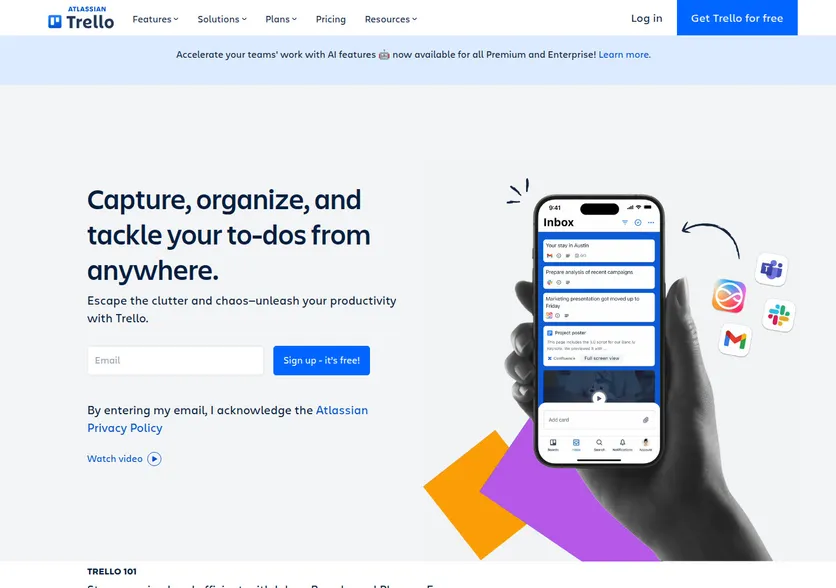
For a marketing team that lives in campaigns and deadlines, this Trello Standard plan turns each campaign into a board with lists for idea, writing, review and published. Cards carry the brief, the asset and the due date, and checklists break each asset into steps. Standard costs five dollars per user a month billed annually and adds unlimited boards, while Premium at ten dollars adds calendar, timeline and dashboard views.
What we like
- The simplest board here, learned in minutes
- Cards and checklists suit step-by-step asset work
- Unlimited boards on the Standard plan
Watch out for
- No timeline or dashboard views on Standard
- Automation limits are low on the entry tier
How to try it
- Create a board per campaign with lists for each stage
- Add a card per asset with the brief and due date attached
- Move cards across the board as work passes review
4. ClickUp
Best for: Marketing teams that want boards, docs and chat in one workspace
Paid tool Starting price: $9/user/month · Nine dollars per user per month billed annually on the Core plan, with a regular price of twelve dollars shown on the vendor page; Business is seventeen dollars per user per month billed annually. The older seven-dollar Unlimited figure is stale after the November 2026 plan restructure
Free plan: Free plan with unlimited tasks
For a marketing team that hates paying for five apps, this ClickUp Core plan tries to replace the docs, the chat and the task list in one workspace for nine dollars per user a month billed annually. Campaign boards carry the work, docs hold the briefs and brand guides, and a thousand automations a month move cards without manual effort. Business at seventeen dollars adds dashboards and workload views for larger teams.

What we like
- Boards, docs and chat in one cheap workspace
- A thousand automations a month on Core
- Unlimited storage and integrations included
Watch out for
- The page shows a twelve-dollar regular price behind the nine-dollar rate
- Dashboards and workload views need Business
How to try it
- Build the campaign board with columns for each stage
- Attach briefs and brand docs to the board so writers find them
- Set automations to move cards when a review completes
5. Jira
Best for: Marketing teams that plan campaigns in sprints
Paid tool Starting price: $9.70/user/month · Nine dollars and seventy cents per user per month on monthly billing for the first hundred users, after Atlassian raised cloud list prices on 13 October 2026; annual billing is sold in user tiers, nine hundred and fifty dollars a year for up to ten users
Free plan: Free plan for up to 10 users
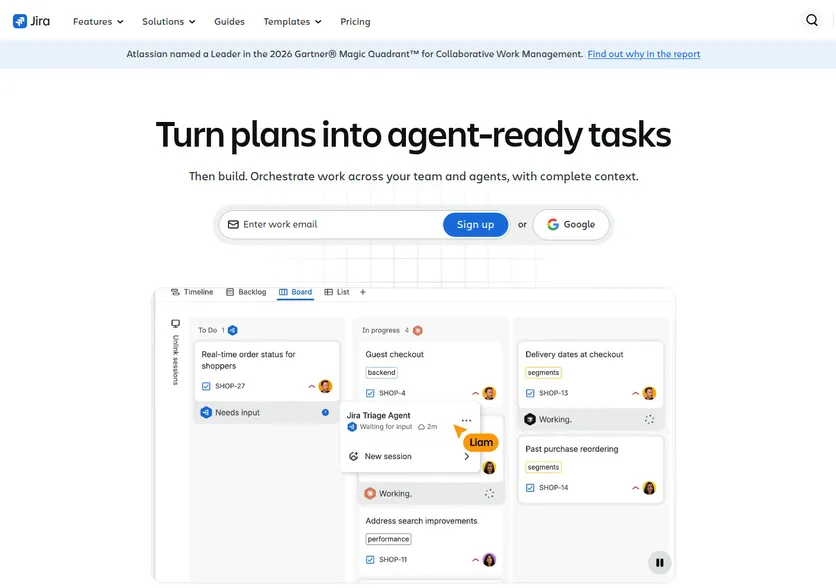
For a marketing team that plans campaigns in sprints, this Jira Standard plan turns each launch into a backlog with owners, due dates and a weekly cadence. Boards carry the daily work, backlogs hold the ideas, and sprint reports show what shipped. Standard costs nine dollars and seventy cents per user a month for the first hundred users, and annual billing is sold in user tiers.
What we like
- Sprint cadence suits weekly campaign planning
- Backlogs and boards in one system
- Automation rules move cards without manual work
Watch out for
- Per-user pricing is banded, so the bill depends on team size
- The interface can feel heavy for a simple campaign board
How to try it
- Build the campaign backlog and plan the sprint on the board
- Move cards across the board as assets pass review
- Review velocity and burndown at the end of each sprint
6. Airtable
Best for: Marketing teams that want the campaign calendar backed by a database
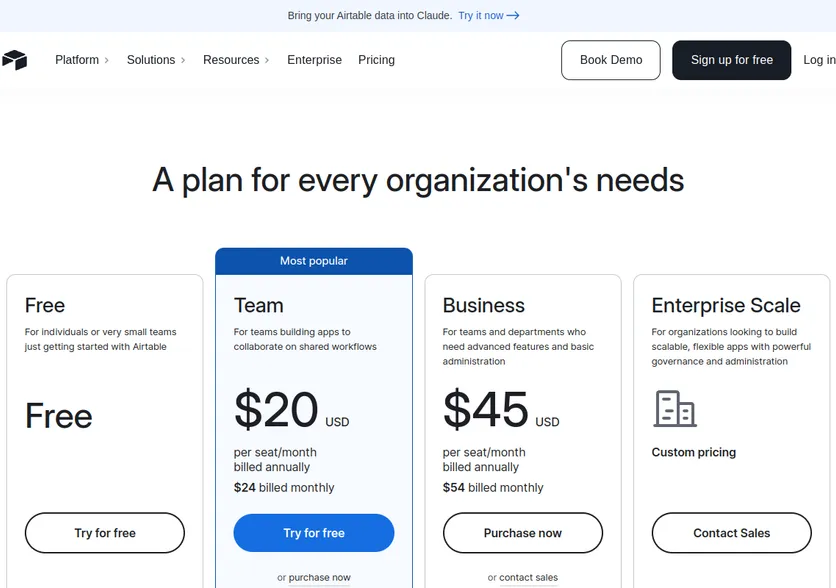
Paid tool Starting price: $20/seat/month · Twenty dollars per seat per month billed annually on the Team plan (twenty-four dollars monthly); Business is forty-five dollars per seat per month billed annually. Bending Spoons completed its acquisition of Airtable in September 2026 with no price change announced
Free plan: Free plan with up to 5 editors
Airtable Team turns a marketing calendar into a database-backed board, and this Airtable plan costs twenty dollars per seat a month billed annually. Each campaign row carries its budget, owner, asset links and status, and the same data shows as a kanban board, a calendar or a grid. Business at forty-five dollars adds more records and automation runs, and Bending Spoons completed its acquisition of Airtable in September 2026 with no price change announced.
What we like
- One table powers board, calendar and grid views
- Every campaign row carries budget, owner and assets
- Fifty thousand records per base on Team
Watch out for
- The priciest tool on this list per seat
- Team bills commenters as paid seats too
How to try it
- Build the campaign table with fields for status, owner and channel
- View the same data as a kanban board for daily work
- Filter and group the board by campaign, owner or deadline
7. Notion
Best for: Marketing teams that want briefs, brand docs and boards in one place
Paid tool Starting price: $10/user/month · Ten dollars per user per month billed annually on the Plus plan (twelve dollars monthly); Business is twenty dollars per user per month billed annually
Free plan: Free plan for individuals and small teams
For a marketing team, this Notion Plus plan turns the content calendar, the brand docs and the campaign board into one workspace for ten dollars per user a month billed annually. Pages become briefs, databases become trackers, and the AI can draft, summarize and answer questions from the workspace. Business at twenty dollars adds admin controls and deeper permissions for larger teams.

What we like
- Docs, wikis and campaign boards in one workspace
- Databases turn pages into real trackers
- AI drafting and summaries built in
Watch out for
- It is a workspace, not a dedicated campaign tool
- Large databases can get slow
How to try it
- Write the campaign brief as a Notion page with tasks attached
- Track the campaign on a board view of the same database
- Let Notion AI summarize the brief for new joiners
8. Wrike
Best for: Marketing departments that run intake forms and approvals
Paid tool Starting price: $10/user/month · Ten dollars per user per month billed annually on the Team plan, for two to fifteen users; Business is twenty-five dollars per user per month billed annually, and seats are sold in blocks of five
Free plan: Free plan for up to 5 users
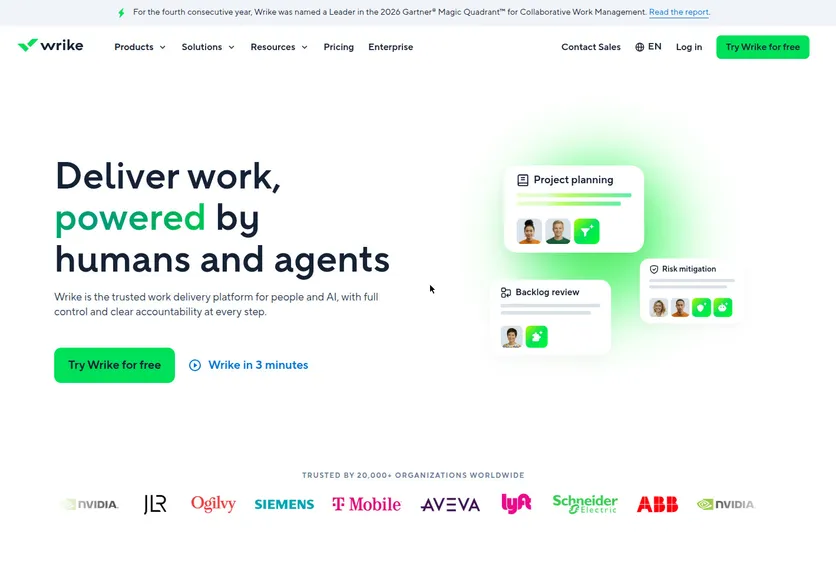
For a marketing department that runs intake forms and approvals, this Wrike Team plan turns every request into a tracked task with a deadline for ten dollars per user a month billed annually. Briefs arrive through a form, get approved, and land on the board with an owner, while proofing keeps feedback on the asset itself. Team covers two to fifteen users, and Business at twenty-five dollars adds resource planning and time tracking.
What we like
- Intake forms turn requests into tracked work
- Proofing keeps feedback on the asset
- Gantt charts and dashboards on the Team plan
Watch out for
- Team caps at fifteen users
- Seats are sold in blocks of five, so a team of six buys ten
How to try it
- Set up intake forms for campaign and asset requests
- Approve requests and send them to the board with an owner
- Use proofing to keep feedback on the asset itself
Prices above were checked on each vendor’s own website on Nov 28, 2026 and can change — the vendor’s page is the final word. Vendor links are editorial: nobody paid to be listed or ranked here. Vendors who want a featured listing can see how it works on our Get listed page.
How a marketing team should run campaigns on kanban
Start with one board per campaign, not one board for everything. Columns should match the real stages of the work: brief, writing, review, published. Put the asset, the brief and the deadline on the card itself, so nobody hunts through chat for the file. Then review the board at the start of every week and move the stuck cards first, because a campaign that sits in review for a week is a deadline that will slip quietly.
Before you buy
- Check whether the price is per user or per seat, and whether free viewers count toward the bill
- Confirm that timelines, calendars and automations are in the tier you buy, not only on the top plan
- Ask how the board handles approvals, because marketing work passes through several hands
- Test the board with one real campaign, from brief to publish, before you commit
- Count the cost of any AI add-on separately, because it is rarely in the headline price
Official websites
Official websites of the products reviewed above. Features and prices were checked against these sites when this guide was written, and they can change, so confirm on the vendor site before you buy.
Frequently asked questions
What is kanban software for marketing teams?
Kanban software for a marketing team is a visual board that shows every campaign, asset and deadline at a glance. Cards move from brief to writing to review to published, and the board shows what is stuck before a deadline slips. The tools in this list add timelines, calendars, approvals and databases around that board. A team uses them to stop tracking campaigns in chat threads and spreadsheets.
Which kanban tool is cheapest for a marketing team?
Trello Standard costs five dollars per user a month billed annually, the cheapest board here. monday.com Basic, ClickUp Core and Jira Standard are nine dollars or nine dollars seventy, and Notion Plus and Wrike Team are ten dollars. Airtable Team is the priciest at twenty dollars per seat a month, but it is really a database with a board view rather than a plain board.
What does Airtable cost for marketing teams?
Airtable Team costs twenty dollars per seat a month billed annually, and it turns the campaign calendar into a database: every row carries its budget, owner, asset links and status, and the same data shows as a board, a calendar or a grid. It is the right pick when the team needs to filter and report on campaigns, not only move cards across a board.
Asana or monday.com for marketing campaigns?
Asana Starter costs ten dollars and ninety-nine cents per user a month billed annually, with timelines, boards and portfolios that roll every campaign into one view. monday.com Basic is nine dollars a seat a month with color-coded boards the whole team can read. Pick Asana for planned campaigns with dependencies and approvals, and monday.com for a board everyone opens every day.
How should a marketing team choose kanban software?
Run one real campaign through the tool during the trial, from brief to published, and watch where the work stalls. Check that approvals and timelines are in the tier you can afford, because marketing work passes through several hands and the entry tier sometimes skips them. And count the seats honestly, including freelancers and approvers, since per-seat pricing is where the bill grows.
Compare the eight tools above, then start with a free trial on the tool that matches how your team already runs campaigns before you pay for a full year.
Browse Productivity Tools tools