On this page
A private equity firm buys software that must track relationships, deals and diligence without leaking sensitive terms. The seven tools below cover the deal workflow from first contact to signed documents, and every price was checked on the vendor site. Pipedrive leads at fourteen dollars a user a month as the cheapest real pipeline for a small deal team. The rest are ranked on relationship intelligence, research depth and how the price grows with the team.
How we researched this
We checked every price on the vendor pricing page on November 28, 2026, and only included tools with a published US dollar list price. DealCloud, Dynamo, Juniper Square and Carta sell by quote, so they are not in this list, and Carta's paid tiers carry no published price at all. Prices change, so confirm the current figure on the vendor site before you buy.
Compare the tools
| Name | Best for | Starting price | Free plan | |
|---|---|---|---|---|
 Pipedrive | Small deal teams that want a visual pipeline at a low price | $14/user/month | 14-day free trial | Visit |
 Notion | Small deal teams that want a flexible shared workspace | $10/user/month | Free plan | Visit |
 Airtable | Teams that want a deal tracker built like a spreadsheet | $20/user/month | Free plan | Visit |
| Attio | Deal teams that want a modern CRM with automatic data capture | $35/user/month | Free plan | Visit |
 DocSend | Founders and deal teams that share decks with investors | $45/user/month | Free trial | Visit |
 Crunchbase | Deal teams that research funding rounds and investors | $49/month | Free plan | Visit |
 Affinity | Private capital firms that win deals through relationships | $2,000/user/year | Free demo | Visit |
The legal tech software for private equity firms, compared
1. Pipedrive
Best for: Small deal teams that want a visual pipeline at a low price
Paid tool Starting price: $14/user/month · Fourteen dollars per user a month billed annually on Lite, or twenty-four dollars billed monthly; Growth is thirty-nine dollars, Premium is fifty-nine dollars and Ultimate is seventy-nine dollars, all billed annually
Free plan: 14-day free trial
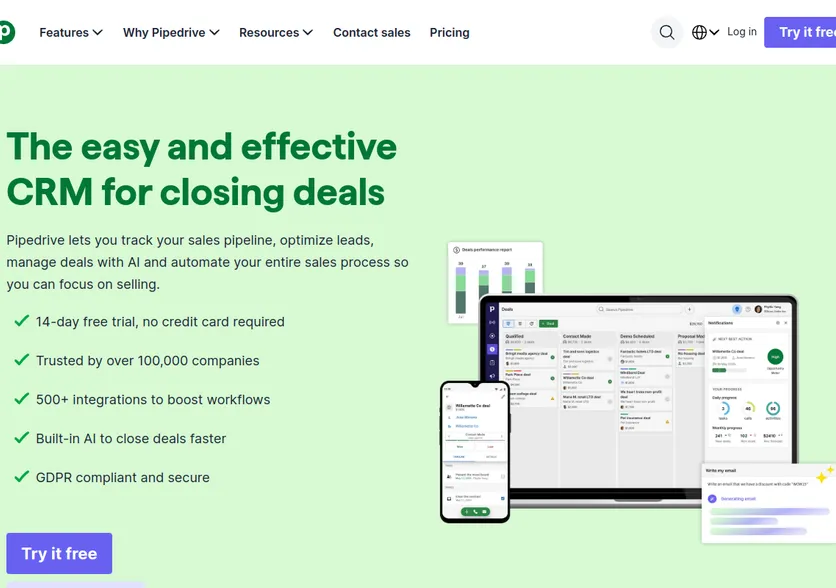
This Pipedrive plan costs fourteen dollars a user a month, and it gives a deal team a visual pipeline with activity tracking built in. Deals move across stages with every call and email logged, and automations chase the follow-ups. It is the cheapest real CRM pipeline here for a small firm that sells through stages.
What we like
- A visual pipeline that shows every deal at a glance
- Email sync and activity tracking on every plan
- Automations that move deals and send follow-ups
Watch out for
- Lead capture tools sit behind paid add-ons
- The Lite plan has no email sync or automations
How to try it
- Set up pipeline stages that match the deal process
- Add deals and log every call and email
- Automate follow-ups when a deal changes stage
2. Notion
Best for: Small deal teams that want a flexible shared workspace
Paid tool Starting price: $10/user/month · Ten dollars per user a month billed annually on Plus, or twelve dollars billed monthly; Business is twenty dollars a user a month billed annually
Free plan: Free plan
This Notion plan costs ten dollars a user a month, and it turns pages and databases into a deal tracker the whole firm can share. A private equity team can hold deals, diligence notes and committee views in one workspace, with templates to start fast. It is the cheapest way to run a shared deal list, though it has no fund reporting of its own.

What we like
- Flexible pages that hold deals, notes and diligence in one place
- Databases that turn a deal list into a live pipeline
- Templates that get a new fund tracker running in minutes
Watch out for
- No built-in deal or fund reporting
- Permissions and audit trails need the higher plans
How to try it
- Create a database for deals with stage and owner fields
- Link diligence notes and documents to each deal
- Share a filtered view with the investment committee
3. Airtable
Best for: Teams that want a deal tracker built like a spreadsheet
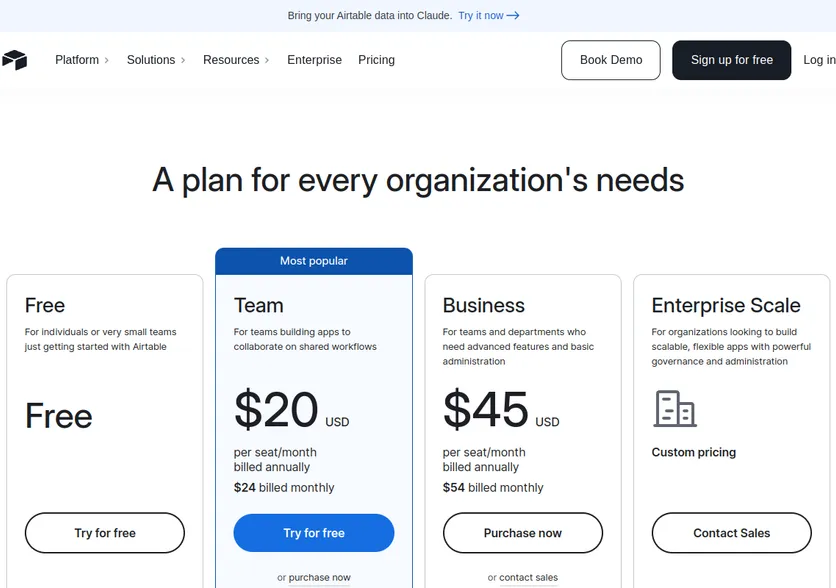
Paid tool Starting price: $20/user/month · Twenty dollars per user a month billed annually on Team, or twenty-four dollars billed monthly; Business is forty-five dollars and Enterprise is quoted
Free plan: Free plan
This Airtable plan costs twenty dollars a user a month, and it builds a deal tracker that feels like a spreadsheet with database power underneath. One deal list becomes a kanban pipeline, a calendar and a report, with automations that flag stalled deals. It suits a firm that wants its deal data shaped its own way, not forced into a CRM mould.
What we like
- Spreadsheet-simple tables with real database power
- Views that turn one deal list into a pipeline and a calendar
- Automations that alert the team when a deal moves
Watch out for
- Record limits bite on the cheaper plans
- Reporting is lighter than a dedicated CRM
How to try it
- Build a base with tables for deals, firms and contacts
- Create a kanban view grouped by deal stage
- Set an automation that flags stalled deals
4. Attio
Best for: Deal teams that want a modern CRM with automatic data capture
Paid tool Starting price: $35/user/month · Thirty-five dollars per user a month billed annually on Plus, or forty-four dollars billed monthly, plus a forty dollar workspace fee that includes the first user; Pro is seventy-nine dollars per user a month billed annually
Free plan: Free plan
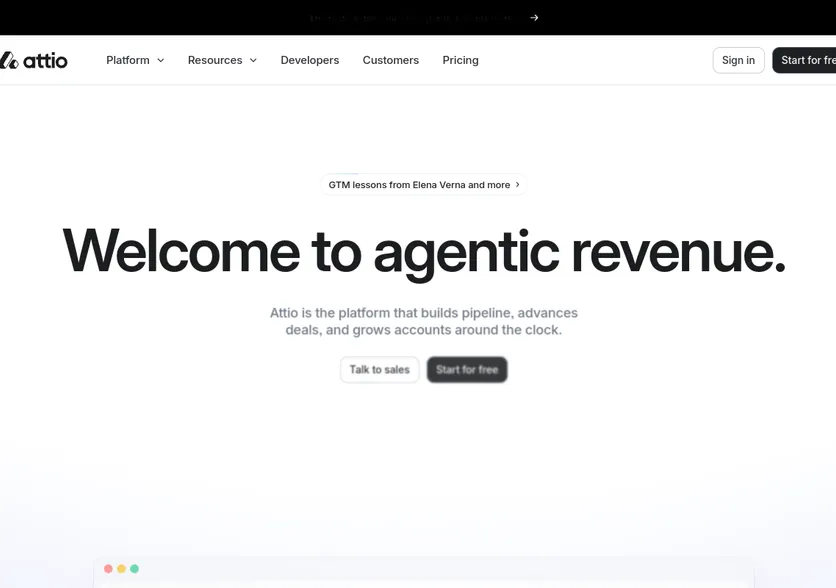
This Attio plan costs thirty-five dollars a user a month, and it captures relationship data automatically from email and calendar. A deal team sees who knows whom, with custom objects for funds, deals and portfolio companies. It is the modern CRM pick for a firm that wins deals through its network.
What we like
- Relationship data captured automatically from email and calendar
- Custom objects that model funds, deals and portfolio companies
- A free plan that covers three seats
Watch out for
- Plus stops at ten users, then the whole workspace moves to Pro
- Workflows draw on a credit pool that can run dry
How to try it
- Connect mailboxes so contacts and activity sync automatically
- Build a pipeline with custom deal stages
- Set workflows that enrich and score new contacts
5. DocSend
Best for: Founders and deal teams that share decks with investors
Paid tool Starting price: $45/user/month · Forty-five dollars per user a month billed annually on Standard, or sixty-five dollars billed monthly; Personal is ten dollars billed annually and Advanced data rooms start at one hundred and fifty dollars a month for three users
Free plan: Free trial
This DocSend plan costs forty-five dollars a user a month, and it shows exactly who opened a deck and which pages they read. A deal team can gate documents with email verification or an NDA, then read the analytics before the next call. It is the pick for sharing sensitive documents with investors and buyers.
What we like
- Tracked links that show exactly who viewed each page
- Email verification and NDA gating before access
- Spaces that organise a whole deal room
Watch out for
- Data rooms sit on the Advanced plan at one hundred and fifty dollars a month
- No free plan, only a trial
How to try it
- Upload the deck and create a tracked link
- Gate the link with email verification or an NDA
- Check page-level analytics before the next call
6. Crunchbase
Best for: Deal teams that research funding rounds and investors
Paid tool Starting price: $49/month · Forty-nine dollars a month on Pro billed annually; higher tiers are quoted by sales rather than published
Free plan: Free plan
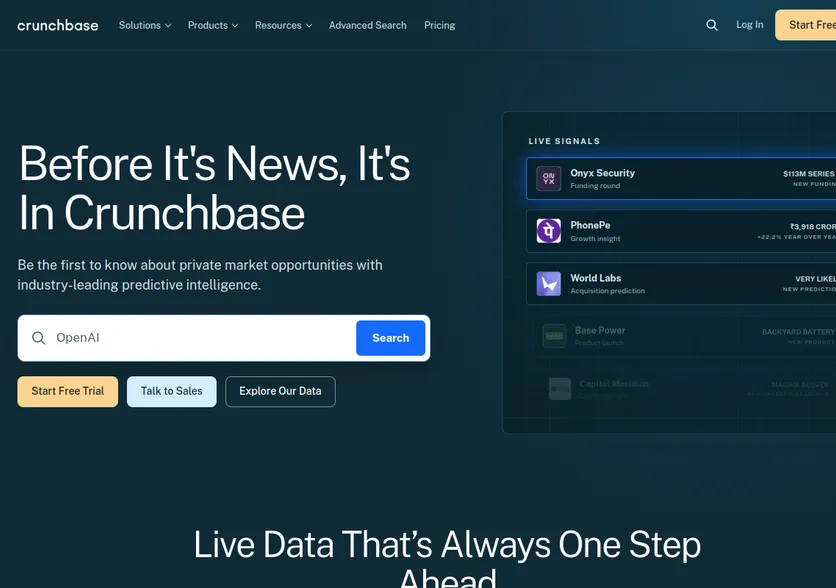
This Crunchbase plan costs forty-nine dollars a month, and it opens the funding database that deal teams use to research companies and investors. Lists and alerts track a sector or a competitor set, and profiles show funding history and growth signals. It is the research pick for a firm that sources deals from market data.
What we like
- Funding rounds, investors and acquirers in one database
- Lists and alerts that track a sector or a competitor set
- Company profiles with growth signals and news
Watch out for
- Full search and exports need the paid plan
- Coverage of very small firms can be thin
How to try it
- Search for companies by sector, stage and funding
- Save a list and set alerts for new rounds
- Check the investor profile before outreach
7. Affinity
Best for: Private capital firms that win deals through relationships
Paid tool Starting price: $2,000/user/year · Two thousand dollars per user a year on Essential, billed annually with no monthly option; Scale is two thousand three hundred dollars and Advanced is two thousand seven hundred dollars, and Enterprise is quoted
Free plan: Free demo
This Affinity plan costs two thousand dollars a user a year, and it is the relationship intelligence CRM built for private capital. Every email and calendar interaction is captured automatically, relationship scores show the warmest path to any contact, and deal pipelines follow private capital workflows. It is the standard pick for a firm whose deal flow runs on who it knows.
What we like
- Automatic capture of every email and calendar interaction
- Relationship scores that show the warmest path to any contact
- Deal pipelines built for private capital workflows
Watch out for
- Two thousand dollars a user a year before any discount
- Every plan is billed annually with no monthly option
How to try it
- Connect firm mailboxes and calendars to capture activity
- Score relationships and find warm introductions
- Track each deal through the pipeline to close
Prices above were checked on each vendor’s own website on Nov 28, 2026 and can change — the vendor’s page is the final word. Vendor links are editorial: nobody paid to be listed or ranked here. Vendors who want a featured listing can see how it works on our Get listed page.
How to build a deal stack that stays private
Keep the deal data in as few places as possible. A private equity firm leaks terms when deals live in email, spreadsheets and chat at once, so pick one CRM as the record and link the research and documents to it. Give the investment committee one filtered view of the pipeline and nothing else, because broad access invites accidental sharing. Check the sharing settings on every document before it leaves the firm. Finally, review the stack once a quarter and remove tools nobody opens, because a forgotten account is a security risk. Log every document share, because the audit trail is what proves who saw what and when.
Before you buy
- Check whether the price is monthly, yearly or quoted by sales
- Ask who can see each deal and how sharing is controlled
- Confirm the CRM captures email and calendar activity automatically
- Test the document sharing and NDA gating before a live deal
- Make sure the research data covers the sectors and stages you buy in
Official websites
Official websites of the products reviewed above. Features and prices were checked against these sites when this guide was written, and they can change, so confirm on the vendor site before you buy.
Frequently asked questions
What is legal tech software for private equity firms?
It is the stack a private equity firm uses to track relationships, deals, diligence and documents, from first contact to signed papers. The tools in this list cover the deal workflow in different places: CRM, research, document sharing and a shared workspace. A good stack keeps sensitive terms in one place and shows the whole pipeline at a glance.
How much does Pipedrive cost?
Pipedrive costs fourteen dollars a user a month billed annually on Lite, or twenty-four dollars billed monthly. Growth is thirty-nine dollars, Premium is fifty-nine dollars and Ultimate is seventy-nine dollars, all billed annually. Lite is the cheapest real pipeline here, though it has no email sync or automations, which start on Growth.
Can a private equity firm start for free?
Notion, Attio and Crunchbase all offer free plans, and Pipedrive, Airtable and DocSend offer free trials. A small deal team can start on the free tiers and pay only when it needs automations, exports or data rooms. Affinity has no free plan and no monthly billing, with every seat at two thousand dollars a year.
Which tool is best for a private equity firm?
Affinity is the strongest fit for a private equity firm that wins deals through relationships, because it captures every interaction and scores the warmest path to any contact. Pipedrive is the value pick for a small team that just needs a clean pipeline. DocSend is the pick for sharing decks and data rooms with investors and buyers.
Do these tools handle fund administration?
No, none of the seven is a fund administrator, and Carta, the best-known cap table platform, sells its paid tiers by quote with no published price. These tools cover the deal workflow, not fund accounting or LP reporting. A firm that needs administration should budget for a specialist provider alongside this stack.
Compare the seven tools above, then start with a free plan or trial on the tool that matches how your deal team works before you pay for a full year.
Browse Business Tools tools