On this page
Remote security teams investigate suspicious files from different places, so a sandbox has to be shared, cloud-based and easy to open together. The six tools below cover that job for teams of different sizes, from a pair of analysts to a distributed SOC. ANY.RUN leads the list because its interactive sessions let the whole team watch the same malware run for free on the Community plan, and the rest are ranked on the same practical test: how quickly they turn a suspicious file into an answer the team can act on.
How we researched this
We checked every price on the vendor pricing page on November 28, 2026, and only included tools with a published price or a free plan. The big enterprise sandboxes, including Palo Alto Prisma Access, Fortinet FortiSandbox, Check Point SandBlast, Zscaler Cloud Sandbox, VMware NSX and Juniper ATP, publish no prices, so they are not in this list. Prices change, so confirm the current figure on the vendor site before you buy.
Compare the tools
| Name | Best for | Starting price | Free plan | |
|---|---|---|---|---|
| ANY.RUN | Analysts who need to watch malware run interactively | $0/month | Free Community plan | Visit |
| Hybrid Analysis | Remote teams that want a fast free first verdict | $0/month | Free public service | Visit |
| Joe Sandbox | Remote teams that need thorough reports without a lab | $0/month | Free Cloud Basic plan | Visit |
| Hatching Triage | Teams that want a scored verdict with configuration extraction | $0/month | Free public cloud | Visit |
| Filescan.io | Analysts who need a fast free triage check | $0/month | Free public service | Visit |
| CAPE Sandbox | Teams that must keep samples on their own hardware | $0/month | Free open source | Visit |
The network sandboxing software for remote teams, compared
1. ANY.RUN
Best for: Analysts who need to watch malware run interactively
Paid tool Starting price: $0/month · Zero dollars per month for the Community plan, with public analyses, a sixty-second session limit and sixteen-megabyte files; the paid Hunter and Enterprise Suite plans are billed yearly and priced by sales, with no published fixed price
Free plan: Free Community plan
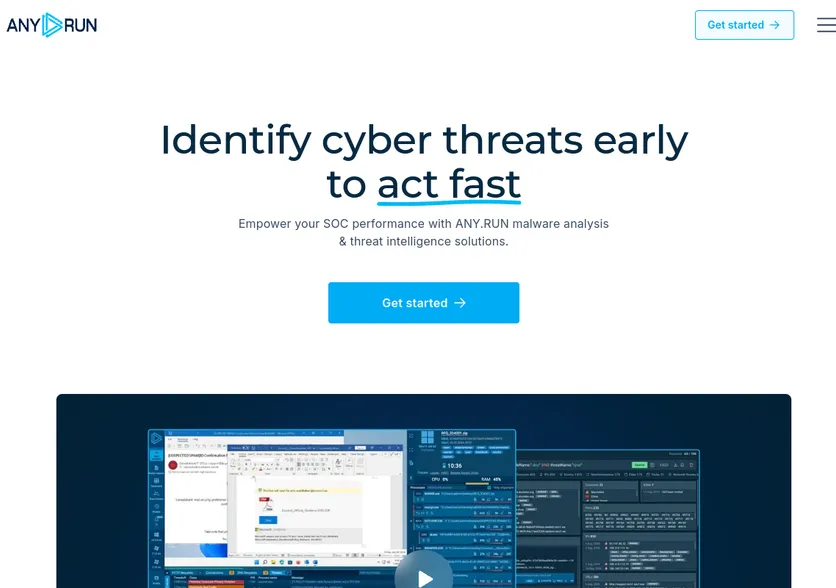
Remote security teams can investigate a suspicious file together in ANY.RUN, which costs zero dollars per month on the Community plan. The interactive virtual machine lets an analyst click through the malware while teammates watch the same session, which beats passing screenshots around. Free analyses are public, so anything sensitive needs a paid plan, and paid prices are quoted by sales.
What we like
- Interactive sessions let you click through the malware yourself
- Real-time process, network and registry visibility
- Public sample database for research and training
Watch out for
- Free analyses are public, never submit sensitive files
- Private analysis needs a paid plan
How to try it
- Upload the suspicious file or paste the URL
- Interact with the virtual machine while the sample runs
- Export indicators and the report for your team
2. Hybrid Analysis
Best for: Remote teams that want a fast free first verdict
Paid tool Starting price: $0/month · Zero dollars per month for the public service, which is CrowdStrike Falcon Sandbox made available to the community; private and enterprise use runs through Falcon, which is priced by sales
Free plan: Free public service
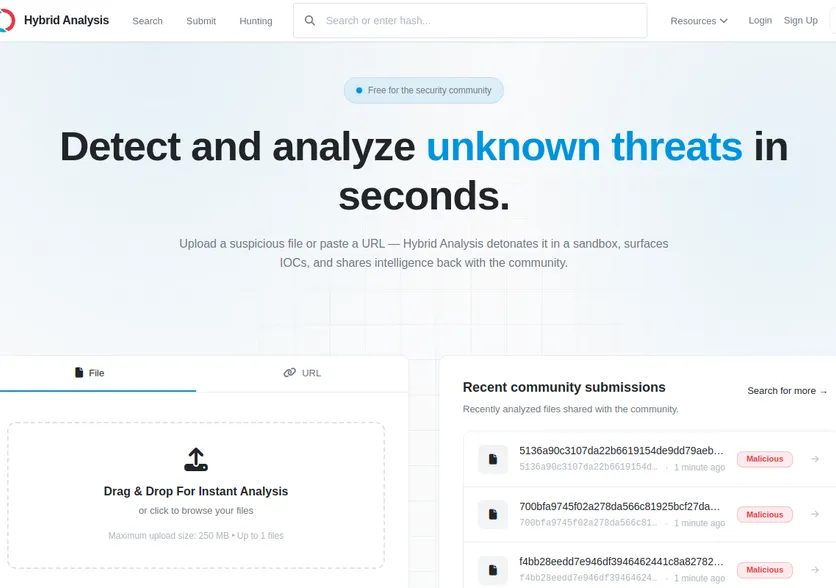
When a remote analyst needs a quick verdict before an incident call, Hybrid Analysis costs zero dollars per month for the public service. Paste a hash first, since the public database often already holds the answer, and submit the file only if it is new. Public submissions are shared with the community, so confidential files need a private deployment.
What we like
- Free detonation with detailed behaviour reports
- Large public sample database to compare against
- No account needed for basic submissions
Watch out for
- Public service shares submissions with the community
- No private analysis on the free tier
How to try it
- Search the hash before uploading anything
- Submit the file or URL for automated analysis
- Read the threat score and extracted indicators
3. Joe Sandbox
Best for: Remote teams that need thorough reports without a lab
Paid tool Starting price: $0/month · Zero dollars per month for Cloud Basic, with fifteen analyses a month and publicly shared results; Cloud Light is five thousand two hundred Swiss francs per user per year for private analysis, and higher tiers are quoted
Free plan: Free Cloud Basic plan
For a remote team that needs thorough reports without a shared lab, Joe Sandbox Cloud Basic costs zero dollars per month with fifteen analyses a month. It runs files and URLs in controlled Windows, macOS and Linux environments and returns a detailed behaviour report the whole team can read. The free tier shares results publicly, while private analysis starts with Cloud Light pricing in Swiss francs.
What we like
- Deep behavioural reports across Windows, macOS and Linux
- Hundreds of signatures and YARA rules built in
- Live interaction with the sample during analysis
Watch out for
- Free tier shares samples and results publicly
- Paid Light tier covers Windows analysis only
How to try it
- Submit the file or URL through the web console
- Choose the operating system and analysis profile
- Review the behaviour report and export indicators
4. Hatching Triage
Best for: Teams that want a scored verdict with configuration extraction
Paid tool Starting price: $0/month · Zero dollars per month for the public cloud, which individual researchers can use free; commercial packages start at five hundred analyses a day and are priced on request
Free plan: Free public cloud
A remote team triaging many samples can start with Hatching Triage at zero dollars per month on the free public cloud. Each sample gets a score out of ten with extracted configuration, so the team can prioritise the worst files first. Commercial packages start at five hundred analyses a day, so a growing team should expect a sales conversation early.
What we like
- Scores samples out of ten with extracted configuration
- Multi-operating-system detonation including Android and macOS
- PCAP capture and live virtual machine access
Watch out for
- Paid packages start at high daily volumes
- Commercial pricing needs a sales conversation
How to try it
- Submit the file or URL to the public cloud
- Open the report to see the score and behaviour
- Download the PCAP and indicators for deeper work
5. Filescan.io
Best for: Analysts who need a fast free triage check
Paid tool Starting price: $0/month · Zero dollars per month for the free public service, which emulates files and extracts indicators without a full virtual machine boot; paid OPSWAT MetaDefender plans are quoted by sales
Free plan: Free public service
When the team needs an answer in minutes, Filescan.io costs zero dollars per month for the free public service. It emulates the file instead of booting a full virtual machine, which keeps the wait short, and it extracts indicators the team can paste straight into its notes. Public submissions are visible to others, so sensitive files stay out of the free tier.
What we like
- Fast emulation without booting a full virtual machine
- Clear indicator extraction for triage
- No account needed for a quick check
Watch out for
- Public submissions are visible to others
- Emulation is lighter than full detonation
How to try it
- Upload the file or paste the URL
- Wait for the emulation report to finish
- Copy the indicators into your investigation notes
6. CAPE Sandbox
Best for: Teams that must keep samples on their own hardware
Paid tool Starting price: $0/month · Zero dollars per month, as CAPE Sandbox is open-source software you run on your own hardware; there is no paid plan and no licence fee, and you pay only for the servers it runs on
Free plan: Free open source
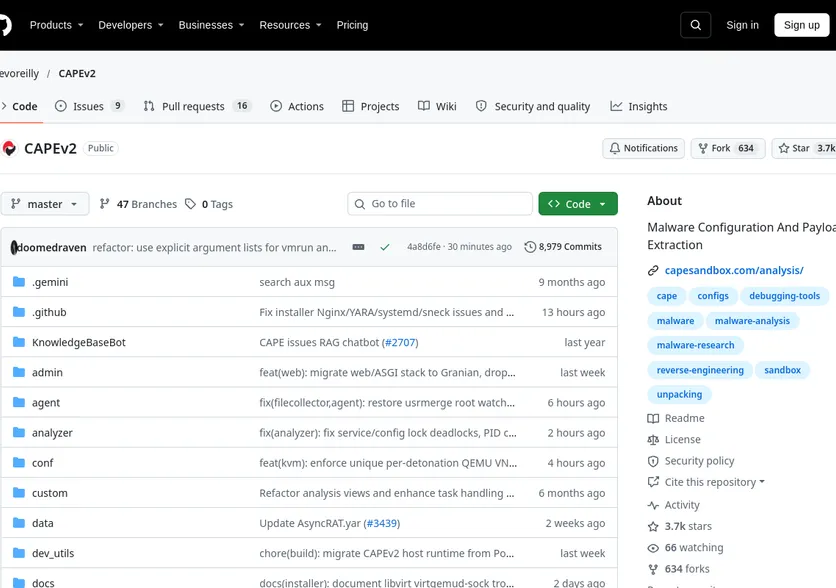
Remote teams that cannot send samples to a public cloud can run CAPE Sandbox at zero dollars per month on their own hardware. It unpacks malware and extracts configuration locally, so no sample ever leaves the team's infrastructure. The cost is the setup work: the team builds and maintains the sandbox itself.
What we like
- Unpacks malware and extracts hidden configuration
- You control the hardware and keep samples private
- Built on an open-source engine with active development
Watch out for
- You build and maintain the whole sandbox yourself
- Needs real setup skill and dedicated hardware
How to try it
- Install CAPE on a dedicated Linux host
- Submit samples through the web interface or API
- Read the extracted configuration and network traffic
Prices above were checked on each vendor’s own website on Nov 28, 2026 and can change — the vendor’s page is the final word. Vendor links are editorial: nobody paid to be listed or ranked here. Vendors who want a featured listing can see how it works on our Get listed page.
How a remote team investigates a suspicious file together
Start with one shared queue for every suspicious file, so two analysts never investigate the same sample twice. Check the hash in a public database first, since the answer often already exists, and submit the file only when it is new. Use public sandboxes only for samples with no sensitive data, and keep a private sandbox for anything confidential. Share the report link in the incident channel, not screenshots, so everyone reads the same verdict. Finally, save the indicators from each analysis so the next similar file is recognised faster. Agree on who owns the queue each week, so samples never wait for someone who is away.
Before you buy
- Keep one shared queue for suspicious files so nobody duplicates work
- Check the hash in a public database before submitting anything new
- Use public sandboxes only for samples with no sensitive data
- Share the report link in the incident channel, not screenshots
- Save extracted indicators so the next similar file is recognised faster
Official websites
Official websites of the products reviewed above. Features and prices were checked against these sites when this guide was written, and they can change, so confirm on the vendor site before you buy.
Frequently asked questions
What is network sandboxing software?
Network sandboxing software isolates and analyses suspicious files or traffic in a controlled environment to detect and prevent advanced threats. It helps remote teams protect against zero-day attacks and unknown malware. The sandbox detonates the file safely, watches what it does, and reports the behaviour before the file reaches the network.
Which sandbox is best for a remote team?
ANY.RUN is the strongest fit for a remote team, because its free Community plan lets the whole team watch one interactive session together. Analysts can click through the malware while teammates see the same screen. Free analyses are public, so sensitive samples need a paid plan, and paid Hunter and Enterprise Suite prices are quoted by sales.
How do remote teams handle sensitive samples?
Sensitive samples should never go to a public sandbox, since public analyses are visible to others. Remote teams should keep a private sandbox for confidential files, either a paid plan or an open-source tool such as CAPE on their own hardware. Public services are for non-sensitive samples and research only.
Can a remote team use a sandbox without a shared lab?
Yes. Cloud sandboxes such as ANY.RUN, Hybrid Analysis and Hatching Triage need no shared lab, since analysis runs in the vendor cloud and the team shares report links. Open-source tools such as CAPE need a server the team maintains, which suits teams that want full control over their samples.
Is there a free sandbox for remote teams?
Yes. ANY.RUN, Joe Sandbox, Hybrid Analysis, Hatching Triage and Filescan.io all have free public tiers, and CAPE Sandbox is a free open-source tool. The free tiers are public, so they suit non-sensitive samples, while confidential files need a private deployment or a paid plan.
Compare the six tools above, then pick the free tier that fits your sample volume and keep sensitive files in a private sandbox.
Browse Security & Privacy tools