On this page
A therapy practice grows by adding services, groups and programs one careful step at a time, and a roadmap keeps those steps in the right order. The eight tools below bring product planning to a practice of any size, from a free starter plan to a fifty-nine dollar a month scoring tool. Productboard leads because it ranks client and staff feedback into a clear plan for nineteen dollars a maker a month, and the rest are judged on how simply they turn ideas into a calendar the whole practice can follow.
How we researched this
We checked every price on the vendor pricing page on November 28, 2026, and only included tools with a published US dollar list price. The enterprise roadmap suites sell by quote and the single-plan tools over four hundred dollars a month suit software companies, not practices, so they are not in this list. Prices change, so confirm the current figure on the vendor site before you buy.
Compare the tools
| Name | Best for | Starting price | Free plan | |
|---|---|---|---|---|
 Productboard | Practices ranking new services by client demand | $19/maker/month | Free plan (Starter) | Visit |
 Aha! Roadmaps | Multi-site practice groups planning several programs | $59/user/month | No free plan; 30-day free trial | Visit |
 Roadmunk | Practices that present plans to partners and funders | $19/editor/month | No free plan; 14-day free trial | Visit |
 ProductPlan | Small practices that want a simple visual plan | $39/editor/month | No free plan; 14-day free trial | Visit |
| airfocus | Practice teams that score services before launching them | $59/editor/month | No free plan; 14-day free trial | Visit |
 Craft.io | Practices planning services and capacity together | $19/editor/month | Free plan (viewers and contributors) | Visit |
 Jira Product Discovery | Jira teams planning new programs inside their tracker | $10/creator/month | Free plan (up to 3 creators) | Visit |
| FeatureOS | Practices that ask clients what to offer next | $50/month | No free plan; 14-day free trial | Visit |
The product roadmap software for therapists, compared
1. Productboard
Best for: Practices ranking new services by client demand
Paid tool Starting price: $19/maker/month · Nineteen dollars a maker a month on Plus billed annually (twenty-five dollars billed monthly); Business is fifty-nine dollars a maker a month billed annually; a November 2026 read lists twenty dollars a maker a month, which conflicts with the vendor page and is disclosed here
Free plan: Free plan (Starter)
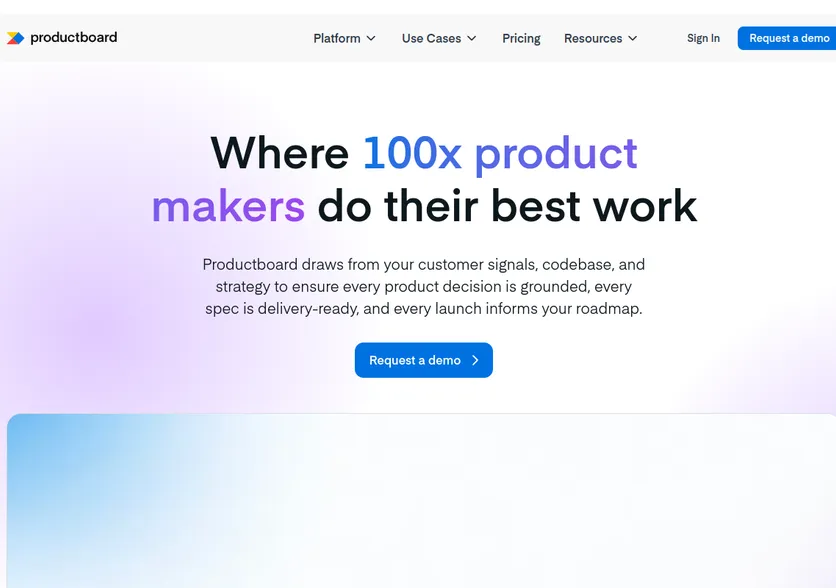
A therapy practice planning new services around what clients actually ask for gets a clear way to rank ideas here, because this Productboard plan costs nineteen dollars a maker a month billed annually. It gathers feedback from clients and staff, scores each idea against practice goals and publishes a roadmap the whole team can read. The free Starter plan is enough to test the workflow on one program before paying.
What we like
- Feedback scoring tied to practice goals
- Roadmaps the whole team can read
- Free Starter plan for small teams
Watch out for
- Paid seats are per maker, so the bill grows with planners
- Deeper reporting needs the dearer Business plan
How to try it
- Collect feedback from clients and staff
- Score each idea against practice goals
- Publish the roadmap for the team
2. Aha! Roadmaps
Best for: Multi-site practice groups planning several programs
Paid tool Starting price: $59/user/month · Fifty-nine dollars a user a month on Premium billed annually (seventy-four dollars billed monthly); Enterprise is ninety-nine dollars and Enterprise Plus is one hundred and forty-nine dollars; prices rise three percent a year
Free plan: No free plan; 30-day free trial
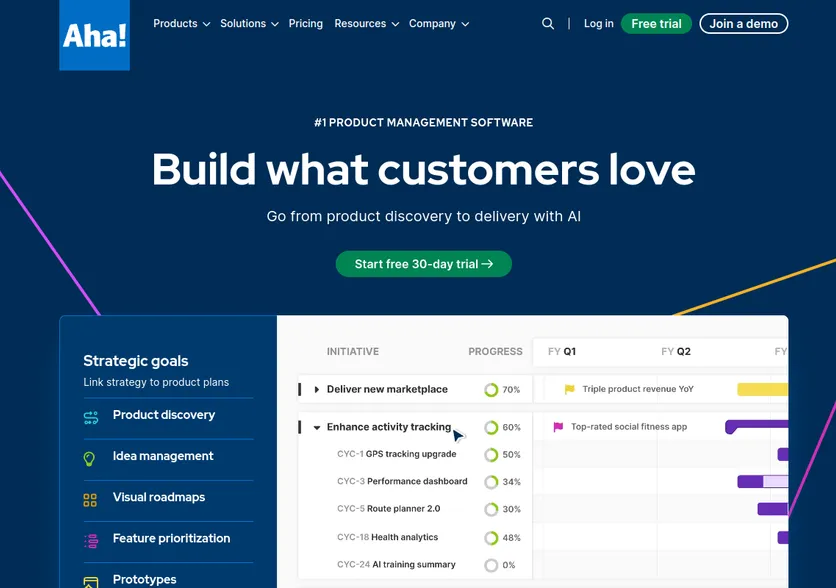
A growing practice group that plans across several locations gets a full strategy workspace here, since this Aha! Roadmaps plan costs fifty-nine dollars a user a month billed annually. It sets goals, plans programs and tracks releases of new services in one place, with reporting that shows progress against each goal. The price and depth suit a multi-site group better than a solo practice.
What we like
- Goals, programs and releases in one workspace
- Reporting that tracks progress per goal
- Mature templates for planning
Watch out for
- The highest mainstream price in this list
- More depth than a small practice will use
How to try it
- Set the goals for the next quarter
- Add programs and rank them by score
- Share the roadmap with each location
3. Roadmunk
Best for: Practices that present plans to partners and funders
Paid tool Starting price: $19/editor/month · Nineteen dollars an editor a month on Starter billed annually; Business is forty-nine dollars and Professional is ninety-nine dollars; new customers are billed annually only; two-way Jira sync is a nine dollar a collaborator a month add-on on Business
Free plan: No free plan; 14-day free trial
A practice that shows its plan to partners, funders or a board gets clean, presentable roadmaps here, because this Roadmunk plan costs nineteen dollars an editor a month billed annually. Its timeline views turn a list of planned services into a story a non-technical audience can follow. Annual billing is the only option for new customers, so budget for the full year.

What we like
- Board-ready timeline and swimlane views
- Simple enough for non-technical readers
- Jira sync for teams that track work there
Watch out for
- New customers can only pay annually
- Feedback tools are lighter than Productboard
How to try it
- List the planned services on a timeline
- Group them by theme or location
- Share the published view with partners
4. ProductPlan
Best for: Small practices that want a simple visual plan
Paid tool Starting price: $39/editor/month · Thirty-nine dollars an editor a month on Basic billed annually (forty-nine dollars billed monthly); Professional is sixty-nine dollars billed annually (eighty-nine dollars monthly; one read lists seventy-nine dollars); Enterprise is quoted
Free plan: No free plan; 14-day free trial
A small practice that wants a plan everyone can read at a glance gets a simple visual tool here, since this ProductPlan plan costs thirty-nine dollars an editor a month billed annually. It lays programs on a timeline, color-codes them by status and shares a live link with staff. The entry plan is deliberately lean, so a practice that needs scoring will outgrow it.
What we like
- A timeline anyone can read at a glance
- Live links share the plan without logins
- Fast to set up with no training
Watch out for
- No feedback scoring on the entry plan
- Lean features suit simple plans best
How to try it
- Add the planned services to the timeline
- Color-code each item by status
- Share the live link with staff
5. airfocus
Best for: Practice teams that score services before launching them
Paid tool Starting price: $59/editor/month · Fifty-nine dollars an editor a month on Core per the vendor blog and October 2026 reads; older listings show a nineteen dollar Essential plan, which appears superseded and is disclosed here; airfocus was acquired by Lucid Software in April 2025 and now trades as airfocus by Lucid
Free plan: No free plan; 14-day free trial
A practice team that weighs every new service before committing gets a scoring-first workspace here, because this airfocus plan costs fifty-nine dollars an editor a month. It ranks ideas with prioritization scoring, then shows the winners on a roadmap and a feedback board. Older nineteen dollar listings still circulate, but the current vendor pricing starts at fifty-nine dollars.
What we like
- Prioritization scoring built into the plan
- Roadmaps and feedback boards together
- Modular setup, buy only what is used
Watch out for
- No free plan, only a trial
- Older nineteen dollar prices no longer apply
How to try it
- Define the scoring criteria for new services
- Rank the ideas and keep the winners
- Publish the roadmap for the team
6. Craft.io
Best for: Practices planning services and capacity together
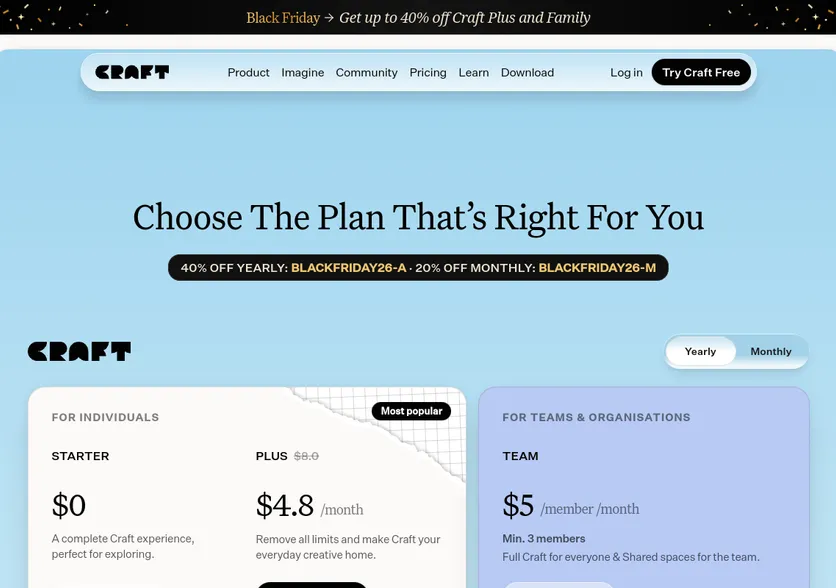
Paid tool Starting price: $19/editor/month · Nineteen dollars an editor a month on Starter billed annually (twenty-four dollars billed monthly); Pro is seventy-nine dollars (ninety-nine dollars monthly); OKR, feedback and capacity add-ons are fifteen dollars an editor a month billed annually
Free plan: Free plan (viewers and contributors)
A practice that plans services, gathers feedback and watches capacity in one place gets a broad workspace here, since this Craft.io plan costs nineteen dollars an editor a month billed annually. It covers roadmaps, feedback and capacity planning, and viewers and contributors work free. The objectives and capacity add-ons cost extra, so the headline price is a starting point.
What we like
- Roadmaps, feedback and capacity in one app
- Viewers and contributors are free
- Low entry price for a broad tool
Watch out for
- Objectives and capacity are paid add-ons
- The breadth takes time to set up well
How to try it
- Create the workspace and invite the team
- Add feedback and link it to planned services
- Check capacity against the next quarter
7. Jira Product Discovery
Best for: Jira teams planning new programs inside their tracker
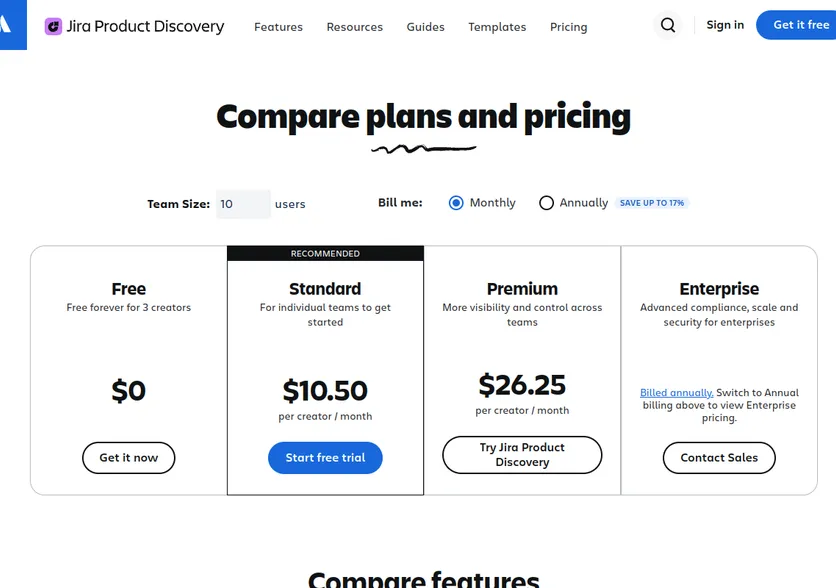
Paid tool Starting price: $10/creator/month · Ten dollars a creator a month on Standard billed annually (ten dollars and fifty cents billed monthly); Premium is twenty-five dollars; annual bands start at five hundred and twenty-five dollars a year for one to five creators
Free plan: Free plan (up to 3 creators)
A practice team that already tracks work in Jira gets planning without a second system here, because this Jira Product Discovery plan costs ten dollars a creator a month billed annually. It captures ideas, scores them and turns the winners into Jira issues. The free plan covers three creators, so a small team can start without spending.
What we like
- Ideas turn into Jira issues with one click
- Scoring beside the delivery work
- Free plan for up to three creators
Watch out for
- Only creators can edit, so seats need care
- Reporting is lighter than a dedicated suite
How to try it
- Capture ideas from staff and clients
- Score them against practice goals
- Send the winners to Jira as issues
8. FeatureOS
Best for: Practices that ask clients what to offer next
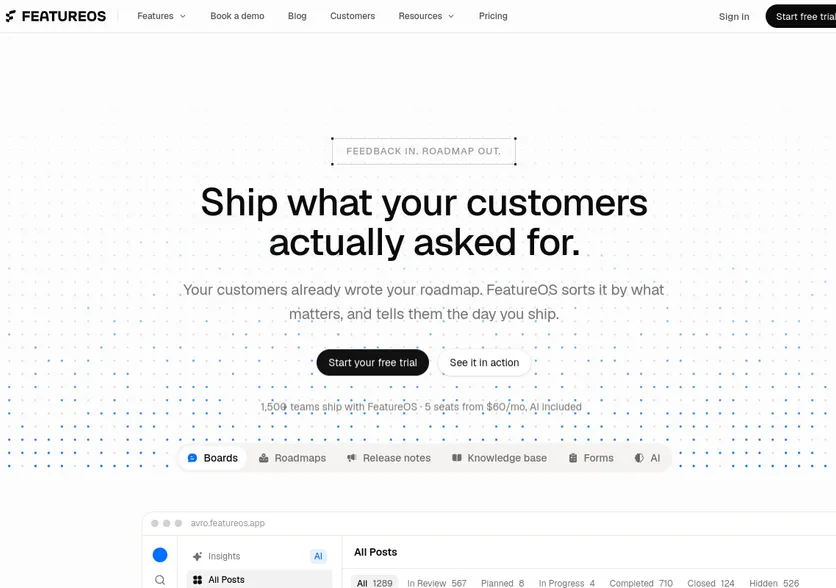
Paid tool Starting price: $50/month · Fifty dollars a month billed annually for five seats on Starter (sixty dollars billed monthly); Growth is one hundred dollars a month billed annually for ten seats; Business is two hundred and eight dollars a month billed annually for fifteen seats; extra seats are fifteen dollars a month
Free plan: No free plan; 14-day free trial
A practice that asks clients what they want next gets a focused feedback tool here, since this FeatureOS plan costs fifty dollars a month billed annually for five seats. It collects requests, runs voting boards and publishes a changelog clients can follow. Seat-based pricing means the bill grows with the team, not with the ideas.
What we like
- Voting boards show what clients want
- A public changelog keeps clients informed
- Simple seat-based pricing
Watch out for
- No free plan, only a fourteen-day trial
- Roadmap depth is lighter than Aha or Productboard
How to try it
- Set up the feedback board for clients
- Let clients vote on the services they want
- Publish the plan and changelog
Prices above were checked on each vendor’s own website on Nov 28, 2026 and can change — the vendor’s page is the final word. Vendor links are editorial: nobody paid to be listed or ranked here. Vendors who want a featured listing can see how it works on our Get listed page.
How a therapy practice picks a planning tool it will keep
Start with the services clients actually ask for, because a practice roadmap earns its keep by ranking real demand, not by looking tidy. Pick a tool whose free plan or trial covers a full quarter of planning, then build one program plan end to end before paying. Check who can edit and who can only view, since per-editor pricing punishes a practice that gives every clinician a seat. Make sure the plan can be shared as a simple link, because a roadmap locked behind logins will not reach the staff who deliver it. Finally, keep the plan short, because a practice that updates a one-page roadmap every quarter will use it far more than one that builds a fifty-item board and forgets it.
Before you buy
- Confirm the free plan covers enough makers or editors for the whole practice team
- Check whether the plan can be shared as a simple link staff can read
- Ask if feedback scoring is included or sold as a paid add-on
- Make sure the tool fits a quarterly planning rhythm, not just software releases
- Test the tool on one real program plan before committing to annual billing
Official websites
Official websites of the products reviewed above. Features and prices were checked against these sites when this guide was written, and they can change, so confirm on the vendor site before you buy.
Frequently asked questions
What is the best product roadmap software for therapists?
Productboard is the best overall pick for therapists, at nineteen dollars a maker a month billed annually with a free Starter plan. It ranks client and staff feedback into a clear plan for new services and programs. Craft.io is the best value for practices that also want capacity planning, at the same nineteen dollar entry price.
How much does Productboard cost for a therapy practice?
Productboard costs nineteen dollars a maker a month on Plus billed annually, or twenty-five dollars billed monthly, and the Starter plan is free. Business costs fifty-nine dollars a maker a month billed annually. A small practice usually needs only one or two maker seats, since the rest of the team can view the roadmap free.
Is there a free product roadmap tool for therapists?
Yes. Productboard offers a free Starter plan, Craft.io lets viewers and contributors work free, and Jira Product Discovery is free for up to three creators. These free tiers cover a small practice planning one or two programs, and a growing group can move to a paid plan when more planners need seats.
Can a roadmap tool help a therapy practice plan new services?
Yes, if it ranks demand first. A tool like Productboard or FeatureOS collects what clients and staff ask for, scores each idea against practice goals, and shows the winners on a shared timeline. That turns a wish list into a dated plan for groups, workshops and new programs, with a clear order of work.
Do therapists need a paid roadmap tool?
Not at first. A free plan from Productboard, Craft.io or Jira Product Discovery covers a solo practice or a small team planning its next quarter. Pay once the practice runs several programs at once, needs scoring and public links, or has more planners than the free tier allows.
Compare the eight tools above, then start with the free Productboard plan or the Craft.io free tier on the tool that matches how the practice already collects client feedback before paying for a full year.
Browse Business Tools tools