On this page
A finance team runs on cycles that never forgive a missed date: month-end close, audits, budgets and board packs all arrive on schedule whether the team is ready or not. The eight tools below were picked for finance teams that need checklists, approvals and an audit trail in one place. Smartsheet leads because its spreadsheet grid, forms and dashboards feel familiar to anyone who lives in Excel, for nine dollars per member a month, and the rest are ranked on how reliably they close the books on time.
How we researched this
We checked every price on the vendor pricing page on November 28, 2026, and only included tools with a published US dollar list price. Quote-only platforms such as Workfront and Planview publish no prices, so they are not in this list. Prices change, so confirm the current figure on the vendor site before you buy.
Compare the tools
| Name | Best for | Starting price | Free plan | |
|---|---|---|---|---|
 Smartsheet | Operations-led teams that already think in grids | $9/member/month | No free plan; 30-day free trial | Visit |
 Asana | Teams that want structure without a long setup | $10.99/user/month | Free plan (up to 2 users) | Visit |
 monday.com | Teams that think in boards and want visual status | $9/seat/month | Free plan (up to 2 seats) | Visit |
 Wrike | Teams that outgrew simple boards and need workload planning | $9.80/user/month | Free plan (unlimited users, 200 tasks) | Visit |
 ClickUp | Teams that want one app instead of five | $9/user/month | Free plan (unlimited members) | Visit |
 Airtable | Teams whose projects are structured data with deadlines | $20/seat/month | Free plan (up to 5 editor seats) | Visit |
 Notion | Teams that want projects, docs and wikis in one place | $10/user/month | Free plan | Visit |
 Basecamp | Teams that want one flat price and calmer communication | $79/month | Free plan | Visit |
The project management software for finance teams, compared
1. Smartsheet
Best for: Operations-led teams that already think in grids
Paid tool Starting price: $9/member/month · Nine dollars per member a month billed annually ($12 billed monthly) on Pro, which caps at ten members; Business is $19 a member a month billed annually ($24 monthly) with a three-member minimum; Enterprise is quoted
Free plan: No free plan; 30-day free trial
For a finance team closing the books on time, this Smartsheet plan costs nine dollars per member a month billed annually, and its spreadsheet grid turns plans into reports without extra tools. Sheets, forms, dashboards and automated alerts handle intake, approvals and reporting, with card, Gantt and calendar views on the same data. It suits operations-led teams that already think in rows and columns.

What we like
- Spreadsheet grid that finance and operations teams already understand
- Gantt, card and calendar views on the same data
- Automation, forms and dashboards without code
Watch out for
- Pro stops at ten members, so growth forces a jump to Business
- No free plan for new signups, only a thirty-day trial
How to try it
- Start from a project sheet template and add columns
- Switch to Gantt view and link task dependencies
- Set up automated alerts for due dates and approvals
2. Asana
Best for: Teams that want structure without a long setup
Paid tool Starting price: $10.99/user/month · Ten dollars and ninety-nine cents per user a month billed annually ($13.49 billed monthly); Advanced is $24.99 a user a month billed annually ($30.49 monthly); Enterprise is quoted
Free plan: Free plan (up to 2 users)
For a finance team closing the books on time, this Asana plan costs ten dollars and ninety-nine cents per user a month billed annually, and it keeps every deadline visible on one shared timeline. Starter adds timeline and Gantt views, dashboards, forms, custom fields and unlimited automations, with free guests for clients and contractors. It is the safest default for a team that wants structure without a long setup.

What we like
- Timeline and Gantt views with dependencies
- Unlimited automations and custom fields on Starter
- Free guests and a generous template library
Watch out for
- Seats are sold in blocks above five users, so the bill jumps in steps
- Portfolios, goals and workload need the Advanced tier
How to try it
- Create a project from a template and set its timeline
- Assign tasks with owners and due dates
- Track progress on the dashboard and adjust dates as work slips
3. monday.com
Best for: Teams that think in boards and want visual status
Paid tool Starting price: $9/seat/month · Nine dollars per seat a month billed annually ($12 billed monthly); Standard is $12 a seat a month billed annually ($14 monthly); Pro is $19 ($24 monthly); paid plans start at three seats
Free plan: Free plan (up to 2 seats)
For a finance team closing the books on time, this monday.com plan costs nine dollars per seat a month billed annually, and its colour-coded boards show status at a glance. Boards, automations and more than two hundred integrations cover most workflows, and the mobile app keeps field and remote staff in the loop. It suits teams that think in boards and want colour and status to do the talking.

What we like
- Colourful boards that non-technical teams read at a glance
- Timeline, Gantt and calendar views from Standard
- No-code automations and 200 plus integrations
Watch out for
- Basic has no timeline view and almost no automations
- Seat bundles mean a small team still pays for three seats
How to try it
- Pick a board template and add the columns the work needs
- Invite the team and assign owners to each item
- Turn on automations for status changes and due-date reminders
4. Wrike
Best for: Teams that outgrew simple boards and need workload planning
Paid tool Starting price: $9.80/user/month · Nine dollars and eighty cents per user a month billed annually on Team, shown as ten dollars on the vendor page, for two to twenty-five users; Business is twenty-four dollars and eighty cents a user a month billed annually (shown as twenty-five dollars), for five to two hundred users; Enterprise and Pinnacle are quoted
Free plan: Free plan (unlimited users, 200 tasks)
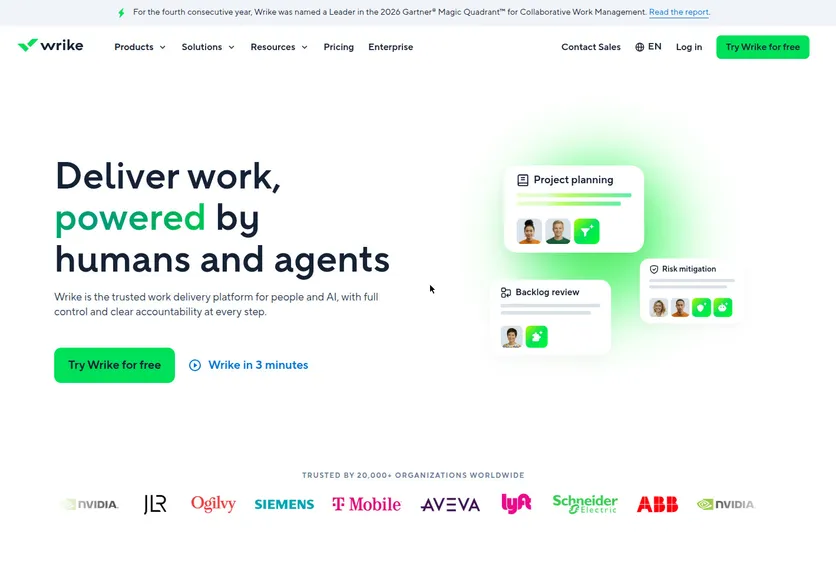
For a finance team closing the books on time, this Wrike plan costs nine dollars and eighty cents per user a month billed annually, and its Gantt charts and workload views keep capacity honest. Folders, spaces, dashboards and interactive Gantt charts organise large portfolios, and request forms bring new work in through one door. It fits teams that outgrow simple boards and need real workload planning.
What we like
- Interactive Gantt charts and workload views built in
- Request forms and approvals route work in cleanly
- Strong reporting across folders and spaces
Watch out for
- Passing fifteen users forces the whole team onto Business at $25
- The interface packs in so much that small teams can find it heavy
How to try it
- Set up a space and folders for each project
- Build the plan on a Gantt chart with dependencies
- Use request forms to take in new work
5. ClickUp
Best for: Teams that want one app instead of five
Paid tool Starting price: $9/user/month · Nine dollars per user a month billed annually ($12 billed monthly); Business is $17 a user a month billed annually ($25 monthly); Enterprise and Max are quoted
Free plan: Free plan (unlimited members)
For a finance team closing the books on time, this ClickUp plan costs nine dollars per user a month billed annually, and it folds docs, goals and time tracking into one workspace. Fifteen views, from list and board to Gantt and calendar, sit beside docs, whiteboards, goals and native time tracking. It is the best value in this list for a team that wants one app instead of five.

What we like
- Fifteen plus views including list, board, Gantt and calendar
- Docs, goals, time tracking and chat in one workspace
- Generous free plan with unlimited members
Watch out for
- The sheer number of settings can overwhelm new teams
- Some views and automations need the Business tier
How to try it
- Build a space for the team and add lists for each workstream
- Switch on the views each project needs, such as board or Gantt
- Set goals and dashboards to watch progress in one place
6. Airtable
Best for: Teams whose projects are structured data with deadlines
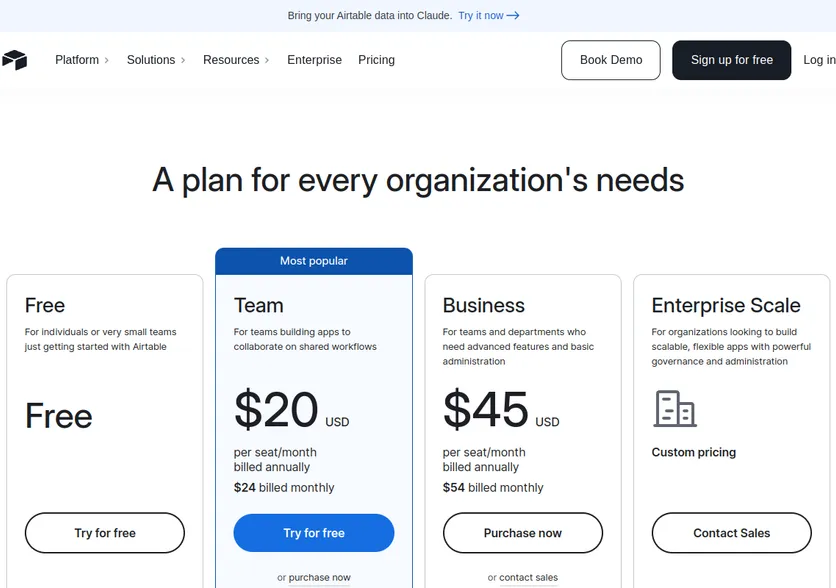
Paid tool Starting price: $20/seat/month · Twenty dollars per seat a month billed annually ($24 billed monthly) on Team; Business is $45 a seat a month billed annually ($54 monthly); Enterprise is quoted
Free plan: Free plan (up to 5 editor seats)
For a finance team closing the books on time, this Airtable plan costs twenty dollars per seat a month billed annually, and its linked tables turn project data into live views. Rich fields, attachments, linked records and Interface Designer turn a simple table into a project hub with custom views for every role. It fits teams whose projects are really structured data with deadlines attached.
What we like
- Spreadsheet tables with rich fields, attachments and links
- Interface Designer builds custom views for each role
- Automations and synced tables across bases
Watch out for
- Real project planning needs views and extensions configured first
- Costs climb fast once many editors need seats
How to try it
- Create a base from a project template
- Add tables for tasks, owners and milestones
- Build a Gantt or timeline view for the plan
7. Notion
Best for: Teams that want projects, docs and wikis in one place
Paid tool Starting price: $10/user/month · Ten dollars per user a month billed annually ($12 billed monthly) on Plus; Business is $20 a user a month billed annually ($24 monthly) and adds full Notion AI; Enterprise is quoted
Free plan: Free plan
For a finance team closing the books on time, this Notion plan costs ten dollars per user a month billed annually, and it pairs project boards with the docs and wikis teams already keep. Databases, timelines, kanban boards and linked docs let a team shape the workspace around its own process instead of the other way round. It suits teams that want their projects, docs and knowledge base in one place.

What we like
- Docs, databases and project boards in one flexible workspace
- Templates for roadmaps, wikis and meeting notes
- Guests join pages free on paid plans
Watch out for
- Project tracking needs setup, since it starts as a blank page
- Offline access is limited next to native apps
How to try it
- Pick a project template or build a database for tasks
- Add status, owner and date properties to every task
- Link docs and meeting notes to the project page
8. Basecamp
Best for: Teams that want one flat price and calmer communication
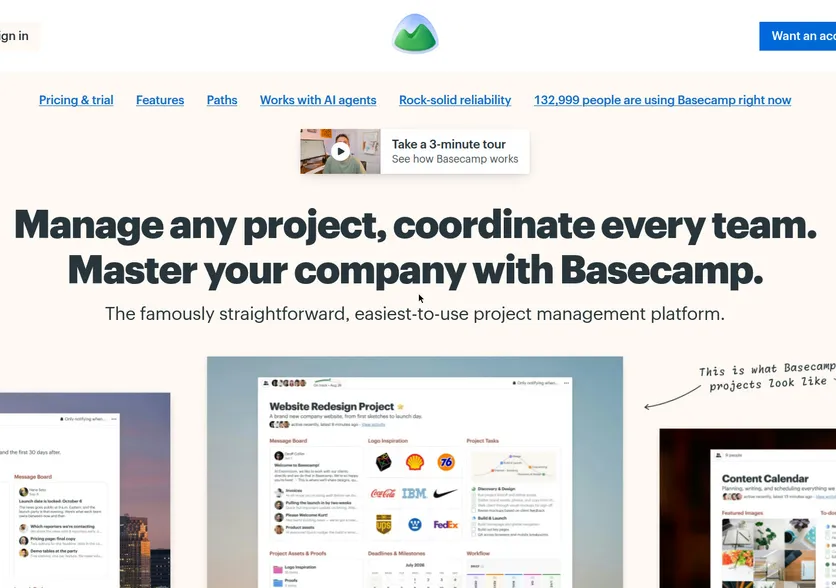
Paid tool Starting price: $79/month · Seventy-nine dollars a month flat on Pro for up to ten users, with unlimited projects; Pro Plus is $99 a month flat; Pro Unlimited is $199 a month billed annually ($329 billed monthly); Freelancer is $29 a month flat
Free plan: Free plan
For a finance team closing the books on time, this Basecamp plan costs seventy-nine dollars a month flat, and it keeps discussion, files and schedules in one calm place. Message boards, to-do lists, schedules, docs and file storage replace scattered email threads, and clients join without extra seat charges. It is the calmest option here, and the flat price makes budgeting easy.
What we like
- One flat monthly price whatever the headcount
- Message boards, to-dos, schedules and docs in one calm place
- Clients join projects without extra seat charges
Watch out for
- No Gantt chart or workload view for detailed planning
- Reporting is light next to dedicated project tools
How to try it
- Create a project and invite the team and clients
- Add to-dos, a schedule and a message board
- Check the activity feed each morning for updates
Prices above were checked on each vendor’s own website on Nov 28, 2026 and can change — the vendor’s page is the final word. Vendor links are editorial: nobody paid to be listed or ranked here. Vendors who want a featured listing can see how it works on our Get listed page.
How to close the month without a last-minute scramble
Turn the close into a checklist with owners and dates, and reuse the same template every month instead of rebuilding it from memory. Put approvals in the tool, so a journal entry cannot move forward until the right person signs it off, and the sign-off is recorded. Keep the supporting documents attached to the task, not in a shared drive nobody can search, so the audit trail builds itself. Run a short daily check during close week and let the overdue tasks set the agenda, instead of asking each person for a status update. After close, review what slipped and fix the template, so next month starts with last month's lessons. A finance team that trusts its checklist spends close week checking work, not chasing it.
Before you buy
- Check that approvals are recorded, since finance work needs an audit trail
- Confirm checklists can be templated and reused for every close cycle
- Ask whether documents can be attached to tasks for the audit file
- Make sure the tool reports who did what and when across the team
- Test the close checklist on a real month-end before rolling it out
Official websites
Official websites of the products reviewed above. Features and prices were checked against these sites when this guide was written, and they can change, so confirm on the vendor site before you buy.
Frequently asked questions
What is project management software for finance teams?
It is software that plans and tracks finance work, from month-end close and audits to budgets and board reporting. The best tools turn the close into a reusable checklist with owners, dates and approvals, so nothing slips in the last week of the month. They also keep supporting documents attached to each task, which builds the audit trail as the team works instead of reconstructing it later.
How much does Smartsheet cost for a finance team?
Smartsheet Pro costs nine dollars per member a month billed annually, or twelve dollars billed monthly, and covers one to ten members. Most finance teams need Business at nineteen dollars per member a month billed annually, because Pro caps at ten members and Business adds unlimited automation and a three-member minimum. Enterprise is quoted for teams that need audit trails and single sign-on.
Can I run finance projects for free?
Yes, to a point. ClickUp offers a free plan with unlimited members, Basecamp has a free plan, and Notion and Airtable both offer free tiers. Asana's free plan covers two users only, so a finance team outgrows it fast. Free plans suit a small team testing a close checklist, but approvals, reporting and audit features usually need a paid plan.
Do these tools work with Excel and accounting software?
Smartsheet and Airtable work closest to Excel, with grids, formulas and imports that finance teams already understand. Asana, monday.com and ClickUp connect to accounting and reporting tools through native integrations or automation platforms. None of them replaces the accounting system, so the project tool should plan and track the work while the ledger keeps the numbers. Check the exact integration before buying.
Which tool is best for a finance team?
Smartsheet is the best overall pick for a finance team, because its grid, forms and dashboards feel familiar to anyone who lives in spreadsheets. Asana is the better pick for a team that needs stronger timelines and portfolios across many workstreams. Airtable is the best pick when the work is really structured data, such as budgets and vendor lists with deadlines attached.
Compare the eight tools above, then start a free trial on the one that fits how the finance team closes before paying for a full year.
Browse Business Tools tools