On this page
A franchise lives or dies by replication: every location should open, train, market and report the same way, and the head office has to see it happening without flying everywhere. The eight tools below were picked for franchise teams that roll out the same playbook across many locations. Asana leads because its templates and portfolios copy a proven process to every new site for ten dollars and ninety-nine cents per user a month, and the rest are ranked on how well they keep dozens of locations in step.
How we researched this
We checked every price on the vendor pricing page on November 28, 2026, and only included tools with a published US dollar list price. Quote-only platforms such as Workfront and Planview publish no prices, so they are not in this list. Prices change, so confirm the current figure on the vendor site before you buy.
Compare the tools
| Name | Best for | Starting price | Free plan | |
|---|---|---|---|---|
 Asana | Teams that want structure without a long setup | $10.99/user/month | Free plan (up to 2 users) | Visit |
 monday.com | Teams that think in boards and want visual status | $9/seat/month | Free plan (up to 2 seats) | Visit |
 ClickUp | Teams that want one app instead of five | $9/user/month | Free plan (unlimited members) | Visit |
 Smartsheet | Operations-led teams that already think in grids | $9/member/month | No free plan; 30-day free trial | Visit |
 Trello | Teams that want the simplest possible board | $5/user/month | Free plan (up to 10 collaborators) | Visit |
 Basecamp | Teams that want one flat price and calmer communication | $79/month | Free plan | Visit |
 Teamwork | Client-service teams that bill by the hour | $9.99/user/month | Free plan (up to 5 users, 5 projects) | Visit |
 Notion | Teams that want projects, docs and wikis in one place | $10/user/month | Free plan | Visit |
The project management software for franchises, compared
1. Asana
Best for: Teams that want structure without a long setup
Paid tool Starting price: $10.99/user/month · Ten dollars and ninety-nine cents per user a month billed annually ($13.49 billed monthly); Advanced is $24.99 a user a month billed annually ($30.49 monthly); Enterprise is quoted
Free plan: Free plan (up to 2 users)
For a franchise rolling out the same playbook everywhere, this Asana plan costs ten dollars and ninety-nine cents per user a month billed annually, and it keeps every deadline visible on one shared timeline. Starter adds timeline and Gantt views, dashboards, forms, custom fields and unlimited automations, with free guests for clients and contractors. It is the safest default for a team that wants structure without a long setup.

What we like
- Timeline and Gantt views with dependencies
- Unlimited automations and custom fields on Starter
- Free guests and a generous template library
Watch out for
- Seats are sold in blocks above five users, so the bill jumps in steps
- Portfolios, goals and workload need the Advanced tier
How to try it
- Create a project from a template and set its timeline
- Assign tasks with owners and due dates
- Track progress on the dashboard and adjust dates as work slips
2. monday.com
Best for: Teams that think in boards and want visual status
Paid tool Starting price: $9/seat/month · Nine dollars per seat a month billed annually ($12 billed monthly); Standard is $12 a seat a month billed annually ($14 monthly); Pro is $19 ($24 monthly); paid plans start at three seats
Free plan: Free plan (up to 2 seats)
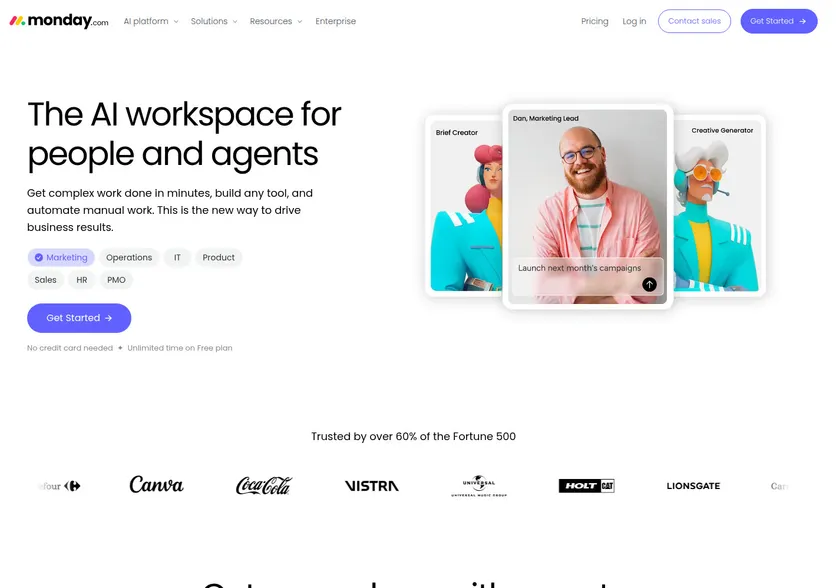
For a franchise rolling out the same playbook everywhere, this monday.com plan costs nine dollars per seat a month billed annually, and its colour-coded boards show status at a glance. Boards, automations and more than two hundred integrations cover most workflows, and the mobile app keeps field and remote staff in the loop. It suits teams that think in boards and want colour and status to do the talking.
What we like
- Colourful boards that non-technical teams read at a glance
- Timeline, Gantt and calendar views from Standard
- No-code automations and 200 plus integrations
Watch out for
- Basic has no timeline view and almost no automations
- Seat bundles mean a small team still pays for three seats
How to try it
- Pick a board template and add the columns the work needs
- Invite the team and assign owners to each item
- Turn on automations for status changes and due-date reminders
3. ClickUp
Best for: Teams that want one app instead of five
Paid tool Starting price: $9/user/month · Nine dollars per user a month billed annually ($12 billed monthly); Business is $17 a user a month billed annually ($25 monthly); Enterprise and Max are quoted
Free plan: Free plan (unlimited members)
For a franchise rolling out the same playbook everywhere, this ClickUp plan costs nine dollars per user a month billed annually, and it folds docs, goals and time tracking into one workspace. Fifteen views, from list and board to Gantt and calendar, sit beside docs, whiteboards, goals and native time tracking. It is the best value in this list for a team that wants one app instead of five.

What we like
- Fifteen plus views including list, board, Gantt and calendar
- Docs, goals, time tracking and chat in one workspace
- Generous free plan with unlimited members
Watch out for
- The sheer number of settings can overwhelm new teams
- Some views and automations need the Business tier
How to try it
- Build a space for the team and add lists for each workstream
- Switch on the views each project needs, such as board or Gantt
- Set goals and dashboards to watch progress in one place
4. Smartsheet
Best for: Operations-led teams that already think in grids
Paid tool Starting price: $9/member/month · Nine dollars per member a month billed annually ($12 billed monthly) on Pro, which caps at ten members; Business is $19 a member a month billed annually ($24 monthly) with a three-member minimum; Enterprise is quoted
Free plan: No free plan; 30-day free trial
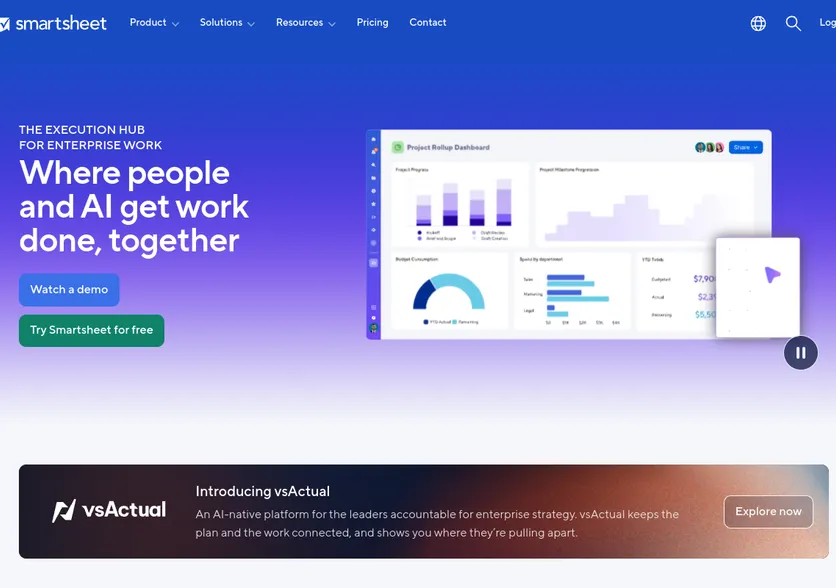
For a franchise rolling out the same playbook everywhere, this Smartsheet plan costs nine dollars per member a month billed annually, and its spreadsheet grid turns plans into reports without extra tools. Sheets, forms, dashboards and automated alerts handle intake, approvals and reporting, with card, Gantt and calendar views on the same data. It suits operations-led teams that already think in rows and columns.
What we like
- Spreadsheet grid that finance and operations teams already understand
- Gantt, card and calendar views on the same data
- Automation, forms and dashboards without code
Watch out for
- Pro stops at ten members, so growth forces a jump to Business
- No free plan for new signups, only a thirty-day trial
How to try it
- Start from a project sheet template and add columns
- Switch to Gantt view and link task dependencies
- Set up automated alerts for due dates and approvals
5. Trello
Best for: Teams that want the simplest possible board
Paid tool Starting price: $5/user/month · Five dollars per user a month billed annually ($6 billed monthly); Premium is $10 a user a month billed annually ($12.50 monthly); Enterprise starts at $17.50 a user a month
Free plan: Free plan (up to 10 collaborators)
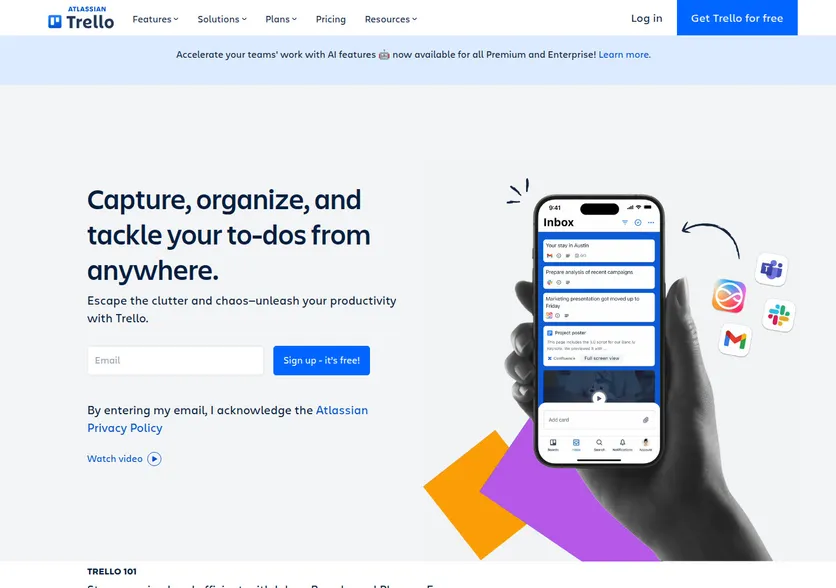
For a franchise rolling out the same playbook everywhere, this Trello plan costs five dollars per user a month billed annually, and its kanban boards make the next step obvious to everyone. Unlimited boards, custom fields, advanced checklists and a thousand automation runs a month come with Standard, plus a generous free tier. It is the simplest way to get a whole team looking at the same board.
What we like
- Kanban boards anyone learns in minutes
- Butler automation and Power-Ups extend every board
- Free plan covers ten collaborators and unlimited cards
Watch out for
- Calendar and Timeline views need Premium
- Reporting and workload views are thin next to full project tools
How to try it
- Create a board and add lists for each stage of the work
- Add cards with owners, due dates and checklists
- Turn on Butler rules to move cards automatically
6. Basecamp
Best for: Teams that want one flat price and calmer communication
Paid tool Starting price: $79/month · Seventy-nine dollars a month flat on Pro for up to ten users, with unlimited projects; Pro Plus is $99 a month flat; Pro Unlimited is $199 a month billed annually ($329 billed monthly); Freelancer is $29 a month flat
Free plan: Free plan
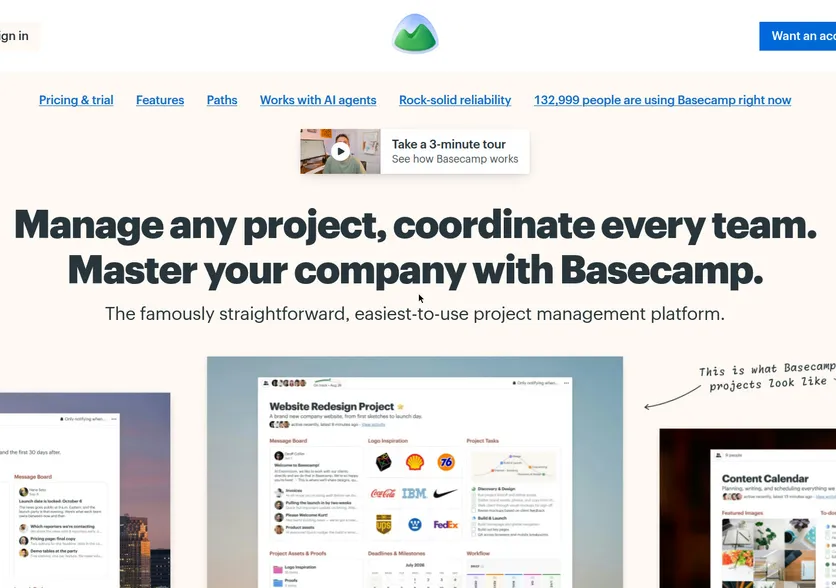
For a franchise rolling out the same playbook everywhere, this Basecamp plan costs seventy-nine dollars a month flat, and it keeps discussion, files and schedules in one calm place. Message boards, to-do lists, schedules, docs and file storage replace scattered email threads, and clients join without extra seat charges. It is the calmest option here, and the flat price makes budgeting easy.
What we like
- One flat monthly price whatever the headcount
- Message boards, to-dos, schedules and docs in one calm place
- Clients join projects without extra seat charges
Watch out for
- No Gantt chart or workload view for detailed planning
- Reporting is light next to dedicated project tools
How to try it
- Create a project and invite the team and clients
- Add to-dos, a schedule and a message board
- Check the activity feed each morning for updates
7. Teamwork
Best for: Client-service teams that bill by the hour
Paid tool Starting price: $9.99/user/month · Nine dollars and ninety-nine cents per user a month billed annually on Basics, with a three-seat minimum; Accelerate is twenty-four dollars and ninety-nine cents a user a month billed annually with a five-seat minimum; Optimize and Enterprise are quoted; free plan covers up to five users. Monthly billing costs more — yearly billing saves twenty-nine percent. The older Deliver and Grow tiers are retired.
Free plan: Free plan (up to 5 users, 5 projects)
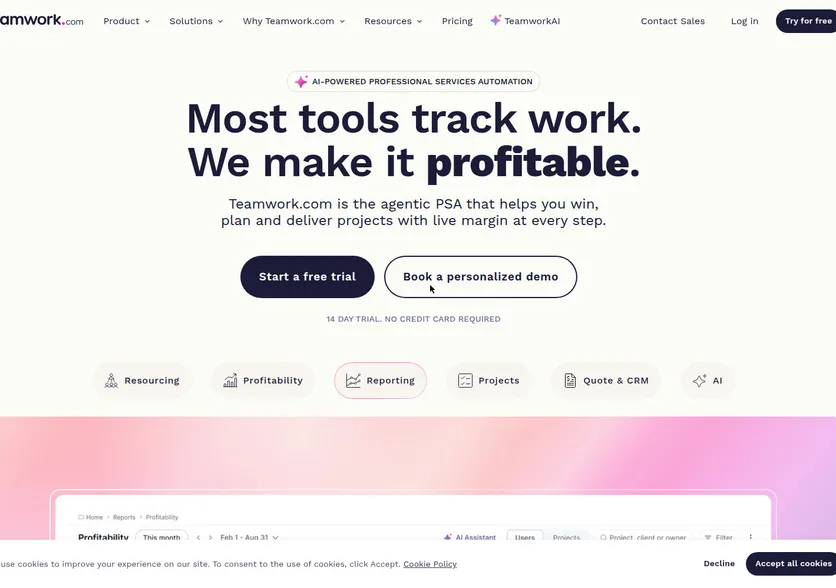
For a franchise rolling out the same playbook everywhere, this Teamwork plan costs nine dollars and ninety-nine cents per user a month billed annually, and it ties time tracking and billing straight to each project. Gantt charts, milestones, project templates, time tracking and invoicing are built for teams that bill clients for the hours they log. It suits client-service teams that need hours and budgets beside the plan.
What we like
- Time tracking, billing and invoicing built for client work
- Gantt charts, milestones and project templates
- Client users see only their own projects
Watch out for
- The vendor pricing page showed conflicting figures in November 2026 reads
- Workload and portfolio tools need the Accelerate tier
How to try it
- Create a project from a template and add milestones
- Log time against tasks and track the budget
- Share a client view so customers see progress
8. Notion
Best for: Teams that want projects, docs and wikis in one place
Paid tool Starting price: $10/user/month · Ten dollars per user a month billed annually ($12 billed monthly) on Plus; Business is $20 a user a month billed annually ($24 monthly) and adds full Notion AI; Enterprise is quoted
Free plan: Free plan
For a franchise rolling out the same playbook everywhere, this Notion plan costs ten dollars per user a month billed annually, and it pairs project boards with the docs and wikis teams already keep. Databases, timelines, kanban boards and linked docs let a team shape the workspace around its own process instead of the other way round. It suits teams that want their projects, docs and knowledge base in one place.

What we like
- Docs, databases and project boards in one flexible workspace
- Templates for roadmaps, wikis and meeting notes
- Guests join pages free on paid plans
Watch out for
- Project tracking needs setup, since it starts as a blank page
- Offline access is limited next to native apps
How to try it
- Pick a project template or build a database for tasks
- Add status, owner and date properties to every task
- Link docs and meeting notes to the project page
Prices above were checked on each vendor’s own website on Nov 28, 2026 and can change — the vendor’s page is the final word. Vendor links are editorial: nobody paid to be listed or ranked here. Vendors who want a featured listing can see how it works on our Get listed page.
How to roll out the same playbook to every location
Write the playbook once, as a template with every step a new location needs, from fit-out to first trading day, and copy it for each opening instead of letting every site improvise. Give each location its own project but roll them up into one portfolio, so head office sees every opening on one screen. Standardise the reporting, so every location answers the same questions in the same format and the numbers can actually be compared. Review progress weekly from the portfolio view, and step in early where a location falls behind, because a late opening costs more than a difficult conversation. After each opening, fold the fixes back into the template, so location ten opens smoother than location one. A franchise that treats its playbook as a living document gets better with every site it opens.
Before you buy
- Check that templates can be copied to every new location without rebuilding
- Confirm a portfolio view shows all locations and openings in one place
- Ask whether reporting can be standardised so locations can be compared fairly
- Make sure location managers can see only their own site, not the whole network
- Test the rollout template on a real opening before using it network-wide
Official websites
Official websites of the products reviewed above. Features and prices were checked against these sites when this guide was written, and they can change, so confirm on the vendor site before you buy.
Frequently asked questions
What is project management software for franchises?
It is software that plans and tracks work across many franchise locations, from new openings and refurbishments to marketing rollouts and compliance checks. The best tools turn the franchise playbook into a repeatable template, so every location opens and operates the same way. They also give head office one portfolio view of all locations, which replaces site visits and spreadsheets as the way to see what is happening.
How much does Asana cost for a franchise?
Asana Starter costs ten dollars and ninety-nine cents per user a month billed annually, or thirteen dollars and forty-nine cents billed monthly. That plan adds timeline and Gantt views, dashboards, forms, custom fields and unlimited automations, plus free guests for franchisees and contractors. A franchise with many locations will usually want Advanced at twenty-four dollars and ninety-nine cents for portfolios and workload views.
Can franchisees use the tool without paying for seats?
Yes, on several of these tools. Asana offers free guests, Basecamp lets clients join without extra seat charges, and Smartsheet Business includes unlimited free guests. monday.com Standard includes guest access, though the guest ratio differs by plan. The exact guest rules differ by vendor, so check the pricing page before promising franchisees access.
How do these tools keep locations consistent?
Through templates and portfolios. A head office builds the opening, training or marketing template once, then copies it to every location, so each site follows the same steps. Portfolios roll every location's project into one view, and standardised reporting lets head office compare sites fairly. The tools cannot enforce consistency by themselves, but a shared template makes drift visible the moment a location skips a step.
Which tool is best for a franchise?
Asana is the best overall pick for a franchise, because its templates and portfolios copy a proven process to every new site. Basecamp is the best pick for a franchise that wants one flat monthly price and calmer communication, at seventy-nine dollars a month for up to ten users. monday.com is the better pick when head office wants the most visual board for tracking many locations at once.
Compare the eight tools above, then start a free trial on the one that fits how the franchise rolls out before paying for a full year.
Browse Business Tools tools