On this page
A general contractor runs several jobs at once, each with its own schedule, subs, inspections and punch list, and a slip on one job steals the crew from another. The eight tools below were picked for contractors who need schedules, field coordination and budgets in one place. Buildertrend leads because it covers scheduling, estimating and the client portal for residential builders, for four hundred and forty-nine dollars a month billed annually, and the rest are ranked on how well they keep a job on schedule.
How we researched this
We checked every price on the vendor pricing page on November 28, 2026, and only included tools with a published US dollar list price. Quote-only platforms such as Procore, Autodesk Construction Cloud and Oracle Aconex publish no prices, so they are not in this list. Prices change, so confirm the current figure on the vendor site before you buy.
Compare the tools
| Name | Best for | Starting price | Free plan | |
|---|---|---|---|---|
 Buildertrend | Residential builders who need scheduling and a client portal | $449/month | No free plan; free demo | Visit |
 Fieldwire | Field crews living on drawings and punch lists | $39/user/month | Free plan (up to 5 users, 3 projects) | Visit |
 Smartsheet | Operations-led teams that already think in grids | $9/member/month | No free plan; 30-day free trial | Visit |
 Asana | Teams that want structure without a long setup | $10.99/user/month | Free plan (up to 2 users) | Visit |
 monday.com | Teams that think in boards and want visual status | $9/seat/month | Free plan (up to 2 seats) | Visit |
 ClickUp | Teams that want one app instead of five | $9/user/month | Free plan (unlimited members) | Visit |
 Wrike | Teams that outgrew simple boards and need workload planning | $9.80/user/month | Free plan (unlimited users, 200 tasks) | Visit |
 TeamGantt | Crews that need a clear timeline and nothing more | $19/manager/month | Free plan (1 manager, 1 project) | Visit |
The project management software for general contractors, compared
1. Buildertrend
Best for: Residential builders who need scheduling and a client portal
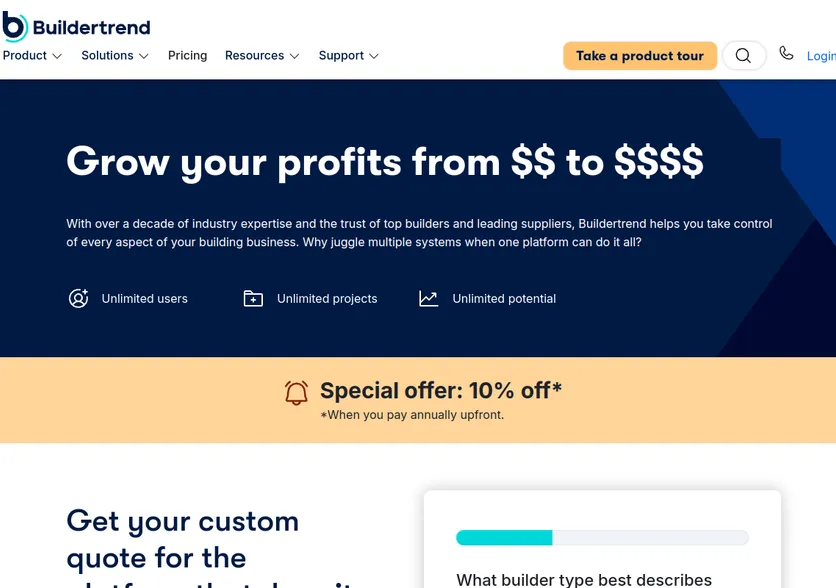
Paid tool Starting price: $449/month · Four hundred and forty-nine dollars a month billed annually on Essential ($499 billed monthly); Advanced is $799 a month; Complete is $1,099 a month; a $300 first-month discount is a promotion, not the list price; one November 2026 read found the vendor page showing no rate without a demo flow, so confirm at checkout
Free plan: No free plan; free demo
For a contractor running jobs across several sites, this Buildertrend plan costs four hundred and forty-nine dollars a month billed annually, and it covers scheduling, estimating and the client portal in one place. Schedules, daily logs, proposals, selections, change orders and payments run on one platform, with unlimited users on every plan. It is built for residential builders, not general project work, and it shows.
What we like
- Scheduling, estimating and job costing for home builders
- Client portal with selections and change orders
- Unlimited users on every plan
Watch out for
- The entry price is steep for a small contractor
- Onboarding fees are reported on top of the subscription
How to try it
- Set up the company profile and import the job list
- Build the schedule and share the client portal
- Log daily updates and track change orders
2. Fieldwire
Best for: Field crews living on drawings and punch lists
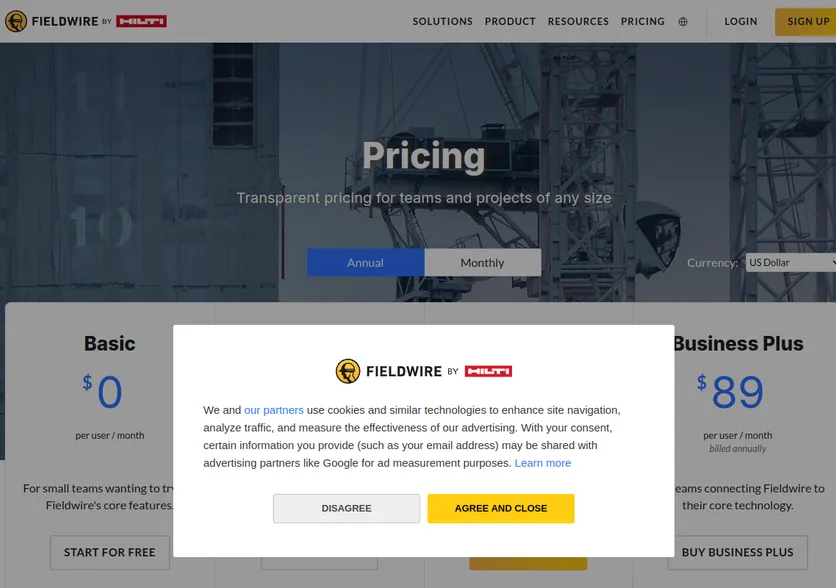
Paid tool Starting price: $39/user/month · Thirty-nine dollars per user a month billed annually on Pro ($54 billed monthly); Business is $64 a user a month billed annually ($79 monthly); Business Plus is $89 ($104 monthly); older listings showing $29 for Pro are stale
Free plan: Free plan (up to 5 users, 3 projects)
For a contractor running jobs across several sites, this Fieldwire plan costs thirty-nine dollars per user a month billed annually, and its plan markup and punch lists work offline on site. Plan viewing, markups, tasks, punch lists, inspections and photo documentation work from phones and tablets, even without a signal. It is the field-first pick when the plan set is the centre of the job.
What we like
- Plan viewing and markup that works offline on site
- Tasks, punch lists and inspections from a phone
- Photos and checklists sync to the office in real time
Watch out for
- RFIs, submittals and budgets need Business Plus at $89
- No estimating or deep job costing built in
How to try it
- Upload the plan set and invite the crew
- Create tasks and punch items pinned to the drawings
- Run inspections and photo reports from the mobile app
3. Smartsheet
Best for: Operations-led teams that already think in grids
Paid tool Starting price: $9/member/month · Nine dollars per member a month billed annually ($12 billed monthly) on Pro, which caps at ten members; Business is $19 a member a month billed annually ($24 monthly) with a three-member minimum; Enterprise is quoted
Free plan: No free plan; 30-day free trial
For a contractor running jobs across several sites, this Smartsheet plan costs nine dollars per member a month billed annually, and its spreadsheet grid turns plans into reports without extra tools. Sheets, forms, dashboards and automated alerts handle intake, approvals and reporting, with card, Gantt and calendar views on the same data. It suits operations-led teams that already think in rows and columns.

What we like
- Spreadsheet grid that finance and operations teams already understand
- Gantt, card and calendar views on the same data
- Automation, forms and dashboards without code
Watch out for
- Pro stops at ten members, so growth forces a jump to Business
- No free plan for new signups, only a thirty-day trial
How to try it
- Start from a project sheet template and add columns
- Switch to Gantt view and link task dependencies
- Set up automated alerts for due dates and approvals
4. Asana
Best for: Teams that want structure without a long setup
Paid tool Starting price: $10.99/user/month · Ten dollars and ninety-nine cents per user a month billed annually ($13.49 billed monthly); Advanced is $24.99 a user a month billed annually ($30.49 monthly); Enterprise is quoted
Free plan: Free plan (up to 2 users)
For a contractor running jobs across several sites, this Asana plan costs ten dollars and ninety-nine cents per user a month billed annually, and it keeps every deadline visible on one shared timeline. Starter adds timeline and Gantt views, dashboards, forms, custom fields and unlimited automations, with free guests for clients and contractors. It is the safest default for a team that wants structure without a long setup.

What we like
- Timeline and Gantt views with dependencies
- Unlimited automations and custom fields on Starter
- Free guests and a generous template library
Watch out for
- Seats are sold in blocks above five users, so the bill jumps in steps
- Portfolios, goals and workload need the Advanced tier
How to try it
- Create a project from a template and set its timeline
- Assign tasks with owners and due dates
- Track progress on the dashboard and adjust dates as work slips
5. monday.com
Best for: Teams that think in boards and want visual status
Paid tool Starting price: $9/seat/month · Nine dollars per seat a month billed annually ($12 billed monthly); Standard is $12 a seat a month billed annually ($14 monthly); Pro is $19 ($24 monthly); paid plans start at three seats
Free plan: Free plan (up to 2 seats)
For a contractor running jobs across several sites, this monday.com plan costs nine dollars per seat a month billed annually, and its colour-coded boards show status at a glance. Boards, automations and more than two hundred integrations cover most workflows, and the mobile app keeps field and remote staff in the loop. It suits teams that think in boards and want colour and status to do the talking.

What we like
- Colourful boards that non-technical teams read at a glance
- Timeline, Gantt and calendar views from Standard
- No-code automations and 200 plus integrations
Watch out for
- Basic has no timeline view and almost no automations
- Seat bundles mean a small team still pays for three seats
How to try it
- Pick a board template and add the columns the work needs
- Invite the team and assign owners to each item
- Turn on automations for status changes and due-date reminders
6. ClickUp
Best for: Teams that want one app instead of five
Paid tool Starting price: $9/user/month · Nine dollars per user a month billed annually ($12 billed monthly); Business is $17 a user a month billed annually ($25 monthly); Enterprise and Max are quoted
Free plan: Free plan (unlimited members)
For a contractor running jobs across several sites, this ClickUp plan costs nine dollars per user a month billed annually, and it folds docs, goals and time tracking into one workspace. Fifteen views, from list and board to Gantt and calendar, sit beside docs, whiteboards, goals and native time tracking. It is the best value in this list for a team that wants one app instead of five.

What we like
- Fifteen plus views including list, board, Gantt and calendar
- Docs, goals, time tracking and chat in one workspace
- Generous free plan with unlimited members
Watch out for
- The sheer number of settings can overwhelm new teams
- Some views and automations need the Business tier
How to try it
- Build a space for the team and add lists for each workstream
- Switch on the views each project needs, such as board or Gantt
- Set goals and dashboards to watch progress in one place
7. Wrike
Best for: Teams that outgrew simple boards and need workload planning
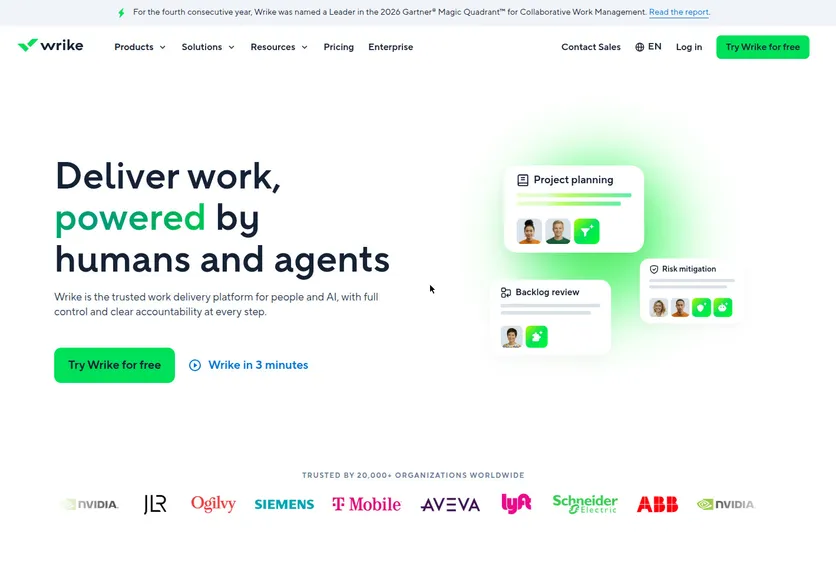
Paid tool Starting price: $9.80/user/month · Nine dollars and eighty cents per user a month billed annually on Team, shown as ten dollars on the vendor page, for two to twenty-five users; Business is twenty-four dollars and eighty cents a user a month billed annually (shown as twenty-five dollars), for five to two hundred users; Enterprise and Pinnacle are quoted
Free plan: Free plan (unlimited users, 200 tasks)
For a contractor running jobs across several sites, this Wrike plan costs nine dollars and eighty cents per user a month billed annually, and its Gantt charts and workload views keep capacity honest. Folders, spaces, dashboards and interactive Gantt charts organise large portfolios, and request forms bring new work in through one door. It fits teams that outgrow simple boards and need real workload planning.
What we like
- Interactive Gantt charts and workload views built in
- Request forms and approvals route work in cleanly
- Strong reporting across folders and spaces
Watch out for
- Passing fifteen users forces the whole team onto Business at $25
- The interface packs in so much that small teams can find it heavy
How to try it
- Set up a space and folders for each project
- Build the plan on a Gantt chart with dependencies
- Use request forms to take in new work
8. TeamGantt
Best for: Crews that need a clear timeline and nothing more
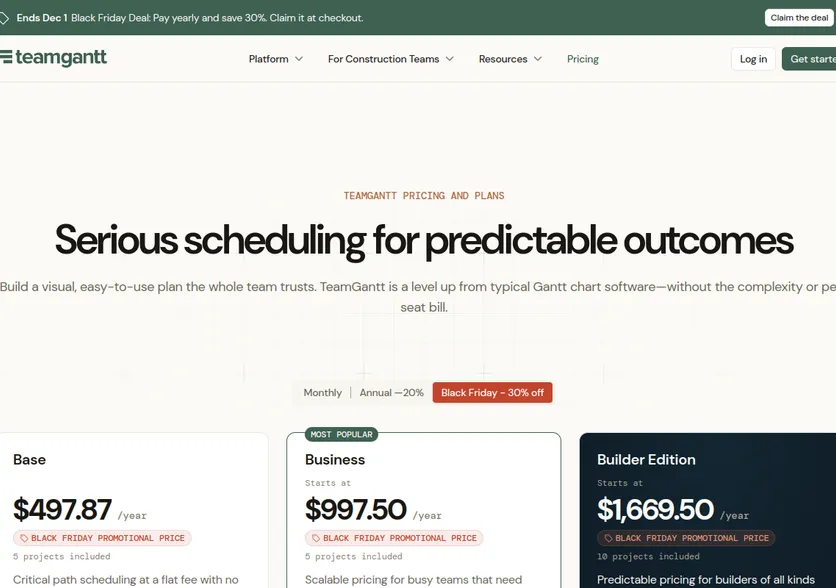
Paid tool Starting price: $19/manager/month · Nineteen dollars per manager a month billed annually; collaborators join projects free, so only managers are billed; Lite and Pro tiers are priced per manager with higher project limits; Enterprise is quoted
Free plan: Free plan (1 manager, 1 project)
For a contractor running jobs across several sites, this TeamGantt plan costs nineteen dollars per manager a month billed annually, and its drag-and-drop Gantt chart is simple enough for any crew. Dependencies, baselines and workload views sit on a clean Gantt chart, and sharing a link shows clients the plan without a login. It suits crews that need a clear timeline and nothing more.
What we like
- Drag-and-drop Gantt charts anyone can read
- Baselines show planned against actual dates
- Collaborators join free, so only managers pay
Watch out for
- Task lists and boards are basic next to full project suites
- No native time tracking or invoicing
How to try it
- Create a project and add tasks to the Gantt chart
- Drag bars to set dates and link dependencies
- Share the chart link with the team and clients
Prices above were checked on each vendor’s own website on Nov 28, 2026 and can change — the vendor’s page is the final word. Vendor links are editorial: nobody paid to be listed or ranked here. Vendors who want a featured listing can see how it works on our Get listed page.
How to keep several jobs on schedule at once
Give every job its own schedule with real dependencies, so a late delivery shows its effect on the finish date before the crew is standing idle. Hold a short weekly lookahead from the schedule, not from memory, and confirm the next two weeks of subs, materials and inspections in one pass. Keep the punch list live from the first walkthrough, so small defects are fixed as they appear instead of piling up at handover. Track daily logs and photos in the tool, since a dated photo settles most disputes about what happened on site. Review budgets against actuals every week, and flag the job that drifts before it becomes the job that loses money. The schedule only works if the field team updates it, so pick a tool the foreman will actually open on a phone.
Before you buy
- Check that schedules show dependencies, since a late delivery moves the finish date
- Confirm the mobile app works offline, because job sites often have no signal
- Ask whether punch lists, inspections and daily logs live in the same tool
- Make sure clients can see progress without calling the office for updates
- Test the tool on a real job, including the schedule and the punch list
Official websites
Official websites of the products reviewed above. Features and prices were checked against these sites when this guide was written, and they can change, so confirm on the vendor site before you buy.
Frequently asked questions
What is project management software for general contractors?
It is software that plans and tracks construction work, from schedules and budgets to field coordination, inspections and punch lists. The best tools give the office a clear schedule and the field a mobile app that works on site, so both sides see the same job. They also keep clients informed through a portal, which cuts the daily calls asking how the job is going.
How much does Buildertrend cost for a general contractor?
Buildertrend Essential costs four hundred and forty-nine dollars a month billed annually, or four hundred and ninety-nine dollars billed monthly. Advanced is seven hundred and ninety-nine dollars a month, and Complete is one thousand and ninety-nine dollars a month. All plans include unlimited users, and a three-hundred-dollar first-month discount is a promotion, not the list price.
What is the cheapest tool for a general contractor?
Smartsheet Pro is the cheapest office-side option in this list, at nine dollars per member a month billed annually. Fieldwire Pro costs thirty-nine dollars per user a month billed annually, and TeamGantt costs nineteen dollars per manager a month with collaborators free. Buildertrend is the most expensive by far, but it is also the only tool here built specifically for construction.
Can these tools work offline on a job site?
Fieldwire is the strongest here, with plan viewing, markups and punch lists that work offline and sync when the signal returns. The other tools need a connection for most features, though their mobile apps cache recent work. If the crew works in basements or rural sites, offline access should decide the pick. Check the vendor's offline claims before buying, since offline often covers viewing better than editing.
Which tool is best for a general contractor?
Buildertrend is the best overall pick for a residential general contractor, because it covers scheduling, estimating and the client portal in one place. Fieldwire is the best pick for field coordination, at thirty-nine dollars per user a month with offline plan access. Smartsheet is the best value for the office side, at nine dollars per member a month with strong reporting.
Compare the eight tools above, then start a free trial or demo on the one that fits how the firm builds before paying for a full year.
Browse Business Tools tools