On this page
Research teams juggle protocols, deadlines, shared documents and collaborators, so the right tool has to keep studies, owners and timelines visible in one place. The seven tools below range from structured task trackers to database tools for samples and participants. Asana leads because it organizes study tasks, owners and timelines in shared projects for ten dollars and ninety-nine cents per user a month, and the rest are ranked on how they fit lab work.
How we researched this
We checked every price on the vendor pricing page on November 28, 2026, and only included tools with a published US dollar list price. Smartsheet Pro is the annual-billed figure for one to ten members. Prices change, so confirm the current figure on the vendor site before you buy.
Compare the tools
| Name | Best for | Starting price | Free plan | |
|---|---|---|---|---|
 Asana | Research teams organizing study tasks, owners and timelines | $10.99/user/month | Free plan (Personal, up to 2 users) | Visit |
| monday.com | Research groups mapping studies and deliverables on boards | $9/seat/month | Free plan (up to 2 seats) | Visit |
 Smartsheet | Large research programs needing governed spreadsheet structure | $9/member/month | No free plan; 30-day free trial | Visit |
 Wrike | Research teams in larger organizations needing delivery control | $9.80/user/month | Free plan (up to 5 users) | Visit |
 ClickUp | Research teams consolidating planning, notes and chat | $9/user/month | Free plan | Visit |
 Notion | Research teams living in notes, protocols and literature | $10/member/month | Free plan | Visit |
 Airtable | Research groups tracking samples and participants as data | $20/user/month | Free plan | Visit |
The project management software for research teams, compared
1. Asana
Best for: Research teams organizing study tasks, owners and timelines
Paid tool Starting price: $10.99/user/month · Ten dollars and ninety-nine cents per user a month billed annually ($13.49 billed monthly); Advanced is $24.99 a user a month billed annually ($30.49 monthly); Enterprise is quoted
Free plan: Free plan (Personal, up to 2 users)
A research team that wants a shared home for study tasks, owners and deadlines will find its clearest option here, since this Asana plan costs ten dollars and ninety-nine cents per user a month billed annually on Starter. Projects can be organized by study or workstream, and automation moves work forward without manual chasing. It fits labs and research programs that value clear task ownership and a consistent view of progress across collaborators. Forms collect intake requests from collaborators who never open the project itself.

What we like
- Timeline and Gantt views keep deadlines visible
- Automation rules move routine work without manual chasing
- Unlimited free guests on paid plans for outside collaborators
Watch out for
- Portfolios and workload views need the Advanced tier
- Per-user pricing climbs quickly as the team grows
How to try it
- Create a project from a template that matches the work
- Assign every task an owner and a due date
- Turn on a rule that moves completed work automatically
2. monday.com
Best for: Research groups mapping studies and deliverables on boards
Paid tool Starting price: $9/seat/month · Nine dollars per seat a month billed annually on Basic ($12 billed monthly); Standard is $12 a seat a month billed annually ($14 monthly); Pro is $19 ($24 monthly); paid plans start at 3 seats and seats are sold in blocks
Free plan: Free plan (up to 2 seats)
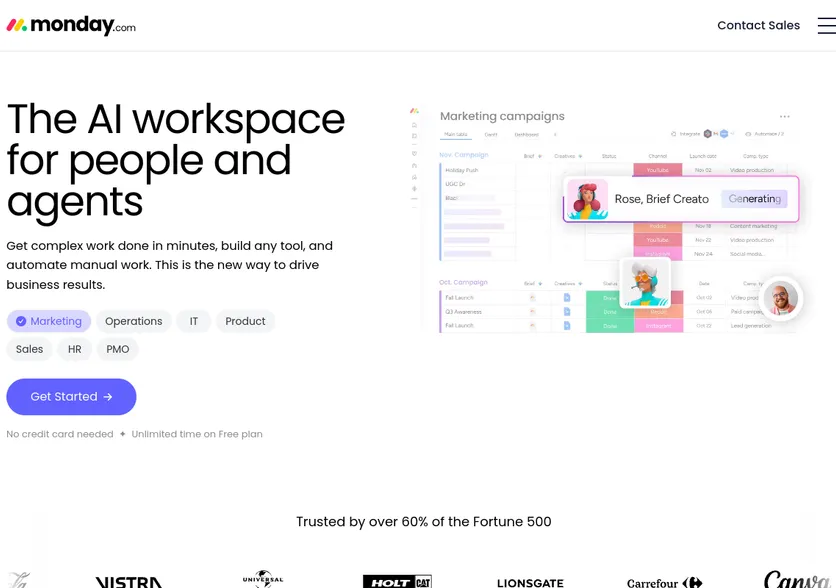
A research group that thinks visually can map studies, deliverables and reviews onto boards here, because this Monday plan costs nine dollars per seat a month billed annually on Basic. Boards and automations track experiments and deliverables, and the AI assistant handles routine handoffs. It fits teams that want a configurable workspace rather than a fixed structure and are comfortable shaping boards to match how projects run. Guest access brings external reviewers into the right boards without giving them the whole workspace.
What we like
- Boards turn any workflow into a visual plan in minutes
- Hundreds of templates shorten setup for common processes
- Automations and integrations cut repetitive admin work
Watch out for
- The 3-seat minimum means a solo user still pays for three seats
- Basic has no timeline view and almost no automations
How to try it
- Pick a template that matches the process to track
- Add status, owner and date columns to the board
- Set one automation that updates status when work moves
3. Smartsheet
Best for: Large research programs needing governed spreadsheet structure
Paid tool Starting price: $9/member/month · Nine dollars per member a month billed annually on Pro ($12 billed monthly) for 1 to 10 members; Business is $19 a member a month billed annually ($24 monthly) for 3 or more members; Enterprise and Advanced Work Management are quoted
Free plan: No free plan; 30-day free trial
A research program with many interdependent studies, milestones and approvals will find the structured option here, since this Smartsheet plan costs nine dollars per member a month billed annually on Pro. Grid-based sheets keep structured records with the governance and visibility larger programs need, and reports roll up status across groups. It fits programs that need oversight across groups and a familiar row-and-column model. Automated approval requests route milestones to the right sign-off without chasing people by email.

What we like
- Grid sheets feel familiar to anyone who plans in spreadsheets
- Gantt, card and calendar views show the same plan differently
- Forms, reports and dashboards turn sheets into a working system
Watch out for
- There is no permanent free plan, only a 30-day trial
- Pro stops at 10 members, so growing teams must move to Business
How to try it
- Build a sheet with one row per job and columns for owner and date
- Switch the sheet to Gantt view to check dependencies
- Add a report that rolls up status across sheets
4. Wrike
Best for: Research teams in larger organizations needing delivery control
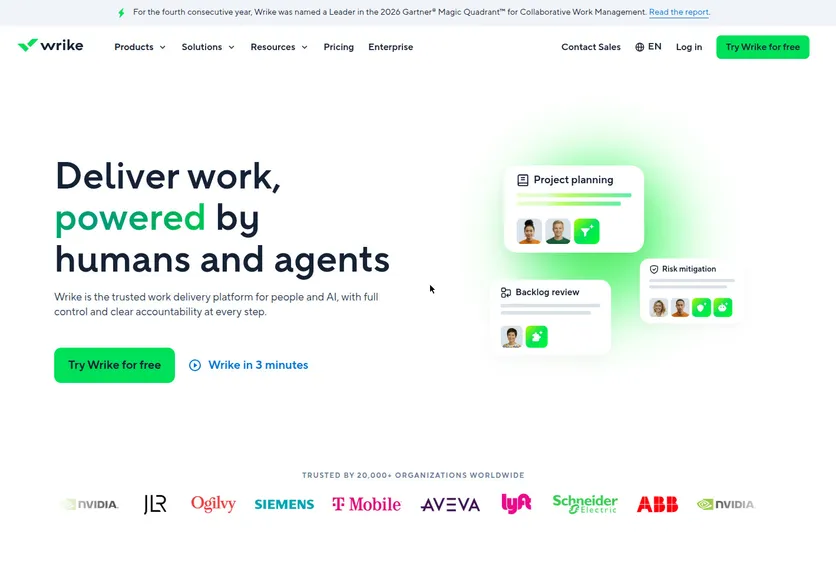
Paid tool Starting price: $9.80/user/month · Nine dollars and eighty cents per user a month billed annually on Team, shown as ten dollars on the vendor page, for two to twenty-five users; Business is twenty-four dollars and eighty cents a user a month billed annually (shown as twenty-five dollars), for five to two hundred users; Enterprise and Pinnacle are quoted
Free plan: Free plan (up to 5 users)
A research team inside a larger organization that must coordinate multi-team projects and keep delivery visible will find the controlled option here, because this Wrike plan costs nine dollars and eighty cents per user a month billed annually on Team. Folders, custom workflows and dashboards coordinate work across departments, and request forms turn incoming work into tracked tasks. It fits groups that need control over process across departments.
What we like
- Folders, projects and custom workflows give clear delivery chains
- Request forms turn incoming work into tracked tasks
- Dashboards and approvals suit teams with sign-off steps
Watch out for
- The most useful reporting and automation sit on Business, not Team
- Setup takes deliberate planning before the platform pays off
How to try it
- Create a folder for the department and a project inside it
- Build a custom workflow that matches the approval steps
- Add a request form so new work arrives as tracked tasks
5. ClickUp
Best for: Research teams consolidating planning, notes and chat
Paid tool Starting price: $9/user/month · Nine dollars per user a month billed annually on Core ($12 billed monthly); Business is $17 a user a month billed annually; Enterprise is quoted; the old $7 Unlimited tier is gone
Free plan: Free plan
A research team that wants one tool for planning, notes and communication instead of juggling separate apps will find the consolidator here, since this ClickUp plan costs nine dollars per user a month billed annually on Core. Tasks, docs, goals and chat share one workspace with list, board, calendar and Gantt views, and the free plan covers unlimited members. It suits groups willing to spend time configuring spaces and views to match their study structure for the whole team.

What we like
- Tasks, docs, goals and chat live in one workspace
- List, board, calendar and Gantt views share the same data
- The free plan covers unlimited members with core task features
Watch out for
- Feature breadth can overwhelm a team that wants a simple tracker
- Workspaces drift without regular housekeeping and conventions
How to try it
- Create a Space for the team and add one List per workstream
- Switch the List to the view each role prefers
- Set a goal and link the tasks that feed into it
6. Notion
Best for: Research teams living in notes, protocols and literature
Paid tool Starting price: $10/member/month · Ten dollars per member a month billed annually on Plus ($12 billed monthly); Business is $20 a member a month billed annually ($24 monthly) and adds full Notion AI; Enterprise is quoted
Free plan: Free plan
A research team that lives in notes, protocols and literature summaries will find its natural home here, because this Notion plan costs ten dollars per member a month billed annually on Plus. Documents and task databases sit side by side in one workspace, and custom agents and cross-app search keep the knowledge base useful. It fits groups that value writing and knowledge capture as much as task tracking. Linked databases connect literature notes to tasks, so the evidence trail stays beside the work.

What we like
- Docs, wikis and task databases live in one workspace
- Templates and linked pages build trackers without code
- Guests are not billed, so clients can view pages free
Watch out for
- Task tracking is lighter than on dedicated project platforms
- Without shared conventions, pages and databases multiply fast
How to try it
- Start from a template for the project or tracker needed
- Link the brief, the task list and the meeting notes on one page
- Set a database view that shows what is due this week
7. Airtable
Best for: Research groups tracking samples and participants as data
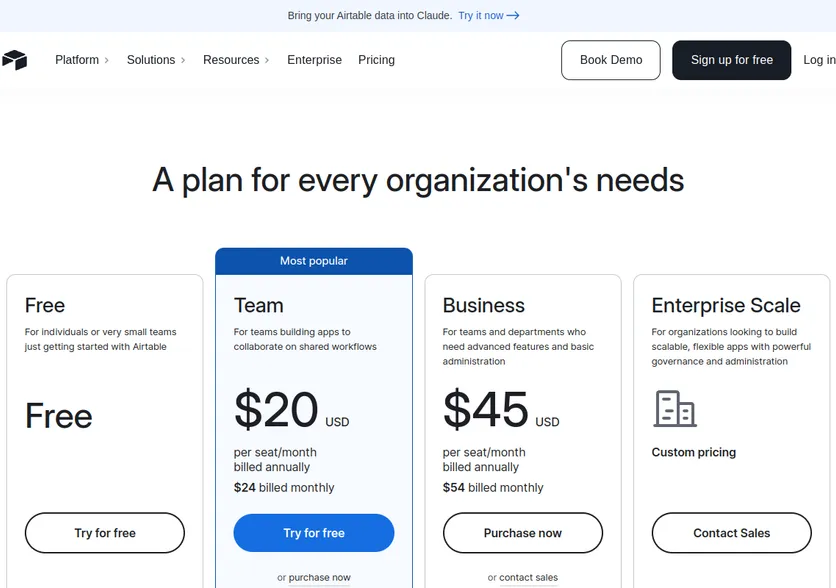
Paid tool Starting price: $20/user/month · Twenty dollars per user a month billed annually on Team ($24 billed monthly); Business is $45 a user a month billed annually; Enterprise Scale is quoted
Free plan: Free plan
A research group that tracks samples, participants or literature in structured records will find the database option here, since this Airtable plan costs twenty dollars per user a month billed annually on Team. Linked tables and lightweight apps turn records into workflows, and real-time collaboration keeps the whole team on the same data. It suits teams whose work is data-shaped and who want a flexible base rather than a fixed task list.
What we like
- Relational tables link records across projects and clients
- Automations move data between tables without manual copying
- Interfaces turn a base into a lightweight app for the team
Watch out for
- You build the structure yourself, so setup takes real thought
- It is less of a ready-made task tracker than a board tool
How to try it
- Create a base with one table per record type
- Link the tables so records connect across the workflow
- Add an automation that updates records when status changes
Prices above were checked on each vendor’s own website on Nov 28, 2026 and can change — the vendor’s page is the final word. Vendor links are editorial: nobody paid to be listed or ranked here. Vendors who want a featured listing can see how it works on our Get listed page.
How to keep a multi-stage study on track without losing the notes
Start by mapping the study lifecycle, because protocols, data collection, analysis and reporting each need a different view of the same work. Task tools suit teams focused on deadlines and coordination, database tools suit teams tracking structured records such as samples or participants, and document tools suit teams whose work is writing-heavy. Check document and file storage limits for the team, and confirm permissions for external collaborators and reviewers before the first study goes live in the tool. Run one pilot study end to end first, and only roll the tool out to the whole lab once the reporting and export steps have proved themselves.
Before you buy
- Check how the tool handles multi-stage studies and approvals
- Confirm document and file storage limits for the team
- Review automation options for recurring research steps across studies
- Verify permissions for external collaborators and reviewers on every project
- Test reporting and export options for the institution before the first study starts
Official websites
Official websites of the products reviewed above. Features and prices were checked against these sites when this guide was written, and they can change, so confirm on the vendor site before you buy.
Frequently asked questions
Which tool is best for a small research lab?
Asana is a strong starting point for small labs because task and project tracking is straightforward, at ten dollars and ninety-nine cents per user a month on Starter with a free Personal plan for up to two users. Notion works well if the lab mainly needs shared notes and planning pages. Compare both against how much structure the studies require.
Can these tools handle regulated research workflows?
Smartsheet and Wrike emphasize governance and visibility for larger programs, which suits regulated environments. Smartsheet Pro is nine dollars per member a month and Wrike Team is ten dollars per user a month. Still, confirm audit, permission and record-keeping details with each vendor, since no tool replaces the institution compliance review.
Should research teams use a database tool or a task tool?
Airtable suits teams tracking structured records such as samples or participants, at twenty dollars per user a month on Team. Asana and monday.com suit teams focused on tasks, deadlines and coordination. Some groups combine a task tool with a database rather than forcing one tool to do both jobs.
How do I choose between Notion and ClickUp for research?
Notion leans toward documents, notes and flexible databases, so it fits knowledge-heavy research at ten dollars per member a month on Plus. ClickUp bundles tasks, docs, goals and chat in one workspace for nine dollars per user a month on Core. Pick based on whether writing or task throughput dominates the lab work.
What does Smartsheet cost for a research program?
Smartsheet Pro costs nine dollars per member a month billed annually, or twelve dollars billed monthly, for one to ten members. Business is nineteen dollars per member a month billed annually for three or more members. There is no permanent free plan, only a thirty-day trial, so budget for paid seats from the start.
Compare the seven tools above, then start with a free plan on the tool that matches how the lab already runs studies before paying for a full year.
Browse Business Tools tools