On this page
A biotech programme runs on many tracks at once: research, validation, regulatory filings and manufacturing, each with its own milestones and owners. The eight tools below cover that job for teams of every size, from a small lab running its first study to a company with several programmes in parallel. Smartsheet leads because its sheets and dashboards give managers a live view of every trial stage for nine dollars per member a month, and the rest are ranked on how well they fit biotech work for the price.
How we researched this
We checked every price on the vendor pricing page on November 28, 2026, and only included tools with a published US dollar list price. The specialist lab and clinical platforms that sell by quote, including Benchling, LabWare and Dotmatics, publish no prices, so they are not in this list. Prices change, so confirm the current figure on the vendor site before you buy.
Compare the tools
| Name | Best for | Starting price | Free plan | |
|---|---|---|---|---|
 Smartsheet | Teams that plan in spreadsheets | $9/member/month | No free plan; 30-day free trial | Visit |
 Jira | Teams that ship work in sprints | $9.70/user/month | Free plan (up to 10 users) | Visit |
 Airtable | Teams that track work as linked records | $20/user/month | Free plan (up to 5 editors) | Visit |
 Asana | Teams that need timelines and portfolios | $10.99/user/month | Free plan (Personal, up to 2 users) | Visit |
 monday.com | Teams that want boards for any workflow | $9/seat/month | Free plan (up to 2 seats) | Visit |
 ClickUp | Small teams that want everything in one app | $9/user/month | Free plan | Visit |
 Wrike | Teams that need requests and proofing | $10/user/month | Free plan (200 active tasks) | Visit |
 Notion | Teams that keep plans and notes together | $10/member/month | Free plan | Visit |
The project management software for biotech teams, compared
1. Smartsheet
Best for: Teams that plan in spreadsheets
Paid tool Starting price: $9/member/month · Nine dollars per member a month billed annually on Pro ($12 billed monthly); Business is $19 a member a month billed annually ($24 monthly); Enterprise and Advanced Work Management are quoted; Pro caps at ten members
Free plan: No free plan; 30-day free trial
Biotech teams tracking studies, samples and regulatory milestones in sheets will like this Smartsheet plan, which costs nine dollars per member a month billed annually, and its dashboards give managers a live view of every trial stage. Its spreadsheet-style sheets feel familiar to anyone who plans in rows and columns, while Gantt views and dependencies keep dates honest. Automations and proofing tools handle approvals without a separate app, and dashboards surface the numbers managers actually check.

What we like
- Spreadsheet-style sheets that new users learn in minutes
- Gantt, dependencies and critical path in the same sheet
- Automations and proofing handle approvals without a second app
Watch out for
- Pro stops at ten members, forcing a jump to Business
- Only paid members can edit, so collaborators cost seats
How to try it
- Build a sheet with tasks, owners and dates, then switch on the Gantt view
- Add dependencies and a critical path to find the dates that matter
- Set automations to alert owners when a date or status changes
2. Jira
Best for: Teams that ship work in sprints
Paid tool Starting price: $9.70/user/month · Nine dollars and seventy cents per user a month is the monthly list price on Standard for one to one hundred users; Premium is $19.60; annual Standard is sold in fixed tiers ($950 a year for up to ten users, $9,700 for up to one hundred); the $8.48 figure seen in some listings is a derived blended figure, not the list price
Free plan: Free plan (up to 10 users)
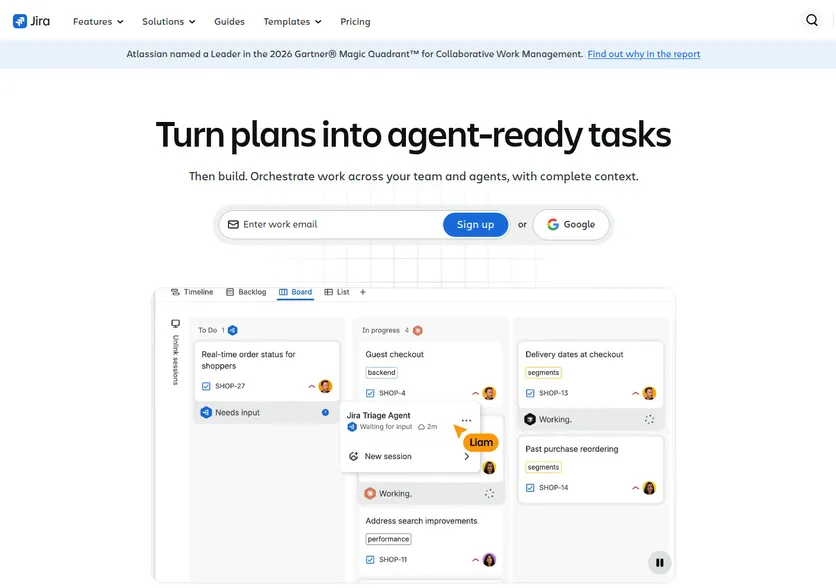
A biotech team that runs lab work in sprints with software-style rigour needs this Jira plan, which costs nine dollars and seventy cents per user a month, and its backlogs keep experiments and validations in order. Its boards, backlogs and sprints are built for teams that ship software in regular cycles. Roadmaps and release tracking keep stakeholders informed, and its marketplace adds integrations for almost every development tool.
What we like
- Boards, backlogs and sprints built for software delivery
- Roadmaps and release tracking keep stakeholders informed
- A huge marketplace adds integrations for almost every dev tool
Watch out for
- Setup is heavy for teams that do not run sprints
- The monthly list price is higher than the annual per-user average
How to try it
- Create a project and set up a board with the team's workflow
- Add issues to the backlog, then plan them into sprints
- Review the roadmap each sprint to keep releases on track
3. Airtable
Best for: Teams that track work as linked records
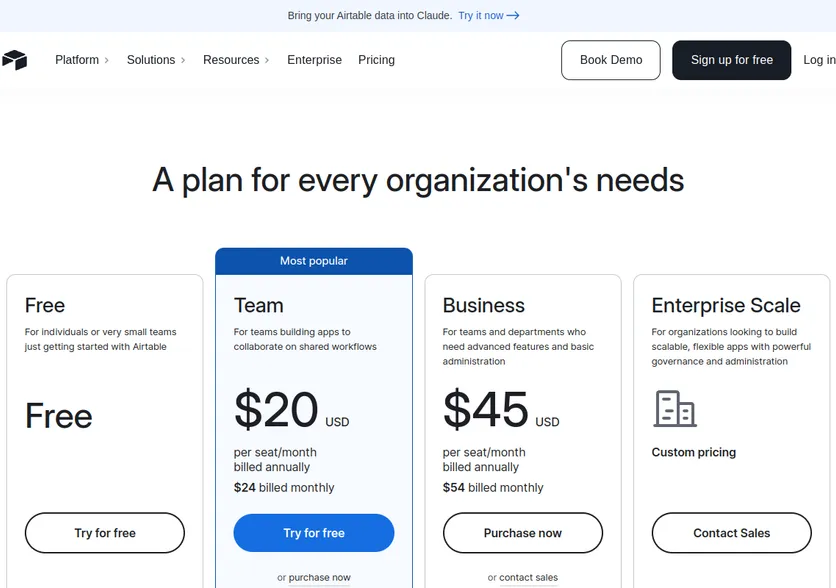
Paid tool Starting price: $20/user/month · Twenty dollars per user a month billed annually on Team ($24 billed monthly); Business is $45 a user a month billed annually ($54 monthly); Enterprise Scale is quoted; Team bills commenters as seats while Business does not
Free plan: Free plan (up to 5 editors)
For a lab that tracks samples, assays and results as linked records, this Airtable plan costs twenty dollars per user a month billed annually, and its views give each scientist the slice of data they need. Its bases combine spreadsheet familiarity with linked records, views and automations that behave like a lightweight database. Interfaces turn a base into a focused app for each role, and templates cover common project setups.
What we like
- Linked records and views behave like a lightweight database
- Interfaces turn a base into a focused app for each role
- Automations move records between stages without manual work
Watch out for
- Team bills commenters as seats, so costs grow fast
- Record limits force an upgrade once a base grows large
How to try it
- Create a base from a template and define its tables and fields
- Build views for each role, from kanban to calendar to gallery
- Add automations to move records and alert owners at each stage
4. Asana
Best for: Teams that need timelines and portfolios
Paid tool Starting price: $10.99/user/month · Ten dollars and ninety-nine cents per user a month billed annually ($13.49 billed monthly); Advanced is $24.99 a user a month billed annually ($30.49 monthly); Enterprise is quoted; seats are sold in blocks above five users
Free plan: Free plan (Personal, up to 2 users)
Biotech teams coordinating research, clinical work and filings across departments will lean on this Asana plan, which costs ten dollars and ninety-nine cents per user a month billed annually, and its portfolios track every programme toward its milestone. Its timeline and board views keep every workstream visible in one place, and custom fields track the details that matter to the team. Automations clear routine status updates from the calendar, and portfolios roll many projects into a single progress view.

What we like
- Timeline and Gantt views with dependencies built in
- Unlimited automations and custom fields on Starter
- Portfolios roll many projects into one progress view
Watch out for
- Seats are sold in blocks above five users, so small teams can overpay
- Goals and workload tracking need the Advanced plan
How to try it
- Create a project from a template and set its timeline and milestones
- Assign owners and due dates, then add custom fields for the details that matter
- Open the portfolio view each week to check progress across every project
5. monday.com
Best for: Teams that want boards for any workflow
Paid tool Starting price: $9/seat/month · Nine dollars per seat a month billed annually on Basic ($12 billed monthly); Standard is $12 a seat a month billed annually ($14 monthly); Pro is $19 ($24 monthly); Enterprise is quoted; paid plans need a three-seat minimum
Free plan: Free plan (up to 2 seats)
A growing biotech firm that needs one board per study and dashboards for leadership will like this monday.com plan, which costs nine dollars per seat a month billed annually, and its automations flag overdue validations. Its boards bend to almost any workflow, from simple task lists to multi-stage approvals with owners and due dates. Automations move work forward without manual chasing, and dashboards give managers a live view of progress across every project.

What we like
- Boards adapt to almost any workflow without code
- Automations and integrations cover the routine chasing
- Dashboards show live progress across every project
Watch out for
- Paid plans need a three-seat minimum, so solo users pay for three
- Basic has no automations, so most teams need Standard or Pro
How to try it
- Pick a board template and add the columns the workflow needs
- Set up automations for status changes and deadline reminders
- Build a dashboard that pulls progress from every active board
6. ClickUp
Best for: Small teams that want everything in one app
Paid tool Starting price: $9/user/month · Nine dollars per user a month billed annually on Core ($12 billed monthly); Business is $17 a user a month billed annually; Enterprise is quoted; a Max plan at $100 a user a month is listed for AI-heavy teams
Free plan: Free plan
Small biotech teams that want docs, experiments and tasks together can start cheaply with this ClickUp plan, which costs nine dollars per user a month billed annually, and its custom fields track sample IDs and protocol versions. Its docs, whiteboards, goals and chat sit beside tasks, so a team can plan and discuss work without leaving the app. Custom views and automations adapt to almost any process, and the free plan is generous enough for small teams to start properly.

What we like
- Docs, whiteboards, goals and chat sit beside tasks
- Custom views and automations adapt to almost any process
- The free plan is generous enough for small teams to start properly
Watch out for
- The depth of features can overwhelm a team that wants simple boards
- Some advanced reporting sits on the higher Business plan
How to try it
- Create a space for the team and add lists for each active project
- Choose the views each role needs, from board to Gantt to calendar
- Set automations for handoffs so nothing waits on a manual update
7. Wrike
Best for: Teams that need requests and proofing
Paid tool Starting price: $10/user/month · Ten dollars per user a month billed annually on Team ($25 on Business); Team covers two to fifteen users and Business five to two hundred; Pinnacle and Apex are quoted; no monthly billing is published
Free plan: Free plan (200 active tasks)
When a biotech programme needs request forms for lab resources and proofing on regulatory documents, this Wrike plan costs ten dollars per user a month billed annually, and its resource views show who is overloaded. Its Gantt charts, request forms and proofing tools cover the full journey from brief to sign-off. Templates repeat proven workflows, and resource views show who is overloaded before deadlines slip.
What we like
- Gantt charts, request forms and proofing in one place
- Templates repeat proven workflows across the team
- Resource views show overload before deadlines slip
Watch out for
- Team stops at fifteen users, pushing growing teams to Business
- No monthly billing is published, so the commitment is annual
How to try it
- Start from a template and set the project timeline with dependencies
- Turn on request forms so new work arrives with the details attached
- Check the workload view each week and rebalance overloaded owners
8. Notion
Best for: Teams that keep plans and notes together
Paid tool Starting price: $10/member/month · Ten dollars per member a month billed annually on Plus ($12 billed monthly); Business is $20 a member a month billed annually ($24 monthly); Enterprise is quoted; full Notion AI is only on Business and above
Free plan: Free plan
A research team that keeps protocols, lab notes and results in one workspace will enjoy this Notion plan, which costs ten dollars per member a month billed annually, and its databases link experiments to their outcomes. Its pages and databases let a team keep project plans, meeting notes and reference material in one connected workspace. Templates and linked views turn a simple page into a tracker, a roadmap or a content calendar with little setup.

What we like
- Pages and databases keep plans and notes in one workspace
- Templates turn a page into a tracker, roadmap or calendar
- Guests are free, so clients can view without a seat
Watch out for
- Full AI and single sign-on need the Business plan
- It is a workspace first, so strict project controls need setup
How to try it
- Create a page for the project and add a database for its tasks
- Link related pages so plans, notes and decisions stay connected
- Share the page with guests who only need to view progress
Prices above were checked on each vendor’s own website on Nov 28, 2026 and can change — the vendor’s page is the final word. Vendor links are editorial: nobody paid to be listed or ranked here. Vendors who want a featured listing can see how it works on our Get listed page.
How to keep a biotech programme on track
Start with one plan that covers research, validation and regulatory work, because a team that plans each stream separately will miss the handoffs between them. Give every study a milestone, an owner and a due date, and record results against the protocol they came from so nobody has to guess later. Track samples and assays as linked records rather than in scattered spreadsheets, and keep the audit trail with the study file. Review the plan weekly, flag overdue validations early, and confirm the next milestone with the whole team before moving on.
Before you buy
- Confirm the tool can track studies, samples and regulatory milestones in one place
- Check whether results can be linked to the protocol and sample they came from
- Ask if the tool keeps an audit trail that stands up to a regulatory review
- Make sure the schedule can show every programme stage, from research to filing
- Test the tool on a real study plan before paying, including a validation round
Official websites
Official websites of the products reviewed above. Features and prices were checked against these sites when this guide was written, and they can change, so confirm on the vendor site before you buy.
Frequently asked questions
What is project management software for biotech teams?
It is software that plans and tracks the work of a biotech team, from research and lab studies through validation and regulatory filings. Good tools keep studies, samples, results and milestones linked, which matters when a programme runs for years and regulators ask for the full trail.
How much does Smartsheet cost for biotech teams?
Smartsheet costs nine dollars per member a month billed annually on Pro, or twelve dollars billed monthly. Business is nineteen dollars per member a month billed annually and adds more storage, automations and WorkApps. Pro caps at ten members, so a growing team should price Business before it commits.
Can I manage a biotech team for free?
Yes, with ClickUp, which offers a free plan, and Notion, which offers a free plan for individuals and small teams. Both work for a tiny lab with a handful of studies, though storage and permissions are limited. A larger team will outgrow either free tier and should compare the paid plans above.
Which tool is best for tracking samples and assay results?
Airtable is the best pick for lab data, at twenty dollars per user a month billed annually on Team, because samples, assays and results link together as records with views for each scientist. Smartsheet is the better pick where the team already plans in spreadsheets and needs dashboards.
Which tool is best for a small biotech team?
Smartsheet is the best overall pick for a small team, at nine dollars per member a month, because its sheets and dashboards cover studies and milestones. Jira is the better pick where the team runs lab work in sprints, while Airtable suits teams that live in sample and assay data.
Compare the eight tools above, then start with a free trial on the tool that matches how the team already tracks studies, samples and milestones before paying for a full year.
Browse Business Tools tools