On this page
Software teams plan in sprints, and a sprint plan that ignores who is actually available is fiction by Wednesday. The seven tools below track engineers, designers and QA across sprints and projects, from a five dollar starter to a ten dollar enterprise platform. Jira leads because its nine dollar and seventy cent Standard plan is the default issue tracker most software teams already run on, and the rest are ranked on how well they turn that tracker into real capacity planning.
How we researched this
We checked every price on the vendor pricing page on November 28, 2026, and only included tools with a published US dollar list price. Kantata, Deltek and other quote-only platforms are not in this list. Prices change, so confirm the current figure on the vendor site before you buy.
Compare the tools
| Name | Best for | Starting price | Free plan | |
|---|---|---|---|---|
 Jira | Software teams that already plan sprints in Jira | $9.70/user/month | Free plan (up to 10 users) | Visit |
 Asana | Software teams that want workload visibility across projects | $10.99/user/month | Free plan (Personal, up to 10 users) | Visit |
| monday.com | Software teams that want a flexible visual tracker | $9/seat/month | Free plan (up to 2 seats) | Visit |
 Wrike | Software teams that want workload views with a free start | $9.80/user/month | Free plan (unlimited users) | Visit |
 Smartsheet | Software teams that think in spreadsheets | $9/member/month | No free plan; 30-day free trial | Visit |
 ClickUp | Software teams that want one workspace for everything | $9/user/month | Free plan (Free Forever) | Visit |
 Resource Guru | Software teams that need a simple availability layer | $5/person/month | No free plan; 30-day free trial | Visit |
The resource management software for software teams, compared
1. Jira
Best for: Software teams that already plan sprints in Jira
Paid tool Starting price: $9.70/user/month · Nine dollars and seventy cents per user a month on Standard at list price for one to one hundred users; Premium is nineteen dollars and sixty cents per user a month; annual fixed tiers are nine hundred and fifty dollars a year for up to ten users and nine thousand seven hundred dollars a year for up to one hundred users on Standard
Free plan: Free plan (up to 10 users)
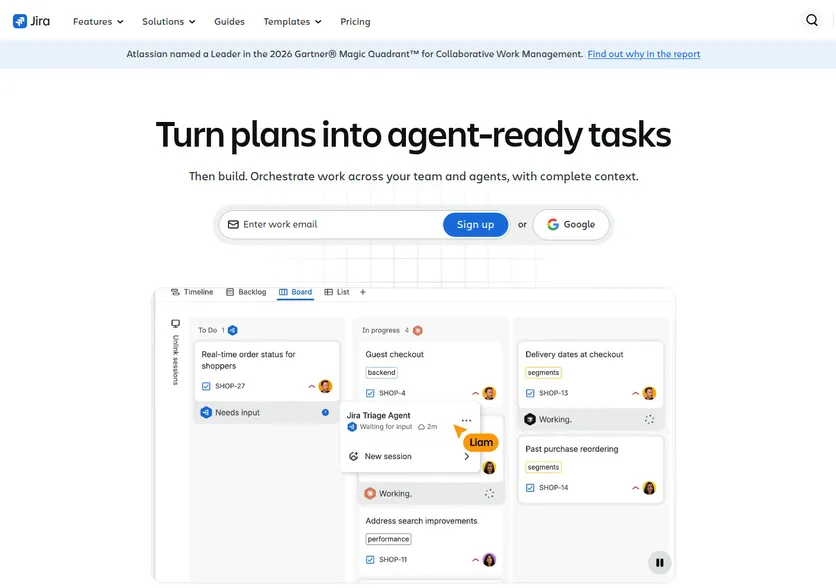
Nine dollars and seventy cents per user a month buys Jira Standard, the issue tracker that most software teams already use to plan sprints and track work. It organizes issues into boards and backlogs, links work to releases and reports on velocity, so capacity planning starts from the same data the team already tracks. The free plan covers up to ten users, and the annual fixed tiers make the price predictable for small teams.
What we like
- The default issue tracker most developers already know
- Boards, backlogs and release planning in one place
- Free plan for up to ten users
Watch out for
- Resource capacity planning is basic without add-ons
- The interface can feel heavy for small teams
How to try it
- Start on the free plan and set up the first project
- Plan the next sprint and assign issues to the team
- Check velocity reports to see real capacity per sprint
2. Asana
Best for: Software teams that want workload visibility across projects
Paid tool Starting price: $10.99/user/month · Ten dollars and ninety-nine cents per user a month billed annually on Starter (thirteen dollars and forty-nine cents billed monthly); Advanced is twenty-four dollars and ninety-nine cents per user a month billed annually; the free Personal plan covers up to ten users and Starter has a two-seat minimum
Free plan: Free plan (Personal, up to 10 users)
Ten dollars and ninety-nine cents per user a month billed annually buys Asana Starter, a work management platform that turns project plans into a workload view showing who is overbooked. It tracks tasks across projects, sets timelines and goals, and reports on capacity so managers can rebalance before a sprint breaks. The free Personal plan covers up to ten users, so a small team can start without paying and upgrade when the workload view matters.

What we like
- Workload view shows who is overbooked across projects
- Timelines and goals link tasks to the bigger picture
- Free Personal plan for up to ten users
Watch out for
- Starter has a two-seat minimum, so solo users pay for two
- Advanced capacity features need the twenty-five dollar plan
How to try it
- Start on the free Personal plan and set up the first project
- Add tasks and check the workload view for over-allocation
- Upgrade to Starter when the team needs timeline and goals
3. monday.com
Best for: Software teams that want a flexible visual tracker
Paid tool Starting price: $9/seat/month · Nine dollars per seat a month billed annually on Basic (twelve dollars billed monthly); Standard is twelve dollars per seat a month billed annually and Pro is nineteen dollars; paid plans have a three-seat minimum
Free plan: Free plan (up to 2 seats)
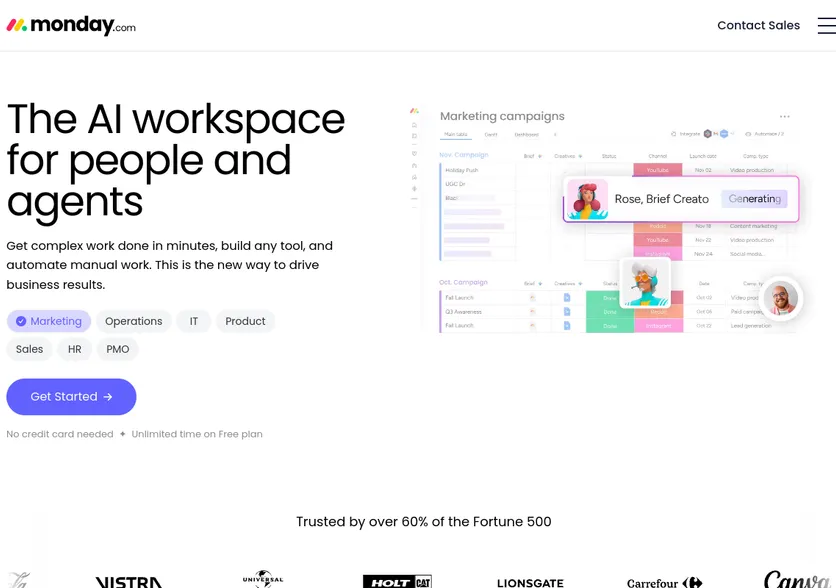
Nine dollars per seat a month billed annually buys monday.com Basic, a visual work platform that tracks projects on boards the whole team can read at a glance. It organizes work into customizable boards, automates routine updates and shows workload across the team, which suits software teams that want a flexible tracker without Jira's structure. Paid plans have a three-seat minimum, so the smallest bill is twenty-seven dollars a month.
What we like
- Boards the whole team can read at a glance
- Automations handle routine updates without manual work
- Free plan for up to two seats
Watch out for
- Paid plans have a three-seat minimum
- Resource management is basic on Basic, deeper on Pro
How to try it
- Start on the free plan and build the first board
- Add the team and check the workload view
- Upgrade to Basic when the team passes two seats
4. Wrike
Best for: Software teams that want workload views with a free start
Paid tool Starting price: $9.80/user/month · Nine dollars and eighty cents per user a month billed annually on Team; Business is twenty-four dollars and eighty cents per user a month billed annually
Free plan: Free plan (unlimited users)
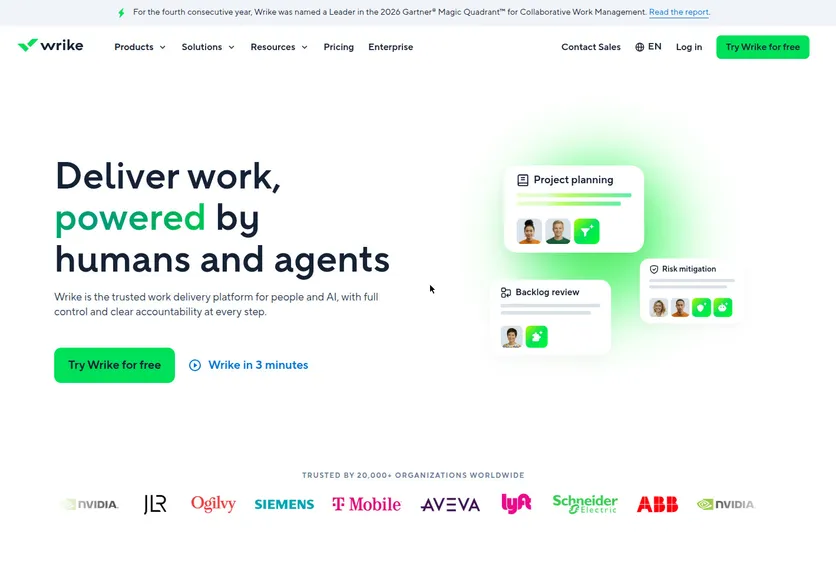
Nine dollars and eighty cents per user a month billed annually buys Wrike Team, a work management platform that pairs task tracking with workload and resource views. It organizes work into folders and projects, shows who is overbooked and reports on capacity, so managers can rebalance before a deadline slips. The free plan covers unlimited users, which makes it the easiest way to test the workflow before paying.
What we like
- Free plan covers unlimited users
- Workload view shows who is overbooked
- Folders and projects keep large programs organized
Watch out for
- Resource management deepens on the Business plan
- Monthly billing price is not published, so confirm before buying
How to try it
- Start on the free plan and set up the first project
- Add tasks and check the workload view
- Upgrade to Team when the team needs advanced features
5. Smartsheet
Best for: Software teams that think in spreadsheets
Paid tool Starting price: $9/member/month · Nine dollars per member a month billed annually on Pro (twelve dollars billed monthly); Business is nineteen dollars per member a month billed annually; Pro is capped at one to ten members and there is no free plan
Free plan: No free plan; 30-day free trial
Nine dollars per member a month billed annually buys Smartsheet Pro, a spreadsheet-style platform that tracks resources in grids the whole team can edit. It organizes projects into sheets, shows resource allocation across them and reports on capacity, which suits software teams that think in rows and columns rather than boards. Pro is capped at one to ten members, so larger teams move to Business at nineteen dollars a member.

What we like
- Spreadsheet grids the whole team can edit together
- Resource allocation across projects in one view
- Thirty-day free trial to test the workflow
Watch out for
- Pro is capped at ten members
- No free plan, so the trial is the only way to test it
How to try it
- Start the thirty-day trial and build the first sheet
- Add resources and check allocation across projects
- Upgrade to Business when the team passes ten members
6. ClickUp
Best for: Software teams that want one workspace for everything
Paid tool Starting price: $9/user/month · Nine dollars per user a month billed annually on Core (twelve dollars billed monthly); Business is seventeen dollars per user a month billed annually; a November 2026 directory read still shows older Unlimited seven dollar and Business twelve dollar figures — the vendor ladder is the current source
Free plan: Free plan (Free Forever)
Nine dollars per user a month billed annually buys ClickUp Core, an all-in-one workspace that pairs task tracking with docs, goals and workload views. It organizes work into spaces and lists, shows who is overbooked and reports on capacity, so a software team can plan sprints and track resources without a second tool. The free plan is genuinely usable, which makes it the easiest way to test the workflow before paying.

What we like
- Tasks, docs, goals and workload in one place
- Free plan is genuinely usable for small teams
- Workload view shows who is overbooked
Watch out for
- The feature set can feel large for a small team
- Some directory reads still show older seven dollar pricing
How to try it
- Start on the free plan and set up the first space
- Plan a sprint and check the workload view
- Upgrade to Core when the team needs advanced features
7. Resource Guru
Best for: Software teams that need a simple availability layer
Paid tool Starting price: $5/person/month · Five dollars per person a month billed annually on Grasshopper (six dollars billed monthly); Blackbelt is eight dollars per person a month billed annually and Master is twelve dollars; the price rose effective July 1, 2026 and non-human resources are billed at half rate
Free plan: No free plan; 30-day free trial
At five dollars per person a month billed annually, Resource Guru Grasshopper gives a software team a booking calendar that shows who is free, who is booked and who is on leave in one clean view. It pairs well with a separate issue tracker, giving a software team a clear availability layer without replacing Jira or Asana. Non-human resources such as test devices and meeting rooms bill at half rate, so the same calendar covers the whole team.

What we like
- Cheapest availability calendar in this list
- Leave management and client portal included
- Non-human resources billed at half rate
Watch out for
- No issue tracking, so it pairs with a separate tool
- Capacity forecasting needs the Blackbelt plan
How to try it
- Add the team and mark working hours and leave
- Book the next sprint and check for clashes
- Share the availability calendar with the team
Prices above were checked on each vendor’s own website on Nov 28, 2026 and can change — the vendor’s page is the final word. Vendor links are editorial: nobody paid to be listed or ranked here. Vendors who want a featured listing can see how it works on our Get listed page.
How to plan sprints around real availability
Plan the sprint from real capacity, not headcount, because a developer on leave or on call is not a full resource no matter what the board says. Check the workload view before committing to a sprint, and rebalance the moment someone crosses one hundred percent rather than waiting for the stand-up. Keep the issue tracker and the availability calendar in sync: a plan that lives in two places will drift within a week. Review velocity every sprint, since the gap between planned and delivered work is the clearest signal that the capacity model is wrong.
Before you buy
- Confirm the tool shows workload across sprints, not just one project at a time
- Check whether capacity planning is included or needs an add-on or higher plan
- Ask how the tool handles leave and on-call time in the capacity model
- Make sure the workload view is visible to managers without a separate report
- Test the tool with the team's actual sprint during the free trial before moving the whole team
Official websites
Official websites of the products reviewed above. Features and prices were checked against these sites when this guide was written, and they can change, so confirm on the vendor site before you buy.
Frequently asked questions
What is resource management software for software teams?
Resource management software shows who is available, who is overbooked and what each person can take on across sprints and projects. For a software team that usually means an issue tracker with a workload view, so managers can plan sprints from real capacity rather than headcount. The goal is to commit to the right amount of work for the people you actually have, without burning out the team.
How much does Jira cost?
Jira Standard costs nine dollars and seventy cents per user a month at list price for one to one hundred users, while Premium is nineteen dollars and sixty cents. Annual fixed tiers are nine hundred and fifty dollars a year for up to ten users and nine thousand seven hundred dollars a year for up to one hundred users on Standard. The free plan covers up to ten users, so a small team can start without paying.
What is the cheapest resource management software for software teams?
Resource Guru is the cheapest at five dollars per person a month billed annually, with a thirty-day free trial, though it is an availability calendar rather than a full issue tracker. Among full work platforms, monday.com, Smartsheet and ClickUp all start at nine dollars a month, with ClickUp and monday.com offering free plans. The right choice depends on whether the team needs a tracker, a calendar, or both.
Do software teams need a separate resource management tool?
Not always. Jira, Asana, monday.com, Wrike and ClickUp all include workload views that cover basic capacity planning for most teams. A separate tool such as Resource Guru only makes sense when the team needs a dedicated availability calendar with leave management and client booking. Start with the workload view in the tracker you already use, and add a calendar only when it stops being enough.
How does ClickUp compare to Jira for resource management?
ClickUp is an all-in-one workspace with tasks, docs, goals and workload views from nine dollars per user a month billed annually, with a genuinely usable free plan. Jira is the default issue tracker for software teams at nine dollars and seventy cents a month, with deeper sprint and release planning. Teams that live in sprints usually prefer Jira, while teams that want docs and goals in the same place prefer ClickUp.
Compare the seven tools above, then start with the free plan or trial on the tool that matches how your team already plans before paying for a full year.
Browse Business Tools tools