On this page
A hospital runs on shifts, and a gap in the rota is a ward without cover, so planning has to show who is working, who is on leave and who can pick up a shift. The eight tools below cover that job for hospitals of every size, from a single clinic to a multi-ward trust, though most are scheduling tools rather than hospital systems. Deputy leads because it schedules shifts and tracks time for five dollars per user a month, and the rest are ranked on how reliably they keep every shift covered.
How we researched this
We checked every price on the vendor pricing page on November 28, 2026, and only included tools with a published US dollar list price. UKG, Oracle, SAP SuccessFactors, ADP Workforce Now and Paycom publish no prices, so they are not in this list, and Qlik Sense is analytics software, not a scheduler, included only as a reporting option. Prices change, so confirm the current figure on the vendor site before you buy.
Compare the tools
| Name | Best for | Starting price | Free plan | |
|---|---|---|---|---|
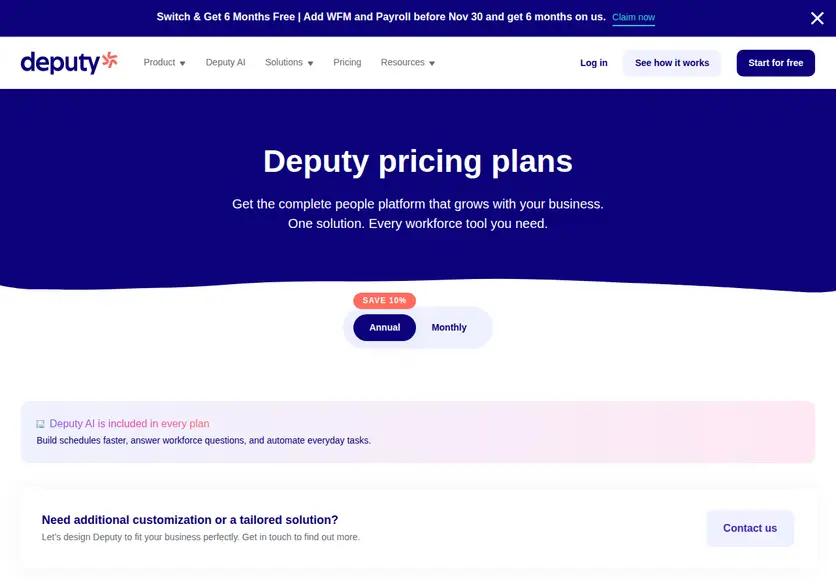
 Deputy | Hospital wards that need shifts and time tracking | $5/user/month | No free plan; 30-day free trial | Visit |
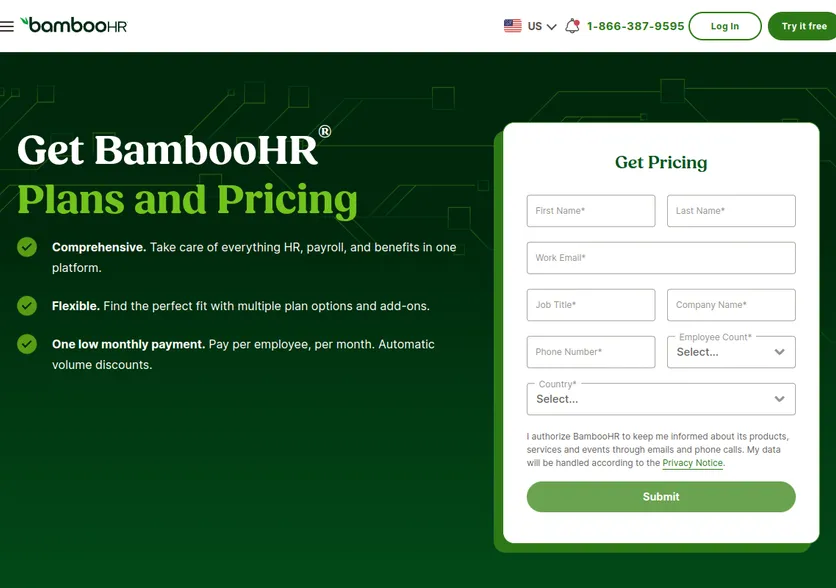
 BambooHR | Hospitals that need HR records beside scheduling | $250/month | No free plan; demo only | Visit |
 Qlik Sense | Hospitals that need workforce analytics and reporting | $30/user/month | No free plan; free trial | Visit |
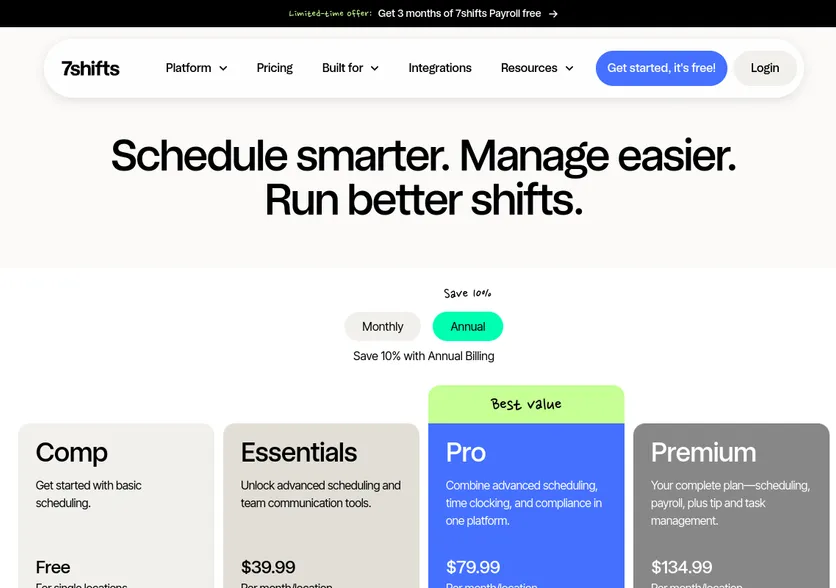
 7shifts | Shift-heavy hospital teams with tight labour budgets | $39.99/location/month | Free plan (1 location, up to 15 employees) | Visit |
 When I Work | Hospital departments that want the cheapest scheduler | $2.50/user/month | No free plan; 14-day free trial | Visit |
 Homebase | Small clinics that want scheduling for free | $24/location/month | Free plan (1 location, up to 10 employees) | Visit |
 Sling | Wards that want scheduling at the lowest price | $1.70/user/month | Free plan (up to 30 users) | Visit |
 Connecteam | Hospitals that run several departments as teams | $29/month | Free plan (up to 10 users) | Visit |
The resource planning software with time tracking for hospitals, compared
1. Deputy
Best for: Hospital wards that need shifts and time tracking
Paid tool Starting price: $5/user/month · Five dollars per user a month on Lite; Core is six dollars and fifty cents and Pro is nine dollars; a thirty-dollar monthly invoice minimum applies; some older reads showed Lite at five dollars and fifty cents, which appears stale
Free plan: No free plan; 30-day free trial
For a hospital ward that needs shifts planned and hours tracked without a big system, this Deputy plan costs five dollars per user a month, and it covers scheduling, time tracking and leave in one app. Managers build the rota in minutes, staff swap shifts from their phones, and the timesheet feeds payroll without retyping. It is the most practical pick in this list for a ward that needs cover, not a project.
What we like
- Scheduling, time tracking and leave in one app
- Staff swap shifts from their phones
- Timesheets feed payroll without retyping
Watch out for
- A thirty-dollar monthly invoice minimum applies
- No hospital-specific compliance features
How to try it
- Add staff with their roles and contracted hours
- Build the rota and publish it to the team
- Approve timesheets and send them to payroll
2. BambooHR
Best for: Hospitals that need HR records beside scheduling
Paid tool Starting price: $250/month · Two hundred and fifty dollars a month flat on Core for up to twenty-five employees, then ten dollars and twenty-five cents per employee a month; Pro is four hundred and twenty-five dollars flat and Elite is six hundred and fifty dollars; a fifteen percent nonprofit discount is listed on the vendor page
Free plan: No free plan; demo only
A hospital that needs people records beside the schedule will find them here, because this BambooHR plan costs two hundred and fifty dollars a month flat for up to twenty-five employees, and it covers HR, leave and reporting in one system. The platform tracks time off and approvals, while the reporting shows headcount and leave across departments. It suits a hospital that needs proper HR records more than a shift planner.
What we like
- HR, leave and reporting in one system
- Flat monthly price for up to twenty-five employees
- A fifteen percent nonprofit discount is listed
Watch out for
- It is an HR system, not a shift scheduler
- Per-employee pricing above twenty-five staff adds up fast
How to try it
- Import employee records and leave balances
- Set up time-off approval chains per department
- Run headcount and leave reports each month
3. Qlik Sense
Best for: Hospitals that need workforce analytics and reporting
Paid tool Starting price: $30/user/month · Thirty dollars per user a month billed annually on Business, with a five-user minimum; Enterprise is quoted; a free trial is available
Free plan: No free plan; free trial
When a hospital already has scheduling covered and needs to understand the data, this Qlik Sense plan costs thirty dollars per user a month billed annually, and it turns workforce data into dashboards managers can read. The analytics show staffing patterns, overtime and absence trends across wards, though it plans nothing by itself. It is the reporting option in this list, not a scheduler, so pair it with a planning tool.
What we like
- Dashboards show staffing patterns and overtime trends
- Connects to many hospital data sources
- Self-service analytics without a data team
Watch out for
- It is analytics software, not a scheduler
- A five-user minimum applies on the Business plan
How to try it
- Connect your workforce and rota data sources
- Build dashboards for overtime and absence
- Share the reports with ward managers weekly
4. 7shifts
Best for: Shift-heavy hospital teams with tight labour budgets
Paid tool Starting price: $39.99/location/month · Thirty-nine dollars and ninety-nine cents per location a month billed annually on Essentials ($44.99 billed monthly), for up to thirty employees; Pro is seventy-nine dollars and ninety-nine cents and Premium is one hundred and thirty-four dollars and ninety-nine cents billed annually; the free Comp plan covers one location and up to fifteen employees
Free plan: Free plan (1 location, up to 15 employees)
A hospital with shift-heavy teams will recognise the workflow here, since this 7shifts plan costs thirty-nine dollars and ninety-nine cents per location a month billed annually, and it was built for scheduling teams that work in shifts. Managers build rotas fast, staff claim open shifts from the app, and labour costs show against the budget as the rota fills. It fits a hospital that schedules like a restaurant: many people, many shifts, tight budgets.
What we like
- Built for teams that work in shifts
- Staff claim open shifts from the app
- Labour costs show against budget as the rota fills
Watch out for
- It is built for restaurants, not healthcare
- No hospital compliance or credential tracking
How to try it
- Add locations and staff with their roles
- Build the rota and publish it to the app
- Track labour cost against the budget weekly
5. When I Work
Best for: Hospital departments that want the cheapest scheduler
Paid tool Starting price: $2.50/user/month · Two dollars and fifty cents per user a month on Essentials; Pro is five dollars and Premium is eight dollars; the vendor page states no billing period, and its FAQ prices multi-location teams at five dollars per user a month; a time-tracking add-on costs about one dollar and fifty cents to two dollars
Free plan: No free plan; 14-day free trial
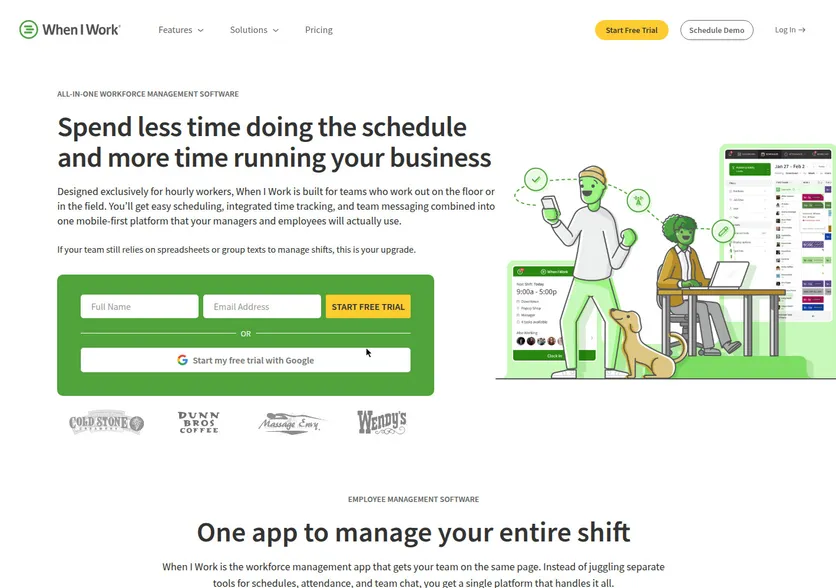
For a hospital team that needs the cheapest scheduling in this list, this When I Work plan costs two dollars and fifty cents per user a month, and it covers shift scheduling, time tracking and messaging in one app. Staff see their shifts, pick up open ones and message managers without a separate tool, while the time clock records hours as they happen. It is the best value pick for a department that needs the basics at a tiny price.
What we like
- Lowest entry price in this list
- Scheduling, time clock and messaging in one app
- Staff pick up open shifts themselves
Watch out for
- The vendor page states no billing period
- Multi-location pricing runs higher at five dollars per user a month
How to try it
- Add staff and their availability
- Publish the shift schedule to the app
- Review the time clock records each week
6. Homebase
Best for: Small clinics that want scheduling for free
Paid tool Starting price: $24/location/month · Twenty-four dollars per location a month billed annually on Essentials ($30 billed monthly); Plus is fifty-six dollars billed annually ($70 monthly) and All-in-One is ninety-six dollars billed annually ($120 monthly); the free Basic plan covers one location and up to ten employees
Free plan: Free plan (1 location, up to 10 employees)
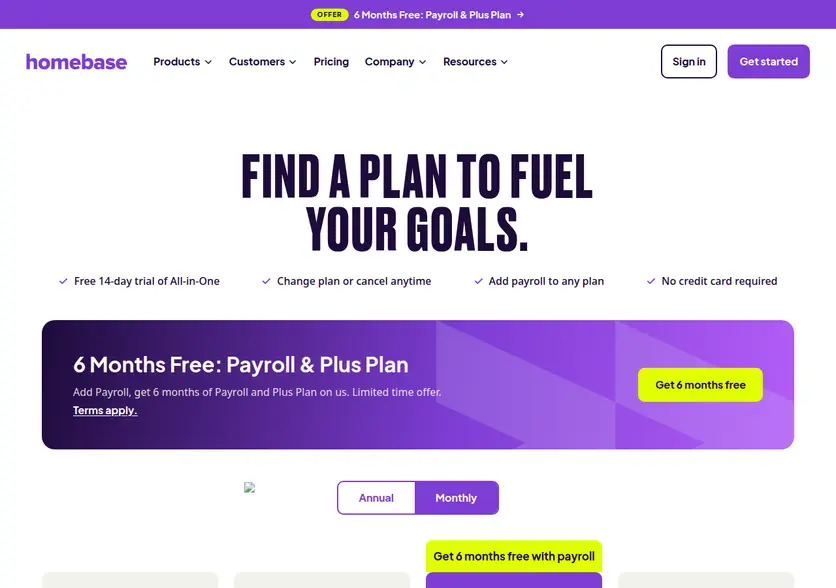
A small clinic that needs scheduling for free will start here, because this Homebase plan costs twenty-four dollars per location a month billed annually, and the free Basic plan covers one location and up to ten employees. The paid plan adds hiring and team messaging beside the schedule, while the time clock and payroll integrations keep hours honest. It is the best free starting point in this list for a single-site clinic.
What we like
- Free plan covers one location and up to ten employees
- Hiring and messaging beside the schedule
- Time clock and payroll integrations included
Watch out for
- The free plan is limited to one location
- Hospital-specific features are absent
How to try it
- Claim the free Basic plan for your clinic
- Add staff and publish the first rota
- Upgrade to Essentials when you need hiring tools
7. Sling
Best for: Wards that want scheduling at the lowest price
Paid tool Starting price: $1.70/user/month · One dollar and seventy cents per user a month billed annually on Premium ($2 billed monthly); Business is three dollars and forty cents billed annually ($4 monthly); the free plan covers up to thirty users; a fifteen-day free trial is included on paid plans
Free plan: Free plan (up to 30 users)
When a hospital department needs scheduling for almost nothing, this Sling plan costs one dollar and seventy cents per user a month billed annually, and it covers shifts, time tracking and team chat in one app. Managers drag shifts onto the calendar, staff get notified instantly, and the free plan covers up to thirty users for teams that want to try it first. It is the cheapest paid option here for a ward on a tight budget.
What we like
- Cheapest paid plan in this list
- Shifts, time clock and team chat in one app
- Free plan covers up to thirty users
Watch out for
- Reporting is basic compared with the bigger tools here
- No payroll or HR features
How to try it
- Add your team and their shift preferences
- Drag shifts onto the calendar and publish
- Let staff swap shifts in the app when plans change
8. Connecteam
Best for: Hospitals that run several departments as teams
Paid tool Starting price: $29/month · Twenty-nine dollars a month per hub billed annually on Basic ($35 billed monthly), for the first thirty users; Advanced is forty-nine dollars and Expert is ninety-nine dollars; all three hubs on Basic total eighty-seven dollars a month; the free Small Business plan covers up to ten users
Free plan: Free plan (up to 10 users)
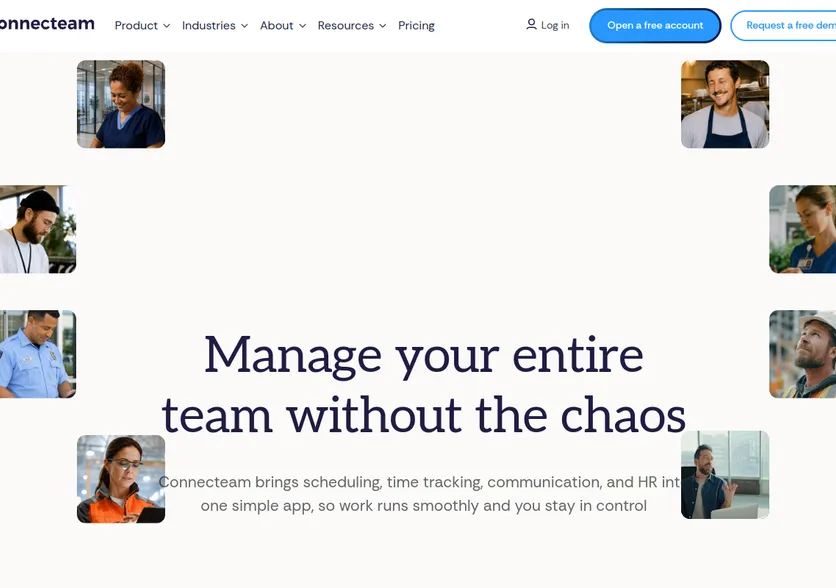
A hospital that runs several departments as separate teams will like this Connecteam plan, which costs twenty-nine dollars a month per hub billed annually, and it combines scheduling with forms, training and messaging. Each hub covers one department, so a ward can run its own schedule while management sees all of them, and the free plan covers up to ten users. It fits a hospital that needs more than a rota: checklists, training and chat in the same app.
What we like
- Scheduling plus forms, training and messaging
- Each hub covers one department
- Free plan covers up to ten users
Watch out for
- All three hubs on Basic total eighty-seven dollars a month
- Per-hub pricing confuses teams that expect per-user pricing
How to try it
- Set up one hub per department
- Build schedules and training checklists in each hub
- Use the team chat for shift changes
Prices above were checked on each vendor’s own website on Nov 28, 2026 and can change — the vendor’s page is the final word. Vendor links are editorial: nobody paid to be listed or ranked here. Vendors who want a featured listing can see how it works on our Get listed page.
How to keep every hospital shift covered without burning staff out
Start with the rota two weeks ahead, because a schedule published late is a schedule full of gaps. Keep a short list of staff who want extra shifts, and offer open shifts to them first before calling agency cover, since agency hours cost far more than overtime. Track overtime weekly, not monthly, and when one person tops ten extra hours for two weeks running, rebalance the rota before they burn out. Finally, let staff swap shifts in the app rather than through the ward phone, so every change is recorded.
Before you buy
- Check whether the tool tracks time as well as schedules, since payroll needs real hours
- Confirm staff can swap shifts and pick up open ones from their phones
- Ask if the price is per user, per location or per hub, since the bill changes completely
- Make sure leave and absence show beside the rota, not hidden in a separate system
- Test the tool with a real ward rota before rolling it out across the hospital
Official websites
Official websites of the products reviewed above. Features and prices were checked against these sites when this guide was written, and they can change, so confirm on the vendor site before you buy.
Frequently asked questions
What is resource planning software with time tracking for hospitals?
It is software that plans staff shifts and records the hours actually worked, so a hospital can keep every ward covered and pay people correctly. Good tools show leave beside the rota, let staff swap shifts from their phones and track overtime, which matters when a gap in the schedule is a gap in patient care.
How much does Deputy cost for a hospital?
Deputy costs five dollars per user a month on Lite, with Core at six dollars and fifty cents and Pro at nine dollars. A thirty-dollar monthly invoice minimum applies, and every plan includes a thirty-day free trial, so a ward can test it on a real rota before paying.
Can a hospital use these tools for free?
Yes, with limits. Homebase is free for one location and up to ten employees, Sling is free for up to thirty users, and Connecteam is free for up to ten users. These free tiers suit a single clinic or ward, but a whole hospital will need a paid plan.
Which tool is best for hospital shift scheduling?
Deputy is the best overall pick for hospital shifts, at five dollars a user a month, because it combines scheduling, time tracking and leave in one app. Homebase is the best free starting point for a single clinic, and 7shifts suits shift-heavy teams that want labour costs beside the rota.
Why are hospital systems like UKG and Oracle not in this list?
UKG, Oracle, SAP SuccessFactors, ADP Workforce Now and Paycom publish no prices, so they cannot be compared honestly on cost. They are also enterprise workforce systems sold by quote, while the tools here publish list prices a hospital can check before buying.
Compare the eight tools above, then start with a free trial on the tool that matches how the hospital already runs its rotas before paying for a full year.
Browse Business Tools tools