On this page
A startup that keeps customer data in a warehouse still needs that data back in the tools the team uses every day, and reverse ETL is the pipe that does it. The eight tools below move warehouse rows into Salesforce, HubSpot, Slack and ad platforms without a custom script for every destination. Airbyte leads because it syncs from twenty dollars a month with a free self-hosted tier, and the rest are ranked on how cheaply they scale as event volume grows.
How we researched this
We checked every price on the vendor pricing page on November 28, 2026, and only included tools with a published US dollar list price. Census is excluded because its pricing is based on monthly active rows with no flat price, and Matillion, Talend, SnapLogic and Polytomic publish no prices, so they are not in this list.
Compare the tools
| Name | Best for | Starting price | Free plan | |
|---|---|---|---|---|
 Airbyte | Startups that want cheap warehouse sync | $20/month | Free plan (self-hosted Core); 14-day Cloud trial | Visit |
 Fivetran | Startups planning to scale past a few destinations | $12,000/year | Free plan (500,000 MAR a month) | Visit |
| Hightouch | Teams that sync warehouse audiences to ad platforms | $350/month | Free plan (1 destination) | Visit |
 Segment | Startups that route product events everywhere | $120/month | Free plan (1,000 MTUs); 14-day free trial | Visit |
 Hevo Data | Startups moving millions of events a month | $265/month | Free plan (1M events a month) | Visit |
| RudderStack | Engineering teams that want an open-source pipeline | $265/month | Free plan (250,000 events a month); 30-day free trial | Visit |
 Stitch | Startups that need simple warehouse replication | $100/month | No free plan; 14-day free trial | Visit |
 Integrate.io | Startups that want one flat bill at any volume | $1,999/month | Free demo | Visit |
The reverse ETL software for startups, compared
1. Airbyte
Best for: Startups that want cheap warehouse sync
Paid tool Starting price: $20/month · Twenty dollars a month for Cloud Standard with five credits and five dollars per extra credit; Plus starts from one hundred and eighty-nine dollars; the older ten-dollar figure is stale after a September 21, 2026 price change
Free plan: Free plan (self-hosted Core); 14-day Cloud trial
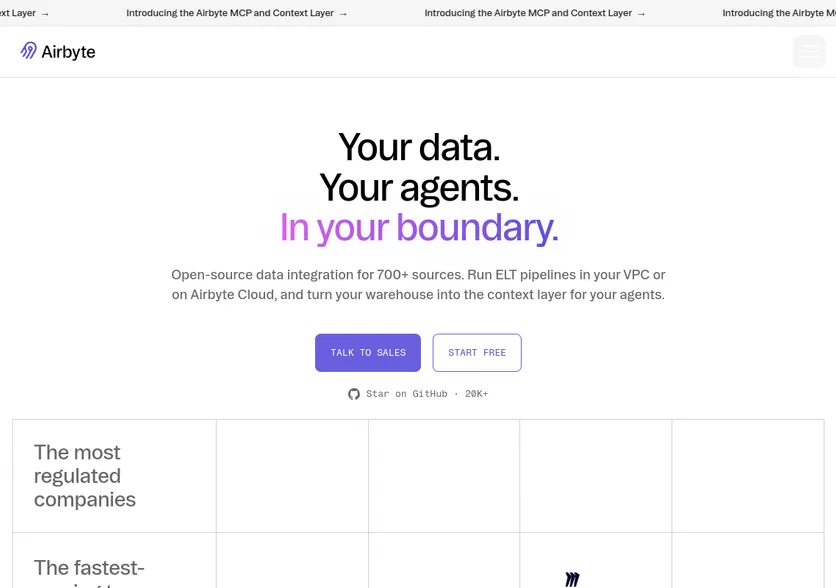
For a startup that wants warehouse sync without a five-figure contract, this Airbyte plan costs twenty dollars a month for Cloud Standard with five credits included. Its catalogue covers hundreds of sources and destinations, and the open-source Core edition runs self-hosted for free when the team prefers to own the infrastructure. The credit model stays cheap while volumes are small, then grows with usage instead of forcing a jump to an enterprise tier.
What we like
- Hundreds of sources and destinations in the catalogue
- Self-hosted Core edition is free and open source
- Credit pricing stays cheap at low volumes
Watch out for
- Extra credits cost five dollars each beyond the included five
- The older ten-dollar entry price is gone after a September 2026 change
How to try it
- Connect the warehouse as a source and pick a destination
- Choose the tables to sync and set the sync schedule
- Watch the first sync, then add more destinations as needed
2. Fivetran
Best for: Startups planning to scale past a few destinations
Paid tool Starting price: $12,000/year · Twelve thousand dollars a year is the annual contract minimum; pricing is based on monthly active rows, with a free tier of five hundred thousand monthly active rows and a five-dollar monthly minimum per standard connection; there is no flat monthly list price
Free plan: Free plan (500,000 MAR a month)
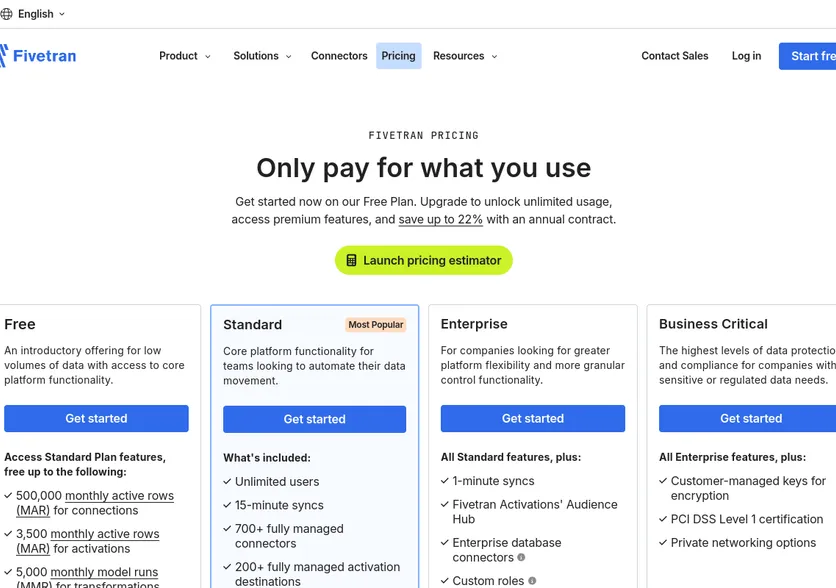
When a startup plans to grow past a handful of destinations, this Fivetran plan starts at twelve thousand dollars a year as the annual contract minimum. It offers the widest connector library in this list, with managed schema changes and automatic retries that keep pipelines running without babysitting. The free tier covers five hundred thousand monthly active rows, so a small team can prove the setup before signing the annual contract.
What we like
- Widest connector library in this comparison
- Managed schema changes and automatic retries
- Free tier covers 500,000 monthly active rows
Watch out for
- No flat monthly price, so small teams face an annual contract
- Costs rise with monthly active rows, not with seats
How to try it
- Pick a source connector and authorise the warehouse
- Select the tables and columns to replicate
- Set the sync frequency and monitor the first runs
3. Hightouch
Best for: Teams that sync warehouse audiences to ad platforms
Paid tool Starting price: $350/month · Three hundred and fifty dollars a month for Starter billed annually with two destinations; Pro is eight hundred dollars a month; April to June 2026 reads listed four hundred and fifty dollars a month, which appears to be the monthly-billed rate
Free plan: Free plan (1 destination)
A team that wants marketers to build audiences straight from the warehouse will like this Hightouch plan, which costs three hundred and fifty dollars a month for Starter billed annually. It turns SQL models into live audiences in ad platforms and CRMs, and the visual audience builder means engineers do not have to write a sync for every campaign. The free plan covers one destination, so a startup can test the workflow on its most important channel first.

What we like
- Visual audience builder for non-technical marketers
- Syncs SQL models to CRMs and ad platforms
- Free plan covers one destination for testing
Watch out for
- Starter covers only two destinations
- Some 2026 reads list a higher monthly-billed rate
How to try it
- Connect the warehouse and define an audience with SQL or the builder
- Map the audience fields to the destination
- Schedule the sync and check the first audience delivery
4. Segment
Best for: Startups that route product events everywhere
Paid tool Starting price: $120/month · One hundred and twenty dollars a month for Team with ten thousand monthly tracked users; the free plan covers one thousand monthly tracked users and Business is custom; pricing now sits on the Twilio hub
Free plan: Free plan (1,000 MTUs); 14-day free trial
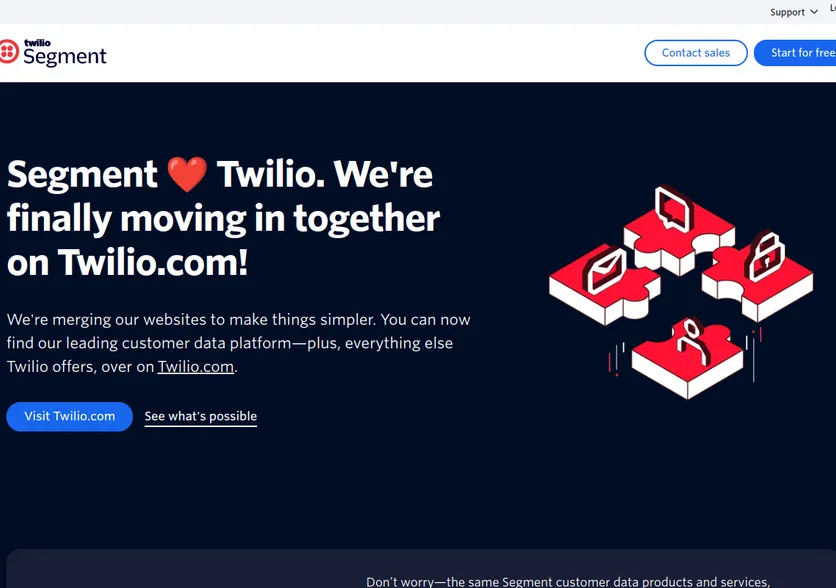
For a startup that already tracks product events, this Segment plan costs one hundred and twenty dollars a month for Team with ten thousand monthly tracked users. It collects events once and routes them to analytics, warehouses and marketing tools, so the team stops wiring the same events into every new tool. The free plan covers one thousand monthly tracked users, which is enough to instrument a product before paying.
What we like
- One event stream feeds analytics, warehouse and marketing tools
- Strong identity resolution across devices
- Free plan covers 1,000 monthly tracked users
Watch out for
- Costs climb steeply once tracked users grow
- Business tier is custom-quoted with no published price
How to try it
- Install the tracking library in the product
- Add destinations for analytics and the warehouse
- Verify events arrive, then turn on the marketing destinations
5. Hevo Data
Best for: Startups moving millions of events a month
Paid tool Starting price: $265/month · Two hundred and sixty-five dollars a month for Starter billed annually, two hundred and ninety-nine dollars billed monthly, with five million events; Professional is seven hundred and fifty dollars a month billed annually; a stale two hundred and thirty-nine dollar annual read is superseded
Free plan: Free plan (1M events a month)
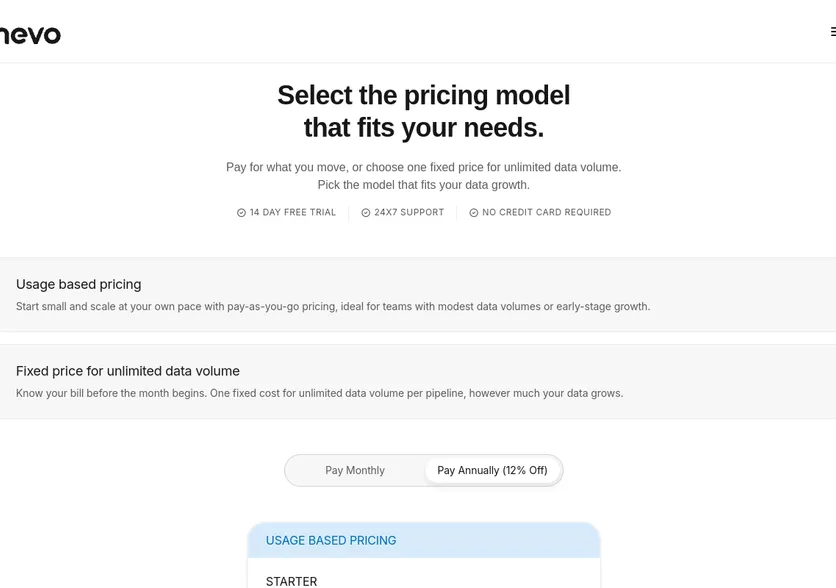
A startup moving millions of events a month gets strong value here, because this Hevo Data plan costs two hundred and sixty-five dollars a month for Starter billed annually. It handles databases, SaaS apps and event streams in one pipeline, with transformations built in so the warehouse stays clean without a separate tool. The free plan covers one million events a month, which lets a small team run a real pipeline before committing.
What we like
- Databases, SaaS apps and event streams in one pipeline
- Built-in transformations keep the warehouse clean
- Free plan covers 1M events a month
Watch out for
- Monthly billing jumps to $299, so annual billing matters
- Professional tier nearly triples the Starter price
How to try it
- Connect a source such as a database or SaaS app
- Map the tables and add any transformations
- Choose the warehouse destination and start the pipeline
6. RudderStack
Best for: Engineering teams that want an open-source pipeline
Paid tool Starting price: $265/month · Two hundred and sixty-five dollars a month for Growth billed monthly, two hundred and twenty-five dollars billed annually, with one million events; the free plan covers two hundred and fifty thousand events a month
Free plan: Free plan (250,000 events a month); 30-day free trial
Engineers who want an open-source event pipeline with warehouse destinations will find this RudderStack plan costs two hundred and sixty-five dollars a month for Growth billed monthly. It captures events, transforms them and routes them to the warehouse and downstream tools, and the open-source core keeps the team in control of the data path. The free plan covers two hundred and fifty thousand events a month, so a startup can run production traffic before paying.
What we like
- Open-source core keeps the data path in team control
- Event transformations built into the pipeline
- Free plan covers 250,000 events a month
Watch out for
- Growth billed monthly costs more than the annual rate
- Setup needs more engineering time than the no-code tools
How to try it
- Install the SDK and start sending events
- Add the warehouse as a destination
- Configure transformations and verify the event flow
7. Stitch
Best for: Startups that need simple warehouse replication
Paid tool Starting price: $100/month · One hundred dollars a month for Standard with five million to three hundred million rows; Advanced is one thousand five hundred dollars a month and Premium is three thousand dollars a month, both billed annually
Free plan: No free plan; 14-day free trial
A startup that only needs reliable replication from databases and SaaS apps into a warehouse should look at this Stitch plan, which costs one hundred dollars a month for Standard. It focuses on extraction and loading without the audience and activation extras, so the bill stays simple while the data lands on schedule. The Standard tier covers five million to three hundred million rows, which suits a team whose volume grows steadily rather than in spikes.
What we like
- Simple extraction and loading without activation extras
- Covers 5M to 300M rows on the Standard tier
- Long track record with database and SaaS sources
Watch out for
- No free plan, only a 14-day trial
- Advanced and Premium tiers jump to $1,500 and $3,000
How to try it
- Connect a source database or SaaS app
- Pick the tables to replicate into the warehouse
- Set the replication frequency and confirm the first load
8. Integrate.io
Best for: Startups that want one flat bill at any volume
Paid tool Starting price: $1,999/month · One thousand nine hundred and ninety-nine dollars a month flat with unlimited usage; no usage-based tiers
Free plan: Free demo
A startup that wants one flat bill whatever the volume can budget easily with this Integrate.io plan, which costs one thousand nine hundred and ninety-nine dollars a month. It combines ETL, reverse ETL and API generation in a single low-code platform, so one subscription covers the whole data movement job. Unlimited usage means a usage spike never triggers a surprise invoice, which is rare in this category.
What we like
- Flat price with unlimited usage and no meter
- ETL, reverse ETL and API generation in one tool
- Low-code builder suits small data teams
Watch out for
- The flat price is far above the cheapest tools here
- No free plan is published, only a demo
How to try it
- Connect the warehouse and the destination systems
- Build the data flow in the low-code designer
- Run the flow and schedule it for regular syncs
Prices above were checked on each vendor’s own website on Nov 28, 2026 and can change — the vendor’s page is the final word. Vendor links are editorial: nobody paid to be listed or ranked here. Vendors who want a featured listing can see how it works on our Get listed page.
How to pick a reverse ETL tool without overpaying for volume
Start with the free tier and sync one destination that matters, because the cheapest way to learn a tool is to run real data through it. Count monthly active rows or events before choosing a tier, since most of these tools charge on volume and the bill can triple when a product launch doubles traffic. Prefer a tool whose next tier is a small step up rather than a tenfold jump, and check whether the free plan covers the destination the team actually needs. Keep the warehouse as the source of truth, and test one audience or sync end to end before wiring every destination.
Before you buy
- Check whether the price is based on rows, events, credits or seats before comparing plans
- Confirm the free plan covers the destination the team needs most, not just any destination
- Ask how much the next tier costs, since volume growth can triple the bill overnight
- Make sure the tool supports the warehouse and the CRM or ad platform already in use
- Test one real sync end to end on the free tier before signing an annual contract
Official websites
Official websites of the products reviewed above. Features and prices were checked against these sites when this guide was written, and they can change, so confirm on the vendor site before you buy.
Frequently asked questions
What is reverse ETL software for startups?
Reverse ETL moves data out of a data warehouse and into the tools a team uses every day, such as a CRM, an ad platform or Slack. Instead of copying data by hand or writing a custom script for each destination, the tool syncs warehouse tables on a schedule so sales, marketing and support all work from the same numbers. For a startup it replaces fragile one-off integrations with one maintained pipeline.
How much does Airbyte cost for a startup?
Airbyte Cloud Standard costs twenty dollars a month with five credits included, and extra credits cost five dollars each. The self-hosted Core edition is free and open source, while the Plus tier starts from one hundred and eighty-nine dollars a month. That makes Airbyte the cheapest entry point in this list, and a startup can stay on the free tier until its sync volume grows.
Is Fivetran too expensive for a startup?
Fivetran starts at twelve thousand dollars a year as an annual contract minimum, so it is the most expensive entry point here. The free tier covers five hundred thousand monthly active rows, which lets a small team test it, but there is no flat monthly plan. Startups that expect to scale past a few destinations may still find it worth the price, while smaller teams should start with Airbyte or Hevo.
Can I use reverse ETL software for free?
Yes, with Airbyte, whose self-hosted Core edition is free, and with Hightouch, Segment, Hevo and RudderStack, which all offer free plans with limited destinations, events or tracked users. Fivetran also has a free tier up to five hundred thousand monthly active rows. These free tiers suit testing and small volumes, but growing startups should budget for a paid plan as sync volume rises.
Which reverse ETL tool is best for a startup?
Airbyte is the best pick for most startups, at twenty dollars a month with a free self-hosted tier and a large connector catalogue. Hevo Data is the best value once event volume passes a million a month, and Fivetran is the best choice for teams that plan to scale to dozens of destinations. Pick the tool whose pricing model matches how the startup's data volume will grow.
Compare the eight tools above, then start on a free tier with the one that covers the destination the startup needs first, and only sign an annual contract once real sync volume is known.
Browse Business Tools tools