On this page
Remote teams browse from home networks, cafes and airports, so the browser is the new office perimeter. The eight tools below protect that perimeter, from Chrome Enterprise Premium at six dollars per user a month to a fully isolated cloud browser at one thousand four hundred and fifty dollars a user a year. Every price was checked on November 28, 2026, and every tool here publishes a US dollar list price. Pick the browser security that matches the sensitivity of the work the team does online.
How we researched this
We checked every price on the vendor pricing page on November 28, 2026, and only included tools with a published US dollar list price. Island, SquareX, Talon and Seraphic are not in this list because they sell by quote only or publish conflicting prices with no verifiable list figure. Prices change, so confirm the current figure on the vendor site before you buy.
Compare the tools
| Name | Best for | Starting price | Free plan | |
|---|---|---|---|---|
 Chrome Enterprise Premium | Remote teams already using Chrome | $6/user/month | Free plan (Chrome Enterprise Core free) | Visit |
| Prisma Browser | Teams already running Palo Alto security | $99/user/year | No free plan; free trial available | Visit |
 Cloudflare Browser Isolation | Teams that want isolation without new software | $7/user/month | Free plan (up to 50 users) | Visit |
 Authentic8 Silo | Regulated teams with the highest security needs | $1,450/user/year | No free plan; 30-day free trial | Visit |
| Menlo Security | Teams that want proven isolation | $130/user/year | No free plan; free trial available | Visit |
| Push Security | Small remote teams worried about logins | $5/user/month | Free plan (first 10 employees free) | Visit |
| dope.security | Teams that want light browser protection | $60/device/year | No free plan; free trial available | Visit |
| LayerX | Teams worried about data leaving through the browser | $8.50/user/month | No free plan | Visit |
The secure enterprise browser software for remote teams, compared
1. Chrome Enterprise Premium
Best for: Remote teams already using Chrome
Paid tool Starting price: $6/user/month · Six dollars per user a month on Premium; Core is free; a sixty-day trial is included
Free plan: Free plan (Chrome Enterprise Core free)
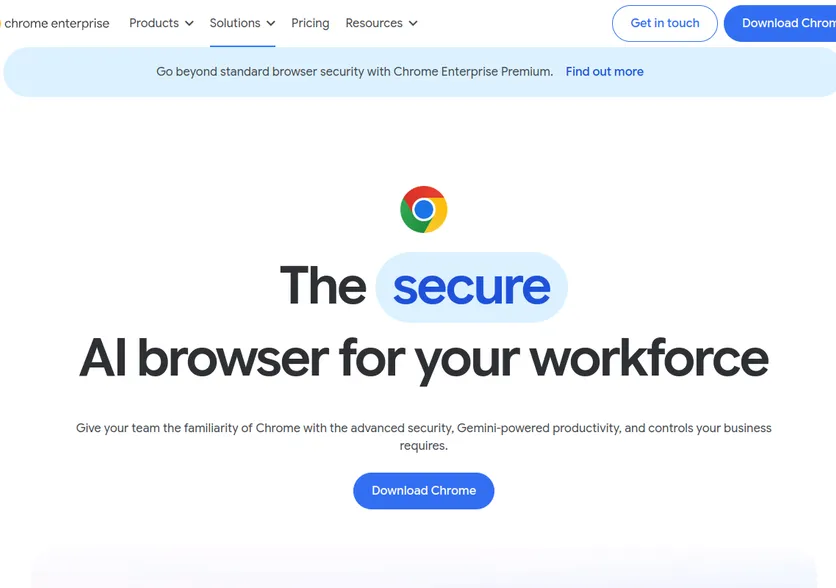
The browser most remote teams already use, hardened for enterprise, is the pitch here, because this Chrome Enterprise Premium plan costs six dollars per user a month and adds data controls to Chrome. Admins can block downloads, watermark pages and stop data leaving through the browser, all from the Google admin console. It is the best overall pick for a remote team that already lives in Chrome.
What we like
- Data controls inside the browser teams already use
- Admin console shared with Google Workspace
- Sixty-day trial to test the controls
Watch out for
- Only protects Chrome, so other browsers stay open
- The free Core tier lacks the data controls
How to try it
- Enrol the team Chrome browsers in the admin console
- Set the data loss prevention and download policies
- Test the controls with a remote worker before rollout
2. Prisma Browser
Best for: Teams already running Palo Alto security
Paid tool Starting price: $99/user/year · Ninety-nine dollars per user a year paid annually, or ten dollars per user a month; no minimum seat count
Free plan: No free plan; free trial available
A secure browser from a network security leader sits here, since this Prisma Browser plan costs ninety-nine dollars per user a year and isolates risky sites from the company network. The browser runs inside Palo Alto security stack, so policies follow the user to any device. It suits a remote team already running Palo Alto security.
What we like
- Isolates risky sites from the company network
- Policies follow the user to any device
- No minimum seat count for small teams
Watch out for
- Priced per user per year, so large teams pay more
- Works best inside the Palo Alto stack
How to try it
- Sign up and enrol the team browsers
- Set the isolation and data policies
- Roll out to remote workers and monitor usage
3. Cloudflare Browser Isolation
Best for: Teams that want isolation without new software
Paid tool Starting price: $7/user/month · Seven dollars per user a month on the Zero Trust pay-as-you-go seat, which covers Gateway and Access; the isolation add-on itself is quote-only, with third-party estimates near ten dollars a user a month extra, so confirm the full price with Cloudflare; the free tier covers up to fifty users
Free plan: Free plan (up to 50 users)
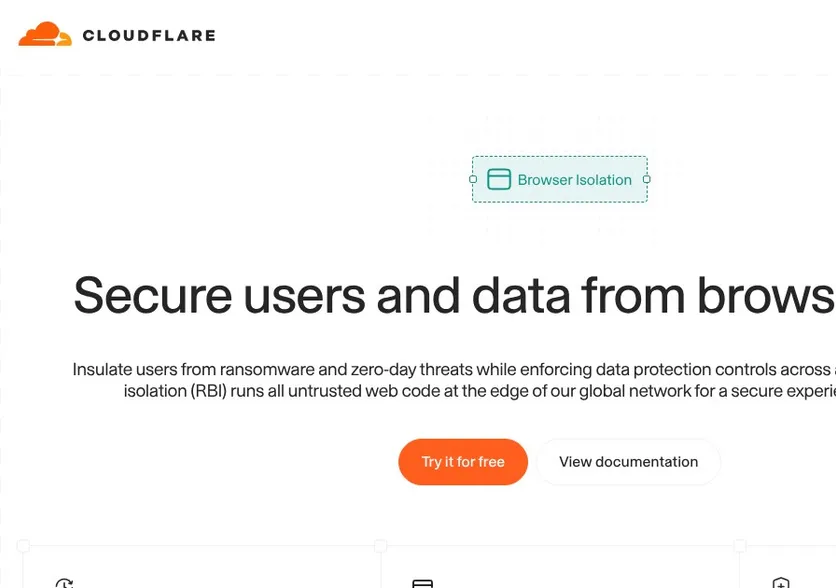
Isolation that runs in the cloud without a new browser to install is the idea here, because this Cloudflare Browser Isolation plan costs seven dollars per user a month for the Zero Trust seat and renders risky pages remotely. Staff browse normally while dangerous code runs on Cloudflare servers, never on the laptop. It is the best value pick for a team that wants isolation without new software.
What we like
- Risky pages render remotely, never on the laptop
- No new browser for staff to learn
- Free tier covers up to fifty users
Watch out for
- The seven-dollar figure covers Gateway and Access, not the isolation line
- The isolation add-on itself is quote-only
How to try it
- Set up the Zero Trust dashboard for the team
- Turn on browser isolation for risky categories
- Test the isolation with a remote worker on a public site
4. Authentic8 Silo
Best for: Regulated teams with the highest security needs
Paid tool Starting price: $1,450/user/year · One thousand four hundred and fifty dollars per user a year on Local; Multi-Region is two thousand four hundred and fifty dollars and Global is three thousand four hundred and fifty dollars; a thirty-day trial is included
Free plan: No free plan; 30-day free trial
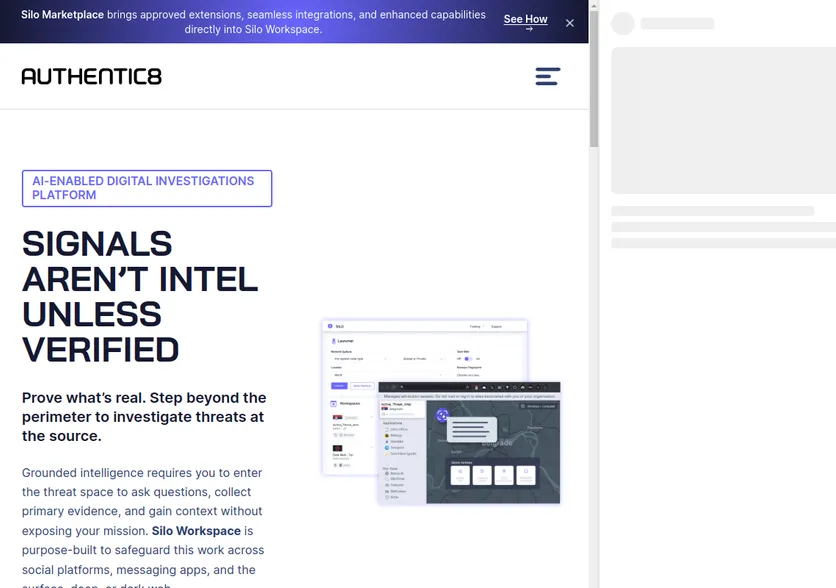
A fully isolated browser for the most sensitive work is what you get here, because this Authentic8 Silo plan costs one thousand four hundred and fifty dollars per user a year and runs every session in the cloud. Nothing from the browsing session touches the local machine, so malware and data leaks have nowhere to land. It is the most secure option in this list and by far the priciest, so it suits regulated teams.
What we like
- Every session runs fully isolated in the cloud
- Nothing from browsing touches the local machine
- Three region options for data residency
Watch out for
- The price is far above every other browser here
- The isolation can slow rich web apps
How to try it
- Start the thirty-day trial with a small group
- Set the data residency region for the team
- Roll out to the staff who handle sensitive data
5. Menlo Security
Best for: Teams that want proven isolation
Paid tool Starting price: $130/user/year · One hundred and thirty dollars per user a year through the AWS Marketplace listing for Secure Internet with Premium Support at zero to ninety-nine users; the full Protect, Secure and Manage modules are quote-only
Free plan: No free plan; free trial available
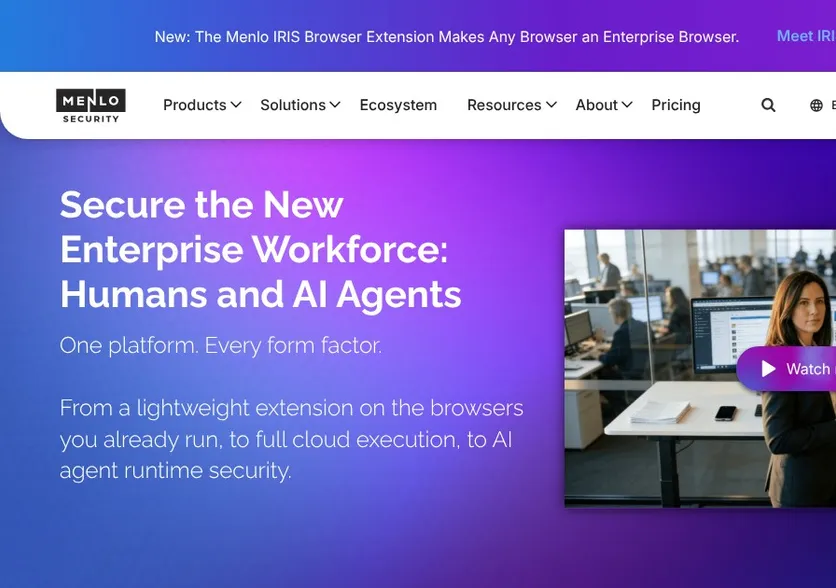
Isolation from a pioneer of the technology is the offer here, as this Menlo Security plan costs one hundred and thirty dollars per user a year and renders every page in the cloud. The platform isolates email links and downloads as well as web pages, so one policy covers the whole browsing surface. It suits a remote team that wants proven isolation at a mid-range price.
What we like
- Isolates web pages, email links and downloads
- Cloud rendering keeps threats off the laptop
- Mid-range price for the isolation category
Watch out for
- The vendor site is quote-only for the full platform
- The marketplace figure covers the base module only
How to try it
- Buy the listing through the AWS Marketplace
- Route the team browsing through the isolation cloud
- Monitor the dashboard for isolated threats
6. Push Security
Best for: Small remote teams worried about logins
Paid tool Starting price: $5/user/month · Five dollars per user a month billed annually, or six dollars a month month to month, for up to five hundred employees; Enterprise is quoted above that; the first ten employees are free
Free plan: Free plan (first 10 employees free)
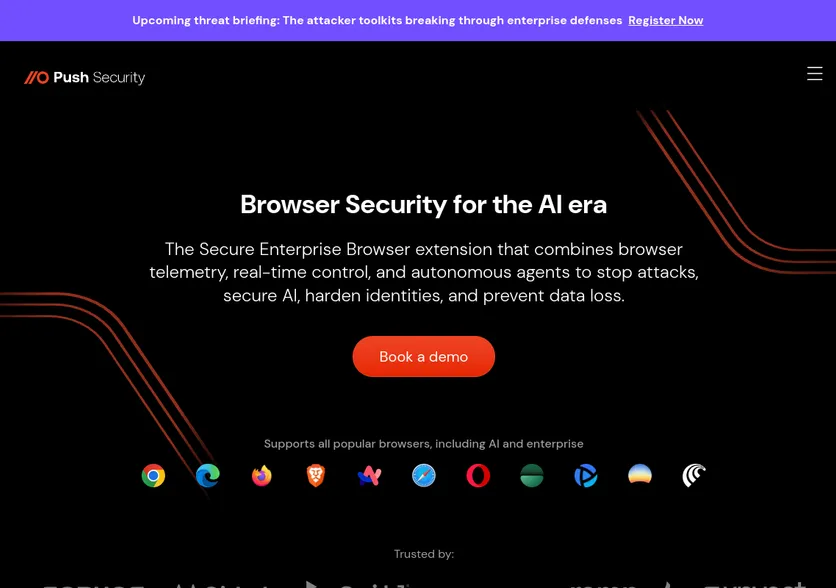
Browser security that watches logins rather than pages is the angle here, since this Push Security plan costs five dollars per user a month billed annually and flags stolen credentials and risky extensions. The browser extension spots phishing logins and session hijacking in real time, which suits a remote team with no office network. It is the cheapest browser security tool in this list for a small team.
What we like
- Flags stolen credentials and risky extensions
- Browser extension with no network changes needed
- First ten employees free
Watch out for
- Covers logins and extensions, not full page isolation
- Enterprise pricing above five hundred employees is quoted
How to try it
- Install the browser extension for the team
- Connect the dashboard and review the flagged logins
- Train staff on the alerts that matter most
7. dope.security
Best for: Teams that want light browser protection
Paid tool Starting price: $60/device/year · Sixty dollars per device a year, or about five dollars per device a month; priced per device rather than per user; a secure web gateway rather than a full enterprise browser
Free plan: No free plan; free trial available
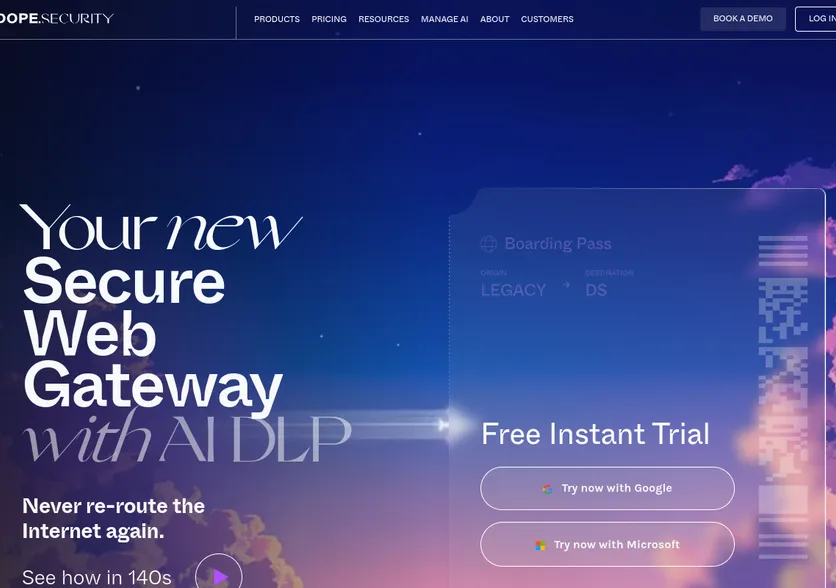
A lightweight web gateway that rides along in the browser is what this is, because this dope.security plan costs sixty dollars per device a year and filters malicious sites in real time. The tool blocks phishing pages and malicious downloads without routing traffic through a slow VPN. It suits a startup that wants browser protection without a heavy platform.
What we like
- Lightweight gateway with no VPN slowdown
- Blocks phishing pages and malicious downloads
- Per-device pricing suits shared machines
Watch out for
- Priced per device, so multi-device staff cost more
- A web gateway, not a full enterprise browser
How to try it
- Install the extension on team devices
- Set the filtering policies for risky categories
- Review the blocked-page reports weekly
8. LayerX
Best for: Teams worried about data leaving through the browser
Paid tool Starting price: $8.50/user/month · Eight dollars and fifty cents per user a month with a fifty-user minimum, through the AWS Marketplace listing; the vendor site is quote-only; a marketplace starting point of sixty dollars per user a year is also listed, so confirm the figure; Akamai acquired LayerX in July 2026, so packaging is in transition
Free plan: No free plan
Browser security that watches what happens inside the page is the focus here, since this LayerX plan costs eight dollars and fifty cents per user a month and flags data leaks in real time. The extension sees copy, paste and upload actions, so it can stop a document leaving through a personal webmail tab. It is a strong pick for a team worried about data leaving through the browser.
What we like
- Sees copy, paste and upload actions in the browser
- Stops documents leaving through personal webmail
- Real-time alerts for risky browser behaviour
Watch out for
- The vendor site is quote-only, so the price comes from a marketplace
- A fifty-user minimum excludes very small teams
How to try it
- Buy the listing through the AWS Marketplace
- Install the extension on team browsers
- Set the data loss policies for uploads and pastes
Prices above were checked on each vendor’s own website on Nov 28, 2026 and can change — the vendor’s page is the final word. Vendor links are editorial: nobody paid to be listed or ranked here. Vendors who want a featured listing can see how it works on our Get listed page.
How to roll out a secure browser to a remote team
Pilot with the most exposed staff first, usually the people who travel or handle customer data, and let them break the setup before the whole company adopts it. Keep one escape route for the first month, such as a standard browser for the internal tools that the secure browser blocks. Write the data rules in plain language and show staff what is blocked and why, since a rule nobody understands gets worked around. Measure the blocked threats weekly and share the numbers with the team, because visible protection builds trust in the tool. Finally, review the policies quarterly, since the sites the team needs change faster than the security rules.
Before you buy
- Check whether the tool is a full browser, an extension or a cloud isolation service
- Make sure the price covers every user and device, including personal laptops
- Ask whether data loss prevention is included or sold as a separate add-on
- Confirm the tool works with the web apps the team uses every day
- Test the tool with remote workers on slow home networks before rolling out
Official websites
Official websites of the products reviewed above. Features and prices were checked against these sites when this guide was written, and they can change, so confirm on the vendor site before you buy.
Frequently asked questions
What is the best secure enterprise browser for remote teams?
Chrome Enterprise Premium leads this list because it adds data controls to the browser remote teams already use, for six dollars per user a month. Cloudflare Browser Isolation is the best value, with a free tier for up to fifty users and cloud rendering for risky pages. Prisma Browser suits teams already running Palo Alto security, at ninety-nine dollars per user a year.
How much does a secure enterprise browser cost?
Prices in this list run from five dollars per user a month for Push Security to eight dollars and fifty cents per user a month for LayerX, with Chrome Enterprise Premium at six dollars and Cloudflare at seven dollars. Authentic8 Silo is the outlier at one thousand four hundred and fifty dollars per user a year for fully isolated browsing. Most tools also offer a free plan or a free trial.
What is browser isolation?
Browser isolation renders web pages on a remote server instead of on the user laptop, so malicious code never reaches the device. Cloudflare, Menlo Security and Authentic8 Silo all work this way, with the page streamed to the browser as pixels. Isolation stops drive-by downloads and malicious scripts, though it can slow rich web apps that need local processing.
Do I need a secure browser if my team uses a VPN?
A VPN protects the network connection, while a secure browser protects what happens inside the page, such as downloads, uploads and pasted data. The two solve different problems, so a remote team with sensitive data usually needs both. Push Security and LayerX add browser-level protection without replacing the VPN the team already runs.
Can a small remote team afford a secure browser?
Yes, with Cloudflare Browser Isolation, which covers up to fifty users free, and Chrome Enterprise Core, which costs nothing. Push Security costs five dollars per user a month with the first ten employees free, and dope.security costs sixty dollars per device a year. Start with a free tier, then pay only for the controls the team actually needs.
Compare the eight tools above, then start with a free tier or trial on the browser security that matches the sensitivity of the work before paying for a full year.
Browse Security & Privacy tools