On this page
Electricians handle customer details, supplier invoices and payment links on phones and tablets, which makes a small firm an easy target for phishing. The nine tools below train the whole crew to spot the attack, led by KnowBe4 at two dollars and forty cents per user a month. Prices run from one dollar per user a month to twenty-five dollars a month flat, and every price was checked on November 28, 2026. Pick the training the crew will actually finish between jobs.
How we researched this
We checked every price on the vendor pricing page on November 28, 2026, and only included tools with a published US dollar list price. Sophos Phish Threat, Living Security, Terranova, uSecure and Infosec IQ are not in this list because they publish no verifiable per-user dollar price, and the quote-only platforms are excluded too. Prices change, so confirm the current figure on the vendor site before you buy.
Compare the tools
| Name | Best for | Starting price | Free plan | |
|---|---|---|---|---|
 KnowBe4 | Firms that want the deepest library | $2.40/user/month | No free plan; free phishing test | Visit |
| NINJIO | Firms whose staff rarely sit at a desk | $1.50/user/month | No free plan; free demo | Visit |
 Hook Security | Small electrical firms that want modern training | $1.50/user/month | No free plan; free trial available | Visit |
| Huntress Managed SAT | Firms that want engaging training without admin work | $2.08/learner/month | No free plan | Visit |
| GoldPhish | Small electrical firms that want the cheapest price | $12/user/year | No free plan; 30-day free trial | Visit |
| CybSafe | Firms that want targeted training | $1.00/user/month | Free plan available | Visit |
 Wizer | Firms that want training to feel like a game | $1.50/user/month | Free plan (unlimited users) | Visit |
| PhishingBox | Firms that want simulation first | $16.50/seat/year | No free plan; free trial available | Visit |
 CyberHoot | Small firms that hate per-seat pricing | $25/month | No free plan; free trial available | Visit |
The security awareness training software for electricians, compared
1. KnowBe4
Best for: Firms that want the deepest library
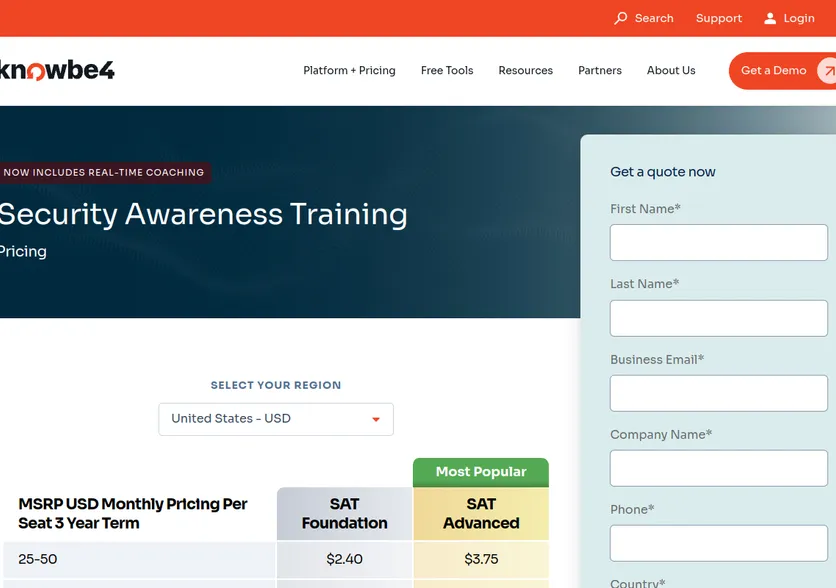
Paid tool Starting price: $2.40/user/month · Two dollars and forty cents per user a month on SAT Foundation at twenty-five to fifty seats on a three-year term, falling to one dollar and sixty-three cents at five hundred and one to one thousand seats; SAT Advanced is three dollars and seventy-five cents down to two dollars and seventy-nine cents; one listing shows one dollar and ninety-seven cents, so confirm the seat band at checkout
Free plan: No free plan; free phishing test
Electricians work on site with phones, not desks, so training has to fit a mobile crew. This KnowBe4 plan costs two dollars and forty cents per user a month and delivers short phishing and password modules that run on any phone. Simulated phishing emails show which crew members click, and the dashboard tracks the whole firm from the office. It is the best overall pick for a firm that wants the deepest library.
What we like
- Short modules that run on any phone
- Phishing simulations with detailed reporting
- Scales from a small crew to a large firm
Watch out for
- The headline price needs a three-year term at twenty-five seats
- The library is so large that picking modules takes time
How to try it
- Run a baseline phishing test for the whole crew
- Assign the training modules for the staff who clicked
- Repeat the simulation monthly and track the click rate
2. NINJIO
Best for: Firms whose staff rarely sit at a desk
Paid tool Starting price: $1.50/user/month · One dollar and fifty cents per user a month; packaging is quote-based, so the per-user figure is indicative rather than a fixed list price; volume deals cluster around fifteen to thirty-five dollars per user a year
Free plan: No free plan; free demo
A crew that learns by watching will finish these episodes, since this NINJIO plan costs one dollar and fifty cents per user a month and teaches security in three-minute videos built around real attacks. Each episode is short enough to watch between jobs, and the dashboard shows who finished. It suits a firm whose staff rarely sit at a desk.
What we like
- Three-minute videos that staff actually finish
- Episodes built around real attack stories
- Simple dashboard for completion tracking
Watch out for
- Packaging is quote-based, so the price is indicative
- Fewer deep-dive modules than KnowBe4
How to try it
- Book a demo and watch a sample episode with the crew
- Roll the episodes out one per week to all staff
- Check the dashboard and follow up with anyone behind
3. Hook Security
Best for: Small electrical firms that want modern training
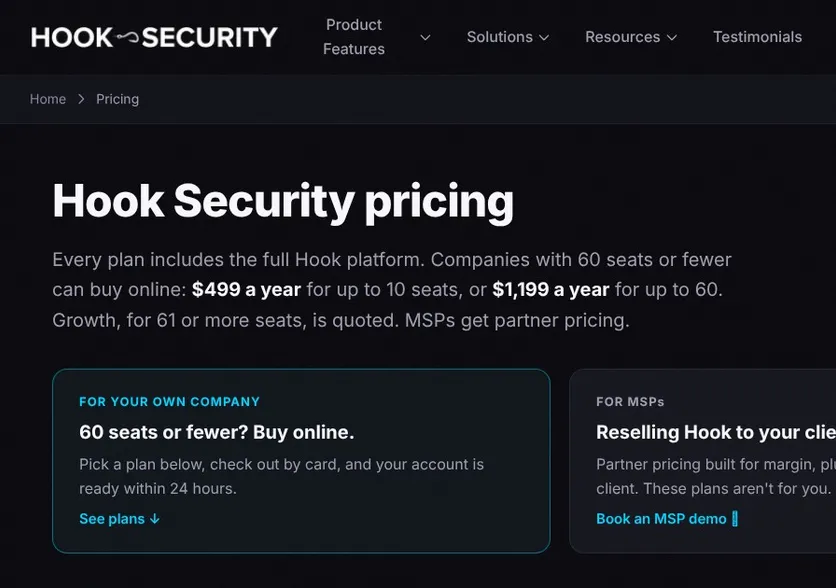
Paid tool Starting price: $1.50/user/month · One dollar and fifty cents per user a month on Basic; Hook Plus is two dollars per user a month; the vendor page now emphasises flat yearly plans, with Micro at four hundred and ninety-nine dollars a year up to ten seats and Starter at one thousand one hundred and ninety-nine dollars a year for eleven to sixty seats, so confirm which structure applies
Free plan: No free plan; free trial available
Small trade firms get a modern platform here, as this Hook Security plan costs one dollar and fifty cents per user a month and mixes phishing simulations with short, practical training. The templates mirror the invoice and supplier scams that target trades, and the reports are written in plain language. It is the best value pick for a small electrical firm.
What we like
- Phishing templates that mirror scams targeting trades
- Short training that fits into a working day
- Reports written in plain language
Watch out for
- The vendor now emphasises flat yearly plans over per-seat pricing
- The library is smaller than the biggest platforms
How to try it
- Start the trial and run a phishing simulation
- Assign the training modules to the staff who clicked
- Review the plain-language report each month
4. Huntress Managed SAT
Best for: Firms that want engaging training without admin work
Paid tool Starting price: $2.08/learner/month · Two dollars and eight cents per learner a month at fifty to ninety-nine learners, falling to one dollar and thirty-eight cents at five hundred to nine hundred and ninety-nine learners, billed annually; fifty learners is the minimum for direct purchase; formerly Curricula, now the Huntress managed programme
Free plan: No free plan
Storytelling is the teaching method here, because this Huntress Managed SAT plan costs two dollars and eight cents per learner a month and uses narrative episodes to make phishing defence memorable. The managed service runs the simulations, so the firm owner does not have to. It suits a firm that wants engaging training without admin work.
What we like
- Story-driven episodes that staff remember
- Managed service handles the simulations
- Clear pricing by learner band
Watch out for
- Fifty learners is the minimum for direct purchase
- The Curricula brand is gone, so older reviews describe a different name
How to try it
- Check the firm meets the fifty-learner minimum
- Enrol the team and start the first story episode
- Run the phishing simulation and review the results
5. GoldPhish
Best for: Small electrical firms that want the cheapest price
Paid tool Starting price: $12/user/year · Twelve dollars per user a year on Premium for one to one hundred seats, falling to three dollars and sixty cents at ten thousand seats; Managed starts at twenty dollars per user a year with a ten-seat minimum; a thirty-day trial is included
Free plan: No free plan; 30-day free trial
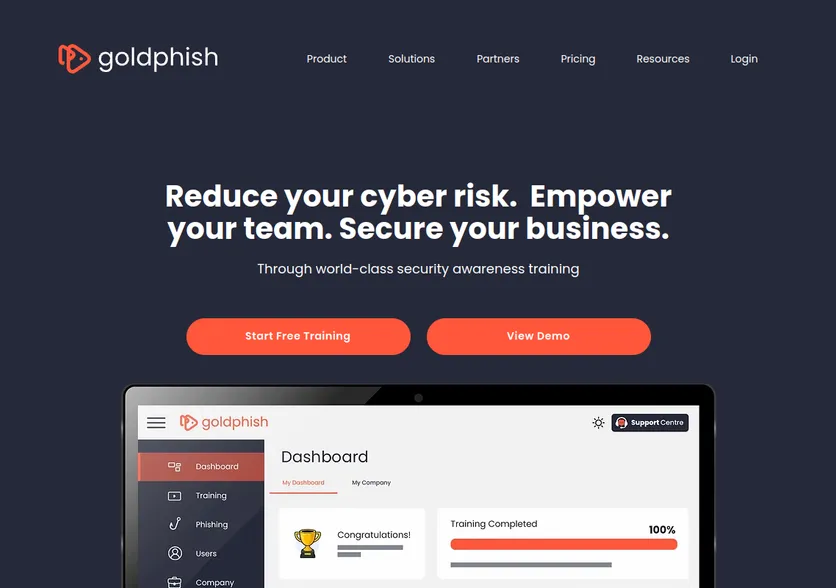
The lowest yearly price in this list is here, since this GoldPhish plan costs twelve dollars per user a year and bundles phishing simulation with the training. The platform is simple to run, which matters for a firm with no IT staff. It is the cheapest yearly option for a small electrical firm.
What we like
- Twelve dollars a user a year is the lowest yearly price here
- Phishing simulation included in the base plan
- Simple enough to run without security staff
Watch out for
- The training library is smaller than the big platforms
- Managed plans start at twenty dollars a user a year
How to try it
- Start the thirty-day trial with the whole crew
- Run the first phishing simulation
- Assign the training to the staff who clicked
6. CybSafe
Best for: Firms that want targeted training
Paid tool Starting price: $1.00/user/month · One dollar per user a month billed yearly on Standard; Professional is one dollar and eighty cents per user a month; third-party listings show pound-sterling tiers at sixty-seven pence, one pound twenty-five and two pounds nine pence, so confirm the dollar figure
Free plan: Free plan available
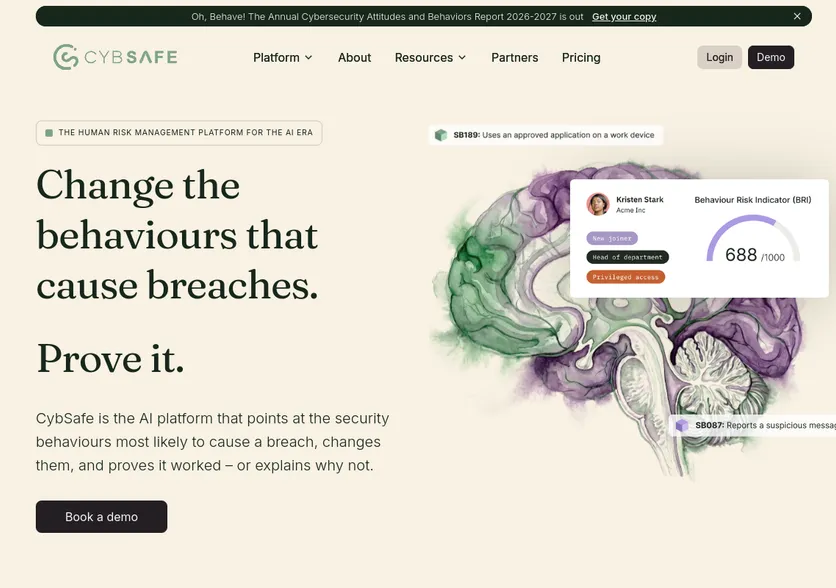
Training that measures risk first is the idea here, as this CybSafe plan costs one dollar per user a month billed yearly and finds who clicks and who reuses passwords before it teaches. Each person gets the modules that match their own weak spots, so nobody wastes time on lessons they already know. It is the best pick for a firm that wants targeted training.
What we like
- Measures each person's risk before assigning training
- Behaviour-based modules target real weak spots
- Free plan available for trying the platform
Watch out for
- Third-party listings show pound prices that confuse the dollar figure
- The free plan is limited, so most firms pay
How to try it
- Run the risk assessment for the whole crew
- Assign the modules the assessment recommends
- Re-test behaviour after three months and compare
7. Wizer
Best for: Firms that want training to feel like a game
Paid tool Starting price: $1.50/user/month · One dollar and fifty cents per user a month on Boost, with other reads listing two dollars and eight cents or three dollars a user a month, so confirm at checkout; base courses start at twenty-five dollars per user a year; the free plan covers unlimited users
Free plan: Free plan (unlimited users)
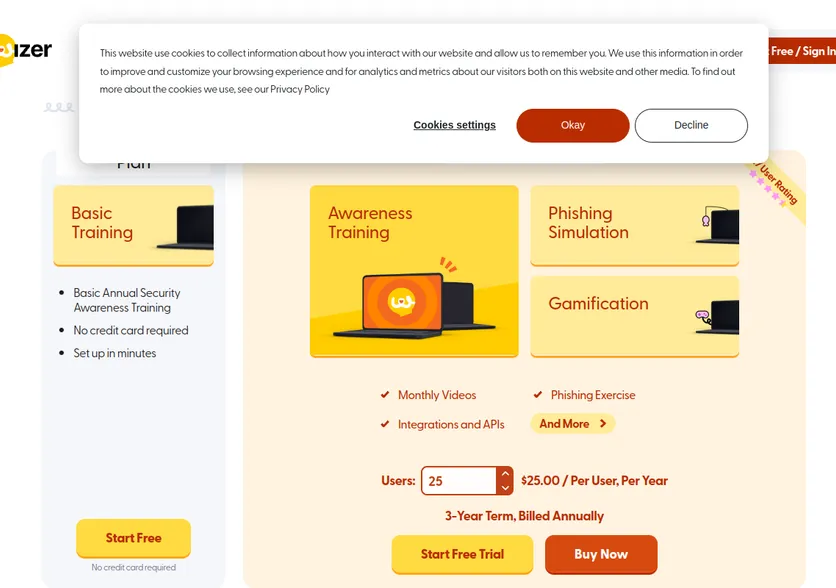
A crew that likes a competition will engage with this one, because this Wizer plan costs one dollar and fifty cents per user a month and turns phishing defence into a game with leaderboards. Short challenges fit between jobs, and the free plan covers unlimited users for the basics. It suits a firm that wants training to feel like a game, not homework.
What we like
- Leaderboards and challenges keep staff engaged
- Free plan covers unlimited users
- Short videos that fit into a working day
Watch out for
- Published prices vary between one dollar fifty and three dollars
- The gamification suits some teams and distracts others
How to try it
- Start with the free plan for the whole crew
- Launch the first challenge and watch the leaderboard
- Upgrade to Boost for the full video library
8. PhishingBox
Best for: Firms that want simulation first
Paid tool Starting price: $16.50/seat/year · Sixteen dollars and fifty cents per seat a year on Standard; Professional is twenty-three dollars and ninety-three cents per seat a year and Enterprise is thirty-one dollars and thirty-five cents; one listing shows forty-one dollars and fifty cents per twenty-five users a month, so confirm the figure
Free plan: No free plan; free trial available
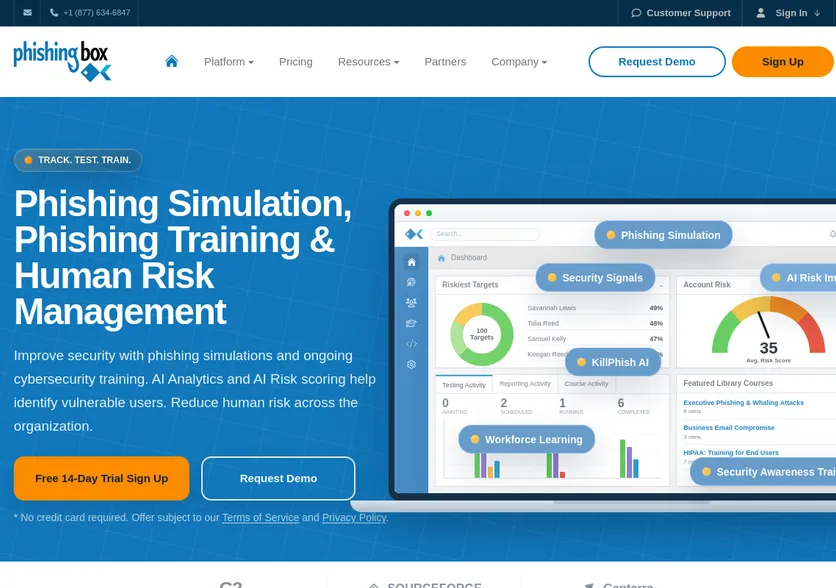
Realistic fake emails are the test here, as this PhishingBox plan costs sixteen dollars and fifty cents per seat a year and sends the crew the scams that target trades, from fake invoices to credential theft. Everyone who clicks gets training attached, so the lesson follows the mistake immediately. It is a solid mid-price pick for a firm that wants simulation first.
What we like
- Realistic phishing templates for professional firms
- Training attached to every simulation
- Simple pricing per seat per year
Watch out for
- Other listings show a higher monthly figure, so confirm the price
- The training library is smaller than KnowBe4
How to try it
- Start the trial and build a phishing campaign
- Send the simulation to the whole crew
- Assign training to everyone who clicked the fake email
9. CyberHoot
Best for: Small firms that hate per-seat pricing
Paid tool Starting price: $25/month · Twenty-five dollars a month flat on Basic, not per user; Autopilot is one hundred and ninety-nine dollars a month and Partners is ninety-one dollars a month; the flat rate suits small firms
Free plan: No free plan; free trial available
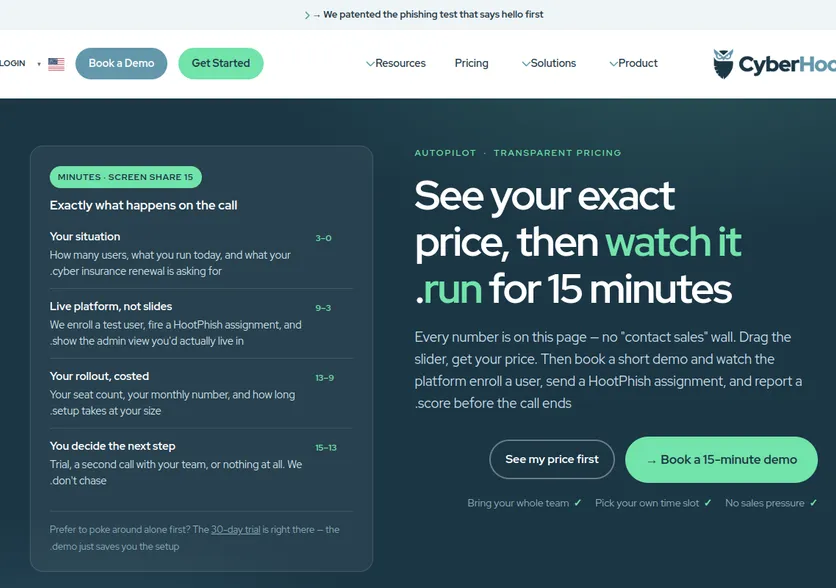
A flat monthly price that ignores headcount is the draw here, since this CyberHoot plan costs twenty-five dollars a month flat and covers the whole firm, from the office to the vans. Automated assignments and phishing tests run with little admin work, which suits a firm with no IT team. It is the best pick for a firm that hates per-seat maths.
What we like
- Flat twenty-five dollars a month, whatever the headcount
- Automated assignments with little admin work
- Phishing tests included in the base plan
Watch out for
- The flat rate still needs the Autopilot plan for automation at scale
- The library is smaller than the enterprise platforms
How to try it
- Start the trial and add the firm staff
- Turn on automated training assignments
- Run a phishing test and review the results
Prices above were checked on each vendor’s own website on Nov 28, 2026 and can change — the vendor’s page is the final word. Vendor links are editorial: nobody paid to be listed or ranked here. Vendors who want a featured listing can see how it works on our Get listed page.
How to train an electrical crew that rarely sits at a desk
Put the training on phones, because an electrician will watch a three-minute video between jobs but will never open a laptop course. Run the phishing simulation with the scams the trade actually sees, such as fake supplier invoices and payment links, rather than generic examples. Share the results with the whole crew, including the owner, since a click rate that stays in the office changes nothing. Keep modules short and repeat them monthly, because one long course a year is forgotten by February. Finally, make the training part of onboarding, so every new hire learns the firm's phishing rules in the first week.
Before you buy
- Check that the training runs well on phones, since the crew rarely sits at a desk
- Make sure the price covers every member of staff, including apprentices and office admin
- Ask whether phishing simulations cover invoice and supplier scams that target trades
- Confirm the modules are short enough to finish between jobs, not just at a desk
- Test the reporting to see who clicked, who finished and who needs more coaching
Official websites
Official websites of the products reviewed above. Features and prices were checked against these sites when this guide was written, and they can change, so confirm on the vendor site before you buy.
Frequently asked questions
What is the best security awareness training for electricians?
KnowBe4 leads this list because its short modules run on any phone and its phishing simulations come with the best reporting, at two dollars and forty cents per user a month. GoldPhish is the best value at twelve dollars per user a year, and CyberHoot suits a firm that wants a flat twenty-five dollars a month whatever the headcount.
How much does security awareness training cost for electricians?
Prices in this list run from one dollar per user a month for CybSafe to two dollars and forty cents for KnowBe4, with GoldPhish at twelve dollars per user a year and CyberHoot at twenty-five dollars a month flat. Most tools also offer a free plan or a free trial, so a firm can test the training before paying. The dearest option here is still far cheaper than the quote-only platforms.
Can electricians do security training on a phone?
Yes, with KnowBe4, NINJIO and Wizer, whose short videos and modules run on any phone between jobs. A crew that rarely sits at a desk should avoid training that needs a laptop or a long sitting, since it will never get finished. Check the free plan or trial on a phone first, before rolling the training out to the whole crew.
How often should an electrical firm run phishing simulations?
An electrical firm should run a phishing simulation each month with a new template, then assign training to the staff who clicked. Monthly simulations keep the crew alert, since phishing tactics change fast and a yearly course is forgotten within weeks. A firm that simulates monthly will see its click rate fall steadily over a year.
What scams target electricians?
Fake supplier invoices and payment links are the most common scams targeting electricians, along with credential theft emails that mimic a supplier portal. Attackers also send fake job sheets and delivery notices that look like real trade emails. Training should cover these trade-specific scams, not just generic phishing examples, so the crew recognises the attacks they actually receive.
Compare the nine tools above, then start with a free plan or trial on the training the crew will actually finish between jobs before paying for a full year.
Browse Security & Privacy tools