On this page
Enterprise work spans departments, time zones and hundreds of projects, and a task tool that only handles one team breaks the moment work crosses a boundary. The nine tools below cover portfolios, workloads and cross-team reporting for companies of every size. ClickUp leads because it covers tasks, docs, goals and chat in one workspace, at a price a large company can justify. The rest are ranked on price, depth and how well they fit enterprise work.
How we researched this
We checked every price on the vendor pricing page on November 29, 2026, and only included tools with a published US dollar list price. Todoist is excluded because it is built for personal task lists rather than enterprise project management. Prices change, so confirm the current figure on the vendor site before you buy.
Compare the tools
| Name | Best for | Starting price | Free plan | |
|---|---|---|---|---|
 ClickUp | Enterprises that want one workspace for every team | $9/user/month | Free plan (Free Forever) | Visit |
 Asana | Enterprises that want clear cross-team coordination | $10.99/user/month | Free plan (Personal, 2 users) | Visit |
 Monday.com | Enterprises that want visual, board-led workflows | $9/seat/month | No free plan; 14-day free trial | Visit |
 Wrike | Enterprises that want structured project management at scale | $9.80/user/month | Free plan | Visit |
 Smartsheet | Enterprises that want spreadsheet-style project tracking | $9/member/month | No free plan; 30-day free trial | Visit |
 Teamwork | Enterprises that want client work managed end to end | $9.99/user/month | Free plan | Visit |
 Jira | Enterprises that run software delivery on agile boards | $9.70/user/month | Free plan (up to 10 users) | Visit |
 Notion | Enterprises that want docs and tasks in one workspace | $10/member/month | Free plan | Visit |
 Airtable | Enterprises that want database-powered project tracking | $20/seat/month | Free plan | Visit |
The task management software for enterprise, compared
1. ClickUp
Best for: Enterprises that want one workspace for every team
Paid tool Starting price: $9/user/month · Nine dollars per user a month on Core billed annually (twelve dollars billed monthly); Business is seventeen dollars a user a month billed annually
Free plan: Free plan (Free Forever)
An enterprise that runs marketing, product and operations in separate tools will find the unification here, since this ClickUp plan costs nine dollars per user a month billed annually, and it covers tasks, docs, goals and chat in one workspace. Its custom views let each team work its own way while leadership sees the same data, and the automations cut the manual status updates that eat a week. The Core tier is the entry point, with Business adding the reporting and permissions larger teams need.

What we like
- Tasks, docs, goals and chat in one workspace
- Custom views that suit every team style
- Strong automations that cut manual updates
Watch out for
- The breadth can overwhelm a team that wants simple lists
- Advanced reporting needs the Business tier
How to try it
- Set up one workspace with a space per department
- Build custom views for tasks, docs and goals
- Automate status updates and review the dashboards weekly
2. Asana
Best for: Enterprises that want clear cross-team coordination
Paid tool Starting price: $10.99/user/month · Ten dollars and ninety-nine cents per user a month on Starter billed annually (thirteen dollars and forty-nine cents billed monthly); Advanced is twenty-four dollars and ninety-nine cents a month billed annually; Personal is free for two users
Free plan: Free plan (Personal, 2 users)
An enterprise that needs every team to see who is doing what by when will find the clarity here, since this Asana plan costs ten dollars and ninety-nine cents per user a month billed annually, and it turns goals into trackable work across departments. Its timeline and portfolio views show leadership the whole programme at a glance, and the rules engine automates the handoffs between teams. The Personal plan is free for two users, so a small team can test it before paying.

What we like
- Clear timelines and portfolios for leadership
- Rules that automate handoffs between teams
- Goals that tie daily work to company aims
Watch out for
- Advanced reporting needs the dearer Advanced tier
- Per-user pricing adds up fast at enterprise scale
How to try it
- Set the company goals and break them into team projects
- Build timelines and portfolios for each department
- Review progress weekly and reassign blocked work
3. Monday.com
Best for: Enterprises that want visual, board-led workflows
Paid tool Starting price: $9/seat/month · Nine dollars per seat a month on Basic billed annually (twelve dollars billed monthly) with a three-seat minimum; Standard is twelve dollars a seat a month and Pro is nineteen dollars a seat a month billed annually; seats are sold in bundles
Free plan: No free plan; 14-day free trial
An enterprise that thinks in boards and colour-coded status will feel at home here, since this Monday.com plan costs nine dollars per seat a month billed annually, and it turns every project into a visual board anyone can read. Its dashboards roll up work from dozens of boards into one view, and the automations move tasks between teams without a meeting. The three-seat minimum and bundled seats mean a small team pays for seats it may not use.

What we like
- Visual boards that anyone can read at a glance
- Dashboards that roll up dozens of boards
- Automations that move work between teams
Watch out for
- Seats are sold in bundles, so small teams overpay
- No free plan, so the trial is the only test
How to try it
- Build a board for each team with status columns
- Set up dashboards that roll up every board
- Automate the handoffs between departments
4. Wrike
Best for: Enterprises that want structured project management at scale
Paid tool Starting price: $9.80/user/month · Nine dollars and eighty cents per user a month on Team; Business is twenty-four dollars and eighty cents per user a month
Free plan: Free plan
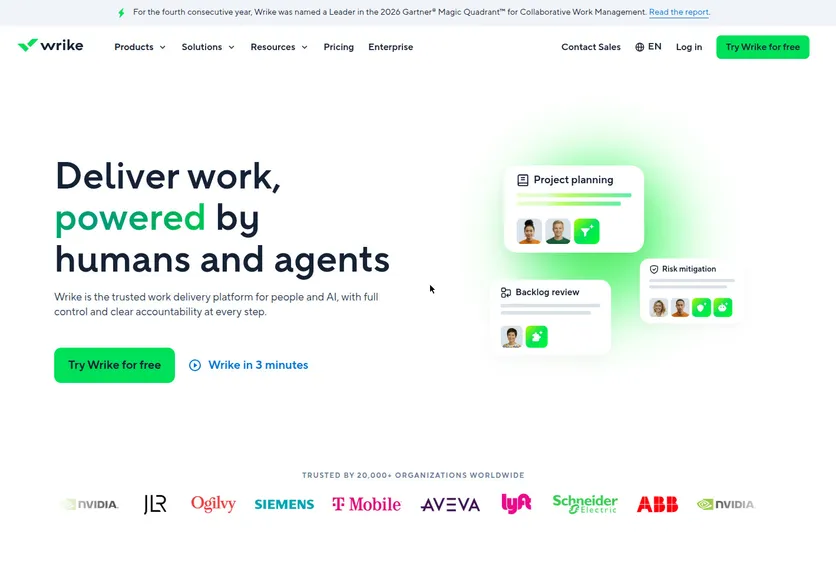
An enterprise that runs complex projects with approvals and proofing will find the structure here, since this Wrike plan costs nine dollars and eighty cents per user a month, and it covers Gantt charts, workloads and approvals in one platform. Its request forms turn ad-hoc asks into tracked work, and the proofing tools suit teams that review creative and documents. The Business tier adds the reporting and automation that larger teams need.
What we like
- Gantt, workload and approvals in one platform
- Request forms that turn asks into tracked work
- Proofing tools for creative and document review
Watch out for
- The interface takes longer to learn than Asana or Monday
- Reporting and automation need the Business tier
How to try it
- Set up request forms for ad-hoc work from other teams
- Build Gantt charts and workload views for each project
- Use proofing to review creative and documents in place
5. Smartsheet
Best for: Enterprises that want spreadsheet-style project tracking
Paid tool Starting price: $9/member/month · Nine dollars per member a month on Pro billed annually (twelve dollars billed monthly) for one to ten members; Business is nineteen dollars a member a month billed annually; Enterprise is quoted
Free plan: No free plan; 30-day free trial
An enterprise that lives in spreadsheets will find the familiarity here, since this Smartsheet plan costs nine dollars per member a month billed annually, and it turns a grid into a project plan with Gantt charts, cards and reports. Its forms collect work requests from anyone, and the dashboards give leadership a live view without a status meeting. The Pro tier covers one to ten members, so a larger team should compare the Business rate before choosing.

What we like
- Spreadsheet familiarity with project power
- Forms that collect work requests from anyone
- Dashboards that replace status meetings
Watch out for
- Pro covers only one to ten members
- No free plan, so the trial is the only test
How to try it
- Build a sheet for each project with owners and dates
- Add Gantt and card views for the team
- Set up dashboards that show leadership the live status
6. Teamwork
Best for: Enterprises that want client work managed end to end
Paid tool Starting price: $9.99/user/month · Nine dollars and ninety-nine cents per user a month on Basics; Accelerate is twenty-four dollars and ninety-nine cents per user a month
Free plan: Free plan
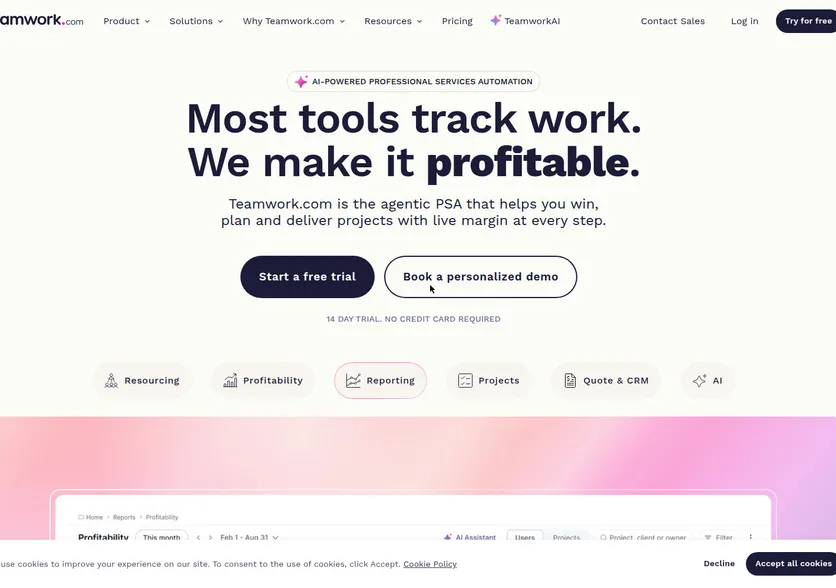
An enterprise that runs client projects will find the client focus here, since this Teamwork plan costs nine dollars and ninety-nine cents per user a month, and it covers tasks, time tracking and client billing in one platform. Its workload views show who is overloaded before a deadline slips, and the templates speed up repeatable client work. The Accelerate tier adds the profitability and forecasting reports that agencies and service teams need.
What we like
- Tasks, time tracking and billing in one place
- Workload views that spot overload early
- Templates that speed up repeatable client work
Watch out for
- Profitability reports need the Accelerate tier
- Less suited to internal-only product teams
How to try it
- Set up a project per client with tasks and milestones
- Track time against each task and bill the client
- Review workloads weekly and rebalance overloaded teams
7. Jira
Best for: Enterprises that run software delivery on agile boards
Paid tool Starting price: $9.70/user/month · Nine dollars and seventy cents per user a month on Standard as the monthly list price for one to one hundred users; Premium is nineteen dollars and sixty cents; annual plans are fixed tiers (nine hundred and fifty dollars a year for up to ten users Standard)
Free plan: Free plan (up to 10 users)
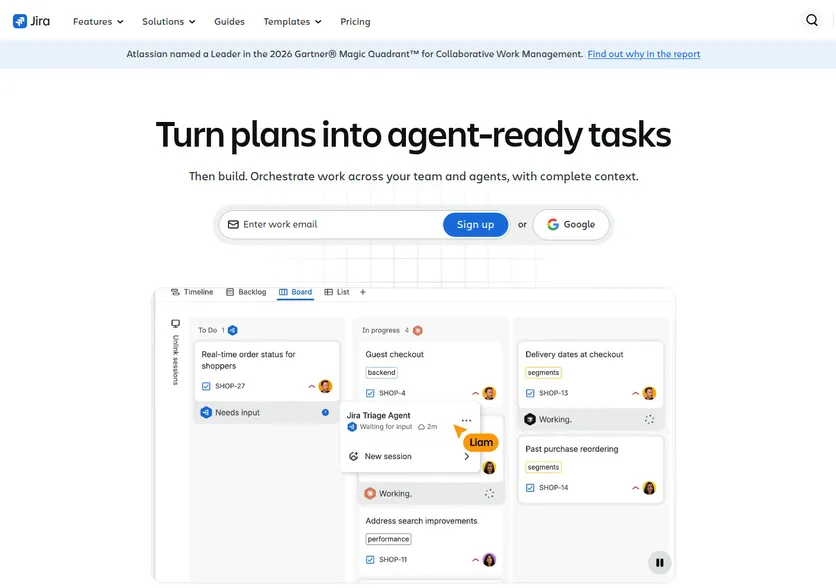
An enterprise that ships software will find the agile depth here, since this Jira plan costs nine dollars and seventy cents per user a month as the monthly list price, and it covers Scrum, Kanban and roadmaps in one platform. Its issue tracking ties every task to a release, and the automation rules cut the manual triage that eats a sprint. The annual plans are fixed tiers, so a team of ten pays nine hundred and fifty dollars a year on Standard.
What we like
- Deep agile support for Scrum and Kanban
- Issue tracking tied to releases and epics
- Automation that cuts manual triage
Watch out for
- Annual plans are fixed tiers, not per-user billing
- The setup takes longer than simpler task tools
How to try it
- Set up a Scrum or Kanban board for each team
- Link issues to epics and releases
- Automate triage and review the roadmap each sprint
8. Notion
Best for: Enterprises that want docs and tasks in one workspace
Paid tool Starting price: $10/member/month · Ten dollars per member a month on Plus billed annually (twelve dollars billed monthly); Business is twenty dollars a member a month billed annually; Enterprise is quoted; a free plan is included
Free plan: Free plan
An enterprise that keeps plans in docs and tasks in another tool will find the combination here, since this Notion plan costs ten dollars per member a month billed annually, and it covers docs, wikis, databases and tasks in one workspace. Its databases turn a simple table into a project tracker, and the AI features draft plans and summaries inside the same pages. The Business tier adds the permissions and admin controls that larger companies need.

What we like
- Docs, wikis, databases and tasks in one place
- Flexible databases that become project trackers
- AI features that draft and summarise in place
Watch out for
- Needs setup effort before it feels like a task tool
- Admin controls need the Business tier
How to try it
- Build a wiki for team docs and a database for tasks
- Link project pages to the task database
- Use AI to draft plans and summarise meetings
9. Airtable
Best for: Enterprises that want database-powered project tracking
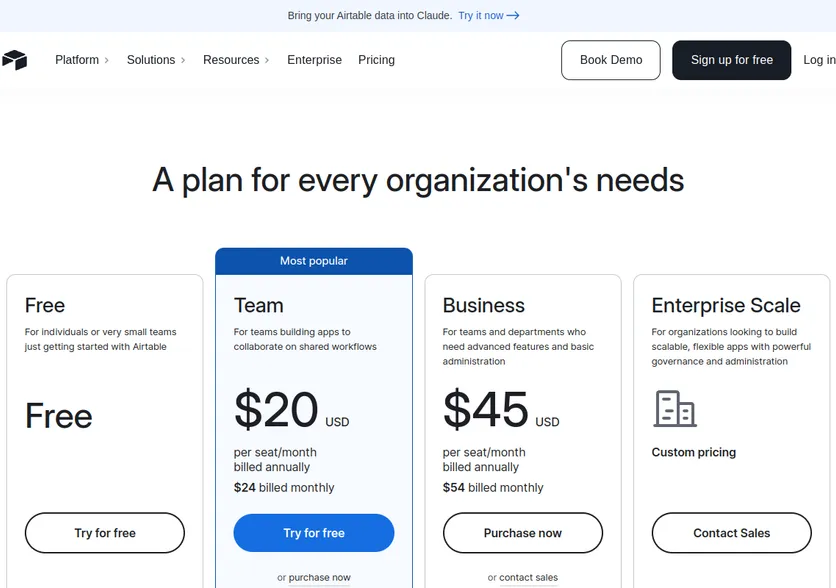
Paid tool Starting price: $20/seat/month · Twenty dollars per seat a month on Team billed annually (twenty-four dollars billed monthly); Business is forty-five dollars a seat a month billed annually; Enterprise Scale is custom; Airtable was acquired by Bending Spoons in September 2026 with no price change announced
Free plan: Free plan
An enterprise that tracks work in structured records will find the database power here, since this Airtable plan costs twenty dollars per seat a month billed annually, and it turns a spreadsheet into a relational database with views, forms and automations. Its interfaces let each team see only the records that matter, and the AI features summarise and categorise work automatically. The price is the highest in this list, and Airtable was acquired by Bending Spoons in September 2026 with no price change announced.
What we like
- Relational databases that beat a flat spreadsheet
- Interfaces that show each team only its work
- AI features that summarise and categorise records
Watch out for
- The highest entry price in this list
- Enterprise Scale is custom quoted
How to try it
- Build a base for projects with linked records
- Create an interface per team that shows only their work
- Automate status changes and review the dashboards weekly
Prices above were checked on each vendor’s own website on Nov 29, 2026 and can change — the vendor’s page is the final word. Vendor links are editorial: nobody paid to be listed or ranked here. Vendors who want a featured listing can see how it works on our Get listed page.
How to roll out task management across an enterprise
Start with one cross-team project, not the whole company, because a tool that works for one department can still fail when work crosses a boundary. Pick two departments that already share work, run a real project through the tool, and collect honest feedback from both sides. Keep the first project simple: one board, one set of deadlines and one dashboard, since a workspace loaded with every feature on day one overwhelms everyone. Train team leads first, because a task tool is only as good as the habits around it, and publish the rollout timeline so nobody is surprised.
Before you buy
- Confirm the price covers every user, since per-seat tools bill the whole company
- Check whether the tool handles portfolios and cross-team work, not just single projects
- Ask if the reporting shows workload and deadlines across departments
- Make sure the tool connects to the chat, docs and code tools the teams already use
- Test one cross-team project with two departments before rolling it out company-wide
Official websites
Official websites of the products reviewed above. Features and prices were checked against these sites when this guide was written, and they can change, so confirm on the vendor site before you buy.
Frequently asked questions
What is the best task management software for enterprise?
ClickUp is the best overall pick for enterprises, at nine dollars per user a month billed annually, because it covers tasks, docs, goals and chat in one workspace. Asana is the best fit for cross-team coordination at ten dollars and ninety-nine cents per user a month. Monday.com suits visual, board-led teams at nine dollars per seat a month.
How much does task management software cost for an enterprise?
Expect nine dollars per user a month for ClickUp, Monday.com and Smartsheet, up to twenty dollars per seat a month for Airtable, with Asana at ten dollars and ninety-nine cents, Jira at nine dollars and seventy cents, and Teamwork at nine dollars and ninety-nine cents in between. Notion Plus costs ten dollars per member a month billed annually.
Why is Todoist not in this list?
Todoist is excluded because it is built for personal task lists rather than enterprise project management, with no portfolios, workload views or cross-team reporting. It costs four dollars a month on Pro and six dollars on Business, which suits individuals and small teams, but an enterprise needs the structure the nine tools in this list provide.
Can I try task management software for free?
Yes, with ClickUp, Wrike, Teamwork, Jira, Notion and Airtable, which all offer a free plan. Asana offers a free Personal plan for two users. Monday.com and Smartsheet offer free trials of fourteen and thirty days. A free plan is the best way to run one cross-team project through the tool before paying.
What should an enterprise look for in task management software?
Check whether the tool handles portfolios and cross-team work, not just single projects. Ask if the reporting shows workload and deadlines across departments. Make sure it connects to the chat, docs and code tools the teams already use, and test one cross-team project with two departments before rolling it out.
Compare the nine tools above, then start with a trial on the tool that matches the team size and work style, and run one cross-team project through it before committing.
Browse Business Tools tools