On this page
Low-code machine learning lets teams build predictions without writing code, with AI that trains models from a spreadsheet. The seven platforms below cover every use, from Obviously AI predictions to Akkio forecasting and Julius AI data chat. Obviously AI is our first pick, the most accessible prediction platform at 75 dollars a month. Every price was checked on the vendor site on November 26, 2026, and every tool offers a free plan or a free trial.
How we researched this
We started with the low-code machine learning platforms teams actually buy in 2026, then read each price on the vendor site on November 26, 2026 and noted the free plan or trial each one carries. We judged them for a team that needs predictions from its own data without hiring data scientists. We kept only platforms with a published price and dropped DataRobot and H2O Driverless AI, because both publish no prices.
Compare the tools
| Name | Best for | Starting price | Free plan | |
|---|---|---|---|---|
 Obviously AI | Teams that want predictions from a spreadsheet | $75/mo | Free trial available | Visit |
 Akkio | Business teams that need forecasting and lead scoring | $49/user/mo | Free trial available | Visit |
 MonkeyLearn | Teams classifying text like tickets and reviews | $299/mo | Free plan (limited queries) | Visit |
 Pecan | Marketing and sales teams predicting revenue | $760/month | Free trial available | Visit |
 BigML | Teams that want classic machine learning visually | $1,000/month | Free plan (limited predictions) | Visit |
 KNIME | Teams that want open source visual workflows | $19/mo | Free plan (KNIME Analytics Platform is free) | Visit |
 Julius AI | Anyone asking questions of their data | $16/mo | Free plan (15 messages a month) | Visit |
The low-code machine learning platforms, compared
1. Obviously AI
Best for: Teams that want predictions from a spreadsheet
Paid tool Starting price: $75/mo · Limited Access; Full Access $999, Pro $2,999
Free plan: Free trial available
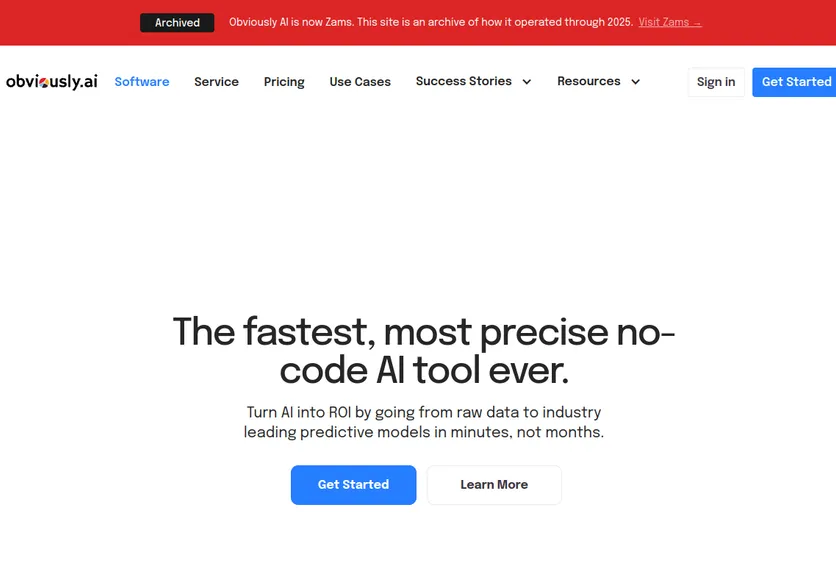
Obviously AI builds prediction models from a spreadsheet, with no code and no data science team needed. This Obviously AI plan adds unlimited predictions, API access and team workspaces for small teams. It is the most accessible prediction platform here, though the entry plan is limited and the full access tier costs much more.
What we like
- Models from a spreadsheet in minutes
- No code and no data science team
- Unlimited predictions on the plan
Watch out for
- Entry plan is limited
- Full access tier costs much more
How to try it
- Upload a spreadsheet with your data
- Pick the outcome you want to predict
- Review the model and share the predictions
2. Akkio
Best for: Business teams that need forecasting and lead scoring
Paid tool Starting price: $49/user/mo · Starter; Team $499 a month for 5 users
Free plan: Free trial available
Akkio is the no-code AI platform for forecasting, lead scoring and chat, built for business teams rather than data scientists. This Akkio plan adds forecasting models, AI chat and integrations with HubSpot and Salesforce. It is the best pick for business forecasting, though the price is per user and the team plan needs five seats.

What we like
- Built for business teams
- Forecasting and lead scoring together
- Strong HubSpot and Salesforce links
Watch out for
- Price is per user
- Team plan needs five seats
How to try it
- Connect your CRM or upload a spreadsheet
- Build a forecasting or lead scoring model
- Chat with the AI about your data
3. MonkeyLearn
Best for: Teams classifying text like tickets and reviews
Paid tool Starting price: $299/mo · Team; Business $999, Enterprise by quote
Free plan: Free plan (limited queries)
MonkeyLearn is the text analysis platform that classifies support tickets, reviews and surveys with no code. This MonkeyLearn plan adds custom models, API access and integrations with Zendesk and Google Sheets. It is the best pick for text classification, though the entry price is high and the platform is built for text only.
What we like
- Best for text classification
- Custom models with no code
- Good Zendesk and Sheets links
Watch out for
- Entry price is high
- Built for text only
How to try it
- Upload your text data to MonkeyLearn
- Train a classifier on your categories
- Connect Zendesk and classify new tickets
4. Pecan
Best for: Marketing and sales teams predicting revenue
Paid tool Starting price: $760/month · Starter plan, $760 a month billed annually for two prediction batches and 500 million rows; the vendor pricing page redirects to a demo page, so the price is stated on the vendor blog
Free plan: Free trial available
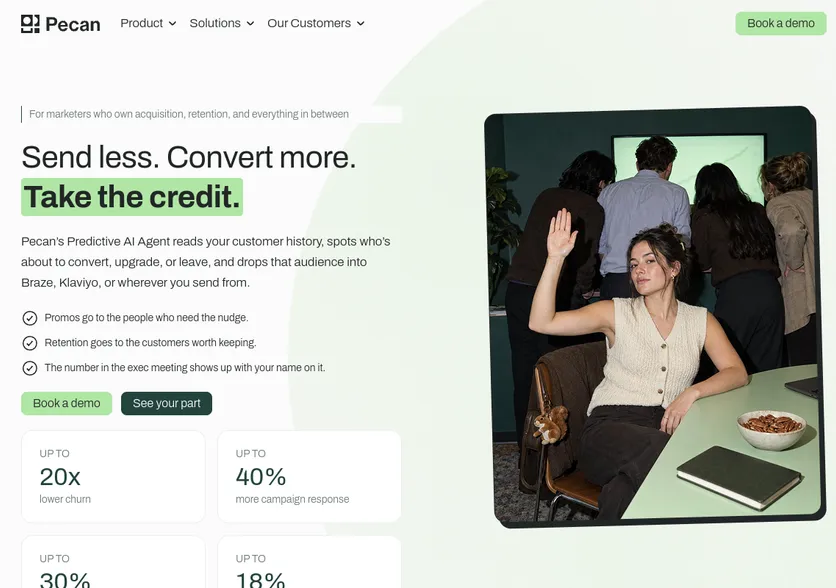
Pecan is the predictive analytics platform for marketing and sales teams, building churn, lifetime value and demand models from your data. This Pecan plan adds automated model building, predictions and integrations with Salesforce and HubSpot. It is the best pick for revenue predictions, though the starting price is high and the higher tiers are quoted.
What we like
- Built for revenue predictions
- Automated model building
- Strong Salesforce and HubSpot links
Watch out for
- Starting price is high
- Higher tiers are quoted
How to try it
- Connect your CRM and sales data to Pecan
- Build a churn or lifetime value model
- Use the predictions in your campaigns
5. BigML
Best for: Teams that want classic machine learning visually
Paid tool Starting price: $1,000/month · Lite plan, $1,000 a month or $10,000 a year; Bronze Enterprise is $45,000 a year plus a $10,000 setup fee
Free plan: Free plan (limited predictions)
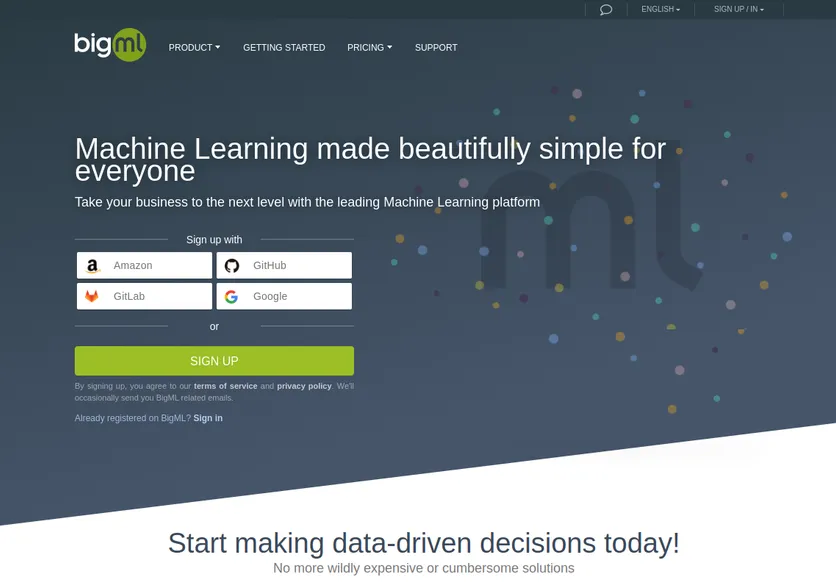
BigML is the machine learning platform with a visual interface, so teams build, test and deploy models without code. This BigML plan adds more predictions, API access and team collaboration for small teams. It is the best pick for classic machine learning, though the interface feels dated and the free tier is small.
What we like
- Visual interface for classic ML
- Build, test and deploy in one place
- API access included
Watch out for
- Interface feels dated
- Free tier is small
How to try it
- Upload your data to BigML
- Build and test a model visually
- Deploy the model and call the API
6. KNIME
Best for: Teams that want open source visual workflows
Paid tool Starting price: $19/mo · Hub Pro, for 1 user; Team $99 a month for 3 members; Business Hub by quote
Free plan: Free plan (KNIME Analytics Platform is free)
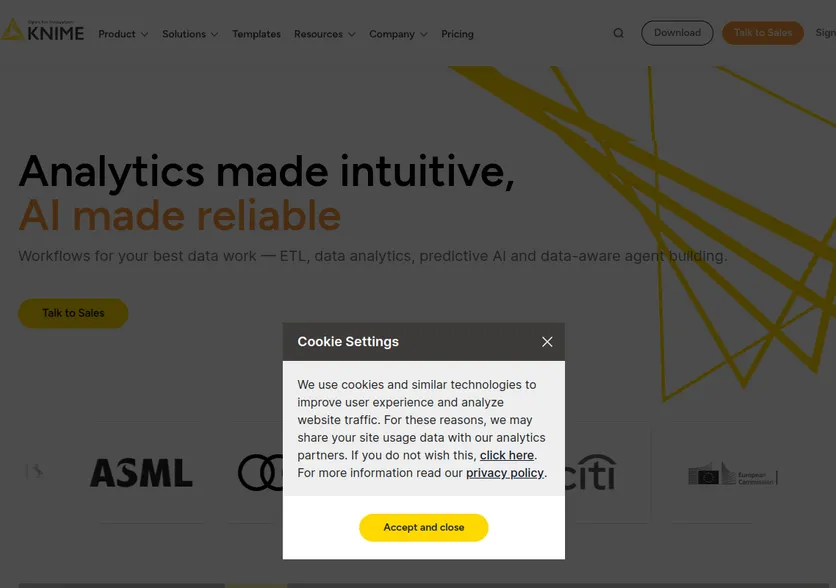
KNIME is the open source analytics platform with a visual workflow builder, now with AI assistants that help you build flows. This KNIME plan adds the cloud hub, team collaboration and scheduled workflows for individuals. It is the best free-first platform here, though the visual workflows take time to learn and the business hub is quoted.
What we like
- Open source and free to start
- Visual workflows for any data
- AI assistants help build flows
Watch out for
- Workflows take time to learn
- Business hub is quoted
How to try it
- Download KNIME and build your first workflow
- Add AI assistants to help with the flow
- Share the workflow on the cloud hub
7. Julius AI
Best for: Anyone asking questions of their data
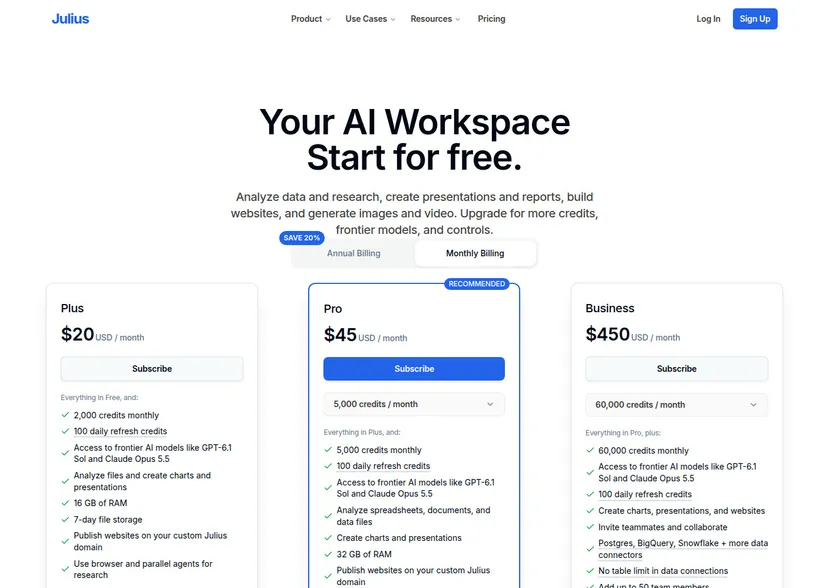
Paid tool Starting price: $16/mo · Plus, billed annually ($20 monthly); Pro $37 annual
Free plan: Free plan (15 messages a month)
Julius AI is the data chat tool that answers questions about your spreadsheets and builds charts from plain language. This Julius AI plan adds more messages, larger files and the ability to build models from your data. It is the best pick for asking questions of your data, though the entry plan caps messages and the tool is chat-first rather than a full platform.
What we like
- Ask questions in plain language
- Charts built from your data
- Cheapest paid plan here
Watch out for
- Entry plan caps messages
- Chat-first, not a full platform
How to try it
- Upload a spreadsheet to Julius AI
- Ask a question in plain language
- Review the chart and download the result
Prices above were checked on each vendor’s own website on Nov 26, 2026 and can change — the vendor’s page is the final word. Vendor links are editorial: nobody paid to be listed or ranked here. Vendors who want a featured listing can see how it works on our Get listed page.
How to choose a low-code machine learning platform
Start with the prediction you actually need, because forecasting sales, classifying text and chatting with data are three different jobs. Obviously AI and Pecan predict numbers, MonkeyLearn classifies text, and Julius AI answers questions about your spreadsheets. If your team has no data scientists, pick the tool that hides the complexity; if it does, KNIME and BigML give more control.
Test with your real data before you buy, because a demo dataset hides the data cleaning your own data needs. Upload a real spreadsheet, build a real model and check the predictions against what actually happened before you commit.
Before you buy
- Match the tool to the prediction, because MonkeyLearn classifies text while Pecan predicts revenue.
- Test with your real data, because a demo dataset hides the cleaning your data needs.
- Check the billing meter, because Akkio charges per user while Pecan charges a flat monthly price.
- Check the free tier limits, because BigML and Julius cap free use tightly.
- Ask who builds the models, because KNIME needs more skill than Obviously AI.
Official websites
Official websites of the products reviewed above. Features and prices were checked against these sites when this guide was written, and they can change, so confirm on the vendor site before you buy.
Frequently asked questions
Which low-code machine learning platform is best for 2026?
Obviously AI is the best overall pick at $75 a month, because it builds prediction models from a spreadsheet with no code. KNIME is better for visual workflows at $19 a month, and Julius AI wins for data chat at $16 a month. Pick Obviously AI for predictions, KNIME for control and Julius AI when you want to ask questions of your data.
What is the cheapest low-code machine learning platform?
Julius AI is the cheapest at $16 a month on the Plus plan, followed by KNIME at $19 a month on Hub Pro. Akkio costs $49 a user a month, and BigML is the priciest here at $1,000 a month on its Lite plan. Compare the job before the price, because Julius AI chats with data while KNIME builds visual workflows and Akkio forecasts for business teams.
Do I need to know how to code?
No, that is the point of low-code platforms. Obviously AI, Akkio, MonkeyLearn, Pecan and Julius AI all build models from spreadsheets or plain language with no code at all. KNIME and BigML are visual rather than code-based, but they still need more skill than the others. Start with Obviously AI or Julius AI if you have never built a model before.
Can these platforms handle my data?
Yes, within limits. All seven accept spreadsheets and common data sources, and Obviously AI, Akkio and Pecan connect to CRMs like Salesforce and HubSpot. Check the row limits on the plan you buy, because entry plans cap the data size and the price jumps when you outgrow them. Test with your real data during the trial, not a demo file.
Do these platforms offer free plans?
Yes, most of them do. MonkeyLearn, BigML, KNIME and Julius AI all offer free plans with caps on queries, predictions or messages, and Obviously AI, Akkio and Pecan offer free trials. The free tiers are fine for learning and small tests, but the caps bite fast when you predict every week, so budget for a paid plan.
Explore more AI tools that work for you — browse the full AI set, free and running on your device.
Browse AI Tools (In-Browser, No API) tools