On this page
An enterprise IoT fleet is a software problem with hardware attached: devices in the field, messages in the cloud, and a team that needs to see both. The nine platforms below were judged on developer terms: how fast a team ships a prototype, what the bill looks like at a thousand devices, and how much of the plumbing the platform handles. AWS IoT Core leads because it charges per message instead of per seat, and the other eight platforms are ranked on the test: what does it cost to start, and what does it cost when the fleet grows?
How we researched this
We checked every price on the vendor pricing page on November 27, 2026, and only included tools with a published US dollar list price, so confirm the current figure on the vendor site before you buy. Google Cloud IoT Core is not in this list because Google shut it down in August 2023, ThingWorx and Cumulocity are quote-only with no published price, and Datacake is excluded because it lists prices in euros only while this guide covers US dollar pricing.
Compare the tools
| Name | Best for | Starting price | Free plan | |
|---|---|---|---|---|
| AWS IoT Core | Enterprise teams already running on AWS | $1 per 1M messages | Free tier for 12 months with 250,000 to 500,000 messages a month | Visit |
| Azure IoT Hub | Enterprise fleets already running on Azure | $10/unit/month | Free tier with 8,000 messages a day and 500 devices | Visit |
| Blynk | Teams that need a working device app fast | $29/month | Free plan for up to 5 devices | Visit |
| Ubidots | Teams that want dashboards and alerts without building them | $99/month | Free STEM plan for up to 3 devices, non-commercial use | Visit |
| ThingsBoard | Teams that want an open-source IoT platform in the cloud | $49/month | Free plan for up to 5 devices | Visit |
| Particle | Hardware teams shipping connected products | $299/month | Free plan for up to 100 devices and 100,000 Data Ops | Visit |
| Losant | Enterprises building custom IoT applications | $250/month | Free Developer Sandbox for up to 10 devices | Visit |
| Mender | Teams that need secure over-the-air updates for Linux devices | $34/month | Free trial available; no free plan listed | Visit |
| Arduino Cloud | Teams prototyping connected products on Arduino hardware | $6/month | Free plan for up to 2 Things | Visit |
The internet of things developers software for enterprise, compared
1. AWS IoT Core
Best for: Enterprise teams already running on AWS
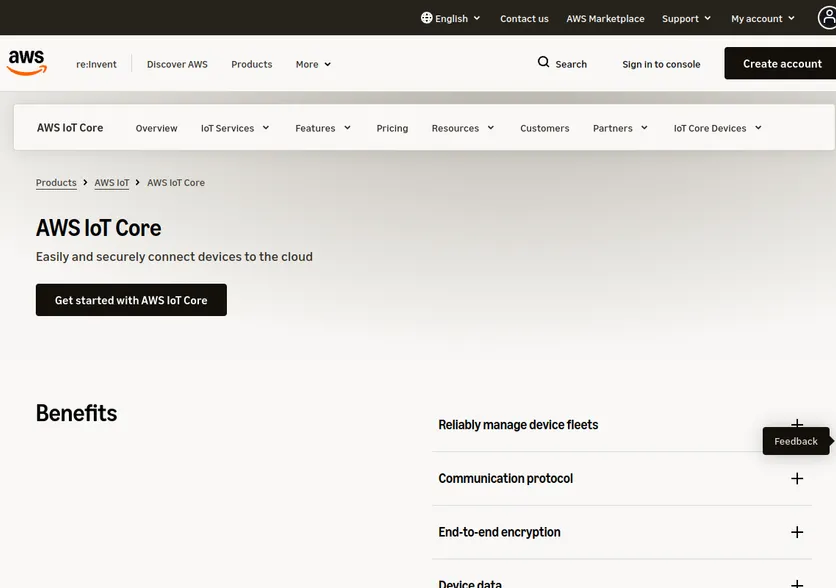
Paid tool Starting price: $1 per 1M messages · One dollar per one million messages for the first one billion messages a month in US East, measured in five kilobyte blocks; connectivity costs eight cents per one million minutes. The free tier covers the first twelve months with two hundred and fifty thousand to five hundred thousand messages a month
Free plan: Free tier for 12 months with 250,000 to 500,000 messages a month
This AWS IoT Core service costs one dollar per one million messages, and it is the most honest pricing model in this list: the bill follows the traffic, not the headcount. Devices connect securely, messages route to Lambda, S3 or your own services, and the fleet can grow from ten devices to ten million without a new contract. An enterprise already on AWS gets the identity, logging and monitoring it already pays for.
What we like
- Pay per message, not per seat or device
- Deep integration with the rest of AWS
- Free tier covers the first twelve months
Watch out for
- Usage billing is hard to forecast for chatty devices
- Steep learning curve for teams new to AWS
How to try it
- Create a thing and its certificates in the IoT console
- Publish a test message and route it to Lambda or S3
- Set up Device Defender to audit fleet security
2. Azure IoT Hub
Best for: Enterprise fleets already running on Azure
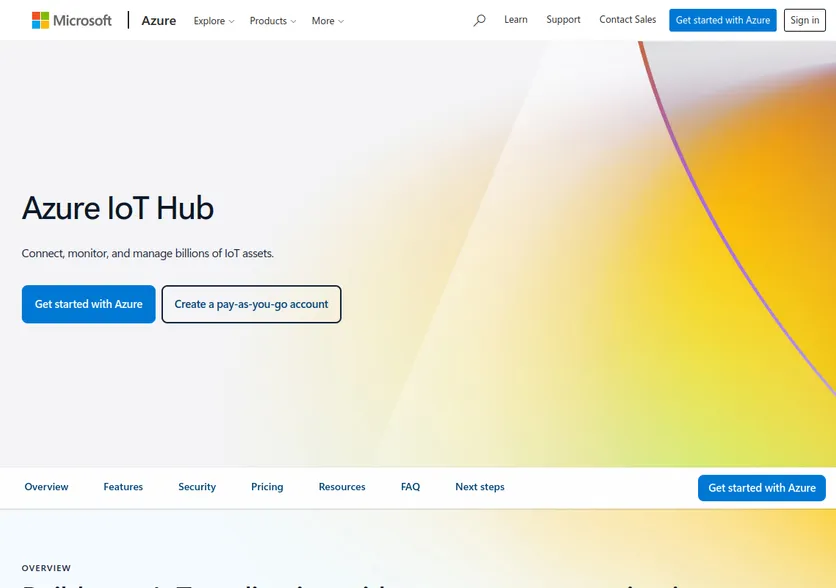
Paid tool Starting price: $10/unit/month · Ten dollars per unit per month on the Basic B1 tier, which covers four hundred thousand messages a day for device-to-cloud traffic only; the Standard S1 tier at twenty-five dollars adds device management, device twins and cloud-to-device messaging
Free plan: Free tier with 8,000 messages a day and 500 devices
This Azure IoT Hub plan costs ten dollars per unit per month on the Basic tier, and it gives an Azure shop a managed way to run a device fleet. Device twins keep a digital record of every device, cloud-to-device messages push updates back out, and the whole pipeline plugs into Event Hubs, Stream Analytics and the rest of Azure. It is the natural pick when the enterprise already trusts Microsoft for identity and compliance.
What we like
- Device twins keep a live record of every device
- Strong fit for Azure and Microsoft 365 shops
- Free tier covers five hundred devices
Watch out for
- Basic tier has no device management or cloud-to-device messages
- Per-unit pricing needs care at fleet scale
How to try it
- Create an IoT hub and register the first devices
- Use device twins to track firmware and configuration
- Route telemetry to Stream Analytics for live dashboards
3. Blynk
Best for: Teams that need a working device app fast
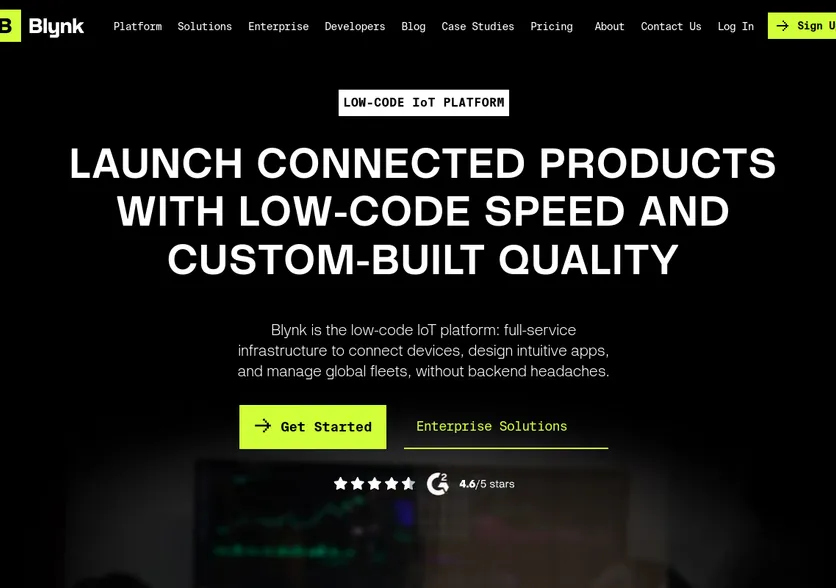
Paid tool Starting price: $29/month · Twenty-nine dollars per month on the Starter plan for ten devices; Prototype is ninety-nine dollars for fifty devices and Production runs from one hundred and ninety-nine dollars to one thousand and ninety-nine dollars a month for one hundred to one thousand devices. Third-party listings that show a four hundred and fifteen dollar Startup plan are out of date
Free plan: Free plan for up to 5 devices
This Blynk plan costs twenty-nine dollars a month for ten devices, and it is the fastest route from a prototype to a product your customers can use. The no-code app builder turns device data into a branded mobile app in days, and the cloud handles the connections, the dashboards and the user accounts. It suits a team that needs to show a working product to a customer before it invests in a custom platform.
What we like
- No-code app builder ships a product fast
- Clear per-device pricing tiers
- Free plan covers five devices
Watch out for
- Enterprise features are custom-priced
- Less flexible than a raw cloud IoT service
How to try it
- Connect a device and build the first dashboard
- Use the app builder to brand the mobile app
- Add user accounts and device sharing for customers
4. Ubidots
Best for: Teams that want dashboards and alerts without building them
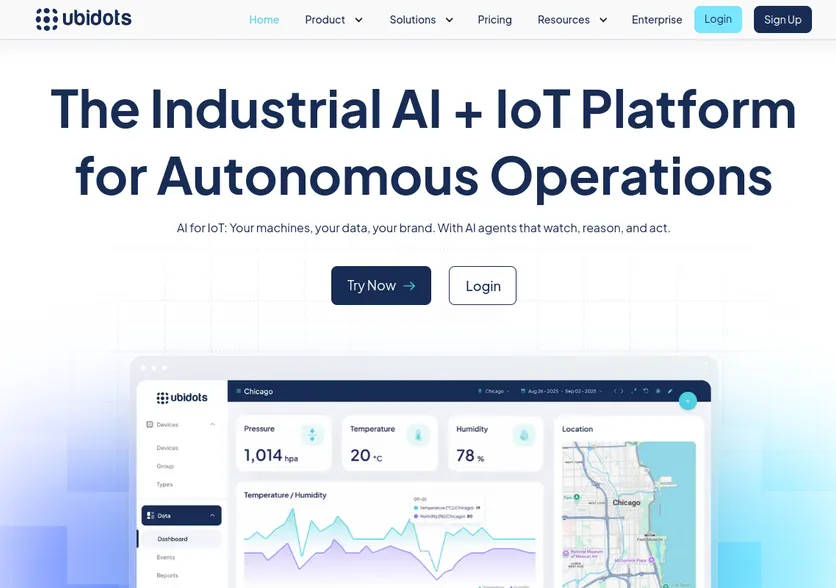
Paid tool Starting price: $99/month · Ninety-nine dollars per month on the Professional plan for fifty devices, plus two dollars per device up to one thousand; Industrial and Enterprise plans are custom-priced
Free plan: Free STEM plan for up to 3 devices, non-commercial use
This Ubidots plan costs ninety-nine dollars a month for fifty devices, and it is built for teams that want dashboards, alerts and reports without writing them. Devices send data, Ubidots turns it into live charts and white-label dashboards, and alerts go out by email or SMS when a sensor crosses a threshold. It is a strong fit for monitoring equipment, buildings and fleets where the value is the dashboard, not the code.
What we like
- Dashboards and alerts work out of the box
- White-label options for customer-facing views
- Simple per-device pricing
Watch out for
- Industrial and Enterprise plans are custom-priced
- Limited for teams that need deep custom logic
How to try it
- Connect devices and build the first live dashboard
- Set up alerts for the thresholds that matter
- White-label the dashboard for customers
5. ThingsBoard
Best for: Teams that want an open-source IoT platform in the cloud
Paid tool Starting price: $49/month · Forty-nine dollars per month on the Prototype plan for fifty devices and ten million data points; Pilot is one hundred and forty-nine dollars, Startup is three hundred and ninety-nine dollars and Business is seven hundred and forty-nine dollars per month
Free plan: Free plan for up to 5 devices
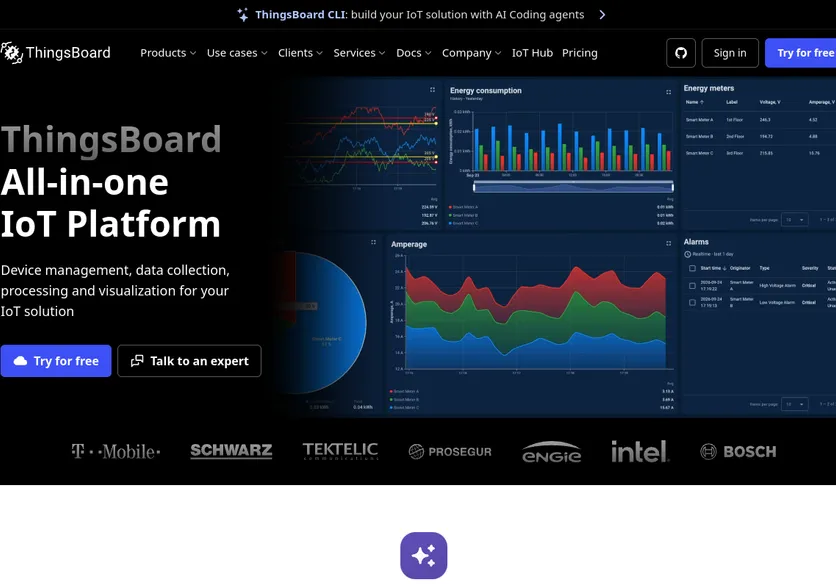
This ThingsBoard plan costs forty-nine dollars a month for fifty devices, and it gives a team an open-source IoT platform without running the servers. Devices stream telemetry, rules process it, and dashboards show the live state of the fleet, all in a platform the team can self-host later if it outgrows the cloud. It is the pick for engineers who want control over their data and their stack.
What we like
- Open-source platform with a cloud option
- Rule chains handle processing without custom code
- Can be self-hosted later if the team outgrows the cloud
Watch out for
- Learning curve is steeper than Blynk or Ubidots
- Enterprise features are custom-priced
How to try it
- Register devices and stream the first telemetry
- Build a rule chain to process and alert on the data
- Create dashboards for the fleet and for customers
6. Particle
Best for: Hardware teams shipping connected products
Paid tool Starting price: $299/month · Two hundred and ninety-nine dollars per month per block on the Basic plan, covering one hundred devices and seven hundred and twenty thousand Data Ops; Plus is five hundred and ninety-nine dollars per block for five million Data Ops. Older listings that split the price into a ninety-nine dollar Wi-Fi block and a two hundred and ninety-nine dollar cellular block are out of date
Free plan: Free plan for up to 100 devices and 100,000 Data Ops
This Particle plan costs two hundred and ninety-nine dollars a month per block, and it covers the whole connected-product stack: the hardware, the cloud and the console. A team ships devices, watches them in the console and pushes firmware updates over the air without building any of that plumbing itself. The per-block pricing is simple to forecast, which matters when the fleet is the product.
What we like
- Hardware, cloud and console in one platform
- Over-the-air firmware updates built in
- Per-block pricing is easy to forecast
Watch out for
- Basic plan is a step up from the old ninety-nine dollar block
- Professional and Enterprise plans are custom-priced
How to try it
- Order the first devices and claim them in the console
- Push the first firmware update over the air
- Set up the fleet view to watch device health
7. Losant
Best for: Enterprises building custom IoT applications
Paid tool Starting price: $250/month · Two hundred and fifty dollars per month on the Launch plan for one hundred thousand payloads with ninety-day retention; Growth is one thousand dollars per month. Note that the vendor pricing page now shows only a custom-quote survey, so confirm the Launch price with Losant before you buy. Losant joined SUSE in February 2026
Free plan: Free Developer Sandbox for up to 10 devices
This Losant plan costs two hundred and fifty dollars a month on the Launch tier, and it is built for teams that treat IoT as an application platform. Workflows connect devices to business systems, dashboards show the live state, and edge compute runs logic on the device itself. Note that the vendor pricing page now shows only a custom-quote survey, so confirm the Launch price with Losant before you buy, and note that Losant joined SUSE in February 2026.
What we like
- Workflows connect devices to business systems
- Edge compute runs logic on the device
- Free sandbox covers ten devices
Watch out for
- Vendor page now shows a quote survey instead of tiers
- Joined SUSE in February 2026, so the roadmap may change
How to try it
- Build the first workflow to route device data
- Create a dashboard for the live fleet state
- Deploy edge logic to devices that need to act offline
8. Mender
Best for: Teams that need secure over-the-air updates for Linux devices
Paid tool Starting price: $34/month · Thirty-four dollars per month on the Basic plan for fifty devices; Professional is two hundred and ninety-one dollars per month for two hundred and fifty devices, and Enterprise is custom-priced. Older blog figures of twenty-nine dollars and two hundred and forty-nine dollars are out of date
Free plan: Free trial available; no free plan listed
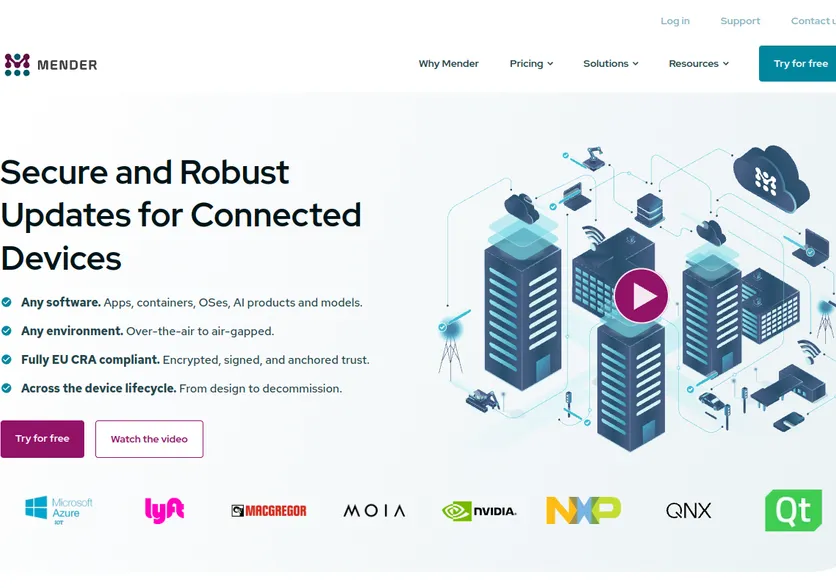
This Mender plan costs thirty-four dollars a month for fifty devices, and it does one thing well: secure over-the-air updates for Linux devices. Updates are signed, verified and rolled back automatically if they fail, which is the difference between a fleet that improves and a fleet that bricks itself. It suits teams shipping Linux-based products where the update pipeline is the product's lifeline.
What we like
- Signed updates with automatic rollback
- Built for Linux devices
- Clear per-device pricing
Watch out for
- Focused on updates, not dashboards or apps
- Enterprise plan is custom-priced
How to try it
- Install the client on the first device
- Publish a signed update and watch it roll out
- Set up automatic rollback on failed updates
9. Arduino Cloud
Best for: Teams prototyping connected products on Arduino hardware
Paid tool Starting price: $6/month · Six dollars per month on the Maker plan, billed as seventy-two dollars a year, for twenty-five Things and one user; Team is one thousand dollars a year for one hundred Things, and Enterprise is custom-priced
Free plan: Free plan for up to 2 Things
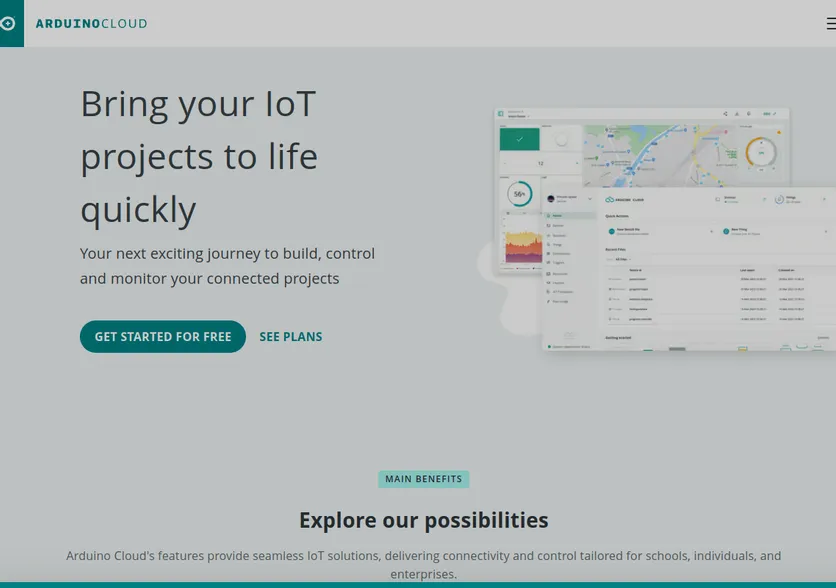
This Arduino Cloud plan costs six dollars a month billed as seventy-two dollars a year, and it turns an Arduino prototype into a connected product with almost no extra work. Things connect, dashboards show live data, and the same code that ran on a breadboard runs in the field. It is the natural pick for a team that prototypes on Arduino and wants the cloud to keep up without a platform migration.
What we like
- Prototyping on Arduino carries straight into production
- Dashboards work with almost no setup
- Maker plan is six dollars a month billed annually
Watch out for
- Team plan jumps to one thousand dollars a year
- Maker plan covers only one user
How to try it
- Create a Thing and link it to your board
- Build a dashboard from the live sensor data
- Share the dashboard with the team or a customer
Prices above were checked on each vendor’s own website on Nov 28, 2026 and can change — the vendor’s page is the final word. Vendor links are editorial: nobody paid to be listed or ranked here. Vendors who want a featured listing can see how it works on our Get listed page.
How enterprise teams should pick an IoT developer platform
Start with the prototype, not the platform: get one device sending real data before you compare dashboards. Count the messages per device per day, because usage pricing punishes chatty sensors and per-device pricing punishes a big fleet. Check where the data lives and who can see it, since enterprise IoT often crosses borders and compliance lines. Make sure over-the-air updates are signed and reversible, because a bad update to a thousand devices is an outage, not a bug. Finally, pick the platform that matches the cloud you already run: the integration is worth more than any feature list.
Before you buy
- Count messages per device per day before you compare usage prices
- Confirm where device data is stored and who can access it
- Check that firmware updates are signed and roll back automatically
- Test the free tier with real devices before you commit
- Ask how the price changes when the fleet grows tenfold
Official websites
Official websites of the products reviewed above. Features and prices were checked against these sites when this guide was written, and they can change, so confirm on the vendor site before you buy.
Frequently asked questions
What is the best internet of things software for enterprise developers?
AWS IoT Core is the best overall pick for teams already on AWS, because it charges one dollar per one million messages with no per-seat fee. Azure IoT Hub is the best pick for Azure fleets, starting at ten dollars per unit a month with device twins and management. Particle is the best choice for hardware teams shipping connected products, since it covers the device, the cloud and the console in one block.
How much does AWS IoT Core cost?
AWS IoT Core costs one dollar per one million messages for the first one billion messages a month in US East, measured in five kilobyte blocks, plus eight cents per one million minutes of connectivity. The free tier covers the first twelve months with two hundred and fifty thousand to five hundred thousand messages a month. The bill follows traffic, so a fleet of quiet sensors costs very little.
What is the cheapest IoT platform for enterprise teams?
Arduino Cloud is the cheapest paid plan in this list at six dollars a month billed annually on the Maker plan, though it covers only one user and twenty-five Things. Blynk follows at twenty-nine dollars a month for ten devices, and Mender at thirty-four dollars for fifty. AWS IoT Core can be cheaper still for low-traffic fleets, since it charges per message and the free tier covers the first year.
Is Google Cloud IoT Core still available?
No. Google shut down Cloud IoT Core in August 2023, and existing customers were migrated off the service. Teams that built on it have moved to AWS IoT Core, Azure IoT Hub or a platform like ThingsBoard. Any guide still listing Google Cloud IoT Core as an option is out of date, and you should not plan a new deployment around it.
What should an enterprise check before choosing an IoT platform?
Check five things: the real cost at your fleet size, where the data is stored, whether updates are signed and reversible, how the platform integrates with the cloud you already run, and whether the vendor publishes its prices. A platform that hides its pricing or forces a quote for a fifty-device pilot is a warning sign. Test the free tier with real hardware before you sign anything.
Compare the nine platforms above, then test the free tier with a real device before you commit to one.
Browse Developer Tools tools