On this page
Developer docs fail in a specific way: the code moves, the docs do not, and the next developer wastes an afternoon on an answer that was wrong for two releases. The fix is a tool that keeps docs close to the code, searches the way developers search, and publishes a site people trust. GitBook leads this list because it syncs Markdown from Git and publishes a fast, searchable site. The other seven tools are ranked on the same test: how well docs stay true as the product ships.
How we researched this
We checked every price on the vendor pricing page on November 28, 2026, and only included tools with a published US dollar list price and a free plan or free trial. Every tool here fits developer documentation: Git sync or API references, search that handles code terms, and a published site developers enjoy reading. Prices change, so confirm the current figure on the vendor site before you buy.
Compare the tools
| Name | Best for | Starting price | Free plan | |
|---|---|---|---|---|
 GitBook | Developer teams that write docs in Git and publish a polished site | $65/site/month + $12/user/month | Free plan for public docs | Visit |
 ReadMe | API teams that need a developer hub with live testing | $250/month | Free Starter plan for 1 project and 1 admin | Visit |
 Mintlify | API-first teams that want AI-written docs on a fast site | $450/month | Free Starter plan for up to 5 editors | Visit |
| Document360 | Teams that need AI answers across a large public knowledge base | $149/project/month | 14-day free trial; no free plan | Visit |
 Confluence | Developer teams already using Atlassian tools | $7.15/user/month | Free plan for up to 10 users | Visit |
 Notion | Developer teams that want docs, wikis and notes in one workspace | $10/user/month | Free plan for individuals with limited blocks | Visit |
 Slab | Developer teams that want a clean internal wiki with verification | $6.67/user/month | Free plan for up to 10 users | Visit |
 Archbee | Product teams that publish developer docs with API references | $49/month | 14-day free trial; no free plan | Visit |
The knowledge base software for developer docs, compared
1. GitBook
Best for: Developer teams that write docs in Git and publish a polished site
Paid tool Starting price: $65/site/month + $12/user/month · Sixty-five dollars per site per month plus twelve dollars per user per month on the Essential plan billed annually; Ultimate is two hundred and forty-nine dollars per site per month plus twelve dollars per user per month. Monthly billing is seventy-nine dollars per site plus fifteen dollars per user
Free plan: Free plan for public docs
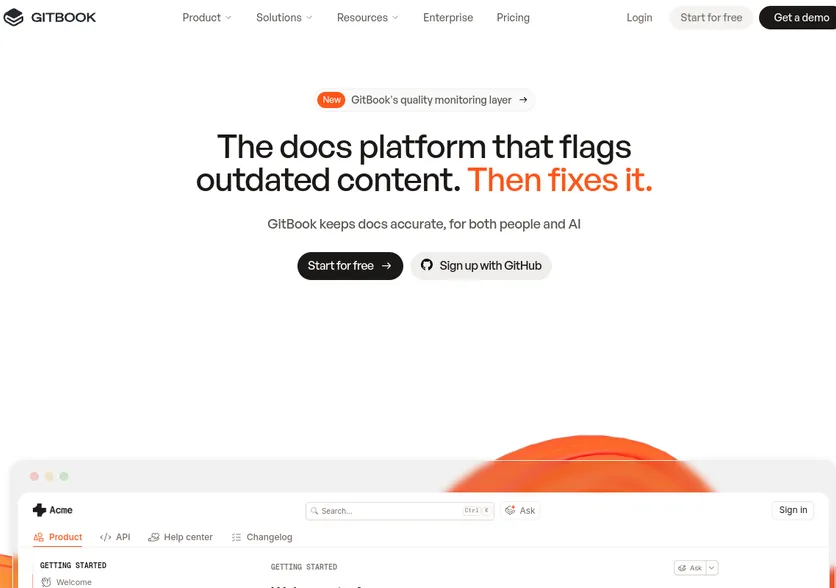
This GitBook plan costs sixty-five dollars per site per month plus twelve dollars per user per month, and it turns Markdown in a repo into a docs site developers enjoy reading. Git sync keeps the docs beside the code, AI drafts and updates pages, and the published site carries search, feedback and analytics. That combination suits teams whose docs are part of the product, not an afterthought.
What we like
- Git sync keeps docs beside the code
- AI drafts and updates pages from the codebase
- The published site is fast with strong search
Watch out for
- The per-site plus per-user price adds up fast
- Advanced permissions need the Ultimate plan
How to try it
- Connect the Git repo and sync the docs folder
- Write in Markdown and let the AI draft the first version
- Publish the site and check the search analytics weekly
2. ReadMe
Best for: API teams that need a developer hub with live testing
Paid tool Starting price: $250/month · Two hundred and fifty dollars per month billed annually on the Pro plan for one project and up to five admins (twenty dollars per month per extra admin); Enterprise is custom, and the Ask AI add-on is one hundred and fifty dollars per month
Free plan: Free Starter plan for 1 project and 1 admin
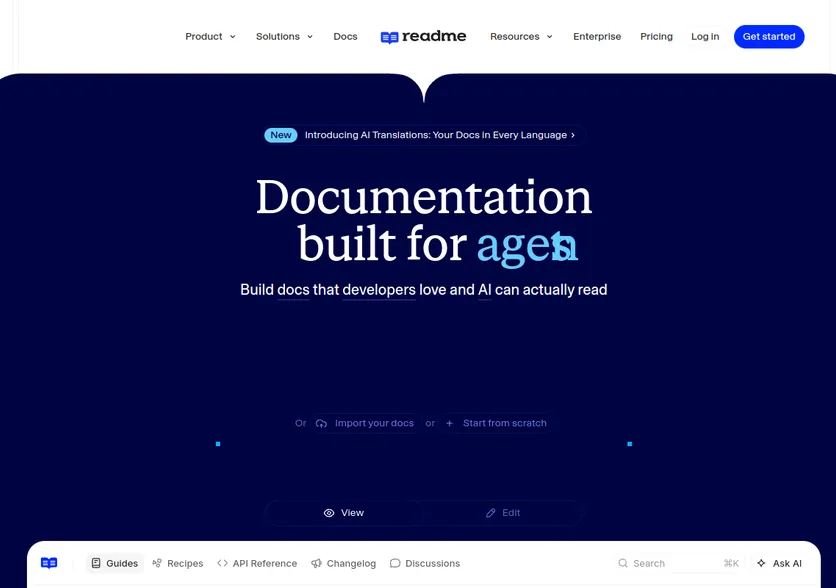
This ReadMe plan costs two hundred and fifty dollars per month billed annually, and it is built around the API reference as the center of the docs. The reference generates from the OpenAPI spec, the API playground lets developers test calls without leaving the page, and guides sit beside the reference so the how and the what stay together. That matters for teams whose docs are the product's front door.
What we like
- The API reference generates from the OpenAPI spec
- The playground lets developers test calls in place
- Guides and reference share one hub
Watch out for
- The price is high for a small API
- AI answers are a paid add-on
How to try it
- Import the OpenAPI spec to generate the reference
- Write guides beside the reference for the common workflows
- Enable the playground so developers can test calls in the docs
3. Mintlify
Best for: API-first teams that want AI-written docs on a fast site
Paid tool Starting price: $450/month · Four hundred and fifty dollars per month billed annually on the Pro plan (five hundred and forty dollars on monthly billing) with unlimited editors and ten thousand AI credits per month; extra credits cost one cent each. Startups get fifty percent off Pro for twelve months through the startup program
Free plan: Free Starter plan for up to 5 editors
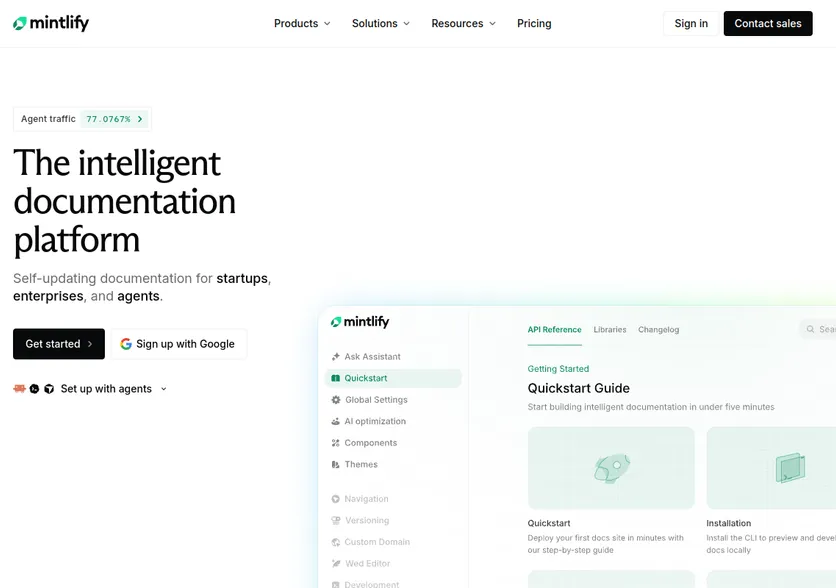
This Mintlify plan costs four hundred and fifty dollars per month billed annually, and it is the most AI-forward docs tool in this list. The AI agent writes and updates docs, answers developer questions from the docs, and the published site is fast with a modern feel. Unlimited editors means the whole team can write without counting seats, which suits a startup where everyone touches the docs.
What we like
- The AI agent writes and updates docs automatically
- Unlimited editors on the Pro plan
- The published site is fast and modern
Watch out for
- The price jumps steeply from the free plan
- AI credits are metered beyond the included ten thousand
How to try it
- Connect the repo and let Mintlify build the docs site
- Turn on the AI assistant and give it the docs as its source
- Review the AI drafts weekly and publish the good ones
4. Document360
Best for: Teams that need AI answers across a large public knowledge base
Paid tool Starting price: $149/project/month · One hundred and forty-nine dollars per project per month on the Standard plan; Professional is two hundred and ninety-nine dollars per project per month, and higher tiers add single sign-on and advanced analytics
Free plan: 14-day free trial; no free plan
This Document360 plan costs one hundred and forty-nine dollars per project per month, and it pairs a full knowledge base with an AI assistant that answers from the docs. Categories, versions and workflows keep a large docs set organized, and the analytics show which articles developers read and which searches fail. That suits teams whose docs serve both developers and end users from one system.

What we like
- The AI assistant answers from the docs library
- Versions and workflows keep large docs sets organized
- Analytics show which searches fail and which articles work
Watch out for
- No free plan, only a fourteen-day trial
- Single sign-on needs a higher tier
How to try it
- Import the existing docs and organize them by category
- Turn on the AI assistant and connect it to the article library
- Read the failed-search report each week and write the missing pages
5. Confluence
Best for: Developer teams already using Atlassian tools
Paid tool Starting price: $7.15/user/month · Seven dollars and fifteen cents per user per month on the Standard plan for one to one hundred users on monthly billing (fourteen dollars and ten cents for Premium); annual billing runs lower at about six dollars per user per month on Standard for a ten-user workspace. Atlassian raised Cloud prices on October 13, 2026
Free plan: Free plan for up to 10 users
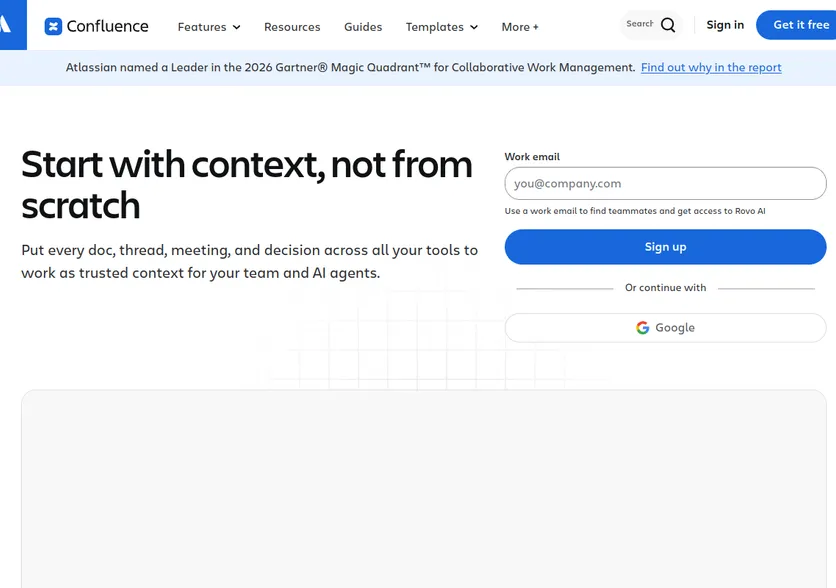
This Confluence plan costs seven dollars and fifteen cents per user per month, and it is the wiki most developer teams already know. Pages, templates and spaces organize design docs, runbooks and decisions, and the link to Jira ties each doc to the work it describes. Whiteboards and databases add planning to the same space, so the docs live where the team already works.
What we like
- Deep integration with Jira and the Atlassian suite
- Templates speed up design docs and runbooks
- Whiteboards and databases add planning in one space
Watch out for
- Search is weaker than dedicated docs tools
- Large spaces can become hard to navigate
How to try it
- Create a space per product and add templates for design docs
- Link each doc to its Jira issues so the work stays connected
- Set page owners and review dates on the docs that change often
6. Notion
Best for: Developer teams that want docs, wikis and notes in one workspace
Paid tool Starting price: $10/user/month · Ten dollars per user per month billed annually on the Plus plan (twelve dollars on monthly billing); Business is twenty dollars per user per month and includes Notion AI
Free plan: Free plan for individuals with limited blocks
This Notion plan costs ten dollars per user per month billed annually, and it gives a developer team one workspace for docs, wikis and project notes. Pages link to databases, so API notes, runbooks and roadmaps connect instead of scattering across tools, and the AI can draft and summarize inside the page. That flexibility suits small teams whose docs mix code notes, decisions and plans in one place.

What we like
- Pages, databases and wikis share one workspace
- The AI drafts and summarizes inside the page
- Flexible enough for code notes, decisions and plans
Watch out for
- The published docs site is weaker than GitBook or Mintlify
- Large wikis need discipline to stay organized
How to try it
- Build the docs wiki with a page per API or service
- Link pages to a database that tracks owners and review dates
- Use the AI to draft the first version of each new page
7. Slab
Best for: Developer teams that want a clean internal wiki with verification
Paid tool Starting price: $6.67/user/month · Six dollars and sixty-seven cents per user per month billed annually on the Startup plan (eight dollars on monthly billing); Business is twelve dollars and fifty cents per user per month
Free plan: Free plan for up to 10 users
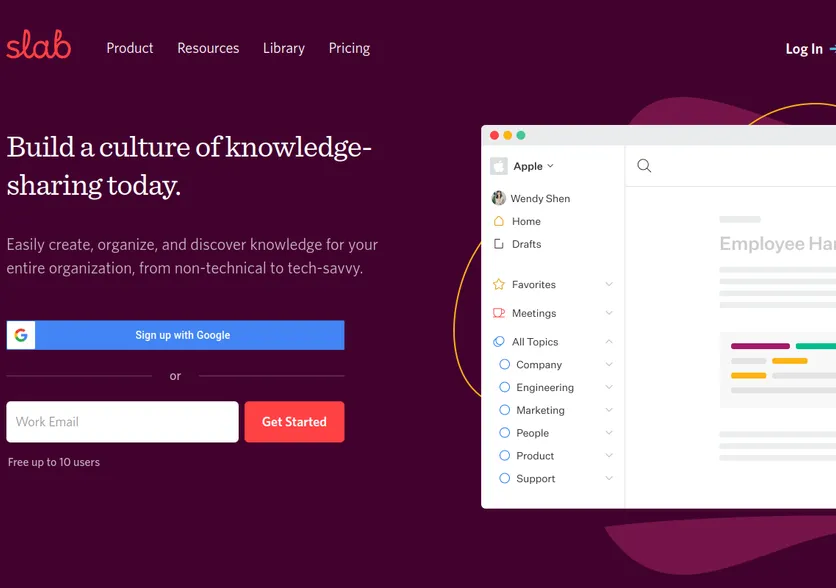
Slab keeps docs true with verified owners and review dates, and this Slab plan costs six dollars and sixty-seven cents per user per month billed annually. Topics organize pages, verification reminders keep owners honest, and integrations pull content from Slack, GitHub and Google Drive into the wiki. That suits a team whose docs go stale because nobody owns them.
What we like
- Verification reminders keep pages accurate
- Topics organize the wiki cleanly
- Integrations pull content from Slack and GitHub
Watch out for
- Built for internal wikis, not public API docs
- The free plan caps the team at ten users
How to try it
- Create topics for each service and move the docs in
- Set verification reminders on the pages that change most
- Connect Slack and GitHub so content flows into the wiki
8. Archbee
Best for: Product teams that publish developer docs with API references
Paid tool Starting price: $49/month · Forty-nine dollars per month billed annually on the Growing plan (fifty-nine dollars on monthly billing) with one editor seat included; Scaling is one hundred and ninety-nine dollars per month and adds versioning, reviews and localization. AI and analytics are paid add-ons
Free plan: 14-day free trial; no free plan
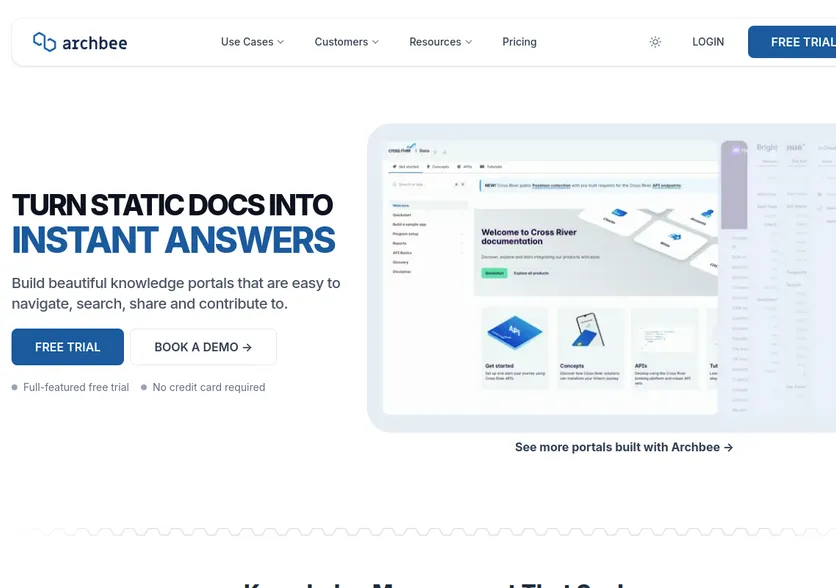
This Archbee plan costs forty-nine dollars per month billed annually, and it gives a product team a docs portal with API references built in. The block editor writes clean pages, OpenAPI support generates the reference, and versioning keeps the docs in step with releases. One editor seat is included in the base price, which keeps the entry cost low for a small docs team.
What we like
- OpenAPI support generates the API reference
- Versioning keeps docs in step with releases
- The entry price is low for a small docs team
Watch out for
- Only one editor seat is included in the base price
- AI and analytics cost extra as add-ons
How to try it
- Connect the repo and import the OpenAPI spec
- Write the guides in the block editor and publish the portal
- Set versioning so each release keeps its own docs
Prices above were checked on each vendor’s own website on Nov 28, 2026 and can change — the vendor’s page is the final word. Vendor links are editorial: nobody paid to be listed or ranked here. Vendors who want a featured listing can see how it works on our Get listed page.
How a developer team should keep docs true as the code ships
Treat the docs like code, because that is what they are. Store the source in the repo, review doc changes in the same pull request as the code change, and block the merge when the docs are missing. Write for the reader who arrives with an error message: put the exact string, the fix and the version in the first paragraph, and keep the page to one task. Measure what matters: read the failed-search report every week and write the pages for the queries that found nothing, because those are the docs your users are asking for. Finally, assign an owner and a review date to every page, since a doc nobody owns is a doc that quietly goes wrong.
Before you buy
- Check that docs update from your code repo, so the docs never lag a release behind
- Confirm the search handles code terms, error messages and API names, not just titles
- Ask whether API references generate from your spec or must be written by hand
- Test the docs on a phone, because developers read error fixes on their phones
- Publish one real API guide on the trial and watch a developer use it before you pay
Official websites
Official websites of the products reviewed above. Features and prices were checked against these sites when this guide was written, and they can change, so confirm on the vendor site before you buy.
Frequently asked questions
What is the best knowledge base software for developer docs?
GitBook is the best pick for most developer teams because it syncs docs from Git, publishes a fast site and costs sixty-five dollars per site per month plus twelve dollars per user per month. ReadMe is better when the API reference is the center of the docs, and Mintlify suits teams that want AI to write and update docs. The right choice depends on whether your docs live in a repo or in an editor.
How much does knowledge base software for developer docs cost?
Paid plans in this list start at six dollars and sixty-seven cents per user per month for Slab Startup and seven dollars and fifteen cents for Confluence Standard. Notion Plus is ten dollars per user per month, while GitBook Essential is sixty-five dollars per site plus twelve dollars per user. ReadMe Pro is two hundred and fifty dollars per month and Mintlify Pro is four hundred and fifty dollars per month.
Can a developer team use a free plan for docs?
Yes, for a small team. GitBook is free for public docs, Mintlify is free for up to five editors, and Notion and Confluence both have free plans. The limits show up in private docs, custom domains, analytics and AI features, so a free plan is a good place to start. Move to a paid plan when the docs become the product's front door.
What features matter most for developer docs?
Git sync matters most, because docs that live beside the code stay current when the code changes. Search that handles error messages and API names matters next, since developers search for the exact string they saw. And a generated API reference matters when the API is the product, because a hand-written reference goes stale within a release or two.
Is GitBook or ReadMe better for developer docs?
GitBook is better when the team writes in Markdown and wants a polished published site with AI help. ReadMe is better when the API reference and playground are the point, because developers can test calls without leaving the docs. Many API teams use ReadMe for the reference and GitBook for the guides, though most small teams should pick one and commit to it.
Pick the tool that fits your stack and your writers, then publish one real API guide on the trial before you pay.
Browse Developer Tools tools